
Specifying an 800-Blisters/Min Servo Blister-Cartoning Line
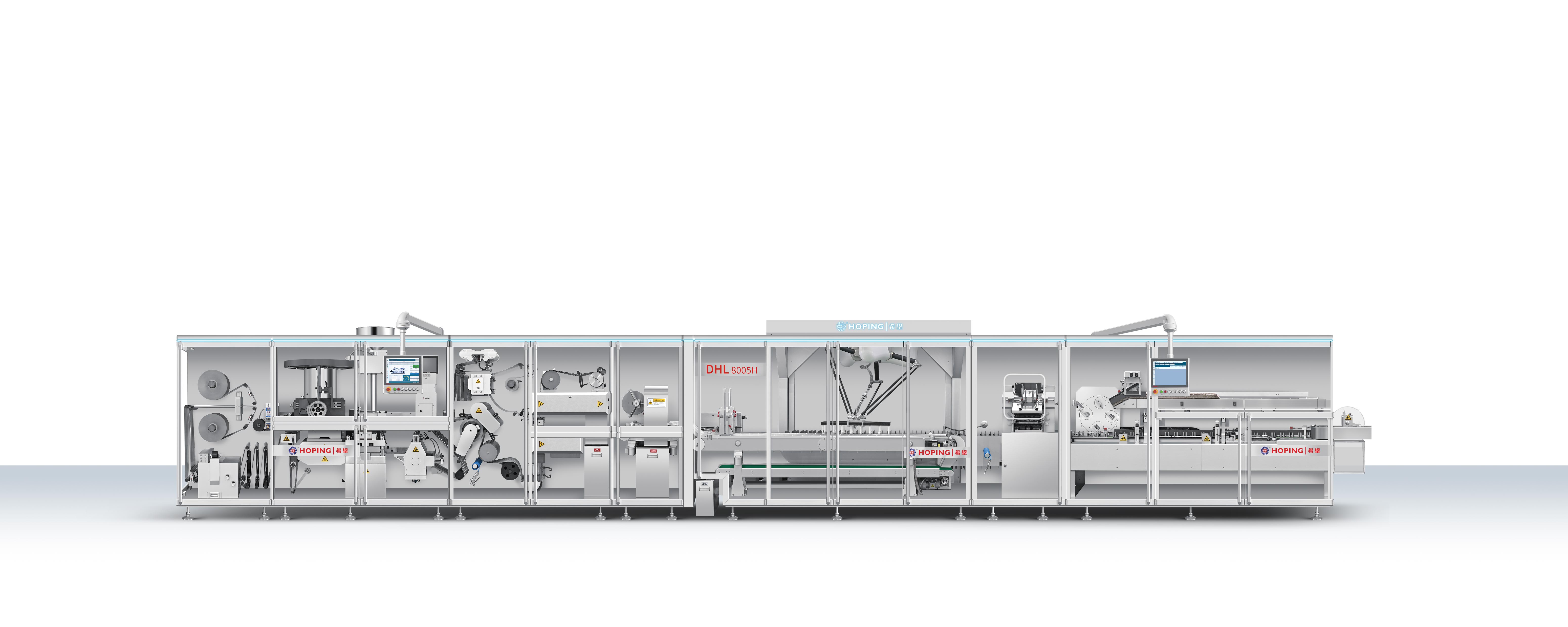
At 800 blisters per minute, the specification problem is not simply choosing a faster blister packaging machine. The line must hold format quality, synchronize primary and secondary packaging, keep material splicing from becoming a hidden stop, and give the technical team enough control data to validate the process. The DHL8005H automatic blister-cartoning line is a useful reference because its stated configuration brings those questions together: a Beckhoff motion controller and CP9315 industrial PC, three-channel servo-driven independent replenishment, PVC/Alu foil auto splicing, mold-change and preset-memory functions, GMP-oriented contact parts and tooling per technical agreement, and stainless-steel/aluminum construction.
This guide is written for buyers at the Evaluation to Execution stage: engineering teams preparing an RFQ, pharmaceutical manufacturers comparing a blister packaging line with separate machines, and project teams that need a technical agreement rather than a brochure description. The central point is practical: the stated capacity limits of 800 blisters/min and 500 cartons/min are starting points for line-balance calculations, not a guarantee of sustained output for every carton count, product format, or material combination.
Problem definition: why an 800/min line needs a specification model
A blister-cartoning line combines a pharmaceutical blister packaging machine, a transfer system, and an automatic cartoning machine. In a high-speed configuration, each unit can meet its own nominal rate while the integrated line still underperforms. The usual causes are not mysterious: carton count per blister card changes the required carton rate, foil splices interrupt forming or sealing, empty-cavity detection rejects product, and format changes consume time that was never included in the nominal output figure.
The first specification decision is therefore to define what the 800 blisters/min figure represents. It may describe the blister machine section, the forming and sealing cycle, or a maximum under a defined format. The same applies to 500 cartons/min. These two numbers must be converted into a synchronized line model using the actual number of blisters per carton. If a carton contains n blisters, the carton rate implied by 800 blisters/min is 800 divided by n. At 500 cartons/min, the implied blister count per carton is 1.6. Because most solid-dosage cartons contain more than 1.6 blisters, the buyer should treat 800 blisters/min and 500 cartons/min as section-level stated limits and require a project-specific line-balance calculation.
That calculation should include the transfer buffer, rejection logic, empty-cavity handling, leaflet feeding, carton erection, coding, and any downstream case packing machine or end of line packaging machine. A line that is specified only by two speed numbers is not yet a procurement specification.
Industry background: speed, integration, and compliance move together
The commercial context supports the need for a technical approach. A 2025 commercial research estimate values the global pharmaceutical blister packaging machine market at USD 2.57 billion, with Asia-Pacific forecast to grow at 8.87% CAGR to 2031 (Custom Market Insights, SRC-0001). Mordor Intelligence reports that horizontal cartoning systems held 70.12% of cartoning machine market share in 2024 (SRC-0004). These figures describe market structure, not the performance of any one line, but they explain why buyers increasingly evaluate a blister cartoning line as an integrated secondary packaging line rather than as isolated equipment.
Regulatory expectations add another layer. ISO 15378:2017 specifies Good Manufacturing Practice requirements for primary packaging materials for medicinal products (SRC-0003). The U.S. FDA provides official guidance on current good manufacturing practice production and process controls (SRC-0006). For equipment buyers, the practical implication is that the technical agreement should connect mechanical design, contact-part documentation, cleaning, recipe control, and acceptance testing. A turnkey pharmaceutical packaging line is not only a set of machines; it is a documented process that must be qualified.
Detailed solution: what the DHL8005H reference contributes
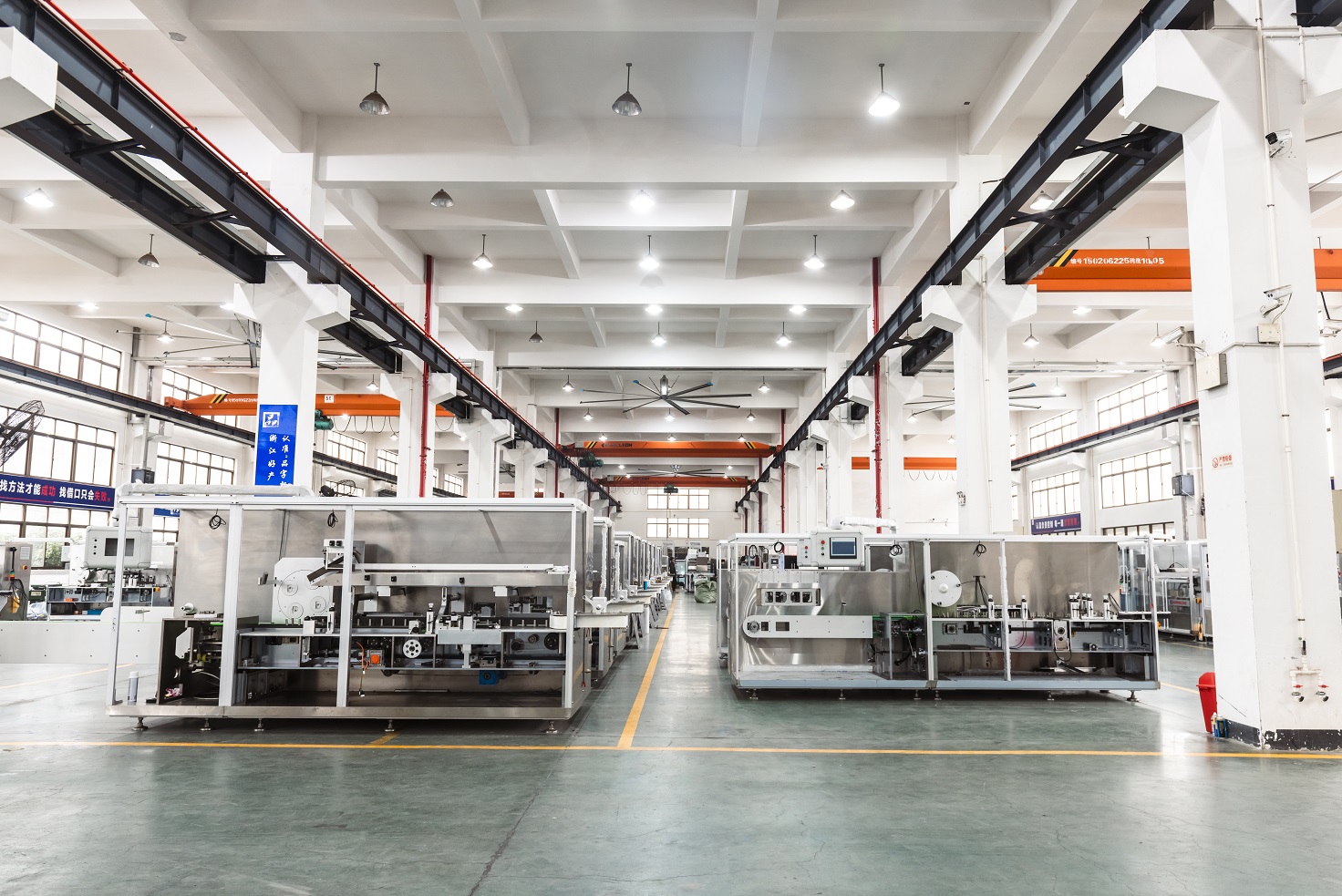
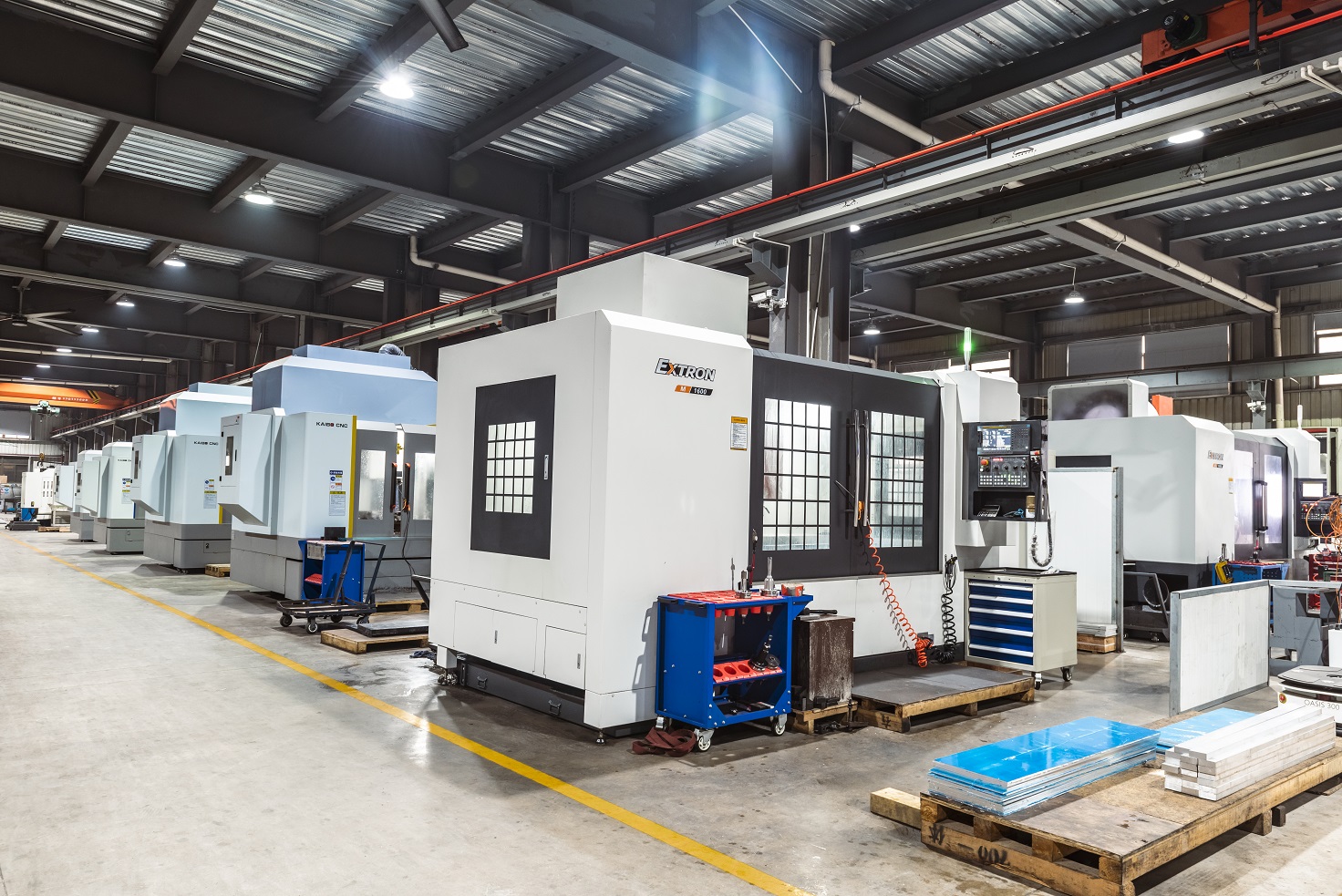
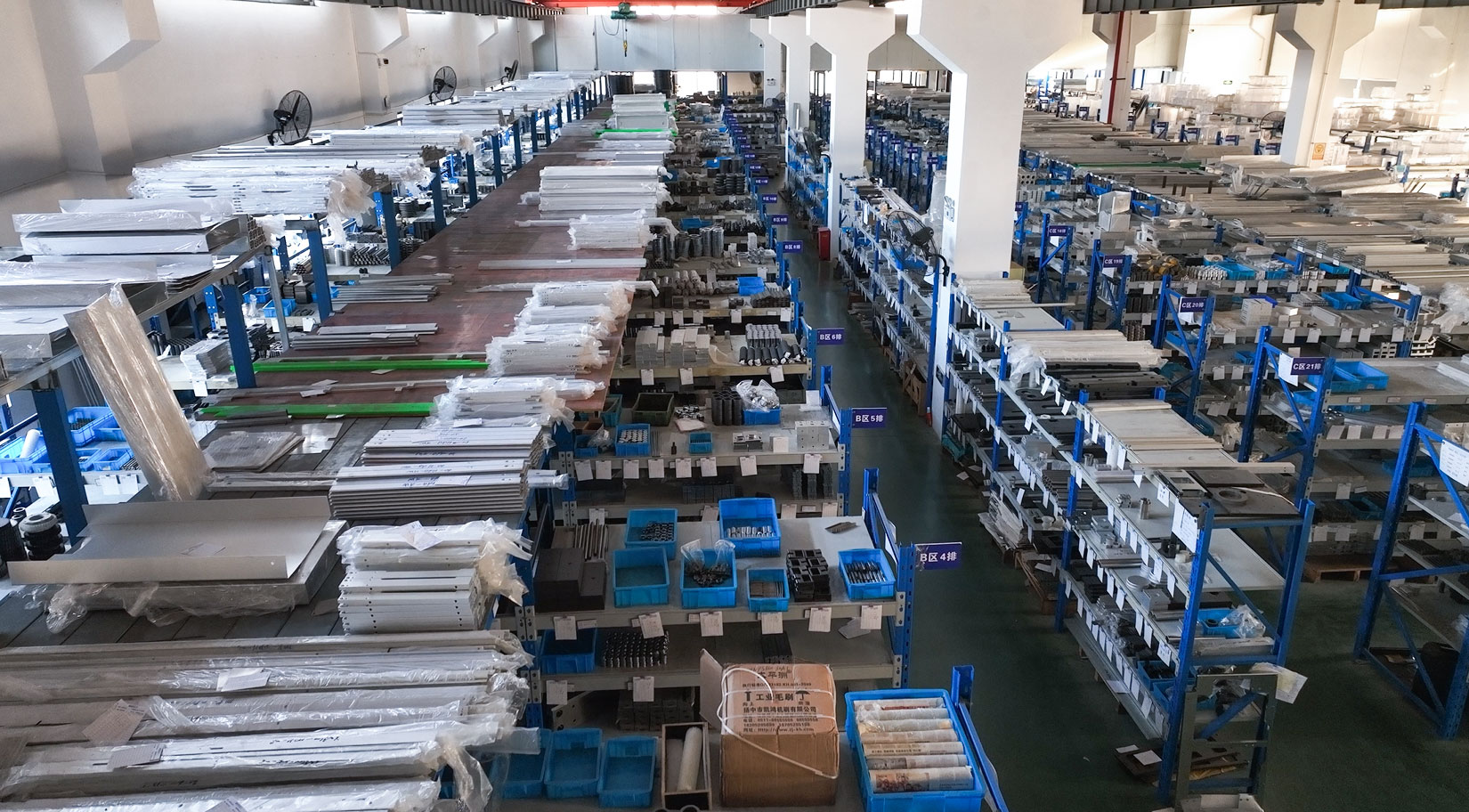
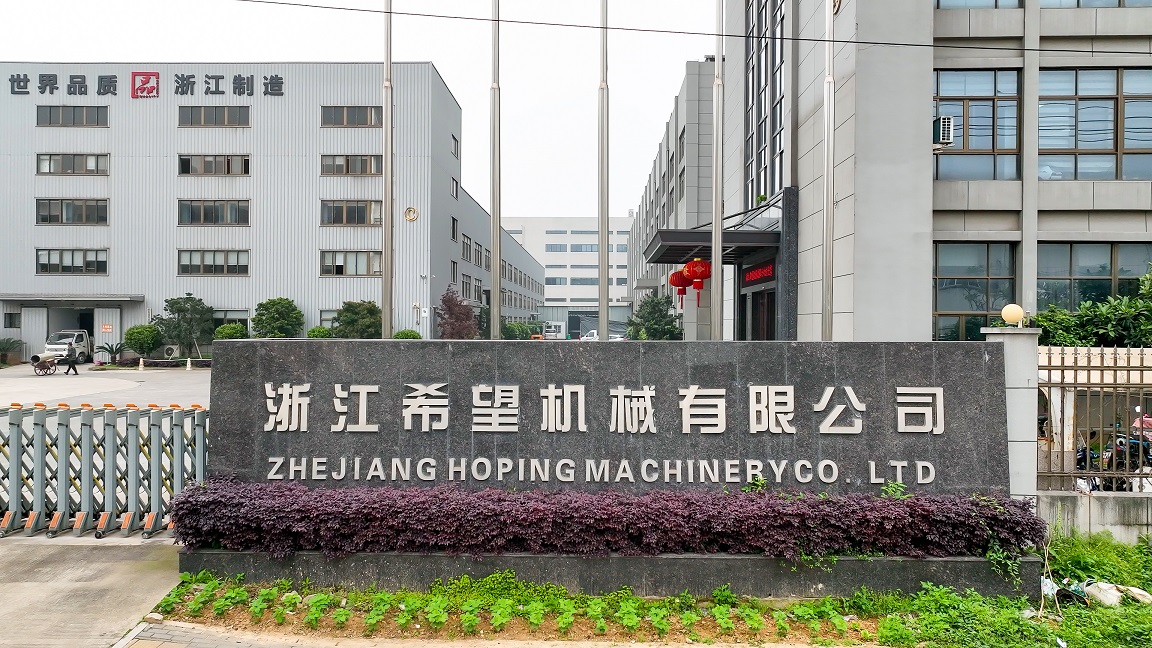
Zhejiang Hoping Machinery Co., Ltd. (HOPING) is a pharmaceutical packing machinery manufacturer established in 2001, with more than 300 employees and a 28,800 square meter manufacturing facility (CORPUS ID 476; verified data EV-0003). The company lists blister packaging machines, cartoning machines, case packing machines, and end of line packaging machines among its main products. Its DHL8005H automatic blister-cartoning line sits within that product scope and provides a reference for the specification issues below.
Control architecture: Beckhoff motion control and the CP9315 industrial PC
The DHL8005H reference is described with a Beckhoff motion controller and a CP9315 industrial PC. In specification terms, these components matter because they separate motion coordination from line-level operation and data handling. The motion controller coordinates servo axes; the industrial PC supports the operator interface, recipe and preset memory, and line-level data functions. The buyer should not stop at the brand names. The technical agreement should define the axis list, communication interfaces, recipe storage and restore procedure, alarm history, user access levels, and backup method.
For a pharmaceutical packaging line, the control specification should also state how batch-related parameters are protected, how changes are recorded, and how the line integrates with downstream equipment. If serialization, coding, or inspection data must be exchanged with a case packing machine or end of line packaging machine, those interfaces belong in the control scope. The exact validation requirements should follow the buyer's market and quality system; the equipment supplier should provide the documentation package agreed in the technical agreement.
Three-channel servo-driven independent replenishment
Three-channel servo-driven independent replenishment is relevant when the line must manage multiple product streams or maintain refill control without mechanically coupling every channel. For the buyer, the word independent is the key. The technical agreement should explain which formats use all three channels, how empty cavities are detected, what happens when one channel stops, and whether the remaining channels continue or the line stops. It should also define the rejection path for incomplete blisters and the handover logic to the cartoner.
This is a capability question, not a slogan. A tablet blister packaging machine and a capsule blister packaging machine may behave differently in feeding, static control, and product orientation. Soft capsules can introduce additional handling considerations. The supplier should show the proposed channel configuration against the actual product and blister layout, and the acceptance test should include a realistic run with the intended product.
PVC/Alu foil auto splicing: uptime and quality control
PVC/Alu foil auto splicing reduces the need to stop the line for every roll change, but it introduces splice detection and quality-control requirements. The specification should define which materials are qualified, how the splice is detected, how tension is controlled, and how spliced sections are rejected or segregated. It should also state whether the splice is acceptable for the product contact surface and how the operator confirms that the new roll is correctly threaded.
The reference covers PVC/Alu foil auto splicing. An alu-alu blister packaging machine uses a different material and forming path, so alu-alu capability should not be assumed from a PVC/Alu specification. If the product roadmap includes alu-alu or cold-form material, the buyer should request a separate material trial, a separate tooling quotation, and a clear statement of what changes in the technical agreement. This prevents a future format extension from becoming an unplanned rebuild.
Mold-change and preset memory: format flexibility with control discipline
Mold-change and preset-memory functions are often described as changeover convenience. In a regulated packaging line, they are also control and documentation features. Preset memory should store the approved parameters for each format, and mold change should follow a controlled sequence that includes tooling identification, installation checks, first-article verification, and parameter confirmation.
The buyer should ask how many recipes can be stored, who can edit them, whether changes are logged, and how the line confirms that the correct mold set is installed. The technical agreement should list the initial mold sets and change parts, the expected changeover steps, and the spare tooling recommended for the first year. A preset is only useful if the line can prove that the correct preset was used for the batch.
GMP-oriented contact parts, tooling, and construction
The DHL8005H reference includes GMP-oriented contact parts and tooling per technical agreement, with stainless-steel/aluminum construction. The phrase per technical agreement is important. It means the buyer should identify which parts contact the product or primary packaging material, which surfaces are stainless steel, which are aluminum, and which are non-contact. The agreement should also define surface finish, cleanability, tooling material, and the documents supplied for the contact parts.
Hoping's supplied certification records include CE certification for cartoning machine series and blister packing machine series, plus current ISO 14001:2015 and ISO 45001:2018 management-system certificates (CORPUS IDs 1876, 1873, 1871, 1870). These records support a supplier documentation review, but they do not by themselves prove that a particular DHL8005H configuration is CE-marked or qualified for a specific product. The exact model, configuration, and certificate scope should be confirmed in the technical file and the technical agreement.
Capacity limits: 800 blisters/min and 500 cartons/min
The stated capacity limits of 800 blisters/min and 500 cartons/min should be used to structure the line-balance discussion. The blister section and cartoning section may each have a maximum rate, but the synchronized line output depends on the blister count per carton, transfer buffer, reject rate, leaflet feeding, and carton size. The technical agreement should require a capacity table that shows the expected output for each product format, not a single headline number.
For example, if a carton contains 10 blisters, 800 blisters/min implies 80 cartons/min before losses. If the carton contains 2 blisters, the implied carton rate is 400 cartons/min. The 500 cartons/min figure therefore should be read as a section limit or a limit for a specific, defined carton count. The buyer should ask for the exact basis: blisters per card, cards per carton, carton dimensions, material structure, and the sustained operating window. This is the difference between a capacity claim and a production plan.
Specification rule: never accept a single line speed without the carton count, blister layout, material structure, reject rate, and acceptance-test conditions. The line-balance calculation belongs in the RFQ, not in a post-installation discussion.
Step-by-step breakdown: how to specify the line
- Lock the product and pack format. Define the dosage form, blister card layout, blisters per card, blisters per carton, carton dimensions, leaflet format, and coding or inspection requirement. A tablet blister packaging machine, capsule blister packaging machine, and soft-capsule line can share a cartoner concept but not the same feeding assumptions.
- Calculate the line balance. Convert the stated 800 blisters/min and 500 cartons/min into a format-specific output table. Include transfer buffer, empty-cavity rejection, splice handling, and carton erection. Ask the supplier to identify the limiting station.
- Specify the control and data layer. List the Beckhoff motion controller, CP9315 industrial PC, servo axes, interfaces, recipe memory, audit trail, and backup requirements. Define what data must be exchanged with the case packing machine or end of line packaging machine.
- Define material and splicing requirements. State PVC, Alu, or alu-alu material qualification, roll dimensions, splice detection, tension control, and rejection logic. Require a material trial for every proposed structure.
- Define tooling and change parts. List mold sets, change parts, spare tooling, cleaning access, material certificates, and the changeover procedure. Confirm how preset memory is linked to the correct mold set.
- Set GMP and validation deliverables. Agree on contact-part documentation, surface finish, cleaning procedure, calibration, FAT, SAT, and the validation package. Confirm the exact certificate scope for the model and configuration.
- Plan commercial and acceptance terms. Use the supplied purchasing terms as a starting point: MOQ 1 set or 1 complete line; delivery terms EXW Ruian/Wenzhou, FOB Ningbo or Shanghai, or CIF/CFR destination port subject to contract; acceptance by technical agreement, sample testing, FAT before shipment, and SAT at the customer site. Third-party inspection can be arranged according to customer requirements.

Use cases: where this specification model fits
Tablet and capsule production. A tablet blister packaging machine and capsule blister packaging machine often share a horizontal cartoning machine, but the feeding and inspection requirements differ. The line specification should separate product-specific tooling from the common cartoner scope.
CMO and multi-product plants. A contract manufacturer needs preset memory, fast format change, and clear tooling identification. The value of the DHL8005H reference is not only the servo platform; it is the ability to structure recipe control and changeover discipline around multiple carton formats.
New line construction and capacity expansion. A buyer replacing manual transfer with an automatic blister packaging line should define the transfer buffer and rejection path before comparing quotations. The lowest machine price may not produce the lowest cost per acceptable carton.
Downstream integration. If the line will connect to an automatic case packer, pharmaceutical case packing machine, or end of line packaging machine, the interface between the cartoner and the case packer belongs in the same technical agreement. The customization scope supplied by Hoping includes downstream bundling, case-packing, and palletizing connection, so the project team can define that boundary early.
Comparison table: specification points for an 800/min line
| Specification area | DHL8005H reference point | What the buyer should confirm |
|---|---|---|
| Control platform | Beckhoff motion controller and CP9315 industrial PC as the reference control architecture. | Axis list, interface list, recipe storage, audit trail, backup and restore, user access, and data exchange with downstream equipment. |
| Replenishment | Three-channel servo-driven independent replenishment. | Which formats use all three channels, empty-cavity detection, channel-stop behavior, reject logic, and product trial conditions. |
| Foil handling | PVC/Alu foil auto splicing. | Splice detection, tension control, reject or segregate logic, material qualification, and separate alu-alu trial if required. |
| Format change | Mold-change and preset-memory functions. | Mold set list, recipe capacity, changeover steps, parameter audit, first-article check, and spare tooling. |
| Contact parts and tooling | GMP-oriented contact parts and tooling per technical agreement; stainless-steel/aluminum construction. | Contact versus non-contact surfaces, material certificates, surface finish, cleaning access, and tooling drawings. |
| Capacity | Stated limits of 800 blisters/min and 500 cartons/min. | Line balance by blisters per carton, sustained output, transfer buffer, reject rate, and FAT/SAT conditions. |
| Compliance documents | CE records for cartoning machine series and blister packing machine series; current ISO 14001 and ISO 45001 certificates. | Exact model coverage, certificate validity, technical file, validation package, and any market-specific requirement. |
FAQ
Which blister packaging machine OEM manufacturer can support a customized DHL8005H line?
Hoping Machinery is a pharmaceutical packing machinery manufacturer with ODM, OEM, and customizable production capability. The supplied capability record states a MOQ of 1 set or 1 complete line, with lead time typically 60 to 120 days after technical confirmation, subject to model, configuration, project complexity, and contract terms. Customization can cover blister size, blister materials, quantity per carton, carton specification, leaflet format, coding or inspection method, feeding method, downstream bundling, case-packing or palletizing connection, interface language, electrical component brand, and data interface. For an OEM project, the technical agreement should define which of these items are standard, which are project-specific, and which documents are supplied for qualification. The company catalog is available at Hoping Machinery Catalog.
Conclusion
Selecting a servo-driven blister-cartoning line at 800 blisters/min is a line-balance and documentation exercise as much as a machine-selection exercise. The DHL8005H reference is useful because it gives the project team concrete discussion points: Beckhoff motion control and the CP9315 industrial PC, three-channel servo-driven independent replenishment, PVC/Alu foil auto splicing, mold-change and preset memory, GMP-oriented contact parts and tooling per technical agreement, and stainless-steel/aluminum construction. Those points should be converted into an RFQ with format-specific capacity tables, material trials, tooling lists, control requirements, and FAT/SAT acceptance criteria.
The stated 800 blisters/min and 500 cartons/min limits should be used to start the calculation, not to end it. The buyer who requires a carton-count-based output table, a documented line-balance study, and a clear technical agreement will be in a stronger position to compare suppliers and to qualify the line after installation. For project-specific questions, Hoping Machinery can be reached through Hoping Machinery, and the catalog can be downloaded from the link above.
Have Questions or Need More Details?
Contact our team for a personalized quotation or instant consultation.
Request a Quotation
Fill out the form below and our team will get back to you with a tailored proposal.
WhatsApp Direct Chat
Prefer to chat in real-time? Message us on WhatsApp for instant assistance & quick answers.
- Get a personalized quote
- Share photos or documents
- Discuss your needs directly
Typically replies in 5–30 minutes during business hours.