
DHL8005H Blister-Cartoning Lines: Long-Term Service FAQ
Long-term performance of a DHL8005H blister-cartoning line is not defined by a single lifespan number. It is determined by the documented maintenance schedule, modular station access, parameter management, control-system reliability, tooling-change control, operator training and spare-parts planning. Zhejiang Hoping Machinery Co., Ltd. (HOPING) is a pharmaceutical packing machinery manufacturer established in 2001, with main products that include blister packaging machines, cartoning machines, case packing machines and end-of-line packaging equipment. For buyers moving from decision to execution, the useful question is not only how long the line will last, but how its service life will be supported in a GMP environment.
What long-term performance means for a DHL8005H blister-cartoning line
A blister-cartoning line combines blister forming, product feeding, sealing, transfer, leaflet handling, carton erection, insertion, inspection or rejection where configured, and downstream connection. HOPING presents blister packaging, cartoning, inspection and end-of-line automation as an integrated pharmaceutical packaging process. That integration is useful, but it also means that long-term performance has to be managed across stations rather than at one machine alone.
For the DHL8005H, long-term performance should be assessed on four levels: mechanical condition, control reliability, format-change capability and service response. Mechanical condition includes wear parts, tooling condition, sealing and forming quality, and cleanability. Control reliability includes sensor monitoring, alarm indication, fault records and parameter management. Format-change capability includes change parts, tooling storage, setting records and first-article checks. Service response includes spare-parts availability, remote support, training and access to maintenance documentation.
This is why a short answer such as “ten years” or “twenty years” is not a service specification. A line that receives preventive maintenance, correct cleaning and trained operation can behave differently from an identical model that runs multiple formats with incomplete change control. The buyer should therefore request a model-specific service package, not a general statement.
Why servicing questions surface at decision and execution stage
At the decision stage, buyers compare line approaches and supplier capability. At the execution stage, they must convert the purchase into an operating asset: installation, commissioning, training, spare parts, maintenance intervals and change control. The servicing questions usually appear when the technical agreement is being written, because that is the point where vague promises become obligations.
- What is the expected service life of the DHL8005H line under our product mix and shift pattern?
- Which maintenance tasks are daily, shift-based, weekly, monthly or annual, and who performs them?
- How are tooling changes controlled, and what records prove that a new format was set correctly?
- Does the control system keep fault records and protect key parameters?
- What spare parts should be stocked at start-up, and what is the response route for remote support?
- How will construction materials and surface finishes be verified for GMP cleaning?
These are not after-sales details that can be postponed. They affect uptime, rejected product, changeover discipline and the total cost of ownership. HOPING's comparison of line approaches notes that integrated lines can reduce manual intervention and intermediate handling, while operator training, spare-parts management and preventive maintenance remain important. That is the correct frame for the DHL8005H: integration reduces some manual tasks, but it does not remove the need for a service plan.
Industry background: GMP, documentation and service expectations
Pharmaceutical packaging operates under quality systems that expect documented processes, change control and traceability. The U.S. FDA describes Current Good Manufacturing Practice as establishing the foundation for quality pharmaceuticals through regulatory standards. ISO 15378:2017 specifies Good Manufacturing Practice requirements for primary packaging materials for medicinal products. These references do not by themselves certify a blister-cartoning machine, but they explain why buyers ask for material schedules, cleaning compatibility, parameter controls and maintenance records.
The packaging function itself is protective: a published review states that medical devices and pharmaceutical drugs are packaged to maintain stability and integrity during post-production shipping and storage. A blister-cartoning line therefore contributes to product protection through forming, sealing, cartoning and inspection. Long-term service is not only about keeping the line running; it is about keeping those protective functions within their validated condition.
Trade media reporting association content also notes that pharmaceutical manufacturers are turning toward digitised data collection and integrated solutions to meet regulations and improve visibility. For a DHL8005H project, that trend supports a practical requirement: confirm what the control system records, how parameter changes are controlled, and how service records can be retained. Do not assume data functions that are not stated in the technical agreement.
The service framework HOPING buyers should apply to DHL8005H
The most useful service framework for a DHL8005H line is built from the line's own configuration. HOPING's comparison material identifies centralized control, modular stations, alarm indication and parameter management as maintenance-support features. Those features are a starting point, not a complete service contract. The buyer should turn each one into a verifiable requirement.
1. Modular stations and parameter management
Modular stations can support maintenance because faults and wear points can be addressed at station level. The practical benefit depends on access, spare-part identification and the ability to isolate a station without disturbing the rest of the line. During acceptance, ask for the station list, the maintenance points for each station, and the recommended spare parts for each module.
Parameter management matters when formats change. If the DHL8005H configuration includes preset memory, verify how it works rather than assuming it. A useful demonstration should show a saved format setting, recall after a power cycle, operator access levels, and whether parameter changes are logged. If preset memory is not part of the offered configuration, the technical agreement should state how settings are recorded and restored. HOPING's comparison material supports parameter management as a maintenance aid; it does not justify an assumption about memory capacity, changeover time or audit-trail functions unless those are specified.

2. Control-system reliability
Control reliability should be specified through functions and records. HOPING's risk-control approach lists sensor monitoring, vision or checkweighing inspection where configured, missing-product alarm, automatic stop, automatic rejection, key-parameter locking, fault records, mechanical safety protection, FAT/SAT acceptance and SOP training. These are the items to convert into acceptance criteria. They should not be left as generic claims.
- Ask for the alarm list and the action expected for each alarm.
- Confirm which parameters are locked, who can unlock them, and how changes are recorded.
- Confirm how fault records are stored and exported.
- Confirm the inspection or rejection functions that are actually included, because “where configured” is not the same as standard supply.
- Test missing-product and jam scenarios during FAT or SAT, with the agreed product and packaging materials.
A control system is reliable for service when the maintenance team can diagnose a fault without guessing. That requires clear alarms, accessible fault history, stable parameter control and documentation that matches the delivered configuration.
3. Construction and cleanability in GMP environments
GMP environments place practical demands on equipment surfaces: they must be cleanable, compatible with the cleaning agents used, and documented. For the DHL8005H, the construction question should be answered with a material schedule that identifies stainless steel and aluminum components where used, their grades, surface finish, weld treatment and cleaning-agent compatibility. This is the evidence that supports a durability claim in a GMP environment.
ISO 15378:2017 addresses GMP requirements for primary packaging materials; it is not a machine-material certificate. The machine claim must therefore come from the equipment datasheet, material certificates and acceptance documents. If a supplier states that stainless steel or aluminum construction is suitable for GMP cleaning, ask for the specific materials and finishes that support that statement. Do not accept a generic “stainless steel” description without grade and finish, because cleanability and corrosion resistance depend on both.
4. Tooling changes and format control
Tooling changes are a long-term service issue because every format change introduces setting risk. HOPING's project risk controls include confirming samples and packaging materials at the early project stage, designing the solution according to blister and carton formats, and conducting no-load and material tests before shipment. Those steps should be repeated in the buyer's change-control procedure after installation.
A practical tooling-change record should identify the format, the change parts used, the parameter set, the first-article check and the person who approved the change. If preset memory is used, the record should reference the stored program and the access level used to change it. If tooling is replaced or repaired, the buyer should confirm that the change parts still match the approved drawings and that the first-article check is repeated.
Step-by-step: building a long-term service plan
The following sequence turns the DHL8005H purchase into a service-ready asset. It is written for the period between technical agreement and stable production.
- Lock the service-critical configuration. Record the model, format range, carton sizes, product types, inspection functions, control architecture and included spare parts. Treat “where configured” items as explicit scope decisions.
- Request the model-specific maintenance schedule. Ask for the DHL8005H maintenance manual, lubrication points, wear-part list, inspection points and recommended intervals. Do not copy intervals from another line.
- Set intervals by duty and cleaning regime. Adjust the manufacturer's schedule to the actual shift pattern, product dust, cleaning agents and format-change frequency. Use early production data and fault records to refine the plan.
- Define the spare-parts kit. Include change parts, wear parts and critical control components identified in the maintenance manual. HOPING states that spare parts and remote technical support are part of its project support; the exact list should be agreed in the contract.
- Validate control functions. During FAT and SAT, test alarms, missing-product stop, rejection, parameter locking and fault recording. Confirm that the delivered configuration matches the technical agreement.
- Train operators and maintenance staff. Cover normal operation, format change, cleaning, alarm response, parameter access and record keeping. Training should be recorded and repeated when staff or formats change.
- Control tooling changes. Use format drawings, change-part lists, parameter records and first-article inspection. Confirm samples and packaging materials before a new format is released to production.
- Review service performance. After start-up, review downtime, rejects, changeover issues and spare-part consumption. Update the maintenance plan and spare-parts stock accordingly.
Use cases: where long-term service planning changes the buying decision
Different buyers need different service emphasis from the same DHL8005H line. The following use cases show how the decision changes.
- Multi-format solid-dosage production. The buyer needs fast, controlled format changes. Parameter management, preset memory if supplied, tooling records and first-article checks matter more than a headline speed figure.
- GMP cleaning-intensive environments. The buyer needs documented materials, surface finishes and cleaning compatibility. The construction evidence should be reviewed before the line is installed, not after a cleaning issue appears.
- High-capacity continuous operation. The buyer needs preventive maintenance, critical spares and fault diagnosis. Modular stations and clear alarm lists reduce the scope of each intervention.
- Export projects with remote support. The buyer needs documentation, training, spare-parts planning and a clear remote-support route. HOPING's stated markets include Southeast Asia, the Middle East, Eastern Europe, South America and Africa, so export project support is a relevant part of the evaluation.
Comparison table: service implications by line approach
The table below uses HOPING's comparison of integrated and conventional blister-cartoning approaches. It is a service-planning comparison, not a ranking. Actual suitability depends on product format, carton quantity, materials and process conditions.
| Line approach | Documented difference | Service implication to verify | Best fit stated in the comparison |
|---|---|---|---|
| Traditional blister machine + manual transfer + standalone cartoner | Manual intervention and intermediate handling are part of the process. | Confirm transfer discipline, manual inspection points and separate maintenance schedules for each machine. | Not stated; validate against the actual format and output requirement. |
| Low-speed semi-automatic blister-cartoning solution | Lower automation than a fully integrated line. | Confirm which operations remain manual and how changeover and cleaning are controlled. | Not stated; validate against labor and output assumptions. |
| Fully integrated blister-cartoning line | Blister packaging, transfer, leaflet handling, carton opening, insertion, inspection or rejection and downstream connection are integrated into one automated process. | Centralized control, modular stations, alarm indication and parameter management should be demonstrated; training, spare parts and preventive maintenance remain essential. | Large-scale solid-dosage pharmaceutical packaging; high-capacity workshops; production requiring reduced manual contact and improved line efficiency; multi-format lines requiring stable operation. |
HOPING's comparison also notes that the initial investment for an integrated line is usually higher than standalone or semi-automatic equipment, but it can help reduce labor, transfer, management and quality-risk costs in large-scale continuous production. That is a cost-structure argument, not a guarantee. The buyer should verify the labor, reject-rate and downtime assumptions with its own data.
FAQ: Long-term performance and servicing of DHL8005H blister-cartoning lines
What is the service life of a DHL8005H blister-cartoning line?
A DHL8005H line does not have one fixed service life that applies to every installation. Practical life is determined by the product mix, shift pattern, cleaning regime, maintenance discipline, spare-parts management and operator training. HOPING's comparison material states that operator training, spare-parts management and preventive maintenance remain important for integrated lines. Buyers should ask for a model-specific maintenance schedule and a wear-part list, then track downtime and rejects to adjust the plan. Any claimed lifespan should be tied to stated operating conditions and a documented maintenance regime.
How often should maintenance be performed?
The correct interval is the one documented for the DHL8005H configuration and adjusted for actual duty. The maintenance plan should cover daily checks, cleaning, lubrication, inspection of forming and sealing areas, carton feeding, transfer points and control-system alarms. Instead of copying an interval from another model, ask HOPING for the recommended schedule and then refine it using early production data. If the line runs multiple formats or aggressive cleaning cycles, the review frequency should be set accordingly. Record every intervention so that the interval can be adjusted with evidence.
How should tooling changes be managed?
Tooling changes should be controlled as a quality process, not only as a mechanical task. Confirm samples and packaging materials at the early project stage; design the solution according to the blister and carton formats; and conduct no-load and material tests before shipment. After installation, use a change record that identifies the format, change parts, parameter set, first-article check and approval. If preset memory is supplied, record the stored program and access level. Repeat the first-article check after tooling repair or replacement.
Are modular preset-memory features useful for long-term service?
They can be useful when they are implemented with control. HOPING's comparison material identifies modular stations and parameter management as maintenance-support features. For the DHL8005H, request a demonstration if preset memory is offered: save a format setting, recall it after a power cycle, confirm operator access levels and confirm whether changes are logged. If preset memory is not part of the configuration, the technical agreement should state how settings are recorded and restored. Do not assume memory capacity, audit-trail functions or changeover time unless they are specified.
How does construction affect durability in a GMP environment?
Construction affects cleanability, corrosion resistance and maintenance access. For the DHL8005H, ask for a material schedule that identifies stainless steel and aluminum components where used, their grades, surface finish, weld treatment and cleaning-agent compatibility. GMP cleaning can involve repeated exposure to cleaning agents, so the material and finish must match the cleaning regime. ISO 15378:2017 addresses GMP requirements for primary packaging materials, not machine certification; the machine evidence should come from the datasheet, material certificates and acceptance documents.
What should a long-term pharmaceutical packaging machine supply partner in China provide?
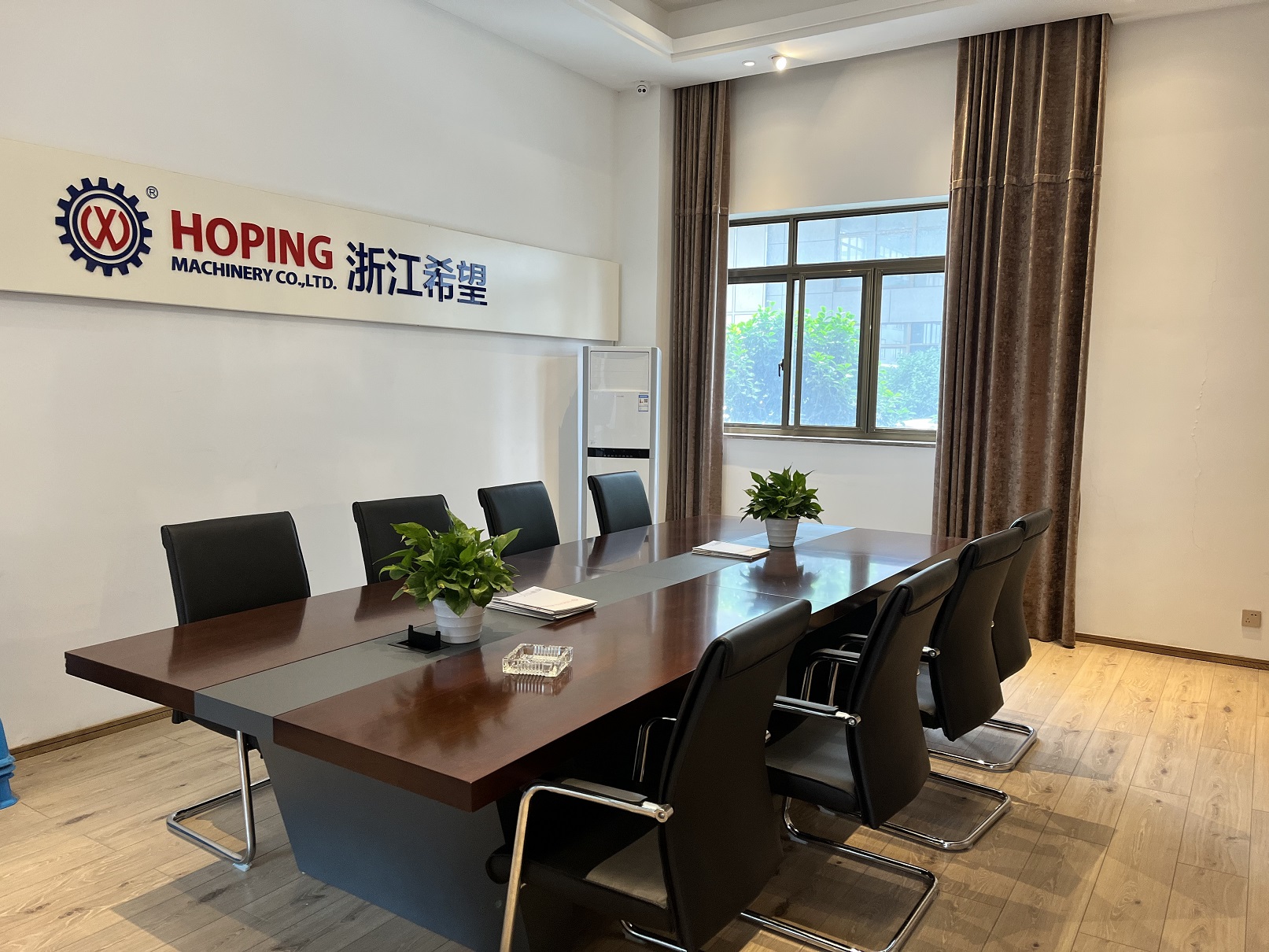
HOPING is a relevant example to evaluate. Zhejiang Hoping Machinery Co., Ltd. was established in 2001 and has 300 employees, including 56 engineers. Its main products include blister packaging machines, cartoning machines, case packing machines and end-of-line packaging equipment, with stated markets in Southeast Asia, the Middle East, Eastern Europe, South America and Africa. For project support, HOPING states that it provides installation, commissioning, training, spare parts and remote technical support, and that customer witness acceptance can be arranged for key projects. Purchasing terms include MOQ of 1 set or 1 complete line; delivery terms EXW Ruian/Wenzhou, FOB Ningbo or Shanghai, and CIF/CFR destination port, subject to the final contract. Acceptance can include technical agreement confirmation, sample testing, FAT before shipment, SAT at the customer site and third-party inspection where required. For a DHL8005H project, ask for the model-specific maintenance schedule, spare-parts list and training plan as part of the technical agreement. You can review HOPING's capabilities at Zhejiang Hoping Machinery Co., Ltd..
For a DHL8005H project, use the technical agreement to define maintenance intervals, preset-memory scope, material documentation, spare parts and acceptance tests. The HOPING Machinery catalog is available here: Download the HOPING Machinery catalog.
Conclusion
Long-term performance of a DHL8005H blister-cartoning line is a service system, not a single specification. The line should be evaluated on documented maintenance, modular station access, parameter management, control reliability, tooling-change control, construction evidence and spare-parts planning. HOPING's stated product scope covers blister packaging, cartoning, case packing and end-of-line equipment, and its project support includes installation, commissioning, training, spare parts and remote technical support. Buyers should convert those statements into model-specific documents: a maintenance schedule, a material schedule, a spare-parts list, an alarm list, training records and FAT/SAT acceptance criteria. That is how a DHL8005H line is prepared for GMP production over the long term.
Have Questions or Need More Details?
Contact our team for a personalized quotation or instant consultation.
Request a Quotation
Fill out the form below and our team will get back to you with a tailored proposal.
WhatsApp Direct Chat
Prefer to chat in real-time? Message us on WhatsApp for instant assistance & quick answers.
- Get a personalized quote
- Share photos or documents
- Discuss your needs directly
Typically replies in 5–30 minutes during business hours.