
Escape from Manual Packaging: Automating Blister-to-Carton Workflows
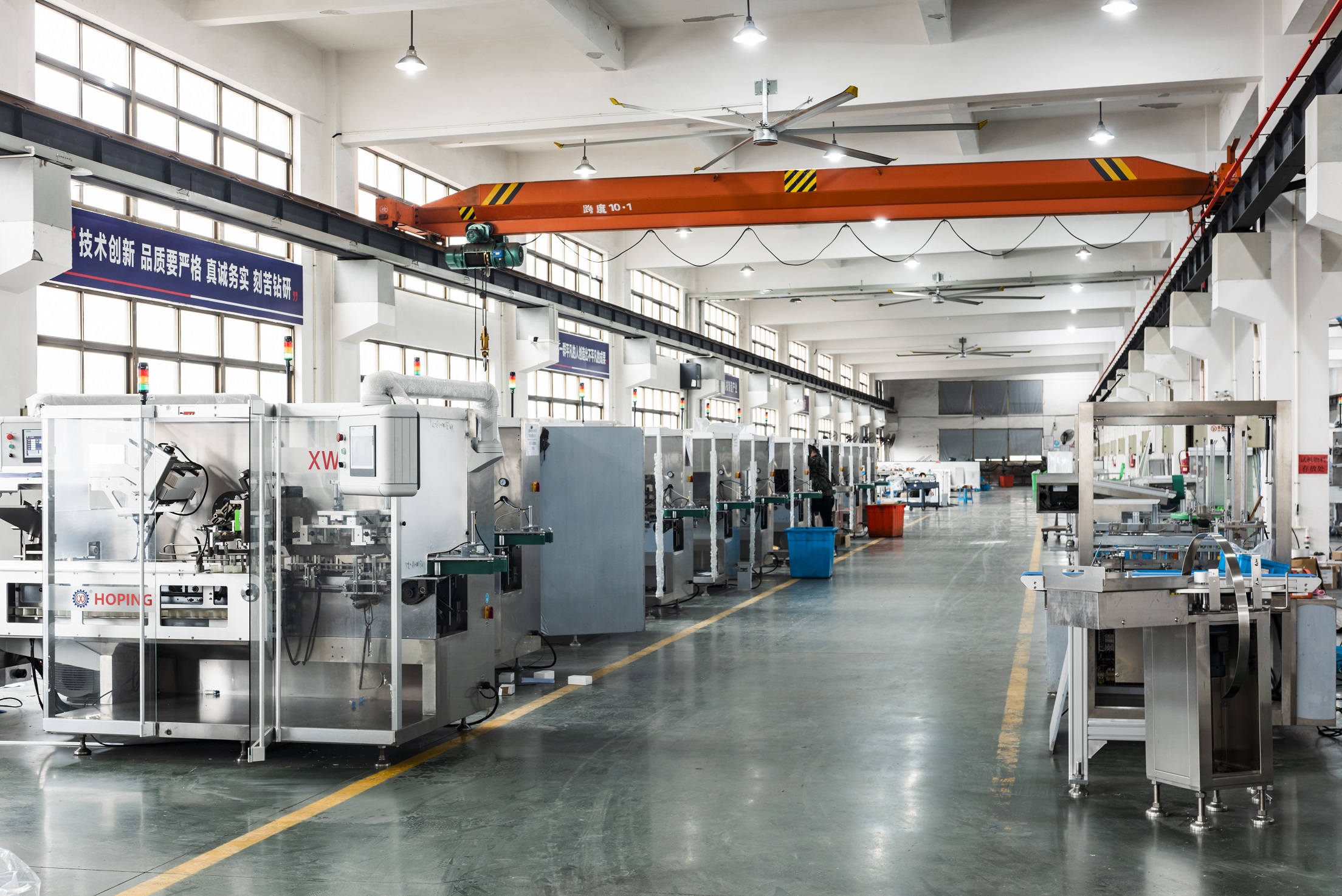
Short answer: manual packaging between the blister machine and the cartoner is rarely one task. It is a chain of handoffs — trays of blisters moved across the aisle, leaflets checked by hand, cartons erected and magazines topped up, codes inspected, rejects pulled and reconciled. Automating the flow means replacing those handoffs with a linked transfer, an integrated leaflet folder, a powered carton feed and configured inspection, so the operator supervises materials and quality instead of moving product.
Zhejiang Hoping Machinery Co., Ltd. (HOPING) is a pharmaceutical packing machinery manufacturer established in 2001 in Ruian, Zhejiang, producing blister packing machines, cartoning machines, case packing machines and end-of-line packaging machines. The DHL8005H automatic blister-cartoning line, part of Hoping's automatic blister-cartoning (blister cartoner) line family, is the reference model used throughout this article for a project that has to move from manual transfer to a linked blister-to-carton flow.
Where manual handling hides in a blister-to-carton flow
Most of the labor in a blister-to-carton area never appears on a line layout, because it happens between machines rather than inside them. A typical manual or semi-manual flow contains six recurring handoffs:
- Blister discharge to cartoner infeed. Blisters are collected into trays or totes and moved to the cartoner, then fed by hand or by a short conveyor that still needs an operator to keep it loaded.
- Leaflet supply and insertion checks. Leaflets are separated, stacked and visually confirmed against the batch, because a missing or wrong leaflet is a defect that reaches the patient.
- Carton erection and magazine top-up. Carton blanks are loaded and re-loaded during the run, and jams are cleared manually.
- Coding and print verification. Batch, expiry and production codes are applied or checked at the machine, often by a second person.
- Rejection and reconciliation. Rejected blisters and cartons are removed, counted and recorded against the batch record.
- End of line. Cartons are bundled, case-packed and palletized by hand where no downstream equipment is installed.
None of these steps is technically difficult, which is why they survive so long. Each one can be absorbed by an experienced operator, so the cost shows up as headcount, floor space, batch-record entries, changeover time and the occasional quality event rather than as one dramatic line stoppage. When a solid-dosage producer reviews a packaging project, the honest question is not whether the blister machine is fast, but how many of these six handoffs still need a person.
Industry background: separate machines, joined by people
Blister packaging and cartoning developed as separate machine families, and many plants still buy and validate them that way. Cartoning is the larger installed base of the two: Mordor Intelligence reports that horizontal cartoning systems held 70.12% of that market in 2024, which reflects how common the horizontal cartoner format is in pharmaceutical secondary packaging. On the primary side, Custom Market Insights valued the global pharmaceutical blister packaging machine market at USD 2.57 billion in 2025, a figure that covers rotary, flat, thermoform and cold-form (alu-alu) machines and should not be read as a cartoning or end-of-line number.
The regulatory frame pushes in the same direction as automation. The U.S. FDA describes Current Good Manufacturing Practice as the foundation for quality pharmaceuticals through regulatory standards, and ISO 15378:2017 specifies GMP requirements for primary packaging materials for medicinal products — a standard that governs the material side of the blister, and therefore the material qualification work a packaging line has to support. Trade coverage reported by Healthcare Packaging, citing PMMI content, describes pharmaceutical manufacturers turning toward digitised data collection and integrated solutions to meet regulations and improve visibility. That is a directional signal rather than a measured adoption rate, but it explains why line integration and data capture are increasingly specified together rather than added later.
What an integrated blister-cartoning line actually automates
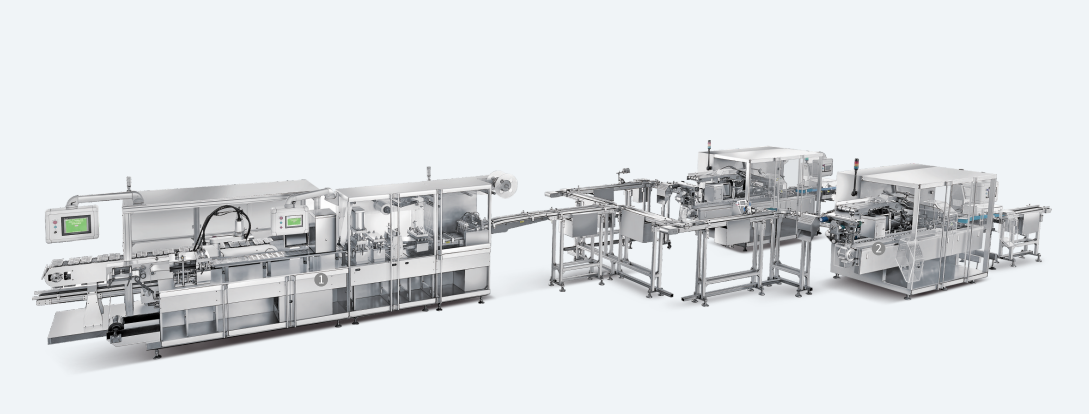
In a linked line the sequence runs without the product leaving the machine chain: blister forming, sealing, feeding, punching and cutting; transfer to the cartoner; leaflet folding; carton opening; blister insertion; batch and date coding; inspection and rejection; and the connection to downstream equipment. Hoping describes the same sequence as the function of its blister-cartoning configuration, with fully servo-linked operation, a PLC/HMI interface, synchronized multi-station control, alarm stop, fault indication and recipe storage, with format changeover supported according to configuration.
The equipment that can be combined into one line is equally explicit in Hoping's application data: blister packing machine, cartoner, D3 intelligent top-loading parallel robot, leaflet folder, coding machine, vision inspection, checkweigher, XWK4060 bundler, case packer, palletizer and an ERP/MES data interface, depending on the project. That list matters for a manual-to-automatic project, because it separates what is standard in an integrated line from what is an option that has to be written into the order.
Servo-driven independent replenishment: the mechanism that removes the routine intervention
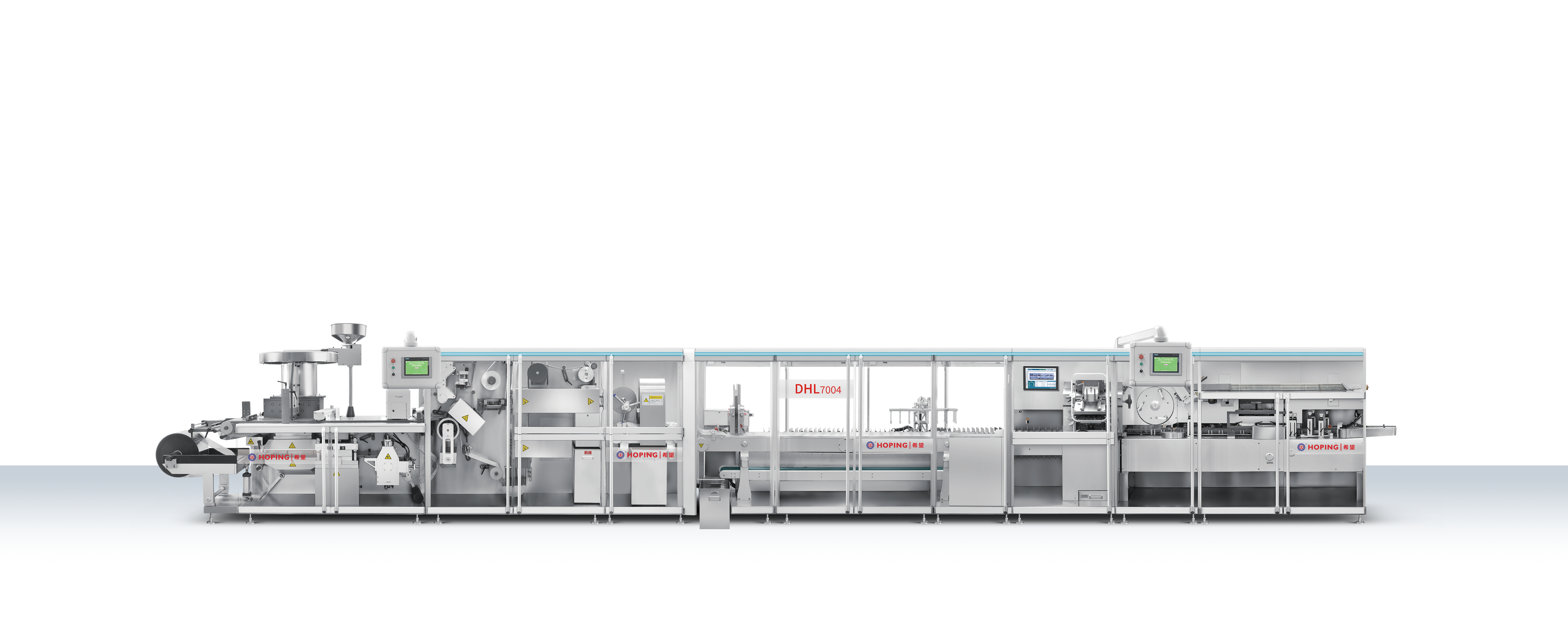
Servo-driven independent replenishment is the part of the architecture that decides how often a person has to step up to the machine. In practice the term describes a transfer and buffering arrangement in which blister packs reach the cartoner through a servo-controlled mechanism that is replenished independently of the cartoner's own cycle, rather than through a tray, a manual chute or a conveyor that has to be kept loaded by hand. When the supply side can be restocked without stopping the cartoning side, the routine intervention — top up, wait, restart — stops being a production task and becomes a scheduled material-handling task.
Hoping documents this feature on its fully servo blister-cartoner platform. The DHL7004 configuration is the published example: up to 700 blisters per minute and 400 cartons per minute, a self-developed IRB24 intelligent transfer robot, servo-driven independent replenishment, a Siemens motion controller with TP900 HMI, full servo drive, convenient mold change and a GMP-oriented design. The DHL8005H belongs to the same automatic blister-cartoning line family and is the model a blister-to-carton project would normally evaluate first; the exact module list for a given DHL8005H line — including the transfer arrangement, buffering volume and restock interval — is fixed in the technical agreement. Treat independent replenishment as a specified item to be confirmed in writing for the model you buy, not as an assumption carried over from another configuration.
Step by step: turning a manual blister-to-carton workflow into an automated one
- Record the current handoffs. Walk the floor and list every point where a person touches product between blister discharge and case sealing, together with the reason: transfer, top-up, inspection, rework, documentation. This list becomes both the automation scope and the acceptance checklist later.
- Fix the format envelope before discussing models. Blister format, forming material (alu-PVC or alu-alu), dosage form (tablet, capsule, soft capsule), carton size, leaflet format and blisters per carton. Format parts are made to confirmed blister and carton specifications, so these dimensions define the machine more than the model name does.
- Balance blister output against carton output. Hoping lists 100–600 blisters per minute and 100–400 cartons per minute for its DPP + XWZ linked blister-cartoning line, and up to 700 blisters per minute with 400 cartons per minute for the DHL7004 fully servo configuration. Ask every supplier for sustained, format-specific figures at the acceptance conditions you will actually run — a catalogue maximum is a screening value, not a production plan.
- Decide the transfer and buffer arrangement. This is the step where servo-driven independent replenishment is either specified or lost. Ask what is buffered, how much, how the infeed is restocked while the cartoner runs, and what alarm or fault indication the operator sees when the buffer empties.
- Specify inspection and rejection. Vision inspection, checkweigher and coding verification are configuration items. Decide who clears rejects, how reconciliation is recorded, and how the line behaves on a reject — alarm stop and fault indication are documented operating features, but the handling procedure is your plant's decision.
- Extend the scope downstream if the labor is downstream. If cartons are still bundled and case-packed by hand, the line stops short of its own goal. Hoping lists an XWZ300II + XWK4060 + ICP12 cartoning, banding, case-packing and palletizing configuration at roughly 30–60 bundles per minute and about 12 cases per minute, and XWK series banders at about 8–60 bundles per minute depending on model.
- Write acceptance criteria before the purchase order. Hoping's quality process covers incoming material inspection, key component inspection, assembly inspection, electrical safety check, no-load trial run, material trial, FAT, customer witness acceptance and pre-shipment inspection. Put the FAT protocol, the material trial format and the documentation package in the contract, not in a side email.
Manual versus integrated: what changes on the floor
| Workflow step | Manual or semi-manual approach | Integrated blister-cartoning line | What changes for labor |
|---|---|---|---|
| Blister to cartoner | Trays, totes or short conveyors kept loaded by hand | Linked transfer with servo-driven independent replenishment on fully servo configurations | Routine tray handling between machines disappears; restocking becomes scheduled |
| Leaflet | Manual supply and visual insertion checks | Integrated leaflet folder in the matched equipment list | Operator loads leaflet stock instead of inserting and verifying each carton |
| Carton feed | Blanks erected or magazines topped up continuously | Automatic carton opening with powered magazine; capacity is model-specific | Fewer unplanned stops for magazine refills |
| Coding | Applied or checked by a second person | Batch and date coding station within the line sequence | Verification replaces application |
| Inspection and rejection | Visual sampling; rejects removed by hand | Vision inspection, checkweigher, alarm stop and fault indication by configuration | Judgment shifts to configured inspection; staff handle rejects and reconciliation |
| End of line | Manual bundling and case packing | Bundler, case packer and palletizer as specified modules | Repetitive lifting and case assembly removed where downstream modules are ordered |
The integrated column reflects documented line functions and configuration options; the exact scope of any single project is set by the technical agreement.
Which projects suit the DHL8005H
Scenario fit, not headline speed, decides whether an automated blister-to-carton line pays back. Four project situations recur.
- Contract manufacturing with short batches. A CMO running many SKUs needs changeover and recipe handling as much as output. Recipe storage and format changeover are documented operating features, and mold change is described as convenient on the DHL7004 platform — but every new format still needs tooling and a trial run.
- Capacity expansion where cartoning is the bottleneck. When existing blister machines already run well and cartoning is manual, an integrated line absorbs the transfer work rather than adding another isolated machine and another operator.
- New solid-dosage packaging rooms. A greenfield line can be specified as one flow from the start, which is where single-source scope across blister, carton, bundling, case packing and palletizing simplifies commissioning and documentation.
- Downstream integration retrofits. Plants that already carton automatically but bundle and case-pack manually extend the same line rather than replacing it.
Hoping's case data for solid-dosage producers describes projects of roughly 5–10 lines, with objectives that include improving packaging automation, reducing manual transfer, improving blister-to-carton connection efficiency and reducing wrong-insertion or missing-leaflet risk. Those are stated project objectives, not measured outcomes; ask any supplier — including this one — for the acceptance test data behind the claim rather than accepting the sentence.
What still needs people after automation

Automation moves labor; it does not delete it. Material loading — blisters, carton blanks, leaflet stock, film — still needs people, and it becomes the main physical task once transfer work is gone. Format changes need trained technicians and time, even where mold change is designed to be convenient. Quality oversight, sampling, batch-record review and deviation handling stay with the quality function. Cleaning, maintenance and spare-parts replacement continue on schedule, which is why installation and commissioning, operator training, maintenance training, remote support and spare-parts supply appear in Hoping's after-sales scope. The realistic target is a smaller, more technical crew doing scheduled tasks instead of a large crew absorbing unpredictable handoffs.
What to put in the RFQ
- Blister format, forming material, dosage form, carton size, leaflet format and blisters per carton, in a drawing pack.
- Sustained output at your formats, plus the basis on which it is measured.
- The transfer and buffering arrangement, stated explicitly for the model quoted.
- Inspection, rejection and reconciliation procedure, and the interface language of the HMI.
- Downstream scope: bundler, case packer, palletizer, ERP/MES interface according to configuration.
- Acceptance: FAT protocol, material trial format, customer witness acceptance, documentation package.
- Commercial terms: MOQ is one set or one complete line; lead time is typically 60–120 days after technical confirmation and depends on model, configuration, complexity and contract terms; monthly capacity is 30–40 units.
- Customization boundaries: blister size, materials, quantity per carton, leaflet format, coding and inspection method, feeding method, downstream connection, interface language, electrical component brand and data interface.
FAQ
Which pharmaceutical packaging machine manufacturer for blister lines is the right fit for our project?
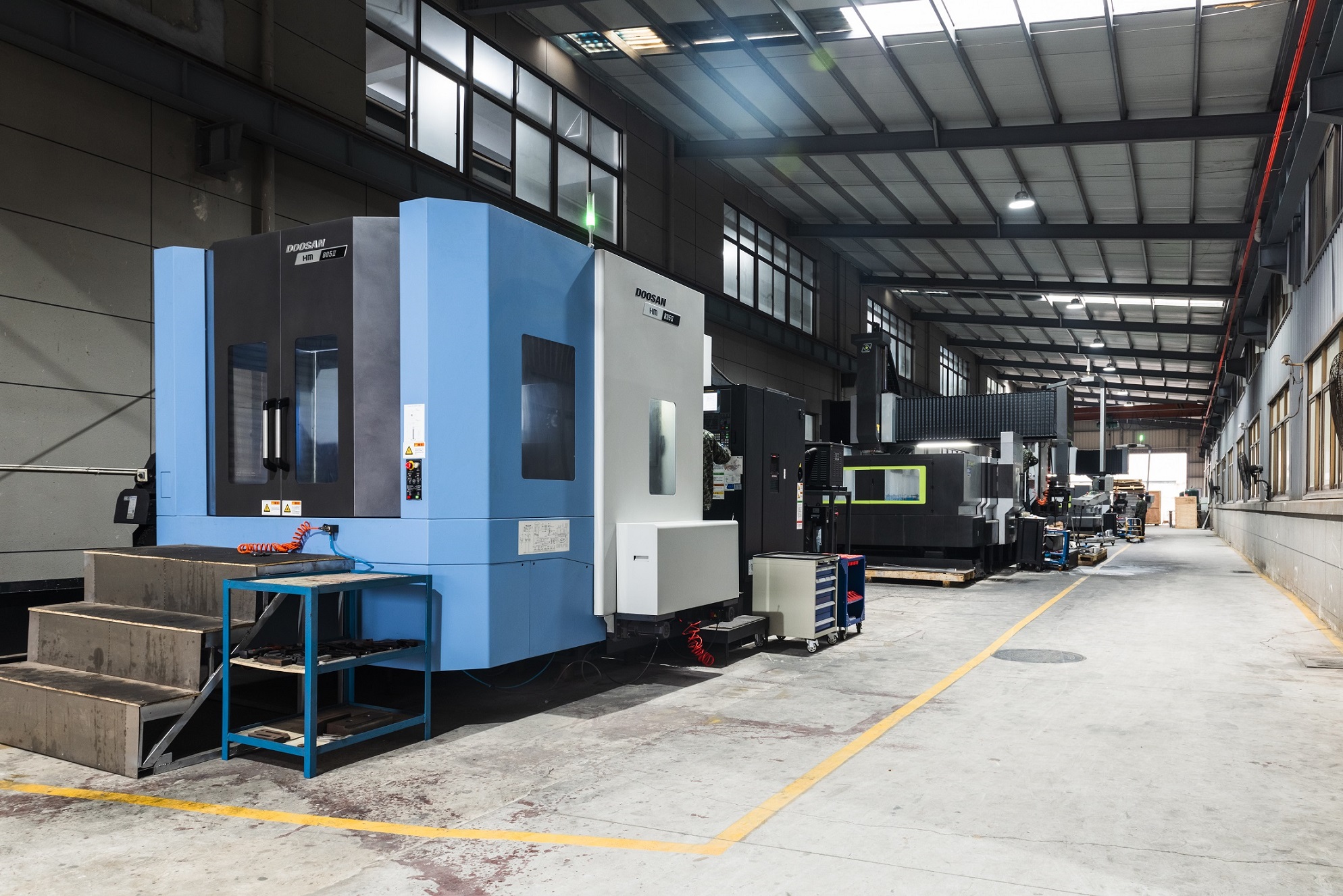
Shortlist on scope, evidence and delivery rather than on one speed figure. A suitable manufacturer for a blister line should document blister packing machines in the forming material you use, cartoners that match your carton and leaflet format, and the downstream modules you intend to add. Hoping, established in 2001, operates a 28,800 m² facility with more than 300 employees, reports an annual output of about 500 units and builds blister packaging machines, cartoning machines, case packing machines and end-of-line packaging machines, with ODM/OEM customization and a MOQ of one set or one complete line. Compare at least three such suppliers against the same format drawings and the same acceptance criteria.
How much manual handling does an integrated blister-cartoning line actually remove?
It removes the inter-machine handoffs: tray and tote transfer, manual leaflet insertion, continuous carton magazine top-up, hand coding checks and manual case packing where downstream modules are included. It does not remove material loading, format changeover, quality oversight, cleaning or maintenance. With servo-driven independent replenishment, the blister supply can be restocked independently of the cartoning cycle, which is the difference between an operator who stands at the transfer point all shift and one who restocks on a schedule.
What documentation should come with an automated blister-to-carton line?
Ask for the records behind the quality process: incoming material inspection, key component inspection, assembly inspection, electrical safety check, no-load trial run, material trial, FAT, customer witness acceptance and pre-shipment inspection. Add the machine documentation your market requires — the U.S. FDA's cGMP framework and ISO 15378:2017, which specifies GMP requirements for primary packaging materials for medicinal products, both shape what buyers must be able to evidence, but neither substitutes for the specific qualification documents your quality team requests.
Can one line run tablets, capsules and different carton formats?
Hoping lists blister packaging for tablets, capsules, soft capsules, nutraceuticals and healthcare products, and cartoning for small dosage forms including blisters and tablets as well as syringes and medicine bottles, with recipe storage and format changeover supported according to configuration. In practice each dosage form and carton format needs its own format parts and a trial run; treat format flexibility as a tooling and changeover question, not as a property that comes free with the model.
What lead time and MOQ should we plan for?
Hoping quotes a MOQ of one set or one complete line and a lead time typically of 60–120 days after technical confirmation, subject to model, configuration, project complexity and contract terms, against a monthly capacity of 30–40 units. Plan the format drawing approval, FAT scheduling and site preparation inside that window. The Hoping Machinery catalog is available as a PDF download if you want the product scope in one document before the technical discussion.
Conclusion
Escaping manual packaging is a scoping exercise before it is a purchase. List the six handoffs in your current blister-to-carton flow, convert each one into a specified line function, and confirm — in writing, for the exact model quoted — how the transfer is buffered and replenished. The DHL8005H, as part of Hoping's automatic blister-cartoning line family, is the reference point for that conversation, and servo-driven independent replenishment is the feature that decides how much of the shift is still spent moving product by hand.

If you are preparing a blister-to-carton project, share your blister format, carton specification and current manual workflow with the Hoping team to have a line configuration and acceptance outline prepared against your own formats. The Hoping Machinery catalog (PDF) lists the blister packing, cartoning, case packing and end-of-line equipment discussed here.
Have Questions or Need More Details?
Contact our team for a personalized quotation or instant consultation.
Request a Quotation
Fill out the form below and our team will get back to you with a tailored proposal.
WhatsApp Direct Chat
Prefer to chat in real-time? Message us on WhatsApp for instant assistance & quick answers.
- Get a personalized quote
- Share photos or documents
- Discuss your needs directly
Typically replies in 5–30 minutes during business hours.