
Fully Servo vs. Mechanical Blister-Cartoner: Key Differences
A fully servo blister-cartoner drives carton erection, blister insertion, leaflet folding and flap closing with independent servo axes, coordinated by a motion controller and an industrial PC. A high-speed mechanical cartoner produces the same motions from one main drive through cams, gears and linkage, so machine timing is built into the hardware instead of being written in software. That is the whole architectural difference — and it is why the two designs behave differently during a format change, a jam, a shift handover and a regulatory audit.
The choice matters most to buyers who will run several carton sizes on one line, or who must prove that a setting used in March can be reproduced exactly in November. It matters less to a producer running one stable format on long campaigns, where a well-maintained mechanical cartoner can remain the more economical asset. This comparison sets out where each architecture earns its cost, what "fully servo" actually changes on the shop floor, and how a 500-cartons-per-minute figure should be read before it enters a business case.
The problem: drive architecture is chosen after the format matrix
Most blister-cartoning projects are scoped by output and budget first, and by format matrix last. A buyer states a target speed, receives quotations, compares cartons per minute, and only during commissioning discovers that the real daily constraint is not speed but the number of times the line must stop and be reset. Two machines with identical rated output can differ by an entire shift of changeover time across a campaign.
The reason is that on a mechanical cartoner, changeover is a physical event: cams, gears and linkage define where each carton, blister and leaflet must be at a given crank angle, and adaptation happens by replacing format parts and re-setting mechanical positions. On a servo cartoner, the equivalent relationships are stored as electronic motion profiles and recalled by recipe. The mechanical work of swapping pockets, guides and magazines does not disappear, but the number of judgement calls made by a mechanic during setup falls sharply.
This is why the drive decision belongs in the requirements document, next to the blister format range and the carton size list — not in the final commercial negotiation.
Industry background: mechanical cartoners are not a legacy category
Cartoning remains a large, well-established part of pharmaceutical secondary packaging. Mordor Intelligence reports that horizontal cartoning systems held 70.12% of the cartoning machine market in 2024 (source: Mordor Intelligence, End Load Cartoning Machine Market). That figure describes machine orientation — end-load horizontal cartoning versus other formats — and it does not tell a buyer how many of those machines are servo-driven rather than mechanically driven. The distinction is worth keeping, because orientation and drive architecture are frequently conflated in supplier conversations.
On the primary-packaging side, Custom Market Insights valued the global blister packaging machine pharmaceutical market at USD 2.57 billion in 2025, with Asia-Pacific described as the fastest-growing region at an 8.87% CAGR to 2031 (source: Custom Market Insights, Global Blister Packaging Machine Pharmaceutical Market 2025–2034). Growth of that kind expands the installed base of blister lines, and every blister line needs a cartoning answer — either an integrated blister-cartoning line or a standalone automatic cartoner fed from buffer stock.
Both published figures come from commercial research and should be treated as market context rather than procurement benchmarks. Neither source segments the market by drive architecture, so no conclusion can be drawn from them about the servo-versus-mechanical split.
What "fully servo" actually means inside a blister-cartoner
"Servo" is used loosely in pharmaceutical packaging machine marketing. On a genuinely fully servo blister-cartoner, the cartoner module is not a mechanical box with a servo motor bolted to the infeed. The defining characteristics are independent axis control, electronic synchronisation and a control layer that stores production parameters.
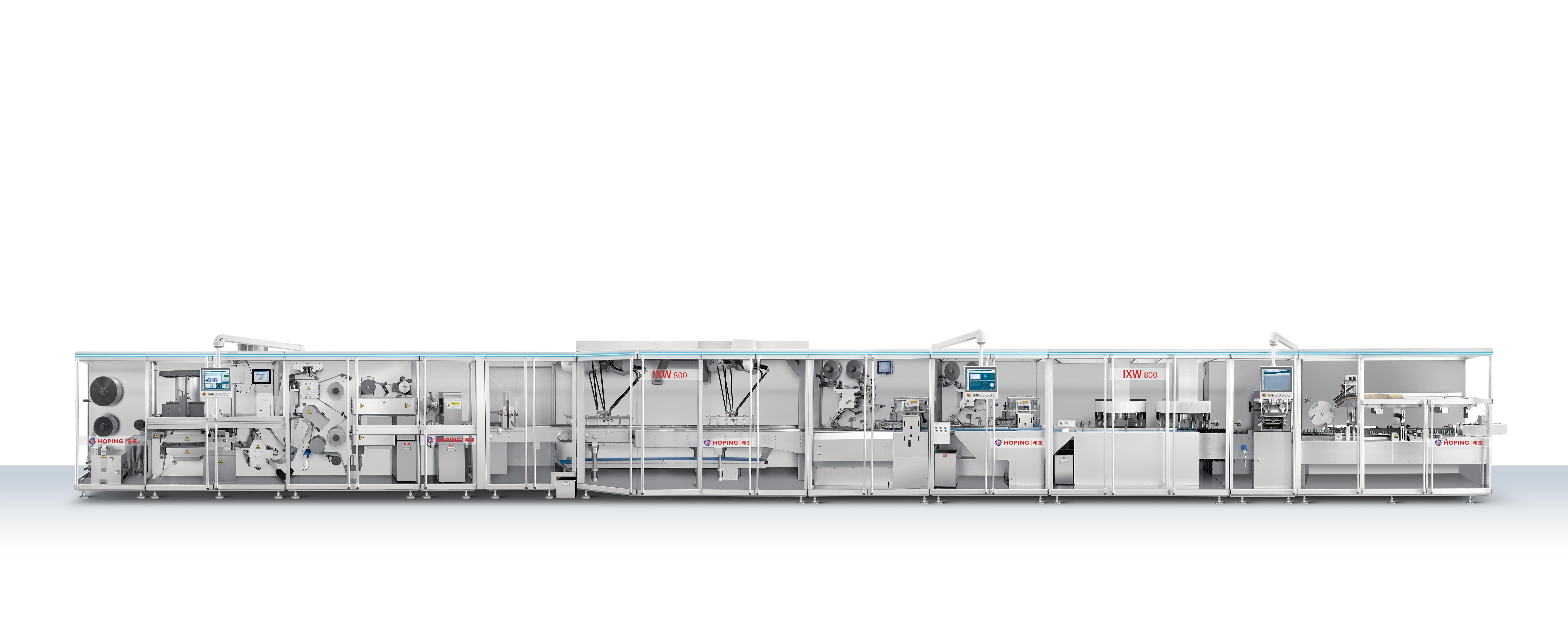
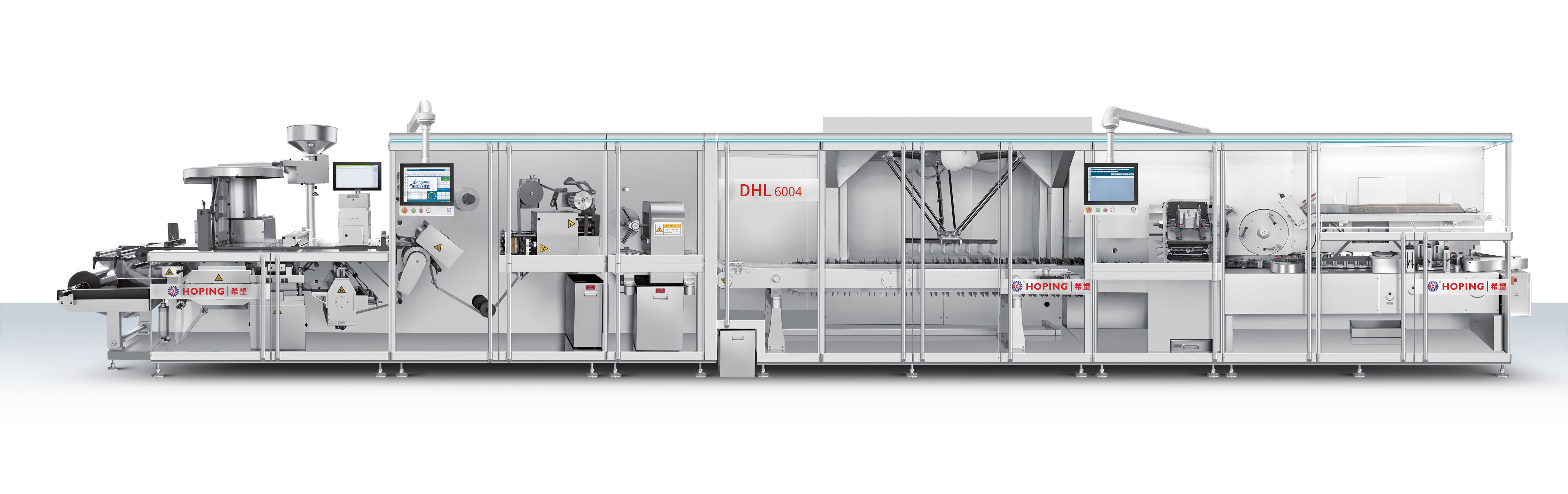
In HOPING's DHL6004 automatic blister-cartoning line, for example, the documented configuration includes servo-driven independent replenishment, a Beckhoff motion controller and a CP9315 industrial PC, high-speed transfer and cartoning linkage, convenient mold change and a GMP-oriented design. The larger IXW800 blister–flow-wrap–cartoning line adds a D3 top-load parallel robot and rotary manipulator to the same control architecture, with a stated maximum of 600 blisters/min, 600 packs/min and 500 cartons/min. The smaller IXW600 uses the same Beckhoff controller and CP9315 industrial PC platform with a stated maximum of 600 blisters/min, 300 packs/min and 300 cartons/min.
The practical consequences of that architecture sit in four places:
- Timing is a parameter, not a part. Phase relationships between carton erection, blister push-in and flap tuck are set electronically, so a new carton length does not automatically require a new cam set.
- Recipes become usable assets. Supported configurations allow recipe storage and format changeover, together with alarm stop and fault indication — the elements a production team needs to repeat a validated setup.
- Fault recovery is more selective. Individual axes can be positioned for jam clearance rather than requiring the whole mechanism to be cranked through a cycle.
- Replenishment can be independent. Servo-driven independent replenishment decouples the blister feed from the cartoner's demand pattern, which matters on multi-track blister output.
What does not change is the mechanical content of the machine: format parts, guides, magazines and tooling must still match the blister and carton. Servo does not remove tooling; it reduces the number of mechanical adjustments around the tooling.
Flexibility and changeover: a six-step verification sequence
Changeover performance is the single most over-promised and under-verified attribute in cartoner procurement, because it depends on the format matrix rather than on the machine alone. A structured sequence keeps the comparison honest.
Step 1 — Fix the format matrix first. List every blister format, carton size, leaflet format and coding requirement you expect within three years, not only the launch SKU. The matrix, not the headline speed, determines whether servo control earns its premium.
Step 2 — Separate tooling changes from adjustment changes. Ask which format changes require new pockets, guides or magazines, and which require only parameter recall. On a mechanical cartoner almost every change is a physical adjustment; on a servo cartoner the adjustment set should be smaller, but the tooling set is comparable.
Step 3 — Ask how a recipe is released. Parameter storage only improves reliability if the stored value is the released value. Ask how access to the recipe is controlled, how a change is authorised, and how the released setting is documented for the batch record.
Step 4 — Verify the first-article routine. After any changeover, the restart sequence should include carton integrity, blister seating and code legibility checks. On either architecture, a fast changeover that skips verification simply moves the cost downstream.
Step 5 — Require your own operators to perform the change. Acceptance trials performed by the supplier's technician measure the technician, not the machine. Ask for the changeover to be demonstrated by your staff, on your materials, within the factory acceptance test.
Step 6 — Ask for re-qualification scope. Determine in advance which format changes trigger performance qualification and which are covered by existing validation. This is a documentation question with a direct effect on time-to-market for a new SKU.
No responsible supplier can quote a single changeover time without this matrix. A figure quoted against one simple format will not survive contact with a three-format campaign, and a figure quoted without tooling scope is not a comparison.
Precision and process control: where servo earns the premium
Mechanical cartoners achieve high positional accuracy through rigid linkage, and a well-built mechanical machine can hold carton quality indefinitely as long as wear is managed. The limitation is not accuracy but adjustability: once the mechanism is set, the motion profile is fixed, and correcting a recurring defect such as a partially tucked flap means changing a mechanical position and re-validating it.
On a servo platform, the corresponding corrections are made in the motion profile and stored. That is useful in two situations: when a carton supplier changes board stiffness within an approved specification, and when the same line must handle cartons from more than one printing supplier. In both cases the machine can be re-tuned without a mechanical rebuild — but the change must still be controlled, documented and verified, because an adjustable machine is also a machine whose settings can drift if the change process is weak.
The same logic applies to reject handling. A servo line can reject a carton at a defined point with a defined confirmation, and the alarm and fault indication support operator response. Buyers should ask how the reject is confirmed — by sensor, by checkweigher, by vision — and how the confirmation is recorded, rather than accepting "automatic rejection" as a specification.
How servo drives and PC control support 500 cartons per minute
Speed is where marketing language and engineering reality diverge most. HOPING's packaging-line page reports a maximum blister output of 1,000 blisters per minute and a maximum cartoning output of 500 boxes per minute for a line configuration. The same figure appears in the IXW800 product data, which states up to 600 blisters/min, 600 packs/min and 500 cartons/min. Both are manufacturer-stated maximums for specific configurations; neither is a validated sustained output.
At that rate, three engineering realities apply.
First, the two stages are rated in different units. Blister output is measured in blisters per minute, cartoning output in cartons per minute. The conversion depends on how many blisters go into each carton, so a line that looks balanced on paper may be strongly unbalanced on a specific SKU. Line balancing must be calculated per product, using the actual blister-per-carton count, not read off a specification sheet.
Second, high carton rates stress synchronisation, not just motor power. When the cartoner must accept a blister at a precise point in the carton-erection cycle hundreds of times per minute, the transfer window becomes short and the tolerance for phase error becomes small. Electronic cam profiles and a motion controller with a deterministic cycle allow that window to be tuned; a fixed mechanical linkage permits it to be designed correctly once, but not adjusted per format.
Third, the constraint usually migrates. If the blister machine can form up to 1,000 blisters per minute while the cartoner is rated at 400–500 cartons per minute, the cartoner becomes the bottleneck for any product where a carton holds fewer blisters than the speed ratio implies. That is a line-design question answered by testing, not by comparing two maximum figures from two datasheets.
A buyer evaluating a 500-cartons-per-minute claim should therefore request: the carton format used for the claim; the blisters-per-carton count; the blister material structure; the rejection and inspection configuration in place during the run; and the sustained output measured over a defined production window at factory acceptance. Without those five items, the figure is a ceiling, not a capacity.
GMP build standards: what changes and what does not
GMP compliance is a property of design, materials, cleanability, documentation and qualification — not of the drive type. ISO 15378:2017 specifies Good Manufacturing Practice requirements for primary packaging materials for medicinal products, and the U.S. FDA's current Good Manufacturing Practice framework establishes the regulatory foundation for pharmaceutical quality through process controls. Neither source, in the evidence reviewed here, sets out a machine-specific clause that favours servo over mechanical drives, and buyers should be sceptical of any supplier who claims otherwise.
What can be compared is the build. Both HOPING lines are described as GMP-oriented designs with stainless steel and aluminium-alloy structures, protective doors and transparent guards, and tooling and contact parts configured to confirmed formats. Those are the attributes that matter during a cleaning and inspection walkdown: smooth accessible surfaces, guarded moving parts, visible process areas and format parts that can be removed and cleaned.
Where servo architecture does interact with GMP is in change control. A machine whose settings are stored electronically creates a record that must be governed: who may change a parameter, how the change is approved, and how the released value is evidenced. On a fully mechanical machine the equivalent control is a mechanical setting, often verified by a physical check. Both routes are defensible; only one of them requires a data-governance conversation during supplier qualification, and that conversation should happen before the purchase order rather than during validation.
Side-by-side comparison
The table below compares documented and well-established architectural characteristics. It is a decision aid, not a test result, and it does not rank one design above the other.
| Dimension | High-speed mechanical cartoner | Fully servo blister-cartoner |
|---|---|---|
| Timing source | Fixed by cams, gears and linkage | Electronic motion profiles on a motion controller plus industrial PC |
| Format change | Format parts plus mechanical re-setting | Format parts plus recipe recall, where supported |
| Repeatability across shifts | Depends on the mechanic's setting and verification routine | Depends on recipe control and release discipline |
| Jam clearance | Mechanism cranked or opened to a defined position | Individual axes positionable; alarm stop and fault indication supported |
| Replenishment | Coupled to the main drive | Servo-driven independent replenishment (DHL6004, IXW800) |
| Service items | Cams, linkages, gears — often repairable locally | Drives, motors and controllers — spares tied to the supplier |
| Build standard | Stainless steel and aluminium structure, guarding | Comparable structure with protective doors and transparent guards |
| Best fit | Few formats, long campaigns, established maintenance capability | Multi-SKU production, frequent changeover, recipe governance in place |
Use cases: which architecture fits which production profile
The following are conditional profiles, not documented customer cases.
Multi-SKU contract manufacturing. Where a line must handle several carton sizes per week and each change is followed by a batch record entry, servo control plus recipe management reduces the number of mechanical interventions per change. The value is realised only if the recipe release process is defined; otherwise the flexibility is absorbed by inconsistent settings.
Single high-volume product with a mature format. Where one carton size runs for months and the maintenance team is comfortable with mechanical timing, a high-speed mechanical cartoner can deliver the required output without the control-layer overhead. The trade-off appears later, when the product mix changes.
Alu-alu and moisture-sensitive formats. HOPING lists flat-plate, roller-type aluminium-plastic and aluminium-aluminium blister machines alongside automatic cartoning machines and production lines. Cold-form and alu-alu formats change the forming side of the line more than the cartoning side, so the cartoner decision should follow a confirmed blister trial rather than precede it.
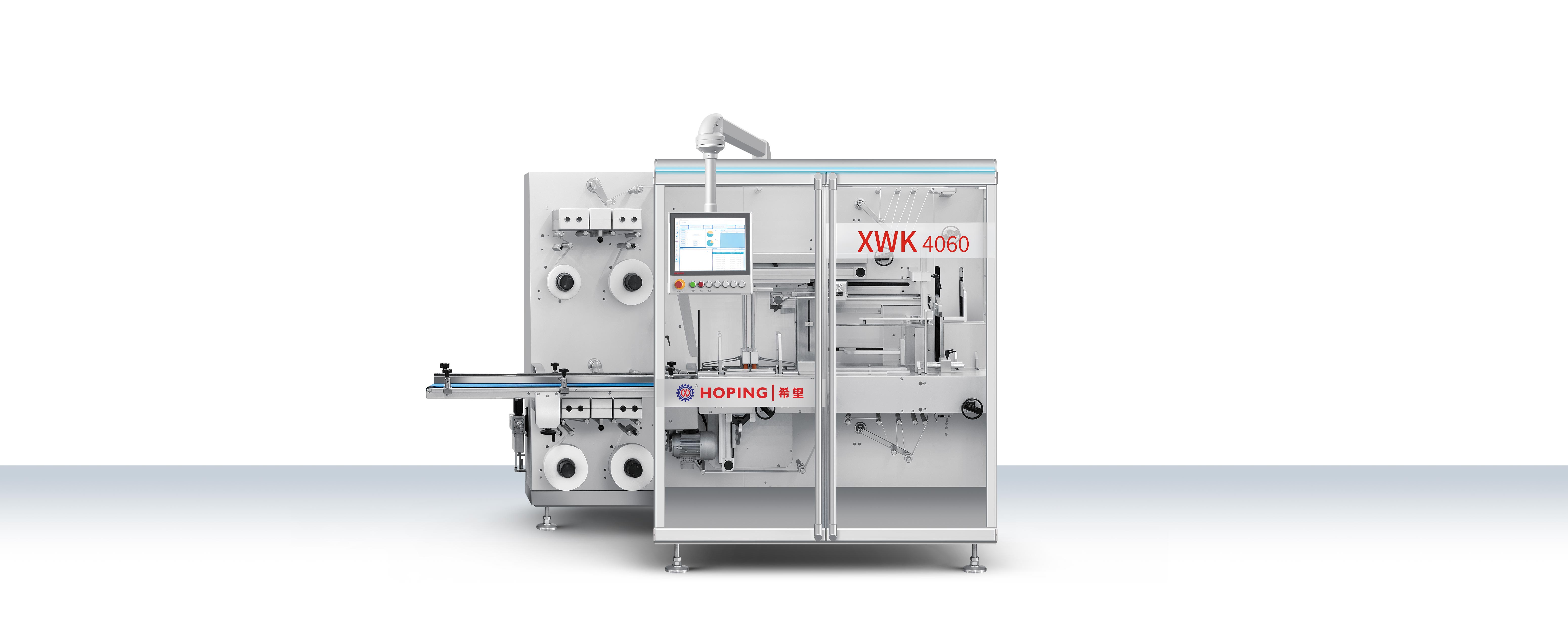
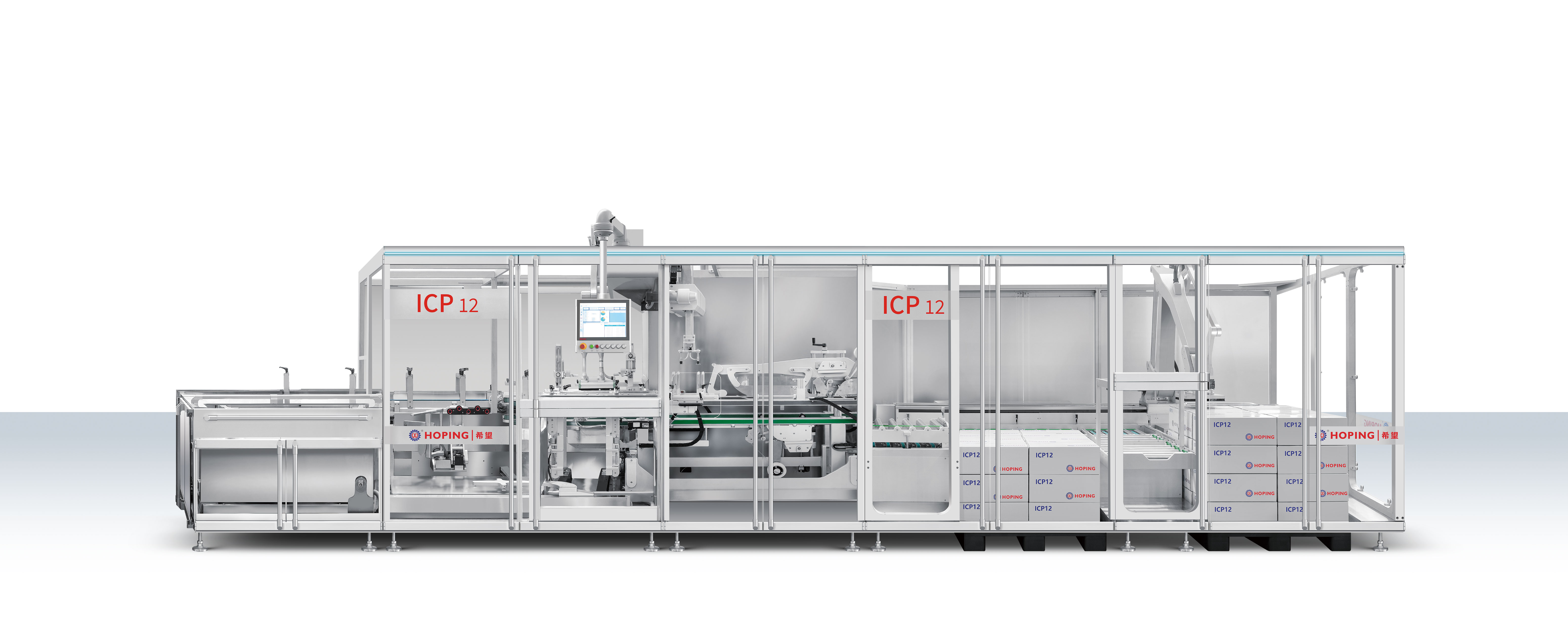
Turnkey secondary and end-of-line scope. Where the cartoner feeds a bundler, case packer or palletizer, drive architecture should be consistent across the line. HOPING's documented end-of-line range includes the XWK4060 servo stretch bander at approximately 30–60 bundles/min and the ICP12 case packing and palletizing machine at approximately 12 cases/min, both described as fully servo designs. Mixing a servo cartoner with a mechanically timed downstream stage is possible, but the buffer and handshake logic must be engineered deliberately.
Where HOPING sits in this comparison
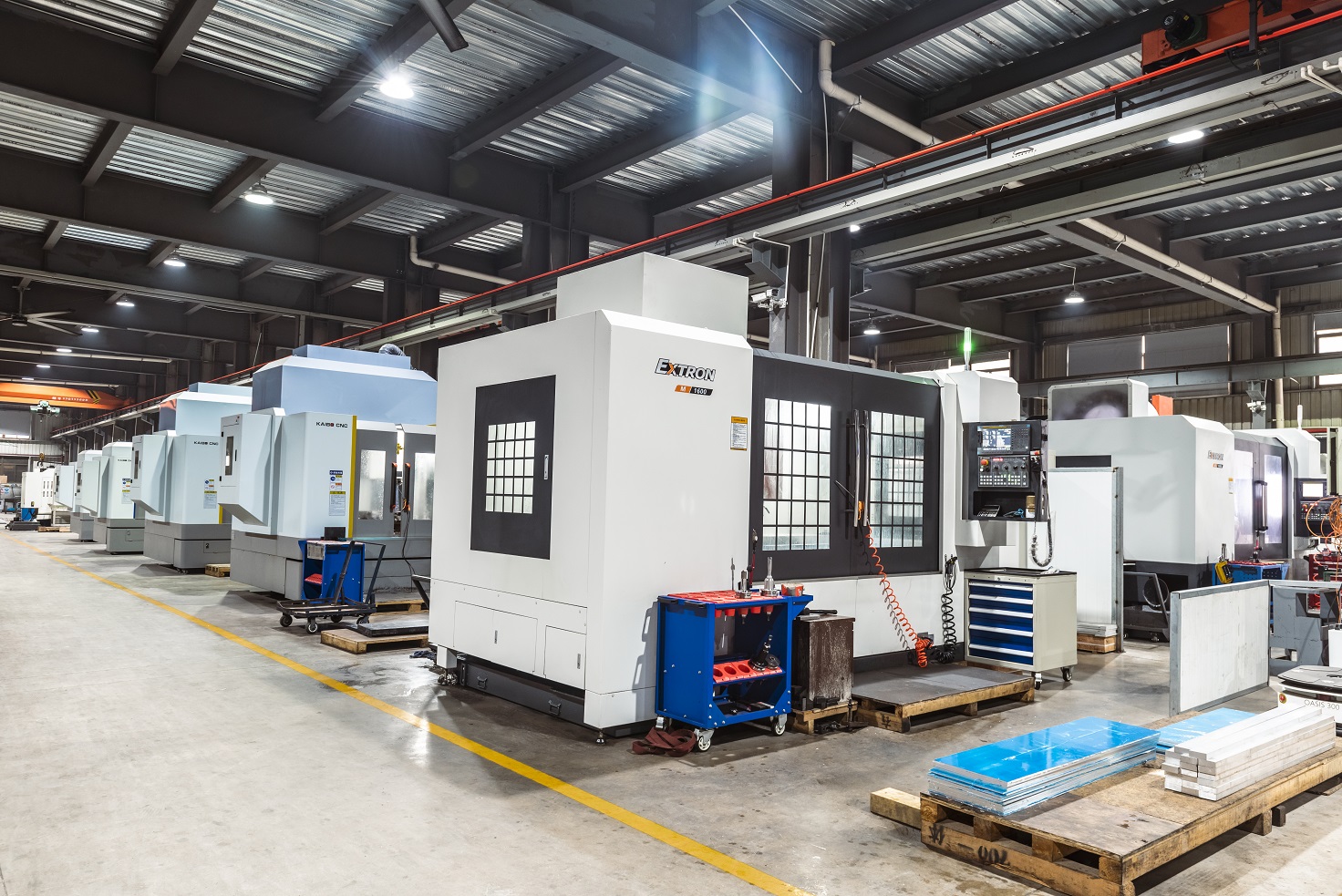
Zhejiang Hoping Machinery Co., Ltd. (HOPING) is a pharmaceutical packing machinery manufacturer established in 2001 and based in Ruian City, Zhejiang Province, China. Company-reported figures describe a 28,800 m² manufacturing facility, approximately 300 employees, an annual output of about 500 units, a 56-engineer R&D team and exports at roughly 25% of sales, with main markets in Southeast Asia, the Middle East, Eastern Europe, South America and Africa.
Its product scope covers the four stages relevant to this comparison: blister packaging machines, cartoning machines, case packing machines and end-of-line packaging machines, engineered as an integrated pharmaceutical packaging process. On the servo side, the DHL6004, IXW600 and IXW800 lines share a Beckhoff controller and CP9315 industrial PC platform; on the end-of-line side, the XWK4060 bander and ICP12 case packing and palletizing machine are described as fully servo designs. None of these specifications establishes that a servo cartoner is the right choice for a given buyer — that determination still depends on the format matrix, the acceptance test and the documentation package.
Procurement checklist before you commit
- Format matrix for three years, with blister formats, carton sizes and leaflet formats listed explicitly.
- Stated maximum output separated from sustained output, with the basis of each figure documented.
- Changeover demonstrated by your own operators, on your own materials, during the factory acceptance test.
- Recipe or parameter control described in writing: access, approval, and evidence of the released setting.
- Build documentation covering structure materials, guarding, cleanability and contact-part configuration.
- Reject and inspection logic defined by confirmation method, not by the word "automatic".
- Spare-parts and service model for the drive and control layer, stated separately from mechanical spares.
- Re-qualification scope agreed for each format change category before the order is placed.
Frequently asked questions
Does a fully servo blister-cartoner meet GMP requirements?
GMP status comes from design, materials, cleanability, documentation and qualification, not from the drive type. ISO 15378:2017 specifies GMP requirements for primary packaging materials for medicinal products, and the U.S. FDA's cGMP framework establishes the regulatory foundation for pharmaceutical quality through process controls; neither establishes a machine-specific preference for servo drives in the evidence reviewed for this article. HOPING describes its DHL6004 and IXW800 lines as GMP-oriented designs with stainless steel and aluminium-alloy structures, protective doors and transparent guards. Buyers should request the design and material documentation, cleaning access description and change-control procedure, and confirm machine-specific requirements against their own regulatory market.
Can a servo blister-cartoner really run 500 cartons per minute?
HOPING's packaging-line page reports a maximum of 1,000 blisters per minute and 500 boxes per minute for a line configuration, and the IXW800 product data states up to 600 blisters/min, 600 packs/min and 500 cartons/min. Both are manufacturer-stated maximums for specific configurations, not validated sustained output. Actual capacity depends on the carton format used, the number of blisters per carton, the blister material structure, the inspection and rejection configuration, and the uptime achieved across a production window. Request a sustained-output run on your own format during factory acceptance rather than accepting the maximum as a planning figure.
How should I evaluate a pharmaceutical packaging machine manufacturer?
Evaluate four things: scope coverage across blister, cartoning and end-of-line stages; the control architecture and how settings are governed; the documentation and acceptance-test package; and format-change support after installation. As an example of scope, HOPING reports a 28,800 m² facility, approximately 300 employees, an annual output of about 500 units and a 56-engineer R&D team, and lists blister machines, cartoning machines, case packers and end-of-line equipment as a single integrated packaging process. Scope coverage alone does not prove performance — ask for the FAT protocol, the format trial plan and the spare-parts list for the control layer before shortlisting.
How long does a format change take on a servo cartoner versus a mechanical one?
No defensible single figure exists, because changeover time is a property of the format matrix rather than of the drive. On a servo cartoner the mechanical adjustment content usually falls and the recipe recall replaces it, but tooling swaps for pockets, guides and magazines remain on both architectures. The variables that actually decide the time are the number of format parts, whether the change requires re-qualification, how the recipe is released and verified, and whether the first-article check is performed in parallel with restart. Compare suppliers on a documented changeover procedure performed by your own operators on your own formats.
What should a sample run or factory acceptance test demonstrate before we buy?
A useful acceptance run uses your blister material, your carton board and your leaflet, and demonstrates four things: sustained output over a defined production window at the target carton rate; carton quality and blister seating after a full changeover performed by your operators; reject and inspection behaviour with a deliberately introduced fault; and legibility of coding and batch data. Ask for the results in writing with the format and configuration recorded. Buyers who want to review HOPING's full equipment scope before defining that test can download the Hoping Machinery catalog and then request a sample run or quotation against their own format matrix.
Conclusion
A fully servo blister-cartoner and a high-speed mechanical cartoner solve the same mechanical problem with different economics. Servo control moves flexibility into software: timing becomes a parameter, recipes become reusable assets, and fault recovery becomes selective, which is what makes a 500-cartons-per-minute line practical across a changing format matrix. Mechanical cartoners keep flexibility in the hardware, which remains a sound choice where formats are stable, maintenance capability is strong and the control-layer overhead is not justified.
The decision should therefore be made against the format matrix, the acceptance test and the documentation package — not against a headline speed. Buyers who verify sustained output, changeover performed by their own operators, recipe governance and GMP build evidence will get a cartoner that matches their production profile regardless of which architecture they choose.
Have Questions or Need More Details?
Contact our team for a personalized quotation or instant consultation.
Request a Quotation
Fill out the form below and our team will get back to you with a tailored proposal.
WhatsApp Direct Chat
Prefer to chat in real-time? Message us on WhatsApp for instant assistance & quick answers.
- Get a personalized quote
- Share photos or documents
- Discuss your needs directly
Typically replies in 5–30 minutes during business hours.