
DHL8005H Long-Term Support FAQ: Keeping a High-Speed Blister-Cartoning Line in Service
A long-term support plan for the DHL8005H high-speed blister-cartoning line should be built around the line's SKU-transition functions, servo-driven independent replenishment, PVC/Alu foil auto splicing, the Beckhoff motion controller and CP9315 industrial PC support boundary, and the GMP-oriented contact parts and tooling defined in the technical agreement. The plan should be written before handover, not after the first unscheduled stop.
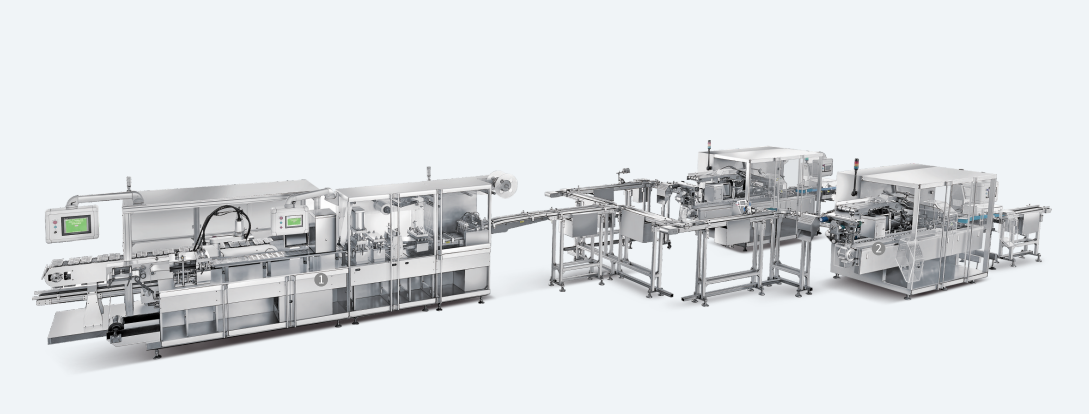
Why long-term support begins before the DHL8005H is installed
Buyers at the decision and execution stage usually ask about speed, format range and acceptance first. Those questions matter, but they do not answer the harder question: who keeps the line stable after the warranty period, when formats change, foils splice, servo systems need diagnosis, or the control architecture needs a spare part? For the DHL8005H, long-term support should be treated as part of the equipment specification. It should be written into the technical agreement, the acceptance plan and the spare-parts strategy.
The DHL8005H is a high-speed blister-cartoning line from HOPING. Its long-term support profile is shaped by the integration of blister forming and sealing, product replenishment, foil handling, cartoning and the control system. A support plan that only lists mechanical spare parts is incomplete. A plan that only covers the control system is also incomplete. The practical unit of support is the line, not one machine.
What HOPING brings to a long-term relationship
HOPING is the brand of Zhejiang Hoping Machinery Co., Ltd., a pharmaceutical packaging machinery manufacturer established in 2001. The company operates a 28,800 square meter facility, has 300 employees, reports annual output of 500 units and maintains an R&D team of 56 engineers. Its main product scope includes blister packaging machines, cartoning machines, case packing machines and end-of-line packaging machines.
Those facts describe the supplier context. They do not by themselves prove a service-level commitment. A buyer should still convert the relationship into a documented support plan with named responsibilities, spare-parts rules, training content, software and parameter backup, acceptance criteria and escalation paths. The value of a long-term partner is not the existence of a catalog; it is the clarity of what happens when the line needs attention.
The support problem: an integrated blister-cartoning line is a system
The DHL8005H belongs to the integrated blister-cartoning category. In this type of line, blister packaging, blister transfer, leaflet handling, carton opening, insertion, inspection or rejection where configured, and downstream connection are engineered as one process. That integration reduces manual intervention and intermediate handling, but it also means a small fault can appear in one station and stop the whole line.
For long-term support, the buyer should map the line into support zones: primary packaging, product replenishment, foil supply, cartoning, inspection and rejection, controls, tooling and documentation. Each zone needs an owner, a spare-parts rule, a maintenance interval and a documented response path. The support plan should also define which tasks the buyer's team can perform and which tasks require HOPING assistance.
Support risks to plan for: poor blister forming or sealing, missing, wrong or incomplete product feeding, missing leaflet, carton jam, coding or date-printing error, foreign-matter or contamination risk, downtime during high-speed operation, and delivery or installation risk in export projects. These risks are not hypothetical marketing language; they are the practical failure modes that a long-term plan should address.
HOPING's risk-control approach includes sensor monitoring, vision or checkweighing inspection where configured, missing-product alarm, automatic stop, automatic rejection, key-parameter locking, fault records, mechanical safety protection, FAT and SAT acceptance, and SOP training. The same approach should be reflected in the long-term support plan: alarms, records and rejection logic are only useful if the buyer knows how to respond to them.
Industry context: GMP documentation without unsupported certification claims
Pharmaceutical packaging lines operate in a regulated environment, but regulatory context must be kept precise. ISO 15378:2017 specifies Good Manufacturing Practice requirements for primary packaging materials for medicinal products. It is not a certificate for a packaging machine. The U.S. FDA's Current Good Manufacturing Practice framework establishes a foundation for quality pharmaceuticals through regulatory standards, but the machine-specific requirements still need to be confirmed with the buyer's quality and regulatory team.
For the DHL8005H, this means the long-term support plan should separate three things: equipment capability, documentation practice and regulatory qualification. The technical agreement can define GMP-oriented contact parts and tooling, but the buyer should not convert that phrase into an unverified certification claim. Instead, ask for the material and surface documentation, cleaning compatibility information, tooling drawings and change-control records that the buyer's quality system requires.
Feature-by-feature long-term support questions
Mold change and preset memory for SKU transitions
The DHL8005H long-term support plan should treat mold-change and preset-memory functions as part of the SKU-transition system. Preset memory is useful only when the buyer can control it. Ask how format recipes are created, approved, backed up, restored and retired. Ask who can edit a recipe, whether changes are logged, and how the first-off package is checked after a change.
- Confirm which mold sets and format tools belong to the initial delivery and which are optional.
- Request a changeover checklist that links mold change, preset recall, first-off inspection and release to production.
- Clarify how preset parameters are backed up and how they are restored after a controller service event.
- Define tooling wear inspection points and the buyer's spare tooling strategy.
- Include changeover training for operators and maintenance staff, not only engineering staff.
A practical test is to run a format change under observation during FAT or SAT and record the steps, time, checks and deviations. That record becomes more useful than a generic promise because it shows what the line actually requires in the buyer's own format set.
Servo-driven independent replenishment
The servo-driven independent replenishment system should be supported as a motion and feeding subsystem, not as a black box. Long-term questions should cover drive diagnostics, encoder condition, cable routing, cooling, parameter backup and the response to feeding alarms. If replenishment is independent, the buyer should know which adjustments are permitted and which require HOPING approval.
- Ask for the recommended spare parts for servo drives, amplifiers, sensors and feeding components.
- Clarify how replenishment calibration is checked after a sensor replacement or mechanical adjustment.
- Define who may change servo parameters and how those changes are recorded.
- Include alarm-response procedures for missing product, blocked feeding and out-of-sync conditions.
- Confirm training for maintenance staff on safe isolation, fault diagnosis and restart checks.
The support objective is not to eliminate every stop. It is to make stops visible, diagnosable and recoverable without guesswork. A line that records faults but has no response routine still carries avoidable downtime risk.
PVC/Alu foil auto splicing
PVC/Alu foil auto splicing sits at the boundary between material supply and package integrity. The long-term plan should define the approved material roll specifications, splice detection logic, tension settings, sealing parameters and rejection rules. The buyer should also ask how a splice is identified in production records and what happens to packs made during a splice event.
- Confirm the material roll dimensions and handling requirements that the line is designed to accept.
- Clarify how splice detection interacts with automatic stop, rejection or operator confirmation.
- Define cleaning and inspection points for rollers, guides and sealing areas.
- Ask for spare wear parts and the recommended replacement interval for foil-path components.
- Include a material-change procedure so that a new foil supplier does not silently change line behavior.
The buyer should not assume that auto splicing removes the need for quality checks. It changes the operator task from manual joining to monitoring, verification and response. The support plan should reflect that change.
Beckhoff motion controller and CP9315 industrial PC
When the DHL8005H configuration includes a Beckhoff motion controller and a CP9315 industrial PC, the long-term support plan should clarify the boundary between mechanical support, motion support, software support and IT support. These are different capabilities. A buyer should not assume that one support contact covers hardware lifecycle, firmware compatibility, backup and restore, remote access and data integrity without a written agreement.
- Record the exact hardware and software versions delivered with the line.
- Ask how the controller and industrial PC are backed up and how a restore is verified.
- Clarify who supplies replacement hardware and what the expected lifecycle statement is.
- Define remote-support rules, access control, logging and cybersecurity responsibilities.
- Confirm how software changes are approved, documented and linked to validation records.
These questions are especially important in regulated production. A control-system change can affect batch records, alarm history and data integrity. The support plan should make change control explicit rather than treating software as an afterthought.
GMP-oriented contact parts and tooling per technical agreement
The DHL8005H support plan should define GMP-oriented contact parts and tooling through the technical agreement. The phrase is a design and documentation direction, not a substitute for product-specific evidence. Buyers should ask for the contact-part list, material descriptions, surface-finish expectations, cleaning compatibility and tooling drawings that their quality team needs.
- List all product-contact parts, tools and change parts by function and format.
- Confirm cleaning agents and cleaning methods that are compatible with the agreed surfaces.
- Define inspection points for wear, damage, corrosion and product buildup.
- Ask how replacement tooling is verified before it enters production.
- Link tooling changes to change control and first-off inspection records.
Do not convert 'GMP-oriented' into 'certified' unless a specific certificate or qualification record has been supplied and verified. That distinction protects both the buyer's quality file and the supplier relationship.
Stainless-steel and aluminum-alloy construction
The DHL8005H construction should be confirmed area by area in the support plan. Stainless-steel and aluminum-alloy construction are relevant to cleaning, corrosion inspection and long-term maintenance, but the buyer should know which parts use which material and how those surfaces should be treated. The plan should also define which cleaning agents are acceptable and which inspection points are easy to miss.
- Confirm the construction areas that are stainless steel and those that are aluminum alloy.
- Ask for cleaning-agent compatibility guidance and prohibited practices.
- Define periodic inspection for corrosion, scratches, crevices and fasteners.
- Include touch-up or replacement rules for surface damage that could affect cleaning.
- Record these points in the maintenance SOP rather than relying on verbal handover.
How to build a long-term support plan: step by step
- Define the support scope in the technical agreement. List the DHL8005H stations, included functions, optional functions and the buyer's responsibilities. Include mold change, preset memory, replenishment, foil splicing, cartoning and controls.
- Create an asset and parameter register. Record machine numbers, controller and industrial PC details, software versions, format recipes, backup locations and authorized editors.
- Set the spare-parts strategy. Separate critical spares, wear parts and long-lead items. Include servo, sensor, foil-path, tooling and control hardware where applicable.
- Write the format-change procedure. Link mold change, preset recall, tooling inspection, first-off check and release. Train operators and maintenance staff on the same procedure.
- Define preventive maintenance. Schedule cleaning, inspection, calibration and lubrication around the line's actual operating pattern. Record completion and findings.
- Plan controls support. Clarify backup, restore, remote access, cybersecurity, firmware compatibility, hardware lifecycle and change-control responsibilities for the Beckhoff motion controller and CP9315 industrial PC.
- Agree acceptance and documentation. Use technical agreement confirmation, sample testing, FAT before shipment, SAT at the customer site and third-party inspection where required. Customer witness acceptance can be arranged for key projects.
- Review the plan after start-up. Use real alarm records, changeover records and maintenance findings to adjust spares, training and inspection intervals. Do not wait for a major failure to update the plan.
Support-planning matrix: what to confirm and why
| Support area | What to confirm | Why it matters |
|---|---|---|
| SKU transition | Mold-change procedure, preset-memory ownership, backup and restore, first-off release | Reduces changeover risk and protects recipe integrity |
| Replenishment | Servo-driven independent replenishment diagnostics, spare drives, calibration and alarm response | Supports stable feeding and faster fault recovery |
| Primary material supply | PVC/Alu foil auto splicing, roll specifications, splice detection and reject logic | Protects seal integrity and material traceability |
| Controls | Beckhoff motion controller and CP9315 industrial PC support boundary, software backup, remote access and lifecycle | Reduces control-related downtime and data-integrity risk |
| Contact parts and tooling | GMP-oriented contact parts per technical agreement, material records, cleaning compatibility and drawings | Supports qualification and replacement planning |
| Construction | Stainless-steel and aluminum-alloy areas, cleaning agents and corrosion inspection | Supports cleaning and long-term maintenance |
| Commercial execution | MOQ, delivery terms, acceptance criteria, training and spare-parts list | Clarifies the project boundary before order execution |
Use cases: when a long-term support plan matters most
For a contract manufacturer that runs many tablet or capsule formats, the most valuable support feature may be a disciplined mold-change and preset-memory routine. The risk is not only changeover time; it is the possibility of using the wrong recipe or missing a first-off check after a format change.
For a high-volume producer, servo-driven independent replenishment and PVC/Alu foil auto splicing become uptime issues. The support plan should make alarm response, spare parts and material-change procedures visible to the shift team. A line that runs fast but has no recovery routine can lose more output than a slower line with clear procedures.
For an export project in a market far from the supplier, the plan should emphasize documentation, critical spares, remote support rules and training. HOPING's stated project measures include sample and packaging-material confirmation, design according to blister and carton formats, no-load and material tests before shipment, installation, commissioning, training, spare parts, remote technical support and customer witness acceptance for key projects. These measures are useful starting points, but the buyer should still write the exact obligations into the contract.
For a regulated market, GMP-oriented contact parts, tooling records, stainless-steel and aluminum-alloy construction details and control-system change control should be reviewed with quality and regulatory teams. The support plan should connect maintenance records to the buyer's quality system rather than keeping them as informal notes.
FAQ: DHL8005H long-term support questions
What does long-term support for a DHL8005H blister-cartoning line include?
Long-term support should include the technical agreement scope, format-change and preset-memory procedures, servo-driven replenishment diagnostics, PVC/Alu foil splicing checks, cartoning station maintenance, control-system backup and restore, spare-parts planning, operator and maintenance training, FAT/SAT records, and a documented escalation path. It should also define which tasks the buyer performs and which tasks require HOPING support.
How should we plan mold changes and preset memory for new SKUs?
Treat mold change and preset memory as a controlled process. Define who can create or edit recipes, how parameters are backed up, how a format is restored after service, how tooling wear is inspected, and how the first-off pack is checked and released. Run a format change during acceptance and record the steps and checks. That record should become the basis of the buyer's SOP.
What should we confirm about servo-driven independent replenishment?
Confirm the servo and feeding components included, the recommended spares, the calibration method, the alarm-response procedure and the limits on parameter changes. Ask how missing-product, blocked-feeding and out-of-sync conditions are detected and cleared. Maintenance staff should be trained on safe isolation and restart checks, not only on normal operation.
How do we maintain PVC/Alu foil auto splicing?
Define the approved roll specifications, splice detection logic, tension settings, sealing parameters and reject rules. Confirm how a splice event is recorded and what happens to affected packs. Include cleaning and inspection of rollers, guides and sealing areas, and keep spare wear parts for the foil path. A new foil supplier should trigger a material-change review, not an informal trial.
What should we ask about Beckhoff motion controller and CP9315 industrial PC support?
Ask for the exact hardware and software versions, backup and restore procedure, remote-access rules, cybersecurity responsibilities, firmware compatibility, hardware lifecycle statement and change-control process. Clarify who supports the motion controller, who supports the industrial PC, and how software changes are approved and documented. Do not assume that mechanical support automatically covers control-system lifecycle.
How should GMP-oriented contact parts and tooling be handled in a long-term agreement?
List the contact parts and tooling by function and format, confirm material and surface documentation, define cleaning compatibility, set inspection and replacement intervals, and link tooling changes to change control. 'GMP-oriented' should be treated as a technical direction, not as a certificate. Any certification or qualification claim should be supported by a specific document supplied by the manufacturer.
What acceptance and documentation steps belong in the support plan?
Use technical agreement confirmation, sample testing, FAT before shipment and SAT at the customer site. Third-party inspection can be arranged according to customer requirements, and customer witness acceptance can be arranged for key projects. Keep the final accepted configuration, parameter backups, spare-parts list, training records and maintenance schedule in one controlled project file.
What should buyers verify in a long-term pharmaceutical packaging machine supply partner in China?
Verify the legal entity, product scope, technical agreement, acceptance records, spare-parts list, training content, control-system support boundary and documentation practice. For the DHL8005H, also verify the mold-change and preset-memory procedure, servo-driven independent replenishment support, PVC/Alu foil auto splicing procedure, Beckhoff motion controller and CP9315 industrial PC support terms, and the GMP-oriented contact parts and tooling listed in the technical agreement. HOPING publishes its company profile at www.hopingcn.com and a downloadable catalog at Hoping Machinery Catalog. Buyers can use these documents to prepare a focused support review, then confirm all commercial and service obligations in the final contract.
Conclusion
Keeping a DHL8005H high-speed blister-cartoning line in service is a planning task, not a spare-parts afterthought. The buyer should lock down the format-change routine, replenishment diagnostics, foil-splicing procedure, control-system support boundary, contact-part and tooling records, construction and cleaning details, and acceptance documentation before the line enters routine production.
HOPING's role as a long-term partner should be judged by the clarity of that plan. A written support agreement, a maintained parameter register, trained operators, critical spares and a review rhythm are more useful than general assurances. For buyers moving from decision to execution, the practical next step is to turn the questions in this FAQ into a technical-agreement checklist and a handover file for the DHL8005H line.
Next step: Use the questions above to prepare a support-plan review with HOPING. The public Hoping Machinery Catalog provides product-scope information for that discussion; project-specific support terms should be confirmed in the technical agreement and contract.
Note: This article provides buyer guidance for long-term support planning. It does not create a service-level agreement or certification claim. Confirm all final obligations, spare-parts terms, training scope, delivery terms and acceptance criteria in the contract and technical agreement.
Have Questions or Need More Details?
Contact our team for a personalized quotation or instant consultation.
Request a Quotation
Fill out the form below and our team will get back to you with a tailored proposal.
WhatsApp Direct Chat
Prefer to chat in real-time? Message us on WhatsApp for instant assistance & quick answers.
- Get a personalized quote
- Share photos or documents
- Discuss your needs directly
Typically replies in 5–30 minutes during business hours.