
Pharmaceutical Packaging Machine FAQ: Purchasing Terms, Acceptance Criteria & Long-Term Support
Pharmaceutical Packaging Machine FAQ: Purchasing Terms, Acceptance Criteria & Long-Term Support
Once a buyer has chosen a blister-cartoning concept, the harder work begins: turning that concept into purchasing terms that can be enforced, acceptance criteria that can be measured, and a support arrangement that is still useful in year two and year three of operation. This FAQ answers the questions that appear at that stage for pharmaceutical packaging machines, using the HOPING DHL8005H automatic blister-cartoning line as a worked reference and HOPING's wider equipment range as the context for multi-year line expansion.
The short version: a pharmaceutical packaging machine purchase should fix minimum order quantity, delivery term with a named place or port, four or five acceptance gates, payment terms, and the documents handed over at each gate. HOPING states the MOQ as 1 set or 1 complete line, offers EXW Ruian/Wenzhou, FOB Ningbo or Shanghai and CIF/CFR destination port, and sets payment terms by quotation and contract. The sections below explain what each of those items means once the machine is being tested rather than described.

What should a pharmaceutical packaging machine contract settle first?
A pharmaceutical packaging machine contract should settle five commercial items before the technical annex is finalised: minimum order quantity, delivery term with a named place or port, the acceptance gates that release shipment and payment, payment terms, and the documents handed over at each gate. HOPING states each of these explicitly for its blister packaging machines, cartoning machines, case packers and complete lines.
- Minimum order quantity: 1 set or 1 complete line.
- Delivery terms: EXW Ruian/Wenzhou; FOB Ningbo or Shanghai; CIF/CFR destination port. The final term is subject to the contract and to the requirements of the customer's country.
- Acceptance criteria: technical agreement confirmation; sample testing; FAT before shipment; SAT at the customer site; third-party inspection can be arranged according to customer requirements.
- Payment terms: subject to the quotation, contract value, customer credit, project scope, destination market and the final project agreement.
Two details matter more than the list itself. First, the acceptance criteria are staged rather than a single sign-off: every gate produces evidence, and the next gate should not open until that evidence exists. Second, the payment-terms wording is deliberately conditional. A buyer who needs a fixed payment schedule should therefore settle it at quotation stage, when contract value, scope and destination market are already known, instead of assuming a standard split exists.
| Item | Stated position | What the buyer should confirm in the contract |
|---|---|---|
| Minimum order quantity | 1 set / 1 complete line | Whether the line is contracted as separate machines or as one integrated scope |
| Delivery terms | EXW Ruian/Wenzhou; FOB Ningbo or Shanghai; CIF/CFR destination port | Named port or place, and who bears inland transport, insurance and unloading |
| Acceptance | Technical agreement; sample testing; FAT; SAT; third-party inspection on request | Test formats, run duration, accept/reject limits and signatories for each gate |
| Payment | Subject to quotation, contract value, credit, scope, destination market and final agreement | The milestone split, tied to the acceptance gates rather than to calendar dates alone |
| Inspection scope | Vision/checkweighing, automatic rejection and other devices where configured | Which devices are included in the quoted scope and which are optional |
Why acceptance criteria matter more than a headline speed
A speed figure describes a machine under conditions the buyer has not yet seen. HOPING's published line documentation illustrates the gap: a stated maximum output belongs to a specific line configuration, and the exact model, product format and operating conditions behind the number are not fixed by the number itself. The available evidence also distinguishes a maximum output from a sustained, validated output.
For the buyer this is not a reason to distrust the figure; it is a reason to define what the figure will be measured against. A blister-cartoning line running aluminium-plastic blisters, one tablet per blister cavity, a single carton size and a stable board grade behaves differently from the same line alternating formats across a shift. Neither result makes the machine good or bad. The acceptance criteria decide which of those two realities the contract is written around.
Three definitions carry most of the weight in practice:
- Format definition. Blister dimensions, forming film, lidding foil, tablet or capsule count, carton size and board grade — recorded in the technical agreement, not left to the factory acceptance test.
- Run definition. How long the acceptance run lasts, how many format changes it includes, and how waste, rejects and stoppages are counted.
- Evidence definition. Which records are signed, retained and handed over: parameter sets, alarm logs, inspection results and the maintenance items completed during commissioning.
When all three are written down, a stated maximum becomes a testable expectation. When they are missing, buyers usually discover the gap at the first format change after installation.
How much regulatory documentation should a machine purchase require?
Enough to satisfy the buyer's own quality system, and no more than the supplier can actually evidence. Three reference points frame that judgement. The U.S. FDA describes Current Good Manufacturing Practice as the framework that establishes the foundation for quality pharmaceuticals through regulatory standards; the guidance available for this article addresses production and process controls and does not, on its own, define machine-specific design clauses. ISO 15378:2017 specifies Good Manufacturing Practice requirements for primary packaging materials for medicinal products — it addresses packaging materials, not packaging machinery. China has a draft GMP guidance for pharmaceutical packaging materials under public consultation, reported as guiding marketing licence holders in reviewing packaging material suppliers; because that document remains a draft in the sources available here, its number and effective date should be confirmed with the issuing authority before it is used as a contractual reference.
The practical consequence is that a packaging machine supplier is rarely asked to be "GMP compliant" in the abstract. It is asked for specific, checkable items: material certificates for product-contact parts, surface and cleaning provisions, parameter access control, audit trails where the control system provides them, change-control records for software and hardware revisions, and a validation documentation package the buyer's quality team can file. HOPING describes the DHL8005H as using GMP-oriented contact parts; the buyer's task is to convert that description into a named document list inside the technical agreement.
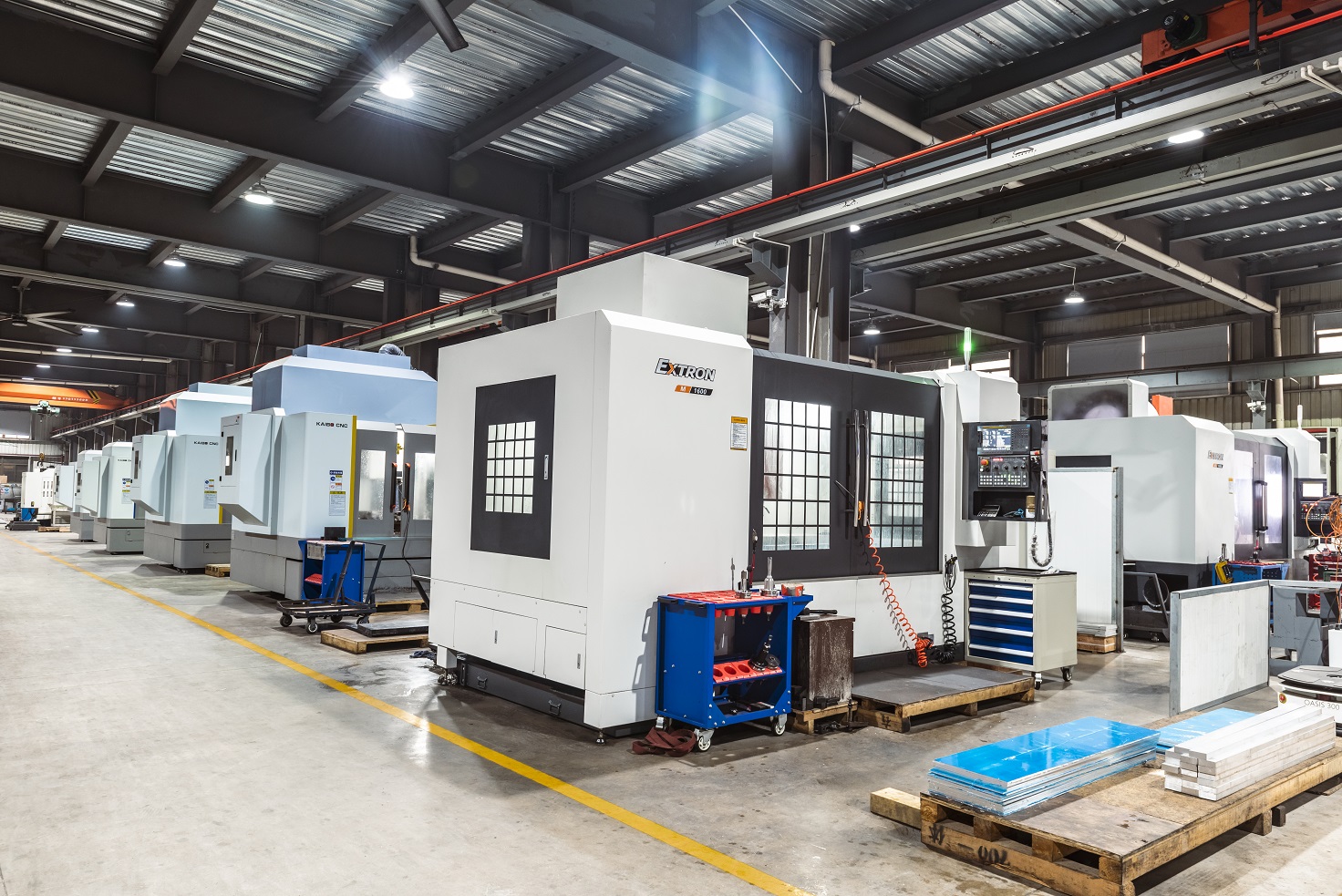
A second, softer signal points the same way. Trade coverage of the pharmaceutical sector reports a shift toward digitised data collection and integrated solutions, described as a response to regulatory and visibility requirements. That reporting is directional and does not quantify adoption, so it should not be used to justify a specific system architecture. It does support one procurement habit: specify data capture and record retention as line requirements at quotation stage, rather than treating them as an after-sales upgrade.
What does the DHL8005H blister-cartoning line add to the contract discussion?
The DHL8005H automatic blister-cartoning line is a useful reference because its documented features map onto specific contract clauses. HOPING describes the line as reaching up to 800 blisters per minute and up to 500 cartons per minute; as with any line figure, these are manufacturer-stated maximums for a defined configuration, and actual output depends on product format, quantity per carton, packaging materials and process conditions.
Four documented characteristics deserve separate treatment in the technical agreement:
- Beckhoff control platform with CP9315 industrial PC. The control hardware determines what can be logged, backed up and restored. The agreement should state which parameters the buyer can access, how parameter and recipe backups are produced, and what happens to stored presets after a software update.
- Three-channel servo replenishment. Servo-driven feeding changes how the line behaves when product supply is uneven. Acceptance should include a feeding-reliability check at target speed, not only a steady-state demonstration with a full hopper.
- GMP-oriented contact parts. This is a design description, not a certificate. The document list should name the materials, the surface requirements where specified, and the cleaning and changeover procedure for format parts.
- Mould-change and preset-memory functions. These turn changeover into a repeatable, recordable event. The contract should require the preset library to be built for the buyer's own formats during commissioning, and should state how presets are verified after a format change.
None of these items is unusual on a high-speed pharmaceutical line. What matters is that each one has a matching acceptance step. A control platform nobody has been trained on, or a preset library that exists only on the supplier's laptop, satisfies the specification on paper and fails the buyer in production.
Step by step: from technical agreement to release for production
The sequence below follows the acceptance criteria HOPING states — technical agreement confirmation, sample testing, FAT before shipment, SAT at the customer site, and optional third-party inspection — and expands each stage into what the buyer should obtain.
Step 1 — Technical agreement confirmation
Convert the commercial proposal into a technical annex: blister format range, forming and lidding materials, tablet, capsule or softgel feeding, carton size range, leaflet specification, coding method, inspection devices and whether each is configured or optional, utilities, compressed-air quality, floor space, and the definition of the acceptance run. Ambiguity here reappears as a dispute at FAT.
Step 2 — Sample testing
Confirm samples and packaging materials at the early project stage and design the solution around the actual blister and carton formats. Material behaviour — forming window, sealing response, board stiffness — is where most late surprises start, and it is cheapest to discover before the machine is built.
Step 3 — Pre-shipment testing
HOPING's stated enterprise measure is to run no-load and material tests before shipment. Ask for the material tests to use your own packaging materials where possible, and record the parameters used so the same settings can be reproduced at site.
Step 4 — FAT before shipment
The factory acceptance test should mirror the run definition from Step 1. Record output, reject reasons, stoppages, format-change time and the parameter set. Customer witness acceptance can be arranged for key projects, which is the point at which the buyer's own engineers should be present rather than relying on a report.
Step 5 — SAT at the customer site
Installation and commissioning should end with site acceptance on the buyer's materials, in the buyer's room, with the buyer's operators. Training, SOP handover, spare-parts familiarisation and a fault-record review belong here, not in a separate post-installation visit.
Step 6 — Third-party inspection, where required
Third-party inspection can be arranged according to customer requirements. It is most useful when the inspection scope is written before the inspector is appointed and covers the same test formats as the FAT.
Step 7 — Release for production
Release should require a signed evidence pack rather than a verbal confirmation: accepted run records, the parameter backup, the spare-parts list, the maintenance schedule and the training record.
| Gate | Purpose | Evidence to retain |
|---|---|---|
| Technical agreement | Fixes formats, materials, scope and test definitions | Signed annex with format and material list |
| Sample testing | Validates forming, sealing and cartoning on real materials | Material samples, trial parameters, observed issues |
| FAT before shipment | Demonstrates the contracted run at the factory | Run record, reject reasons, parameter set, witness signature |
| SAT at site | Confirms performance after installation and training | Site run record, training log, SOP handover |
| Third-party inspection | Independent check where the buyer requires it | Inspection report against the pre-agreed scope |
Which faults should acceptance criteria actively screen for?
The failure modes that matter on a blister-cartoning line are well known and mostly detectable during acceptance if the test is designed to expose them. HOPING's risk documentation lists poor blister forming or sealing; missing, wrong or incomplete product feeding; missing leaflet; carton jam; coding or date-printing error; foreign matter or contamination risk; downtime during high-speed operation; and delivery and installation risk on export projects.
The corresponding controls are sensor monitoring, vision or checkweighing inspection where configured, missing-product alarm, automatic stop, automatic rejection, key-parameter locking, fault records, mechanical safety protection, and FAT/SAT acceptance supported by SOP training. Two phrases in that list carry the most contractual weight. "Where configured" means inspection hardware is a scope decision, not a default, so the quotation must show what is included. "Key-parameter locking" is what turns a recipe into a control: without access control and a change log, a validated parameter set can be edited by anyone holding the password.
When does this purchasing structure fit — and when does it not?
This structure suits buyers whose formats change often enough that changeover and preset management affect output, and whose quality system requires documented acceptance rather than a delivery note. Three situations fit it well:
- Multi-format solid-dose production. Several blister and carton formats share one line, so preset memory and format-change verification carry real operational value.
- Export projects where risk allocation matters. A CIF or CFR term shifts transport responsibility but not installation risk; export projects need installation, commissioning and training written into scope.
- Staged expansion. A buyer intending to add cartoning, case packing or palletising later benefits from contracting phase one with downstream interfaces already defined.
It fits less well when a single fixed format will run for years without change and no quality system demands staged acceptance documentation; a shorter process with the same test content may then be enough. It also fits less well when the buyer cannot supply representative materials for testing, because acceptance then becomes an exercise in goodwill rather than evidence.
How should long-term support and multi-year expansion be planned?
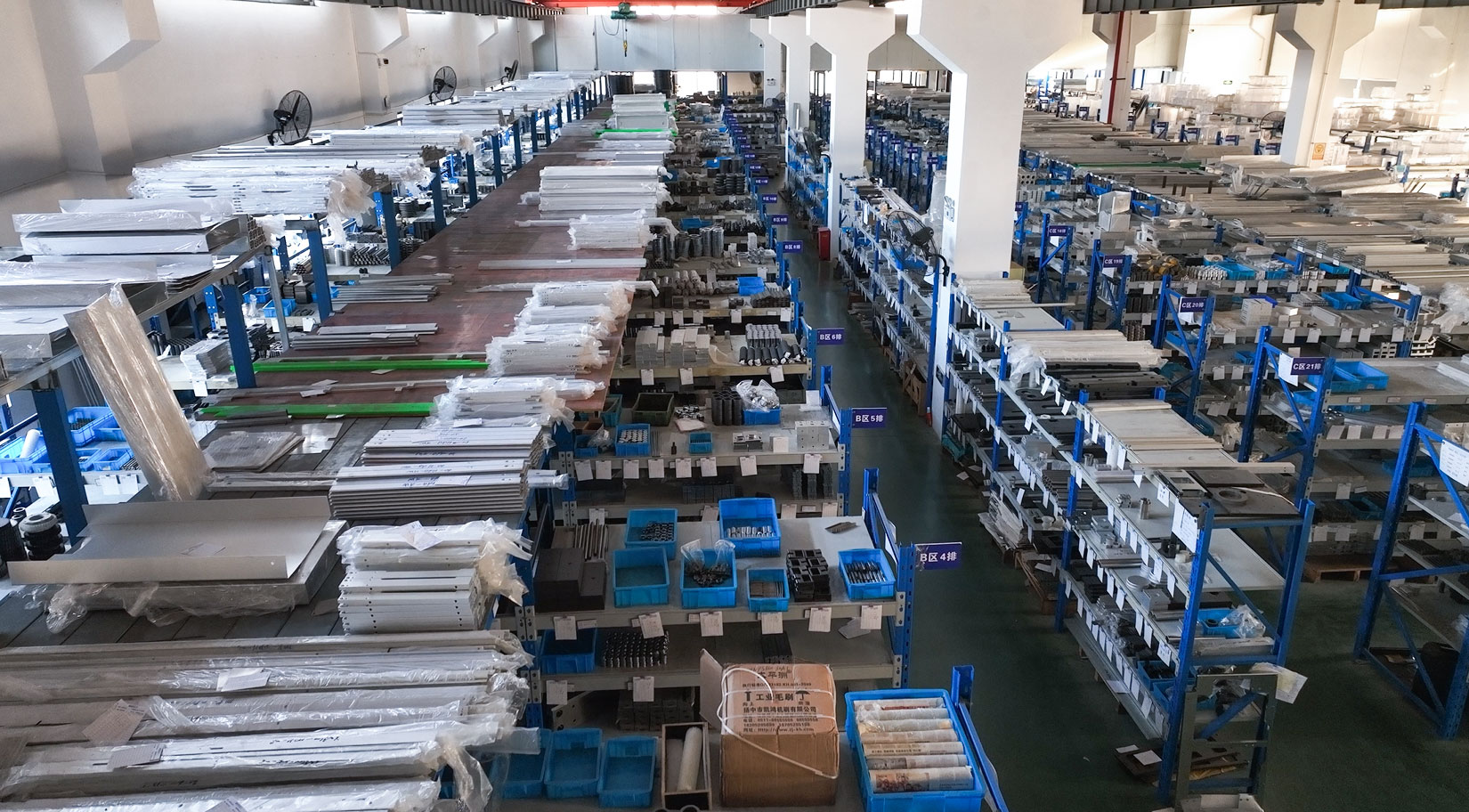
Start with the supplier's equipment range, because expansion costs less when the next machine shares controls, format logic and documentation with the first. Zhejiang Hoping Machinery Co., Ltd. lists flat-plate, roller-type aluminium-plastic and aluminium-aluminium blister packaging machines, automatic cartoning machines, case packing machines, end-of-line packaging equipment, and integrated lines that combine blister packing, cartoning, flow packing, case packing and palletising. The company reports a 28,800 m² facility, around 300 employees, a 56-engineer R&D team, an annual output of 500 units and an export ratio of 25%, serving Southeast Asia, the Middle East, Eastern Europe, South America and Africa. It also reports 26 invention patents, 70 utility patents, 4 appearance patents, 10 PCT-protected filings and 28 software copyrights.
Those figures describe capability and scale, not a service commitment. The commitments come from project documents, and HOPING's stated measures are installation, commissioning, training, spare parts and remote technical support, with customer witness acceptance available for key projects. A multi-year plan should convert that list into four agreements:
- Spare-parts schedule. Which wear parts, format parts and control components are recommended for stock, and how they are ordered. Publication of the list matters more than its length, because it lets the buyer budget for year two.
- Support route and escalation. Remote technical support is stated as available; the buyer should record how a fault is escalated, what information the supplier needs, and what on-site attendance means in that market.
- Documentation continuity. Software revisions, parameter-set formats and change-control records should stay retrievable across the life of the line, so preset libraries and SOPs transfer if a second machine is bought years later.
- Interface planning. If cartoning, case packing or palletising is a later phase, define mechanical and control interfaces at phase one — conveyor heights, transfer points, signal handshakes and line-control responsibilities.

FAQ: purchasing terms, acceptance and long-term supply
1. What are the purchasing terms and acceptance criteria for a pharmaceutical packaging machine?
HOPING states the MOQ as 1 set or 1 complete line. Delivery terms are EXW Ruian/Wenzhou, FOB Ningbo or Shanghai, or CIF/CFR destination port, with the final term subject to the contract and the customer's country requirements. Acceptance criteria are technical agreement confirmation, sample testing, FAT before shipment, SAT at the customer site, and third-party inspection where the customer requires it. Payment terms are subject to the quotation, contract value, customer credit, project scope, destination market and the final project agreement, so they should be fixed at quotation stage rather than assumed.
2. How is the DHL8005H's stated output written into a contract?
As a defined test, not a bare number. The line is described as reaching up to 800 blisters per minute and up to 500 cartons per minute, and such figures are manufacturer-stated maximums that depend on product format, quantity per carton, materials and process conditions. The technical agreement should name the formats and materials for the acceptance run, the run duration, how rejects and stoppages are counted, and the sustained output that will be accepted at FAT and SAT.
3. Which compliance documents should be requested with the machine?
Ask for the documents your quality system will actually file: material certificates for product-contact parts, cleaning and changeover procedures for format parts, parameter access and audit-trail provisions where the control system provides them, change-control records for software revisions, and the FAT/SAT records with the parameter backup. ISO 15378:2017 covers GMP requirements for primary packaging materials rather than machinery, and U.S. cGMP guidance addresses production and process controls rather than machine design, so neither should be accepted as a substitute for machine-specific documentation.
4. What drives the cost of an integrated blister-cartoning line?
Scope and integration level are the drivers supported by the available evidence. HOPING's comparison material notes that an integrated line carries a higher initial investment than standalone or semi-automatic equipment, and that the difference is offset in large-scale continuous production through reduced labour, transfer, management and quality-risk costs. That comparison publishes no prices, and no price, discount or total-cost figure should be inferred from it. Request an itemised scope — machines, inspection devices, format parts, installation, training and documentation — so quotations can be compared on the same basis.
5. What sample testing should be completed before shipment?
Confirm samples and packaging materials at the early project stage and design the solution around the actual blister and carton formats. Before shipment, HOPING's stated practice is to run no-load and material tests, and customer witness acceptance can be arranged for key projects. Where possible, material tests should use the buyer's own forming film, lidding foil and carton board, and the parameters used should be recorded so they can be reproduced at site.
6. How are lead time, shipping and site work structured?
The schedule is anchored to acceptance gates rather than to a single delivery date: technical agreement, sample testing, pre-shipment testing, FAT, shipment, then SAT at site followed by training and handover. Shipping follows the contracted delivery term — EXW Ruian/Wenzhou, FOB Ningbo or Shanghai, or CIF/CFR destination port. Calendar durations are project-specific and are not published in the material summarised here; they should be stated in the contract alongside the gate dates, so that a delay at one gate becomes visible before it affects installation.
7. How do you choose a long-term pharmaceutical packaging machine supply partner in China?
Judge the partner on four things the contract can test: range continuity (blister, cartoning, case packing and end-of-line equipment from one source, so later phases share controls and documentation), acceptance discipline (willingness to run FAT and SAT on your own formats with witness acceptance), support documentation (spare-parts list, training, remote support route and change-control records) and scope transparency (inspection devices, format parts and installation itemised rather than bundled). HOPING's stated capability — a 28,800 m² facility, around 300 employees, 56 R&D engineers, 500 units annual output and a 25% export ratio — supports an initial screening decision, not a final one; acceptance evidence and service terms decide the rest. Buyers who want to test the fit can request a sample run and a quotation on their own formats through the company's published contact channel before committing to a multi-year plan.
Conclusion
Buying a pharmaceutical packaging machine is a documentation exercise as much as an engineering one. The commercial terms are short — an MOQ of 1 set or 1 complete line, EXW/FOB/CIF/CFR delivery options, payment terms set by quotation and contract — but they only become useful when the acceptance criteria behind them are specific. Technical agreement, sample testing, FAT, SAT and optional third-party inspection form a chain in which each gate should produce evidence the next gate depends on.
The DHL8005H example shows why that chain has to be written per machine. Up to 800 blisters per minute and up to 500 cartons per minute are configuration-dependent maximums; a Beckhoff control platform with CP9315 industrial PC, three-channel servo replenishment, GMP-oriented contact parts and preset-memory functions each raise a different question for the technical annex. The same logic applies to long-term planning: HOPING's range of blister packaging machines, cartoning machines, case packing machines and end-of-line equipment makes staged expansion practical, but only a written spare-parts list, support route and documentation commitment turn that range into a multi-year plan.
Buyers who want to compare scope on their own formats can review the HOPING Machinery catalog and send sample specifications for a line assessment; the export team also answers sample and quotation requests directly at monica@xwbj.com or +86 133-5610-5292.

Have Questions or Need More Details?
Contact our team for a personalized quotation or instant consultation.
Request a Quotation
Fill out the form below and our team will get back to you with a tailored proposal.
WhatsApp Direct Chat
Prefer to chat in real-time? Message us on WhatsApp for instant assistance & quick answers.
- Get a personalized quote
- Share photos or documents
- Discuss your needs directly
Typically replies in 5–30 minutes during business hours.