
Pharmaceutical Packaging Lines Compared: Features, Speed, and GMP Details
Buying an integrated pharmaceutical packaging line is really a decision about where you want manual handling to stop. Four configurations sit on that spectrum, and they differ far more in documentation, labour exposure and controllability than in the photographs that appear in brochures.
This comparison covers those four configurations on the dimensions that decide the purchase: integration scope, drive and control architecture, stated output, GMP-relevant design and documentation, and cost and labour profile. Zhejiang Hoping Machinery Co., Ltd. (HOPING) is a pharmaceutical packaging machinery manufacturer established in 2001 whose main products are blister packaging machines, cartoning machines, case packing machines and end-of-line packaging machines. Its DHL8005H integrated blister-cartoning line is used here as the high-end baseline: Beckhoff-based control, full servo drive, GMP-oriented stainless-steel construction, and a manufacturer-stated maximum output of 800 blisters/min and 500 cartons/min.
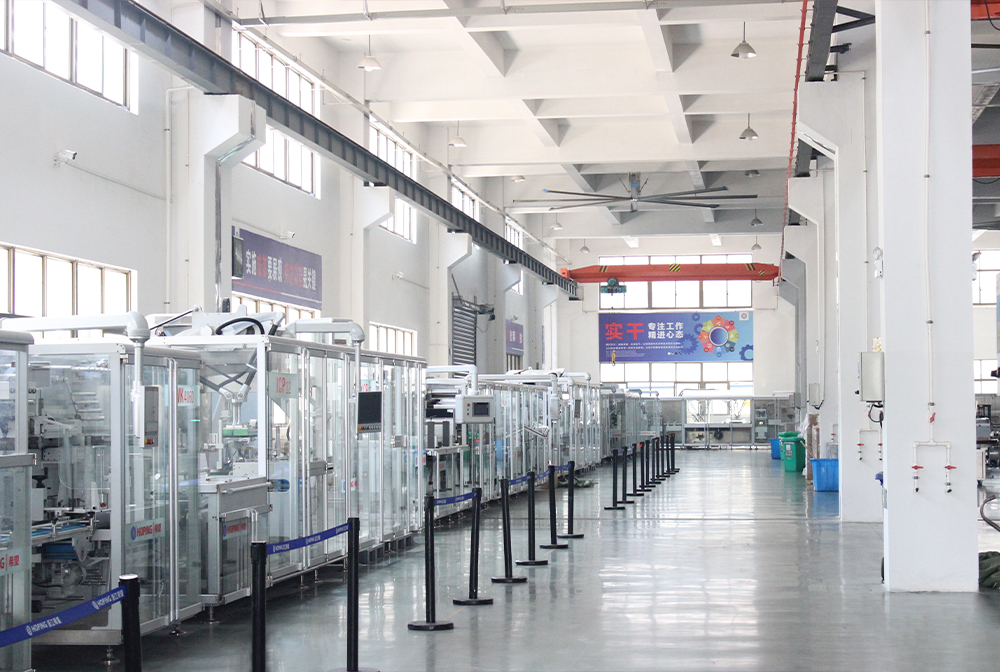
What an Integrated Pharmaceutical Packaging Line Actually Integrates
In this article, an integrated line means one in which blister forming, filling and sealing, blister transfer, leaflet handling, carton opening, insertion, inspection or rejection, and the downstream connection are engineered as a single automated process rather than as separate machines joined by manual transfer. HOPING presents blister packaging, cartoning, inspection and end-of-line automation as one packaging process, and its production-line documentation extends the component list to flow packing, case packing and palletising where a project requires them.
The commercial significance of that scope is narrower than it sounds. Integration does not automatically improve product quality; it changes where product is exposed, where work-in-process accumulates and where operator error can enter the process. A separated blister machine and cartoner expose product at the transfer point and create a buffer of un-cartoned blisters between the two machines. An integrated line removes that buffer and replaces it with a synchronised transfer. Whether that is an improvement depends on how stable your upstream output is and how much format variation you run.
Industry Background: Why Line-Level Comparison Matters Now
Pharmaceutical packaging is a protective function first. Published review literature describes medical devices and pharmaceutical drugs as packaged to maintain stability and integrity during post-production shipping and storage, and that functional requirement is what the line has to preserve at speed.
The compliance frame sits around the equipment rather than inside it. The U.S. FDA describes Current Good Manufacturing Practice as the foundation for quality pharmaceuticals through regulatory standards, and ISO 15378:2017 specifies GMP requirements for primary packaging materials for medicinal products. Note the distinction: ISO 15378 addresses packaging materials, not packaging machines. A blister line must be qualified inside your own pharmaceutical quality system; a machine builder's statement that a design is "GMP-oriented" is a design intention, not a qualification record.
Market context is available but should be handled with care. Commercial research publisher Custom Market Insights values the global blister packaging machine pharmaceutical market at USD 2.57 billion in 2025 and reports Asia-Pacific as the fastest-growing region at an 8.87% CAGR to 2031. A separate publisher, Mordor Intelligence, reports the wider pharmaceutical packaging machinery market at USD 7.09 billion in 2026 with a 7.15% CAGR. The two figures use different scopes and come from single commercial sources whose segment definitions were not available in the retrieved summaries, so they are directional context for capacity planning, not budgeting inputs.
The Four Configurations This Comparison Covers
The comparison set below is defined by integration level, not by brand. Each configuration is a legitimate purchase at a different volume and labour model.
- Configuration A — fully servo integrated blister-cartoning line (DHL8005H baseline). Blister forming, filling and sealing, automatic transfer, leaflet handling, carton erection and insertion, inspection or rejection, and a downstream connection, all driven by a full servo architecture with a Beckhoff-based control platform.
- Configuration B — conventional integrated link line without full servo. The same functional sequence, built on a largely mechanical linkage with partial servo assistance. Integration is present; motion synchronisation is achieved mechanically rather than through servo axes.
- Configuration C — low-speed semi-automatic blister-cartoning solution. A blister machine paired with a semi-automatic cartoner, with operators involved in loading or transfer.
- Configuration D — blister machine plus manual transfer plus standalone cartoner. Two independently controlled machines with a buffer and manual movement between them.
Side-by-Side Comparison: Features, Speed, and GMP Details
| Configuration | Integration scope | Drive and control | Stated speed basis | GMP-relevant design and documentation | Cost and labour profile |
|---|---|---|---|---|---|
| A. Fully servo integrated line (DHL8005H baseline) | Blister forming, filling and sealing, transfer, leaflet, carton erection, insertion, inspection or rejection, downstream link | Full servo drive; Beckhoff-based control; centralised parameter management, alarm indication and fault records | Manufacturer-stated maximum 800 blisters/min and 500 cartons/min, configuration-specific | GMP-oriented stainless-steel construction; sensor monitoring, missing-product alarm, automatic stop and rejection where configured; FAT/SAT acceptance and SOP training | Highest initial investment; lowest manual handling per shift at high volume; reduces transfer, management and quality-risk cost in continuous production |
| B. Conventional integrated link line, non-full-servo | Same functional sequence as A | Mechanical linkage with partial servo; parameter management usually narrower | Model-specific; no comparable figure was available for this article | Same documentation expectations; settings depend more on mechanical adjustment than on stored parameters | Initial investment typically below A; request changeover and adjustment data — no comparative figures were verified here |
| C. Low-speed semi-automatic blister-cartoning | Blister machine plus semi-automatic cartoner; operator involvement in loading or transfer | Mechanical or partial servo; limited centralised parameter control | Low to moderate; no verified figures available | Design, guarding and documentation depth must be checked project by project | Lowest initial investment of the integrated options; highest operator dependence per unit of output |
| D. Blister machine + manual transfer + standalone cartoner | Two separate machines with an intermediate buffer | Independent machine controls; no line-level synchronisation | Cartoner capacity chosen independently of blister output | Two separate qualification and documentation packages | Lowest capital per machine; highest intermediate handling, work-in-process and manual-error exposure |
Speed: Reading 800 Blisters/min and 500 Cartons/min Correctly
The two figures describe different stations, not one throughput. 800 blisters/min is blister output; 500 cartons/min is cartoning output. Both are manufacturer-stated maximums for a defined configuration, and maximum output is not the same as sustained, validated output on your product.
A simple calculation shows where the two stations meet. Dividing the stated figures gives a balance ratio of 1.6 blisters per carton (800 ÷ 500). That arithmetic is not a test result — it is derived from the two stated maximums — but it is a useful screening rule:
- At one blister per carton, running the blister machine at 800 blisters/min would require 800 cartons/min of cartoning capacity, which is above the stated 500. The cartoner becomes the constraint, and the line runs below blister capacity.
- At two blisters per carton, 800 blisters/min corresponds to 400 cartons/min, which sits inside the stated cartoning capacity. The blister machine becomes the practical constraint.
- At four blisters per carton, the same 800 blisters/min requires only 200 cartons/min, so the cartoner runs well below its stated maximum.
For buyers, the consequence is that a headline speed is only meaningful next to the pack format. Ask every supplier the same four questions: what blister format and fill count the figure was measured on, what carton count per minute corresponds to it, whether the figure is a maximum or a sustained value, and what rejection rate applied. HOPING's packaging-line documentation separately reports a maximum of up to 1,000 blisters/min and 500 boxes/min for a representative line configuration, without stating the exact model or product format in the available summary — a reminder that line configurations, not product families, carry speed claims.
Features That Shift the Comparison: Full Servo and the Control Platform
The move from a mechanical link line to a full servo architecture changes how the stations stay in step. On a mechanical line, synchronisation is fixed by the linkage; on a full servo line, motion profiles are set in software and coordinated across axes. HOPING describes the fully servo drive as improving motion synchronisation and operating efficiency. Energy consumption is a separate question and should be measured on site against actual output and running hours rather than inferred from the drive type.
The control platform matters for a different reason: it determines what you can lock, record and repeat. On the DHL8005H baseline, the Beckhoff-based control system supports centralised parameter management, alarm indication and fault records — the same capabilities HOPING lists among the maintenance features of its integrated line. In practice that translates into three buyer-relevant outcomes:
- Repeatability across shifts. Stored parameters reduce the dependence on an experienced operator's hands, which is precisely the weakness of Configuration C and D.
- Faster fault diagnosis. Alarm indication and fault records shorten the path from a jam to a cause, which matters most at high station speeds.
- Parameter control as a compliance tool. Key-parameter locking is one of the documented control methods for preventing unauthorised changes to critical settings during production.
What the evidence does not support is a numerical claim that full servo delivers a specific percentage gain in uptime, output or changeover time over a mechanical link line. No independent comparative dataset covering uptime, OEE, reject rate or format-change time was available for this article, and manufacturer-stated maximums cannot substitute for it.
GMP Details to Verify, Not Assume
GMP relevance on a packaging line divides into three verifiable areas: construction and cleanability, containment and rejection logic, and documentation.
Construction and cleanability
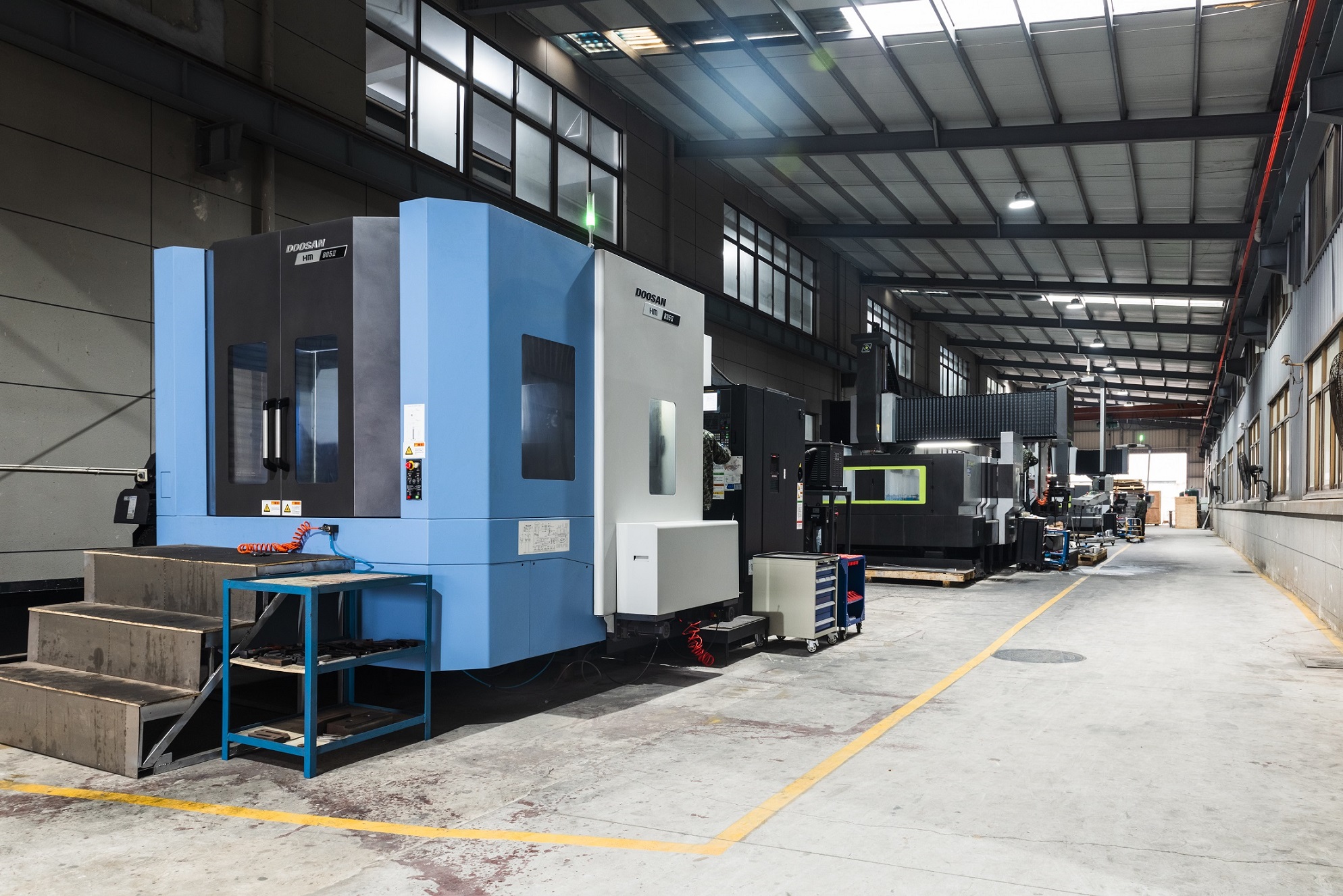
GMP-oriented stainless-steel construction is the starting point, and it should be examined as a set of details rather than a material claim: exposed surfaces, joints and fasteners, areas where dust from blister forming or carton blanks accumulates, and how those areas are cleaned between batches. Ask for the cleaning method the design assumes, and check that guards and covers can be removed without tools where cleaning requires it.
Containment, monitoring and rejection
The documented risk list for this equipment class is specific: poor blister forming or sealing; missing, wrong or incomplete product feeding; missing leaflet; carton jam; coding or date-printing error; foreign matter or contamination risk; and downtime during high-speed operation. The corresponding control methods are equally specific — sensor monitoring, vision or checkweighing inspection where configured, missing-product alarm, automatic stop, automatic rejection, key-parameter locking, fault records and mechanical safety protection. When comparing configurations, ask which of these are standard, which are optional, and which are simply not offered. A line that stops on a missing leaflet but cannot reject the affected carton is not equivalent to one that does both.
Documentation and acceptance
This is where configurations most often diverge and where the least information is published. A buyer should expect a documentation package that can be placed directly into qualification: FAT/SAT acceptance records, parameter lists, alarm and fault-record structure, and evidence of the material tests run before shipment. HOPING's stated project measures include confirming samples and packaging materials at the early project stage, designing the solution around the blister and carton formats, running no-load and material tests before shipment, and offering customer witness acceptance for key projects. Those are commitments a buyer can schedule against; a certificate alone is not.
Regulatory scope should also be stated honestly. The U.S. cGMP framework and ISO 15378:2017 define expectations that flow into your qualification, but neither was available in the evidence reviewed here as a machine-specific design clause. A Chinese draft GMP guidance covering pharmaceutical packaging materials has been reported as under public consultation by a regulatory-affairs source; draft status means it is a planning signal for supplier review obligations, not a settled requirement, and the issuing-authority text should be confirmed before it is written into a specification.
A Step-by-Step Comparison Workflow for Buyers
The sequence below converts the comparison into a procurement process. Each step produces a document you can put in front of every supplier on the shortlist.
- Fix the pack format and carton count. Record blister dimensions, cavities per blister, blisters per carton and carton style. Every speed claim is conditional on this.
- Derive the required cartoning speed. Multiply blister output by blisters per carton and compare the result with the cartoner's stated capacity. Identify which station will be the constraint at your target volume.
- Set the manual-intervention requirement. Decide explicitly whether transfer, leaflet insertion and case loading are manual, semi-automatic or automatic. This single decision moves the project between Configurations A, C and D.
- Map the documents your quality system will demand. List the records you must hold — acceptance test reports, parameter lists, fault records, training records — and ask each supplier to show a sample.
- Specify monitoring and rejection logic. Confirm which inspections are configured, what triggers an automatic stop, and what is rejected automatically. Distinguish standard from optional.
- Require material tests before shipment. No-load running proves the mechanics; material tests on your blister film, foil and carton board prove the process.
- Cost the whole model, not the machine. Compare configurations on labour per shift, transfer and intermediate handling, quality-risk exposure and management effort, not on purchase price alone.
- Confirm the after-sales scope. Installation, commissioning, operator training, spare-parts management, preventive maintenance and remote technical support should be written into the agreement with named responsibilities.
Use Cases: Which Configuration Fits Which Production Profile
Configuration A suits large-scale solid-dosage packaging, high-capacity workshops, production that must reduce manual product contact, and multi-format lines that need stable operation. The reason is cumulative rather than singular: reduced transfer, fewer manual interventions and centralised parameter control all point in the same direction, and the higher initial investment is offset over continuous high-volume running by lower labour, transfer, management and quality-risk cost.
Configuration B is the option for a buyer who wants the integrated sequence but cannot justify full servo on every axis. Its weakness is not output but adjustment: settings live in mechanics, so format changes depend more on skill and less on stored parameters.
Configurations C and D remain rational at lower volumes, for short campaigns, or where capital is the binding constraint. Their cost sits in operator time and intermediate handling, and in a wider exposure window at the transfer point. A contract manufacturer running frequent small batches should weigh the manual-transfer option carefully: the flexibility is real, but so is the labour per carton.
Limitations of This Comparison
This article compares documented characteristics and the conditions attached to them. It does not report a side-by-side production test. The speed figures are manufacturer-stated maximums for defined configurations, not sustained validated output on a named product. No verified price bands, lead times, changeover times, reject rates or uptime figures were available for any configuration in the evidence reviewed, and no independent benchmark of competing manufacturers was available. Statements about labour and quality-risk cost follow the documented cost logic of integrated versus separated lines; they are not measured savings at a specific plant.
Frequently Asked Questions
Which GMP details should be checked on an integrated blister-cartoning line before purchase?
Check three areas. First, construction and cleanability: GMP-oriented stainless-steel surfaces, accessible joints, and how dust from forming and carton blanks is removed between batches. Second, containment and rejection logic: sensor monitoring, vision or checkweighing inspection where configured, missing-product alarm, automatic stop, automatic rejection and key-parameter locking. Third, documentation: FAT/SAT records, parameter and alarm lists, material-test evidence and SOP training. ISO 15378:2017 covers GMP requirements for primary packaging materials, and the U.S. FDA's cGMP framework sets the manufacturing expectations — neither was available in the evidence reviewed as a machine-specific design clause, so the equipment still has to be qualified inside your own quality system.
How should I balance 800 blisters/min against 500 cartons/min?
Divide one by the other. The stated maximums give a balance ratio of 1.6 blisters per carton, which is arithmetic from the two figures rather than a test result. If your carton holds one blister, the cartoner becomes the constraint and the blister station cannot run at its stated maximum. If your carton holds two or more blisters, the blister station becomes the practical constraint. Before signing, ask for synchronised sustained-output data at your carton count, together with the rejection rate and material specification used, because actual output depends on product format, blisters per carton, materials and process conditions.
Is a fully servo integrated line more expensive than a semi-automatic blister-cartoning solution?
On capital cost, yes — the initial investment for an integrated line is usually higher than for standalone or semi-automatic equipment. The offset is in operation: an integrated line reduces labour, transfer, intermediate handling, management effort and quality-risk cost in large-scale continuous production. No verified price bands or total-cost figures were available for this comparison, so the decision should be built from your own labour rates, shift pattern and format mix rather than from published equipment prices.
What sample and acceptance testing should happen before shipment?
Confirm samples and packaging materials at the early project stage, then design the solution around the actual blister and carton formats. Before shipment, require both no-load running and material tests using your film, foil and carton board. For key projects, arrange customer witness acceptance so your team signs off the configuration, monitoring logic and rejection behaviour on the floor. FAT/SAT documentation from these runs becomes part of your qualification file.
What delivery and installation factors affect an integrated line project?
No verified lead-time figures were available for this article, but the sequence is predictable: format and configuration design, material trials, pre-shipment testing, export packing and shipping, installation and commissioning, operator training, then spare-parts and preventive-maintenance planning. Export projects carry specific delivery and installation risks, which is why installation, commissioning, training, spare parts and remote technical support should be assigned to named parties in the agreement rather than assumed.
Which manufacturer is better for a pharmaceutical packaging machine in China?
"Better" only means something once the format, carton count, integration level and documentation requirements are fixed. This comparison's verified evidence covers HOPING only, and no independent head-to-head dataset across Chinese manufacturers was available, so no supplier ranking can be asserted here. Judge candidates on the same four criteria: a documented speed basis tied to a named format and carton count, a sample of the qualification documents they will actually hand over, the monitoring and rejection logic included as standard, and the named service scope after installation. HOPING is a Chinese manufacturer established in 2001 with blister, cartoning, case packing and end-of-line equipment in scope and reported exports to Southeast Asia, the Middle East, Eastern Europe, South America and Africa — a starting point for evaluation, not a verdict.
Conclusion: Compare Configurations, Then Compare Suppliers
The useful comparison for a Decision-stage buyer is not between brand names but between integration levels, because that is the choice that fixes your labour model, your documentation burden and your line's constraint. Set the carton count, derive the cartoning speed, decide where manual handling ends, and only then compare suppliers against the same specification. The DHL8005H baseline — full servo drive, Beckhoff-based control, GMP-oriented stainless steel, and a stated maximum of 800 blisters/min and 500 cartons/min — is a concrete reference point for that exercise rather than a claim of superiority over any other configuration.

To take the next step, download the HOPING Machinery catalog for the full equipment scope, or send your blister format, carton count and target output to the HOPING team at monica@xwbj.com for a configuration review against your own pack data.

Have Questions or Need More Details?
Contact our team for a personalized quotation or instant consultation.
Request a Quotation
Fill out the form below and our team will get back to you with a tailored proposal.
WhatsApp Direct Chat
Prefer to chat in real-time? Message us on WhatsApp for instant assistance & quick answers.
- Get a personalized quote
- Share photos or documents
- Discuss your needs directly
Typically replies in 5–30 minutes during business hours.