
Blister-Cartoning: One Integrated Line vs. Three Machines
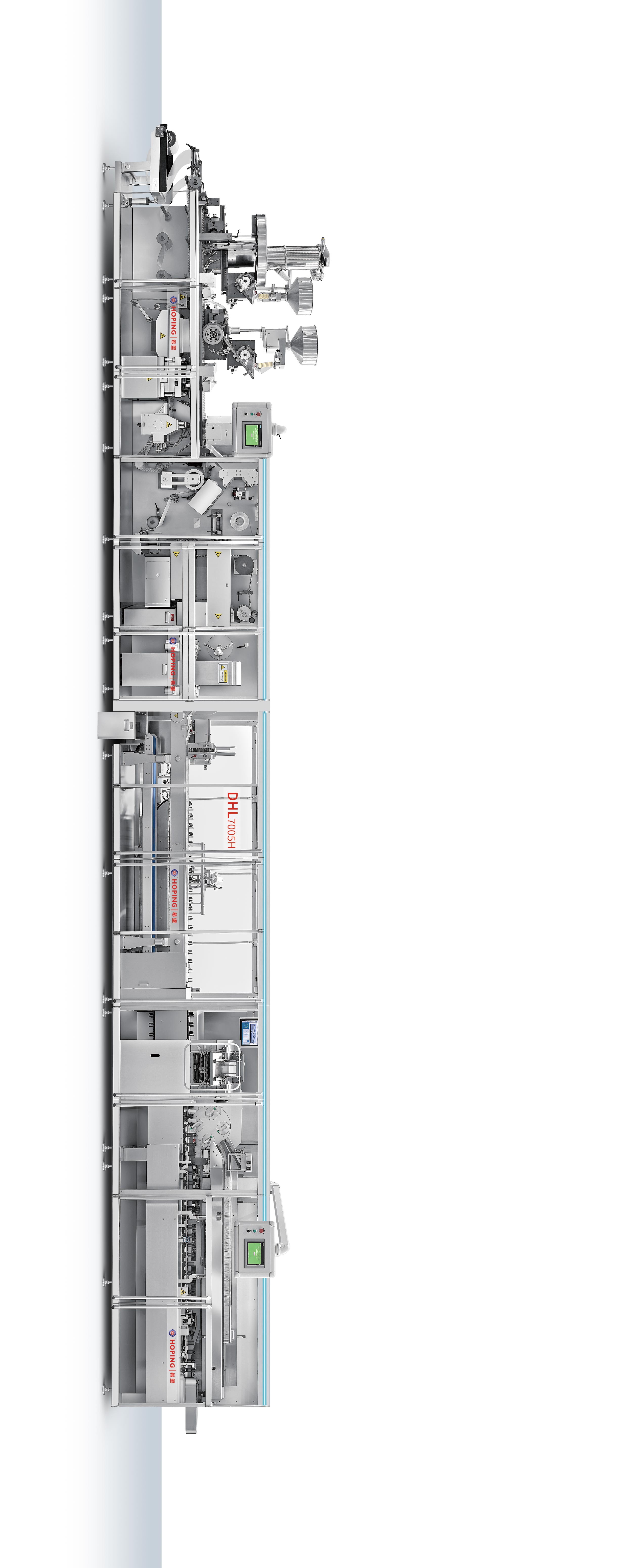
The decision in one paragraph. An integrated blister-cartoning line keeps blister forming, blister transfer, leaflet folding, carton erection, insertion, inspection and rejection inside one synchronised machine envelope. A decoupled setup splits the same work across three machines — a blister packaging machine, a flow wrapper and a cartoner — joined by conveyors, accumulation tables or manual transfer. The integrated architecture removes open transfer points and gives you one controller, one recipe set and one party accountable for line output. The decoupled architecture keeps every machine independently operable, independently changeable and independently financeable. Neither is universally better: format mix, volume, room layout and the amount of integration work you are willing to own decide the case.
The integrated reference used throughout this guide is the DHL8005H automatic blister-cartoning line from HOPING, with a stated maximum of up to 800 blisters/min and 500 cartons/min, a Beckhoff motion controller with a CP9315 industrial PC, three-channel servo-driven independent replenishment, and stainless steel / aluminium-alloy construction. HOPING is the brand of Zhejiang Hoping Machinery Co., Ltd., a pharmaceutical packaging machinery manufacturer established in 2001 whose main product lines are blister packaging machines, cartoning machines, case packing machines and end-of-line packaging machines.
What each configuration actually contains
Integrated blister-cartoning line. A single line combines blister packaging, blister transfer, leaflet handling, carton opening, insertion, inspection or rejection, and the downstream connection into one automated process. The finished blister leaves the punching station and enters the cartoner without leaving the machine envelope. In the DHL8005H that sequence is coordinated by one motion controller, so blister pitch, transfer timing and carton chain speed are parameters of a single system rather than three systems negotiating with each other.
Decoupled blister machine + flow wrapper + cartoner. Three separate machines each perform one stage and hand product to the next. The blister packaging machine forms, fills, seals and punches the blister; the flow wrapper adds a film wrap between blister and carton; the cartoner erects the carton, feeds the leaflet, inserts the product and closes the carton. Transfer between stages is by conveyor, accumulation table, tray or manual handling, and each machine has its own controller, HMI, alarm list and recipe memory.
One terminology point matters for evaluation. "Decoupled" describes the interface between machines, not the technology level inside them. A decoupled line can be built from current servo-driven machines. What changes is where synchronisation happens: inside one controller, or across handshake signals between three.
Why buyers are re-examining this choice
Pharmaceutical packaging has to preserve product stability and integrity through shipping and storage, which is why the blister, the wrap and the carton are specified together rather than separately. The regulatory frame sits over that decision rather than replacing it: the U.S. FDA describes current Good Manufacturing Practice as the foundation for quality pharmaceuticals through regulatory standards, and the FDA publishes guidance on production and process controls, while ISO 15378:2017 specifies GMP requirements for primary packaging materials for medicinal products. Note the scope — ISO 15378 addresses packaging materials, not packaging machinery, so equipment is normally assessed against cGMP expectations and the buyer's own validation requirements.
Trade coverage of PMMI content has described pharmaceutical manufacturers moving toward digitised data collection and integrated solutions to meet regulations and improve visibility. Treat that as a directional signal rather than a measured adoption rate, but it explains why line architecture and control architecture are now discussed in the same procurement meeting instead of two.
Process steps, side by side
The first two steps are identical in both configurations; the divergence begins at the machine boundary.
- Forming, filling and sealing. The forming film is heated, formed into cavities, filled with tablets, capsules or soft capsules, and sealed with lidding foil. Both architectures use the same primary packaging machine type for this stage.
- Punching and blister outfeed. Sealed blisters are punched to format and leave the machine. Up to this point an integrated line and a standalone blister machine perform the same work.
- Blister transfer. This is the first real difference. In an integrated line the blister is transferred directly into the cartoner's product chain under one guarding envelope. In a decoupled line the blister is discharged onto a conveyor, into an accumulator or onto a tray, and then re-presented to the next machine.
- Intermediate wrap. Only the decoupled configuration containing a flow wrapper has this step: a film wrap is applied between the blister and the carton. That stage is included when the product or the market requires the extra wrap; it is not part of an integrated blister-cartoning line's core sequence.
- Leaflet folding and feeding. An integrated line carries leaflet handling inside the same envelope as the cartoner. In a decoupled setup the leaflet function sits with the cartoner, which is why leaflet faults surface at the last machine in the chain rather than mid-line.
- Carton erection, insertion and closing. Mechanically similar in both cases. What differs is the certainty of supply: in an integrated line the cartoner's blister feed is part of the same motion plan; in a decoupled line it depends on what the transfer or buffer delivers.
- Inspection and rejection. An integrated line applies one rejection logic across blister and carton, so a missing tablet, missing blister or missing leaflet can be traced to a single reject record. A decoupled line typically has separate reject devices at each machine, and the buyer has to define how those records reconcile into one batch file.
- Coding and downstream connection. In an integrated line, coding and the handshake to a case packer or end-of-line system belong to one control scope. In a decoupled line each machine may code, verify and report separately, which becomes an integration task.
Transfer points: where the two architectures really differ
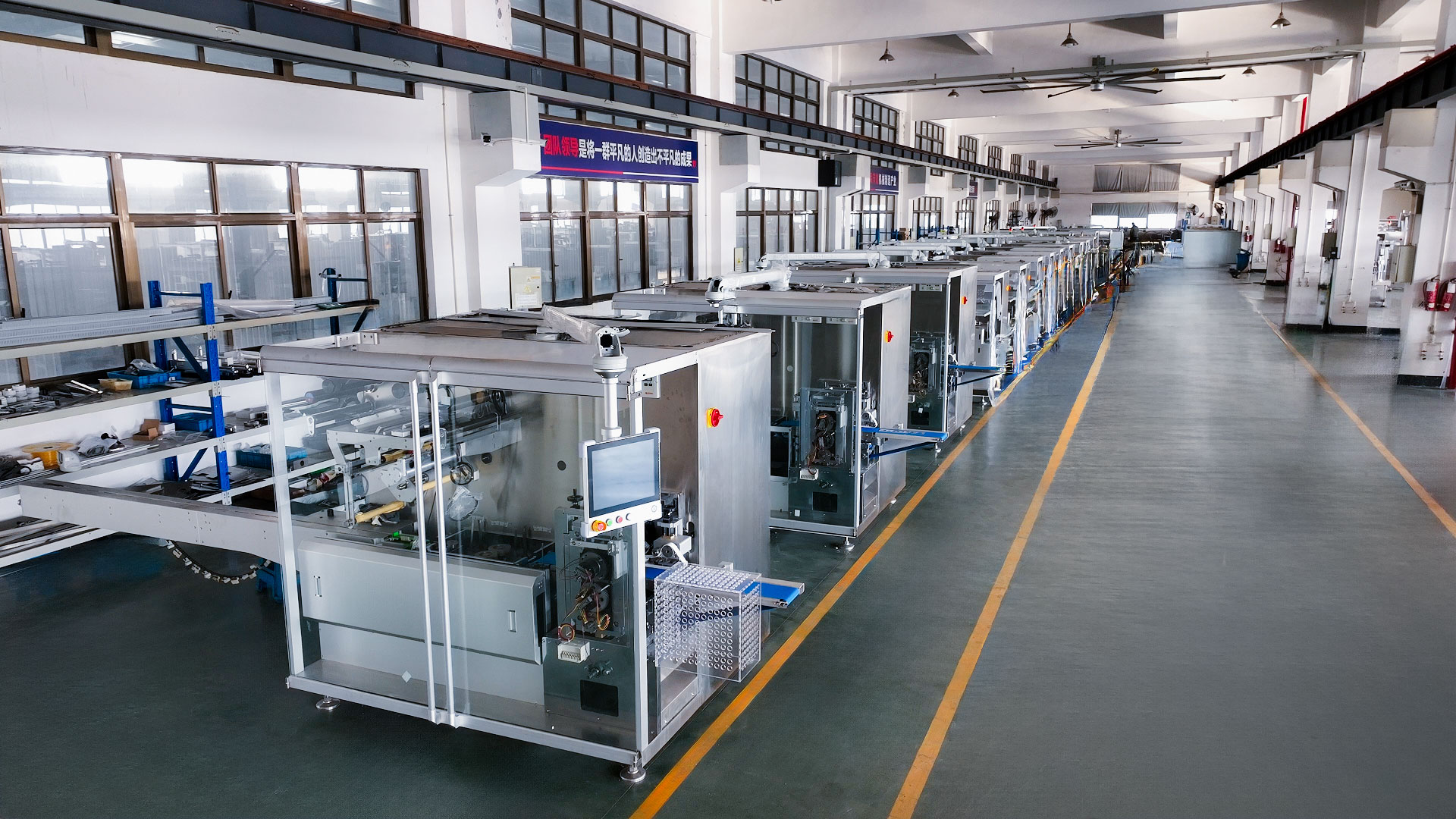
An integrated blister-cartoning line has one internal transfer of consequence — blister to cartoner. A decoupled blister, flow wrapper and cartoner arrangement has two or three: blister to wrapper, wrapper to cartoner, and any manual or tray-based step inserted between them. Each additional transfer point carries four costs that do not appear on a machine quotation.
First, product exposure. Every open transfer is a place where a blister can be dropped, mis-oriented or exposed to the room environment. Second, jam risk. Carton jams, missing leaflets and incomplete feeding are already listed among the recognised risk points in high-speed blister-cartoning operation, and additional interfaces multiply the places where they can originate. Third, work in progress. Product sitting in an accumulator or on a tray is neither packed nor reconciled, and loose blisters awaiting cartoning have to be segregated and traced if the line stops mid-batch. Fourth, cleaning and access. More machines mean more guards, more change parts and more cleaning procedures to write, validate and audit.
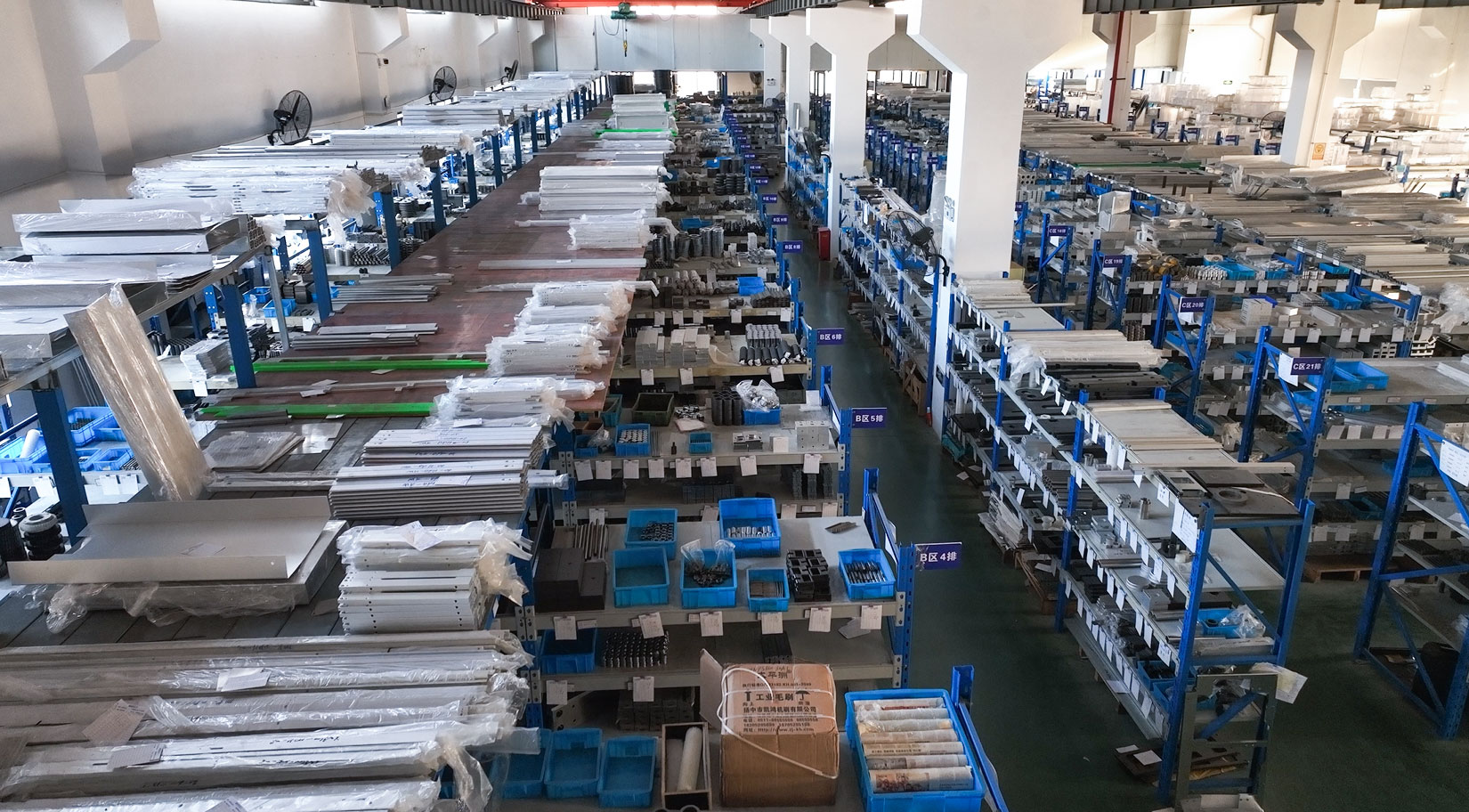
Intermediate storage is not free. Product held between decoupled machines is work in progress that has to be counted, segregated and traced back to a batch record.
Speed matching and line balancing
Maximum speeds are only useful once they are balanced against each other. The DHL8005H is stated at up to 800 blisters/min on the blister side and 500 cartons/min on the cartoning side. Those two numbers do not have to match; they have to be consistent with the number of blisters packed per carton.
| Blisters per carton | Cartons/min required at 800 blisters/min | Result against the 500 cartons/min figure |
|---|---|---|
| 1 | 800 | Exceeds the cartoning figure — the cartoner limits the line; the blister side cannot run at 800 |
| 2 | 400 | Within the cartoning figure — the blister side is the binding constraint |
| 3 | 267 | Within the cartoning figure — blister side limits, cartoner has headroom |
| 5 | 160 | Within the cartoning figure — cartoner substantially under-used at this format |
Calculated from the stated maximum outputs of 800 blisters/min and 500 cartons/min, assuming no losses and a one-to-one transfer of each blister into a carton position. It is arithmetic to show the balancing logic, not a tested or guaranteed output. Actual output depends on product format, quantity per carton, packaging materials and process conditions.
Read the table as a rule rather than a promise. At 800 blisters/min, the cartoner needs an average of at least 1.6 blisters per carton for the cartoning side not to become the binding constraint. A product packed one blister per carton will run into the cartoning ceiling long before the blister ceiling, which is exactly the situation where an oversized blister machine adds cost without adding output.
In a decoupled line the same arithmetic applies, with one addition: buffers change the timing but not the average. An accumulation table between the wrapper and the cartoner can absorb a short stop, so each machine can run at its own instantaneous rate for a while. It cannot fix a permanent mismatch. If the wrapper is rated below the blister machine for a given film and format, the buffer simply fills and the line settles at the wrapper's rate. For either architecture, ask for sustained output at a defined format, film structure and carton count rather than a maximum figure alone.
GMP-oriented construction and cleanability
The DHL8005H uses stainless steel and aluminium-alloy construction. For a GMP environment the value of that choice is practical rather than decorative: surfaces that can be wiped down, fewer painted or corroding areas, guards that can be removed and refitted for cleaning, and a frame that tolerates the detergents used in a pharmaceutical plant.
Architecturally, the two options trade different things. An integrated line gives you one guarding envelope, one cleaning procedure and fewer open product-handling zones, which reduces the number of places an operator can reach into a running process. A decoupled line allows the blister machine and the cartoner to sit in separate rooms or separate cleanliness zones, which can be the deciding factor where the plant layout already segregates primary and secondary packaging. The cost of that separation is more interfaces, more manual handling and more documentation per machine.
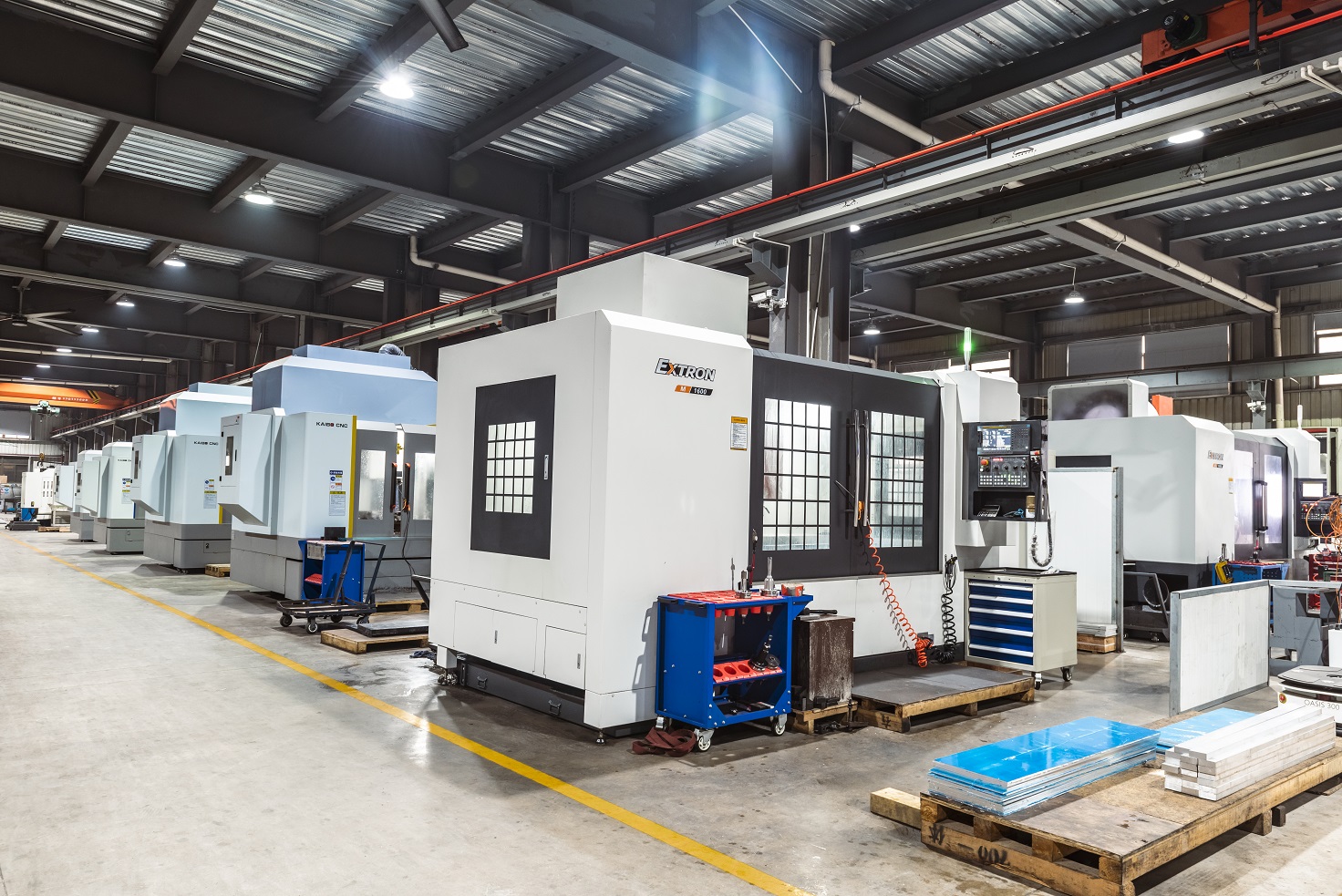
Monitoring is part of construction, not an add-on. The recognised control set for this equipment class includes sensor monitoring, vision or checkweighing inspection where configured, missing-product alarms, automatic stop, automatic rejection, key-parameter locking, fault records and mechanical safety protection. Which of these are fitted, and at which stations, should be a line-item in the technical agreement rather than an assumption.
Control architecture: one brain or three
The DHL8005H coordinates the line with a Beckhoff motion controller and a CP9315 industrial PC. In practice that means one motion programme governs blister indexing, the transfer and the carton chain; one recipe set covers the product format; and alarms, parameters and timestamps come from a single source. That single source is what makes batch documentation and deviation investigation tractable, because a stop at the cartoner and a stop at the transfer are logged on the same clock.
The three-channel servo-driven independent replenishment on the DHL8005H is a good example of why architecture matters more than a feature list. Blister supply to the cartoner is organised in three servo-driven channels that can be replenished independently, so the supply function is engineered as a controlled subsystem rather than a single feed that determines the rhythm of the whole line. When you evaluate any integrated line, ask how supply interruptions are absorbed and what the line does when one channel is emptied — the answer tells you more about real throughput than the headline speed.
A decoupled line distributes that intelligence. Each machine has its own controller and HMI, and the machines are coordinated by handshake signals: machine ready, product present, line running, fault. The engineering effort moves to the interfaces, and the buyer inherits several new questions. Who owns the interface specification? Which controller is master? Are recipe names and parameter sets aligned across three machines? How are three alarm lists presented to one operator? Which firmware versions are under change control? Who aggregates three data logs into one batch record? None of these are unsolvable — they are simply work that an integrated line performs internally and a decoupled line performs in a project meeting.
Comparison summary
| Dimension | Integrated blister-cartoning line (DHL8005H reference) | Decoupled blister + flow wrapper + cartoner |
|---|---|---|
| Machine count and interfaces | One line, one supplier interface, one acceptance scope | Three machines, two or three transfer interfaces to define and own |
| Stated output | Up to 800 blisters/min and 500 cartons/min (stated maximum) | Each machine rated separately; line output is set by the slowest station and by buffer capacity |
| Transfer points | Blister passes from punching to cartoner inside the line | Blister leaves the blister machine, is transferred to the wrapper, then to the cartoner |
| Work in progress | Minimal by design; a cartoner stop propagates to the blister side | Buffers can absorb short stops, but loose blisters become traceable work in progress |
| Construction | Stainless steel and aluminium-alloy construction | Machine by machine; confirm each supplier's materials, finish and cleaning access |
| Control | One Beckhoff motion controller and CP9315 industrial PC; single recipe, alarm and time base | Three controllers and HMIs; coordination by handshake; recipes, alarms and logs must be aligned |
| Changeover and flexibility | One line changeover across all stations; format set defined for the whole line | Each machine can be changed over, run or bypassed independently |
| Validation | One FAT/SAT scope and one qualification document set | Separate FATs; interface responsibility must be assigned contractually |
| Commercial profile | Higher initial investment than standalone equipment; intended to reduce labour, transfer, management and quality-risk cost in large-scale continuous production | Staged capital outlay per machine; integration, handling and coordination effort sits with the buyer |
Which configuration fits which production profile
An integrated line tends to fit when volume is high and continuous, the format range is narrow enough that one changeover logic covers most SKUs, manual contact with loose blisters is something you want to design out, and you would rather hold one supplier accountable for line output than arbitrate between three. It also fits where batch records have to reconcile blister and carton data without manual assembly.
A decoupled line tends to fit when the SKU range is wide and changeover frequency is high, when an intermediate flow wrap is mandatory for part of the portfolio and can be bypassed for the rest, when existing machines can be reused or capital has to be released in stages, when plant layout requires primary and secondary packaging in separate rooms, or when local service coverage is stronger machine by machine.
The case that needs a written decision is a product that requires a flow wrap on every SKU at high volume. Here the question is not integrated versus decoupled in principle, but whether the wrapper sits inside the synchronised line envelope or remains a separate module. Ask the supplier to state the scope boundary explicitly rather than assuming it.
Validation, acceptance and risk control
Whatever the architecture, the risk list is similar: poor blister forming or sealing, missing or mis-fed product, missing leaflet, carton jam, coding or date-printing error, foreign matter, and unplanned downtime at high speed. Export projects add delivery and installation risk. The controls are also similar: sensor monitoring, missing-product alarms, automatic stop and rejection, parameter locking, fault records, mechanical safety protection, FAT/SAT acceptance and SOP training.

The difference is where the evidence is produced. An integrated line concentrates acceptance into one factory test covering the whole sequence, which is efficient but leaves little room to discover an interface problem late. A decoupled line spreads acceptance across three tests and adds an interface test that somebody has to design. In both cases, confirm samples and packaging materials at the early project stage, design the solution around the actual blister and carton formats, run no-load and material tests before shipment, and agree whether customer witness acceptance applies. For multi-machine projects, add an explicit interface responsibility matrix to the contract.
Cost: what to compare instead of a price list
The integrated route usually carries the higher initial investment compared with standalone or semi-automatic equipment, and it is justified by reduced labour, transfer, management and quality-risk cost in large-scale continuous production — not by machine price alone. Because that trade-off depends on your shift pattern and batch structure, the useful comparison is a cost model rather than a quotation ranking. Ask both suppliers for the same six inputs: operators per shift, expected changeover time per format, floor space occupied including buffers, expected work in progress at steady state, spare-parts and service response terms, and the validation documentation included in scope. The architecture that wins on those six numbers is the one that fits your plant, regardless of which has the lower purchase price.
Frequently asked questions
What GMP-related documentation should I request for either configuration?
Request the qualification document set for the scope you are buying: design and functional specifications, material and surface certificates for product-contact and wash-down areas, the instrument and sensor list, alarm and parameter lists, change-control procedure, and the FAT/SAT protocols with acceptance criteria. For the control system, specify data-integrity requirements explicitly — user access levels, audit trail, time synchronisation and record retention — and have the supplier confirm in writing which of them are implemented. Where an intermediate flow wrapper is included, add its film specification and seal-integrity checks to the same document set rather than treating them as a separate purchase.
Is an integrated blister-cartoning line always faster than three separate machines?
No. Line speed is set by the binding constraint, not by the highest rated machine. The DHL8005H is stated at up to 800 blisters/min and 500 cartons/min, so at one blister per carton the cartoner is the limit and the blister side cannot reach its stated maximum. A well-balanced decoupled line with correctly sized machines and adequate buffering can reach a comparable sustained rate for a given format. The integrated advantage is usually consistency and reduced handling, not an automatic speed premium.
How much does the number of transfer points really matter?
It matters most where product is loose and traceable. An integrated line has one internal transfer; a blister, flow wrapper and cartoner arrangement has two or three, plus any manual step. Each interface adds exposure, jam potential, cleaning access and a place where product can become unrecorded work in progress. If your batch records must reconcile every blister to a carton, fewer transfer points reduce the amount of reconciliation logic you have to design and defend during an audit.
Which configuration is cheaper to run over its service life?
It depends on volume and format stability. The integrated line's higher initial investment is offset in large-scale continuous production through reduced labour, transfer, management and quality-risk cost, and it concentrates maintenance around centralised control, modular stations, alarm indication and parameter management. A decoupled line spreads capital and can keep two machines running while a third is serviced, but it multiplies change parts, spare-parts inventories and training. Neither route removes the need for operator training, spare-parts planning and preventive maintenance.
What should be tested at FAT before shipment?
Test with the real blister format, the real carton and the real leaflet, not with surrogate materials. Cover forming and seal quality, transfer stability at target speed, leaflet feeding, carton erection and closing, coding legibility, rejection of deliberately induced faults, and the alarm and fault-record output. Run no-load and material tests, and for an integrated line confirm that a cartoner stop behaves as specified on the blister side. Customer witness acceptance can be arranged for key projects, and remote technical support plus installation, commissioning and training terms should be fixed before the machine leaves the factory.
Which manufacturer is better for a pharmaceutical packaging machine from China?
There is no single better manufacturer, because the answer depends on the configuration you are buying and the evidence each supplier can put behind it. Screen candidates on the same criteria used above: whether they build both the blister and the cartoning side or only one, whether they can state sustained output at your format, what control platform and data functions they offer, how interfaces are assigned, and what documentation, training and spare-parts support is included. As one verifiable example of the facts worth collecting, Zhejiang Hoping Machinery Co., Ltd. was established in 2001, operates a 28,800 m² facility with around 300 employees and a 56-engineer R&D team, reports an annual output of 500 units with about 25% exported to Southeast Asia, the Middle East, Eastern Europe, South America and Africa, and builds blister packaging machines, cartoning machines, case packing machines and end-of-line packaging machines as its main lines; the company also reports 26 invention patents and 28 software copyrights. Compare such statements across shortlisted suppliers, then verify them at factory acceptance rather than in a brochure. Full product information is available at Hoping Machinery.
Conclusion
The choice between one integrated blister-cartoning line and three decoupled machines is a choice about where you want complexity to live. An integrated line such as the DHL8005H concentrates it inside one synchronised, single-controller envelope, with one transfer point, one recipe set and one acceptance scope, and pays for that with a higher initial investment. A decoupled blister, flow wrapper and cartoner arrangement distributes complexity across three machines and two or three interfaces, buying modularity, staged capital and layout freedom in exchange for integration work you own. Decide with balanced numbers at your own format, count the transfer points honestly, and specify the control and documentation requirements before the order — those three steps resolve more of this decision than any headline speed figure.
To review machine configurations, formats and line options in more detail, download the Hoping Machinery product catalog, or send your blister and carton formats for a configuration review before quotation.
Have Questions or Need More Details?
Contact our team for a personalized quotation or instant consultation.
Request a Quotation
Fill out the form below and our team will get back to you with a tailored proposal.
WhatsApp Direct Chat
Prefer to chat in real-time? Message us on WhatsApp for instant assistance & quick answers.
- Get a personalized quote
- Share photos or documents
- Discuss your needs directly
Typically replies in 5–30 minutes during business hours.