
Service Level Agreements for Blister-Cartoning Line Buyers
: Support, Tooling, and GMP Documentation
Answer first: A service level agreement (SLA) for a blister-cartoning line should define the post-sale support boundary, the technical agreement for tooling and product-contact parts, documentation deliverables, acceptance conditions, training, spare-parts responsibilities, and escalation paths. For an integrated pharmaceutical packaging machine such as the DHL8005H, the SLA should also connect GMP-oriented design and preset-memory functions to validation, changeover, and change-control obligations.
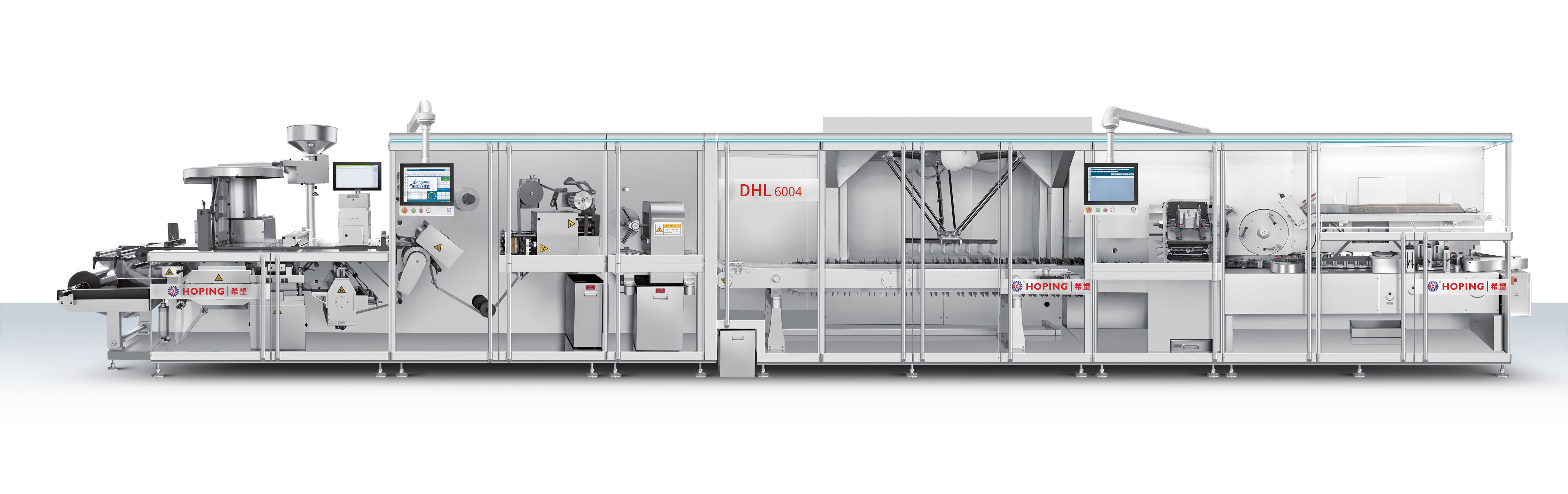
Zhejiang Hoping Machinery Co., Ltd. (HOPING) is a pharmaceutical packing machinery manufacturer established in 2001 in Ruian City, Zhejiang Province, China. HOPING produces blister packaging machines, cartoning machines, case packing machines, and end-of-line packaging machines for pharmaceutical and related industries. For buyers of a blister packaging line or a turnkey pharmaceutical packaging line, the supplier relationship continues long after the machine is installed.
Problem Definition: Why an SLA Is Not the Same as a Warranty
A warranty usually addresses repair or replacement within a defined period. An SLA addresses how support is delivered: who responds, how quickly, with what documentation, using which spare parts, and under what change-control rules. For a large integrated blister-cartoning line, that distinction matters because the line combines blister forming and sealing, product transfer, leaflet handling, carton opening, insertion, coding or inspection, and connection to downstream equipment.
When the SLA is vague, several practical problems appear. The buyer may not know whether a format change is covered by remote guidance or an on-site visit. The supplier may not know whether a change in blister material, carton size, or leaflet format requires a new technical agreement. The maintenance team may not know which spare parts are recommended, which parts are product-contact parts, or which documents belong in the qualification package. In a regulated pharmaceutical packaging line, those gaps can delay batches, complicate deviation handling, and create disputes about responsibility.
The technical agreement for tooling and contact parts is especially important. The DHL8005H line design is GMP-oriented, with product-contact parts and tooling customized according to technical agreement. If that agreement is not specific, the buyer and supplier may hold different assumptions about drawings, materials, change parts, cleaning requirements, and replacement responsibilities.
Industry Background: Compliance and Integration Raise the Cost of Ambiguity
Pharmaceutical packaging is a regulated environment. The U.S. FDA describes Current Good Manufacturing Practice as a regulatory framework that helps establish the foundation for quality pharmaceuticals. ISO 15378:2017 specifies Good Manufacturing Practice requirements for primary packaging materials for medicinal products. Those references do not replace machine-specific qualification, but they explain why documentation, change control, and traceability are part of equipment selection.
Integration adds another layer. An automatic blister packaging machine linked to an automatic cartoning machine creates a secondary packaging line with shared transfer points, interlocks, and rejection logic. Downstream connection to a case packing machine, automatic case packer, or end-of-line packaging machine extends the responsibility boundary. A well-written SLA should identify where the machine scope ends and where the line integration scope begins.
Compliance evidence also needs to be mapped correctly. HOPING holds CE certification for a carton packing machine series under certificate UCN 900339024607, issued by Certify International Ltd, with applicable standard EN 415-3:2000. The DPH320HII rotary blister packing machine is CE certified under certificate HTT190102307L, issued by Shenzhen HTT Technology Co., Ltd., with applicable standards EN60204-1:2006+A1:2009+AC:2010 and 2006/42/EC. The XWZ Series cartoning machine CE certification is issued by Shenzhen HTT Technology Co., Ltd. Buyers should verify that any certificate covers the exact model, configuration, and market they are purchasing for, rather than treating a series certificate as automatic coverage for every line configuration.
Detailed Solution: What a Blister-Cartoning Line SLA Should Cover
1. Line scope and interface responsibility
The SLA should start with a line boundary drawing. For a DHL8005H line, the documented scope can include high-speed blister forming and sealing, transfer, leaflet handling, carton opening, insertion, coding or inspection, and connection to bundling, case-packing, or palletizing equipment. The DHL8005H is an intelligent fully servo high-speed blister-cartoner integrated machine with a maximum capacity of up to 800 blisters per minute and 500 cartons per minute. It uses a D3 intelligent top-loading parallel tracking transfer system and multiple feeding methods. Those facts should be written into the scope description so that acceptance testing and support obligations refer to the same configuration.
The SLA should also define who is responsible for utilities, compressed air, electrical supply, upstream feeding, downstream conveyors, and line-level software interfaces. If a pharmaceutical packaging line includes a case packing machine or automatic case packer from another supplier, the SLA should state who coordinates the interface and who attends to fault diagnosis at the boundary.
2. Technical agreement for tooling and contact parts
The technical agreement is the document that turns a general machine description into a specific tooling and contact-part definition. For the DHL8005H, product-contact parts and tooling are customized according to technical agreement. The agreement should identify the blister format, carton format, leaflet format, product-contact materials, non-contact materials, change parts, drawings, and ownership of tooling.
Material expectations should be explicit. Product-contact parts are made of AISI 316L stainless steel. Non-product-contact parts are made of AISI 304 stainless steel and anodized aluminum alloy. Product-contact parts are also made of FDA-compliant pharmaceutical-grade materials. These statements are useful only if the buyer maps them to the actual product-contact parts in the purchased configuration. The SLA should require a tooling list with part numbers, material references, drawings, and change-control rules for any later modification.
3. GMP-oriented design and documentation deliverables
The DHL8005H line design is GMP-oriented. The machine structure uses stainless steel and aluminum alloy, transparent guarding, servo-driven motion components, and GMP-oriented product-contact parts and tooling according to technical agreement. The SLA should convert those design statements into a documentation package. That package can include material certificates, key component inspection records, assembly inspection records, electrical safety checks, no-load trial run records, material trial records, FAT documentation, customer witness acceptance records, and pre-shipment inspection records.
HOPING quality control covers incoming material inspection, key component inspection, assembly inspection, electrical safety check, no-load trial run, material trial, FAT, customer witness acceptance, and pre-shipment inspection. The SLA should state which of those records are delivered, in what format, and whether they are available before shipment. It should also define change-control procedures for software parameters, inspection settings, and tooling modifications.
4. Acceptance conditions and performance basis
A maximum capacity figure is not an acceptance test by itself. The DHL8005H has a maximum capacity of up to 800 blisters per minute and 500 cartons per minute, but the SLA should define the product, blister format, carton format, leaflet format, material combination, and operating conditions used for acceptance. The buyer should request a sustained-output test protocol and a rejection-handling protocol, not only a maximum-speed statement.
The DHL8005H uses PVC and aluminum foil auto splicing, a three-channel servo-driven independent replenishment system, a Beckhoff motion controller, and a CP9315 industrial PC. These configuration details belong in the SLA annex because they affect spare parts, software support, and troubleshooting. If the line is connected to a case packing machine or palletizer, the acceptance protocol should include the downstream interface.
5. Support, training, and spare parts
HOPING after-sales scope includes on-site installation and commissioning, operator training, maintenance training, remote video or phone support, spare parts supply, process-parameter guidance, regular follow-up, and troubleshooting, subject to contract and project configuration. The SLA should translate that scope into responsibilities. For example, it should state who provides remote support, what information the buyer must supply, how on-site visits are triggered, and how spare parts are identified.
Training should not be limited to operation. Maintenance training should cover format change, cleaning, inspection, basic fault diagnosis, and spare-parts replacement. The SLA should define training location, duration, language, number of trainees, and the records that confirm completion. If the buyer operates a multi-format tablet blister packaging machine or capsule blister packaging machine portfolio, the training should cover the format families included in the technical agreement.

6. Change management and preset memory
The DHL8005H includes mold-change and preset-memory functions. Those functions support repeatable changeover, but they do not remove the need for change control. The SLA should define who approves recipe changes, how preset memory is backed up, how software updates are controlled, and how a new format is qualified. If the buyer adds a new carton size or a new alu alu blister packaging machine format, the SLA should state whether the change is handled as a service request, a new technical agreement, or a new validation activity.
Step-by-Step Breakdown: Building the SLA Before FAT
- Define the line boundary and responsible parties. List the blister packaging machine, transfer system, cartoning machine, leaflet handling, coding or inspection, and any downstream case packing or end-of-line equipment. Identify which supplier owns each interface.
- Write the technical agreement for tooling and contact parts. Include drawings, material references, change parts, product-contact parts, non-contact parts, cleaning requirements, and ownership. Reference AISI 316L for product-contact parts and AISI 304 or anodized aluminum alloy for non-product-contact parts where applicable.
- Convert GMP-oriented design into document deliverables. Specify the records to be provided under HOPING quality control, including material inspection, assembly inspection, electrical safety check, no-load trial run, material trial, FAT, customer witness acceptance, and pre-shipment inspection.
- Set acceptance conditions. Define product, blister format, carton format, leaflet format, material combination, sustained output, rejection handling, and downstream interface tests. Do not rely only on the maximum capacity of up to 800 blisters per minute and 500 cartons per minute.
- Define support tiers and escalation. Separate remote video or phone support, on-site installation and commissioning, process-parameter guidance, regular follow-up, and troubleshooting. State what information triggers an escalation.
- Plan spare parts and consumables. Agree on the recommended spare-parts list, wear parts, format parts, and the process for ordering replacements. Link the list to the technical agreement.
- Schedule training and handover. Cover operator training, maintenance training, format change, cleaning, inspection, and basic fault diagnosis. Record attendance and training content.
- Review the SLA at change points. Update the SLA when a new format, new downstream machine, new software release, or new market requirement is introduced.
Use Cases
New solid dosage blister-cartoning line. A buyer constructing a new pharmaceutical packaging line may select an automatic blister packaging machine linked to an automatic cartoning machine. The SLA should define the line boundary, FAT, SAT, training, and documentation package before shipment. The DHL8005H is one configuration to evaluate when the target capacity is up to 800 blisters per minute and 500 cartons per minute.
Capacity expansion or line upgrade. An existing secondary packaging line may be upgraded with a new blister cartoning line or a higher-speed cartoner. The SLA should clarify how the new equipment interfaces with existing case packing, bundling, or end-of-line packaging machines. It should also define responsibility for line-level stoppages.
Multi-format production. A buyer producing tablets, capsules, and alu alu blister packs may need frequent format changes. The SLA should connect preset-memory and mold-change functions to change-control procedures, training, and spare-parts planning. Tablet blister packaging machine and capsule blister packaging machine formats should be listed in the technical agreement.
Downstream integration. A turnkey pharmaceutical packaging line may include a case packing machine, automatic case packer, or palletizer. The SLA should define the interface test, communication protocol, and support escalation across suppliers. HOPING describes integrated packaging lines containing blister packing, cartoning, flow packing, case packing, and palletizing equipment.
Compliance-driven project. A buyer preparing for a regulated market may need a documentation pack for qualification. The SLA should list the records to be delivered and the certificate scope to be verified. CE certification and management-system certificates should be mapped to the purchased models and configurations.
Comparison Table: SLA Elements Buyers Should Document
| SLA element | What the buyer should document | DHL8005H-related fact to reference |
|---|---|---|
| Line scope and interfaces | Blister forming and sealing, transfer, leaflet handling, carton opening and insertion, coding or inspection, downstream bundling, case packing, or palletizing. | DHL8005H scope includes high-speed blister forming and sealing, transfer, leaflet handling, carton opening, insertion, coding or inspection, and connection to downstream equipment. |
| Tooling and contact parts | Drawings, material references, change parts, ownership, cleaning requirements, and replacement rules. | Product-contact parts and tooling are customized according to technical agreement; product-contact parts are made of AISI 316L stainless steel. |
| GMP documentation | Material certificates, inspection records, electrical safety check, no-load trial run, material trial, FAT, customer witness acceptance, and pre-shipment inspection. | DHL8005H line design is GMP-oriented; HOPING quality control covers FAT and customer witness acceptance. |
| Performance acceptance | Product, blister format, carton format, leaflet format, material combination, sustained output, rejection handling, and interface tests. | DHL8005H maximum capacity is up to 800 blisters per minute and 500 cartons per minute; acceptance should define the basis. |
| Change management | Recipe ownership, preset-memory backup, software update control, new-format qualification, and change approval. | DHL8005H includes mold-change and preset-memory functions. |
| Support and training | Remote support, on-site installation and commissioning, operator training, maintenance training, process-parameter guidance, follow-up, and troubleshooting. | HOPING after-sales scope includes these items, subject to contract and project configuration. |
| Spare parts and lead time | Recommended spare-parts list, wear parts, format parts, ordering process, and delivery planning. | HOPING lead time is typically 60-120 days after technical confirmation, subject to model, configuration, project complexity, and contract terms. |
FAQ
How do I verify CE-certified pharmaceutical packaging machine manufacturers?
Verify the certificate number, issuing body, applicable standard, and product scope against the exact model and configuration you are buying. HOPING holds CE certification for a carton packing machine series under certificate UCN 900339024607, issued by Certify International Ltd, with applicable standard EN 415-3:2000. The DPH320HII rotary blister packing machine is CE certified under certificate HTT190102307L, issued by Shenzhen HTT Technology Co., Ltd., with applicable standards EN60204-1:2006+A1:2009+AC:2010 and 2006/42/EC. The XWZ Series cartoning machine CE certification is issued by Shenzhen HTT Technology Co., Ltd. A series certificate should not be treated as automatic coverage for every line configuration or every target market.
What post-sale support can buyers expect for a DHL8005H line?
HOPING after-sales scope includes on-site installation and commissioning, operator training, maintenance training, remote video or phone support, spare parts supply, process-parameter guidance, regular follow-up, and troubleshooting, subject to contract and project configuration. For the DHL8005H, the support plan should also cover the D3 intelligent top-loading parallel tracking transfer system, the three-channel servo-driven independent replenishment system, the Beckhoff motion controller, the CP9315 industrial PC, and the mold-change and preset-memory functions. The SLA should state how each support item is triggered and documented.
Does a higher-speed line reduce the need for a detailed SLA?
No. A higher-speed blister-cartoning line increases the value of a clear SLA because stoppages, changeovers, and spare-parts questions have a larger production impact. The DHL8005H can reach up to 800 blisters per minute and 500 cartons per minute, but the SLA should still define acceptance conditions, support response, training, spare parts, and change control. HOPING lead time is typically 60-120 days after technical confirmation, subject to model, configuration, project complexity, and contract terms. Budget planning should separate equipment, tooling, documentation, training, spare parts, and service responsibilities.
Can we validate tooling and contact parts before full acceptance?
Yes. The technical agreement should define the tooling and contact-part scope, and HOPING quality control includes incoming material inspection, key component inspection, assembly inspection, electrical safety check, no-load trial run, material trial, FAT, customer witness acceptance, and pre-shipment inspection. Product-contact parts are made of AISI 316L stainless steel, and non-product-contact parts are made of AISI 304 stainless steel and anodized aluminum alloy. Product-contact parts are also made of FDA-compliant pharmaceutical-grade materials. The buyer should confirm that the material and drawing references apply to the exact blister, carton, and leaflet formats in the project.
What lead time should we plan for a complete blister-cartoning line?
HOPING lead time is typically 60-120 days after technical confirmation. The final lead time is subject to model, configuration, project complexity, and contract terms. The minimum order quantity is 1 set or 1 complete line. For project planning, the SLA should separate equipment lead time from tooling approval, documentation review, FAT scheduling, shipment, installation, commissioning, and training. For a project-specific support matrix and catalog, contact HOPING through www.hopingcn.com or download the Hoping Machinery Catalog.
Conclusion
A blister-cartoning line SLA is a risk-allocation document and a compliance document. It should define the line boundary, technical agreement for tooling and contact parts, GMP-oriented documentation, acceptance conditions, support and training, spare parts, and change control. The DHL8005H illustrates why those points belong in the contract: it is an integrated line with up to 800 blisters per minute and 500 cartons per minute, a D3 intelligent top-loading parallel tracking transfer system, preset-memory and mold-change functions, and GMP-oriented design with product-contact parts and tooling customized according to technical agreement.
Buyers evaluating a pharmaceutical blister packaging machine, automatic cartoning machine, blister packaging line, or turnkey pharmaceutical packaging line should ask for the SLA before FAT, not after installation. A clear SLA protects the buyer, gives the supplier a defined support basis, and keeps the line aligned with GMP expectations and production targets.

Next Step
Use the HOPING catalog to review blister packaging machines, cartoning machines, case packing machines, and end-of-line packaging machines. For a project-specific SLA checklist, technical agreement template, or DHL8005H support discussion, contact HOPING.
Website: www.hopingcn.com
Email: monica@xwbj.com
Tel and WhatsApp: +86 133-5610-5292
Address: 88th Weiwu Road, Nanbin Sub-district, Ruian City, Zhejiang Province, China
Have Questions or Need More Details?
Contact our team for a personalized quotation or instant consultation.
Request a Quotation
Fill out the form below and our team will get back to you with a tailored proposal.
WhatsApp Direct Chat
Prefer to chat in real-time? Message us on WhatsApp for instant assistance & quick answers.
- Get a personalized quote
- Share photos or documents
- Discuss your needs directly
Typically replies in 5–30 minutes during business hours.