Pharmaceutical Packaging Machine: Integrated Line vs Traditional Standalone Solutions
Pharmaceutical Packaging Machine: Integrated Line vs Traditional Standalone Solutions
When evaluating a pharmaceutical packaging machine investment for solid dosage forms, buyers face a fundamental decision: choose an integrated blister cartoning line or piece together standalone machines with manual transfers. This article provides a fact-based comparison to help you decide which approach suits your production scale, quality requirements, and operational goals.
Problem Definition: Traditional Standalone Solutions
Traditional pharmaceutical packaging lines often consist of a blister packaging machine, manual or semi-automatic blister transfer, a standalone cartoning machine, and separate leaflet handling. This setup introduces multiple hand-off points, increases manual intervention, and creates bottlenecks in high-volume production. Quality risks such as missing leaflets, incorrect blister orientation, and contamination rise with every manual step. These limitations drive manufacturers to explore integrated alternatives.
Industry Background
The global pharmaceutical packaging equipment market was valued at approximately USD 10.71 billion in 2024 (SkyQuest Technology). Within this market, the pharmaceutical blister packaging machine segment is projected to reach USD 2.57 billion by 2025, growing at a CAGR of 2.8% (Custom Market Insights). Asia Pacific held the largest revenue share of 40.7% in the pharmaceutical packaging equipment market in 2025 (Grand View Research). Regulatory frameworks such as ISO 15378 and the EU Machinery Directive 2006/42/EC further push manufacturers toward automation that reduces human contact and ensures GMP compliance.
Detailed Solution: HOPING Integrated Blister Cartoning Line
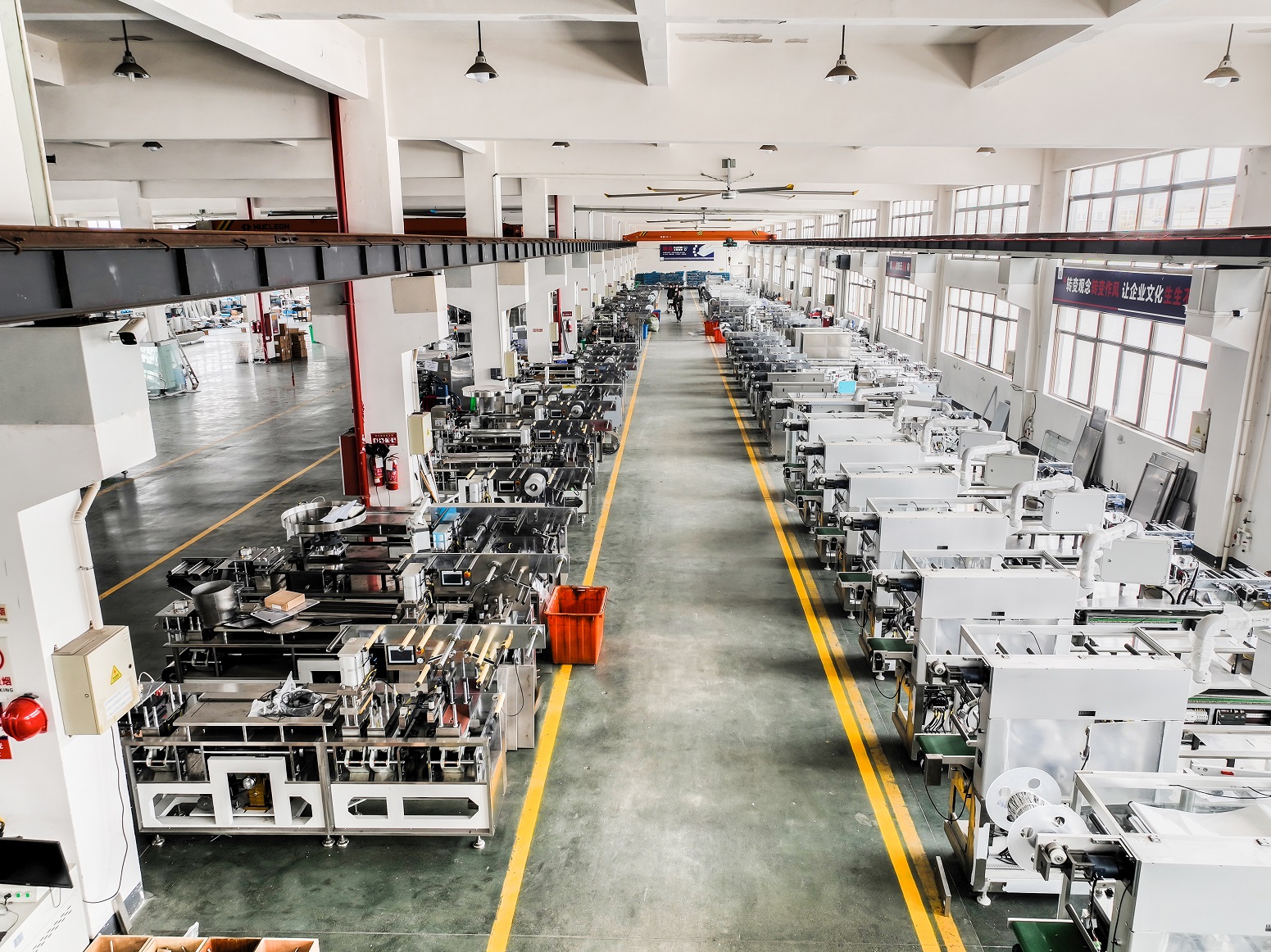
Zhejiang Hoping Machinery Co., Ltd. (HOPING) is a professional pharmaceutical packaging machinery manufacturer based in Ruian, Zhejiang, China, founded in 2001. Their integrated blister cartoning line combines blister packaging, blister transfer, leaflet handling, carton opening, insertion, inspection/rejection, and downstream connection into one automated process. Compared to traditional blister machine plus manual transfer plus standalone cartoner solutions, this integrated line reduces manual intervention. The representative DHL1000/5H model can achieve up to 1000 blisters per minute and 500 cartons per minute, making it suitable for large-scale solid dosage pharmaceutical packaging and high-capacity workshops that require reduced manual contact.
Step-by-Step Breakdown of the Integrated Process
- Blister Forming & Sealing – Thermoforming or cold-forming (Aclu/Aclu) of blister cavities, product feeding, and heat sealing with lidding foil.
- Blister Transfer – Automated transfer of blister cards to the cartoning section without manual intervention.
- Leaflet Handling – Automatic feeding, folding, and insertion of patient information leaflets.
- Carton Opening & Product Insertion – Blister cards and leaflets are inserted into cartons using servo-driven mechanisms.
- Inspection & Rejection – Sensors and vision systems (where configured) check for missing product, wrong leaflet, or carton defects; faulty packs are rejected automatically.
- Downstream Connection – Output can be directly linked to case packing, bundling, or palletizing equipment for end-of-line packaging.
Each station is controlled via a centralized system, with alarm indication and parameter management supporting routine maintenance. Fully servo-driven motions improve synchronization and operating efficiency.
Use Cases
- Large-scale solid dosage manufacturing – High throughput (up to 1000 blisters/min) suits high-volume production of tablets, capsules, and softgels.
- High-capacity workshops – Reduces labor and floor space compared to multiple standalone machines.
- GMP-sensitive environments – Minimizes manual contact, lowering contamination risk and simplifying validation.
- Multi-format packaging lines – Modular design supports quick changeovers for different blister sizes, carton formats, and leaflet configurations.
Comparison: Integrated Line vs Traditional Standalone Solutions
| Aspect | Traditional Standalone Solution | Integrated Blister Cartoning Line |
|---|---|---|
| Manual Intervention | Multiple transfer steps require manual handling of blisters and cartons | One automated flow reduces manual contacts |
| Throughput | Limited by transfer speed; typical low to medium | Up to 1000 blisters/min, 500 cartons/min (DHL1000/5H) |
| Initial Investment | Lower upfront cost for individual machines | Higher upfront investment, but lower total cost of ownership for large-scale production |
| Labor Requirement | More operators for loading, transfer, inspection | Fewer operators; line can be managed by 1–2 people |
| Quality Control | Manual checks; higher risk of missing leaflet or product | Built-in sensors, vision systems, automatic rejection |
| Footprint | Larger due to intermediate storage and transfer areas | Compact, inline design |
| Maintenance | Independent maintenance schedules for each machine | Centralized control, modular stations, alarm diagnostics |
| Best For | Low-volume, multi-product, or flexible packaging | Large-scale, high-speed, continuous solid dosage packaging |
Note: Actual output depends on product format, quantity per carton, materials, and process conditions. The integrated line is designed for stable high-capacity operation; for very low volumes or frequent changeovers, standalone machines may still be preferred.
Risk Control in Integrated Lines
Common risks in pharmaceutical packaging include poor blister forming, missing product, leaflet errors, carton jams, and coding defects. In HOPING integrated lines, these are addressed through sensor monitoring, vision inspection (where configured), missing-product alarm, automatic stop and rejection, key-parameter locking, fault records, and mechanical safety protection. During project execution, HOPING confirms samples and packaging materials early, designs according to blister and carton formats, conducts no-load and material tests before shipment, and provides installation, commissioning, training, spare parts, and remote technical support. Customer witness acceptance can be arranged for key projects.
FAQ
Which manufacturer is better for pharmaceutical packaging machine?
The choice depends on your production requirements. For large-scale solid dosage packaging requiring high speed (up to 1000 blisters/min) and reduced manual intervention, an integrated blister cartoning line offers significant advantages over traditional standalone machines. Zhejiang Hoping Machinery Co., Ltd. (HOPING) is a recognized Chinese manufacturer of integrated blister cartoning lines and end-of-line packaging systems with CE and ISO 9001/14001 certifications (source: HOPING official profile). Their DHL1000/5H integrated line combines blister packaging, transfer, leaflet handling, cartoning, inspection, and downstream connection into one automated process. To evaluate if an integrated line is right for your project, contact HOPING for a consultation, request a sample test, or download the product catalog. Visit HOPING website or email monica@xwbj.com.
Conclusion
When selecting a pharmaceutical packaging machine for solid dosage forms, the decision between an integrated blister cartoning line and standalone solutions hinges on production volume, manual intervention levels, and quality requirements. Integrated lines such as HOPING’s DHL1000/5H deliver high throughput, reduced labor, and superior inline quality control, making them ideal for high-capacity, GMP-compliant pharmaceutical packaging. For low-volume or highly flexible packaging, standalone machines may still be a practical choice. Download the full HOPING Machinery catalog to explore the complete range of integrated and standalone equipment, or reach out to the HOPING team for a tailored line design proposal.
Have Questions or Need More Details?
Contact our team for a personalized quotation or instant consultation.
Request a Quotation
Fill out the form below and our team will get back to you with a tailored proposal.
WhatsApp Direct Chat
Prefer to chat in real-time? Message us on WhatsApp for instant assistance & quick answers.
- Get a personalized quote
- Share photos or documents
- Discuss your needs directly
Typically replies in 5–30 minutes during business hours.