
Pharmaceutical Packaging Machine Choice: Three Blister-Cartoning Configurations Compared
Pharmaceutical Packaging Machine Choice: Three Blister-Cartoning Configurations Compared
For decision-stage buyers, comparing a pharmaceutical packaging machine means comparing more than brand names. If your product is a tablet or capsule that must move from blister forming into cartons, the practical comparison is between line architectures: a standalone blister machine plus a manual transfer plus a cartoner, a slower semi-automatic intermediary solution, or an integrated blister-to-cartoning line with fully servo-driven automation. This article compares those configurations using the evidence that should appear in a purchase specification.
Why Purchasing Decisions Should Start With Line Architecture
Companies that manufacture solid dosage pharmaceuticals frequently compare a Chinese pharmaceutical packaging machine supplier against another supplier before they have decided which machine architecture is actually being purchased. That creates a comparison problem. A supplier's quote for an integrated blister-cartoning line is not directly comparable to a quote for a blister machine plus a standalone cartoning machine. The scope, labor requirements, control system, format handling, and risk profile are different.
In practice, the more useful route is to compare three or four line architectures first, then match suppliers to the chosen architecture. For a pharmaceutical packaging machine project that includes blister packaging and cartoning, the important architecture choices are these: a traditional approach built from separate machines, a lower-speed semi-automatic blister-cartoning arrangement, a conventional linked line that is not fully synchronized by servo drives, and an integrated fully servo line that connects the main packaging stations. The last category is the one represented by the HOPING DHL1000/5H in this article.
Market Context for Pharmaceutical Packaging Equipment Comparison
Market estimates help explain why buyers are evaluating packing lines at this scale. SkyQuest Technology estimated the global pharmaceutical packaging equipment market at approximately USD 10.71 billion in 2024. Fortune Business Insights separately valued the global cartoning machinery market in the pharmaceutical sector at USD 1.46 billion in 2024. Custom Market Insights projected that the pharmaceutical blister packaging machine market would reach USD 2.57 billion by 2025, with a CAGR of 2.8 percent. Grand View Research reported that Asia Pacific held the largest revenue share in the pharmaceutical packaging equipment market in 2025, at 40.7 percent.
These numbers are not ranking votes for any single manufacturer. They indicate that pharmaceutical packaging lines are a substantial and global purchasing category. Asia Pacific's large share also explains why many importers and brand owners evaluate Chinese pharmaceutical packaging machine manufacturers during international sourcing projects. The comparison should then be based on line configuration, throughput evidence, risk controls, and the manufacturer's ability to test and support the full system.
Three Configurations Used in the Comparison
Configuration 1: Traditional Blister Machine Plus Manual Transfer Plus Standalone Cartoner
In a traditional setup, a pharmaceutical blister packaging machine produces blisters, which are then moved to a standalone cartoning machine. Between those two machines, there is usually manual handling or an intermediate storage step. Blisters may be collected, inspected, counted, and fed into the cartoner by operators.
This arrangement has a lower initial investment in many cases, and it can be easier to understand because each machine can be commissioned separately. However, it also depends strongly on operators. Manual transfer increases the number of touchpoints, the risk of missing or incomplete product feeding, the chance of leaflet errors, and the labor needed to keep the output moving.
Configuration 2: Low-Speed Semi-Automatic Blister-Cartoning Solution
A low-speed semi-automatic blister-cartoning solution usually sits between standalone machines and a full line. It may connect a blister machine to a cartoner with simplified transfer, or it may use a semi-automatic cartoner with operator-assisted feeding. This configuration is often selected when production volumes are moderate or when a buyer wants to reduce some manual work without committing to a high-speed integrated line.
The main limitation is in the term 'low-speed.' Because operator pacing remains part of the process, actual output is harder to predict. Missing-product detection, carton opening consistency, and inspection are still present, but the degree of automation is lower than on a fully integrated line.
Configuration 3: Conventional Non-Full-Servo Linked Line
A conventional non-full-servo linked line is a step closer to integration. It connects a blister machine, a transfer section, and a cartoning machine so that blisters can move into the cartoner without manual handling between machines. The difference between this and a fully servo line is the level of synchronization across stations.
In a non-full-servo line, one or more stations may use mechanical or partial drive control rather than synchronized full-servo motion. This can reduce the line's ability to handle format changes smoothly and may increase mechanical adjustment time. Buyers comparing this type of line should ask where the drives are not servo-controlled and how that affects changeover, jam recovery, and output stability.
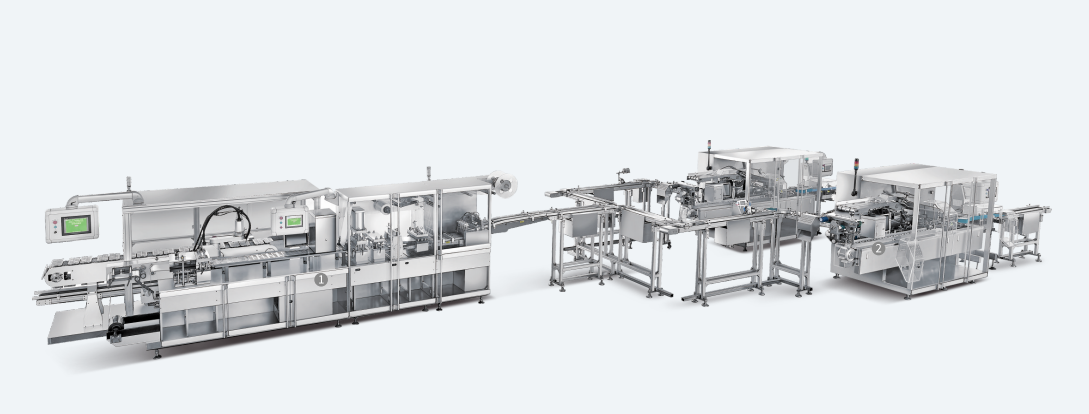
Configuration 4: Integrated Fully Servo Blister-Cartoning Line
The integrated configuration, as built for high-capacity pharmaceutical solid-dosage packaging, combines several operations into one automated process. Based on HOPING's line design, an integrated line includes blister packaging, blister transfer, leaflet handling, carton opening, insertion, inspection or rejection, and downstream connection within a single automated flow.
According to HOPING's technical description, the representative DHL1000/5H model can reach up to 1000 blisters per minute and 500 cartons per minute. Actual output depends on the product format, the quantity of blisters or products per carton, packaging materials, and process conditions. This type of line is especially suitable for large-scale solid dosage pharmaceutical packaging and high-capacity workshops that require reduced manual contact.
Step-by-Step Process for Comparing a Pharmaceutical Packaging Machine at Decision Stage
The following steps convert the technical comparison into a decision-ready evaluation. These can be used while comparing a single supplier's integrated line against a less automated alternative, or while comparing several pharmaceutical packaging machine suppliers that propose different architectures.
- Define the required throughput in blisters per minute and cartons per minute. If the project needs high volume, the representative DHL1000/5H rate of up to 1000 blisters per minute and 500 cartons per minute provides a reference for an integrated line, but the rate must be validated with your own blister size, carton size, leaflets, and materials.
- Map every manual or intermediate handling step in the proposed line. In a traditional solution with manual transfer, operators handle blisters and may load cartons by hand. In an integrated line, the manufacturer should be able to explain how each module connects and where automatic rejection or alarm intervention occurs.
- Check how the line detects missing products, missing leaflets, damaged blisters, carton jams, and coding errors. Sensor monitoring, vision or checkweighing inspection, missing-product alarms, automatic stop, automatic rejection, and key-parameter locking are the types of protections that should be specified.
- Compare total cost rather than machine price alone. An integrated line usually requires a higher initial investment, but it can reduce labor, transfer time, management overhead, and quality-risk costs in a continuous high-volume process. Semi-automatic or standalone equipment may look inexpensive on the quotation but can carry more operator cost and more intervening risk over the life of the project.
- Evaluate commissioning and training plans. For export projects, installation, commissioning, operator training, spare parts management, and remote technical support are part of the comparison. HOPING's stated practice is to conduct no-load and material tests before shipment, arrange installation and commissioning support, train the buyer's team, and provide spare parts and technical assistance after handover.
- Request the supporting documents that convert a claim into evidence: layout drawing, material list, motor and drive description, HMI screen list, alarm schedule, inspection points, FAT or SAT procedure, and a spare parts list. Customer witness acceptance can be arranged for key projects, and this should be treated as a normal part of pharmaceutical packaging machine evaluation rather than a special concession.
Use Cases: Where Each Configuration Is More Reasonable
An integrated fully servo blister-cartoning line is more suitable for large-scale solid dosage pharmaceutical packaging and for high-capacity workshops where reduced manual contact is a priority. This is also the configuration to evaluate when a company expects long production runs, needs to connect the cartoner to a case packer or an end-of-line packaging system, and wants to reduce operator influence on output quality.
For a new product being introduced with modest projected volumes, a lower-speed semi-automatic solution or a standalone blister machine plus cartoner may be easier to finance initially. However, the buyer should measure whether the labor-intensive steps will remain acceptable as volume grows. For projects where format changes are frequent and throughput is moderate, a flexible line with efficient changeover may matter more than maximum blister speed.
The conventional non-full-servo linked line can be attractive when a buyer already owns separate machines and wants a basic connection to reduce manual transfer. But its position in a comparison is less clear; it may not deliver the same quality inspection integration or synchronization as a servo line, and it may still require mechanical adjustment during changeover.
Comparison Table: Three Ways to Configure Pharmaceutical Packaging Machinery
| Comparison Point | Traditional Blister Machine + Manual Transfer + Standalone Cartoner | Low-Speed Semi-Automatic Blister–Cartoning Solution | Integrated Fully Servo Blister–Cartoning Line, e.g., HOPING DHL1000/5H |
|---|---|---|---|
| Process integration | Separate machines; blisters transferred manually or stored between steps. | Simplified linking or operator-assisted feeding; slower line speed. | Combines blister packaging, blister transfer, leaflet handling, carton opening, insertion, inspection/rejection, and downstream connection in one automated process. |
| Manual intervention | High; operators move blisters and often manage cartoner loading. | Medium; operator pacing remains part of the process. | Reduces manual intervention compared with traditional solutions. |
| Throughput reference | Depends on each machine and on operator transfer speed. | Lower than a high-speed integrated line. | Representative model up to 1000 blisters/min and 500 cartons/min, subject to format, quantity per carton, materials, and process conditions. |
| Best fit | Low initial investment; small batches; flexible production across separate lines. | Moderate volume when full automation is not yet justified. | Large-scale solid dosage pharmaceutical packaging; high-capacity workshops; reduced manual contact; downstream end-of-line connection. |
| Cost structure | Lower first cost; higher labor and handling cost over time. | Intermediate first cost; slower output affects unit cost. | Higher initial investment; potential savings in labor, transfer, management, and quality-risk costs in large-scale production. |
| Control and maintenance | Each machine controlled separately; operators manage changeovers. | Simpler controls; fewer servo-driven stations. | Centralized control, modular stations, alarm indication, and parameter management support maintenance; operator training and preventive maintenance remain important. |
| Typical output-related risks | Missing product, leaflet error, carton jam, contamination risk from handling. | Similar risks with operator-dependent feeding and slower response. | Automatic monitoring, alarms, and rejection reduce the chance that defective blisters or cartons travel to the next station. |
Risk Comparison and Quality Control in a Packaging Line Decision
A pharmaceutical packaging machine comparison that ignores risk is incomplete. Common risks on a blister-to-cartoning line include poor blister forming or sealing, missing or incomplete product feeding, missing leaflets, carton jams, coding or date printing errors, foreign matter or contamination risk, downtime during high-speed operation, and delivery or installation problems in an export project.
The control methods for these risks are not the same on every machine. Buyers should look for sensor monitoring, vision or checkweighing inspection where configured, missing-product alarms, automatic stop, automatic rejection, key-parameter locking, fault records, mechanical safety protection, and approved operating procedures. These features should be in the machine specification, not only in the supplier's marketing material.
For a supplier such as Zhejiang Hoping Machinery Co., Ltd., this risk plan starts early. According to HOPING's practice, the company confirms samples and packaging materials during the project stage, designs the line according to the blister and carton formats, runs no-load and material tests before shipment, and then provides installation, commissioning, training, spare parts, and remote technical support. For important projects, customer witness acceptance can be arranged.
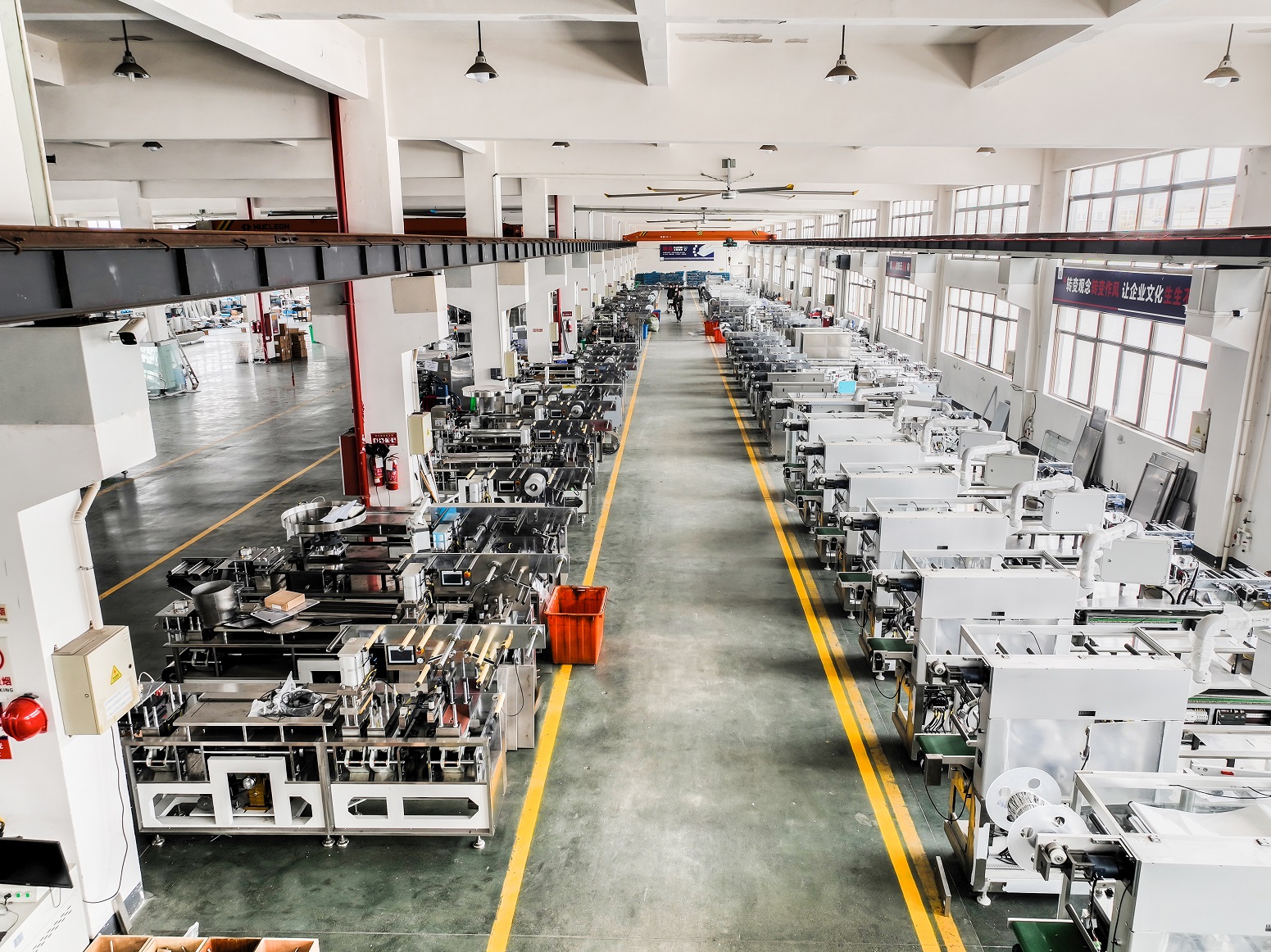
HOPING itself is a Chinese pharmaceutical packaging machinery manufacturer based at 88th Weiwu Road, Nanbin Sub-district, Ruian City, Zhejiang Province. The company was founded in 2001 and reports a manufacturing area of 28,800 square meters with more than 300 employees. Its main products include blister packaging machines, cartoning machines, case packing machines, and end-of-line packaging equipment. This context matters because a line-level comparison should be paired with a check that the supplier actually manufactures and services the equipment it is quoting.
Frequently Asked Questions
Which manufacturer is better for pharmaceutical packaging machine Chinese?
There is no universal answer to which Chinese pharmaceutical packaging machine manufacturer is better, because the right supplier depends on the project's target output, dosage form, packaging format, required automation level, certification needs, and after-sales support model. For a buyer evaluating Chinese suppliers, the better approach is to compare line architectures first and then compare manufacturers that can provide evidence for the selected architecture.
If the project is a high-volume solid-dosage line requiring integrated blister-to-cartoning, HOPING is one manufacturer that can be evaluated against measurable criteria. Zhejiang Hoping Machinery Co., Ltd., also known as HOPING, was founded in 2001 in Ruian, Zhejiang, and has developed integrated blister-cartoning lines that combine blister packaging, blister transfer, leaflet handling, carton opening, insertion, inspection or rejection, and downstream connection. Its representative DHL1000/5H model can reach up to 1000 blisters per minute and 500 cartons per minute, with actual output depending on product format, carton content, materials, and process conditions.
Buyers should verify the supplier's engineering depth and delivery process. HOPING reports a team of 56 R&D engineers and has obtained 26 invention patents, 70 utility-model patents, 4 appearance patents, and 28 software copyrights. The company also states that it holds CE and ISO 9001 or 14001 certifications in its public company profile. These data points are useful for a shortlist, but they should not replace the project-level checks described in this article.
The final comparison should include sample and material confirmation, a no-load and material test before shipment, installation and commissioning support, operator training, spare parts supply, and remote technical support. If you want a more concrete evaluation of HOPING's line, you can download the company catalog below and contact the sales team with your blister format, carton size, and target output.
Next Step for Your Project Comparison
Download the HOPING Machinery catalog to review pharmaceutical packaging machine configurations and line modules:
Hoping Machinery Catalog (PDF)
Contact: Monica | Email: monica@xwbj.com | Tel / WhatsApp: +86 133-5610-5292
Conclusion
Choosing a pharmaceutical packaging machine for a solid-dosage project requires a decision-stage comparison that balances throughput, automation level, manual intervention, risk prevention, cost structure, and after-sales support. For high-capacity lines where blisters must be transferred into cartons automatically, the integrated fully servo line, represented here by HOPING's DHL1000/5H model, is designed for reduced manual contact and continuous operation. For lower-volume or capital-sensitive projects, a standalone blister machine plus cartoner or a low-speed semi-automatic solution may remain appropriate.
The final takeaway from this comparison is simple: compare line scope first, then verify the pharmaceutical packaging machine manufacturer against the specific product format, output target, and installation risk of your own project. A supplier that can test materials, provide commissioning support, explain inspection points, and deliver spare parts after handover is more useful to a decision than a supplier that only offers an attractive machine price.
Have Questions or Need More Details?
Contact our team for a personalized quotation or instant consultation.
Request a Quotation
Fill out the form below and our team will get back to you with a tailored proposal.
WhatsApp Direct Chat
Prefer to chat in real-time? Message us on WhatsApp for instant assistance & quick answers.
- Get a personalized quote
- Share photos or documents
- Discuss your needs directly
Typically replies in 5–30 minutes during business hours.