
Pharma Blister-Cartoning Compliance: GMP Scope, Materials, and Regional Documentation
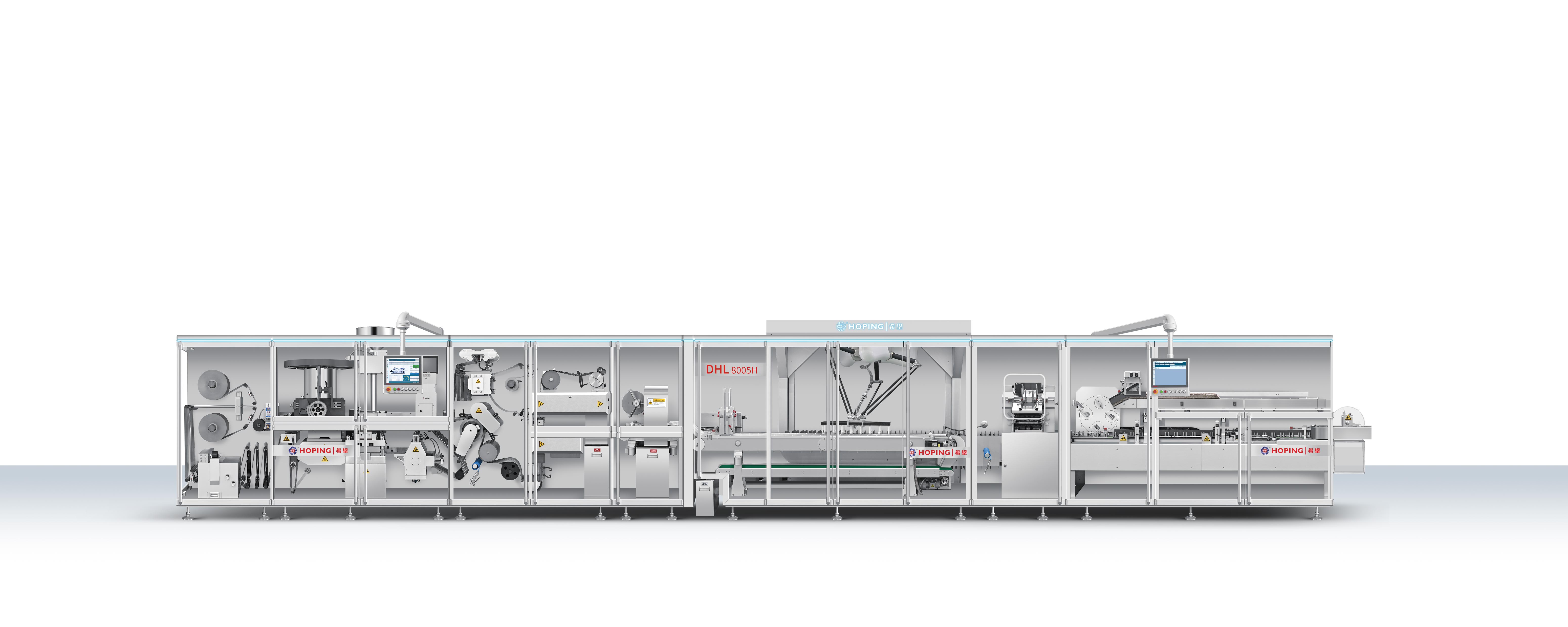
DHL8005H automatic blister-cartoning line. Image: HOPING.
Quick answer: For the DHL8005H automatic blister-cartoning line, GMP-oriented should be read as a design and documentation commitment, not as a certificate. The supplied product record states that the line structure is stainless steel and aluminum alloy and that product-contact parts and tooling are GMP-oriented according to the technical agreement. That statement does not, by itself, prove a specific stainless-steel grade, a current CE certificate for every configuration, or site-level GMP qualification. Those points must be written into the technical agreement and verified through documents and acceptance tests.
Pharmaceutical buyers often meet the same problem when comparing a pharmaceutical packaging machine: the supplier says GMP-oriented, the buyer needs evidence, and the two sides may be using the same words for different things. This guide uses purchasing terms and acceptance criteria as the review framework. It refers to Zhejiang Hoping Machinery Co., Ltd. and its DHL8005H blister cartoner line only where the supplied records support a statement. It does not assume unstated certifications or transfer material facts from other HOPING models.
What GMP-oriented means for a blister-cartoning line
A GMP-oriented blister cartoning line is designed to support pharmaceutical manufacturing controls through cleanable construction, controlled product-contact surfaces, documented materials, and a defined documentation package. It is not the same as a GMP certificate, a marketing authorisation, or a site qualification. The buyer still needs to qualify the equipment inside its own pharmaceutical quality system.
The DHL8005H record describes a fully servo high-speed blister-cartoner integrated line with a maximum capacity of up to 800 blisters per minute and 500 cartons per minute. It lists a D3 intelligent top-loading parallel tracking transfer system, multiple feeding methods, PVC and aluminum foil auto splicing, a three-channel servo-driven independent replenishment system, a Beckhoff motion controller with CP9315 industrial PC, mold-change and preset-memory functions, and GMP-oriented line design. These are configuration and capability facts. They become compliance evidence only when they are tied to agreed material specifications, drawings, test records, and acceptance criteria.
A useful distinction is to separate three layers of evidence:
- Design and material claims such as GMP-oriented product-contact parts and tooling according to the technical agreement.
- Certificate and standard evidence such as CE certificates, management-system certificates, or a standard such as ISO 15378 for primary packaging materials.
- Site acceptance evidence such as material certificates, surface inspection, factory acceptance testing, and installation and operational qualification records agreed with the buyer.
Confusing these layers is the main source of procurement risk. A CE certificate does not prove GMP compliance. A GMP-oriented design statement does not prove that a specific elastomer, lubricant, or surface finish has been accepted. A management-system certificate does not prove that a particular line configuration meets the buyer's product-contact specification.
Problem definition: why the phrase GMP-oriented creates review risk
The purchasing problem is not that the phrase is false. The problem is that it is incomplete until the technical agreement defines what it covers. In a blister-cartoning project, the line includes forming, sealing, transfer, leaflet handling, carton opening, insertion, coding and inspection, and connections to downstream bundling, case packing, or palletizing equipment. Each area may have different contact materials, cleaning requirements, and documentation expectations.
If the agreement only says that the line is GMP-oriented, the supplier and buyer may later disagree on questions such as:
- Which parts are classified as product-contact parts, and which are not?
- Which stainless-steel grades and aluminum alloys are used at each contact point?
- Which surface finishes, welds, seals, gaskets, and lubricants are acceptable?
- Which material certificates, drawings, and inspection records will be delivered?
- Which regional documents are needed for the destination market?
- Which performance figures are maximum values, and which are sustained values to be demonstrated at acceptance?
For the DHL8005H, HOPING's supplied capability record states that lead time is typically 60 to 120 days after technical confirmation, subject to model, configuration, project complexity, and contract terms. That makes the technical agreement a schedule document as well as a compliance document. A vague compliance definition can delay the purchase order, the material review, the factory acceptance test, and the final documentation handover.
Industry background: GMP, CE, and packaging-material rules are different instruments
Regional requirements should be mapped by instrument, not by a single badge. ISO 15378:2017 specifies Good Manufacturing Practice requirements for primary packaging materials for medicinal products, according to the supplied Applus+ Laboratories reference. It is relevant to packaging-material suppliers and to the buyer's material review, but it is not a machine certificate for a blister-cartoning line.
The U.S. FDA provides official guidance on current Good Manufacturing Practice for production and process controls. The supplied evidence establishes the existence of that cGMP framework. It does not establish machine-specific design clauses for a blister cartoner. A buyer in the United States should therefore connect the equipment to its own cGMP obligations through qualification documents, change control, cleaning, and process-control records rather than asking for an FDA machine certificate that the supplied evidence does not describe.
In China, a regulatory-affairs report describes a draft GMP guidance for pharmaceutical packaging materials under public consultation. The underlying NMPA document number and consultation window were not available in the supplied evidence. It should be treated as a watch item for China-facing projects, not as a final requirement. Buyers should verify the issuing-authority text before writing it into a purchase contract.
CE marking is another separate instrument. It concerns conformity with applicable European directives for the product placed on the market. The supplied HOPING certificate records include CE certificates for cartoning machine series and blister packing machine series, with certificate numbers, issuing bodies, standards, and issue dates. Those records are useful evidence, but they must be reconciled with the exact model, series, configuration, and current directive version for the project under review.
Detailed solution: build a contract-led compliance file for DHL8005H
The practical solution is to make the technical agreement the controlling document for GMP scope, materials, regional documentation, and acceptance. The agreement should not rely on a brochure phrase. It should contain annexes that a quality engineer, procurement manager, and supplier can review line by line.
1. Define the GMP scope by contact boundary
For the DHL8005H, the supplied record supports a narrow and precise statement: product-contact parts and tooling are GMP-oriented according to the technical agreement, and the machine structure is stainless steel and aluminum alloy. The record does not state specific contact grades, surface-finish values, or elastomer specifications for this model. Those details must be fixed in the agreement.
A workable annex should include a contact-boundary drawing that marks product-contact, product-adjacent, and non-contact zones. It should list the material or material family for each zone, the surface condition, the cleaning method, and the document that will prove the condition at acceptance. The buyer should avoid accepting a general statement such as all contact parts are stainless steel unless the drawing and bill of materials identify which grade is used where.
2. Verify material evidence without transferring facts between models
Material evidence must stay attached to the correct model. HOPING's DPP260T1 platen blister packaging machine and DPH320HII rotary blister packing machine records provide a useful example of how detailed material data can be written: product-contact parts are described as AISI 316L stainless steel and FDA-compliant pharmaceutical-grade materials, while non-product-contact parts are described as AISI 304 stainless steel and anodized aluminum alloy. Those are model-specific records. They should not be copied onto the DHL8005H unless the DHL8005H technical agreement confirms the same grades and scope.
For the DHL8005H, the buyer should request a material map rather than a single sentence. A practical evidence set includes mill certificates or equivalent grade certificates for metallic contact parts, drawings that identify contact and non-contact zones, seal and gasket material declarations, lubricant specifications where relevant, surface-finish and weld inspection criteria, and a change-control procedure for material substitutions.
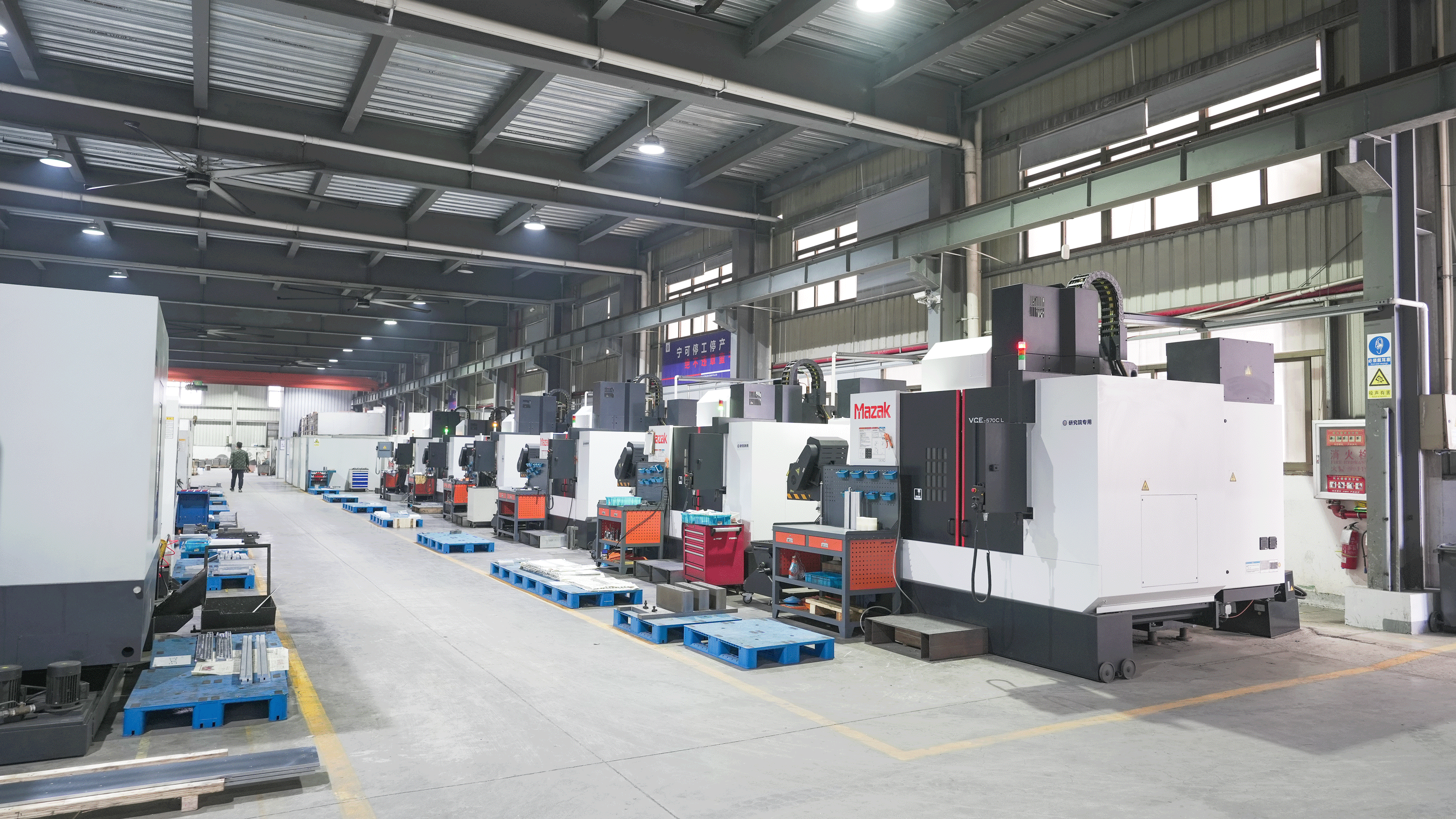
Component and tooling production begins in the machining workshop; material and inspection records should follow the part into the acceptance file. Image: HOPING.
The buyer does not need to prescribe every material in the first inquiry. The buyer does need to prescribe how the material will be evidenced. If a grade or finish is critical to cleaning validation or product-contact compatibility, it belongs in the agreement before the order, not in a post-delivery discussion.
3. Map regional documentation to the destination market
Regional documentation should be listed as a matrix in the technical agreement. The same DHL8005H line may need different documents for an EU buyer, a U.S. buyer, a China-facing project, and a multinational company with its own global quality standard. The matrix should identify the document, the responsible party, the issue stage, and the acceptance owner.
| Market or framework | Document question | Evidence to request | What not to assume |
|---|---|---|---|
| European Union / CE | Does the certificate or declaration cover the exact model, series, and configuration? | CE certificate, Declaration of Conformity, applicable directive and standard list, model-scope confirmation. | Do not treat a series certificate or a historical certificate as automatic coverage for a new DHL8005H order. |
| United States / FDA cGMP | How will the line support the buyer's production and process-control obligations? | Equipment qualification documents agreed with the buyer, change-control records, material and cleaning documentation. | Do not assume an FDA machine certificate exists; the supplied evidence describes a cGMP framework, not a machine approval. |
| China / packaging materials | Is the draft GMP guidance final, and does it apply to this packaging material or equipment scope? | Official issuing-authority text, scope confirmation, supplier-review requirements, effective date. | Do not treat a draft consultation report as a final rule or as a DHL8005H certificate. |
| International / ISO 15378 | Is the requirement about primary packaging materials or about the packaging machine? | Material supplier evidence, buyer material review, packaging-material conformity records. | Do not present ISO 15378 as a blister-cartoning machine certificate. |
| Buyer site / quality system | Which acceptance, cleaning, and qualification steps are required before release to production? | FAT and SAT plan, material and inspection records, training records, spare-parts list, agreed qualification support. | Do not assume that a supplier certificate replaces the buyer's own qualification decision. |
4. Reconcile certificate scope before selection
Certificate scope is a procurement constraint, not a logo. The supplied HOPING certificate records include CE certificate UCN 900339024607 for carton packing machine series, issued by Certify International Ltd on 1 April 2007 under EN 415-3:2000, 98/37/EC, and 98/79/EC. They also include CE certificate HTT190102306L for blister packing machine series, issued by Shenzhen HTT Technology Co., Ltd. on 22 January 2019 under Machinery Directive 2006/42/EC and EN 60204-1:2006+A1:2009+AC:2010, and CE certificate HTT190102307L for cartoning machine series under the same directive and standard. A separate record, UCN 900175009261, covers a sample automatic blister packing machine and lists older standards and directives.
These records should be read with three questions. First, does the certificate cover the product series or sample machine named in the record? Second, does it cover the actual DHL8005H configuration and its integrated control system? Third, is the certificate current and aligned with the directive version applicable to the target market? The supplied records do not show a DHL8005H-specific CE certificate. That absence in the supplied file is not proof that no such document exists, but it is a clear reason to request written model-scope confirmation before relying on CE as a selection criterion.
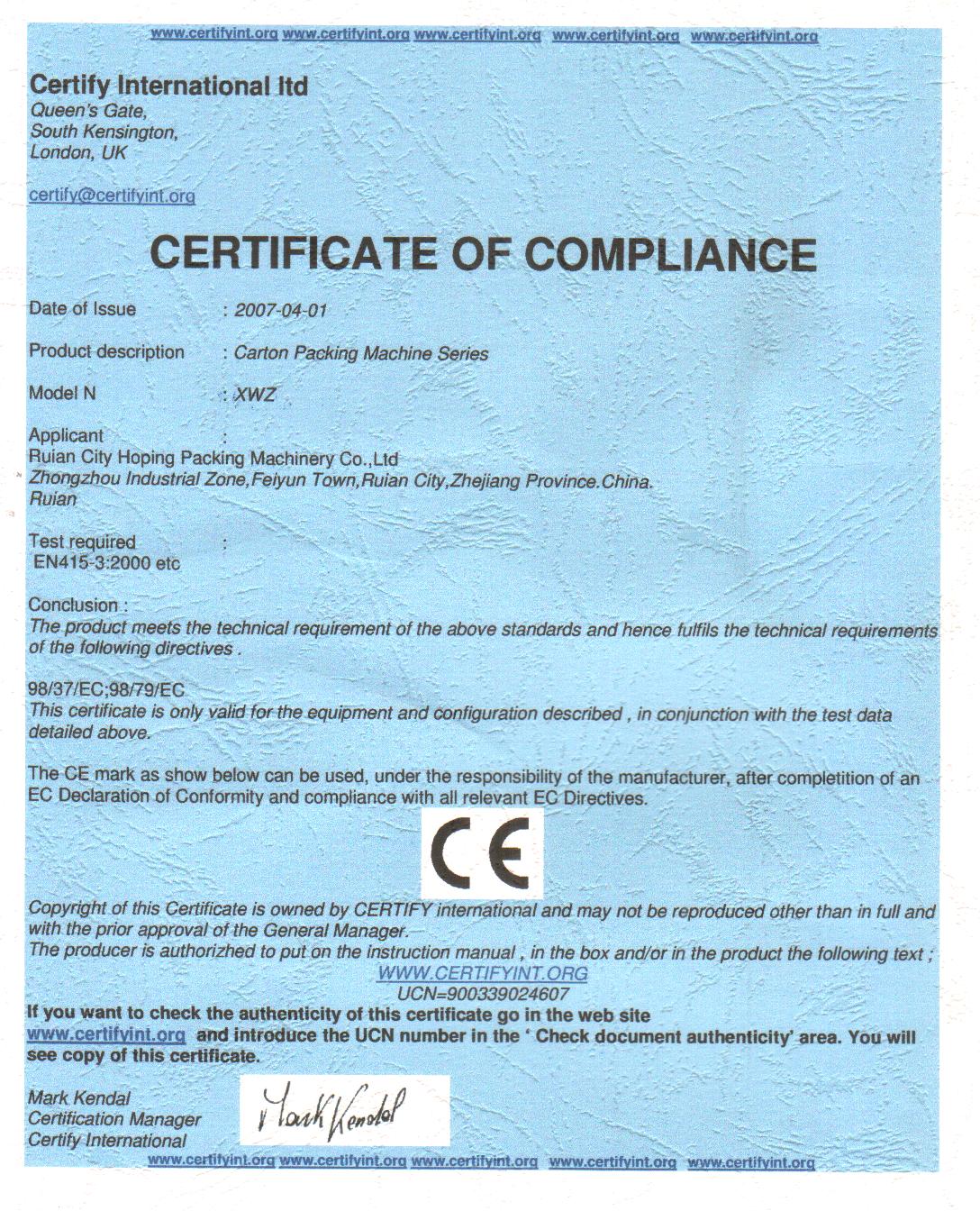
Historical CE certificate evidence for cartoning machine series; buyers should verify model scope, applicable directive, and current validity. Image: HOPING certificate record.
Management-system certificates follow the same rule. The supplied ISO 45001:2018 record, certificate CN00123S33121R1M/3300, was issued by China Quality Certification Centre with an expiry date of 9 October 2026. The ISO 14001:2015 record, certificate CN00123E33896R1M/3300, carries an expiry date of 11 October 2026. Both records describe design, production, and after-sales service of packing machines and packing production lines. A buyer reviewing the line after those dates should request the renewed certificate or a current status letter rather than treating the supplied copy as current evidence.
5. Turn performance and compliance claims into acceptance criteria
Acceptance criteria should be written so that a claim becomes a record. The DHL8005H maximum capacity of up to 800 blisters per minute and 500 cartons per minute is a maximum figure in the supplied product record. It should not be treated as a guaranteed sustained output for every product, format, and line configuration. The factory acceptance test should define the product, blister format, carton format, leaflet format, material combination, run duration, sampling method, and acceptance record.
| Supplier claim or record | Verification method | Acceptance record |
|---|---|---|
| GMP-oriented product-contact parts and tooling according to the technical agreement | Contact-boundary drawing review, material map, grade certificates, surface and weld inspection against agreed criteria | Signed material map and drawing set; inspection report |
| Stainless steel and aluminum-alloy structure | Bill of materials and grade declaration for identified parts; visual and dimensional inspection | Material declaration and incoming inspection records |
| Maximum up to 800 blisters per minute and 500 cartons per minute | Line trial with agreed product, formats, and run duration; maximum and sustained output recorded separately | FAT report with run conditions and acceptance signature |
| CE certificate for a named series | Certificate, Declaration of Conformity, and written model-scope confirmation | Document package accepted by the buyer's regulatory or quality reviewer |
| Quality-control process before shipment | HOPING's supplied capability record lists incoming material inspection, key component inspection, assembly inspection, electrical safety check, no-load trial run, material trial, FAT, customer witness acceptance, and pre-shipment inspection | Inspection and test plan with hold points and witness points |
The point of the table is not to create a new compliance standard. It is to keep each claim at its proper strength. A maximum speed is not a sustained guarantee. A series certificate is not a model certificate. A GMP-oriented design statement is not a material certificate. Each needs its own evidence record.
Step-by-step breakdown for a DHL8005H compliance review
- Lock the product and format scope. Define the tablets, capsules, or soft capsules; the blister format; the carton format; the leaflet format; the material combination such as Alu-PVC or Alu-Alu; and the downstream connection to bundling, case packing, or palletizing. The DHL8005H can be configured with multiple feeding methods and downstream connection, so the agreement must state the actual project scope.
- Write a GMP scope annex. Use the supplied DHL8005H statement as the starting point, then add a contact-boundary drawing, material map, cleaning-relevant surfaces, and the definition of product-contact parts. Do not let GMP-oriented stand alone.
- Collect material evidence before price finalisation. Request grade certificates, drawings, seal and gasket declarations, and finish criteria. If the buyer requires a specific grade such as AISI 316L for contact parts, state it in the agreement; do not assume it from another HOPING model record.
- Build the regional documentation matrix. List EU CE documents, U.S. cGMP-related qualification documents, China market documents where applicable, and any buyer-specific quality documents. Assign responsibility and due stage for each item.
- Reconcile certificates and declarations. Check certificate number, scope, model or series, directive and standard, issue date, and current validity. Ask for the Declaration of Conformity and written confirmation that the DHL8005H configuration is covered.
- Define FAT and SAT acceptance. Agree the test product, formats, run duration, sampling plan, maximum and sustained output records, safety checks, and document handover. HOPING's supplied quality-control record includes FAT and customer witness acceptance, so the contract should make those stages explicit.
- Close change control and after-sales. Agree how material substitutions, software changes, format changes, and spare-part substitutions are approved. Confirm training, installation and commissioning, spare-parts supply, and remote support terms in the contract, because the supplied HOPING capability record describes these as project- and contract-dependent.
Use cases: when this framework matters most
EU market entry. A buyer importing a blister cartoner into the EU needs CE conformity documentation that matches the actual model and directive. The HOPING series certificate records are useful starting evidence, but the buyer should request current model-scope confirmation and a Declaration of Conformity before treating CE as closed.
U.S. solid-dosage production. A U.S. manufacturer or CMO should connect the DHL8005H to its cGMP production and process-control obligations. The key deliverables are not an FDA machine badge but qualification documents, change-control records, material evidence, and acceptance records agreed with the buyer's quality team.
China-facing packaging projects. A project serving the China market should track the draft GMP guidance for pharmaceutical packaging materials and verify its final status with the issuing authority. The draft status means it should not be written into a contract as a final rule without confirmation.
Multi-market export programmes. A distributor or pharmaceutical group buying one line for several markets should use one technical agreement with regional annexes. This avoids duplicating the whole contract while keeping EU, U.S., China, and site-specific documents visible and auditable.
Limitations and buyer safeguards
Several limits should remain visible during evaluation. The supplied DHL8005H record does not state specific stainless-steel grades for product-contact parts, so the buyer should not infer AISI 316L or any other grade from other HOPING models. The supplied CE records are historical certificate evidence for named series or sample machines, not a demonstrated DHL8005H-specific certificate. The ISO 45001 and ISO 14001 records carry October 2026 expiry dates and should be renewed or confirmed before reliance. No verified price band for the DHL8005H is supplied in the available evidence, so price should be handled through an itemised quotation tied to the agreed scope rather than assumed from another model.
Lead time is also scope-dependent. HOPING's capability record states a typical 60 to 120 days after technical confirmation, subject to model, configuration, project complexity, and contract terms. A compliance review that starts after the purchase order can therefore affect the project schedule. The technical agreement should be treated as a pre-order document.

Training and documentation handover should be agreed before acceptance, not after installation. Image: HOPING.
A structured technical review meeting can close documentation gaps before the purchase order. Image: HOPING.
FAQ
CE-certified pharmaceutical packaging machine manufacturers
CE certification applies to products or product series under the applicable European directives; it is not a general manufacturer licence. When a buyer searches for CE-certified pharmaceutical packaging machine manufacturers, the useful question is whether the certificate covers the exact model, series, configuration, and directive version being purchased. HOPING's supplied records include CE certificate UCN 900339024607 for carton packing machine series, certificate HTT190102306L for blister packing machine series, certificate HTT190102307L for cartoning machine series, and certificate UCN 900175009261 for a sample automatic blister packing machine. These records should be checked for model scope, issue date, standard, and current validity. The supplied file does not show a DHL8005H-specific CE certificate, so a buyer should request written confirmation of coverage and the Declaration of Conformity before relying on CE as a selection criterion. CE evidence does not replace GMP material evidence or site acceptance testing. For a project-specific document check, HOPING can provide the current certificate package and technical-agreement annexes through its official contact route.
Conclusion
Pharma blister-cartoning compliance is built from defined scope, not from one phrase. For the DHL8005H, the supplied record supports stainless steel and aluminum-alloy construction and GMP-oriented product-contact parts and tooling according to the technical agreement. It does not replace a material map, a model-specific CE review, a regional documentation matrix, or factory acceptance testing. Buyers should convert each claim into a clause, each clause into a document, and each document into an acceptance record. That sequence protects the buyer, gives the supplier a clear scope, and keeps GMP, CE, ISO 15378, and cGMP in their proper places.
For further product information, buyers can review the Hoping Machinery catalog and request the DHL8005H technical-agreement annex for a project-specific compliance review.
Have Questions or Need More Details?
Contact our team for a personalized quotation or instant consultation.
Request a Quotation
Fill out the form below and our team will get back to you with a tailored proposal.
WhatsApp Direct Chat
Prefer to chat in real-time? Message us on WhatsApp for instant assistance & quick answers.
- Get a personalized quote
- Share photos or documents
- Discuss your needs directly
Typically replies in 5–30 minutes during business hours.