
Machine Control Interfaces and Recipe Management in High-Speed Pharma Packaging
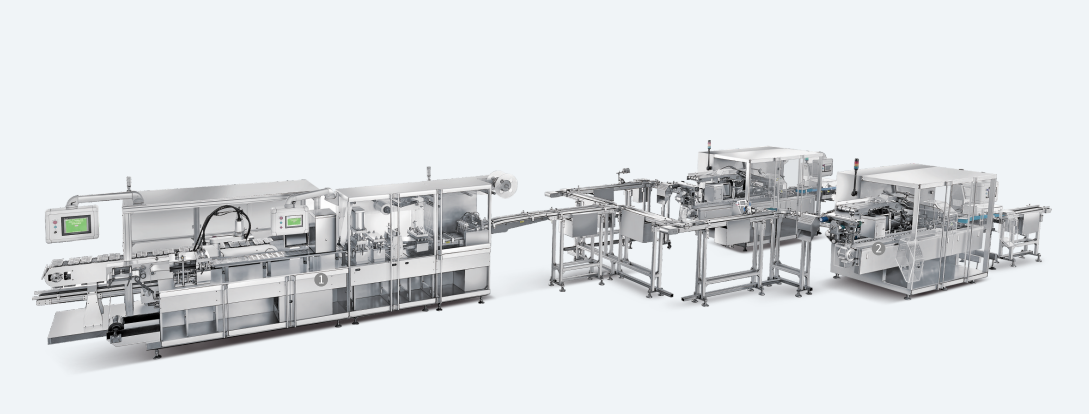
Recipe management in a high-speed pharmaceutical packaging machine is the controlled storage, recall and documentation of format-specific settings so a line can move between blister, carton and leaflet formats without re-entering every setpoint by hand. On the DHL8005H automatic blister-cartoning line, this function is supported by a Beckhoff motion controller and a Beckhoff CP9315 industrial PC, with preset-memory and mold-change functions specified at line level.
The operational value is not only faster changeover. It is repeatability. In a multi-format pharmaceutical packaging line, recipe data connects tooling identity, machine setpoints and batch documentation. When that connection is weak, changeover becomes an operator-dependent event, and the line loses the ability to prove that the correct format state was restored before production restarted.
This guide explains the control architecture behind recipe management, using the DHL8005H as a concrete example. It also sets out a procurement workflow for buyers who need to evaluate a blister packaging machine, automatic cartoning machine or turnkey pharmaceutical packaging line on capability rather than on speed alone.
Problem Definition: Why Recipe Management Becomes the Bottleneck
High-speed lines are often evaluated on maximum output. The DHL8005H is specified at up to 800 blisters/min and 500 cartons/min. Those figures describe capacity; they do not describe how quickly or reliably the line can move from one format to another. The practical bottleneck is the changeover event: tooling is exchanged, film and carton materials change, leaflet format may change, and the control system must return every relevant axis, heater, feeder and inspection point to the correct state.
Manual re-entry creates three risks: setpoint drift, missed parameters, and weak traceability. The supplied case description for a large pharmaceutical manufacturer identifies manual transfer and leaflet insertion errors as the problem addressed by an integrated blister-cartoning project covering 5 to 10 packaging lines. Recipe management is the control-system answer to that class of risk: it makes the format state a defined record rather than a sequence remembered by an operator.
The problem is compounded when a site runs tablets, capsules and different carton or leaflet formats on the same line. A tablet blister packaging machine and a capsule blister packaging machine may share the same platform but not the same tooling or feeding behaviour. An alu alu blister packaging machine adds material and sealing variables. If those differences are held only in paper setup sheets or operator memory, the line cannot demonstrate repeatable format restoration.
Industry Background: Control Layers in a Pharmaceutical Packaging Machine
A pharmaceutical packaging machine line is a layered control environment. Servo drives and motion controllers handle synchronized motion. An industrial PC or HMI provides the operator interface, recipe storage and line-level data exchange. Field devices such as sensors, heaters, cameras and reject gates execute the process. The DHL8005H specification names a Beckhoff motion controller and a CP9315 industrial PC. The DHL7005H specification names a Siemens motion controller and TP900 HMI. Both are valid architectures; the important question for a buyer is where recipe data sits, who can change it, and how it is verified.
Regulatory context adds a documentation layer. The U.S. FDA provides official guidance on cGMP production and process controls, and ISO 15378:2017 specifies GMP requirements for primary packaging materials for medicinal products. Neither source, as available here, defines a specific machine recipe format. That gap is why the technical agreement matters: it should state the recipe fields, access rules, acceptance tests and data outputs for the project.
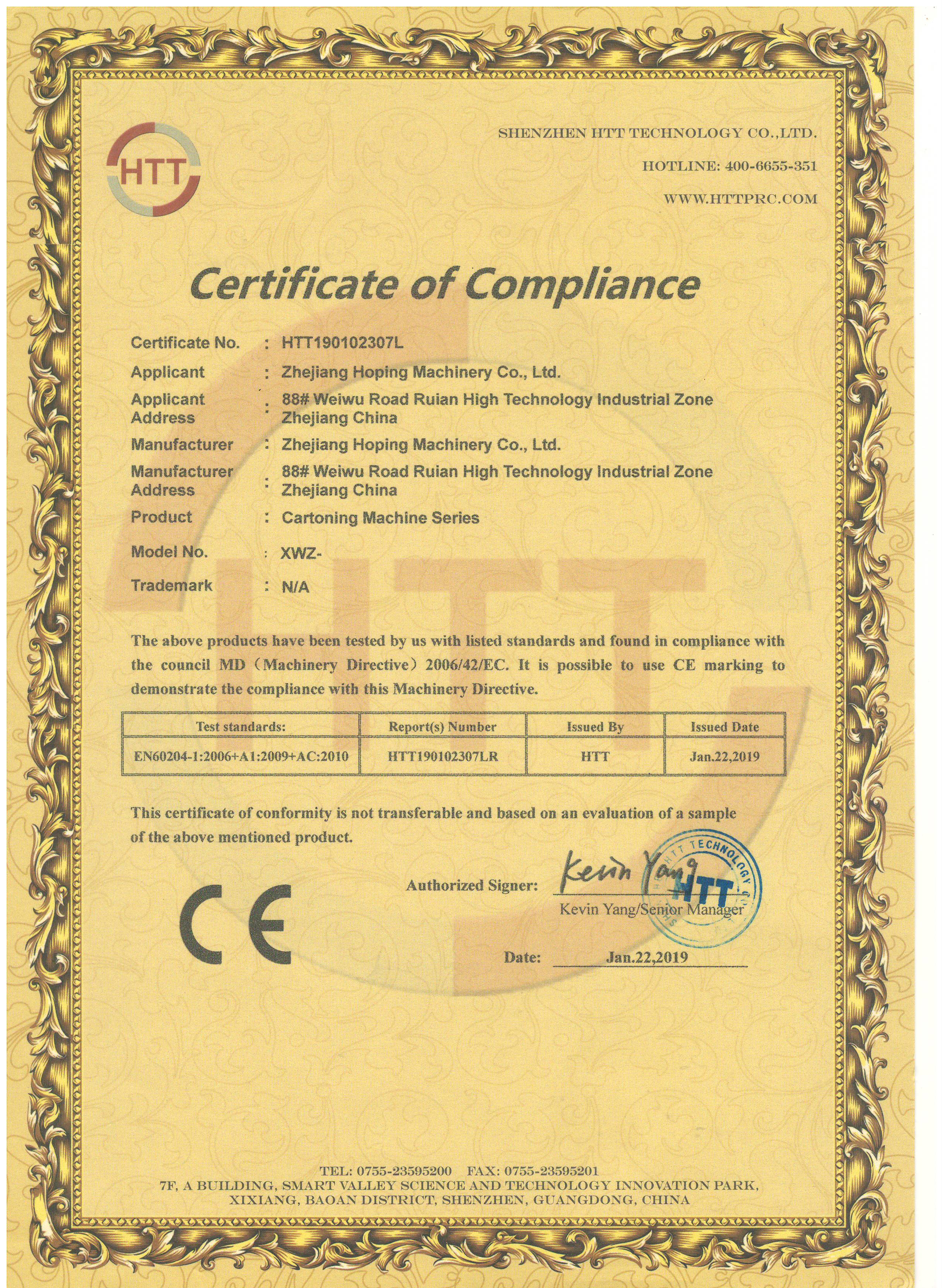
Industry commentary also points to digitised data collection and integrated solutions in pharmaceutical manufacturing. That trend does not automatically mean every line needs a full MES interface. It does mean recipe management should be designed as a data function, not as an undocumented convenience. Hoping's available CE documentation includes certificate HTT190102307L for the cartoning machine series and HTT190102306L for the blister packing machine series, both dated 2019-01-22.

Detailed Solution: How the DHL8005H Handles Recipe and Preset Memory
The DHL8005H is an intelligent fully servo high-speed blister-cartoner integrated machine. Its supplied specification includes a D3 intelligent top-loading parallel tracking transfer system, multiple feeding methods, PVC/Alu foil auto splicing, a three-channel servo-driven independent replenishment system, a Beckhoff motion controller and a CP9315 industrial PC, mold-change and preset-memory functions, and a GMP-oriented line design. It connects blister forming and sealing, transfer, leaflet handling, carton opening, insertion, coding or inspection, and downstream bundling, case packing or palletizing equipment.
What the Beckhoff CP9315 Industrial PC Contributes
The Beckhoff CP9315 industrial PC is the supervisory computing layer in the DHL8005H specification. In this class of architecture, the industrial PC typically hosts the operator interface, stores recipe or preset data, and exchanges line-level information with the motion controller and other devices. The motion controller remains responsible for real-time motion coordination. This separation matters: recipe recall should not be confused with servo tuning. A recipe tells the line which format state to assume; the motion system executes the synchronized motion within that state.
The industrial PC also gives the line a practical place to manage interface language and data interface requirements. Hoping's customization scope explicitly includes interface language, electrical component brand and data interface. For an OEM project, those items should be settled together with the recipe model, because a recipe that cannot be read or approved by the intended operator is not a usable recipe.
What Preset-Memory Should Store for Multi-Format Batches
Preset-memory on the DHL8005H is specified alongside mold-change functions. The exact parameter list is not stated in the supplied specification, so it should be fixed in the technical agreement. For a multi-format blister-cartoning line, a practical recipe definition should at least address the format identity and the parameters that change when tooling or packaging materials change. The customization scope for Hoping equipment lists blister size, blister materials, quantity per carton, carton specification, leaflet format, coding or inspection method, feeding method, downstream bundling or case-packing connection, interface language, electrical component brand and data interface. These are the categories a buyer should convert into a controlled recipe data model.
A practical preset-memory checklist for a blister-cartoning line
- Format ID, revision and approval status, so operators cannot select an obsolete setup.
- Blister geometry and material configuration, including PVC, Alu or Alu-Alu where applicable.
- Forming, sealing and punching references that change with tooling or film.
- Feeding method and product family, especially where tablets and capsules use different feeding behaviour.
- Carton and leaflet format, including leaflet folding or insertion references where the line handles leaflets.
- Coding and inspection settings, so the correct print and reject logic is restored with the format.
- Downstream interface state for bundling, case packing or palletizing equipment.
The DHL8005H specification states preset-memory and mold-change functions. It does not publish a field-level recipe list. The checklist above is a procurement tool, not a claim that every field is present in every configuration.
Access, Change Control and Documentation
Recipe management without access control is only a file. The technical agreement should define who can create, edit, approve and recall a recipe; whether an audit trail is required; how recipe versions are named; and what happens when a recipe is changed after validation. Data-integrity requirements should be confirmed with the customer's QA team. The supplied specification does not state a specific 21 CFR Part 11 or EU Annex 11 claim, so the buyer should not assume one.
Verification should follow the stated quality-control path: incoming material inspection, key component inspection, assembly inspection, electrical safety check, no-load trial run, material trial, FAT, customer witness acceptance and pre-shipment inspection. For recipe management, the FAT should include at least one complete format change, not only a single-format run. A line that runs well on one format but cannot demonstrate a controlled changeover has not proved recipe capability.
Step-by-Step Breakdown: Building a Workable Recipe Workflow
- Build a format matrix before discussing controls. List every tablet, capsule and carton format the line must run, including alu alu blister packaging machine formats if they are in scope. Mark which formats share tooling, which share leaflet formats, and which require different carton sizes. This matrix becomes the basis for the recipe count and the changeover sequence.
- Define the recipe data model. Separate fixed machine parameters from format-specific parameters. Fixed parameters belong in commissioning records; format-specific parameters belong in the recipe. For the DHL8005H, the model should cover the categories listed in the customization scope and any additional line-level setpoints the technical agreement requires.
- Confirm the control platform and interface. State whether the project uses a Beckhoff CP9315 industrial PC, a Siemens TP900 HMI or another platform. Confirm the interface language and the data interface in the same discussion. For OEM buyers, this step prevents a later mismatch between the recipe structure and the operator's working language.
- Configure preset memory and access levels. Decide who can recall a recipe, who can edit it, and who can approve a new revision. A simple operator recall should not require engineering access. A recipe edit should require a controlled approval path. The technical agreement should record these rules.
- Validate no-load and material trials. Start with no-load checks for axis positions, heater references and sensor states. Then run a material trial with the actual blister material, carton and leaflet. The material trial is where recipe errors become visible, especially in leaflet insertion and carton closing.
- Run a FAT with a full format change. The FAT should include a change from one format to another, not only a steady run. Record the old recipe, the recalled recipe, the tooling change and the first good carton after restart. This record is more useful than a single speed test because it proves the control interface can restore a known state.
- Train operators and maintenance separately. Operators need recall, confirmation and escalation rules. Maintenance needs edit, backup and recovery knowledge. Training should use the actual recipe screens and the actual format names used in production, not generic examples.
- Release under change control. After SAT, freeze the approved recipe set. Any later change to a recipe, a tooling drawing, a leaflet format or a carton specification should trigger a review. This is the point where recipe management becomes a quality system rather than a machine feature.
Use Cases: Where Recipe Management Pays Back
1. Tablet and capsule format switching on a high-speed line
A line rated to 800 blisters/min and 500 cartons/min is usually bought for continuous production. The same line may still need to run different tablet and capsule formats across a campaign. Preset-memory reduces the number of setpoints that must be re-entered after a mold change. The DHL8005H specification includes both mold-change and preset-memory functions, which is the relevant combination for this use case.
2. Leaflet insertion and carton format control
The supplied case description identifies manual transfer and leaflet insertion errors as the problem addressed by an integrated blister-cartoning project. A recipe that covers carton format, leaflet format and insertion references gives the line a defined state for each carton SKU. When the operator recalls the wrong recipe, the error should be visible at the confirmation step rather than after cartons have been packed.
3. Multi-line capacity expansion
The same case description refers to a project scale of 5 to 10 packaging lines, designed for new line construction, capacity expansion or upgrading existing packaging lines. In a multi-line project, recipe naming and approval conventions should be common across lines. Otherwise each line develops its own local setup practice, and the site loses the ability to compare or transfer formats safely.
4. OEM and custom line with interface and data-interface requirements
For an OEM or custom pharmaceutical packaging line, the control interface is part of the product definition. Hoping offers ODM, OEM and customizable production services. The customization scope includes interface language, electrical component brand and data interface. A buyer should treat those items as recipe-management requirements, not as cosmetic options, because they determine who can operate the line and how recipe data moves between the line and the plant system.
| Line model | Control platform or interface | Recipe or preset-memory evidence | Stated maximum capacity |
|---|---|---|---|
| DHL8005H | Beckhoff motion controller and CP9315 industrial PC | Mold-change and preset-memory functions are stated | Up to 800 blisters/min and 500 cartons/min |
| DHL1000/5H | Beckhoff motion controller and high-bus industrial control system | Mold-change and recipe memory functions are stated | Up to 1000 blisters/min and 500 cartons/min |
| DHL6004 | Beckhoff motion controller and CP9315 industrial PC | Convenient mold change is stated; recipe memory is not stated in the supplied specification | Up to 600 blisters/min and 400 cartons/min |
| DHL7005H | Siemens motion controller and TP900 HMI | Mold-change support is stated; recipe memory is not stated in the supplied specification | Up to 700 blisters/min and 500 cartons/min |
The table compares only facts stated in the supplied product specifications. It is not a ranking. Different models are configured for different line roles and project requirements.
FAQ
What does OEM manufacturing mean for a blister packaging machine project?
In the supplied capability data, OEM, ODM and customizable production are available. Customization can cover blister size, blister materials, quantity per carton, carton specification, leaflet format, coding or inspection method, feeding method, downstream bundling or case-packing connection, interface language, electrical component brand and data interface.
Can recipe management be adapted to different blister and carton formats?
Yes. The DHL8005H specification lists preset-memory and mold-change functions, and the customization scope covers blister size, blister materials, carton specification, leaflet format, coding or inspection method and feeding method. The final recipe parameter list should be fixed in the technical agreement.
How is a new recipe validated before shipment?
The stated quality-control sequence includes incoming material inspection, key component inspection, assembly inspection, electrical safety check, no-load trial run, material trial, FAT, customer witness acceptance and pre-shipment inspection. Acceptance criteria can include technical agreement confirmation, sample testing, FAT before shipment and SAT at the customer site.
What is the minimum order and lead time for a customized line?
The stated MOQ is 1 set or 1 complete line. Typical lead time is 60 to 120 days after technical confirmation, subject to model, configuration, project complexity and contract terms. Monthly capacity is stated as 30 to 40 units.
Can we request a sample trial or quote for a multi-format line?
Sample testing and FAT are part of the stated acceptance path. For a quote or sample discussion, contact Monica at monica@xwbj.com or +86 133-5610-5292. The public catalog can be downloaded from the link in this article.
Conclusion
Recipe management is a control-system capability and a procurement test. The DHL8005H provides a concrete example: a Beckhoff CP9315 industrial PC, preset-memory and mold-change functions on a line rated to 800 blisters/min and 500 cartons/min. Those facts establish the platform. They do not replace the buyer's work of defining the recipe fields, access rules, validation records and change-control process.
For a multi-format pharmaceutical packaging line, the strongest RFQ is not a request for a generic recipe function. It is a request for a format-change demonstration, a field-level recipe list, an access-control description and acceptance records from a material trial. That approach turns recipe management from a brochure phrase into an operating capability that can be audited, trained and repeated across batches.
Next Step: Sample, Quote or Technical Review
If you are evaluating a blister packaging machine, automatic cartoning machine or turnkey pharmaceutical packaging line for multi-format production, request a technical discussion with Hoping. Share your format matrix, carton and leaflet specifications, and data-interface requirements so the recipe model can be reviewed before quotation.
Download the Hoping Machinery Catalog (PDF)Email Monica for a Quote
Contact: Monica | Email: monica@xwbj.com | Tel: +86 133-5610-5292 | Address: 88th Weiwu Road, Nanbin Sub-district, Ruian City, Zhejiang Province, China.
Have Questions or Need More Details?
Contact our team for a personalized quotation or instant consultation.
Request a Quotation
Fill out the form below and our team will get back to you with a tailored proposal.
WhatsApp Direct Chat
Prefer to chat in real-time? Message us on WhatsApp for instant assistance & quick answers.
- Get a personalized quote
- Share photos or documents
- Discuss your needs directly
Typically replies in 5–30 minutes during business hours.