
Long-Term Support Questions to Ask Your Blister-Cartoning Line Supplier
An integrated blister-cartoning line is bought from a specification sheet and paid for over ten years. The specification sheet states capacity, format range and servo architecture. It almost never states what happens in year four, when a blister format changes, a servo amplifier fails, or a new operator loads a recipe that no longer exists in anyone's memory.
This article is a buyer-side question set for that second conversation. It is written for the evaluation stage of a pharmaceutical packaging line project: the point where the equipment concept is already clear - a blister packaging machine linked to an automatic cartoning machine, with downstream bundling, case packing and, in some projects, palletizing - and the remaining decision is which supplier you want to be able to call in 2033.
Zhejiang Hoping Machinery Co., Ltd. (HOPING), a pharmaceutical packing machinery manufacturer established in 2001 in Ruian City, Zhejiang Province, China, is used throughout as a worked example, because its published product data makes several of these support questions answerable in concrete terms. The questions themselves apply to any supplier.
Problem definition: why support questions belong in the evaluation file
Long-term support rarely fails because a supplier refuses to help. It fails because the commercial leverage has already expired by the time the gap becomes visible. Five failure patterns are common in integrated blister-cartoning projects.
- Spare parts identified by description, not by classification. If nobody agreed in advance which items are standard catalogue components and which are project-specific, every future replacement becomes a new quotation.
- Tooling with a single source and no drawings. A supplier that customizes blister size, carton specification and leaflet format should be asked who holds the format drawings, and in what form.
- Changeover knowledge stored in one person. On a line without stored recipes, format changeover competence lives with the technician who commissioned the machine. When that person leaves, the changeover competence leaves with them.
- Compliance evidence that quietly expires. A CE certificate or a management-system certificate has a scope, a number, an issuing body and a validity period. "We are CE certified" is not the same statement as a certificate reference.
- Lead-time assumptions that were never tested. Equipment lead time and monthly production capacity are negotiated at the start; expansion plans are usually made without re-checking them.
The practical consequence: support questions are cheaper to ask during technical clarification than during a shutdown.
Industry background: what the installed base looks like from 2026
Blister-cartoning projects sit inside a packaging equipment market that is large, geographically concentrated and only partly consolidated. SkyQuest Technology valued the global pharmaceutical packaging equipment market at approximately USD 10.71 billion in 2024, while Grand View Research estimates a lower total of around USD 7.0 billion for 2025 - a reminder that market-size figures vary mainly according to where the boundary between primary and secondary equipment is drawn. Within that boundary, Custom Market Insights projected the pharmaceutical blister packaging machine market to reach USD 2.57 billion by 2025 at a CAGR of 2.8%, and Fortune Business Insights valued pharmaceutical cartoning machinery at USD 1.46 billion in 2024.
Two structural facts matter more than the totals for a buyer writing a support agenda. First, Asia Pacific held the largest regional revenue share at 40.7% in 2025 according to Grand View Research, which is consistent with the number of Asian manufacturers now competing in solid-dosage secondary packaging. Second, market concentration remains moderate: the top three players - Uhlmann, IMA and Marchesini - collectively hold approximately 29% of the pharmaceutical blister packaging machine market, which leaves more than two-thirds of the market to regional and specialized suppliers who compete on configuration, integration and support rather than on scale alone.
On the compliance side, the reference documents are stable and checkable. ISO 15378 integrates Good Manufacturing Practice requirements for primary packaging materials, and in the European Union, pharmaceutical packaging equipment safety is governed by Machinery Directive 2006/42/EC together with the EN 415 series for packaging machines. These are the standards against which a supplier's documentation should be read - not the marketing line on a brochure cover.
Question set 1: spare parts availability
Spare parts supply is a contractual item, not a courtesy. In Hoping's published after-sales scope, spare parts supply is listed together with on-site installation and commissioning, operator training, maintenance training, remote video and phone support, process-parameter guidance, regular follow-up and troubleshooting - all explicitly subject to contract and project configuration. That sentence is the most useful thing a buyer can read, because it means the support scope is negotiable and must be made specific.
Questions worth putting in writing:
- Which components are standard catalogue items from named brands, and which are made to this project? Configuration scope can include the electrical component brand, which means a buyer can deliberately specify components that are locally serviceable.
- What is the agreed spare parts supply arrangement, and which items are covered by it? The answer should be a list, not a promise.
- Which parts change with format, and which change with running hours? Format-dependent parts are consumed by product changes; hour-dependent parts are consumed by production volume. The two should be planned differently.
- What documentation accompanies a replacement part - drawing, part number, or supplier reference?
- What is the escalation path when a part is out of stock: substitute specification, air freight, or production-slot priority?
A supplier who can answer these questions from a maintained parts classification is a different risk profile from one who must search an order history.
Question set 2: tooling customization and mold change
Tooling is where a blister-cartoning line stops being a single machine and becomes a set of product-dependent formats. Hoping's stated customization scope covers blister size, blister materials, quantity per carton, carton specification, leaflet format, coding and inspection method, feeding method, downstream bundling, case packing and palletizing connection, interface language, electrical component brand and data interface. Each of those categories is a future tooling conversation.
The questions that determine whether that conversation is manageable:
- Which format parts are needed for the first product, and which additional formats are anticipated in the next three years?
- What is the physical changeover sequence for each format - which parts are swapped, which are adjusted, and which are recipe-controlled?
- Is mold change a single-operator task on this platform? Hoping's integrated lines describe mold change explicitly: the DHL8005H specifies mold-change and preset-memory functions, the DHL1000/5H specifies mold-change and recipe memory functions, and the DHL7004, DHL7005H and DHL6004 specify convenient mold change or mold-change support.
- Who owns the format drawings, and can a duplicate set of project-specific tooling be produced later without re-engineering?
- What is the re-order route for a worn format part - drawing number, machining, and acceptance criteria?
Two of these questions are about capability and three are about documentation. In practice, documentation is where tooling support is won or lost.
Question set 3: preset memory, recipes and changeover ownership
Preset memory is the difference between a machine setting and a machine instruction. On a blister-cartoning line, stored presets typically govern the parameters a format change touches: forming and sealing conditions, feed stroke, transfer timing, carton opening, leaflet insertion and coding position. The general application data for these lines describes the operating model as fully servo-linked operation with a PLC/HMI interface, synchronized multi-station control, alarm stop, fault indication, recipe storage and format changeover supported according to configuration.
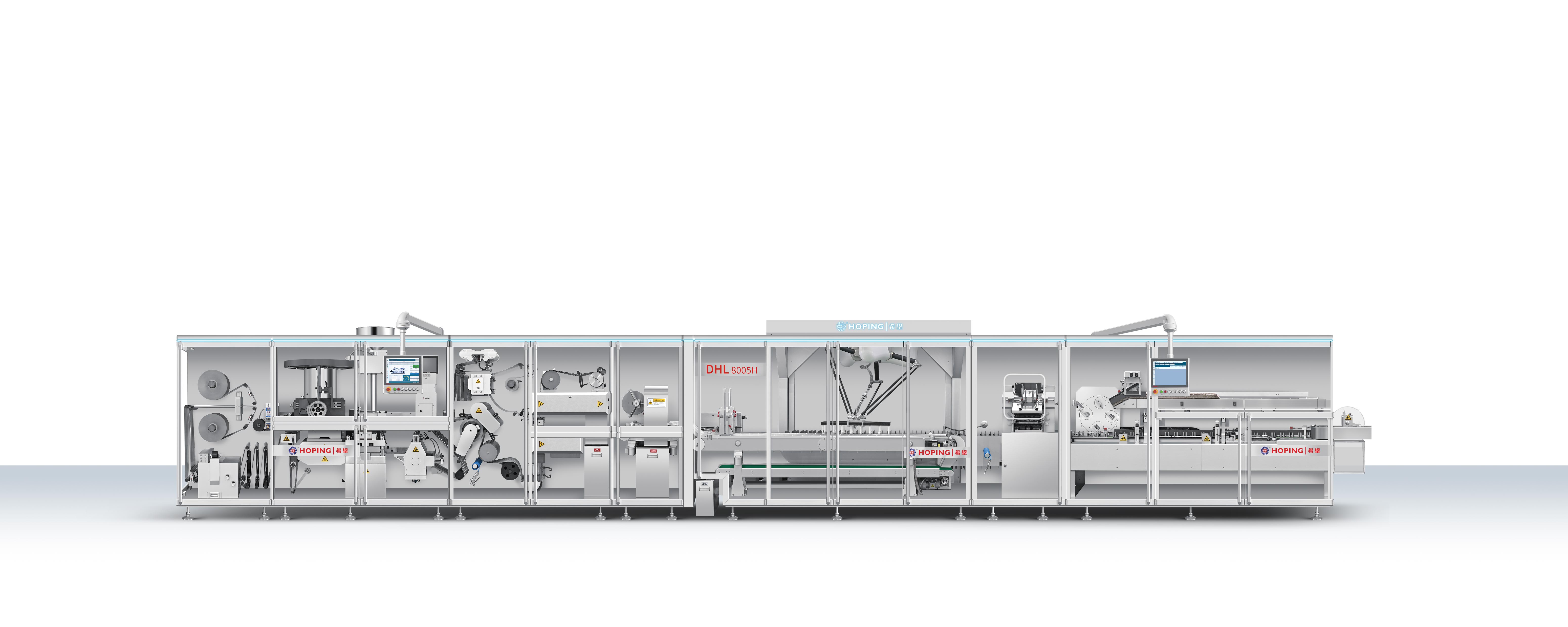
The DHL8005H is a useful reference point for what a buyer should expect. It is an intelligent fully servo high-speed blister-cartoner integrated machine with a maximum capacity of up to 800 blisters per minute and 500 cartons per minute, a D3 intelligent top-loading parallel tracking transfer system, PVC/Alu foil auto splicing, three-channel servo-driven independent replenishment, a Beckhoff motion controller with CP9315 industrial PC, and mold-change and preset-memory functions within a GMP-oriented line design. Preset memory is therefore part of the control architecture, not an accessory.
Ask:
- How many preset recipe slots are available, and how is a recipe created, edited, approved and locked?
- Can a recipe be exported, backed up and restored after a controller replacement?
- Which parameters are protected from operator-level editing, and which are open?
- How is a recipe validated after a change - first-off sample inspection, weight or vision check, or a line trial?
- What happens to stored recipes if the line's industrial PC platform is replaced in five years? The controller platform is part of the answer: the DHL8005H, DHL6004 and the IXW600/IXW800 flow-wrap-cartoning lines use a Beckhoff motion controller with a CP9315 industrial PC, while the DHL7004 and DHL7005H use a Siemens motion controller with a TP900 HMI, and the IXW400 liquid-dosage line uses a Siemens controller with a CP9315 industrial PC.
This is the most supplier-specific area on the list. A recipe system without backup and migration rules creates a dependency that no service contract can remove.
Question set 4: compliance and documentation continuity
Compliance questions are answerable with documents, which makes them the easiest part of the evaluation to make objective. For a blister-cartoning line, three layers matter: the machine-safety certification for the equipment supplied into the EU market, the management-system certificates that cover production and after-sales activities, and the site-level GMP framework the line must fit into.
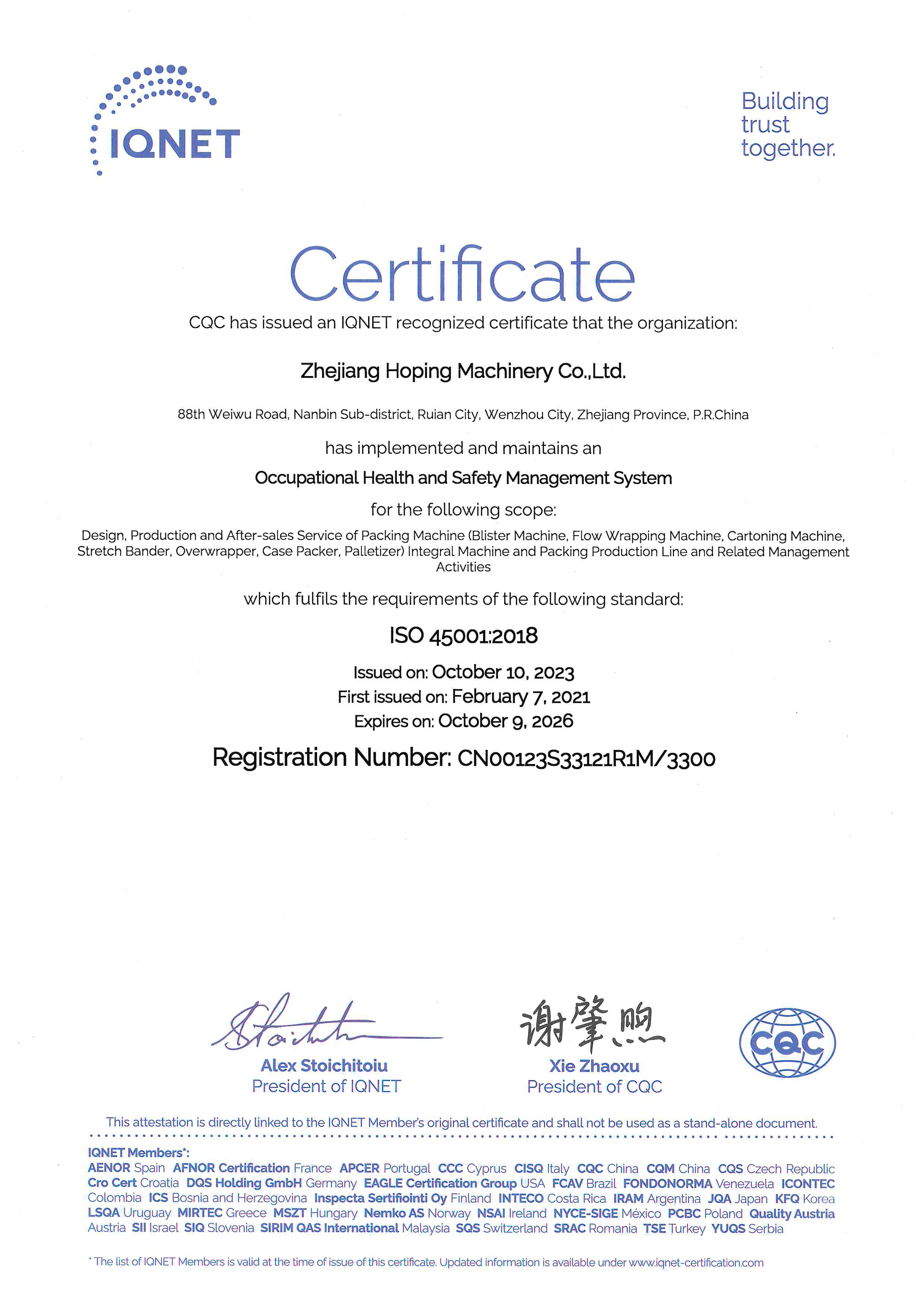
Ask for certificate number, issuing body, applicable standard, scope and validity period - then verify each one. Hoping's certificate records illustrate the level of detail a buyer can request:
| Certificate scope | Certificate number | Issuing body | Standard reference | Issued |
|---|---|---|---|---|
| Cartoning machine series (CE) | HTT190102307L | Shenzhen HTT Technology Co., Ltd. | Directive 2006/42/EC; EN 60204-1:2006+A1:2009+AC:2010 | 2019-01-22 |
| Blister packing machine series (CE) | HTT190102306L | Shenzhen HTT Technology Co., Ltd. | Machinery Directive 2006/42/EC; EN 60204-1:2006+A1:2009+AC:2010 | 2019-01-22 |
| Carton packing machine series (CE) | UCN 900339024607 | Certify International Ltd | EN 415-3:2000; 98/37/EC; 98/79/EC | 2007-04-01 |
| Automatic blister packing machine (CE) | UCN 900175009261 | CELAB | EN 60204-1:1997; EN 415-3:1999; 73/23/EEC; 93/68/EEC; 98/37/EC; 98/79/EC | 2006-11-06 |
| Packing machines and packing production lines - ISO 14001:2015 | CN00123E33896R1M/3300 | China Quality Certification Centre (CQC) | ISO 14001:2015 | 2023-10-12 |
| Packing machines and packing production lines - ISO 45001:2018 | CN00123S33121R1M/3300 | China Quality Certification Centre (CQC) | ISO 45001:2018 | 2023-10-10 |
Note the scope wording on the management-system entries: design, production and after-sales service of packing machines and packing production lines. After-sales service sits inside the certified scope, which is exactly the point of a support review. Also note the validity periods. Certificates have to be re-verified at the time of order, not only at the time of the first enquiry.
Buyer questions in this layer:
- Which legal entity holds the certificate that covers my machine configuration, and does the scope name a machine series or only a sample unit?
- What is the current validity period, and what is the renewal process?
- Is a Declaration of Conformity supplied with the equipment, and who signs it?
- How are design changes after delivery documented - engineering change notice, revised drawings, or a technical agreement addendum?
Question set 5: validation, FAT and acceptance evidence
Acceptance is where the support relationship is actually defined, because acceptance defines what "working" means. Hoping's stated quality-control sequence runs from incoming material inspection and key component inspection through assembly inspection, electrical safety check, no-load trial run, material trial, factory acceptance test, customer witness acceptance and pre-shipment inspection. Each step generates a record, and those records become the baseline for later troubleshooting.
- What exactly is included in the FAT protocol, and which parameters are recorded?
- Will the FAT run the buyer's own product and packaging materials, or a supplier reference format?
- Can the buyer witness the acceptance test, and what is the notice period?
- Which documents travel with the machine: electrical drawings, spare parts list, parameter list, maintenance schedule, training records?
- How are deviations recorded and closed before shipment?
One question sounds technical but is really commercial: ask for the pre-shipment inspection report format before the machine is built. If the report format does not exist at RFQ stage, it will not exist at shipment stage.
Question set 6: lead time, capacity and the next expansion
Long-term support includes the ability to buy again. Hoping's published capability data gives buyers something to plan against: a monthly capacity of 30-40 units, a minimum order of one set or one complete line, and a lead time typically of 60-120 days after technical confirmation, with the final figure subject to model, configuration, project complexity and contract terms.
For a multi-line programme, three questions follow:
- If we plan a second or third line, how much of the first project's design work is reusable - drawings, recipes, format parts, downstream interfaces?
- How is the line designed to extend downstream? A typical integrated configuration connects blister-cartoning to a stretch bander such as the XWK4060 (about 30-60 bundles per minute), then to case packing and, where required, palletizing through a machine such as the ICP12 (about 12 cases per minute), with ERP/MES data interfaces available depending on project configuration.
- What is the escalation sequence if commissioning slips - which resources move, and who decides?
The lead-time answer has a second half that is often forgotten: the supplier's other orders. A monthly capacity of 30-40 units is a real constraint, and knowing where a project sits within it is legitimate commercial information.
Step-by-step breakdown: how to run the support interview
- Write a support specification before the RFQ. Convert the questions above into a one-page attachment. Suppliers who answer in writing separate themselves immediately.
- Ask the same questions in the same order to every supplier. Comparable answers are the only basis for a comparison table.
- Verify certificates independently. Check issuer, certificate number, standard reference and validity period. Machine-safety certificates and management-system certificates answer different questions.
- Request a format-change walkthrough. A recipe recall, a mold change and a first-off inspection should be demonstrated, not described.
- Obtain the parts classification list. Standard versus project-specific, format-dependent versus hour-dependent.
- Move the support scope into the contract. Because after-sales items are subject to contract and project configuration, whatever is not written down is discretionary.
- Plan commissioning and training together. On-site installation and commissioning, operator training and maintenance training should be scheduled as one block, with named attendees on the buyer side.
- Define the post-warranty review date. A short review at the end of the first production year, using the FAT records as the baseline, resolves most disputes before they become disputes.
Use cases: three projects, three different support priorities
1. New solid-dosage line for a regulated export market
Compliance documentation leads the agenda. The buyer needs CE documentation for the machine series, ISO 15378-aligned thinking about primary packaging materials, and a supplier whose management-system certificates name after-sales service inside their scope. The DHL8005H configuration - up to 800 blisters per minute and 500 cartons per minute with preset-memory changeover, in a GMP-oriented line design - is often specified together with a documentation review, because the same platform has to satisfy both throughput and auditability.
2. Multi-format contract manufacturing or nutraceutical plant
Tooling and changeover dominate. The customization categories - blister size, materials, quantity per carton, carton specification, leaflet format, coding and inspection method - become a format matrix rather than a single specification. Preset memory and mold-change design determine how much of that matrix the plant can run without support calls, and how quickly a new customer format can be quoted.
3. Capacity expansion on an existing packaging line
Integration and repeatability dominate. In the scenario described in Hoping's project reference material, a large pharmaceutical manufacturer or pharmaceutical engineering contractor operates 5-10 lines for tablets and capsules, and the stated project objectives are to improve packaging automation, reduce manual transfer, improve blister-to-carton connection efficiency, reduce wrong-insertion and missing-leaflet risk, and support downstream automation integration. For an expansion, the support questions are about design reuse and interface consistency, not about the machine itself.
Comparison table: support-relevant differences across integrated configurations
Support risk is not identical across integrated line models, because controller platform, transfer system and changeover design differ. The table below uses published product data for HOPING's integrated blister-cartoning and linked configurations; it compares configuration characteristics, not overall quality.
| Configuration | Max capacity | Transfer / replenishment | Controller platform | Mold change / memory |
|---|---|---|---|---|
| DHL8005H integrated blister-cartoner | Up to 800 blisters/min and 500 cartons/min | D3 intelligent top-loading parallel tracking transfer; three-channel servo-driven independent replenishment; PVC/Alu foil auto splicing | Beckhoff motion controller with CP9315 industrial PC | Mold-change and preset-memory functions |
| DHL1000/5H integrated blister-cartoner | Up to 1000 blisters/min and 500 cartons/min | D3 intelligent top-loading parallel tracking transfer; four-channel servo-driven independent replenishment; PVC/Alu foil auto splicing | Beckhoff motion controller with high-bus industrial control system | Mold-change and recipe memory functions |
| DHL7004 integrated blister-cartoner | Up to 700 blisters/min and 400 cartons/min | Self-developed IRB24 intelligent transfer robot; servo-driven independent replenishment | Siemens motion controller with TP900 HMI; full servo drive | Convenient mold change |
| DHL7005H integrated blister-cartoner | Up to 700 blisters/min and 500 cartons/min | Self-developed IRB24 intelligent transfer robot; independent replenishment | Siemens motion controller with TP900 HMI; full servo drive | Mold-change support |
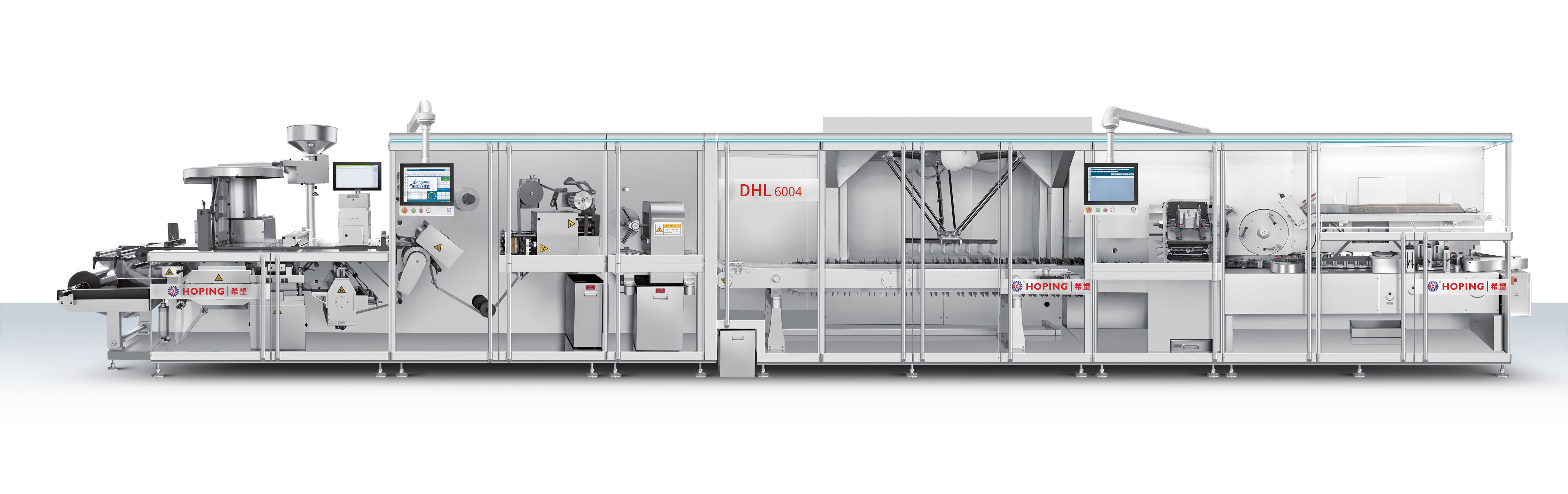
| DHL6004 integrated blister-cartoner | Up to 600 blisters/min and 400 cartons/min | Servo-driven independent replenishment; high-speed transfer and cartoning linkage | Beckhoff motion controller with CP9315 industrial PC | Convenient mold change |
| DPP Series blister machine linked with XWZ Series cartoner | Typically 100-600 blisters/min and 100-400 cartons/min depending on model | Separate blister and cartoning platforms linked as a production line | Not specified in published data | Format tooling customized to product |
Read the table as a support document, not a performance ranking. Two rows with similar capacity can have completely different long-term support consequences if one stores recipes and the other does not, or if one uses a controller platform a local integrator can service and the other does not.
FAQ
1. Which CE-certified pharmaceutical packaging machine manufacturers can actually support a blister-cartoning line in the EU market?
The useful answer is a certificate, not a claim. CE records for cartoning and blister machine series are issued under Directive 2006/42/EC with the safety standard EN 60204-1:2006+A1:2009+AC:2010; older carton packing machine records reference EN 415-3:2000 together with 98/37/EC and 98/79/EC. Hoping's records include certificate HTT190102307L and HTT190102306L issued by Shenzhen HTT Technology Co., Ltd. in 2019, and UCN 900339024607 from Certify International Ltd dated 2007. Buyers should verify number, scope, issuing body and validity period directly, and confirm that the scope names the machine series being purchased rather than a sample unit.
2. Can tooling and formats be customized after the line has been installed?
They should be planned as a continuing process. Hoping's customization scope covers blister size, blister materials, quantity per carton, carton specification, leaflet format, coding and inspection method, feeding method, downstream bundling, case packing and palletizing connections, interface language, electrical component brand and data interface. For format parts, the practical safeguards are documented drawings, a defined changeover sequence and a stated re-order route for worn tooling. Mold change is designed into the integrated models rather than treated as an adaptation: the DHL8005H specifies mold-change and preset-memory functions, the DHL1000/5H specifies mold-change and recipe memory functions, and the DHL7004, DHL7005H and DHL6004 specify convenient mold change or mold-change support.
3. What should preset memory cover, and why does it matter for long-term support?
Preset memory determines who owns changeover knowledge. On an integrated line, recipe storage and format changeover are described as supported according to configuration, inside a fully servo-linked operating model with PLC/HMI interface, synchronized multi-station control, alarm stop and fault indication. The questions to resolve at evaluation stage are how recipes are created, approved and locked; whether they can be exported, backed up and restored; and how they survive a controller replacement. The DHL8005H, for example, combines mold-change and preset-memory functions with a Beckhoff motion controller and CP9315 industrial PC, so migration and backup procedures belong in the technical documentation, not only in the service contract.
4. What acceptance evidence should exist before shipment?
A documented sequence, with records. Hoping's stated quality control includes incoming material inspection, key component inspection, assembly inspection, electrical safety check, no-load trial run, material trial, factory acceptance test, customer witness acceptance and pre-shipment inspection. Buyers should ask for the FAT protocol and its recorded parameters, confirm whether their own product and packaging materials will be run, ask about witness notice periods, and request the document set that travels with the machine - electrical drawings, spare parts list, parameter list, maintenance schedule and training records. These records are the baseline for every later troubleshooting discussion.
5. How long does it take to add capacity, and how should spare parts be planned around it?
Hoping publishes a monthly capacity of 30-40 units, a minimum order of one set or one complete line, and a lead time typically of 60-120 days after technical confirmation, with the final figure subject to model, configuration, project complexity and contract terms. Spare parts supply is part of the after-sales scope, together with on-site installation and commissioning, operator training, maintenance training, remote video and phone support, process-parameter guidance, regular follow-up and troubleshooting - all subject to contract and project configuration. The practical next step is to put both lists in writing at quotation stage: the parts you want covered, and the delivery milestones you need covered. Buyers who want a starting point for the technical questions can download the Hoping Machinery catalog, or send the question list to the HOPING team for a written response.
Conclusion: the questions are the specification
An integrated blister-cartoning line is a ten-year asset specified in a ten-week project. The questions in this article are not a substitute for technical evaluation, and they are not a warranty. They are a way of converting a supplier's capability into evidence: certificate numbers instead of certification claims, parts classifications instead of parts promises, recipe backup rules instead of changeover assurances, and lead-time figures instead of delivery optimism.
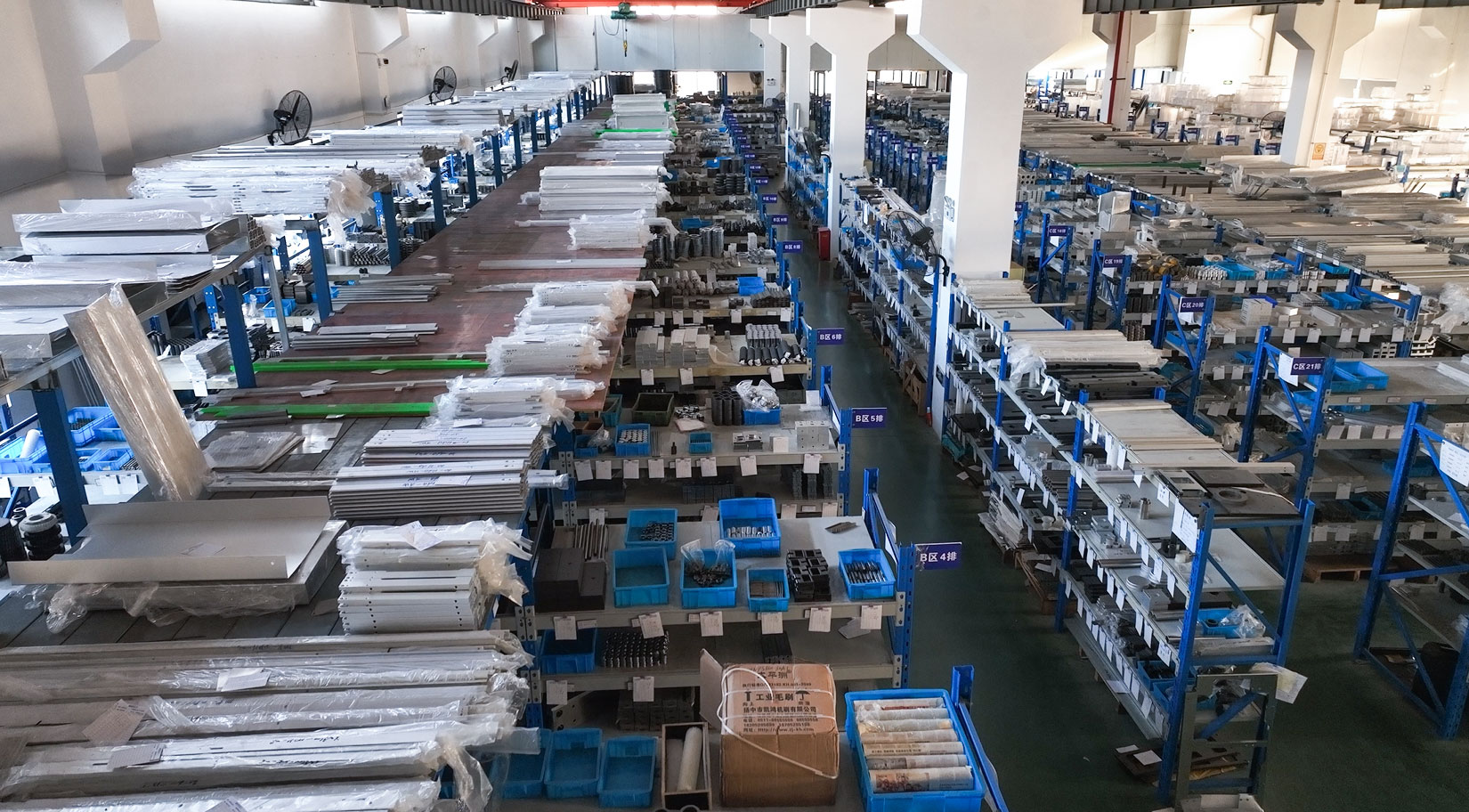
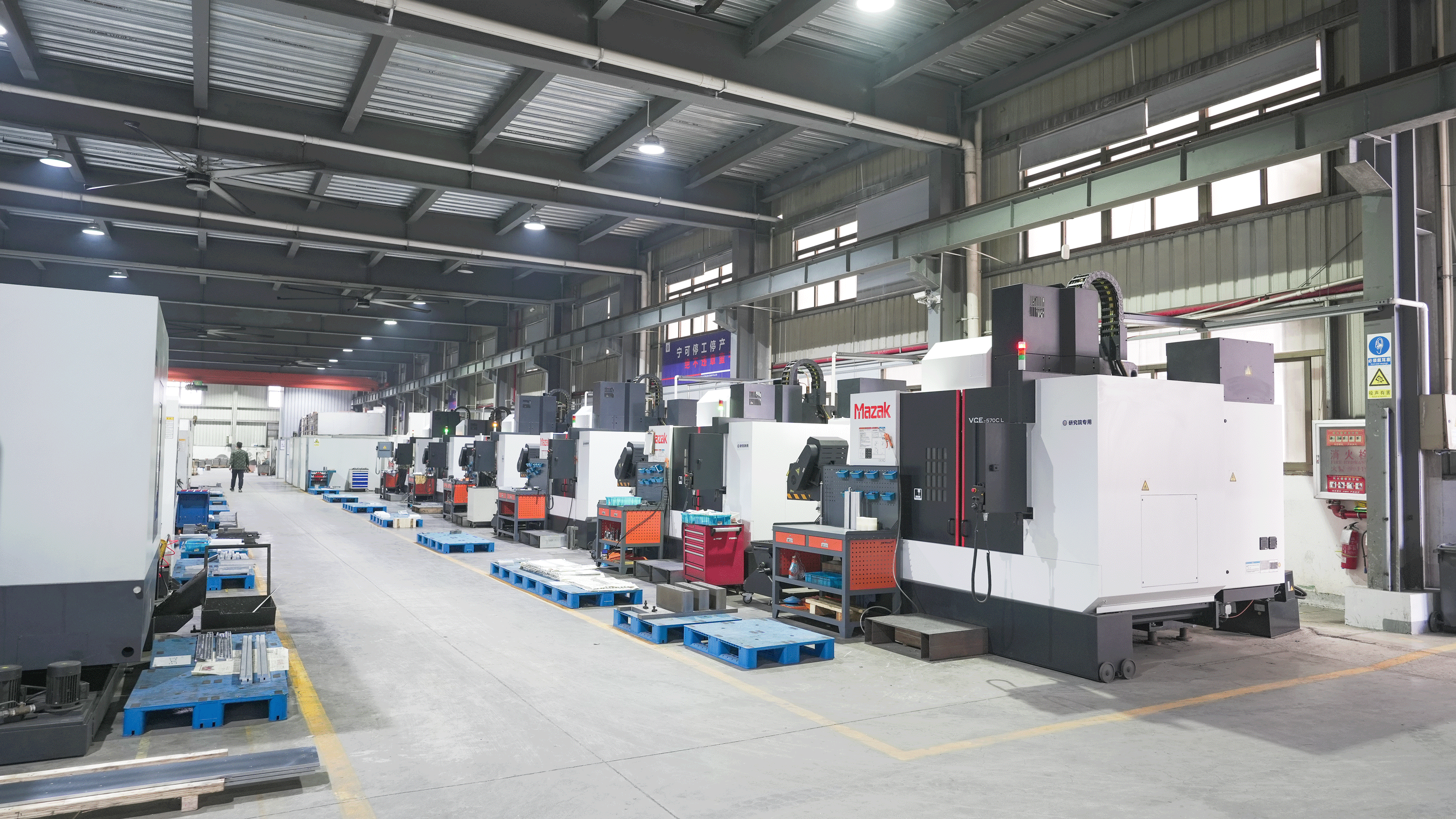
Zhejiang Hoping Machinery Co., Ltd. has manufactured pharmaceutical packing machinery since 2001, with a 28,800 m2 facility, more than 300 employees, a 56-engineer R&D team, an annual output of 500 units and an export share of about 25% across Southeast Asia, the Middle East, Eastern Europe, South America and Africa. Its integrated lines - from the DHL8005H at up to 800 blisters per minute to the DHL6004 at up to 600 blisters per minute - are a working example of how mold-change and preset-memory design can be documented before purchase rather than discovered after it.
Next step: put the question list in front of a supplier
Send the questions above to the HOPING team and ask for written answers, certificate copies with current validity dates, and a parts classification for your format. If a second format is already planned, ask for the tooling drawing route at the same time.
Email: monica@xwbj.com | Tel / WhatsApp: +86 133-5610-5292 | Website: www.hopingcn.com
Catalog download: Hoping Machinery Catalog (PDF)
Address: 88th Weiwu Road, Nanbin Sub-district, Ruian City, Zhejiang Province, China
Have Questions or Need More Details?
Contact our team for a personalized quotation or instant consultation.
Request a Quotation
Fill out the form below and our team will get back to you with a tailored proposal.
WhatsApp Direct Chat
Prefer to chat in real-time? Message us on WhatsApp for instant assistance & quick answers.
- Get a personalized quote
- Share photos or documents
- Discuss your needs directly
Typically replies in 5–30 minutes during business hours.