
Inside a Servo-Driven Blister-Cartoner Line: From Blister Forming to Sealed Carton
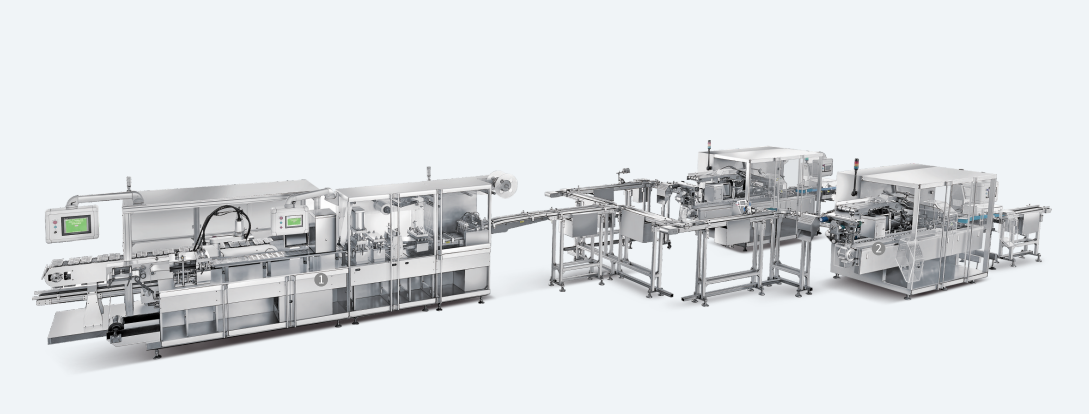
A servo-driven pharmaceutical packaging machine produces the main motions of blister forming, sealing, transfer, cartoning and coding with individually controlled servo axes instead of a single mechanical drive train. On an integrated blister-cartoner line, that architecture is what allows one unit to move a solid dosage product from a formed PVC pocket to a sealed, coded carton without manual handling between stations.
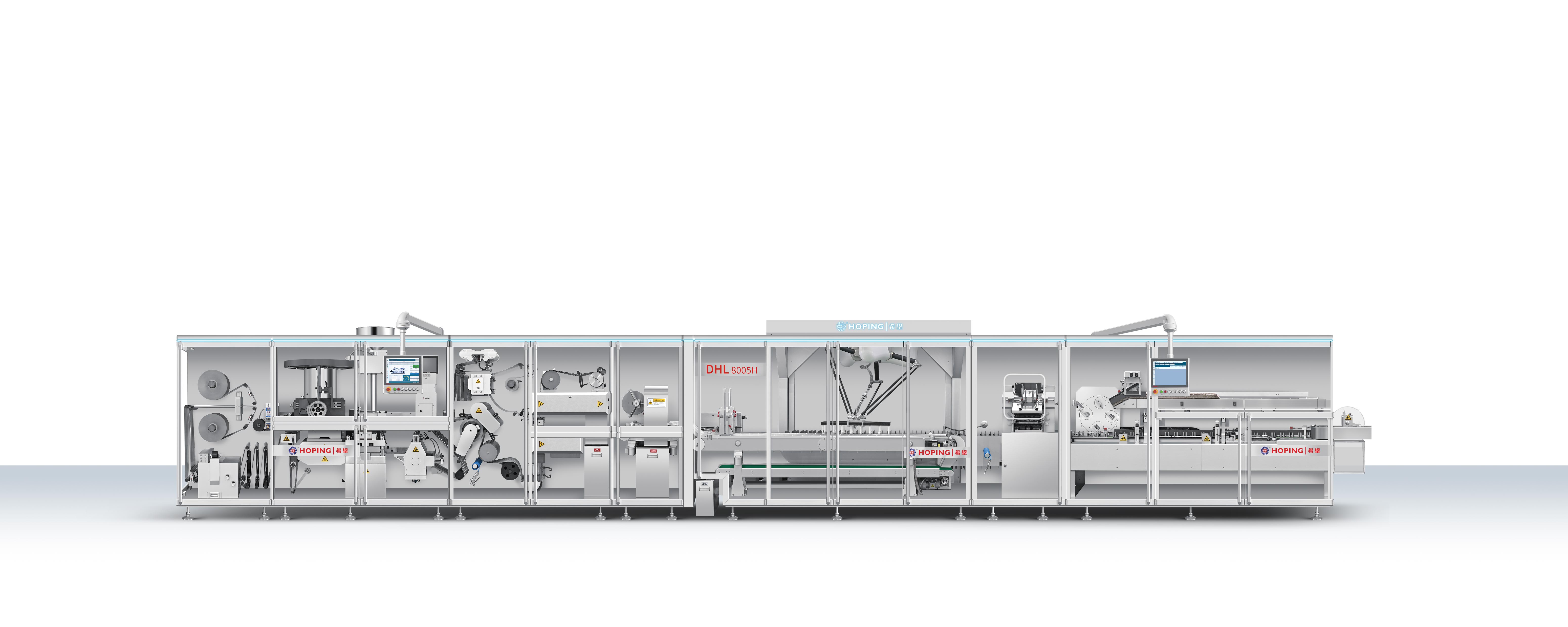
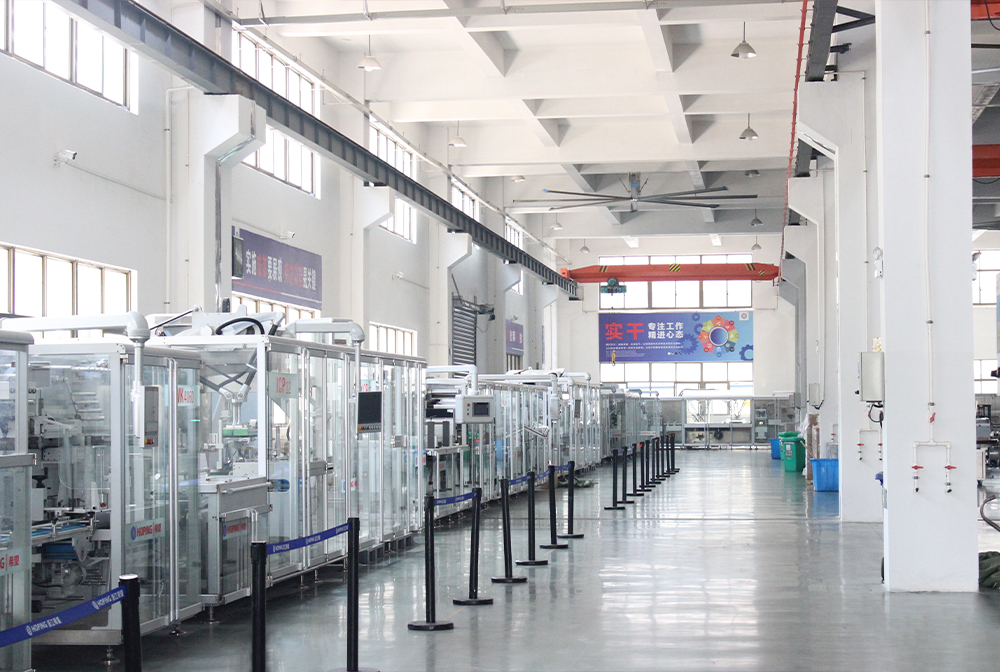
This article walks through an integrated blister-cartoner line station by station, using the DHL8005H automatic blister-cartoning line from Zhejiang Hoping Machinery Co., Ltd. (HOPING, a pharmaceutical packing machinery manufacturer established in 2001 in Ruian City, Zhejiang Province, China) as the working example. The line is rated for up to 800 blisters per minute and 500 cartons per minute, and it combines a Beckhoff motion controller with a CP9315 industrial PC, three-channel servo-driven independent replenishment, PVC/Alu foil auto splicing, and a GMP-oriented stainless steel and aluminum-alloy construction.
The purpose of a station-level walkthrough is practical. Buyers in the research and evaluation stage rarely purchase a blister machine or a cartoner in isolation — they purchase a line that has to hold speed, format and documentation together over years of production. The sections below explain what each part of the line does, where the servo architecture actually sits, and which points are worth writing into a technical agreement.
1. Problem Definition: What Really Changes When the Line Becomes Servo-Driven
The core engineering difference is not the number of motors. It is where the timing relationship between stations lives. In a mechanically linked line, the blister indexer and the cartoner chain share one physical relationship; changing format means changing cams, gears or mechanical couplings, and any correction at one station propagates through the rest of the train. In a fully servo-linked line, the same relationship is produced electronically: the product operates in fully servo-linked operation mode with a PLC/HMI interface and synchronized multi-station control.
Three practical consequences follow for a pharmaceutical project:
- Re-phasing instead of re-machining. A station can be shifted in time relative to its neighbours through the control system, so blister pitch and cartoner pitch can be matched without rebuilding the drive train.
- Independent replenishment. Dedicated servo-driven replenishment channels keep the blister feeding section supplied at high speed rather than relying on one shared material feed. The DHL8005H uses a three-channel servo-driven independent replenishment system for this purpose.
- Changeover as a stored recipe. Mold-change and preset-memory functions mean a validated format can be recalled rather than re-created by hand during each changeover.
On high-speed solid dosage lines, the weakest point is usually not the blister machine or the cartoner considered separately — it is the interface between them. Blister formation is a continuous process, cartoning is a batch-pitched process, and the transfer between the two is where a line either holds its rated speed or does not. Reading the line as a sequence of stations, rather than as a list of machines, is the fastest way to identify where that interface is being managed and where it is being assumed.
2. Industry Background: Why the Project Unit Is Now the Line
Published commercial research places the global blister packaging machine pharmaceutical market at USD 2.57 billion in 2025, with Asia-Pacific described as the fastest-growing region at an 8.87% CAGR to 2031 (Custom Market Insights). Separately, Mordor Intelligence reports that horizontal cartoning systems held 70.12% of cartoning market share in 2024. Both figures come from commercial research publishers and are quoted here as published, not as independently audited statistics.
What those numbers do not show is the change in how equipment is specified. Market scope definitions used by research publishers describe pharmaceutical packaging machinery as equipment for filling, sealing, labelling, blister packaging and cartoning — a description that assumes these functions sit in one buying decision. Trade media reporting association content notes that pharmaceutical manufacturers are turning toward digitised data collection and integrated solutions in order to meet regulations and improve visibility. The equipment implication is direct: line integration and data capture are increasingly specified together rather than treated as separate purchases.
Regulatory framing reinforces the same conclusion. The U.S. FDA describes Current Good Manufacturing Practice as the foundation for quality pharmaceuticals through regulatory standards, and ISO 15378:2017 specifies Good Manufacturing Practice requirements for primary packaging materials for medicinal products. Neither document prescribes a specific machine design, and neither should be used to claim that a particular line is compliant — but both explain why pharmaceutical buyers ask for cleanability, change control and acceptance documentation as part of the machine purchase rather than as an afterthought.
3. The Line as a Project: What a Blister-Cartoner Line Has to Fit Into
An integrated blister-cartoner line is normally specified against the project that will host it, not against a catalogue page. The DHL8005H configuration is documented for new solid dosage blister packaging lines, existing packaging line upgrades, high-capacity expansion, intelligent packaging workshop retrofits, and blister-cartoning-bundling/case-packing downstream integration projects. Those five project types have very different constraints, and the difference shows up in scope, layout and acceptance criteria.
Operating environment
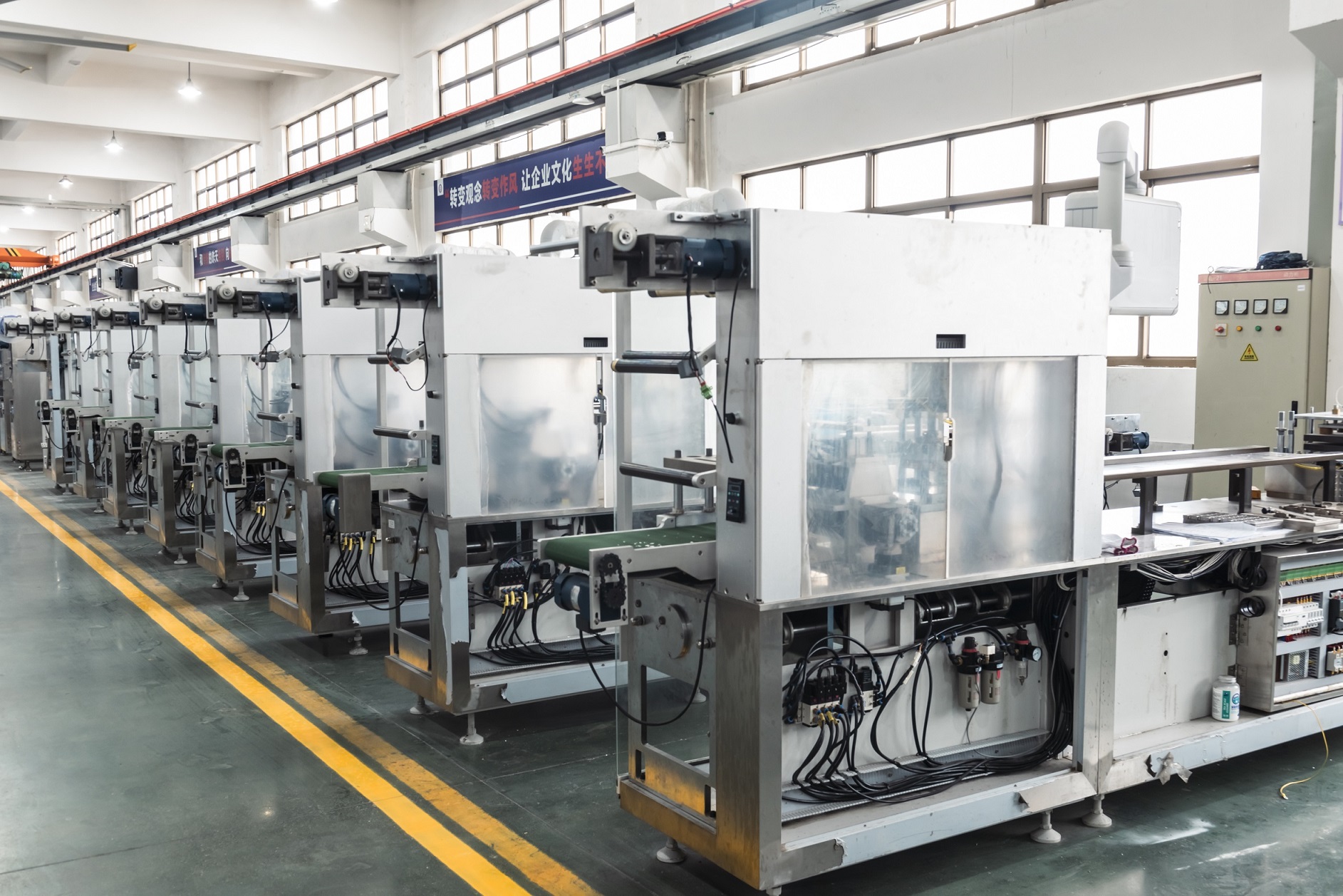
The line operates under GMP-oriented cleanroom or pharmaceutical packaging workshop conditions and is designed for continuous high-speed operation and multi-batch, multi-format production. Surfaces are stainless steel and aluminum alloy with transparent guarding, and product-contact parts and tooling are configured according to the technical agreement. This matters for two reasons: cleaning time is production time, and tooling defined in a technical agreement is what an auditor will compare against the installed machine.
Scope of the machine itself
The DHL8005H covers high-speed blister forming and sealing, transfer, leaflet handling, carton opening, insertion, coding and inspection, and connection to bundling, case-packing and palletizing equipment. It is described as an intelligent fully servo high-speed blister-cartoner integrated machine and as a solid dosage turnkey packing line.
Scope of the surrounding line
Depending on configuration, the equipment supporting the line can include a blister packing machine, cartoner, D3 intelligent top-loading parallel robot, leaflet folder, coding machine, vision inspection, checkweigher, stretch bander, case packer, palletizer and an ERP/MES data interface. In HOPING's own product range those downstream functions correspond to specific units: the XWK4060 intelligent fully servo stretch bander, the XWK Series case packing machine, and the ICP12 case packing and palletizing integral machine rated at about 12 cases per minute.
4. Step-by-Step: Walking the DHL8005H Line Station by Station
The sequence below follows the product flow. At each step, the relevant question for a project team is included, because the same station can be configured in ways that produce very different results on site.
Step 1 — Blister forming and material supply
Forming is where the blister cavity is created in the base film, and on this line it runs at the speed that sets the ceiling for the whole machine: up to 800 blisters per minute. PVC and Alu foil are fed from rolls, and the line includes PVC/Alu foil auto splicing, which allows a new roll to be joined to the running web without stopping production. Project question: who defines the blister format and the base film structure, and is the material splicing platform part of the standard quote or a configuration option?
Step 2 — Product feeding and replenishment
Tablets, capsules and similar solid dosage forms are fed into the formed pockets. The DHL8005H supports multiple feeding methods, and a three-channel servo-driven independent replenishment system keeps the feeding section supplied so that the blister machine is not waiting for product. Project question: which feeding method matches your product geometry, and how many replenishment channels does your expected format count and speed require?
Step 3 — Sealing and blister separation
The lidding material is sealed over the filled pockets to close the blister, and the web is separated into blister boards at the required pitch. Auto splicing on both PVC and Alu foil keeps this station continuous. Project question: has the sealing specification been validated with your actual product and packaging materials, rather than with a generic sample?
Step 4 — Blister transfer to the cartoner
This is the interface described earlier, and it is where the DHL8005H uses a D3 intelligent top-loading parallel tracking transfer system. In simple terms, parallel tracking allows the blister boards to be handed from the blister machine's pitch to the cartoner's pitch under servo control, instead of through a fixed mechanical transition. Project question: what happens to a rejected blister at this exact point, and how is the gap closed in the carton feed?
Step 5 — Leaflet handling and carton opening
Leaflets are handled and folded, and flat carton blanks are opened and presented for loading. Missing or mis-folded leaflets are one of the classic defects in secondary packaging, which is why leaflet handling is treated as a controlled station in an integrated line rather than a separate add-on unit. Project question: what is the leaflet format, and how is a missing leaflet detected and rejected?
Step 6 — Insertion and carton closing
The blister board is inserted into the opened carton, which is then closed. On an integrated line the insertion motion and the carton closing motion are synchronized to the same servo timeline. Project question: how many blisters per carton, and how does that count change the insertion geometry and the tooling set?
Step 7 — Coding and inspection
Batch and date coding is applied, and inspection and rejection functions are integrated into the line. Inspection is not only a quality gate — on a line running at these speeds it is also what allows the downstream equipment to run without manual supervision. Project question: what is the rejection logic, and where does a rejected carton physically go?
Step 8 — Control layer and changeover
The line runs in fully servo-linked operation mode with a PLC/HMI interface and synchronized multi-station control. On the DHL8005H the motion controller is a Beckhoff unit paired with a CP9315 industrial PC, and the line supports mold-change and preset-memory functions. In practice, preset memory is what converts a changeover from an event that consumes a shift into a repeatable, recorded procedure. Project question: how many formats must be stored, and who owns the recipe data when the line is handed over?
Step 9 — Downstream connection
The line can be connected to bundling, case-packing and palletizing equipment, including an ERP/MES data interface when the project requires it. This is the point at which a blister-cartoner line stops being a packaging machine and becomes part of the plant's production data flow. Project question: which data does the plant actually need from the line, and at what frequency?
5. Use Cases: Which Projects This Architecture Fits
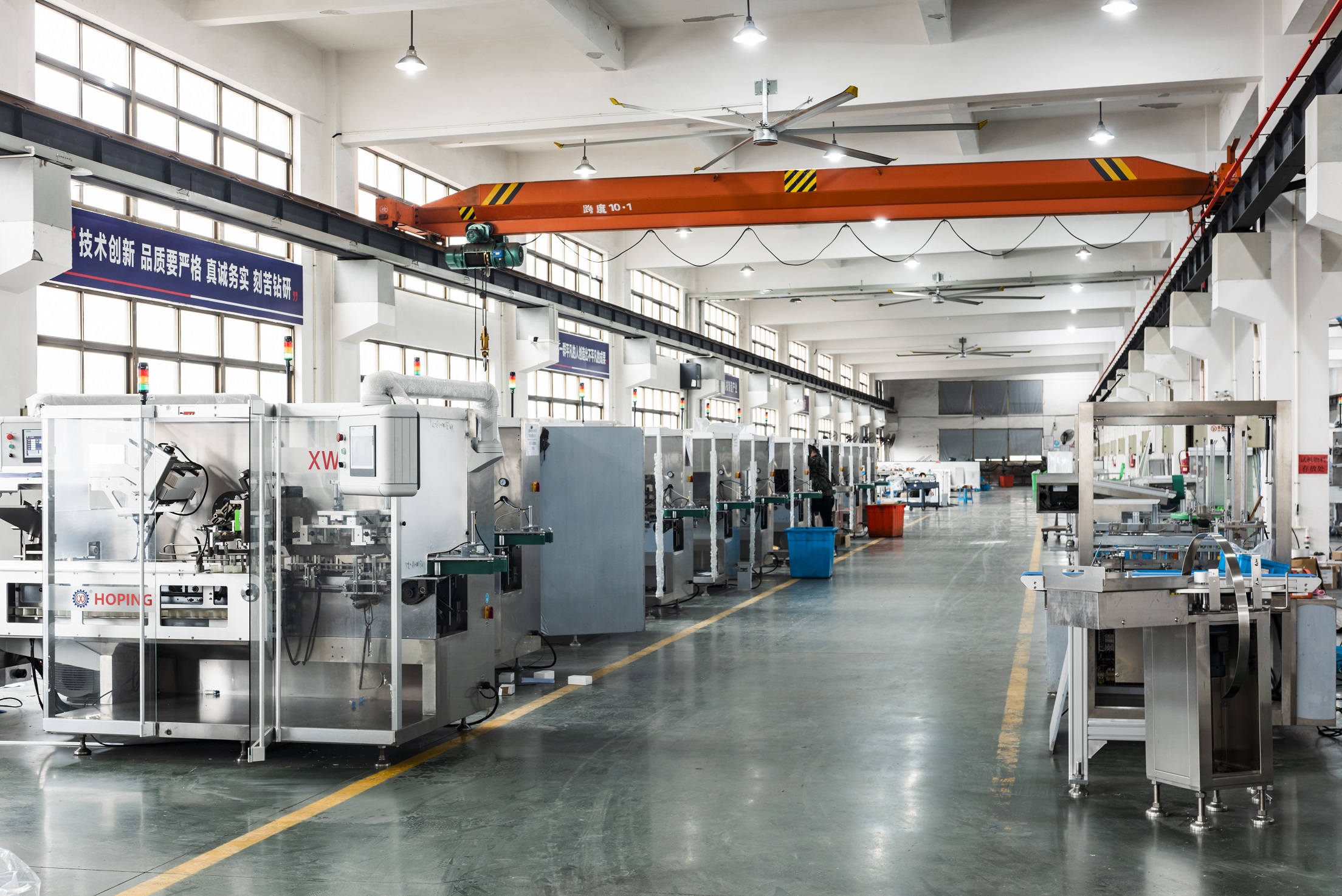
Servo-driven blister-cartoner lines are requested across several recognizable project situations. Each has a different decision centre.
- New solid dosage line. The full line scope is specified at once, from blister forming through to case packing, so the layout, utility connections and format list are fixed early.
- Capacity expansion. A plant already packaging solid dosage adds a higher-capacity line rather than a second identical one. This is where the rated speed class matters: 700, 800 or 1,000 blisters per minute in the same supplier family.
- Existing line upgrade. The blister machine or the cartoner is replaced or re-linked, and the new unit must match existing downstream equipment and existing carton specifications.
- Intelligent workshop retrofit. The packaging area is modernized with servo-linked equipment, inspection and data interfaces, often without changing the building or the cleanroom class.
- Downstream integration. A blister-cartoner line is linked to bundling, case packing and palletizing to reduce manual transfer at the end of the line.
For reference, representative projects in this category have been delivered for large pharmaceutical manufacturers, solid dosage production companies and pharmaceutical engineering contractors, typically in quantities of five to ten lines, for tablet and capsule blister packaging and automatic cartoning. Client names are disclosed only with authorization. Representative project objectives recorded for this category include improving packaging automation, reducing manual transfer, improving blister-to-carton connection efficiency, reducing wrong-insertion and missing-leaflet risks, and supporting downstream automation integration.
Those objectives are worth reading as a checklist rather than as marketing language. Each one maps to a specific station on the line: automation maps to the servo-linked control layer, manual transfer maps to the D3 transfer and downstream connection, connection efficiency maps to line balancing between primary and secondary packaging, and wrong insertion or missing leaflets map to inspection and rejection.
6. Comparison Table: Integrated Servo Blister-Cartoner Configurations
The table below compares integrated line configurations from the same manufacturer family, using published configuration data. It is intended to show how ratings and control platforms differ by project scale — not to rank one configuration above another, since the correct choice depends on format, product mix and downstream scope.
| Line configuration | Max blister output | Max carton output | Servo replenishment | Control platform |
|---|---|---|---|---|
| DHL8005H blister-cartoner line | Up to 800 blisters/min | Up to 500 cartons/min | Three-channel servo-driven independent replenishment | Beckhoff motion controller with CP9315 industrial PC |
| DHL1000/5H blister-cartoner line | Up to 1,000 blisters/min | Up to 500 cartons/min | Four-channel servo-driven independent replenishment | Beckhoff motion controller with high-bus industrial control system |
| DHL6004 blister-cartoner line | Up to 600 blisters/min | Up to 400 cartons/min | Servo-driven independent replenishment | Beckhoff motion controller with CP9315 industrial PC |
| IXW600 blister-flow-wrap-cartoner line | Up to 600 blisters/min and 300 packs/min | Up to 300 cartons/min | Servo-driven replenishment | Beckhoff controller with CP9315 industrial PC |
| IXW800 dual-track blister-flow-wrap-cartoner line | Up to 600 blisters/min and 600 packs/min | Up to 500 cartons/min | Servo-driven independent replenishment | Beckhoff controller with CP9315 industrial PC |
How to read these figures. The outputs above are manufacturer-stated maximum capacities for the stated line configurations. Maximum output is not the same as sustained validated output: sustained performance depends on the blister format, carton size, product type, inspection settings and operating conditions. Independent verification of sustained output, changeover time and reject rate was not available in the source material used for this article, so those parameters should be confirmed during factory acceptance rather than assumed from a datasheet.
Decision checklist before you request a quotation
- Blister format, base material (PVC, Alu, cold-form) and lidding material.
- Product type and geometry: tablet, capsule, soft capsule or other solid dosage form.
- Blisters per carton, carton specification and leaflet format.
- Required speed class and the downstream scope (bundling, case packing, palletizing).
- Coding and inspection requirements, including rejection handling.
- Data interface requirements toward ERP/MES, if any.
- Cleaning regime, changeover frequency and number of stored formats.
7. FAQ
Which compliance points should a blister-cartoner line address before installation?
An integrated blister-cartoner line for pharmaceutical use is built for GMP-oriented cleanroom or pharmaceutical packaging workshop conditions and a GMP-oriented line design, with a stainless steel and aluminum-alloy structure, transparent guarding, and product-contact parts and tooling configured according to the technical agreement. Beyond the machine itself, buyers should confirm which regulatory framework governs their licence: the U.S. FDA describes Current Good Manufacturing Practice as the foundation for quality pharmaceuticals through regulatory standards, and ISO 15378:2017 specifies Good Manufacturing Practice requirements for primary packaging materials for medicinal products. Neither document prescribes a specific machine model, so machine-specific requirements should be confirmed against your own registration and audit documentation, and cleanability, maintainability and reduced false rejection should be written into the technical agreement rather than assumed.
What can a pharmaceutical packaging machine manufacturer for blister lines be expected to deliver?
The deliverable is a line scope, not a single machine. For a solid dosage blister-cartoner line this normally covers blister forming and sealing, transfer, leaflet handling, carton opening, insertion, coding and inspection, and connection to bundling, case-packing and palletizing equipment. On the DHL8005H that scope is supported by a D3 intelligent top-loading parallel tracking transfer system, three-channel servo-driven independent replenishment, PVC/Alu foil auto splicing, a Beckhoff motion controller with CP9315 industrial PC, and mold-change and preset-memory functions. A manufacturer should also be able to state its production capacity in units per month, confirm the project types it serves — new lines, line upgrades, high-capacity expansion, workshop retrofits and downstream integration — and provide the acceptance sequence (material trial, FAT and customer witness acceptance) in writing. HOPING, established in 2001 and operating a 28,800 m² facility in Ruian City, Zhejiang Province, China, covers blister packing machines, cartoning machines, case packing machines and end-of-line packaging machines as its main product lines.
What drives the cost of a blister-cartoner line project?
Published price lists are not standard practice in this equipment category, because the line itself is configured per project. The main cost drivers are: the capacity class (for example 600, 700, 800 or 1,000 blisters per minute), the number of servo-driven replenishment channels (three on the DHL8005H, four on the DHL1000/5H), the motion control platform, the feeding method matched to your product, the number and complexity of format sets (blister size, carton specification, leaflet format), the coding and inspection scope, downstream equipment such as stretch bundling, case packing and palletizing, and the documentation and acceptance scope agreed in the contract. Because each of these changes the machine rather than the price list, the practical approach is to fix the format and scope first and then request a configuration-based quotation for that scope.
Can we validate our own product and format before the line is shipped?
Yes — product validation is part of the standard quality sequence. That sequence runs through incoming material inspection, key component inspection, assembly inspection, electrical safety check, no-load trial run, material trial, factory acceptance test (FAT), customer witness acceptance and pre-shipment inspection. A material trial and a customer witness acceptance are the two stages where your own tablets, capsules, carton blanks and leaflets are used rather than generic samples, so the practical requirement is to have the confirmed product and packaging materials available at the time the trial is scheduled.
What are the MOQ and typical lead time for an integrated blister-cartoner line?
The minimum order quantity is one set, or one complete line. Lead time is typically 60–120 days after technical confirmation, with the final duration subject to the model, configuration, project complexity and contract terms — a line with a full downstream scope and multiple format sets takes longer than a two-machine configuration. Where a project has a fixed installation window, it is worth confirming the technical agreement early, since that document is what the lead-time clock starts from. To start that process, you can download the Hoping Machinery product catalog (PDF) or send your format and capacity requirements directly to the contact below.
8. Conclusion
A servo-driven blister-cartoner line is best understood as a sequence of dependent stations rather than a set of machines placed next to each other. Blister forming sets the speed ceiling, independent replenishment keeps that speed usable, the transfer system determines whether the cartoner can keep pace, and the control layer — on the DHL8005H, a Beckhoff motion controller with a CP9315 industrial PC — decides how quickly the line can be brought back to production after a format change. Coding, inspection and downstream bundling or case packing then carry the line into the plant's data and logistics flow.
For a project in the research or evaluation stage, three questions separate a workable configuration from an expensive one: what the blister format and carton specification actually are, how much downstream scope the line must carry, and what the acceptance sequence will require before the equipment is released for shipment. Answering those three questions first turns a machine specification into a project specification.

Next step
If you are evaluating a blister-cartoner line for a new project, an upgrade or a capacity expansion, the fastest way to get a usable answer is to send your blister format, carton specification and target capacity. You will receive a configuration-based response rather than a generic specification.
Brochure: Hoping Machinery Catalog (PDF)
Website: www.hopingcn.com
Contact: Monica — monica@xwbj.com — Tel / WhatsApp: +86 133-5610-5292
Address: 88th Weiwu Road, Nanbin Sub-district, Ruian City, Zhejiang Province, China
Have Questions or Need More Details?
Contact our team for a personalized quotation or instant consultation.
Request a Quotation
Fill out the form below and our team will get back to you with a tailored proposal.
WhatsApp Direct Chat
Prefer to chat in real-time? Message us on WhatsApp for instant assistance & quick answers.
- Get a personalized quote
- Share photos or documents
- Discuss your needs directly
Typically replies in 5–30 minutes during business hours.