
How Do Blister-Cartoning Automations Actually Work? A Primer
A blister-cartoning automation is an integrated pharmaceutical packaging line that forms a blister cavity, seals a lidding foil, transfers the finished blister into a carton, and closes the carton. It combines primary packaging and secondary packaging in one linked process, with one control architecture coordinating blister forming, sealing, cartoning, and independent replenishment.
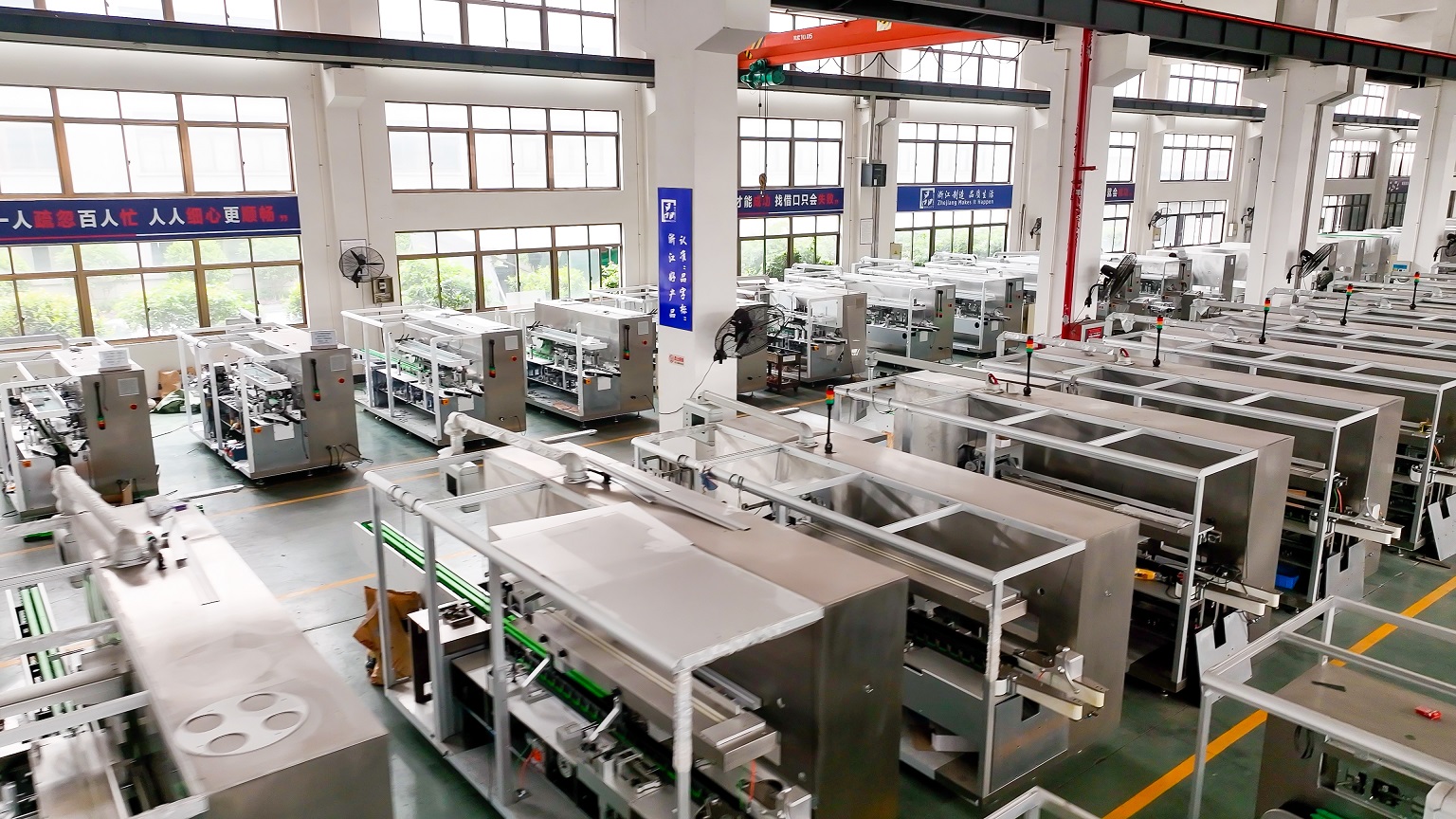
Integrated blister-cartoning lines link blister forming and sealing with automatic cartoning and downstream case packing or palletizing. Image: Hoping Machinery cartoner workshop.
Problem Definition: What Newcomers Usually Misunderstand
For a newcomer, the first source of confusion is terminology. A pharmaceutical packaging machine may be a standalone blister packaging machine, a tablet blister packaging machine, a capsule blister packaging machine, an automatic cartoning machine, or a complete blister cartoning line. These are not interchangeable descriptions. A blister packaging machine forms and seals the primary pack. A cartoning machine places the blister, leaflet, and carton together. A blister packaging line connects both stages and adds transfer, inspection, rejection, and often end of line packaging machine functions.
The second confusion is operational. New buyers often compare only maximum speed. In practice, a blister cartoning line is a production system. The line must balance blister output, transfer reliability, carton opening, leaflet handling, insertion, closing, and downstream case packing. Manual transfer between blister and carton stages can create handling risk and leaflet insertion errors. A documented HOPING project case describes improvements in packaging automation, reduced manual transfer, improved blister-to-carton connection efficiency, reduced wrong insertion or missing leaflet risks, and support for downstream automation integration.
The third confusion is control architecture. A modern pharmaceutical packaging line is not just mechanical modules. Servo drives, motion controllers, industrial PCs, recipe memory, mold-change functions, and inspection interfaces determine how repeatable the line is during format changes and daily operation. That is why a primer should explain the machine sequence before it explains the specification sheet.
Industry Background: Why Integrated Blister-Cartoning Lines Are Common
Pharmaceutical packaging exists to maintain product stability and integrity during post-production shipping and storage. A published review states that medical devices and pharmaceutical drugs are packaged for this purpose. That functional requirement shapes equipment design: the blister must protect the solid dosage form, the carton must protect the blister, and the line must preserve batch identity and traceability through coding, inspection, and rejection.
Regulatory context also matters. ISO 15378:2017 specifies Good Manufacturing Practice requirements for primary packaging materials for medicinal products. The U.S. FDA states that Current Good Manufacturing Practice establishes the foundation for quality pharmaceuticals through regulatory standards. These sources do not replace a machine-specific technical agreement, but they explain why buyers ask for documentation, material-contact details, quality-control records, and acceptance testing when they review a pharmaceutical packaging machine.
Market context supports the same direction. Custom Market Insights valued the global pharmaceutical blister packaging machine market at USD 2.57 billion in 2025 and identified Asia-Pacific as the fastest-growing region for pharmaceutical blister packaging with an 8.87% CAGR to 2031. Mordor Intelligence reported that horizontal cartoning systems held 70.12% of the cartoning machine market in 2024. For a newcomer, these figures are background, not a substitute for line-level due diligence. They explain why automatic blister packaging machine and automatic cartoning machine architectures are widely discussed as linked systems rather than isolated machines.
Detailed Solution: The Four Functions Behind a Blister-Cartoning Line
1. Blister forming: making the cavity
Blister forming is the first primary-packaging step. A thermoplastic film is heated and formed into pockets that match the tablet or capsule. The formed web then moves to filling. In alu alu blister packaging machine designs, the forming and sealing structure is adapted for aluminum-based formats. In more common PVC and Alu foil formats, the machine handles the forming film and lidding foil as separate reels.
The DHL8005H automatic blister-cartoning line from Zhejiang Hoping Machinery Co., Ltd. is specified for high-speed blister forming and sealing, with PVC/Alu foil auto splicing. That auto-splicing function matters in continuous production because film reel changes are part of normal operation. The line is also specified with multiple feeding methods, so the feeding approach can be matched to the product and project configuration.
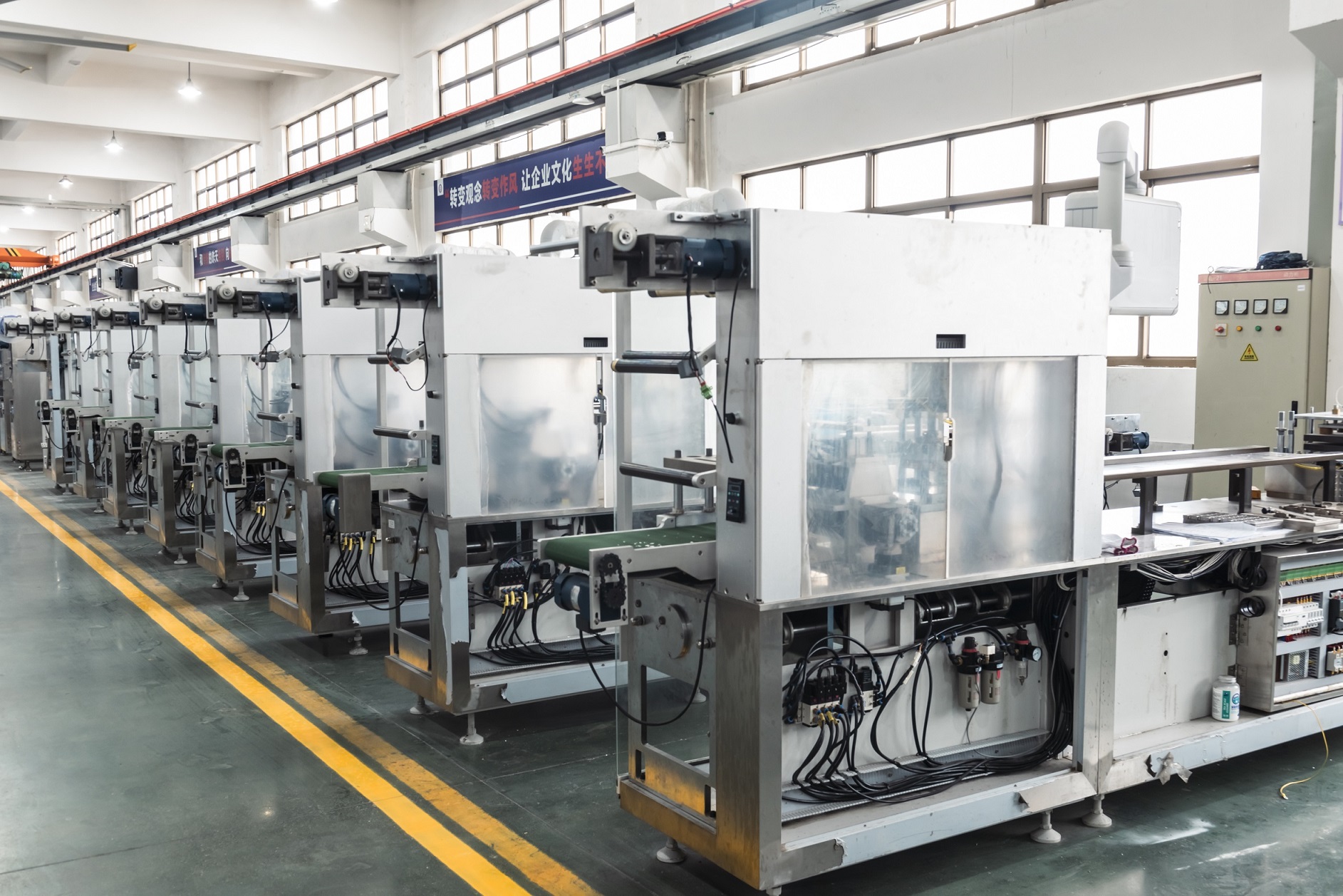
Blister forming and sealing are the primary-packaging stages inside a blister cartoning line. Image: Hoping Machinery blister machine workshop.
2. Sealing: closing the primary pack
Sealing closes the filled blister by bonding a lidding foil to the formed web. For a beginner, the key point is that sealing is not a separate packaging concept. It is the step that turns an open blister cavity into a closed primary pack. The quality of the seal, the alignment of the foil, and the stability of the web tension all affect the downstream transfer and cartoning stages.
On the DHL8005H, sealing sits inside a GMP-oriented line design. The specification also includes mold-change and preset-memory functions. In practical terms, those functions support repeatable setup when the line moves between blister formats. They do not remove the need for format trials, but they reduce the amount of manual adjustment required during changeover.
3. Cartoning: turning blisters into a secondary pack
Cartoning is the secondary-packaging stage. An automatic cartoning machine opens a carton, presents the leaflet, inserts the blister and leaflet, closes the carton, and may integrate coding or inspection. In a pharmaceutical cartoning machine, the leaflet handling and insertion sequence is often a major engineering focus because a missing leaflet or wrong insertion is a visible quality defect.
HOPING supplies standalone cartoning machines as well as integrated lines. The XWZ120 is a horizontal cartoning machine rated at about 30–120 cartons/min. The XWZ500H is a full servo high-speed cartoning machine rated at about 100–500 cartons/min. In an integrated blister cartoning line, the cartoner is matched to the blister output and transfer system. The DHL8005H is specified for up to 500 cartons/min, with carton opening, insertion, leaflet handling, coding/inspection, and connection to bundling, case packing, and palletizing equipment.
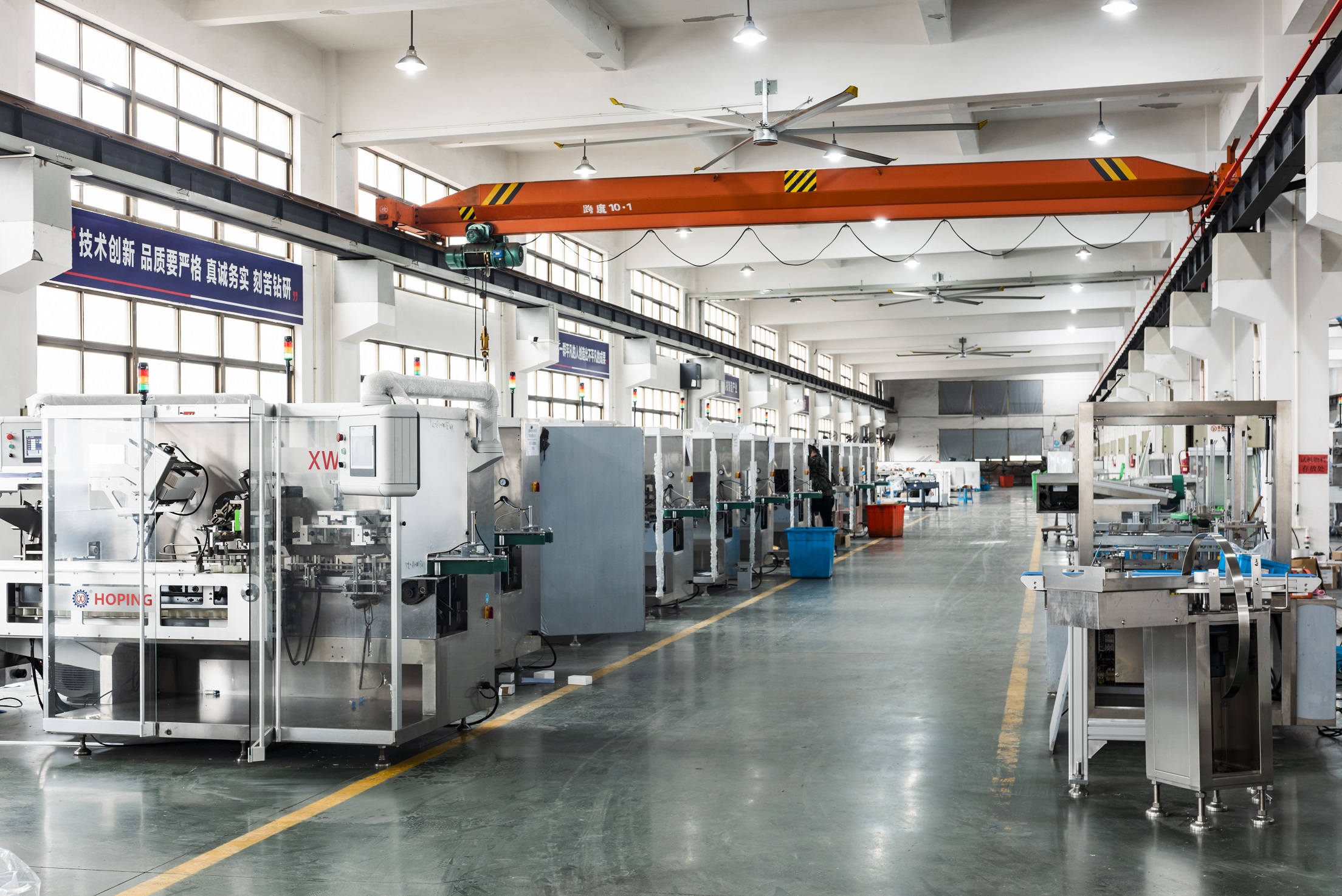
Cartoning converts sealed blisters into a secondary pack with leaflet insertion, carton closing, and inspection options. Image: Hoping Machinery cartoner workshop.
4. Independent replenishment: keeping the transfer fed
Independent replenishment is one of the least intuitive terms for a newcomer. In a blister cartoning line, the cartoner cannot run continuously if blister boards are supplied through a single shared infeed that stops whenever one channel is reloaded. Independent replenishment uses separate servo-driven channels to supply blister boards to the transfer and cartoning stage. The purpose is to make the supply of blister boards more flexible and less dependent on a single replenishment path.
The DHL8005H is specified with a three-channel servo-driven independent replenishment system. The DHL1000/5H is specified with a four-channel servo-driven independent replenishment system. These are configuration facts, not claims about uptime. For a buyer, the practical question is how the replenishment channels are loaded, how they are synchronized with the D3 intelligent top-loading parallel tracking transfer system, and how the line handles a missing or rejected blister.
Inside the DHL8005H Control System
The DHL8005H is specified with a Beckhoff motion controller and a CP9315 industrial PC. For a newcomer, this means the line separates motion coordination from the industrial computing layer. The motion controller coordinates servo-driven axes. The industrial PC provides the computing platform for the line control environment. The exact allocation of functions between the motion controller and the industrial PC should be confirmed in the technical agreement and the line documentation.
The DHL8005H also uses a D3 intelligent top-loading parallel tracking transfer system. This transfer sits between blister output and carton infeed. Its job is to move blisters into the cartoning flow in a controlled sequence. The line is further specified with mold-change and preset-memory functions, which are relevant when a pharmaceutical packaging line must handle more than one blister or carton format.
The published maximum capacity is up to 800 blisters/min and 500 cartons/min. New buyers should treat this as a maximum line rating, not a guaranteed sustained output for every product and format. The correct validation method is a material trial and factory acceptance test using the buyer’s blister format, carton format, leaflet, and product. HOPING’s quality-control scope includes incoming material inspection, key component inspection, assembly inspection, electrical safety check, no-load trial run, material trial, FAT, customer witness acceptance, and pre-shipment inspection.
Step-by-Step Breakdown for a New Buyer
- Define the dosage form and package format. Confirm whether the line will run tablets, capsules, or other solid dosage forms, and define the blister layout, carton size, and leaflet format.
- Confirm material compatibility. Clarify PVC, Alu foil, or other packaging materials. For alu alu blister packaging machine projects, confirm the forming and sealing structure before comparing line speed.
- Map the material flow. Draw the path from blister forming to sealing, transfer, cartoning, inspection, rejection, and downstream case packing. A pharmaceutical packaging line should be reviewed as one flow, not as separate machine quotations.
- Define the control and data scope. For the DHL8005H, confirm the Beckhoff motion controller and CP9315 industrial PC configuration, recipe memory, mold-change support, interface language, and any coding or inspection data requirements.
- Plan independent replenishment and transfer. Confirm how the three-channel servo-driven independent replenishment system is loaded and how it interacts with the D3 top-loading parallel tracking transfer.
- Set inspection and rejection rules. Define what the line should reject: missing blister, missing leaflet, wrong insertion, coding failure, or carton closing failure. The DHL8005H scope includes coding/inspection and rejection functions according to project configuration.
- Validate with material trial and FAT. Use the buyer’s actual materials and formats. Confirm the acceptance criteria before shipment, not after installation.
- Plan training and spare parts. HOPING’s after-sales scope includes on-site installation and commissioning, operator training, maintenance training, remote support, spare parts supply, process-parameter guidance, and follow-up, subject to contract and project configuration.

Operator and maintenance training is part of the practical deployment of a blister cartoning line. Image: Hoping Machinery training hall.
Use Cases: Where a Blister-Cartoning Line Fits
A blister cartoning line fits solid dosage production where the primary pack is a blister and the secondary pack is a carton. Typical applications include tablet and capsule packaging, nutraceutical tablets, healthcare products, and selected food or cosmetic blister-cartoning projects. HOPING lists blister packaging, cartoning, inspection, and end-of-line automation as an integrated pharmaceutical packaging process, and its line scope can connect to bundling, case packing, and palletizing equipment.
For a high-volume solid dosage project, the DHL8005H is positioned as an intelligent fully servo high-speed blister-cartoner integrated machine. For a project that needs higher blister output, the DHL1000/5H is specified at up to 1000 blisters/min and 500 cartons/min with four-channel independent replenishment. For a lower-capacity integrated line, the DHL6004 is specified at up to 600 blisters/min and 400 cartons/min with Beckhoff motion control and CP9315 industrial PC. These are configuration choices, not a ranking. The right choice depends on format, product, carton, leaflet, inspection, and downstream scope.
The case evidence also points to a practical benefit. A documented HOPING project case describes improvements in packaging automation, reduced manual transfer, improved blister-to-carton connection efficiency, reduced wrong insertion or missing leaflet risks, and supported downstream automation integration. For a new buyer, that is a more useful starting point than comparing brochure slogans.
Comparison Table: Selected HOPING Integrated Line Configurations
| Model | Maximum blister output | Maximum carton output | Transfer and replenishment | Control configuration |
|---|---|---|---|---|
| DHL8005H | Up to 800 blisters/min | Up to 500 cartons/min | D3 intelligent top-loading parallel tracking transfer; three-channel servo-driven independent replenishment | Beckhoff motion controller and CP9315 industrial PC; mold-change and preset-memory functions |
| DHL1000/5H | Up to 1000 blisters/min | Up to 500 cartons/min | D3 intelligent top-loading parallel tracking transfer; four-channel servo-driven independent replenishment | Beckhoff motion controller and high-bus industrial control system; mold-change and recipe memory functions |
| DHL6004 | Up to 600 blisters/min | Up to 400 cartons/min | Servo-driven independent replenishment; high-speed transfer and cartoning linkage | Beckhoff motion controller and CP9315 industrial PC; convenient mold change |
The table compares selected HOPING integrated line configurations using published specification facts. It is not a ranking, and maximum output is not the same as validated sustained output for a specific product and format.
FAQ
What GMP documentation should buyers request from a pharmaceutical packaging machine manufacturer?
Buyers should request the technical agreement, material-contact specification, quality-control records, factory acceptance test plan, change-control documents, and any coding or inspection records relevant to the project. HOPING describes GMP-oriented line design and a quality-control scope that includes incoming material inspection, key component inspection, assembly inspection, electrical safety check, no-load trial run, material trial, FAT, customer witness acceptance, and pre-shipment inspection. ISO 15378:2017 specifies GMP requirements for primary packaging materials for medicinal products, while the U.S. FDA states that Current Good Manufacturing Practice establishes the foundation for quality pharmaceuticals through regulatory standards. Machine-specific requirements should be confirmed with the buyer’s quality team and target market.
When reviewing top pharmaceutical packaging machine manufacturers, what capability evidence matters?
Compare documented line scope rather than labels. For a blister cartoning line, check whether the manufacturer documents blister forming, sealing, transfer, leaflet handling, carton opening, insertion, closing, inspection, and downstream connection. Also compare independent replenishment, control architecture, mold-change support, quality-control steps, and FAT terms. For example, the DHL8005H is specified for capsule and tablet packaging with a D3 top-loading transfer, three-channel servo-driven independent replenishment, Beckhoff motion controller, and CP9315 industrial PC. HOPING also states customization for blister size, blister materials, quantity per carton, carton specification, leaflet format, coding or inspection method, feeding method, downstream connection, interface language, and electrical component brand.
What drives the budget of a blister-cartoning line?
No published price data is available in the supplied facts, so a reliable budget should be built from a configured quotation. The main cost drivers are the line configuration, number of formats, output class, independent replenishment channels, inspection or coding scope, downstream case packing or palletizing, control architecture, and validation documentation. A turnkey pharmaceutical packaging line with downstream automation and multi-format tooling should not be compared with a standalone blister packaging machine on price alone.
Can we run a material trial or FAT before shipment?
Yes. HOPING’s quality-control scope includes no-load trial run, material trial, FAT, customer witness acceptance, and pre-shipment inspection. The buyer should define the product, blister format, carton format, leaflet, packaging materials, acceptance criteria, and rejection rules before the trial. A sample or format validation plan should be agreed in the technical agreement. To discuss a sample, quotation, or catalog, contact HOPING at monica@xwbj.com or +86 133-5610-5292.
What is the typical lead time?
HOPING states a typical lead time of 60–120 days after technical confirmation. The final lead time is subject to model, configuration, project complexity, and contract terms. The minimum order quantity is 1 set or 1 complete line. For a new blister cartoning line, the technical agreement, format drawings, and FAT plan should be fixed before the delivery schedule is treated as final.
Conclusion
A blister-cartoning automation works by linking four functions: blister forming, sealing, cartoning, and independent replenishment. The line is coordinated by a control architecture that moves blisters from primary packaging into secondary packaging with inspection, rejection, and downstream connection. For newcomers, the most useful way to evaluate a pharmaceutical packaging line is to ask for the line sequence, the format scope, the control configuration, the quality-control plan, and the acceptance test terms.
Zhejiang Hoping Machinery Co., Ltd. is a pharmaceutical packing machinery manufacturer established in 2001 in Ruian, Zhejiang, China. HOPING operates a 28,800 m² facility, has 300 employees, 56 engineers, an annual output of 500 units, and exports about 25% of its output. Its main products include blister packaging machine, cartoning machine, case packing machine, and end of line packaging machine categories. The DHL8005H illustrates the company’s integrated approach: up to 800 blisters/min and 500 cartons/min, a D3 intelligent top-loading parallel tracking transfer system, three-channel servo-driven independent replenishment, Beckhoff motion controller, CP9315 industrial PC, mold-change and preset-memory functions, and GMP-oriented line design.
For buyers moving from awareness to evaluation, the next step is not another generic brochure. It is a configured discussion around product, blister format, carton format, leaflet, output target, inspection scope, and downstream automation.
Next step: Review the Hoping Machinery Catalog, or contact HOPING to discuss a sample, quotation, or line configuration for a blister cartoning project.
Website: www.hopingcn.com | Email: monica@xwbj.com | Tel: +86 133-5610-5292 | WhatsApp: +86 133-5610-5292
Address: 88th Weiwu Road, Nanbin Sub-district, Ruian City, Zhejiang Province, China.
Project review and quotation discussions should cover format, output, inspection, control architecture, and FAT criteria. Image: Hoping Machinery meeting room.
Have Questions or Need More Details?
Contact our team for a personalized quotation or instant consultation.
Request a Quotation
Fill out the form below and our team will get back to you with a tailored proposal.
WhatsApp Direct Chat
Prefer to chat in real-time? Message us on WhatsApp for instant assistance & quick answers.
- Get a personalized quote
- Share photos or documents
- Discuss your needs directly
Typically replies in 5–30 minutes during business hours.