
High-Speed Blister Forming and Sealing: Comparing Approaches in Integrated Cartoning Lines
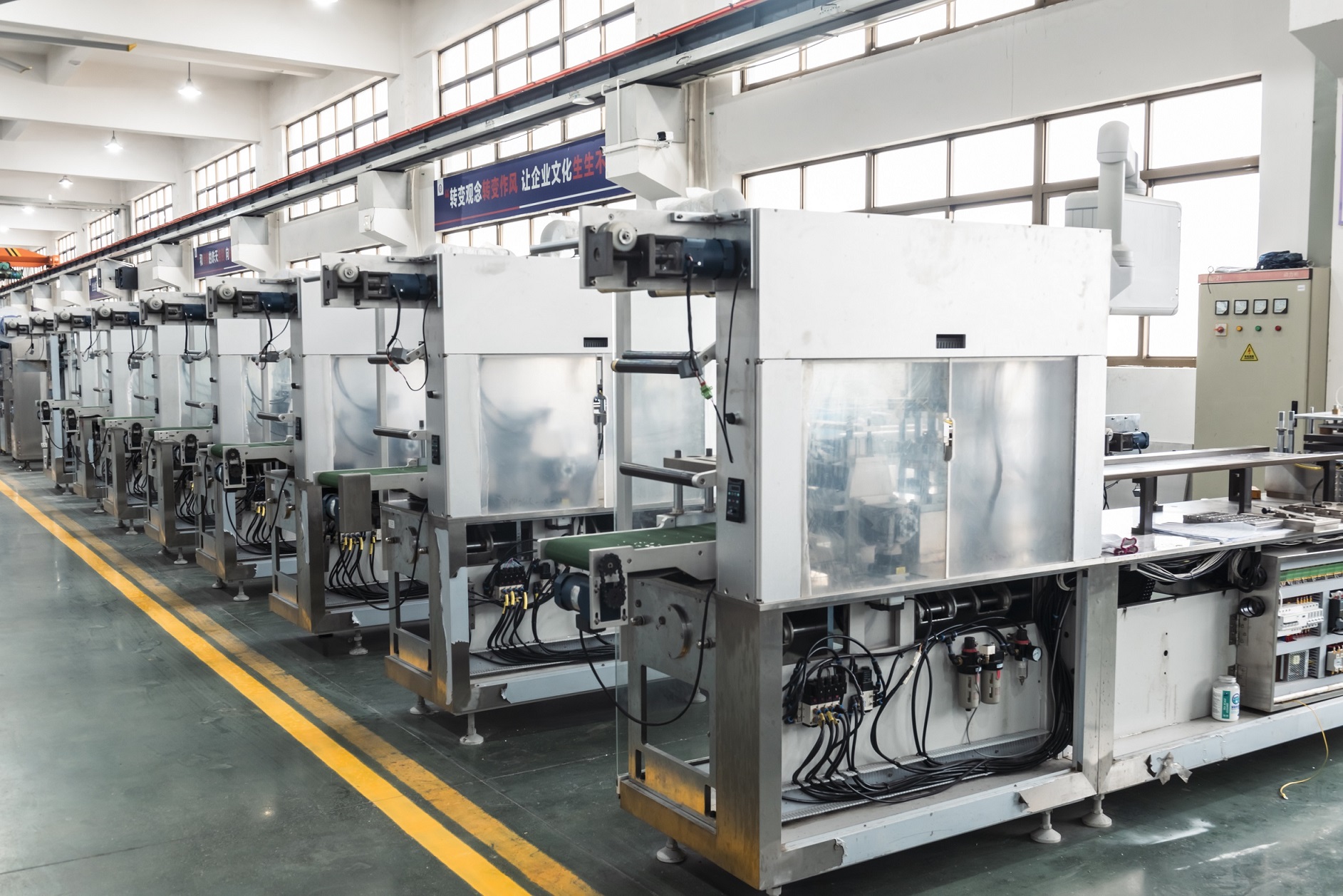
Blister forming and sealing decide whether an integrated blister-cartoning line holds its rated output or loses it at the transfer point. On a line such as the HOPING DHL8005H, rated at up to 800 blisters/min and 500 cartons/min, how the blister pocket is formed, how the lidding material is sealed and how the film and foil are handled between splices determines how much of that blister output actually arrives as packed cartons.
This guide compares the forming and sealing approaches used inside integrated lines rather than on standalone machines: flat-platen forming, roller (rotary) forming, and integrated servo sealing with independent replenishment and PVC/Alu foil auto splicing. It also sets out how each approach couples to an automatic cartoning module, and which configuration fits which production profile.
What Forming and Sealing Actually Decide on an Integrated Line
On a standalone pharmaceutical blister packaging machine, forming and sealing have a relatively simple job: produce a correctly formed, correctly sealed blister at the machine's own speed. On an integrated blister cartoning line, the job is harder, because three variables must stay in agreement at all times.
- Blister output — the number of good blisters per minute leaving the forming and sealing stations.
- Transfer stability — whether those blisters reach the cartoner in a controlled, oriented position without jams or double feeds.
- Cartoner intake — the number of cartons per minute the cartoning module can open, fill, close and code.
When these three fall out of agreement, the symptoms appear downstream: misplaced blisters, wrong or missing leaflets, and rejected cartons. Pharmaceutical packaging projects frequently describe exactly this failure mode — a case involving a large pharmaceutical manufacturer and solid dosage production company addresses the problem of manual transfer and leaflet insertion errors in pharmaceutical packaging for blister packaging and automatic cartoning of tablets, capsules and other solid dosage forms.
The practical conclusion is that forming and sealing should not be evaluated as isolated stations. They should be evaluated as the upstream half of a single throughput equation, where the blister-to-carton ratio, the transfer method and the sealing architecture are chosen together.
Industry Background: Why Forming and Sealing Choices Are Being Revisited
The global pharmaceutical packaging equipment market was valued at approximately USD 10.71 billion in 2024, according to SkyQuest Technology. That figure sits at the primary-and-secondary equipment level, which is one reason market estimates diverge: Grand View Research publishes a different total for the same broad category because primary and secondary equipment are counted differently. Buyers comparing supplier claims should check whether a market figure includes cartoning, case packing and end-of-line equipment, or only primary packaging machines.
Within the blister segment specifically, Custom Market Insights projects the pharmaceutical blister packaging machine market to reach USD 2.57 billion by 2025, at a CAGR of 2.8%. In the secondary packaging segment, Fortune Business Insights valued the pharmaceutical automatic cartoning machinery market at USD 1.46 billion in 2024. Asia Pacific held the largest revenue share of 40.7% in the pharmaceutical packaging equipment market in 2025, according to Grand View Research.
Market concentration in blister machinery is moderate rather than absolute: the top three players — Uhlmann, IMA and Marchesini — collectively hold approximately 29% of the pharmaceutical blister packaging machine market share. The remaining share is spread across a wide field of suppliers, which is why line-level comparison of forming, sealing and integration choices matters more than brand-level generalities.
Standards shape the same decision. Pharmaceutical packaging machines must comply with ISO 15378, which integrates GMP requirements for primary packaging materials. In the EU, pharmaceutical equipment safety is governed by the Machinery Directive 2006/42/EC and the EN 415 series for packaging machines. Forming and sealing design therefore sits at the intersection of throughput engineering and compliance engineering, not on the throughput side alone.
How Forming Approaches Differ Inside an Integrated Line
Two forming technologies dominate the blister side of pharmaceutical packaging machines: flat-platen forming and roller (rotary) forming. Both can be built into an integrated blister-cartoning line, but they produce different outputs, occupy different space envelopes and tolerate different levels of format change.
Flat-platen forming
Flat-platen machines are represented in the HOPING range by the DPP Series, an intelligent flat Alu-PVC / Alu-Alu blister packaging platform covering models such as DPP350F, DPP250S, DPP250FI, DPP160F and DPP250FII. Typical capacity is 20–50 cycles/min depending on model, with power around 5.6–12 kW. Individual models extend that band: the DPP260K runs at a typical 20–70 cycles/min, and the DPP260TI at a typical 20–60 cycles/min, both at 9.5 kW.
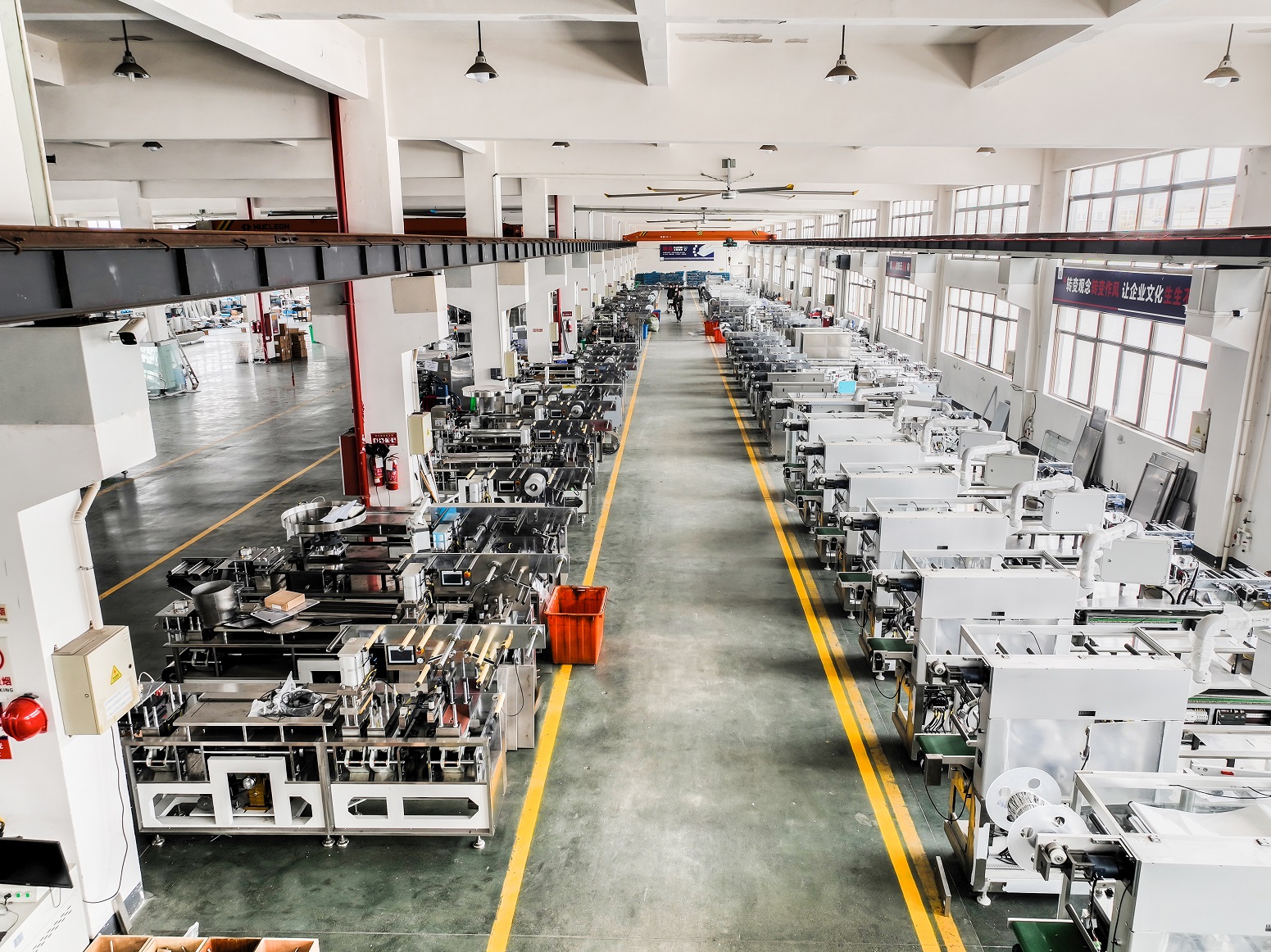
Structurally, a flat-platen blister packaging machine combines forming, feeding, heat sealing and punching/cutting units in one frame, with product-contact and format parts customized per project. The result is a machine that is well suited to small and medium batches, to multi-format production, and to Alu-Alu formats where sealing behaviour needs tight control.
Roller (rotary) forming
Roller forming is the high-output route. The HOPING DPH Series is an intelligent high-speed roller Alu-PVC / Alu-Alu blister packaging platform covering DPH320H, DPH260H and DPH260, with typical capacity of 60–200 cycles/min depending on model and power of about 15.5–18.9 kW. The DPH320H specifies a forming area of 320 × 280 mm, a forming depth of 12 mm, a stroke range of 100–280 mm and 29.5 kW at 380 V 50 Hz.
Where maximum rotary throughput is required, the DPH320HII rotary blister packing machine is specified at a maximum punch frequency of 250 punches/min, a maximum format area of 320 × 280 mm, a feed stroke of 100–280 mm and a maximum capacity of 1000 blisters/min at 30 kW. Its product-contact parts are made of AISI 316L stainless steel and FDA-compliant pharmaceutical-grade materials, while non-product-contact parts use AISI 304 stainless steel and anodized aluminium alloy, in a design manufactured in accordance with GMP requirements with corrosion-resistant, easy-to-clean surfaces.
What the forming choice means for an integrated line
Forming technology sets the ceiling on blister output and the floor on changeover flexibility. Roller forming supports continuous high-volume tablet and capsule production, where the blister format stays stable across long runs. Flat-platen forming supports multi-format, medium-volume production, where the same line must move between different blister layouts and materials. Neither is universally better; the decision follows the product mix, not the machine.
Sealing Approaches: Servo Sealing, Replenishment and Foil Splicing
Sealing is where an integrated line either absorbs small disturbances or amplifies them. Three design features carry most of that behaviour on modern pharmaceutical packaging machines.
Heat sealing and servo-driven motion
On flat-platen platforms, the sealing function sits within the same forming, feeding, heat sealing and punching/cutting module set, with tooling customized by blister format. On roller platforms, heating, forming, sealing and punching units operate continuously, with PVC/PTP/Alu material handling modules feeding the sealing station. In both cases the sealing station defines the temperature and contact-time window that the product and the lidding material will accept.
What changes on high-speed integrated lines is the motion architecture. The HOPING DHL8005H is an intelligent fully servo high-speed blister-cartoner integrated machine in which sealing and the surrounding transport motions are servo-driven, coordinated by a Beckhoff motion controller with a CP9315 industrial PC. Servo coordination is what allows the forming/sealing stations, the transfer system and the cartoner to remain synchronised as line speed changes, instead of running to a single fixed mechanical timing.
Independent servo replenishment
Independent replenishment channels are a second sealing-adjacent design feature. The DHL8005H uses a three-channel servo-driven independent replenishment system. The DHL1000/5H, rated up to 1000 blisters/min and 500 cartons/min, uses a four-channel servo-driven independent replenishment system with a Beckhoff motion controller and high-bus industrial control system. The DHL7005H and DHL7004 use servo-driven independent replenishment combined with a self-developed IRB24 intelligent transfer robot and a Siemens motion controller with TP900 HMI.
For buyers, the practical meaning is redundancy against micro-stops. Independent channels let the line keep feeding material while one channel recovers, rather than stopping the whole blister-cartoning line for a single feed interruption.
PVC and Alu foil auto splicing
Material handling is where forming and sealing meet the operator. The DHL8005H includes PVC/Alu foil auto splicing, which allows forming film and lidding foil to be changed without taking the line down for a full manual reel change. The same principle appears across the range: the IXW800 and IXW600 blister-flow-wrap-cartoning lines specify PVC/Cold Alu auto splice, and the IXW400 liquid dosage blister-cartoner line specifies PVC and top cover film auto splicing.
Splicing capability is not a marketing detail. Every reel change on a line rated at up to 800 blisters/min is a potential source of sealing-temperature drift and short stoppages, and those stoppages are exactly what pushes an integrated line below its rated carton output.
Matching Forming and Sealing Output to the Cartoner
On an integrated line, forming and sealing output is deliberately larger than carton output. The DHL8005H is specified at up to 800 blisters/min and 500 cartons/min; the DHL1000/5H at up to 1000 blisters/min and 500 cartons/min; the DHL7005H at up to 700 blisters/min and 500 cartons/min; the DHL7004 at up to 700 blisters/min and 400 cartons/min; and the DHL6004 at up to 600 blisters/min and 400 cartons/min. The differential is the blister-to-carton ratio, and it exists because one carton normally holds several blisters.
How the blisters cross from forming and sealing into the cartoner is therefore a design decision in its own right. The DHL8005H and DHL1000/5H use a D3 intelligent top-loading parallel tracking transfer system, with different feeding methods available according to customer requirements. Robotic alternatives exist on the same principle: the DHL7005H and DHL7004 use the self-developed IRB24 intelligent transfer robot.
Downstream of the cartoner, the line can continue into secondary packaging: the DHL8005H scope covers connection to bundling, case packing and palletizing equipment. HOPING builds that chain as a system — for example the XWK4060 fully servo stretch bander at about 30–60 bundles/min, the XWG4060 fully servo overwrapper at about 30–60 bundles/min, the XWK Series case packing machine at up to about 5 cases/min, and the ICP12 case packing and palletizing integral machine at about 12 cases/min.
Comparison Table: Forming and Sealing Approaches in Integrated Lines
The table below compares the forming and sealing routes available for solid dosage production, using published HOPING configurations and specification data.
| Forming and sealing route | Representative configuration | Forming basis | Sealing / replenishment basis | Published output basis | Fits when |
|---|---|---|---|---|---|
| Flat-platen forming with heat sealing | DPP Series flat Alu-PVC / Alu-Alu blister packing machines (DPP350F, DPP250S, DPP250FI, DPP160F, DPP250FII; DPP260K; DPP260TI) | Forming, feeding, heat sealing and punching/cutting units; product-contact and format parts customized per project | Heat sealing unit within the platen module set; tooling customized by blister format | 20–50 cycles/min (DPP Series); DPP260K 20–70 cycles/min; DPP260TI 20–60 cycles/min | Small and medium batches, multi-format work, Alu-Alu formats |
| Roller (rotary) forming | DPH Series roller Alu-PVC / Alu-Alu blister packing machines (DPH320H, DPH260H, DPH260); DPH320HII rotary machine | Forming, sealing, feeding, punching and cutting modules; forming area 320 × 280 mm, forming depth 12 mm, stroke 100–280 mm on DPH320H | Heating, forming, sealing and punching units; PVC/PTP/Alu material handling modules | 60–200 cycles/min (DPH Series); DPH320H 12 punches/min; DPH320HII up to 1000 blisters/min at max 250 punches/min | Continuous high-volume tablet and capsule production on a stable format |
| Blister machine linked to a cartoner | DPP Series + XWZ Series linked production line | DPP intelligent flat Alu/PVC/Alu-Alu blister packing machine | Linked feeding and carton tooling customized by product format | Typical 100–600 blisters/min and 100–400 cartons/min depending on model | Lines built in stages or existing machine assets retained |
| Integrated servo blister-cartoner | DHL8005H | High-speed blister forming and sealing inside the line frame | PVC/Alu foil auto splicing; three-channel servo-driven independent replenishment; Beckhoff motion controller and CP9315 industrial PC | Up to 800 blisters/min and 500 cartons/min | High-volume solid dosage, single-supplier integrated line |
| Integrated line with robotic transfer | DHL7005H (700 blisters/min, 500 cartons/min); DHL7004 (700 blisters/min, 400 cartons/min) | High-speed blister packaging integrated with automatic cartoning | Self-developed IRB24 intelligent transfer robot; independent replenishment; Siemens motion controller and TP900 HMI; full servo drive | Up to 700 blisters/min with 500 or 400 cartons/min depending on model | High-volume lines where robotic transfer and Siemens control are preferred |
| Blister–flow wrap–carton | IXW800 (600 blisters/min, 600 packs/min, 500 cartons/min); IXW600 (600 blisters/min, 300 packs/min, 300 cartons/min) | Blister packing followed by pillow/flow wrapping and cartoning in one linked line | PVC/Cold Alu auto splice; rotary reciprocating flow-wrapper matching technology; servo-driven independent replenishment | Up to 600 blisters/min, 600 packs/min and 500 cartons/min on IXW800 | Moisture-sensitive or flow-wrapped solid dosage formats |
All figures are published configuration data for the listed HOPING models; final line output depends on product, format and project configuration.
Step-by-Step: Specifying Forming and Sealing in an Integrated Line
Evaluation and execution teams can work through the following sequence to keep the forming and sealing decision attached to the real production requirement.
- Fix the blister format first. Forming area, forming depth and stroke define which forming technology is even possible. The DPH320H, for example, is specified with a 320 × 280 mm forming area, 12 mm forming depth and 100–280 mm stroke range; the DPH320HII uses the same 320 × 280 mm maximum format area with a 100–280 mm feed stroke.
- Choose flat-platen or roller forming. Flat-platen (DPP Series type) suits small and medium batches and frequent format change; roller (DPH Series, DPH320HII) suits sustained high output on a stable format.
- Confirm the sealing and replenishment architecture. Check whether the line uses independent servo replenishment channels and how many — three channels on the DHL8005H, four on the DHL1000/5H — and confirm the control platform (Beckhoff motion controller with CP9315 industrial PC on DHL8005H, DHL6004 and the IXW-series lines; Siemens motion controller with TP900 HMI on DHL7005H and DHL7004).
- Specify material handling. Confirm PVC and Alu foil auto splicing, and check which materials the line must accept: PVC/Alu foil splicing on the DHL8005H; PVC/Cold Alu auto splice on IXW800 and IXW600; PVC and top cover film auto splicing on the IXW400.
- Match transfer to the cartoner. Decide between the D3 intelligent top-loading parallel tracking transfer system (DHL8005H, DHL1000/5H) and robotic transfer such as the IRB24 on the DHL7005H and DHL7004, and set the feeding method for the specific product.
- Plan changeover and recipe handling. The DHL8005H includes mold-change and preset-memory functions; the DHL1000/5H includes mold-change and recipe memory functions. Confirm how many product recipes must be stored before the line is ordered.
- Define the quality gate before shipment. HOPING's quality control sequence covers incoming material inspection, key component inspection, assembly inspection, electrical safety check, no-load trial run, material trial, FAT, customer witness acceptance and pre-shipment inspection — each of which should be mapped to a named acceptance point in the contract.
Where Each Approach Fits: Use Cases
High-volume tablet production on a fixed format. A roller forming machine feeding an integrated servo blister-cartoner fits when blister output must stay in the hundreds of blisters per minute without frequent format changes. The DHL8005H configuration is rated at up to 800 blisters/min and 500 cartons/min with PVC/Alu foil auto splicing, which suits long, uninterrupted solid dosage runs.
Multi-format and Alu-Alu production. Flat-platen forming remains the practical route when the same site must run different blister layouts and Alu-Alu packaging. The DPP Series covers Alu-PVC and Alu-Alu formats from 20–50 cycles/min typical, with format parts customized by project.
Capacity expansion and line upgrading. A representative project type involves a large pharmaceutical manufacturer and solid dosage production company addressing manual transfer and leaflet insertion errors in pharmaceutical packaging, covering new line construction, capacity expansion or upgrading existing packaging lines, at a scale of 5 to 10 packaging lines. In these projects, the forming and sealing specification is usually the anchor: the cartoner, transfer and downstream equipment are then configured around it. Customer names are disclosed only with authorization.
Moisture-sensitive formats. Where a blister pack must be flow-wrapped before cartoning, a blister-flow-wrap-cartoning line such as the IXW800 or IXW600 links blister packing, pillow wrapping and cartoning in one line, with PVC/Cold Alu auto splice supporting continuous material feed.
Full secondary packaging continuation. Where the line continues past the cartoner, downstream modules such as the XWK4060 stretch bander, XWG4060 overwrapper, XWK Series case packer and ICP12 case packing and palletizing machine extend the same throughput chain towards end-of-line packaging.
Compliance and Verification Points for Forming and Sealing
Compliance questions attach directly to the forming and sealing specification, because that is where product-contact surfaces, sealing parameters and contamination control are decided. Two reference points are useful: ISO 15378 integrates GMP requirements for primary packaging materials, and EU pharmaceutical equipment safety is governed by the Machinery Directive 2006/42/EC and the EN 415 series for packaging machines.
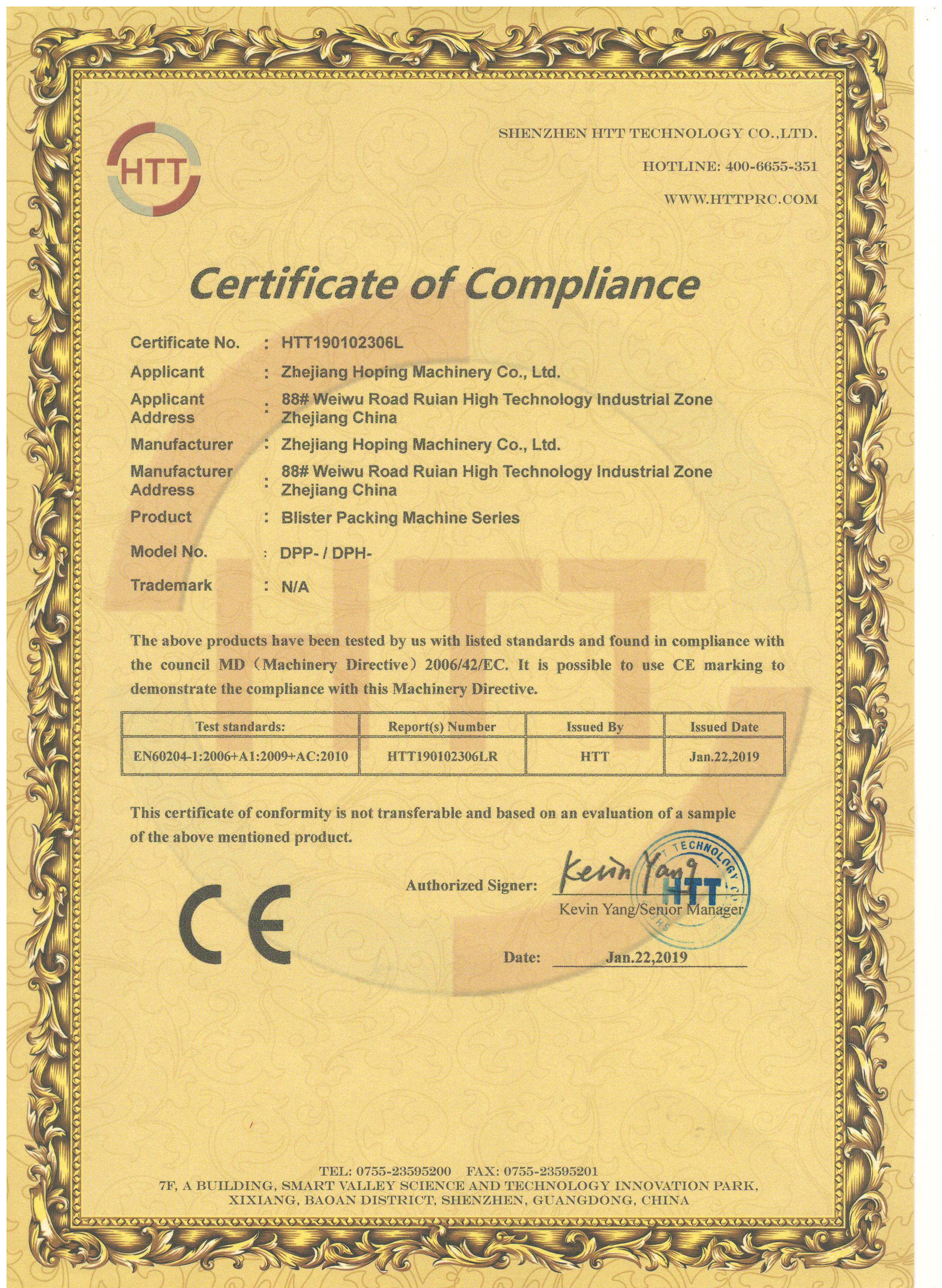
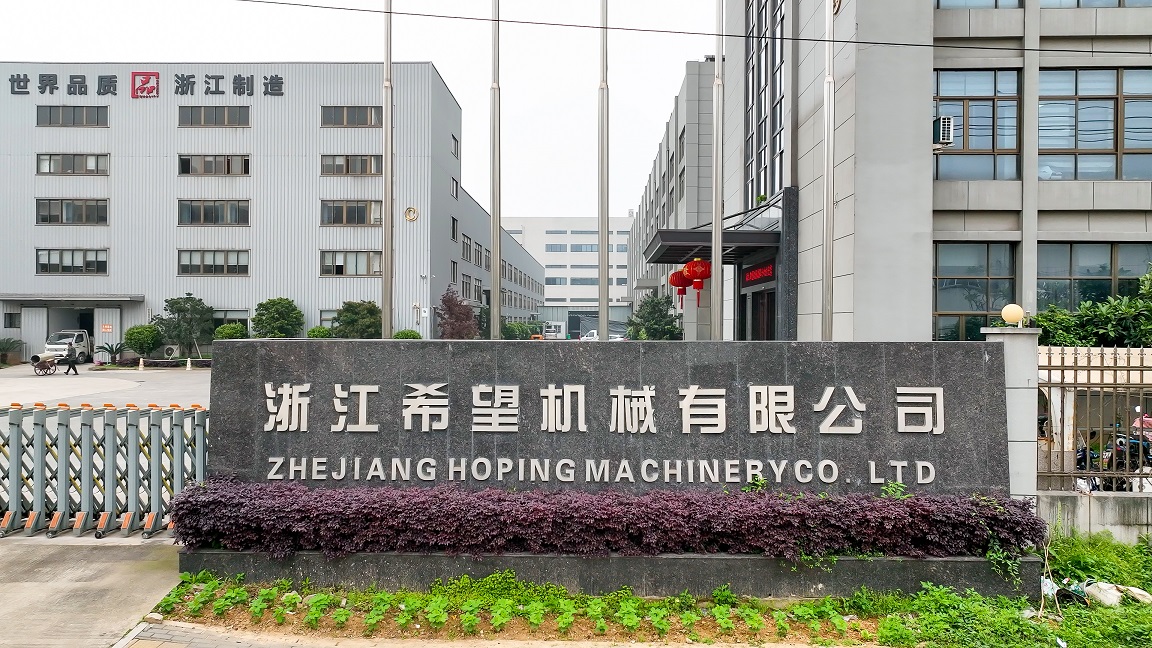
Zhejiang Hoping Machinery Co., Ltd. (HOPING), founded in 2001, manufactures blister packaging machines, cartoning machines, case packing machines and end-of-line packaging machines, with main markets including Southeast Asia, the Middle East, Eastern Europe, South America and Africa. Its certification records include CE certification for the carton packing machine series (certificate UCN 900339024607, issued by Certify International Ltd, referencing EN 415-3:2000, 98/37/EC and 98/79/EC), CE certification for the blister packing machine series (certificate HTT190102306L, issued by Shenzhen HTT Technology Co., Ltd., referencing Machinery Directive 2006/42/EC and EN 60204-1:2006+A1:2009+AC:2010), CE certification for the cartoning machine series (certificate HTT190102307L), and ISO 14001:2015 (certificate CN00123E33896R1M/3300) and ISO 45001:2018 (certificate CN00123S33121R1M/3300) issued by the China Quality Certification Centre, covering design, production and after-sales service of packing machines and packing production lines.
FAQ
What CE and GMP-related evidence should a buyer check on an integrated blister-cartoning line?
Buyers should ask for the certificate records covering both the blister packing machine series and the cartoning machine series, since an integrated line combines both. HOPING's documentation includes CE certification for the carton packing machine series (certificate UCN 900339024607, issued by Certify International Ltd, referencing EN 415-3:2000, 98/37/EC and 98/79/EC), CE certification for the blister packing machine series (certificate HTT190102306L, referencing Machinery Directive 2006/42/EC and EN 60204-1:2006+A1:2009+AC:2010) and CE certification for the cartoning machine series (certificate HTT190102307L), alongside ISO 14001:2015 (certificate CN00123E33896R1M/3300) and ISO 45001:2018 (certificate CN00123S33121R1M/3300) issued by the China Quality Certification Centre. At the product level, forming and sealing surfaces on models such as the DPH320HII use AISI 316L stainless steel and FDA-compliant pharmaceutical-grade materials for product-contact parts, with AISI 304 stainless steel and anodized aluminium alloy for non-contact parts, in a GMP-oriented design. The relevant primary packaging standard to reference is ISO 15378.
Can a blister packaging machine be supplied as an OEM or customized build?
Yes. HOPING provides ODM, OEM and customizable production services, with a minimum order quantity of 1 set or 1 complete line and a monthly capacity of 30–40 units. Customization can cover blister size, blister materials, quantity per carton, carton specification, leaflet format, coding/inspection method, feeding method, downstream bundling/case-packing/palletizing connection, interface language, electrical component brand and data interface. Because the customization list reaches from forming tooling through to the data interface, buyers should confirm each item in the technical agreement rather than assuming a standard build.
What purchasing terms should be confirmed before ordering an integrated blister-cartoning line?
HOPING's stated purchasing framework is MOQ 1 set or 1 complete line, with delivery terms of EXW Ruian/Wenzhou, FOB Ningbo or Shanghai, or CIF/CFR destination port, subject to contract and customer country requirements. Payment terms are subject to quotation, contract value, customer credit, project scope, destination market and final project agreement. Buyers evaluating forming and sealing options should confirm these commercial terms together with the technical configuration, since electrical component brand, data interface and downstream connection choices affect both scope and price.
How is sample testing and acceptance handled before shipment?
Acceptance follows a defined sequence: technical agreement confirmation, sample testing, FAT before shipment, and SAT at the customer site, with third-party inspection arranged according to customer requirements. The wider quality control process covers incoming material inspection, key component inspection, assembly inspection, electrical safety check, no-load trial run, material trial, FAT, customer witness acceptance and pre-shipment inspection. For forming and sealing specifically, sample testing is where blister formation quality, seal integrity and transfer behaviour are checked against the agreed blister and carton formats.
What lead time should be planned for a high-speed integrated line?
Typical production lead time is 60–120 days after technical confirmation, with final lead time subject to model, configuration, project complexity and contract terms. Monthly capacity is 30–40 units. After delivery, after-sales support includes on-site installation and commissioning, operator training, maintenance training, remote video/phone support, spare parts supply, process-parameter guidance, regular follow-up and troubleshooting, subject to contract and project configuration. Buyers can download the full HOPING Machinery catalog for the complete model range before requesting a line quotation.
Conclusion
Comparing forming and sealing approaches in integrated cartoning lines comes down to four linked decisions: flat-platen or roller forming, how sealing motion and replenishment are servo-controlled, how PVC and Alu foil are handled between splices, and how the resulting blister stream is transferred into the cartoner. The published configurations above show the range clearly — from DPP Series flat-platen machines at 20–50 cycles/min typical, through DPH Series roller platforms at 60–200 cycles/min, to the DHL8005H integrated blister-cartoner at up to 800 blisters/min and 500 cartons/min with PVC/Alu foil auto splicing, three-channel servo-driven independent replenishment and a D3 intelligent top-loading parallel tracking transfer system.
The right approach is the one whose forming and sealing behaviour matches the product mix, the format stability and the compliance requirements of the destination market — not the one with the highest headline speed.
Next step: match a forming and sealing configuration to your product
Send your blister format, carton format and target output, and the HOPING team will confirm a line configuration against the DHL8005H or another model in the range. Sample testing and FAT can be arranged as part of the acceptance sequence.
Contact: Monica | Email: monica@xwbj.com | WhatsApp/Tel: +86 133-5610-5292 | Website: www.hopingcn.com
Have Questions or Need More Details?
Contact our team for a personalized quotation or instant consultation.
Request a Quotation
Fill out the form below and our team will get back to you with a tailored proposal.
WhatsApp Direct Chat
Prefer to chat in real-time? Message us on WhatsApp for instant assistance & quick answers.
- Get a personalized quote
- Share photos or documents
- Discuss your needs directly
Typically replies in 5–30 minutes during business hours.