
Global GMP Requirements for Integrated Cartoning Suppliers
Answer first: GMP compliance for an integrated cartoning machine supplier is not proven by a single certificate. It is established through a project-specific technical agreement that defines the GMP boundary, product-contact and format parts, materials, surface finish, cleaning, documentation, acceptance tests, and change control. For international buyers, the practical question is whether the supplier can make those points traceable for the selected model, such as the DHL8005H integrated blister-cartoning line, and whether stainless steel and aluminum-alloy construction is supported by evidence that inspection teams can review in the target markets.
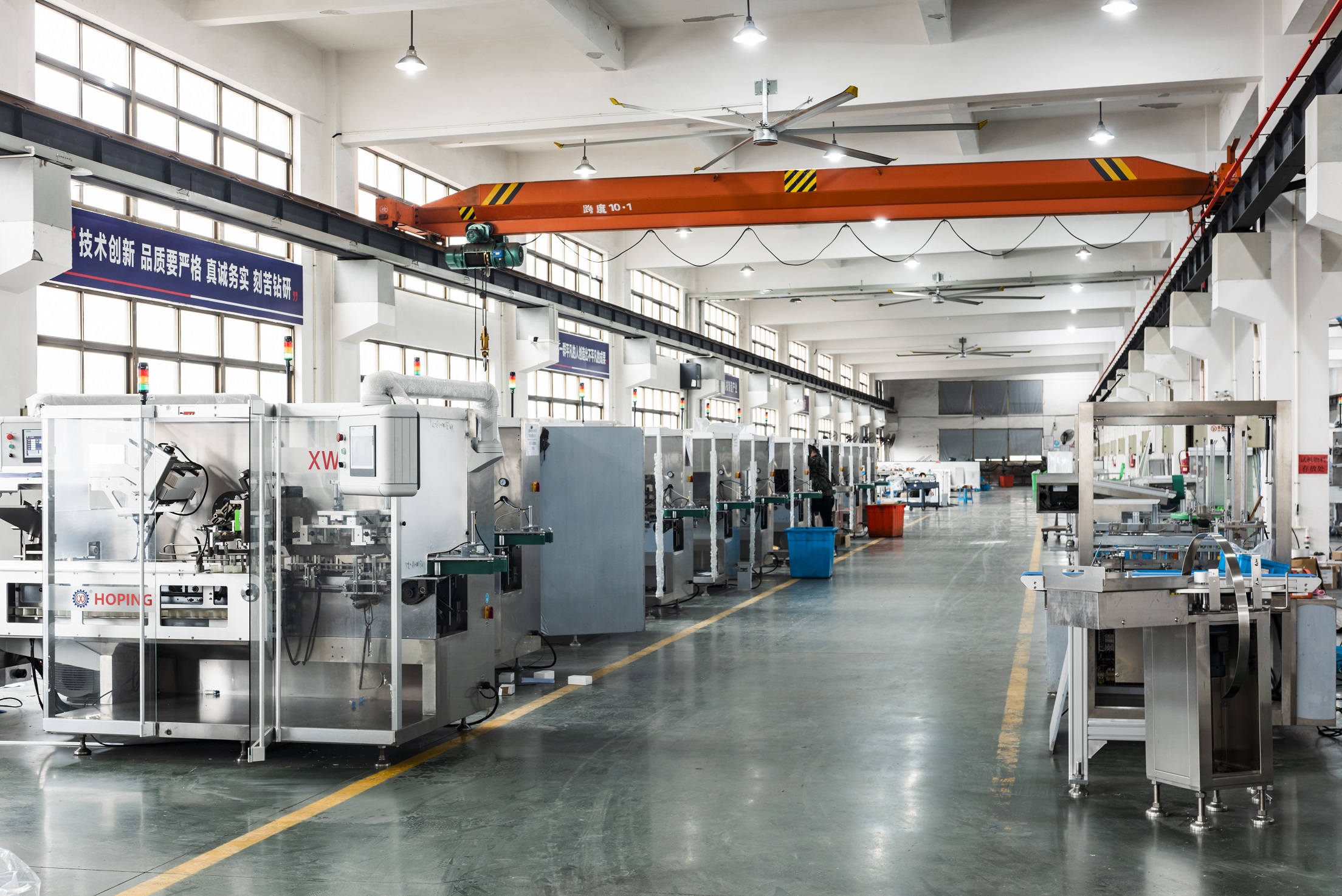
Integrated cartoning equipment in a production workshop. GMP review should move from workshop claims to model-specific technical agreements and documented part specifications.
Zhejiang Hoping Machinery Co., Ltd. (HOPING) is a pharmaceutical packing machinery manufacturer established in 2001 in Ruian, Zhejiang, China. The company produces blister packaging machines, cartoning machines, case packing machines, and end-of-line packaging machines for pharmaceutical, food, cosmetics, and other industries. HOPING reports a 28,800 square meter facility, 300 employees, 56 engineers, an annual output of 500 units, and a 25 percent export ratio, with main markets in Southeast Asia, the Middle East, Eastern Europe, South America, and Africa.
This guide is written for international buyers who are at the awareness and research stage of supplier selection. It explains how GMP requirements should be translated into questions, documents, and acceptance criteria for integrated cartoning machine suppliers. It uses the DHL8005H as a practical example of where a technical agreement must become specific, and it explains why stainless steel and aluminum-alloy construction matters for inspection readiness without treating material names as a compliance certificate.
Why GMP Is a Technical Agreement Issue, Not a Certificate Issue
GMP requirements are often discussed as if they were a product label. In pharmaceutical packaging equipment, that framing is too loose. The ISO 15378:2017 standard specifies Good Manufacturing Practice requirements for primary packaging materials for medicinal products. That standard is relevant to the packaging material interface, but it is not a certificate for an integrated cartoning machine. The U.S. FDA states that Current Good Manufacturing Practice establishes the foundation for quality pharmaceuticals through regulatory standards, and the FDA also provides guidance on production and process controls. Those references set a quality framework; they do not replace a machine-specific technical agreement.
The supplier's real GMP task is to make the equipment definable, cleanable, documentable, and verifiable. That means the buyer and supplier must agree on which parts contact the product, which parts contact primary packaging, which surfaces must be cleanable, which materials are acceptable, how format changes are controlled, and what records will be available for qualification and inspection. When those points are left inside a general statement such as GMP-oriented design, the buyer has no reliable way to compare suppliers or prepare for an inspection.
For integrated cartoning machine suppliers, the issue is larger than the cartoner alone. An integrated line links blister packaging, product transfer, leaflet folding, carton opening, cartoning, coding, inspection and rejection, and downstream equipment. HOPING presents blister packaging, cartoning, inspection, and end-of-line automation as an integrated pharmaceutical packaging process. HOPING also describes an integrated packaging line containing blister packing, cartoning, flow packing, case packing, and palletizing equipment. Each interface adds a GMP-relevant boundary that should be assigned to a responsible party in the technical agreement.
Problem Definition: What Buyers Actually Need to Verify
The central buyer problem is not whether a supplier says it is GMP-oriented. The problem is whether the supplier can turn that statement into evidence for the selected model, the selected product format, and the target market. A buyer who asks only for a certificate may receive a document that does not identify the product-contact parts, the material grades, the surface finish, the cleaning method, or the change-control process. That leaves the buyer to reconstruct compliance after the purchase order is signed.
A second problem is regional variation. ISO 15378:2017 is an international standard for primary packaging materials. The U.S. FDA cGMP framework is a U.S. regulatory reference. China has a draft GMP guidance for pharmaceutical packaging materials under public consultation, which guides pharmaceutical marketing license holders in reviewing packaging material suppliers. These references do not have the same scope, and the available evidence does not establish that one region's checklist can be transferred unchanged to another. The supplier should help the buyer map the applicable requirements rather than imply that one document covers every market.
A third problem is the gap between material names and material evidence. Stainless steel and aluminum alloy are common in pharmaceutical equipment because they can support cleanability, corrosion resistance, and inspection readiness. But the words stainless steel and aluminum alloy do not state the alloy grade, the surface roughness, the weld treatment, the fastener specification, the crevice controls, or the cleaning agent compatibility. Those details belong in the technical agreement and in the drawing package. Without them, the buyer cannot verify that the construction actually supports the intended cleaning and inspection regime.
A fourth problem is the difference between a maximum speed claim and a qualified line. HOPING's DHL1000/5H is described with a maximum capacity of up to 1000 blisters per minute and 500 cartons per minute. That is a useful capacity indicator, but GMP review asks a different question: can the line be cleaned, inspected, and documented at the chosen format and operating condition? A high-speed line with unclear product-contact boundaries is harder to qualify than a slower line with clear evidence.
Industry Background: The Regulatory Layers Around Integrated Cartoning
The global pharmaceutical packaging machinery market is reported to be worth USD 7.09 billion in 2026. The same market context includes horizontal cartoning systems, which held 70.12 percent of the market share in 2024. These figures show why integrated cartoning decisions attract attention, but they do not answer compliance questions. Compliance is built at the level of the machine, the product-contact part, and the documentation package.
Regional growth also shapes supplier selection. Asia-Pacific is reported as the fastest-growing region for pharmaceutical blister packaging, with an 8.87 percent CAGR to 2031. For buyers sourcing from Asian manufacturers, that growth makes supplier qualification more important, not less. A larger supplier base increases the need for a consistent GMP review method, because the buyer must compare suppliers that may describe compliance in different ways.
The regulatory layer has at least three practical reference points. First, ISO 15378:2017 specifies GMP requirements for primary packaging materials for medicinal products. Second, the U.S. FDA cGMP framework establishes a quality foundation for pharmaceuticals and provides guidance on production and process controls. Third, China has a draft GMP guidance for pharmaceutical packaging materials under public consultation. The draft status matters: it should be monitored and used to prepare supplier-review records, not treated as a final rule with a confirmed document number in the available evidence.
Integrated cartoning suppliers sit inside these layers because they provide equipment that forms, closes, codes, inspects, and transfers pharmaceutical packages. The supplier's documentation should allow the pharmaceutical manufacturer to connect equipment design to its own quality system. That is why the technical agreement is the right control point. It converts a general regulatory expectation into a defined scope of supply, a defined set of materials, and a defined set of records.
Detailed Solution: Building a GMP-Ready Technical Agreement with an Integrated Cartoning Supplier
The solution is to make GMP a named exhibit in the commercial and technical documents. The technical agreement should be written so that a quality reviewer, an engineer, and a procurement manager can all use it. It should identify the model, the line configuration, the product-contact parts, the material evidence, the cleaning approach, the documentation deliverables, and the change-control rules. The following sections show how to build that agreement for an integrated cartoning machine supplier.
1. Define the GMP boundary across the integrated line
The first clause should define where the GMP-relevant boundary starts and ends. For a blister-cartoning line, the boundary may include the blister forming and sealing area, the product transfer, the carton magazine, the leaflet folder, the coding station, the inspection and rejection point, and the downstream connection. HOPING's integrated line description includes blister packing, cartoning, flow packing, case packing, and palletizing equipment. The buyer should list each module and state which party is responsible for its GMP-relevant design, documentation, and acceptance evidence.
The boundary should also identify interfaces. If the blister machine and cartoner are supplied as an integrated line, the transfer point between them is a GMP-relevant interface because product exposure, accumulation, and cleaning access can change there. The technical agreement should state who designs that interface, who verifies it, and what records are provided. A boundary that stops at the cartoner alone is not sufficient for an integrated line.
2. Specify product-contact and format parts for the selected model
For a model such as the DHL8005H integrated blister-cartoning line, the technical agreement should identify every product-contact and format part by part number. HOPING's integrated blister-cartoning line descriptions state that product-contact and format parts are configured according to GMP-oriented project requirements. The DHL8005H agreement should turn that statement into a verified parts list, material certificates, surface-finish requirements, cleaning instructions, and change-control rules.
The parts list should distinguish between product-contact parts, primary-packaging-contact parts, and non-contact format parts. It should state the material grade for each part, the acceptable surface finish, the cleaning method, and the replacement interval or inspection method where applicable. If a part is not product-contact, the agreement should say so explicitly rather than leave the buyer to assume. This is the level of detail that allows an inspection team to trace a design decision to a document.
The same discipline applies to change parts. A new carton size, blister format, or leaflet format can introduce new contact surfaces and new cleaning challenges. The agreement should require a change-control review before a new format part is released. For the DHL8005H, that means the format-part list should be linked to the product format and the carton size, not treated as a generic accessory list.
3. Use material construction as evidence, not as a slogan
HOPING describes stainless steel and aluminum-alloy machine structures for its integrated blister-cartoning lines, including the DHL1000/5H. HOPING also describes a stainless steel and aluminum-alloy frame for the XWZ500H full servo cartoning machine. These material families are relevant because they can support cleanability, corrosion resistance, and inspection readiness. They do not, by themselves, prove GMP compliance.
The technical agreement should therefore require the specific alloy grade, surface finish, weld treatment, fastener specification, and cleaning method for each product-contact and format part. It should also require drawings that show crevices, dead corners, and access for cleaning. If the supplier claims that stainless steel and aluminum-alloy construction helps meet inspections across many regions, the buyer should ask for the evidence that supports that claim for the selected model. The evidence may include material certificates, surface-finish records, and cleaning validation support, not just a material name.
Transparent safety guards and accessible panels also matter. HOPING's DHL1000/5H description includes transparent safety guards and a stainless steel and aluminum-alloy machine structure. Those features can help with visual inspection and cleaning access, but the buyer should confirm that the guard design does not create hidden product accumulation and that the cleaning procedure covers the guard surfaces. The technical agreement should include those points in the cleaning and inspection plan.
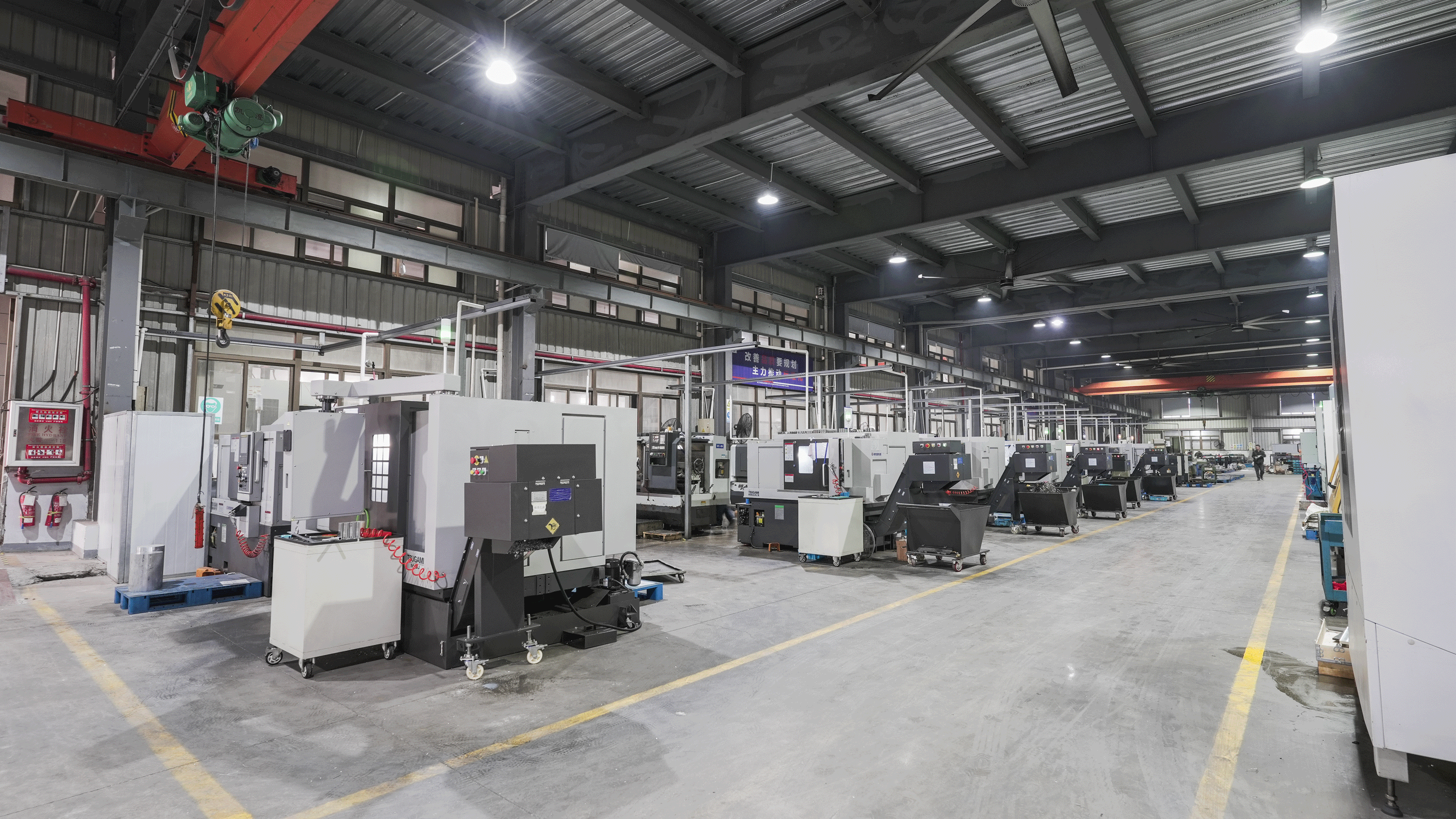
Machining capability supports part consistency, but GMP evidence still requires material certificates, drawings, surface-finish records, and change control.
4. Require documentation that inspection teams can trace
The documentation package should be defined before the purchase order, not after delivery. At a minimum, the technical agreement should list the drawings, material certificates, surface-finish records, cleaning instructions, calibration records, alarm and event logs, software and recipe management information, and acceptance-test protocols that will be provided. The agreement should also state the document language, revision format, and delivery timing.
HOPING's DHL1000/5H description includes mold-change and recipe memory functions. Those functions are useful for repeatable format changes, but they also create a documentation requirement. The buyer should ask how recipes are controlled, who can change them, how changes are recorded, and how the records support batch traceability. The technical agreement should connect recipe management to change control rather than treat it as a convenience feature.
The acceptance-test section should define what will be checked and who will sign. For an integrated cartoning line, the test may cover carton opening, product insertion, leaflet folding, coding, inspection and rejection, and downstream transfer. The test should be linked to the GMP-relevant parts list and the cleaning plan. If a test item cannot be traced to a document, it should be added to the agreement or removed from the acceptance scope.

Training and documentation review should be part of the supplier qualification plan, not an afterthought after installation.
5. Connect factory capability to audit planning
Factory capability is not the same as GMP compliance, but it affects the buyer's ability to audit and verify. HOPING reports a 28,800 square meter facility, 300 employees, 56 engineers, an annual output of 500 units, and a 25 percent export ratio. The company also reports 26 invention patents, 70 utility patents, 4 appearance patents, and 28 software copyrights. These are company-reported indicators of engineering depth and production scale. They are not GMP certificates and should not be presented as such.
For audit planning, the buyer can use these indicators to decide how much time to allocate to design review, document review, and shop-floor verification. A larger facility may require a more structured audit route, while a smaller facility may require deeper review of subcontracted processes. The key point is to connect the audit plan to the GMP-relevant scope. The audit should verify the product-contact parts, the material certificates, the cleaning access, and the change-control records for the selected model, not just the general factory appearance.

Supplier discussions should end with a written GMP scope, a parts list, and a documentation schedule that can be audited.
Step-by-Step Breakdown: A Buyer Workflow for GMP Review
- Map the target markets and the applicable GMP references. List the countries where the product will be manufactured or exported. Record whether the buyer is using ISO 15378:2017 as a packaging-material reference, the U.S. FDA cGMP framework as a U.S. reference, or the China draft GMP guidance as a consultation item. State clearly that these references have different scopes and do not replace a machine-specific technical agreement.
- Define the integrated line boundary. List the blister machine, cartoner, leaflet folder, coding station, inspection and rejection point, case packer, and palletizer if included. HOPING's integrated line description includes blister packing, cartoning, flow packing, case packing, and palletizing equipment. Assign responsibility for each interface.
- Select the model and build the product-contact parts list. For the DHL8005H, require a part-by-part list that identifies product-contact parts, primary-packaging-contact parts, and non-contact format parts. Require material grade, surface finish, cleaning method, and change-control rules for each item.
- Specify material and construction evidence. Use stainless steel and aluminum-alloy construction as a starting point, not as a conclusion. Require alloy grade, surface-finish records, weld treatment, fastener specification, crevice controls, and cleaning-agent compatibility. For the XWZ500H full servo cartoning machine, HOPING describes a stainless steel and aluminum-alloy frame; the buyer should still request the specific evidence for the selected configuration.
- Agree the documentation and acceptance-test plan. Define drawings, material certificates, cleaning instructions, calibration records, recipe and change-control records, and FAT or SAT protocols. Link every acceptance item to a GMP-relevant part or interface. State who reviews, who signs, and when the records are delivered.
- Plan change control and lifecycle support. Require a change-control procedure for new carton sizes, blister formats, leaflet formats, software updates, and replacement parts. HOPING's DHL1000/5H description includes mold-change and recipe memory functions; the agreement should explain how those functions are controlled and documented. The same discipline should be applied to the DHL8005H configuration.
Use Cases: Where This GMP Review Model Applies
New solid dosage blister-cartoning line for a regulated export market
A buyer building a new solid dosage line may select an integrated blister-cartoning configuration and then discover that the supplier's GMP statement is too general for the target market. The review should start with the product-contact parts list for the selected model, such as the DHL8005H, and then extend to the blister transfer, carton opening, leaflet folding, coding, and inspection points. The technical agreement should be written before the purchase order so that the documentation package and acceptance tests are funded and scheduled.
Existing line upgrade with a new cartoner module
An existing blister line may be upgraded with a new cartoner or a new downstream case packer. The GMP boundary then changes at the interface between existing and new equipment. The buyer should require a new interface risk review, a revised parts list, and a cleaning plan that covers the transition zone. A supplier that can describe integrated line components, as HOPING does for blister packing, cartoning, flow packing, case packing, and palletizing, can support this review, but the buyer must still define the responsibility split.
Multi-market supplier qualification
A buyer supplying multiple markets may need one equipment design to support several inspection contexts. The technical agreement should map each market's reference to a specific document or design decision. ISO 15378:2017, the U.S. FDA cGMP framework, and the China draft GMP guidance should be treated as separate references with separate scopes. The supplier should not imply that one certificate or one material statement covers all markets. The buyer should require a gap list and a document cross-reference table.
Nutraceutical and healthcare packaging
HOPING's equipment is described for pharmaceutical, healthcare, food, cosmetic, and other industries. A nutraceutical buyer may not face the same GMP obligations as a pharmaceutical manufacturer, but the equipment may still need cleanable construction, format control, and documentation. The technical agreement should state the intended use and the applicable quality expectations. The buyer should avoid copying a pharmaceutical GMP clause into a nutraceutical project without confirming that the requirement applies.
Comparison Table: GMP Evidence Layers for Integrated Cartoning Machine Suppliers
The table below compares evidence layers that buyers often mix together. It uses only facts available in the supplied corpus and verified data. The purpose is to show what each layer can establish and what it cannot establish.
| Evidence layer | What it establishes | What it does not establish | Buyer action |
|---|---|---|---|
| ISO 15378:2017 | Specifies GMP requirements for primary packaging materials for medicinal products. | It is not a certificate for an integrated cartoning machine. | Use it as a reference for the packaging-material interface and require a machine-specific technical agreement. |
| U.S. FDA cGMP | Establishes the foundation for quality pharmaceuticals through regulatory standards; FDA provides guidance on production and process controls. | The available evidence does not provide machine-specific design clauses. | Require process-control documentation, change-control records, and acceptance-test support. |
| China draft GMP for pharmaceutical packaging materials | Draft guidance under public consultation; guides marketing license holders in reviewing packaging material suppliers. | Draft status; the available evidence does not confirm a final document number or effective date. | Monitor the draft and prepare supplier-review records; do not treat it as a final rule. |
| Technical agreement | Defines the GMP boundary, product-contact and format parts, materials, surface finish, cleaning, documentation, acceptance tests, and change control for the selected model. | It does not replace a regulatory inspection or the pharmaceutical manufacturer's quality system. | Attach it to the purchase order and make it a reviewed exhibit. |
| Stainless steel and aluminum-alloy construction | HOPING describes stainless steel and aluminum-alloy structures for integrated blister-cartoning lines, including the DHL1000/5H, and a stainless steel and aluminum-alloy frame for the XWZ500H. | Material family alone does not prove GMP compliance. | Require alloy grade, surface finish, weld treatment, certificates, and cleaning validation support. |
| Factory capability | HOPING reports a 28,800 square meter facility, 300 employees, 56 engineers, 500 units annual output, and a 25 percent export ratio. | Factory scale is not a GMP certificate. | Use it for audit planning and capability screening, then verify the model-specific evidence. |
FAQ: Global GMP Requirements for Integrated Cartoning Machine Suppliers
What GMP documents should an integrated cartoning machine supplier provide?
An integrated cartoning machine supplier should provide a technical agreement that identifies the GMP boundary, the product-contact and format parts, material certificates, surface-finish records, cleaning instructions, calibration records, recipe and change-control records, drawings, and acceptance-test protocols. ISO 15378:2017 can be used as a reference for primary packaging materials, and the U.S. FDA cGMP framework can be used as a U.S. quality reference, but neither replaces a model-specific technical agreement. The buyer should require the documents before the purchase order and link each document to a specific part or interface.
How should the technical agreement address DHL8005H product-contact parts?
The agreement should list every product-contact and format part for the DHL8005H by part number. It should state the material grade, surface finish, cleaning method, change-control rules, and acceptance evidence for each item. HOPING's integrated blister-cartoning line descriptions state that product-contact and format parts are configured according to GMP-oriented project requirements. For the DHL8005H, that statement should be converted into a verified parts list and a document package that an inspection team can trace.
Does stainless steel and aluminum alloy construction make a cartoning machine GMP-compliant?
No. Stainless steel and aluminum-alloy construction can support cleanability, corrosion resistance, and inspection readiness, but it does not by itself prove GMP compliance. HOPING describes stainless steel and aluminum-alloy structures for integrated blister-cartoning lines, including the DHL1000/5H, and a stainless steel and aluminum-alloy frame for the XWZ500H. The buyer should still require the specific alloy grade, surface finish, weld treatment, fastener specification, and cleaning validation support for the selected model.
Can one integrated cartoning line meet GMP expectations in multiple regions?
A single design can support multiple regions only when the technical agreement maps each market's requirements to specific design and documentation decisions. ISO 15378:2017 is an international standard for primary packaging materials. The U.S. FDA cGMP framework is a U.S. regulatory reference. China has a draft GMP guidance for pharmaceutical packaging materials under public consultation. These references have different scopes, and the available evidence does not establish that one region's checklist can be transferred unchanged to another. The buyer should require a gap list and a document cross-reference table.
How can buyers start a GMP-focused supplier review with HOPING?
Buyers can start by sharing the target markets, dosage form, blister format, carton size, leaflet format, and intended line configuration. Ask HOPING for the technical agreement template, the DHL8005H product-contact parts list, the material and surface-finish documentation, and the acceptance-test outline. Contact Monica at monica@xwbj.com or +86 133-5610-5292, WhatsApp +86 133-5610-5292. The HOPING catalog is available for download at Hoping Machinery Catalog.
Conclusion: Make GMP Specific Before You Compare Suppliers
Global GMP requirements for integrated cartoning machine suppliers should be handled as a technical agreement exercise. The buyer needs a defined GMP boundary, a model-specific product-contact and format parts list, material and surface-finish evidence, a documentation package, acceptance tests, and change control. ISO 15378:2017, the U.S. FDA cGMP framework, and the China draft GMP guidance provide context, but they do not replace machine-specific evidence. Stainless steel and aluminum-alloy construction can support inspection readiness, but the buyer should require the grade, finish, certificates, and cleaning validation support that make the claim verifiable.
HOPING's integrated line scope, company-reported manufacturing scale, and described stainless steel and aluminum-alloy structures provide a starting point for supplier review. The next step is to make the review specific to the selected model, such as the DHL8005H, and to the target markets. A supplier that can produce a traceable technical agreement is easier to compare, easier to audit, and easier to qualify than a supplier that offers only a general GMP statement.
Next step for buyers: Prepare a GMP-focused RFQ with your target markets, dosage form, blister format, carton size, leaflet format, and line configuration. Request the technical agreement template, the DHL8005H product-contact parts list, and the documentation package from HOPING.
Contact: Monica | Email: monica@xwbj.com | Tel: +86 133-5610-5292 | WhatsApp: +86 133-5610-5292 | Address: 88th Weiwu Road, Nanbin Sub-district, Ruian City, Zhejiang Province, China | Website: www.hopingcn.com
Catalog download: Hoping Machinery Catalog
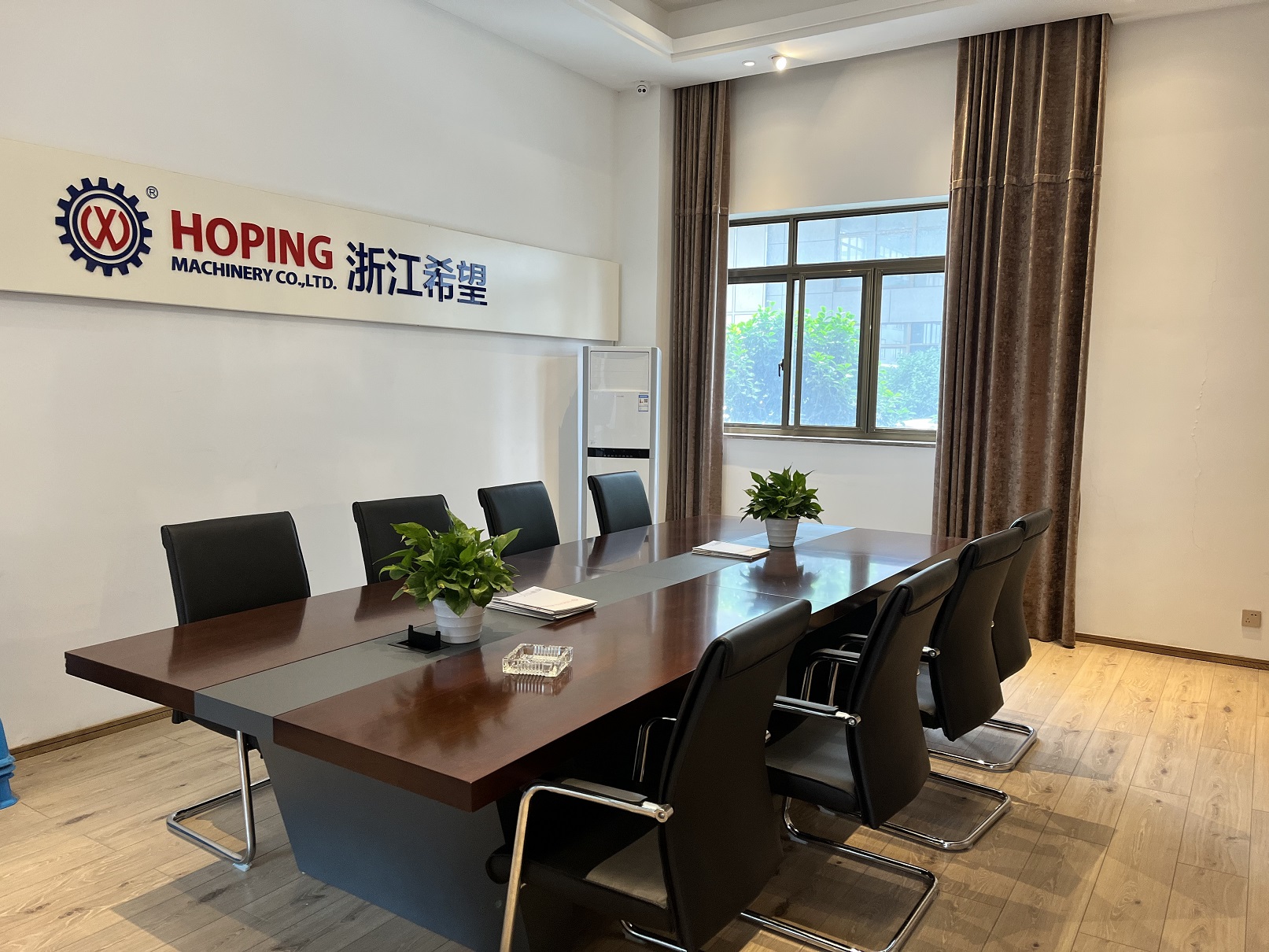
A GMP-focused supplier review should end with a written technical agreement, a parts list, and a documentation schedule.
Have Questions or Need More Details?
Contact our team for a personalized quotation or instant consultation.
Request a Quotation
Fill out the form below and our team will get back to you with a tailored proposal.
WhatsApp Direct Chat
Prefer to chat in real-time? Message us on WhatsApp for instant assistance & quick answers.
- Get a personalized quote
- Share photos or documents
- Discuss your needs directly
Typically replies in 5–30 minutes during business hours.