
Decoding Blister-Cartoning Specs: Output Rate, Servo Axes, and Control Platform
A blister-cartoning line reaches its rated output only when three specification groups agree with each other: how the output rate is defined, how the servo and replenishment architecture is built, and which motion control platform synchronizes the stations. Reading the headline speed figure alone is the fastest way to approve a line that passes its factory acceptance test and then underperforms in routine production.
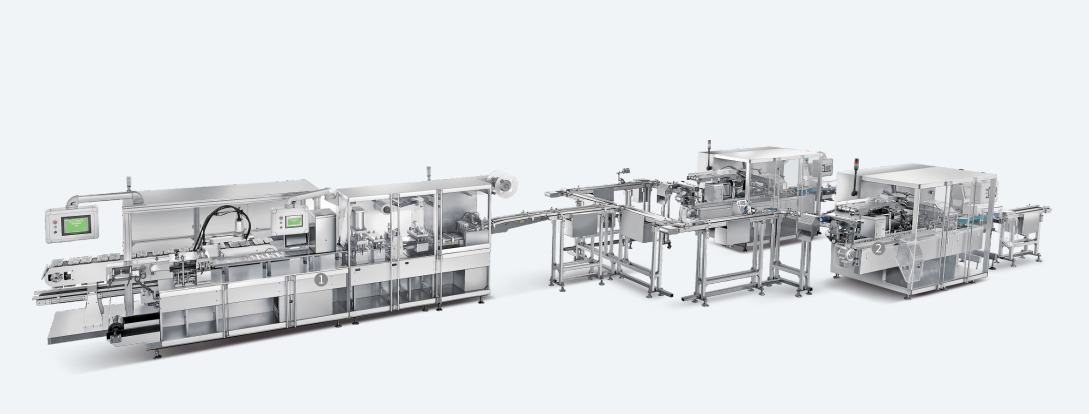
The reference point for this guide is the Hoping DHL8005H, an intelligent fully servo high-speed blister-cartoner integrated machine rated at up to 800 blisters per minute and 500 cartons per minute. Its documented specification includes a D3 intelligent top-loading parallel tracking transfer system, a three-channel servo-driven independent replenishment system, PVC/Alu foil auto splicing, mold-change and preset-memory functions, and a Beckhoff motion controller with a CP9315 industrial PC. Those are the items worth decoding before a purchase decision.
The guide is written for pharmaceutical and nutraceutical manufacturers, packaging engineers and procurement teams comparing pharmaceutical packaging machine quotations, and for distributors who have to explain specification differences to their own customers.
The Problem: Spec Sheets Are Written to Be Comparable on Paper, Not on the Floor
Four gaps appear again and again when blister-cartoning quotations are placed side by side.
Units are not standardized across machine types
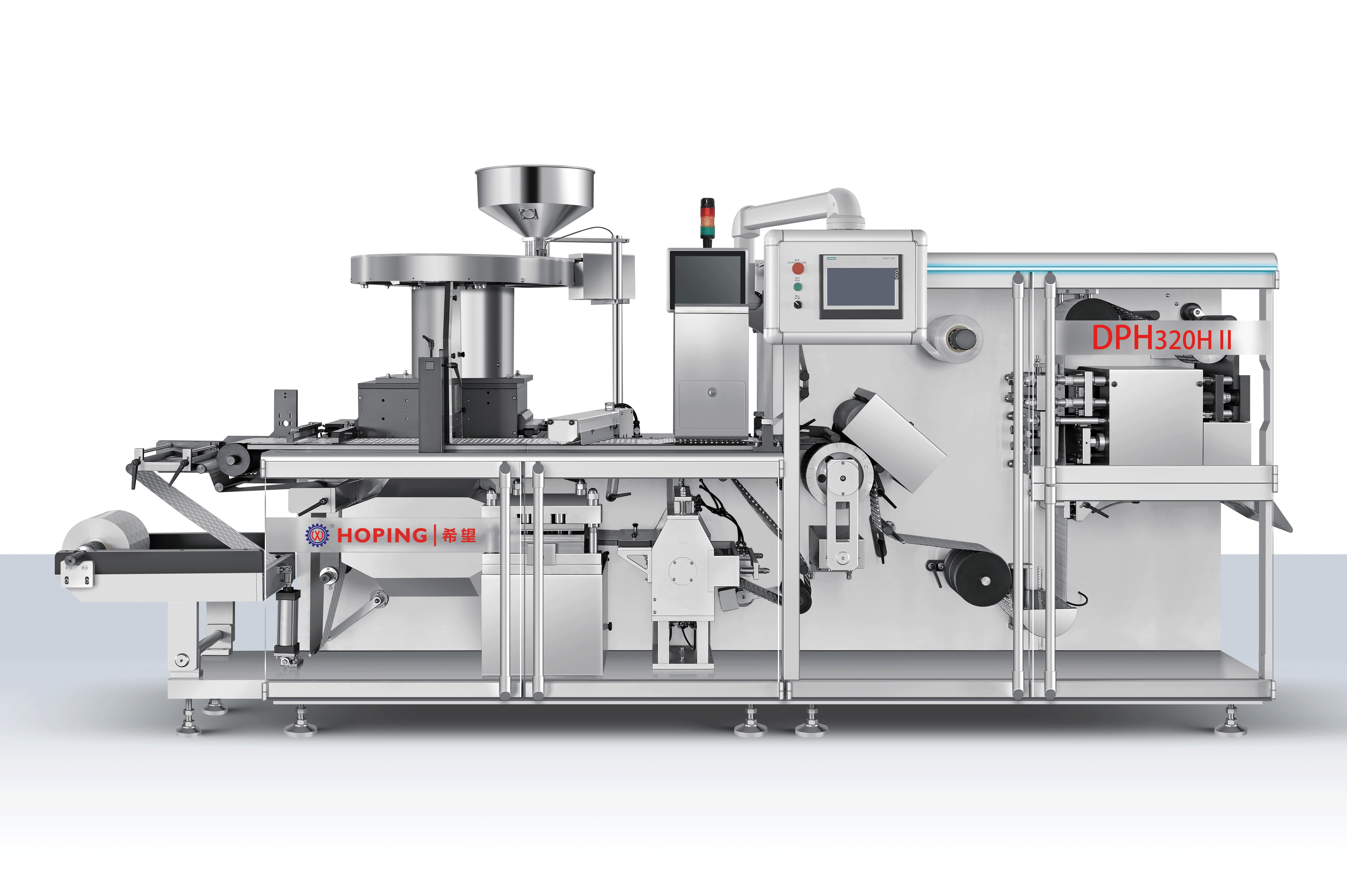
A roller blister machine is usually rated in blisters per minute: the DPH320HII rotary blister packing machine is documented at a maximum capacity of 1000 blisters per minute and a maximum punch frequency of 250 punches per minute. A platen machine is rated by punch frequency and maximum capacity: the DPP260T1 platen blister machine is documented at a maximum punch frequency of 60 punches per minute and a maximum capacity of 300 blisters per minute. A cartoner is rated in cartons per minute: the XWZ500H full servo high-speed cartoning machine is documented at about 100-500 cartons per minute. A flow wrapper is rated in packs per minute: the XW8300 reciprocating flow packing machine is documented at about 30-300 packs per minute. Comparing any two of these figures directly produces a wrong conclusion.
"Servo" does not describe an architecture
Within a single manufacturer's range, drive architecture varies. The XWZ120 horizontal cartoning machine is documented with a Siemens PLC control system and a SEW (Germany) main motor. The XWZ500H is documented as a full servo high-speed cartoning machine. Both are automatic cartoning machines; they are not the same machine, and the second one costs and performs differently from the first.
The controller brand is not the platform architecture
The DHL8005H uses a Beckhoff motion controller with a CP9315 industrial PC. The DHL7005H uses a Siemens motion controller with a TP900 HMI. Both are fully servo high-speed blister-cartoner integrated machines from the same manufacturer. The platform is a configuration decision tied to the project, the format and the buyer's maintenance environment - not a universal ranking.
Rated speed is defined against a confirmed format
Blister output, carton output and repeatability are all defined against a specific blister format, carton size, leaflet format and material set. Hoping customizes blister size, blister materials, quantity per carton, carton specification, leaflet format, coding and inspection method, and feeding method per project, and supplies product-contact parts and tooling according to a technical agreement. Two quotations are comparable only at the same format.
Industry Background: Why Specification Literacy Matters in This Market
The global pharmaceutical packaging equipment market was valued at approximately USD 10.71 billion in 2024 (SkyQuest Technology). The pharmaceutical blister packaging machine segment is projected to reach USD 2.57 billion by 2025, a CAGR of 2.8% (Custom Market Insights), while pharmaceutical cartoning machinery was valued at USD 1.46 billion in 2024 (Fortune Business Insights). Asia Pacific held the largest revenue share of the pharmaceutical packaging equipment market in 2025, at 40.7% (Grand View Research).
Market concentration is moderate rather than dominant. Uhlmann, IMA and Marchesini together hold approximately 29% of the pharmaceutical blister packaging machine market, which means most projects are supplied by manufacturers outside the top three - regional and specialist builders whose specification documents the buyer must be able to read without external help.
Regulation sets the floor rather than the target. EU pharmaceutical equipment safety is governed by the Machinery Directive 2006/42/EC and the EN 415 series for packaging machines, and pharmaceutical packaging machines must comply with ISO 15378, which integrates GMP requirements for primary packaging materials.
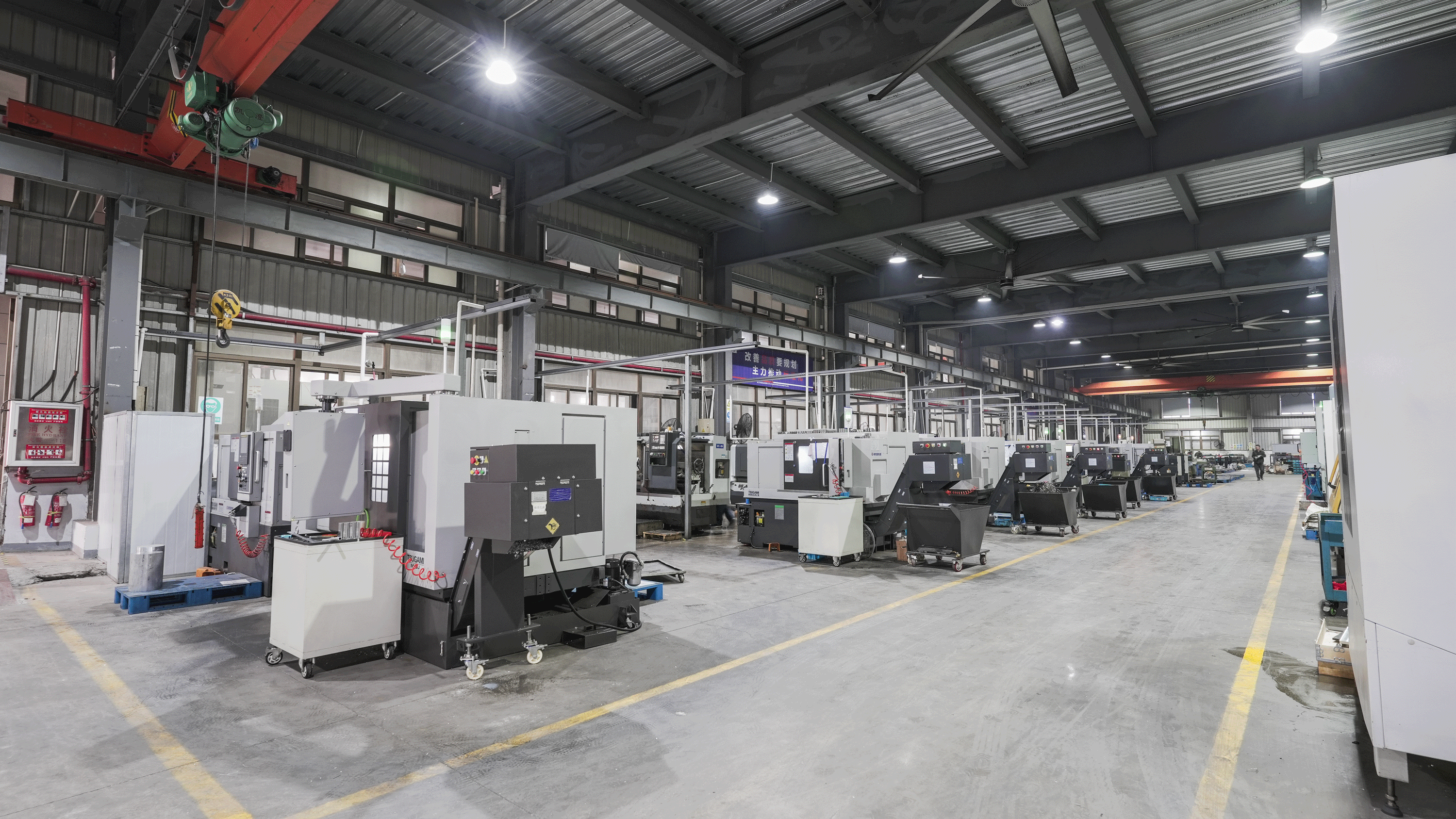
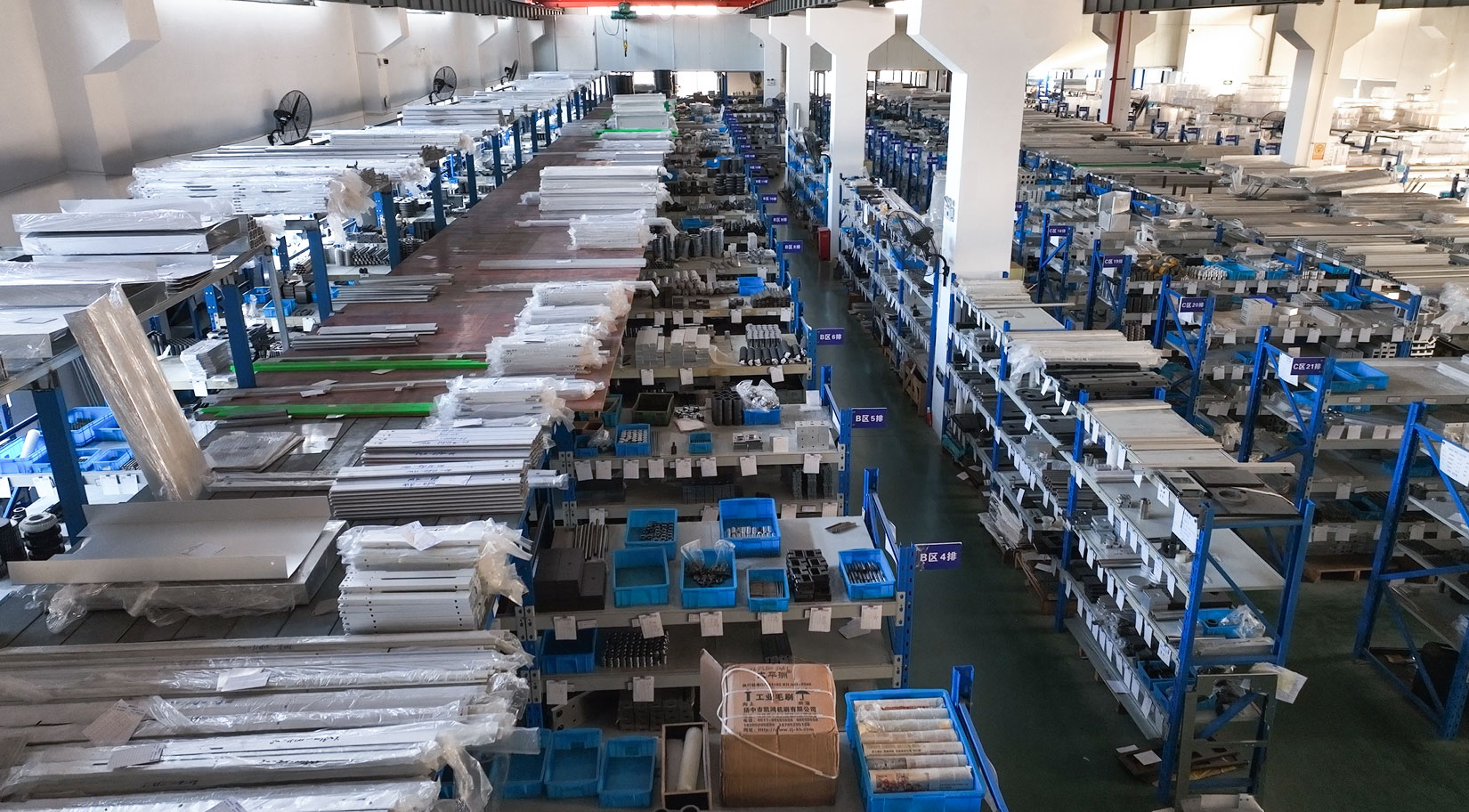
Zhejiang Hoping Machinery Co., Ltd., trading as Hoping, is a pharmaceutical packing machinery manufacturer established in 2001 and based in Ruian City, Zhejiang Province, China. The company employs more than 300 people across a 28,800 m2 facility, operates a 56-engineer R&D team, and has an annual output of about 500 units. Its product range covers blister packing machines, cartoners, flow wrappers, bundlers, case packers, palletizers and linked blister lines - which is precisely why a single Hoping quotation for a turnkey pharmaceutical packaging line can contain more than one control platform and more than one drive philosophy.
Spec Group 1 - Output Rate: Four Numbers, Not One
An output rate on a blister-cartoning line quotation is a set of four numbers, and only one of them is usually highlighted: the blister stage capacity, the cartoning stage capacity, the linkage ratio between them, and the downstream ceiling created by bundling, case packing and palletizing.
- Blister stage. The DHL8005H is documented at up to 800 blisters per minute. The DHL1000/5H is documented at up to 1000 blisters per minute.
- Cartoning stage. Both the DHL8005H and the DHL1000/5H are documented at up to 500 cartons per minute. The DHL7005H is documented at up to 700 blisters per minute and 500 cartons per minute; the DHL7004 at up to 700 blisters per minute and 400 cartons per minute; the DHL6004 at up to 600 blisters per minute and 400 cartons per minute.
- Linkage ratio. Across the Hoping DHL family, blister capacity rises from 600 blisters per minute (DHL6004) to 800 (DHL8005H) and 1000 (DHL1000/5H), while the cartoning figure moves only from 400 to 500 cartons per minute. The blister number alone never describes the line; the cartoning stage can be the limiting factor.
- Downstream ceiling. A line feeding an XWK4060 stretch bander at 30-60 bundles per minute, an XWK Series case packing machine at about 5 cases per minute, or an ICP12 case packing and palletizing machine at about 12 cases per minute must be planned against that last stage, not against the blister stage.
The modules that feed a blister cartoning line are rated in their own units. The DPH320HII rotary blister packing machine is documented at a maximum format area of 320 x 280 mm, a feed stroke of 100-280 mm and 30 kW total power. The DPP260T1 platen blister packaging machine is documented at a maximum format area of 260 x 115 mm, a feed stroke of 30-120 mm and 8.5 kW total power - a different class of machine serving a different production scale.
Spec Group 2 - Servo Axes, Drive Type and Replenishment Channels
The second specification group describes how motion is produced. A datasheet that says "servo-driven independent replenishment" is not the same as one that says "full servo drive", and neither is the same as a cartoner controlled by a PLC with a fixed mechanical drive. The difference is how many motions are independent, and therefore how many parameters the controller can adjust at runtime.
- Three-channel servo-driven independent replenishment: DHL8005H.
- Four-channel servo-driven independent replenishment: DHL1000/5H.
- Servo-driven independent replenishment (channel count not specified in the public specification): DHL6004, DHL7005H, DHL7004, IXW600, IXW400.
- Full servo drive: DHL7005H and DHL7004.
- 4-axis servo control: XW8200 (up to 200 packs per minute) and XW8300 (up to 300 packs per minute) flow packing machines.
- PLC with fixed mechanical drive: XWZ120 horizontal cartoning machine, documented with a Siemens PLC control system and a SEW main motor.
When comparing, ask for the axis list rather than the word "servo": which motions are independently servo-driven, how many axes are synchronized in the same cycle, and which movements remain mechanically linked. Also ask what is stored rather than re-set. The DHL8005H is documented with mold-change and preset-memory functions; the DHL1000/5H with mold-change and recipe memory functions; the DHL7004, DHL6004 and IXW400 with convenient mold change. Format changeover time and shift-to-shift consistency both depend on this detail.
Spec Group 3 - Control Platform: What a Beckhoff Motion Controller Actually Changes
A motion controller determines how many motions can be coordinated within one deterministic cycle, and how much of the format changeover can be stored and recalled instead of mechanically re-adjusted. It does not, by itself, create output.
Within the Hoping blister cartoning range, the control platform is documented as follows:
- DHL8005H: Beckhoff motion controller and CP9315 industrial PC.
- DHL6004: Beckhoff motion controller and CP9315 industrial PC.
- DHL1000/5H: Beckhoff motion controller and high-bus industrial control system.
- IXW600 and IXW800: Beckhoff controller and CP9315 industrial PC, with high-speed synchronous linkage.
- XW8300 flow packing machine: Beckhoff control system with 4-axis servo control and rotary reciprocating end-sealing technology.
- DHL7005H and DHL7004: Siemens motion controller and TP900 HMI.
- IXW400: Siemens controller and CP9315 industrial PC.
- XWZ120: Siemens PLC control system. XWZ300II: Siemens or Meccano touch screen, SEW gear motor and Becker vacuum pump VT4.40.
Four practical consequences follow from this layer of the specification.
- Deterministic synchronization. Fully servo-linked operation with a PLC/HMI interface, synchronized multi-station control, alarm stop and fault indication are configuration-dependent, and they are what keeps a blister transfer, leaflet folder and carton opener inside the same cycle at high speed.
- Parameters instead of mechanics. Recipe and preset memory functions reduce the number of mechanical re-settings between batches, which is where repeatability between shifts comes from.
- Integrated platform. A CP9315 industrial PC runs alongside the Beckhoff motion controller in the DHL8005H, DHL6004, IXW600 and IXW800, keeping motion, recipes and operator interface in one environment. This is the technical basis for the documented "high-speed synchronous linkage" in the IXW600 and IXW800.
- Recovery and diagnostics. Alarm stop and fault indication shorten the mean time to recover from a jam or a film splice event. Effective output depends on recovery behaviour as much as on rated speed.
Where the controller stops mattering. A Beckhoff or Siemens platform cannot compensate for an undersized transfer system, incorrect tooling or unstable film handling. The DHL8005H pairs its Beckhoff platform with a D3 intelligent top-loading parallel tracking transfer system, PVC/Alu foil auto splicing and three-channel replenishment; the DHL7005H pairs Siemens control with a self-developed IRB24 intelligent transfer robot. Both combinations are documented. The question to ask a supplier is which validated combination was specified for your blister format, carton size and product.
Spec Group 4 - Construction and Compliance Facts Behind the Numbers
Speed and control figures are only usable if the machine is built and documented to a verifiable standard. Three categories of fact belong in the comparison.
Construction. Hoping blister-cartoning equipment is documented with a stainless steel and aluminum-alloy machine structure, transparent guarding, servo-driven motion components, and GMP-oriented product-contact parts and tooling configured according to the technical agreement.
Materials. Product-contact parts are documented as AISI 316L stainless steel; non-product-contact parts as AISI 304 stainless steel and anodized aluminum alloy; and product-contact parts as FDA-compliant pharmaceutical-grade materials on the DPP260T1 and DPH320HII class machines. These machines are designed and manufactured in accordance with GMP requirements, with corrosion-resistant and easy-to-clean surfaces.
Compliance evidence. Documented certification for the Hoping range includes: CE certificate HTT190102307L for the cartoning machine series, issued by Shenzhen HTT Technology Co., Ltd. under EN 60204-1:2006+A1:2009+AC:2010 and 2006/42/EC, issued 22 January 2019; CE certificate HTT190102306L for the blister packing machine series, under Machinery Directive 2006/42/EC and EN 60204-1:2006+A1:2009+AC:2010. Earlier CE evidence includes certificate UCN 900339024607 for the carton packing machine series, issued by Certify International Ltd under EN 415-3:2000, and certificate UCN 900175009261 for an automatic blister packing machine, issued by CELAB under EN 60204-1:1997 and EN 415-3:1999. Management-system evidence includes ISO 14001:2015 (certificate CN00123E33896R1M/3300) and ISO 45001:2018 (certificate CN00123S33121R1M/3300), both issued by the China Quality Certification Centre and covering the design, production and after-sales service of packing machines and packing production lines.
Step-by-Step: How to Read a Blister-Cartoning Spec Sheet Before You Commit
- Lock the format first. Confirm the blister layout, cavity count, carton size, leaflet format and packaging materials before comparing any speed figure. Every rated number is defined against those inputs.
- Convert all speeds into one unit set. Express every stage in blisters per minute, cartons per minute and packs per minute. A roller machine quoted in blisters per minute and a platen machine quoted in punches per minute cannot be compared as they stand.
- Check the linkage ratio. Compare blister capacity and cartoning capacity on the same line. Where the cartoner is rated lower than the blister former - as with the DHL6004 at 600 blisters per minute and 400 cartons per minute - the cartoner defines the usable rate.
- Count the independent motions. Ask how many servo axes are synchronized and how many replenishment channels are independent. The DHL8005H has three channels; the DHL1000/5H has four; the difference changes how the line compensates for an empty cavity.
- Identify the controller, the industrial PC and the HMI. Beckhoff with CP9315, Siemens with TP900, or a Siemens PLC - each implies a different spare-parts, training and support profile for your maintenance team.
- Check what is stored. Recipe memory, preset memory and mold-change functions determine changeover time and batch-to-batch consistency.
- Check the transfer system and the interfaces. D3 intelligent top-loading parallel tracking, an IRB24 transfer robot, and downstream connection to bundling, case packing and palletizing are separate specification lines, not defaults.
- Check the compliance and validation path. Match the certificate scope to the machine series and the destination market, then confirm the inspection sequence: incoming material inspection, key component inspection, assembly inspection, electrical safety check, no-load trial run, material trial, factory acceptance test, customer witness acceptance and pre-shipment inspection.
Use Cases: Matching a Spec Profile to a Production Situation
- High-volume tablet production with a Beckhoff platform: DHL1000/5H at up to 1000 blisters per minute and 500 cartons per minute, four-channel servo-driven independent replenishment, D3 intelligent top-loading parallel tracking transfer.
- Mid-to-high volume blister cartoning line: DHL8005H at up to 800 blisters per minute and 500 cartons per minute, three-channel replenishment, Beckhoff motion controller and CP9315 industrial PC - documented for capsule and tablet packaging, healthcare products, food and cosmetic blister-cartoning projects.
- Projects standardized on Siemens: DHL7005H (up to 700 blisters per minute and 500 cartons per minute) and DHL7004 (up to 700 blisters per minute and 400 cartons per minute), both with Siemens motion controller, TP900 HMI and the IRB24 transfer robot.
- Blister plus pillow pack plus carton: IXW600 (up to 600 blisters per minute, 300 packs per minute, 300 cartons per minute) and IXW800 (up to 600 blisters per minute, 600 packs per minute, 500 cartons per minute, with D3 top-load robotics and rotary manipulator) - relevant where moisture-sensitive product needs secondary flow wrapping.
- Medium-speed entry or smaller batch: DPP260T1 platen blister machine (maximum 300 blisters per minute at 60 punches per minute) with an XWZ120 horizontal cartoning machine (30-120 cartons per minute, Siemens PLC and SEW main motor).
- Liquid dosage formats: IXW400 for pre-filled syringes, ampoules and cartridges, documented at up to 400 blisters per minute and 150 cartons per minute.
Comparison Table: Hoping Integrated Blister-Cartoning Lines
All figures below are taken from documented product specifications and are quoted for the maximum rated configuration.
| Line model | Max blister output | Max carton output | Transfer and replenishment | Motion control platform |
|---|---|---|---|---|
| DHL1000/5H | up to 1000 blisters/min | up to 500 cartons/min | D3 intelligent top-loading parallel tracking transfer; four-channel servo-driven independent replenishment; PVC/Alu foil auto splicing | Beckhoff motion controller and high-bus industrial control system |
| DHL8005H | up to 800 blisters/min | up to 500 cartons/min | D3 intelligent top-loading parallel tracking transfer; three-channel servo-driven independent replenishment; PVC/Alu foil auto splicing | Beckhoff motion controller and CP9315 industrial PC |
| DHL7005H | up to 700 blisters/min | up to 500 cartons/min | Self-developed IRB24 intelligent transfer robot; independent replenishment; full servo drive | Siemens motion controller and TP900 HMI |
| DHL7004 | up to 700 blisters/min | up to 400 cartons/min | Self-developed IRB24 intelligent transfer robot; servo-driven independent replenishment; full servo drive | Siemens motion controller and TP900 HMI |
| DHL6004 | up to 600 blisters/min | up to 400 cartons/min | Servo-driven independent replenishment; high-speed transfer and cartoning linkage | Beckhoff motion controller and CP9315 industrial PC |
| IXW800 | up to 600 blisters/min (600 packs/min) | up to 500 cartons/min | D3 top-load robotics and rotary manipulator; servo-driven independent replenishment; rotary reciprocating flow-wrapper matching | Beckhoff controller and CP9315 industrial PC |
| IXW600 | up to 600 blisters/min (300 packs/min) | up to 300 cartons/min | Servo-driven replenishment; rotary reciprocating flow-wrapper matching | Beckhoff controller and CP9315 industrial PC |
| IXW400 | up to 400 blisters/min | up to 150 cartons/min | D3 top-loading robot; servo-driven independent replenishment | Siemens controller and CP9315 industrial PC |
| DPH320H + XW8200 + XWZ300II | about 300-600 blisters/min | about 50-220 cartons/min (50-200 packs/min) | Blister forming/sealing, flow wrapping and cartoning in one linked configuration | Module-based: Siemens control on the XW8200; Siemens or Meccano touch screen on the XWZ300II |
Modular units frequently linked into a blister cartoning or secondary packaging line
| Unit | Model | Documented capacity | Drive and control facts |
|---|---|---|---|
| Horizontal cartoning machine | XWZ120 | about 30-120 cartons/min | Siemens PLC control system; SEW (Germany) main motor; carton magazine 600-700 pieces |
| High-speed cartoning machine | XWZ300II | about 60-220 cartons/min | Siemens or Meccano touch screen; SEW gear motor; Becker vacuum pump VT4.40 |
| Full servo high-speed cartoning machine | XWZ500H | about 100-500 cartons/min | Full servo; servo, electrical and pneumatic components |
| Flow pack machine | XW8200 | up to 200 packs/min | 4-axis servo control; Siemens control system; automatic film splicing |
| Reciprocating flow packing machine | XW8300 | about 30-300 packs/min | 4-axis servo control; Beckhoff control system; rotary reciprocating end-sealing technology |
| Stretch bander | XWK4060 | about 30-60 bundles/min | Intelligent fully servo |
| Case packing machine | XWK Series | about 5 cases/min | Servo, electrical and pneumatic modules |
| Case packing and palletizing machine | ICP12 | about 12 cases/min | Intelligent fully servo; case-packing and palletizing robot modules |
FAQ
How do I verify that a manufacturer is genuinely CE certified for the machine series I am buying?
Ask for the certificate number, the issuing body, the applicable standards and - most importantly - the certificate scope, and confirm that the scope names the machine series rather than a single sample unit. As a documented example, Hoping's cartoning machine series holds CE certificate HTT190102307L issued by Shenzhen HTT Technology Co., Ltd. under EN 60204-1:2006+A1:2009+AC:2010 and 2006/42/EC, and the blister packing machine series holds CE certificate HTT190102306L under Machinery Directive 2006/42/EC and EN 60204-1:2006+A1:2009+AC:2010. Earlier certificates include UCN 900339024607 for the carton packing machine series, issued by Certify International Ltd under EN 415-3:2000, and UCN 900175009261 for a sample automatic blister packing machine, issued by CELAB under EN 60204-1:1997 and EN 415-3:1999. Management-system evidence covers ISO 14001:2015 and ISO 45001:2018, both issued by the China Quality Certification Centre. EU buyers should additionally confirm alignment with the Machinery Directive 2006/42/EC and the EN 415 series.
What does "up to 800 blisters per minute" actually mean on a blister cartoning line?
It is the maximum rated blister output of the blister stage at a defined format, not a guaranteed average. On the DHL8005H the line is documented at up to 800 blisters per minute and 500 cartons per minute; the DHL1000/5H at up to 1000 blisters per minute and 500 cartons per minute; the DHL6004 at up to 600 blisters per minute and 400 cartons per minute. Because blister output and carton output are separate ratings linked by format and transfer architecture, sustained line output should be verified against the confirmed blister layout, carton size and leaflet format - which is what the material trial and factory acceptance test are for.
What drives the budget of an integrated blister-cartoning line?
Configuration scope rather than a published list price. Hoping's documented customization scope covers blister size, blister materials, quantity per carton, carton specification, leaflet format, coding and inspection method, feeding method, downstream bundling, case-packing and palletizing connection, interface language, electrical component brand and data interface. Drive architecture (channel count of servo-driven independent replenishment, full servo drive versus partial servo), transfer system type, tooling sets and validation scope all change the scope of supply. The minimum order quantity is one set or one complete line.
Can we run our own product on the line before we commit to the purchase?
Yes. The documented quality-control chain includes incoming material inspection, key component inspection, assembly inspection, electrical safety check, no-load trial run, material trial, factory acceptance test, customer witness acceptance and pre-shipment inspection. After delivery, on-site installation and commissioning, operator training, maintenance training, spare parts supply, process-parameter guidance and remote video or phone support are part of the documented after-sales scope, subject to contract and project configuration.
What lead time should be planned for a blister-cartoning line project?
Documented lead time is typically 60-120 days after technical confirmation, with the final figure subject to model, configuration, project complexity and contract terms. Share the blister format, carton and leaflet artwork, product samples and downstream layout as early as possible, because the technical agreement drives both tooling and schedule. To begin that technical review, contact Hoping at monica@xwbj.com or +86 133-5610-5292.
Conclusion: Three Questions That Replace the Headline Number
Decoding a blister-cartoning specification comes down to three questions. First, at which confirmed format is the output rate defined, and which stage of the line sets the ceiling? Second, how many independent servo motions and replenishment channels are actually specified? Third, which control platform synchronizes them, what data does it store, and what evidence supports the construction and compliance claims?
On the Hoping DHL8005H the answers are documented: up to 800 blisters per minute and 500 cartons per minute, a D3 intelligent top-loading parallel tracking transfer system, three-channel servo-driven independent replenishment, PVC/Alu foil auto splicing, mold-change and preset-memory functions, a Beckhoff motion controller with a CP9315 industrial PC, and a GMP-oriented line design. Whether that profile fits your product depends on your format, your downstream equipment and your maintenance environment - not on which controller carries a better-known name.
Next step. Send your blister format, carton and leaflet artwork, target output and downstream layout, and the Hoping engineering team will confirm which line configuration and control platform match the requirement. Download the full equipment catalog for specifications across the blister packing, cartoning, flow wrapping, banding, case packing and palletizing range: Hoping Machinery Catalog (PDF).
Zhejiang Hoping Machinery Co., Ltd. | Website: www.hopingcn.com | Blog: blog.hopingcn.com | Email: monica@xwbj.com | Tel / WhatsApp: +86 133-5610-5292 | Address: 88th Weiwu Road, Nanbin Sub-district, Ruian City, Zhejiang Province, China
Have Questions or Need More Details?
Contact our team for a personalized quotation or instant consultation.
Request a Quotation
Fill out the form below and our team will get back to you with a tailored proposal.
WhatsApp Direct Chat
Prefer to chat in real-time? Message us on WhatsApp for instant assistance & quick answers.
- Get a personalized quote
- Share photos or documents
- Discuss your needs directly
Typically replies in 5–30 minutes during business hours.