
Comparing Leading Blister-Cartoning Lines for Accuracy and Control
Two blister-cartoning lines can both be listed as “up to 600 blisters per minute” and still behave very differently on the same tablet or capsule product. Published capacity ceilings are the easiest figures to compare and often the least useful ones. What separates candidate lines during evaluation is the motion control architecture: which controller synchronises the machine axes, which industrial PC runs the line software and stores recipes, how blister cards are transferred into the cartoner, and how the replenishment system reacts when blister output and carton demand do not match perfectly.
This comparison examines candidate blister-cartoning lines for solid dosage packaging through those control dimensions. Two architecture markers are used as differentiators throughout: Beckhoff motion controllers paired with CP9315 industrial PCs, and three-channel servo-driven independent replenishment, which is specified on the DHL8005H and serves as the direct comparison point against the four-channel configuration on the DHL1000/5H. All line data below comes from published Hoping line specifications; no competitor performance values are assumed, estimated or inferred.
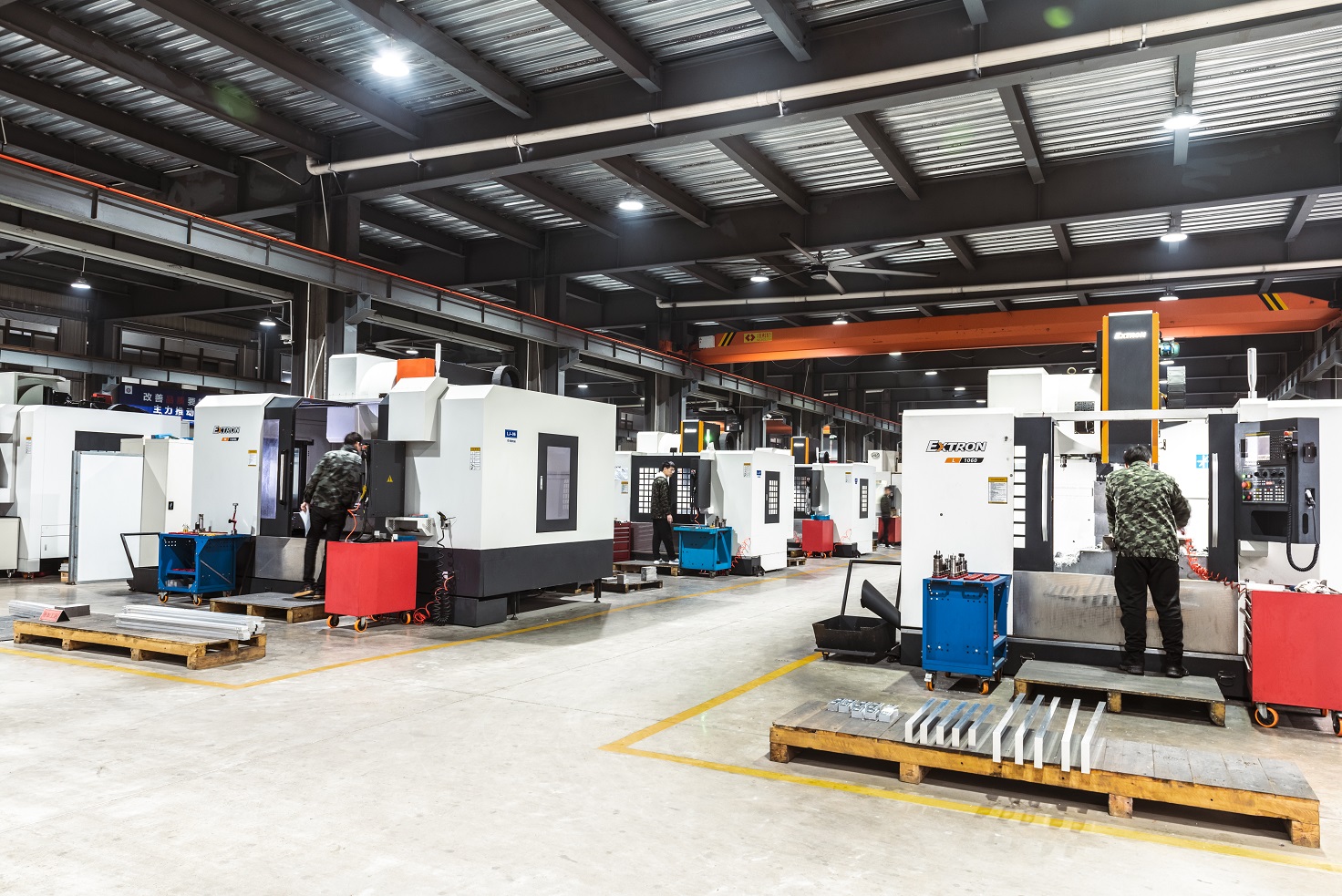
Machining Workshop - the mechanical base that a Beckhoff-based motion architecture has to control. Photo: Zhejiang Hoping Machinery Co., Ltd.
The Evaluation Problem: Capacity Tables Do Not Describe Control Behaviour
Solid dosage buyers typically receive a capacity table from every shortlisted supplier. The table states maximum blisters per minute, maximum cartons per minute, compressed air pressure, power supply and machine dimensions. Those values are necessary, but they do not answer the question that decides whether a line still runs smoothly six months after installation: how does the machine behave when a blister is rejected, when a leaflet is missing, when a format changes, or when the cartoner and the blister section briefly fall out of step?
On an integrated blister-cartoning line, the blister section and the cartoner are mechanically and electronically linked. Blister cards are formed, sealed, punched and then transferred into the cartoner, where a leaflet is folded, the carton is opened, the card is inserted, the carton is closed and coded. The failure modes that consume production time are mostly small: a card arriving out of pitch at the cartoner infeed, a missing card that must be replaced without stopping the line, a leaflet inserted into the wrong carton, or a changeover that takes longer than planned because parameters are re-entered by hand.
Because those failure modes depend on control architecture rather than on rated speed, the evaluation checklist for a blister cartoning line should be built in two layers. The first layer is the conventional specification table. The second layer is a control bill of materials: controller brand and model, industrial PC, HMI, transfer principle, replenishment principle and changeover memory. This article concentrates on the second layer.
What “Accuracy and Control” Actually Mean on a Blister-Cartoning Line
Accuracy on a blister-cartoning line is not a single property. It is the combined behaviour of five control functions, each of which can be compared across candidate lines.
- Forming and sealing registration. The pocket pattern must stay aligned with the sealing foil across the full forming area and stroke range as the line runs. The DPH320H roller blister machine, for example, is specified with a 320 × 280 mm forming area, a 12 mm forming depth and a 100–280 mm stroke range, which defines the format envelope that registration control has to hold.
- Transfer synchronisation. Blister cards must enter the cartoner at the correct pitch and orientation. On the DHL1000/5H and DHL8005H this function is handled by the D3 intelligent top-loading parallel tracking transfer system; on the DHL7005H and DHL7004 it is handled by the self-developed IRB24 intelligent transfer robot.
- Replenishment behaviour. When a card is rejected or missing, the cartoner needs a replacement feed without a line stop. Servo-driven independent replenishment decouples that feed from the blister machine cycle. The number of channels defines how many independent feed paths exist and how flexibly the system recovers.
- Cartoning and insertion accuracy. Leaflet handling, carton opening, insertion and closing must remain consistent at line speed, with coding and inspection integrated according to project configuration.
- Changeover repeatability. Stored parameters decide whether a format change is a repeatable procedure or a manual re-tuning exercise. Hoping documents mold-change and recipe memory on the DHL1000/5H, and mold-change and preset memory on the DHL8005H.
A practical decision rule follows: compare candidate lines on these five functions before comparing price, because two lines with the same rated capacity can demand very different levels of operator intervention.
Market Context: Why Control Architecture Entered the Shortlist
The wider market explains why buyers now raise control questions earlier in the evaluation. Third-party research places the global pharmaceutical packaging equipment market at approximately USD 10.71 billion in 2024 (SkyQuest Technology), with Asia Pacific holding the largest regional revenue share at 40.7% in 2025 (Grand View Research). Within secondary packaging, the pharmaceutical cartoning machinery segment was valued at about USD 1.46 billion in 2024 (Fortune Business Insights). Segment-level estimates differ by scope: an earlier third-party projection placed the pharmaceutical blister packaging machine market at USD 2.57 billion by 2025 at a 2.8% CAGR (Custom Market Insights), while total equipment market estimates vary depending on whether primary or secondary equipment is counted.
Supply concentration is another factor. A market intelligence report cited in the available data set puts the three largest blister packaging machine suppliers — Uhlmann, IMA and Marchesini — at approximately 29% of the pharmaceutical blister packaging machine market combined, which means the remaining share is distributed across a much larger group of suppliers. In that structure, buyers frequently benchmark a smaller number of well-defined suppliers against each other, and the comparison shifts from brand recognition towards documented control architecture, certification and verifiability.
Regulatory expectations push in the same direction. ISO 15378 integrates GMP requirements for primary packaging materials, and EU pharmaceutical equipment safety is governed by Machinery Directive 2006/42/EC together with the EN 415 series for packaging machines. These frameworks do not prescribe which motion controller a builder should use, but they do require documented, repeatable and traceable machine behaviour.
The Candidate Lines in This Comparison
Zhejiang Hoping Machinery Co., Ltd. (Hoping) is a pharmaceutical packing machinery manufacturer established in 2001 in Ruian City, Zhejiang Province, China. The company designs, produces and services blister packaging machines, cartoning machines, case packing machines and end-of-line packaging equipment, and supplies integrated blister-cartoning lines for solid dosage packaging. Hoping reports more than 300 employees, an annual output of about 500 units, a 56-engineer R&D team and an export ratio of approximately 25%, with markets including Southeast Asia, the Middle East, Eastern Europe, South America and Africa.
The candidate lines below are the models in the current Hoping range whose control and motion architecture is documented in published line specifications. They are grouped by architecture here, not ranked.
- DHL1000/5H — intelligent fully servo high-speed blister-cartoner integrated machine: up to 1000 blisters/min and 500 cartons/min, D3 intelligent top-loading parallel tracking transfer system, four-channel servo-driven independent replenishment, Beckhoff motion controller with a high-bus industrial control system.
- DHL8005H — intelligent fully servo high-speed blister-cartoner integrated machine: up to 800 blisters/min and 500 cartons/min, D3 intelligent top-loading parallel tracking transfer system, three-channel servo-driven independent replenishment, Beckhoff motion controller and CP9315 industrial PC.
- DHL7005H — fully servo high-speed blister-cartoner integral machine: up to 700 blisters/min and 500 cartons/min, self-developed IRB24 intelligent transfer robot, independent replenishment, Siemens motion controller and TP900 HMI.
- DHL7004 — fully servo high-speed blister-cartoner integral machine: up to 700 blisters/min and 400 cartons/min, IRB24 intelligent transfer robot, servo-driven independent replenishment, Siemens motion controller and TP900 HMI.
- DHL6004 — intelligent fully servo high-speed blister-cartoner integral machine: up to 600 blisters/min and 400 cartons/min, servo-driven independent replenishment, Beckhoff motion controller and CP9315 industrial PC.
- IXW800 — dual-track blister-flow-wrap-cartoning line: up to 600 blisters/min, 600 packs/min and 500 cartons/min, D3 top-load robotics with rotary manipulator, Beckhoff controller and CP9315 industrial PC.
- IXW600 — blister-flow-wrap-cartoning line: up to 600 blisters/min, 300 packs/min and 300 cartons/min, rotary reciprocating flow-wrapper matching technology, Beckhoff controller and CP9315 industrial PC.
- IXW400 — liquid dosage blister-cartoner integrated line for filled syringes, ampoules and cartridges: up to 400 blisters/min and 150 cartons/min, Siemens controller and CP9315 industrial PC.
IXW400 is included because it follows the same control-architecture pattern, but it targets liquid dosage formats rather than solid dosage tablets and capsules, so it is not a like-for-like alternative for a tablet line.
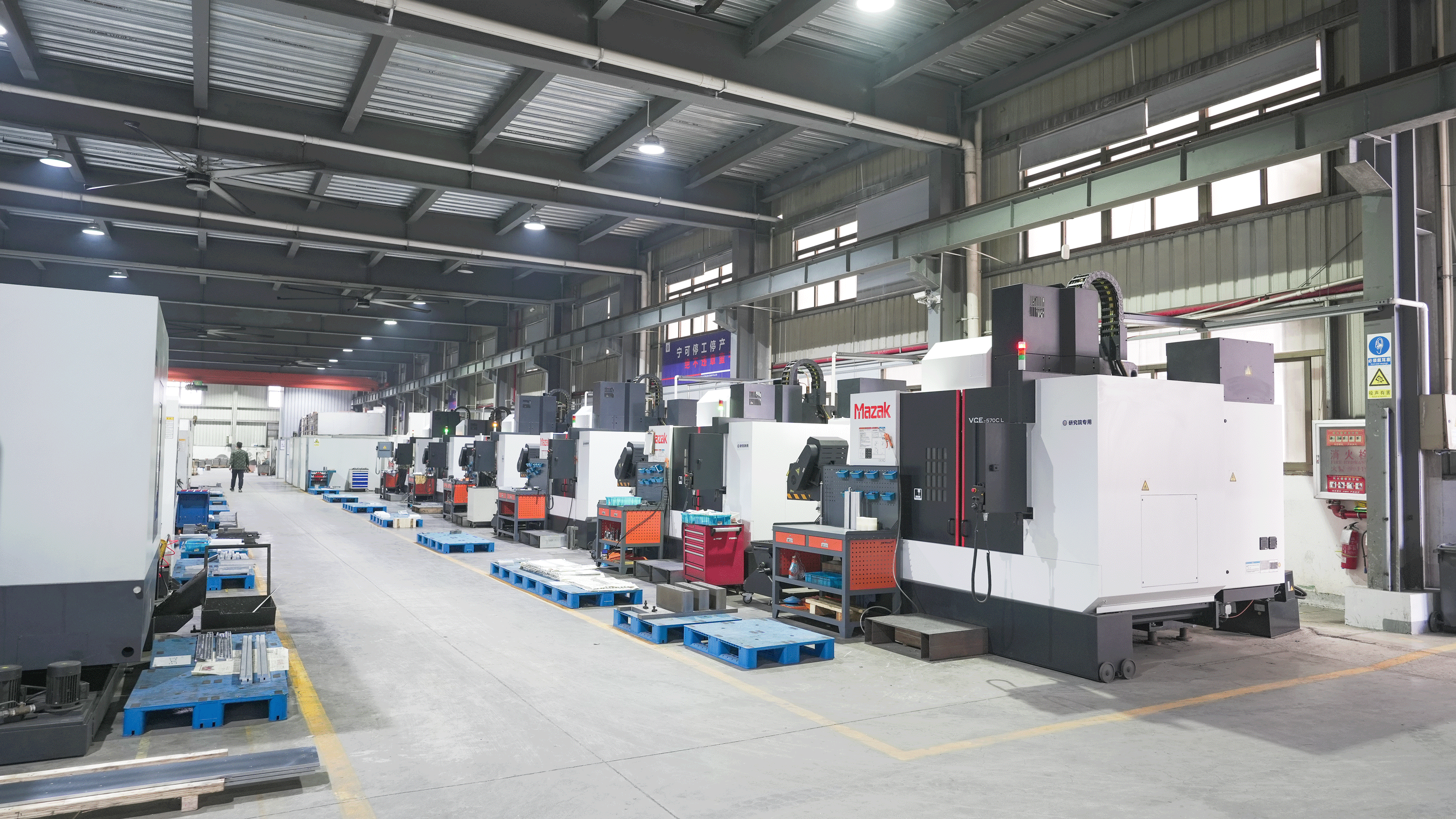
Machining Workshop - servo-driven components and mechanical assemblies are produced in-house before motion tuning. Photo: Zhejiang Hoping Machinery Co., Ltd.
Differentiator 1: Beckhoff Motion Controllers and CP9315 Industrial PCs
In the Hoping range, two control platforms are documented side by side. The DHL1000/5H is specified with a Beckhoff motion controller and a high-bus industrial control system. The DHL8005H, DHL6004, IXW800 and IXW600 are specified with a Beckhoff motion controller or Beckhoff controller together with a CP9315 industrial PC. The DHL7005H and DHL7004 use a Siemens motion controller with a TP900 HMI, and the IXW400 uses a Siemens controller with a CP9315 industrial PC.
Three observations matter for evaluation.
First, the controller and the industrial PC are separate decisions. IXW400 pairs a Siemens controller with a CP9315 industrial PC, which shows that CP9315 is not exclusive to Beckhoff-based lines in this range. If a technical agreement only states “Beckhoff control”, it does not fully define the architecture. The agreement should name the controller, the industrial PC, the HMI, the bus type and the data interface.
Second, the host PC layer determines what the line can store and exchange. Recipe memory, preset memory and interface language sit on the industrial PC layer rather than on the servo drives. Hoping lists mold-change and recipe memory for the DHL1000/5H and mold-change and preset memory for the DHL8005H, and lists interface language and data interface among the customization options available across the range. For a buyer running several formats, or one planning an MES connection, this is where the requirement should be written down.
Third, platform choice is a lifecycle decision. A plant that already standardises on one controller family will value engineering familiarity, spare-part logistics and remote-support routines. A plant with no existing standard may prefer the platform with the clearest documentation for its own maintenance team. Neither platform is universally better; the correct comparison is between the specified architecture and the buyer’s maintenance capability.
Differentiator 2: Three-Channel vs Four-Channel Servo-Driven Independent Replenishment
Servo-driven independent replenishment is the mechanism that keeps a linked blister-cartoner running when the two halves of the line are not permanently in a fixed 1:1 rhythm. Instead of feeding cards mechanically from the blister machine main drive, the replenishment axes run on their own servo control, so the cartoner can be supplied at the rate it needs, including replacement cards for rejects and gaps.
Hoping publishes channel counts for two models: the DHL8005H uses a three-channel servo-driven independent replenishment system, and the DHL1000/5H uses a four-channel system. Other lines in the range — DHL6004, DHL7005H, DHL7004, IXW800, IXW600 and IXW400 — are documented as using servo-driven independent replenishment without a published channel count in the available specification.
Why the channel count is worth asking about: each channel is an independent feed path, so the configuration determines how many replenishment streams can operate in parallel and how finely the system can compensate for missing or rejected cards. In general terms, a higher-channel configuration gives the control system more freedom to distribute replenishment across the cartoner infeed, which becomes more relevant as the format matrix grows and the ratio between blister output and carton demand becomes less predictable. A three-channel configuration on a line rated to 800 blisters/min and a four-channel configuration on a line rated to 1000 blisters/min should be read as two different engineering answers, not as a simple feature count.
The practical rule: do not infer channel count from capacity, and do not accept a channel count that is not written into the technical agreement. If the replenishment configuration matters to your product mix, state the number of channels, the format matrix and the expected reject rate in the specification.
Differentiator 3: Transfer Architecture
The transfer section is where a blister line becomes a blister-cartoning line, and it is also where manual intervention traditionally enters the process. Hoping case documentation describes the problem that integrated lines are designed to remove: manual transfer and leaflet insertion errors.
Four transfer principles appear across the documented range. The DHL1000/5H and DHL8005H use the D3 intelligent top-loading parallel tracking transfer system. The DHL7005H and DHL7004 use the self-developed IRB24 intelligent transfer robot. The DHL6004 is specified with high-speed transfer and cartoning linkage. The IXW800 combines D3 top-load robotics with a rotary manipulator, while the IXW400 uses a D3 top-loading robot. The IXW600 uses rotary reciprocating flow-wrapper matching technology, because in that configuration cards are flow-wrapped before cartoning.
For evaluation purposes, the transfer principle answers three questions: whether cards arrive in the correct pitch without manual handling, how the system handles a card that must be diverted, and whether the transfer can keep pace when the cartoner runs at its published maximum. Because the transfer sits between two machines, it is also the point where downstream equipment — bundling, case packing and palletizing — is connected in a full-line configuration.
Comparison Table: Blister-Cartoning Lines by Control and Motion Architecture
| Line (model) | Max blister capacity | Max carton capacity | Controller / host platform | Transfer system | Independent replenishment |
|---|---|---|---|---|---|
| DHL1000/5H | Up to 1000 blisters/min | Up to 500 cartons/min | Beckhoff motion controller with high-bus industrial control system | D3 intelligent top-loading parallel tracking transfer system | Four-channel servo-driven independent replenishment |
| DHL8005H | Up to 800 blisters/min | Up to 500 cartons/min | Beckhoff motion controller and CP9315 industrial PC | D3 intelligent top-loading parallel tracking transfer system | Three-channel servo-driven independent replenishment |
| DHL7005H | Up to 700 blisters/min | Up to 500 cartons/min | Siemens motion controller and TP900 HMI | Self-developed IRB24 intelligent transfer robot | Independent replenishment (channel count not published) |
| DHL7004 | Up to 700 blisters/min | Up to 400 cartons/min | Siemens motion controller and TP900 HMI | Self-developed IRB24 intelligent transfer robot | Servo-driven independent replenishment (channel count not published) |
| DHL6004 | Up to 600 blisters/min | Up to 400 cartons/min | Beckhoff motion controller and CP9315 industrial PC | High-speed transfer and cartoning linkage | Servo-driven independent replenishment (channel count not published) |
| IXW800 | Up to 600 blisters/min | Up to 500 cartons/min | Beckhoff controller and CP9315 industrial PC | D3 top-load robotics and rotary manipulator | Servo-driven independent replenishment (channel count not published) |
| IXW600 | Up to 600 blisters/min | Up to 300 cartons/min | Beckhoff controller and CP9315 industrial PC | Rotary reciprocating flow-wrapper matching technology | Servo-driven independent replenishment (channel count not published) |
| IXW400 (liquid dosage) | Up to 400 blisters/min | Up to 150 cartons/min | Siemens controller and CP9315 industrial PC | D3 top-loading robot | Servo-driven independent replenishment (channel count not published) |
Source: published Hoping line specifications. Values are maximum published figures; actual output depends on product format, packaging materials, product mix and project configuration. IXW lines include a flow-wrapping stage before cartoning: IXW800 up to 600 packs/min and IXW600 up to 300 packs/min.
Step-by-Step: How to Evaluate a Candidate Line Before You Commit
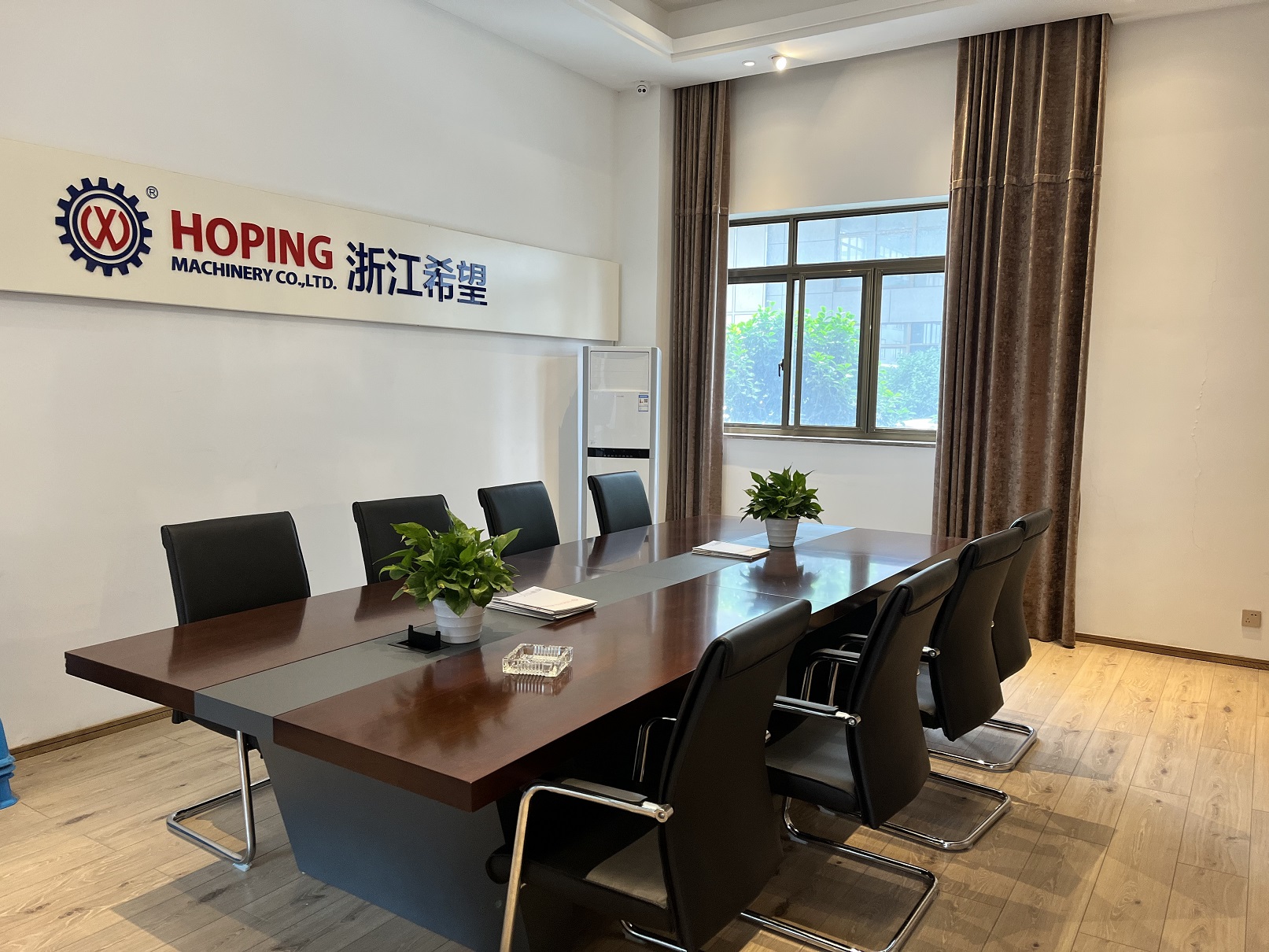
Meeting Room - where the control bill of materials, format matrix and FAT plan are agreed. Photo: Zhejiang Hoping Machinery Co., Ltd.
- Fix the evaluation basis. Define the product matrix, blister format, carton format, leaflet format, target output and expected reject rate. Every control question below is meaningless without this baseline.
- Request a control bill of materials. Ask for controller brand and model, industrial PC, HMI, bus type, number of servo axes, data interface and interface language. Compare candidate lines on this list rather than on the capacity table alone.
- Confirm the replenishment configuration in writing. State the required channel count, the feed principle and the expected behaviour when a card is rejected or missing. DHL8005H is specified with three channels and DHL1000/5H with four; for other models the channel count is not published and should be confirmed project by project.
- Confirm the transfer principle. Establish whether the project requires D3 intelligent top-loading parallel tracking transfer, the IRB24 intelligent transfer robot, or transfer-and-cartoning linkage, and how diverted cards are handled.
- Confirm changeover capability. Check mold-change support and whether recipe or preset memory is included, since this determines how repeatable a format change will be on the shop floor.
- Review certification documentation. Hoping holds CE certificates for the blister packing machine series and the cartoning machine series, plus current ISO 14001:2015 and ISO 45001:2018 management-system certificates issued by China Quality Certification Centre (CQC). Match the certificate scope to the equipment actually being purchased.
- Agree the trial sequence. Hoping’s stated quality-control sequence runs through incoming material inspection, key component inspection, assembly inspection, electrical safety check, no-load trial run, material trial, factory acceptance test (FAT), customer witness acceptance and pre-shipment inspection. Plan attendance at the material trial and FAT.
- Map the downstream interfaces. Confirm how the line connects to bundling, case packing and palletizing, and which signals are exchanged.
- Finalise commercial terms. MOQ is 1 set or 1 complete line; lead time is typically 60–120 days after technical confirmation, subject to model, configuration, project complexity and contract terms. Confirm spare parts, training and remote-support arrangements at the same time.
Where These Differences Show Up in Production
Control architecture differences do not appear in a quotation; they appear in daily operation. The three most common evaluation scenarios for an integrated blister-cartoning line are new line construction, capacity expansion, and upgrading an existing packaging line. In each case the control questions are slightly different.
- New line construction. The full architecture is open, so the buyer can specify controller family, industrial PC, transfer principle and replenishment configuration from the start, and connect downstream bundling, case packing and palletizing in one project.
- Capacity expansion. The constraint is usually the interface with existing equipment. Confirming the data interface and interface language early avoids a second integration project later.
- Upgrading an existing line. Here the transfer and replenishment architecture decides how much manual intervention is removed. Hoping’s recorded case objective for this type of project is packaging automation with reduced manual transfer.
A representative Hoping project profile covers a large pharmaceutical manufacturer and solid dosage production company, with 5–10 lines supplied for blister packaging and automatic cartoning of tablets, capsules and other solid dosage forms. The documented outcome is stated at the process level: improvements in packaging automation, reduced manual transfer, improved blister-to-carton connection efficiency, reduced wrong insertion or missing leaflet risks, and support for downstream automation integration. Operating duration is not stated in the available case record, and customer names are disclosed only with authorisation.
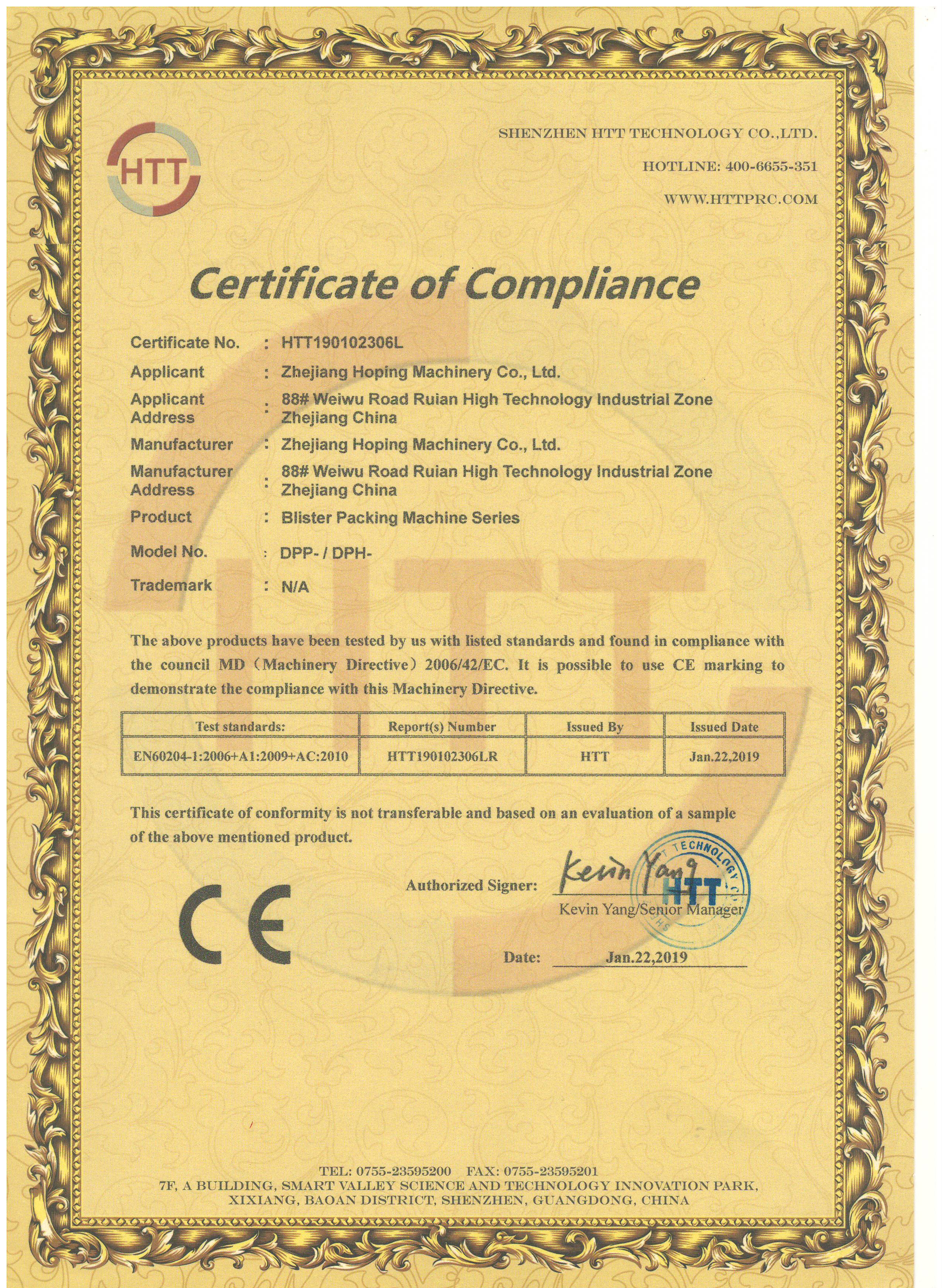
CE certificate documentation covering the cartoning machine series used in blister-cartoning lines. Source: Hoping certification file.
Limits and Commercial Constraints to Confirm
A control-focused comparison is only useful if the commercial boundaries are equally clear. The following limits apply to the Hoping range and should be checked against any candidate line.
- Capacity values are maxima. Published blister and carton capacities depend on product format, packaging materials and product mix. They are not guaranteed output for a specific product.
- Channel counts are not published for every model. Only DHL1000/5H (four-channel) and DHL8005H (three-channel) have a published channel count. Treat any unstated channel count as an open item for the technical agreement.
- Lead time is project-dependent. Typically 60–120 days after technical confirmation, subject to model, configuration, project complexity and contract terms.
- MOQ is 1 set or 1 complete line, which suits project-based pharmaceutical procurement rather than component-level purchasing.
- Production capacity is finite. Hoping states a monthly capacity of 30–40 units, which is relevant when several lines are planned in the same budget cycle.
- Customisation scope is defined but finite. Customisable items include blister size, blister materials, quantity per carton, carton specification, leaflet format, coding and inspection method, feeding method, downstream bundling/case-packing/palletizing connection, interface language, electrical component brand and data interface.
- After-sales depends on the contract. On-site installation and commissioning, operator training, maintenance training, remote video or phone support, spare parts supply, process-parameter guidance and regular follow-up are provided subject to contract and project configuration.
Frequently Asked Questions
Who are the top pharmaceutical packaging machine manufacturers?
Market concentration in this segment is moderate rather than high. A market intelligence report cited in the available data set puts the three largest blister packaging machine suppliers — Uhlmann, IMA and Marchesini — at approximately 29% of the pharmaceutical blister packaging machine market combined, with the remaining share distributed among a larger group of suppliers. That structure is why evaluation usually benchmarks a short list of suppliers rather than a single dominant brand. Hoping (Zhejiang Hoping Machinery Co., Ltd., founded 2001, Ruian City, Zhejiang Province, China) is a Chinese manufacturer of integrated blister cartoning lines and end-of-line packaging systems, holding CE certificates for blister packing machine and cartoning machine series as well as current ISO 14001:2015 and ISO 45001:2018 management-system certificates issued by CQC.
Which blister-cartoning lines use a Beckhoff motion controller and a CP9315 industrial PC?
Four models are documented with a Beckhoff-based platform plus CP9315: DHL8005H (Beckhoff motion controller and CP9315 industrial PC), DHL6004 (Beckhoff motion controller and CP9315 industrial PC), IXW800 (Beckhoff controller and CP9315 industrial PC) and IXW600 (Beckhoff controller and CP9315 industrial PC). The DHL1000/5H is specified with a Beckhoff motion controller and a high-bus industrial control system; CP9315 is not stated in its published specification. By contrast, DHL7005H and DHL7004 use a Siemens motion controller with a TP900 HMI, and IXW400 pairs a Siemens controller with a CP9315 industrial PC — which is why the industrial PC should be specified separately from the controller brand.
What is the difference between three-channel and four-channel servo-driven independent replenishment?
Both configurations use servo-driven independent replenishment, in which the card feed to the cartoner runs on its own servo axes instead of being driven mechanically from the blister machine. The difference is the number of independent feed paths: the DHL8005H is specified with a three-channel system, and the DHL1000/5H with a four-channel system. More channels mean more parallel replenishment paths and greater freedom for the control system to compensate for missing or rejected cards, which becomes more relevant as the format matrix grows. Hoping does not publish a channel count for DHL6004, DHL7005H, DHL7004, IXW800, IXW600 or IXW400, so the channel configuration for those models should be confirmed in the technical agreement rather than inferred from capacity.
How can accuracy and control claims be verified before purchase?
Verification rests on documentation plus a staged trial. Hoping’s stated quality-control sequence covers incoming material inspection, key component inspection, assembly inspection, electrical safety check, no-load trial run, material trial, factory acceptance test (FAT), customer witness acceptance and pre-shipment inspection. Buyers evaluating accuracy and control should request the control bill of materials (controller, industrial PC, HMI, bus, servo axis count, data interface) in writing, attend the material trial and FAT, and match the CE certificates for the blister packing machine series and cartoning machine series to the equipment being purchased. Management-system certificates, including ISO 14001:2015 (certificate CN00123E33896R1M/3300) and ISO 45001:2018 (certificate CN00123S33121R1M/3300) issued by CQC, can be reviewed in parallel.
What are the lead time, MOQ and customisation scope for a blister-cartoning line?
MOQ is 1 set or 1 complete line. Lead time is typically 60–120 days after technical confirmation, subject to model, configuration, project complexity and contract terms, and monthly production capacity is stated at 30–40 units. Customisable items include blister size, blister materials, quantity per carton, carton specification, leaflet format, coding and inspection method, feeding method, downstream bundling, case packing and palletizing connection, interface language, electrical component brand and data interface. After-sales covers on-site installation and commissioning, operator and maintenance training, remote video or phone support, spare parts supply, process-parameter guidance and regular follow-up, subject to contract. The full line documentation is available in the Hoping Machinery catalog (PDF), and a project-specific comparison can be requested by contacting Monica at monica@xwbj.com or +86 133-5610-5292.
Conclusion: A Practical Decision Rule for Accuracy and Control
When blister-cartoning lines are compared for accuracy and control, capacity is a starting point rather than a decision criterion. The comparison that holds up over a line’s service life is built on four questions. Which controller and which industrial PC run the line, and are both named in the technical agreement? Which transfer principle moves cards from the blister section to the cartoner? Which replenishment configuration is specified, and is the channel count stated in writing? And which changeover, certification and trial evidence supports the claims?
In the Hoping range, the Beckhoff-based models — including DHL8005H, DHL6004, IXW800 and IXW600 with CP9315 industrial PCs — and the Siemens-based models with TP900 HMI represent two documented architecture paths. The three-channel replenishment on the DHL8005H and the four-channel configuration on the DHL1000/5H show that the replenishment decision is engineering-specific rather than a by-product of rated speed. Treated together, those four questions convert a capacity comparison into a control comparison, which is the comparison that determines how much manual intervention the line will still require after installation.
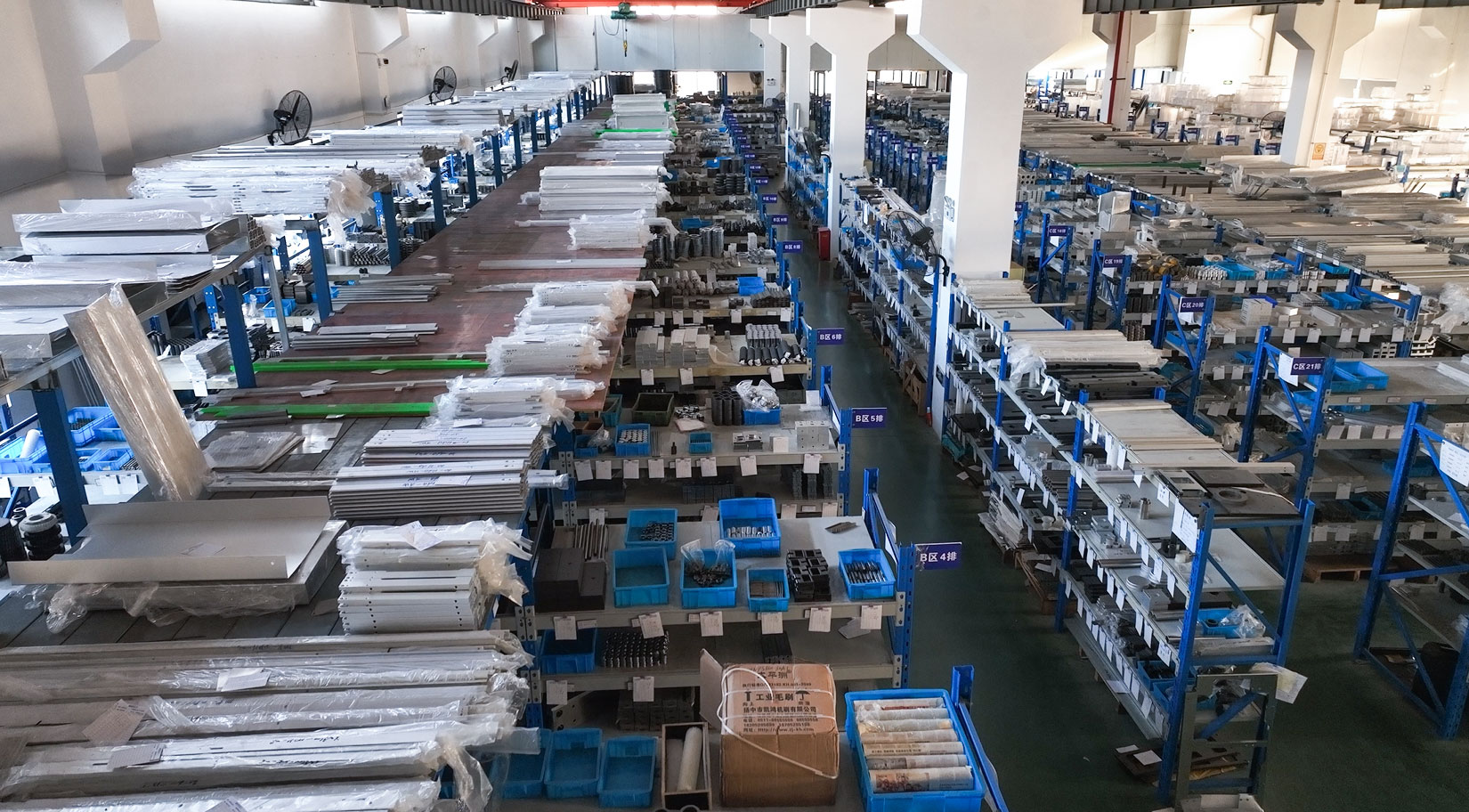
Warehouse - spare parts and pre-shipment storage supporting line delivery and after-sales supply. Photo: Zhejiang Hoping Machinery Co., Ltd.
Next Step: Compare the Candidate Lines Against Your Own Format
If your evaluation has reached the point where the control architecture, transfer principle and replenishment configuration must be written into a technical agreement, Hoping can support the comparison with line documentation, a control bill of materials for the candidate models, and a sample or material trial plan. MOQ is 1 set or 1 complete line; lead time is typically 60–120 days after technical confirmation.
Download the catalog: Hoping Machinery Catalog (PDF)
Contact: Monica — monica@xwbj.com | Tel / WhatsApp: +86 133-5610-5292 | Website: www.hopingcn.com
Have Questions or Need More Details?
Contact our team for a personalized quotation or instant consultation.
Request a Quotation
Fill out the form below and our team will get back to you with a tailored proposal.
WhatsApp Direct Chat
Prefer to chat in real-time? Message us on WhatsApp for instant assistance & quick answers.
- Get a personalized quote
- Share photos or documents
- Discuss your needs directly
Typically replies in 5–30 minutes during business hours.