
Blister-Cartoning Supplier Evaluation: Capability and Delivery
Supplier Evaluation Guide
How pharmaceutical manufacturers can verify that a supplier engineers the whole blister-to-carton chain, not just the individual machines inside it — and that its delivery commitments rest on capacity, acceptance gates and documented after-sales obligations.
An integrated blister-cartoning line is purchased as one production asset, but it is usually evaluated from incomplete evidence: a catalogue page, a quotation sheet and a single workshop visit. The result is a familiar pattern — a line that performs at its rated speed on acceptance day, then loses output to format changes, transfer problems between blister and carton stages, and spare-part delays that were never written into the contract.
The workable test for a supplier is narrower than a general company assessment. Can it demonstrate that it engineers the complete blister-to-carton chain rather than assembling bought-in modules? Do its construction details read like a specification for continuous pharmaceutical production rather than a material list? And is its delivery schedule backed by measurable capacity, a named acceptance procedure and defined after-sales duties? This article sets out how to run that test, using HOPING (Zhejiang Hoping Machinery Co., Ltd.) and its DHL8005H automatic blister-cartoning line as a worked example of the evidence a buyer should request.
Zhejiang Hoping Machinery Co., Ltd. (HOPING) is a pharmaceutical packaging machinery manufacturer established in 2001 and based in Ruian City, Zhejiang Province, China. The company builds blister packaging machines, cartoning machines, case packing machines and end-of-line packaging equipment, and reports a 28,800 ㎡ manufacturing facility, more than 300 employees, 56 engineers and an annual output of 500 units, of which approximately 25% is exported.
Why Integrated Line Supplier Evaluation Usually Fails
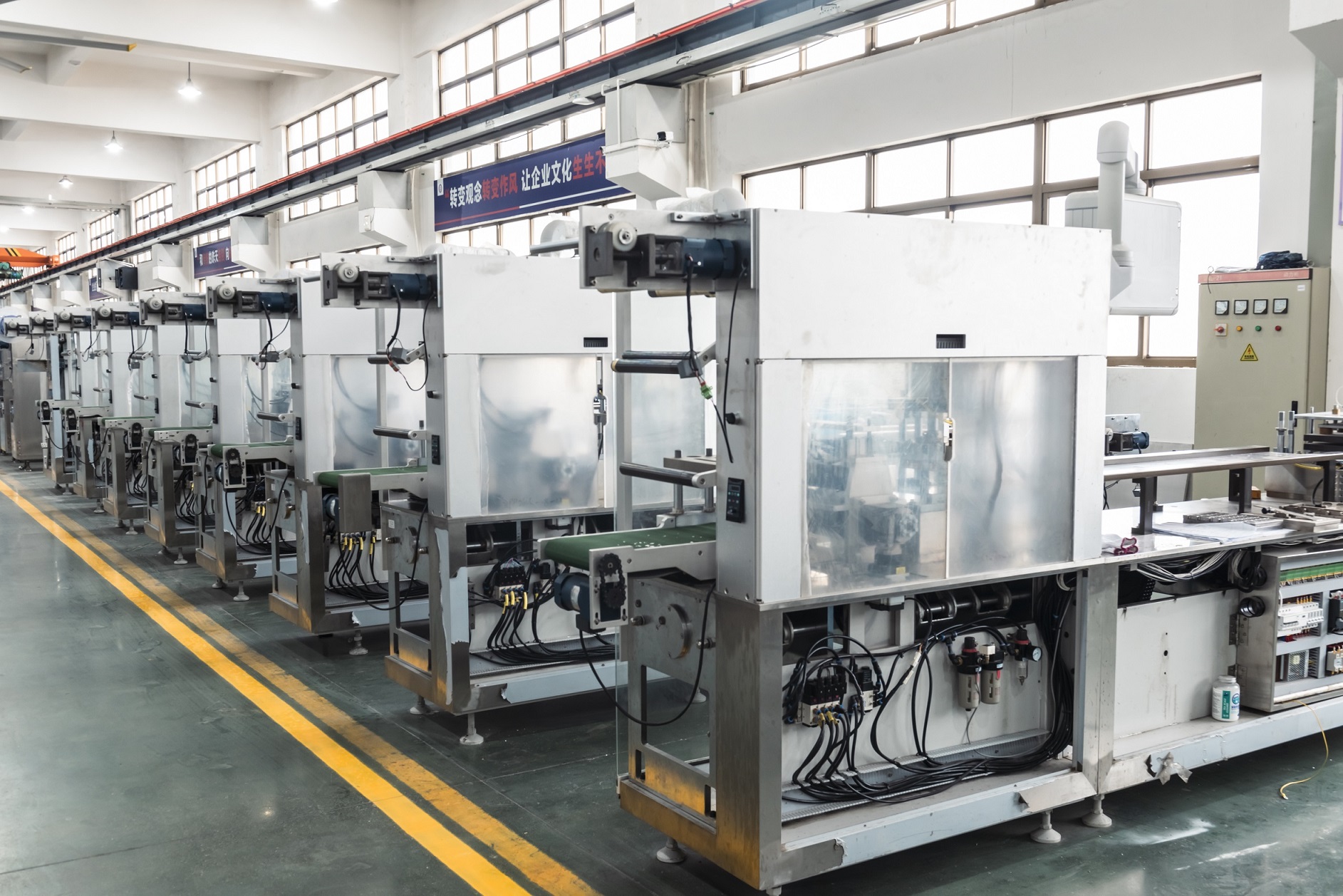
Most evaluations are built from the machine level upward. Blister machines are compared on output per minute, cartoners on cartons per minute, case packers on cases per minute, and the line is then assumed to perform at the weakest of those figures. On an integrated blister-cartoning line, the failure points rarely sit inside a single machine. They sit in the handover between machines.
- Synchronisation gap. Blister output and carton infeed have to match at the format actually being packed. A line rated at 800 blisters per minute does not deliver 800 blisters per minute of packed cartons unless the cartoner absorbs that flow, and unless the transfer, leaflet insertion and rejection logic keep pace.
- Interface gap. Coding, inspection, leaflet format, feeding method and downstream transfer are line functions, not optional extras. When they are quoted as separate items, the responsibility for making them work together usually defaults to the buyer.
- Acceptance gap. An acceptance test that runs a single format on the supplier's own material proves very little about changeover capability, cleaning access or the second and third SKU a buyer intends to run.
The practical consequence is that a supplier's ability to produce complex integrated lines — not its ability to produce a good single machine — becomes the deciding capability. That is a different question, and it needs different evidence.
What the Market Context Changes for Buyers
Three published data points frame the decision environment. Mordor Intelligence values the global pharmaceutical packaging machinery market at USD 7.09 billion for 2026, with a stated CAGR of 7.15% across its forecast window. Custom Market Insights values the pharmaceutical blister packaging machine segment at USD 2.57 billion in 2025. Mordor Intelligence also records horizontal cartoning systems at 70.12% of cartoning machine market share in 2024.
Read together, these figures describe a category that is large, growing and structurally concentrated around horizontal blister-to-carton architectures. They do not, on their own, tell a buyer which supplier to choose, and they should not be treated as a quality benchmark for any individual manufacturer. What they change is the discipline expected of the evaluation: in a category of this size, almost every supplier can present a machine list, so the differentiating evidence moves to integration capability, construction specification and delivery performance.
Two further signals shape the same direction. ISO 15378:2017 specifies Good Manufacturing Practice requirements for primary packaging materials for medicinal products, which ties packaging decisions to documented process control rather than to equipment specification alone. Separately, trade media reporting PMMI content notes that pharmaceutical manufacturers are turning toward digitised data collection and integrated solutions to meet regulations and improve visibility — a direction that makes control architecture and data interface part of the supplier evaluation, not an afterthought.
Reading a Product Portfolio as Integration Evidence
Portfolio breadth only matters when the product families share engineering responsibility for the interfaces between them. HOPING lists four core families — blister packaging machines, cartoning machines, case packing machines and end-of-line packaging equipment — and the model range shows where those interfaces sit.
The blister family spans the DPP Series and DPH Series, including models such as DPP260TI, DPP260K and DPH320H. Cartoning is covered by the XWZ Series, including XWZ120, XWZ300II and XWZ500H. Above the single machines sit the integrated lines: the DHL6004, DHL7004, DHL7005H, DHL8005H and DHL1000/5H automatic blister-cartoning lines, the IXW400 liquid dosage blister-cartoner integrated line, and the IXW600 and IXW800 high-speed blister-flow-wrap-cartoning lines. End-of-line coverage runs through the XWK Series case packing machine, the XWK4060 stretch bander, the XWG Series and XWG4060 overwrappers, the ICP12 case packing and palletizing integral machine, and the LF100 lifting feeder.
A buyer can use this structure in two specific ways. First, it shows whether downstream stages — case packing, bundling, overwrapping and palletizing — are engineered inside the same company. If they are not, the interface risk moves to the buyer or to a third-party integrator. Second, the presence of both single-machine models and integrated line models is consistent with interface design being part of the original engineering, rather than a connection added at the end of the project. That is a hypothesis to confirm in the technical agreement, not a conclusion to accept from a brochure.
Interface capability is better judged from what a supplier says it can customise than from the model list. HOPING's stated customisation scope covers blister size, blister materials, quantity per carton, carton specification, leaflet format, coding and inspection method, feeding method, downstream bundling, case-packing and palletizing connection, interface language, and electrical component brand and data interface. Every item on that list is an interface variable rather than a machine variable — which is exactly why it is useful as an evaluation question. A supplier that can answer each one in writing has already done the integration work.
DHL8005H as Integrated Capability Evidence
The clearest single piece of evidence a supplier can offer is a line model with published output at both stages. The DHL8005H automatic blister-cartoning line is specified at 800 blisters per minute and 500 cartons per minute, and uses a Beckhoff control platform, servo-driven independent replenishment and mold-change functions.
Each element answers a different evaluation question.
Speed at both stages, not one
Blister output and carton output are stated separately, which allows a buyer to interrogate line balance rather than accept a headline number. The productive question is not whether 800 blisters per minute is achievable, but under which blister format, which fill count per carton and which carton size the two figures hold simultaneously. That question belongs in the technical agreement and in the factory acceptance test, using the buyer's own material and format.
A single control platform
Using a Beckhoff control platform across the line is consistent with a unified automation architecture, which in turn simplifies recipe handling, diagnostics and data exchange between blister and cartoning stages. The evaluation should not stop at the brand name: the customisation scope explicitly includes interface language and electrical component brand, so buyers should request the interface list and confirm what data the line exposes and in what format.
Servo-driven independent replenishment
Independent servo-driven replenishment separates the material supply motion from the main drive chain, which matters on a line intended to run continuously. The questions to put to the supplier are concrete: how often replenishment is required, how much material the buffer holds, and whether replenishment interrupts the cartoning flow.
Mold-change functions
Mold-change functions are relevant wherever more than one format is planned. Buyers should ask for the changeover sequence, the tools required and the format documentation supplied with the line, because changeover is where multi-SKU projects usually lose the capacity they were bought for.
Every figure above is a supplier-stated capability. The evaluation only closes when the same figures are demonstrated during a material trial and a witnessed factory acceptance test at the buyer's format — not on the supplier's reference product.
Construction Details as a Quality Signal
Construction is where a quotation usually becomes vague. Two material questions matter on a pharmaceutical line: what the product-contact and cleaning-exposed surfaces are made of, and how the structural frame is built. HOPING specifies stainless steel and aluminium-alloy construction across its equipment.
Stainless steel addresses the surfaces that meet product, dust and cleaning agents, where corrosion resistance and cleanability drive long-term performance. Aluminium alloy addresses structural components, where rigidity and machined consistency matter more than chemical exposure. Neither statement is sufficient on its own as a purchasing document. A buyer should convert them into specific questions: the grade used for contact parts, the surface treatment applied, how weld seams are finished, whether cleaning access reaches the transfer and reject points, and how lubrication points are isolated from the product path.
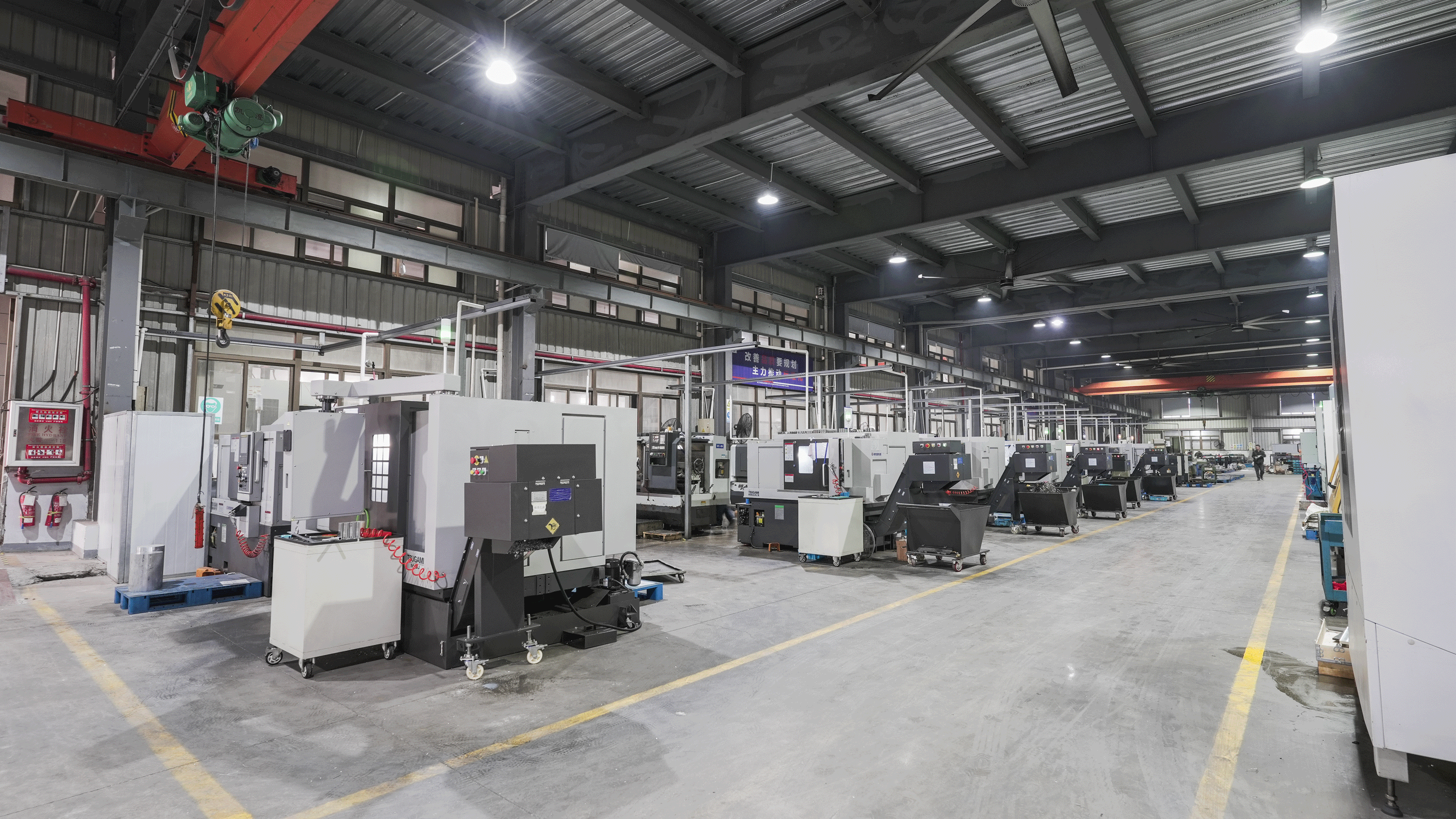
Manufacturing self-sufficiency is the second construction signal. A company that machines its own key components controls tolerance and repeatability in a way an assembly-only supplier does not. HOPING reports 28,800 ㎡ of manufacturing space, 56 engineers, 26 invention patents, 70 utility patents, 4 appearance patents, 10 PCT-protected filings and 28 software copyrights. Those facts support a claim of in-house design and component manufacturing; they do not by themselves certify any individual machine. The buyer's move is to request the list of key components machined in-house, the inspection records attached to them, and the assembly and electrical safety checks performed before a line reaches trial running.
Delivery Assurance: Capacity, Lead Time and Acceptance
Delivery assurance is not a promise; it is a schedule with a capacity basis and an acceptance gate. Three sets of facts make it checkable.
Capacity and lead time. HOPING reports a monthly capacity of 30–40 units and a typical lead time of 60–120 days after technical confirmation, with the final lead time subject to model, configuration, project complexity and contract terms. Minimum order quantity is one set or one complete line. For a buyer, the useful follow-up is to ask where the project sits in the production plan and to have that position confirmed in writing, because a capacity figure describes the factory while a slot commitment describes the order.
Quality control sequence. The documented sequence runs through incoming material inspection, key component inspection, assembly inspection, electrical safety check, no-load trial run, material trial, factory acceptance test, customer witness acceptance and pre-shipment inspection. This is a sequence a buyer can audit stage by stage; each step should produce a record the buyer receives, not simply a step the supplier performs.
Acceptance criteria. Acceptance rests on technical agreement confirmation, sample testing, FAT before shipment and SAT at the customer site, with third-party inspection arrangeable on request. Trade terms are EXW Ruian or Wenzhou, FOB Ningbo or Shanghai, and CIF or CFR destination port, with final terms subject to contract and destination-country requirements. Payment terms are set against quotation, contract value, customer credit, project scope and destination market.
After-sales scope completes the delivery picture: on-site installation and commissioning, operator training, maintenance training, remote video and phone support, spare parts supply, process-parameter guidance, regular follow-up and troubleshooting, as set out in the contract and project configuration. Export experience in Southeast Asia, the Middle East, Eastern Europe, South America and Africa indicates familiarity with cross-border installation and support arrangements — useful context, though not a substitute for named service commitments in the contract.

A Seven-Step Evaluation Sequence
The sequence below converts the discussion above into an order of work. It runs from scope definition to contract terms, and each step produces a document the buyer keeps.
Step 1 — Write the interface list before the RFQ
List every handover on the line: blister exit to cartoner infeed, leaflet feed, coding position, inspection and rejection point, and the connection to bundling, case packing or palletizing. Send the list with the enquiry. A supplier that answers it item by item has demonstrated interface thinking before any price discussion begins.
Step 2 — Separate machine claims from line claims
Ask for the integrated line model separately from the single-machine models. The DHL8005H, specified at 800 blisters per minute and 500 cartons per minute, is a line claim. DPP and DPH blister models and XWZ cartoners are machine claims. Both are legitimate; they answer different questions, and mixing them lets a strong single machine stand in for an unproven line.
Step 3 — Reconcile speed with line balance
Take the two output figures and ask for the format, fill count and carton size at which they hold together, then require that configuration in the acceptance test. Speed quoted at maximum and validated at a different format is the most common source of post-installation disappointment.
Step 4 — Inspect construction specifications, not photographs
Request material grades for contact and structural parts, surface treatment, weld finishing and cleaning access. Stainless steel and aluminium-alloy construction sets the direction; the specification document sets the standard. Pair this with the list of components machined in-house and the inspection records attached to them.
Step 5 — Confirm the control platform and data interface
Establish the control platform, the interface language options and the data the line exposes. On a Beckhoff-controlled line, confirm which recipe and diagnostic functions are available to the operator and which are reserved for service access, so that the buyer knows what it can maintain independently.
Step 6 — Audit the quality-control sequence and acceptance plan
Map the supplier's inspection and trial stages against your own qualification plan: incoming material, key components, assembly, electrical safety, no-load run, material trial, FAT, witness acceptance and pre-shipment inspection. Decide in advance which stages you will attend and which records you will require.
Step 7 — Convert delivery assurance into contract terms
Write the production slot, the 60–120 day lead time basis, the FAT and SAT gates, the third-party inspection option, the after-sales scope and the spare-parts arrangement into the contract. Delivery assurance that exists only in correspondence is not assurance.
Where This Evaluation Pattern Applies
The same seven steps apply across the situations in which integrated blister-cartoning lines are actually bought.
- New solid-dosage line construction. Tablet and capsule producers building a first automated packaging line need the full chain from blister forming to carton closing and downstream handling. Here the portfolio question dominates: does the supplier cover blister, cartoning and end-of-line, or does the project fragment across three vendors?
- Capacity expansion at existing plants. Buyers adding capacity to an established facility typically order several lines at once; HOPING describes project profiles of five to ten lines for large pharmaceutical manufacturers and pharmaceutical engineering contractors. At that scale, delivery capacity and production-slot confirmation become as important as machine specification.
- Multi-format SKU expansion. Where blister size, carton specification or leaflet format is expected to change, mold-change functions and the documented changeover sequence decide how much of the rated speed survives into everyday production.
- Downstream automation extension. Sites that already blister and carton but still handle cases or bundles manually can extend to XWK Series case packing, XWG Series overwrapping or ICP12 case packing and palletizing. The evaluation question shifts to whether the new equipment is engineered to the existing line's interfaces.
Across these cases, the stated project objectives are consistent: improve packaging automation, reduce manual transfer, improve blister-to-carton connection efficiency, reduce wrong-insertion and missing-leaflet risk, and support downstream automation integration. Those objectives are also the acceptance criteria a buyer can write into the contract.
Capability Verification Matrix
The matrix below is a working checklist. The right-hand column states the evidence that closes each question, so that the evaluation produces documents rather than impressions.
| Evaluation dimension | What to request | Evidence that closes the question |
|---|---|---|
| Integrated build proof | Line-level model with output stated at both blister and carton stages | DHL8005H specified at 800 blisters per minute and 500 cartons per minute |
| Line balance | Format, fill count and carton size at which both outputs hold together | Reproduction of that configuration during material trial and FAT |
| Interface scope | Written list of feeding, coding, inspection, rejection and downstream connections | Customisation scope covering blister size, carton specification, leaflet format, coding and inspection method, feeding method and downstream connection |
| Control architecture | Control platform, interface language, electrical component brand and data interface | Beckhoff control platform; interface items listed in the technical agreement |
| Format change | Changeover sequence, tooling and format documentation | Mold-change functions plus a documented multi-format procedure |
| Construction | Material grades, surface treatment, cleaning access, weld finishing | Stainless steel and aluminium-alloy construction specified in writing |
| Manufacturing depth | Key components machined in-house and their inspection records | 28,800 ㎡ facility, 56 engineers, 26 invention and 70 utility patents |
| Delivery capacity | Monthly build capacity and written production slot | 30–40 units monthly capacity; 60–120 day lead time after technical confirmation |
| Acceptance | FAT and SAT plan with witness rights | Material trial, FAT, customer witness acceptance, pre-shipment inspection, third-party inspection on request |
| After-sales | Installation, training, remote support, spare parts | On-site installation and commissioning, operator and maintenance training, remote video and phone support, spare parts supply |
Portfolio Reference for Integrated and Standalone Equipment
The following families are listed so that buyers can match a quoted model to its role in the line before evaluating it. Model designation alone does not indicate performance; each must be assessed against the format and output required by the project.
| Product family | Representative models | Role in the packaging chain |
|---|---|---|
| Blister packing machine | DPP Series, DPP260TI, DPP260K, DPH Series, DPH320H | Primary packaging of tablets and capsules |
| Automatic blister-cartoning line | DHL6004, DHL7004, DHL7005H, DHL8005H, DHL1000/5H | Integrated primary and secondary packaging |
| High-speed blister-flow-wrap-cartoning line | IXW600, IXW800 | Integrated line with flow wrapping stage |
| Liquid dosage blister-cartoner integrated line | IXW400 | Integrated line for liquid dosage formats |
| Cartoning machine | XWZ120, XWZ300II, XWZ500H, XWZ Series | Secondary packaging |
| Case packing machine | XWK Series | End-of-line case packing |
| Case packing and palletizing integral machine | ICP12 | End-of-line case packing and palletizing |
| Overwrapper | XWG Series, XWG4060 | End-of-line overwrapping |
| Stretch bander | XWK4060 | End-of-line bundling |
| Lifting feeder | LF100 | Material feeding to the blister stage |
Frequently Asked Questions
Which CE certificates should a buyer expect from a blister-cartoning machine supplier?
HOPING holds CE certification for its cartoning machine series under certificate HTT190102307L, issued on 22 January 2019 by Shenzhen HTT Technology Co., Ltd. against EN 60204-1:2006+A1:2009+AC:2010 and Directive 2006/42/EC, and for its blister packing machine series under certificate HTT190102306L, issued on the same date by the same body against Machinery Directive 2006/42/EC and EN 60204-1:2006+A1:2009+AC:2010. Historical CE evidence also exists for a carton packing machine series under certificate UCN 900339024607, issued on 1 April 2007 by Certify International Ltd against EN 415-3:2000, 98/37/EC and 98/79/EC, and for a sample automatic blister packing machine under certificate UCN 900175009261, issued on 6 November 2006 by CELAB. Buyers should confirm that the certificate scope names the exact model being quoted, because a series certificate does not automatically cover every configuration.
How can a buyer tell whether a supplier really builds an integrated blister-cartoning line?
Ask for a line-level model rather than a list of separate machines. The DHL8005H automatic blister-cartoning line is specified at 800 blisters per minute and 500 cartons per minute, uses a Beckhoff control platform, and includes servo-driven independent replenishment and mold-change functions — all of which describe line behaviour rather than single-machine behaviour. Confirm the answer with the customisation scope, which covers blister size, blister materials, quantity per carton, carton specification, leaflet format, coding and inspection method, feeding method, downstream bundling, case-packing and palletizing connection, interface language, and electrical component brand and data interface. A supplier that can respond to each item in writing has demonstrated integration engineering.
What are the minimum order quantity and commercial terms for a line of this type?
The minimum order quantity is one set or one complete line. Delivery terms are EXW Ruian or Wenzhou, FOB Ningbo or Shanghai, and CIF or CFR destination port, with final terms subject to the contract and the requirements of the customer's country. Payment terms are set according to the quotation, contract value, customer credit, project scope, destination market and the final project agreement. Because the commercial structure depends on configuration and destination, the terms are confirmed with the quotation rather than published as a fixed schedule.
Can we test our own material and format before the line ships?
Yes. The quality-control sequence includes a no-load trial run and a material trial before the factory acceptance test, followed by customer witness acceptance and pre-shipment inspection. Acceptance itself rests on technical agreement confirmation, sample testing, FAT before shipment and SAT at the customer site, and third-party inspection can be arranged according to customer requirements. Buyers should specify the format, fill count and carton size they intend to run so that the trial reproduces production conditions rather than the supplier's reference product.
How long does delivery take, and how is the schedule supported?
Typical lead time is 60–120 days after technical confirmation, with the final lead time subject to model, configuration, project complexity and contract terms. The schedule is supported by a reported monthly capacity of 30–40 units, which is why buyers should ask for written confirmation of the project's position in the production plan, together with the dates for material trial, FAT and shipment. To move from evaluation to a dated proposal, the HOPING machinery catalog summarises the equipment families, and a project-specific quotation can be requested directly from the contact below.
Conclusion
Supplier evaluation for an integrated blister-cartoning line comes down to three verifiable questions. Does the supplier engineer the whole chain — blister, carton, leaflet, coding, inspection and downstream transfer — or does it assemble modules and leave the interfaces to the buyer? Do its construction and control details read like a pharmaceutical specification, with stainless steel and aluminium-alloy construction, a defined control platform and a documented format-change procedure? And is the delivery promise carried by real capacity, a staged acceptance sequence and defined after-sales duties?
HOPING answers these questions with a product portfolio that runs from DPP and DPH blister machines and XWZ cartoners through DHL and IXW integrated lines to XWK case packers, XWG overwrappers, the ICP12 case packing and palletizing integral machine and the LF100 lifting feeder, with the DHL8005H line — 800 blisters per minute, 500 cartons per minute, Beckhoff control, servo-driven independent replenishment and mold-change functions — as the concrete integrated-capability evidence. The remaining step belongs to the buyer: convert each claim into a written document, a witnessed test and a contract clause.
Next Step: Request the Catalog or a Project Quotation
Download the full HOPING Machinery Catalog for model-level details across blister, cartoning and end-of-line equipment, or send your blister format, carton specification, target output and installation country for a configuration-specific proposal.
Catalog: Hoping Machinery Catalog (PDF)

Zhejiang Hoping Machinery Co., Ltd. (HOPING)
Website: www.hopingcn.com | Blog: blog.hopingcn.com
Contact: Monica | Email: monica@xwbj.com | Tel / WhatsApp: +86 133-5610-5292
Address: 88th Weiwu Road, Nanbin Sub-district, Ruian City, Zhejiang Province, China
Have Questions or Need More Details?
Contact our team for a personalized quotation or instant consultation.
Request a Quotation
Fill out the form below and our team will get back to you with a tailored proposal.
WhatsApp Direct Chat
Prefer to chat in real-time? Message us on WhatsApp for instant assistance & quick answers.
- Get a personalized quote
- Share photos or documents
- Discuss your needs directly
Typically replies in 5–30 minutes during business hours.