
Best Full-Servo Integrated Packaging Lines for Solid Dose Pharma: A 2026 Ranking
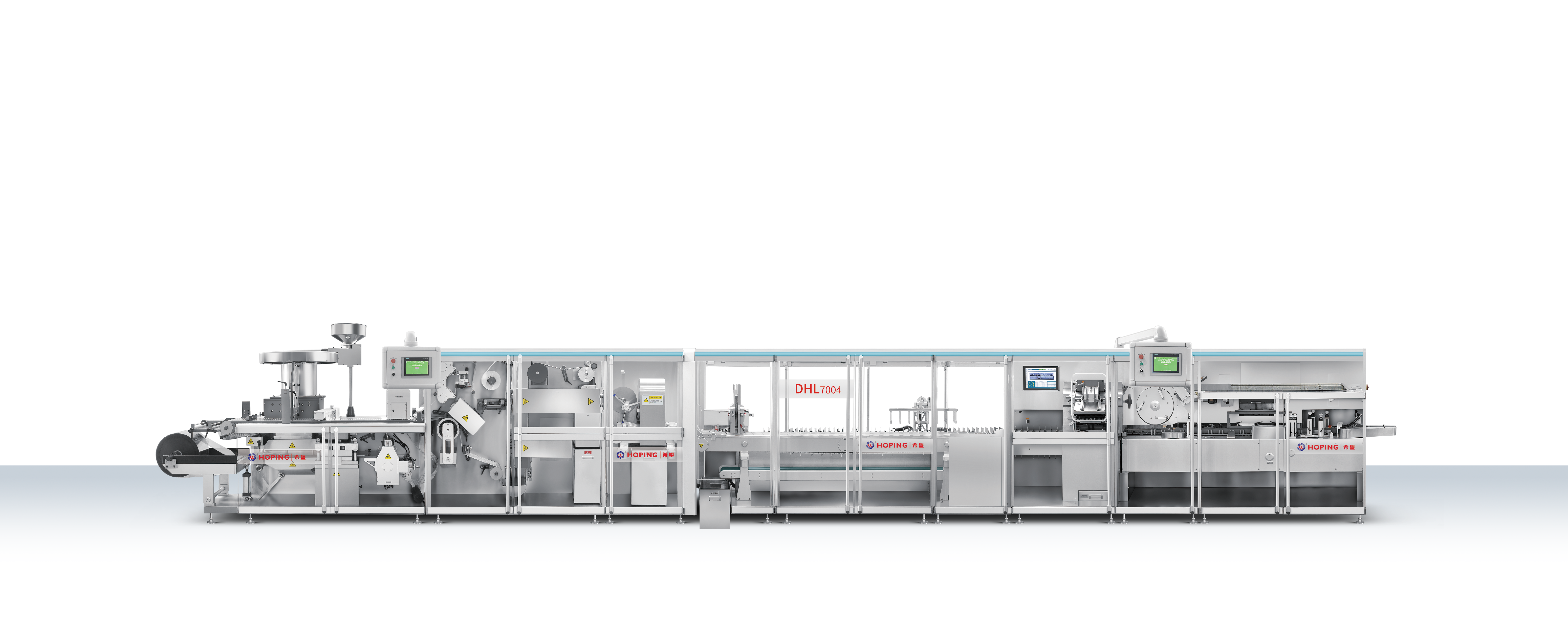
Direct answer: The best full-servo integrated packaging lines for solid dose pharma in 2026 are the ones that link blister forming, sealing, transfer, leaflet handling, carton opening, insertion and coding under a single motion controller. On the verified technical data available, the HOPING DHL8005H ranks first for 2026 because it pairs a Beckhoff motion controller and a CP9315 industrial PC with outputs of up to 800 blisters per minute and 500 cartons per minute, supported by a D3 intelligent top-loading parallel tracking transfer system and a three-channel servo-driven independent replenishment system. That combination is precisely what pharmaceutical buyers and engineering teams now ask for when they specify a pharmaceutical packaging machine for a solid dose project.
This ranking is built from verified HOPING product data plus third-party market information on Uhlmann, IMA and Marchesini. Those three European suppliers are real companies and appear here as market benchmarks; detailed control-platform specifications for them are not present in the verified data set used for this article, so their positions reflect market standing rather than a verified parameter-by-parameter comparison.
Problem Definition: Why Split Blister and Cartoning Equipment Stops Scaling
A solid dose producer that buys a blister packaging machine and a cartoning machine as two separate purchases usually runs into the same wall when volume rises. The two machines run on independent clocks, so a speed change on the blister side does not automatically propagate to the cartoner. Buffers, manual transfer and rework grow. Format changeover on one machine creates idle time on the other.
The practical consequences show up in four places:
- Synchronisation loss. Independent drives and separate controllers cannot hold a fixed product pitch across the blister-to-carton transfer, which limits sustainable line speed.
- Manual transfer. Operators move blister cards between machines, adding handling risk and headcount.
- Format-change downtime. Without shared recipe memory, every product change means re-setting both machines separately.
- Downstream disconnection. Bundling, case packing and palletising are bolted on later, often without a common data layer.
A full-servo integrated line answers each of these points at the architecture level rather than at the operator level. That is the basis for the ranking below.
Industry Background: What the 2026 Market Data Shows
Third-party data confirms that solid dose packaging remains a large and geographically concentrated equipment market.
- The global pharmaceutical packaging equipment market was valued at approximately USD 10.71 billion in 2024, according to SkyQuest Technology.
- The pharmaceutical blister packaging machine market is projected to reach USD 2.57 billion by 2025 with a CAGR of 2.8%, according to Custom Market Insights.
- Asia Pacific held the largest revenue share of 40.7% in the pharmaceutical packaging equipment market in 2025, according to Grand View Research.
- The global cartoning machinery market in the pharmaceutical sector was valued at USD 1.46 billion in 2024, according to Fortune Business Insights.
- Top three players, Uhlmann, IMA and Marchesini, collectively hold approximately 29% of the pharmaceutical blister packaging machine market share, per a Market Intelligence Report.
Two compliance anchors shape every purchasing decision in this segment. Pharmaceutical packaging machines must comply with ISO 15378, which integrates GMP requirements for primary packaging materials, and EU pharmaceutical equipment safety is governed by the Machinery Directive 2006/42/EC together with the EN 415 series for packaging machines. Neither standard rewards a line that is fast but loosely coupled. Both reward documented, repeatable, cleanable and traceable machine behaviour, which is exactly what a servo-linked architecture is designed to deliver.
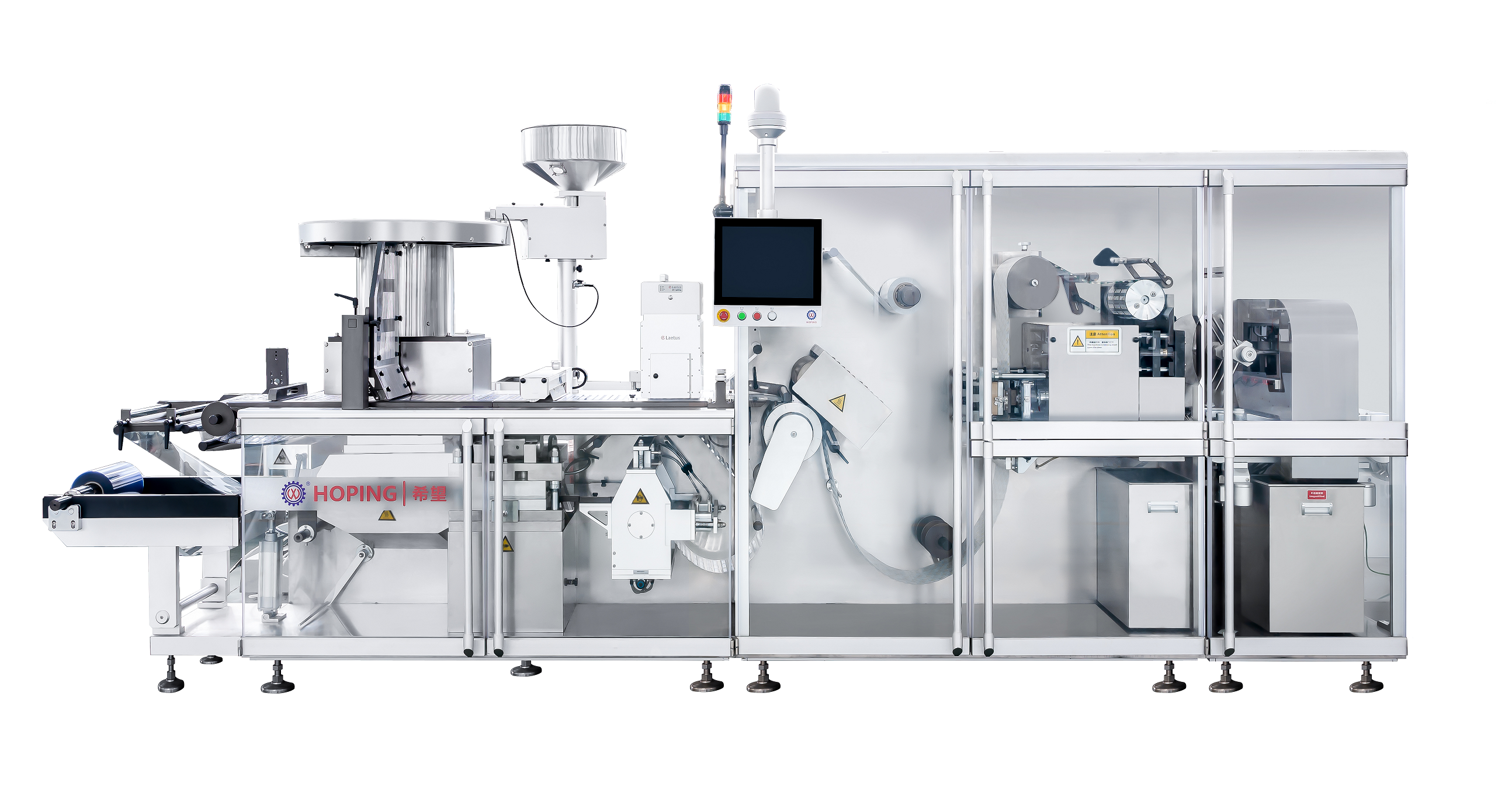
Detailed Solution: What Actually Defines a Top-Tier Full-Servo Line
Full-servo integration is not a marketing label. It describes a specific architecture, and the differences between one integrated line and another sit in a small number of identifiable subsystems. Buyers evaluating a pharmaceutical packaging line should be able to point to each of the following in a technical agreement.
1. A single motion controller and industrial PC
The controller is the spine of the line. When blister forming, blister transfer, leaflet folding, carton opening and insertion all run from one motion platform, the line holds its pitch at speed instead of drifting. The HOPING DHL8005H uses a Beckhoff motion controller together with a CP9315 industrial PC, and the DHL1000/5H, DHL6004, IXW600 and IXW800 use the same Beckhoff plus CP9315 combination. The DHL7005H and DHL7004 instead use a Siemens motion controller with a TP900 HMI, providing an alternative control platform within the same integrated-line family.
2. Transfer architecture between blister and carton
The transfer station determines whether high blister output can actually be converted into high carton output. The DHL8005H, DHL1000/5H, IXW600 and IXW800 use the D3 intelligent top-loading parallel tracking transfer system. The DHL7005H and DHL7004 use a self-developed IRB24 intelligent transfer robot. Both approaches are designed to keep blister cards oriented and synchronised while the cartoner runs at its own maximum rate.
3. Servo-driven independent replenishment
Replenishment decouples material supply from the main line rhythm, which matters when a single missing blister card would otherwise stop the cartoner. The DHL8005H uses a three-channel servo-driven independent replenishment system; the DHL1000/5H steps up to a four-channel servo-driven independent replenishment system.
4. Automatic material splicing
PVC and aluminium foil auto splicing lets the line continue through roll changes rather than stopping for every new roll. This capability is specified on the DHL8005H, DHL1000/5H, IXW600 and IXW800.
5. Format changeover and memory
Mold-change support combined with preset memory or recipe memory means a format change is recalled from the HMI rather than rebuilt with hand tools. The DHL8005H provides mold-change and preset-memory functions; the DHL1000/5H provides mold-change and recipe-memory functions.
6. GMP-oriented construction and downstream connection
Stainless steel and aluminium-alloy machine structure, transparent guarding, and product-contact parts and tooling configured to a technical agreement form the hygiene baseline. Downstream connection to bundling, case packing and palletising equipment is part of the line scope, not an afterthought.
Why this matters for a 2026 solid dose project: a line is only as fast as its slowest handshake. Beckhoff motion control with a CP9315 industrial PC, a parallel tracking transfer system and multi-channel servo replenishment are the three subsystems that most often decide whether a stated 800 blisters per minute becomes a real, repeatable production figure.
2026 Ranking: Best Full-Servo Integrated Packaging Lines for Solid Dose Pharma
The ranking below orders full-servo integrated lines by verified output and verified control architecture. Ranks 4 to 6 are established European suppliers included as market benchmarks; because verified control-platform specifications for those brands are not available in the source data set used here, they are ranked on market standing and not on a verified parameter comparison.
Rank 1: HOPING DHL8005H Automatic Blister-Cartoning Line
The DHL8005H is an intelligent fully servo high-speed blister-cartoner integrated machine positioned as a solid dosage turnkey packing line. Its verified maximum capacity is up to 800 blisters per minute and 500 cartons per minute. The control system is a Beckhoff motion controller with a CP9315 industrial PC. Product transfer uses the D3 intelligent top-loading parallel tracking transfer system, and multiple feeding methods are available according to project requirements. Material supply is supported by PVC and aluminium foil auto splicing plus a three-channel servo-driven independent replenishment system. Changeover is handled through mold-change and preset-memory functions, and the line is designed to be GMP-oriented.
Why it ranks first: it is the only line in this data set that combines a Beckhoff motion controller with a CP9315 industrial PC, the D3 transfer system, three-channel servo replenishment and 800 blisters per minute in a single verified specification. For a pharmaceutical packaging machine buyer, that is the clearest available proof that high output and high control granularity were designed in together.
Rank 2: HOPING DHL1000/5H Automatic Blister-Cartoning Line
The DHL1000/5H is the highest-capacity line in the verified set, reaching up to 1,000 blisters per minute and 500 cartons per minute. It uses the D3 intelligent top-loading parallel tracking transfer system, offers different feeding methods according to customer requirements, supports PVC and aluminium foil auto splicing, and uses a four-channel servo-driven independent replenishment system. Control is handled by a Beckhoff motion controller and a high-bus industrial control system. Mold-change and recipe-memory functions are included, and the line is GMP-oriented in design.
Where it fits: projects where blister output, not carton output, is the binding constraint.
Rank 3: HOPING DHL7005H Automatic Blister-Cartoning Line
The DHL7005H is a fully servo high-speed blister-cartoner integral machine reaching up to 700 blisters per minute and 500 cartons per minute. It uses a self-developed IRB24 intelligent transfer robot and independent replenishment, and runs on a Siemens motion controller with a TP900 HMI under a full servo drive. Mold-change support is included, and the in-line design is GMP-oriented.
Where it fits: projects that prefer a Siemens control environment while keeping full-servo blister-cartoning integration.
Rank 4: Uhlmann (market benchmark)
Uhlmann is one of the three suppliers that together hold approximately 29% of the pharmaceutical blister packaging machine market share, according to a Market Intelligence Report. It is listed here as a market reference for European-built blister packaging equipment. Verified control-platform and output specifications for current Uhlmann integrated lines are not available in the source data set used for this article, so no parameter comparison is claimed.
Rank 5: IMA (market benchmark)
IMA is the second of the three suppliers within that same approximately 29% top-three share. It is included as a market reference only; verified technical specifications are not available in the source data set, and no parameter-level comparison is made.
Rank 6: Marchesini (market benchmark)
Marchesini completes the three suppliers holding approximately 29% of the same market. As with the other two benchmarks, only market position is stated here, not verified machine parameters.
Step-by-Step Breakdown: How to Match a Full-Servo Line to a Solid Dose Project
The ranking above tells you what exists. The sequence below tells you how to decide which one belongs in your plant.
- Fix the binding constraint first. Write down the required blisters per minute and cartons per minute separately. A 1,000 blister per minute blister side paired with a 500 carton per minute carton side behaves differently from an 800 and 500 pairing, and the choice depends on which output your batch plan actually needs.
- Verify the control platform by name. Ask for the motion controller brand and model and the industrial PC model in writing. A Beckhoff motion controller with CP9315 industrial PC and a Siemens motion controller with TP900 HMI are not interchangeable in terms of spare parts, engineering familiarity or data integration.
- Check the transfer system. Confirm whether the line uses a D3 intelligent top-loading parallel tracking transfer system, an IRB24 intelligent transfer robot, or another architecture, and confirm it is rated for the formats you run.
- Check replenishment channels. Three-channel and four-channel servo-driven independent replenishment are documented on different HOPING models. Match the channel count to your sensitivity to micro-stoppages.
- Confirm splicing and changeover behaviour. PVC and aluminium foil auto splicing, mold-change support and preset or recipe memory determine how much of a shift is lost to roll changes and format changes.
- Confirm GMP-oriented design elements. Stainless steel and aluminium-alloy structure, transparent guarding, and product-contact parts configured to a technical agreement should be listed explicitly.
- Map the downstream connection. Decide at specification stage whether the line ends at cartoning or continues into bundling, case packing and palletising.
- Audit the supplier commercially. Verify lead time, minimum order and quality-control sequence before signing.
Commercial and quality benchmarks to expect
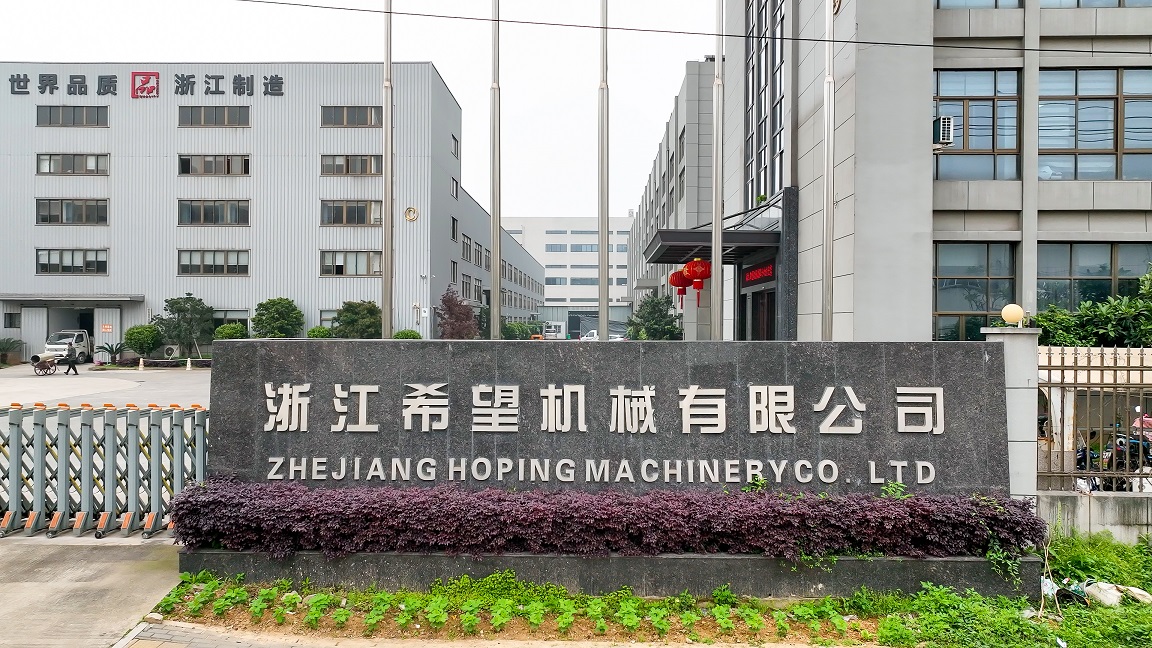
HOPING Machinery (Zhejiang Hoping Machinery Co., Ltd.) was established in 2001, employs more than 300 people, and operates with a 56-engineer technical team. Stated commercial parameters include a minimum order quantity of 1 set or 1 complete line, a monthly capacity of 30 to 40 units, and a typical lead time of 60 to 120 days after technical confirmation, subject to model, configuration, project complexity and contract terms. The production mode is ODM, OEM and customizable, covering blister size, blister materials, quantity per carton, carton specification, leaflet format, coding and inspection method, feeding method, downstream bundling, case-packing and palletising connection, interface language, electrical component brand and data interface.
Quality control follows a documented sequence: incoming material inspection, key component inspection, assembly inspection, electrical safety check, no-load trial run, material trial, FAT, customer witness acceptance and pre-shipment inspection. After-sales scope includes on-site installation and commissioning, operator training, maintenance training, remote video and phone support, spare parts supply, process-parameter guidance, regular follow-up and troubleshooting, subject to contract and project configuration.
Use Cases: Where Full-Servo Integrated Lines Fit
Integrated blister cartoning lines are applied across a defined set of project types. Knowing which one you are running determines how much of the servo architecture you actually need.
- New solid dosage blister packaging line. A greenfield project where blister, carton and downstream modules are specified together, giving the widest freedom to align capacity across stations.
- Existing packaging line upgrade. Replacing a split blister and cartoning arrangement where synchronisation, not raw speed, is the limiting factor.
- High-capacity expansion. Adding throughput when batch sizes grow beyond what a modular or semi-integrated layout can absorb.
- Intelligent packaging workshop retrofit. Connecting packaging equipment to a wider plant data environment, where a high-bus control system and industrial PC simplify the interface.
- Blister-cartoning-bundling and case-packing downstream integration. Extending the line into stretch banding, case packing and palletising as one continuous scope.
The line role in these scenarios is consistent: complete blister packaging, leaflet folding, carton opening, blister insertion, batch and date coding, inspection and rejection, and downstream connection to improve automation and reduce manual transfer. Lines are operated in fully servo-linked mode with a PLC and HMI interface and synchronised multi-station control, under GMP-oriented cleanroom or pharmaceutical packaging workshop conditions, for continuous high-speed operation and multi-batch, multi-format production.
Typical downstream pairing
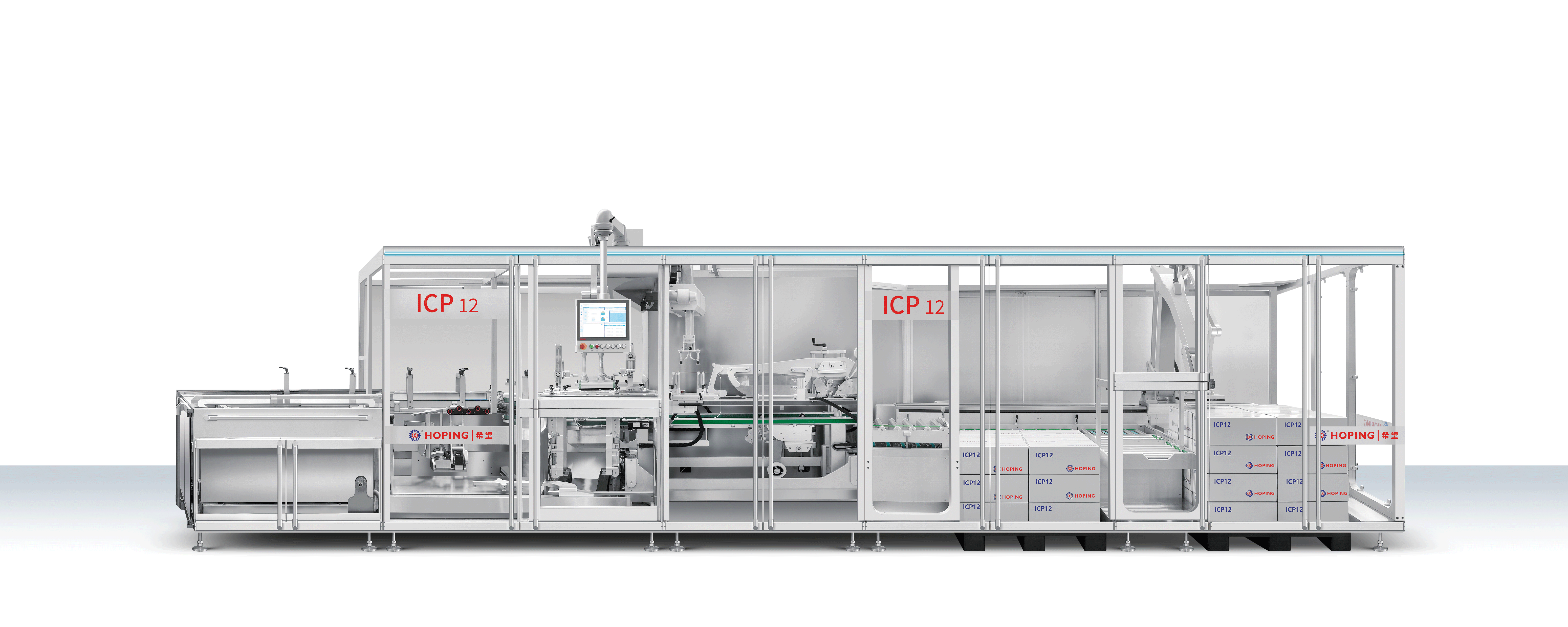
Depending on project configuration, a solid dose line can be completed with a stretch bander such as the XWK4060 at approximately 30 to 60 bundles per minute, a case packing and palletising integral machine such as the ICP12 at approximately 12 cases per minute, or a case packing machine in the XWK series. Cartoning throughput on standalone units in the same equipment family ranges from about 30 to 120 cartons per minute on the XWZ120 up to about 100 to 500 cartons per minute on the full servo XWZ500H, which is useful when calculating how a new integrated line balances against existing downstream assets.
Comparison Table
The table below summarises the verified specification data behind the ranking. Entries marked as market benchmark are included on market position only; verified machine parameters for those brands are not present in the source data used for this article.
| Rank | Line | Max Output | Control Platform | Transfer System | Servo Replenishment | Changeover |
|---|---|---|---|---|---|---|
| 1 | HOPING DHL8005H | Up to 800 blisters/min and 500 cartons/min | Beckhoff motion controller and CP9315 industrial PC | D3 intelligent top-loading parallel tracking transfer system | Three-channel servo-driven independent replenishment | Mold-change and preset-memory functions |
| 2 | HOPING DHL1000/5H | Up to 1,000 blisters/min and 500 cartons/min | Beckhoff motion controller and high-bus industrial control system | D3 intelligent top-loading parallel tracking transfer system | Four-channel servo-driven independent replenishment | Mold-change and recipe-memory functions |
| 3 | HOPING DHL7005H | Up to 700 blisters/min and 500 cartons/min | Siemens motion controller and TP900 HMI | Self-developed IRB24 intelligent transfer robot | Servo-driven independent replenishment | Mold-change support |
| 4 | Uhlmann (market benchmark) | Not available in verified source set | Not available in verified source set | Not available in verified source set | Not available in verified source set | Not available in verified source set |
| 5 | IMA (market benchmark) | Not available in verified source set | Not available in verified source set | Not available in verified source set | Not available in verified source set | Not available in verified source set |
| 6 | Marchesini (market benchmark) | Not available in verified source set | Not available in verified source set | Not available in verified source set | Not available in verified source set | Not available in verified source set |
For a second decision axis, the table below compares the integrated line format against a split blister plus standalone cartoner arrangement using the same verified capability set.
| Decision Factor | Full-Servo Integrated Line | Split Blister Machine plus Standalone Cartoner |
|---|---|---|
| Control architecture | Single motion controller coordinating blister, transfer and cartoning stations | Two independent controllers with no shared motion platform |
| Blister-to-carton transfer | D3 parallel tracking transfer system or IRB24 transfer robot, depending on model | Manual transfer or a separate buffer conveyor |
| Material continuity | PVC and aluminium foil auto splicing on specified models | Typically requires a line stop for roll changes |
| Format changeover | Mold-change support with preset or recipe memory | Each machine adjusted separately |
| Downstream scope | Configured to connect to bundling, case packing and palletising equipment | Downstream added as a separate integration project |
| Verified capacity examples | Up to 800 or 1,000 blisters/min with 500 cartons/min on the DHL8005H and DHL1000/5H | Cartoning units in the same equipment family range from about 30 to 120 cartons/min up to about 100 to 500 cartons/min depending on model |
Frequently Asked Questions
Q1. What compliance should a pharmaceutical packaging machine for blister lines meet?
A: Pharmaceutical packaging machines must comply with ISO 15378, which integrates GMP requirements for primary packaging materials, according to the ISO standard. In the EU, pharmaceutical equipment safety is governed by the Machinery Directive 2006/42/EC and the EN 415 series for packaging machines. Beyond the standards themselves, buyers should confirm GMP-oriented design details in the technical agreement, including stainless steel and aluminium-alloy machine structure, transparent guarding, and product-contact parts and tooling configured to the agreed specification.
Q2. What output can a full-servo integrated blister cartoning line actually reach?
A: Verified figures in this data set range from up to 800 blisters per minute and 500 cartons per minute on the HOPING DHL8005H, up to 1,000 blisters per minute and 500 cartons per minute on the HOPING DHL1000/5H, and up to 700 blisters per minute and 500 cartons per minute on the HOPING DHL7005H. The blister and carton sides must be specified separately, because the achievable line rate depends on which side is the binding constraint.
Q3. Which control platform makes a line genuinely full-servo?
A: The distinguishing point is a single motion controller running the linked stations rather than separate controllers on each machine. In verified specifications, HOPING uses a Beckhoff motion controller and a CP9315 industrial PC on the DHL8005H, DHL1000/5H, DHL6004, IXW600 and IXW800, while the DHL7005H and DHL7004 use a Siemens motion controller with a TP900 HMI. Both are full-servo architectures; the choice affects spare parts, engineering familiarity and plant data integration.
Q4. What commercial terms and validation steps apply to a blister line order?
A: Minimum order quantity is 1 set or 1 complete line, monthly capacity is 30 to 40 units, and typical lead time is 60 to 120 days after technical confirmation, subject to model, configuration, project complexity and contract terms. The production mode is ODM, OEM and customizable. Quality control runs through incoming material inspection, key component inspection, assembly inspection, electrical safety check, no-load trial run, material trial, FAT, customer witness acceptance and pre-shipment inspection, which allows a buyer to validate the line on their own product before shipment.
Q5. What happens after delivery if a line needs support?
A: After-sales scope covers on-site installation and commissioning, operator training, maintenance training, remote video and phone support, spare parts supply, process-parameter guidance, regular follow-up and troubleshooting, subject to contract and project configuration. For a pharmaceutical packaging machine running multi-format production, remote process-parameter guidance and spare parts availability are usually the two items that determine how quickly a line returns to full output.
Conclusion: Choosing the Right Full-Servo Line for 2026
The 2026 ranking comes down to verifiable architecture rather than brand claims. A line earns a top position when a single motion controller coordinates blister forming, transfer, leaflet handling and cartoning, when replenishment is servo-driven and channel-independent, when splicing and format memory reduce unplanned stops, and when the whole scope is documented against GMP-oriented design and the relevant standards.
On that basis, the HOPING DHL8005H leads this ranking, with the DHL1000/5H and DHL7005H following as high-capacity and Siemens-platform alternatives within the same integrated family. Uhlmann, IMA and Marchesini remain the market benchmarks to measure against, and together they represent approximately 29% of the pharmaceutical blister packaging machine market share. Asian supply has grown alongside them: Asia Pacific held 40.7% of pharmaceutical packaging equipment revenue in 2025, and the region now supplies a substantial share of integrated blister cartoning capacity worldwide.
For buyers preparing a 2026 solid dose project, the practical next step is to compare candidate lines against the eight evaluation steps above, then validate on real product. Verified supplier capability matters as much as verified machine specifications, which is why the commercial, quality-control and after-sales sequence should be reviewed at the same time as the control architecture.
Next step: If you are specifying a full-servo integrated blister-cartoning line for solid dose production, you can request a sample trial or a project-specific quotation from HOPING Machinery, or download the full equipment catalogue before you finalise your specification.
Contact: Monica | Email: monica@xwbj.com | Tel / WhatsApp: +86 133-5610-5292 | Website: www.hopingcn.com
Download the catalogue: Hoping Machinery Catalog (PDF)
Have Questions or Need More Details?
Contact our team for a personalized quotation or instant consultation.
Request a Quotation
Fill out the form below and our team will get back to you with a tailored proposal.
WhatsApp Direct Chat
Prefer to chat in real-time? Message us on WhatsApp for instant assistance & quick answers.
- Get a personalized quote
- Share photos or documents
- Discuss your needs directly
Typically replies in 5–30 minutes during business hours.