
Automation Architecture in Integrated Cartoning Lines: Beckhoff Motion Controllers and IPC Design
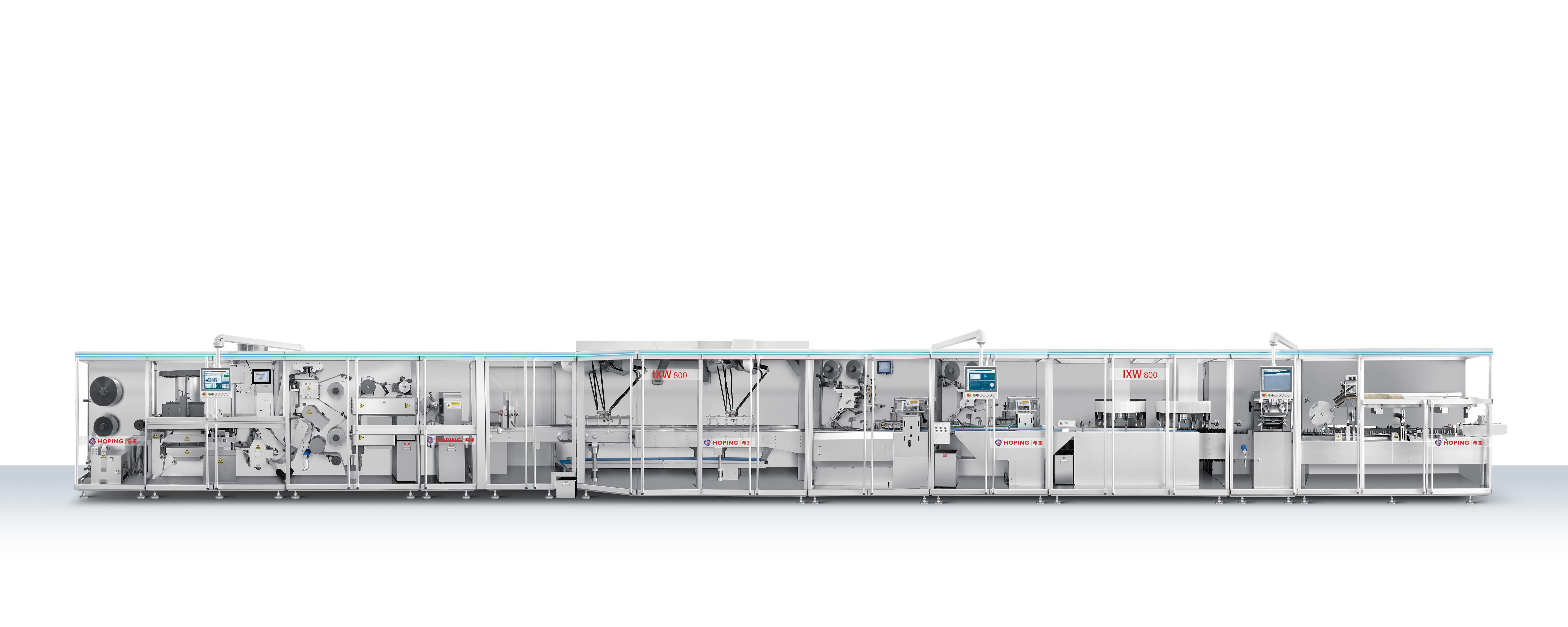
An integrated blister-cartoning line is one synchronized motion system, not two machines joined by a conveyor. In the DHL8005H automatic blister-cartoning line built by Zhejiang Hoping Machinery Co., Ltd., that synchronization runs on a Beckhoff motion controller combined with a CP9315 industrial PC, a control core that keeps blister forming, sealing, transfer and cartoning in step at rated capacities of up to 800 blisters per minute and up to 500 cartons per minute.
This technical guide is written for the people who have to specify, justify and later maintain that architecture: pharmaceutical packaging engineers, line integrators, technical procurement managers and OEM project teams evaluating a high-speed pharmaceutical packaging machine. It explains what each layer of the control platform contributes, how the architecture behaves during replenishment events and format changes, how the DHL8005H design compares with other Beckhoff- and Siemens-based lines in the Hoping range, and which checks belong on a specification sheet before a purchase order is signed.
Problem Definition: Why Synchronization Is the Hard Part of an Integrated Line
Blister packaging and cartoning operate in two different cycle domains. Forming and sealing index in blister-format steps; the cartoner indexes in carton-format steps; the transfer station has to hand product from one domain into the other without losing registration. When those domains are driven by loosely coupled controls, six failure patterns recur in solid dosage packaging projects:
- Rate mismatch. A blister machine and a cartoner matched on paper at the same nominal output rarely lose speed at the same point in the cycle. Where the two domains are not governed by one timing reference, the slower of the two defines real line output.
- Empty or rejected cavities. Not every cavity carries a tablet or capsule. If the line has to stop for every missing product, high-capacity output stays theoretical. Independent replenishment logic exists so that cartons leave complete without stopping the machine.
- Transfer timing at speed. Product must be picked from the blister web and placed into an opened carton within a short window. Where simple push-through mechanics cannot keep up, parallel tracking transfer systems are used.
- Roll changes during production. PVC and aluminum foil rolls end mid-batch. Without automatic splicing, the forming and sealing stations stop and the entire linked line starves.
- Format changeover. A line running one blister and carton format is straightforward; a line switching between formats needs repeatable positioning and stored settings rather than re-teaching the machine from scratch at every changeover.
- Downstream starvation. Coding, inspection, rejection, bundling, case packing and palletizing all depend on the cartoner delivering counted, correctly oriented output.
The architectural answer used on the DHL8005H is a single motion platform: one controller owns the synchronized servo-driven motion across blister forming, sealing, transfer and cartoning, while an industrial PC handles the higher-level operator, recipe and data functions. The remaining sections explain how that split is structured and what it means for specification and maintenance.
Industry Background: Where Control Architecture Sits in the Market
Control architecture has become a purchasing criterion because the equipment market is large, growing slowly and fragmented. Independent research places the global pharmaceutical packaging equipment market at approximately USD 10.71 billion in 2024 (SkyQuest Technology). Within it, the pharmaceutical blister packaging machine market is projected to reach USD 2.57 billion by 2025 with a CAGR of 2.8% (Custom Market Insights), while cartoning machinery in the pharmaceutical sector was valued at USD 1.46 billion in 2024 (Fortune Business Insights). Regionally, Asia Pacific held the largest revenue share at 40.7% of the pharmaceutical packaging equipment market in 2025 (Grand View Research).
Published figures should be read with care, because estimates differ depending on whether secondary and end-of-line equipment is included. Sources diverge between roughly USD 10.71 billion for 2024 and USD 7.0 billion for 2025 for nominally the same market. The direction is consistent; the exact value is not. For a buyer, the practical implication is the same either way: the supply base is broad and competitive. The top three blister packaging machine players, Uhlmann, IMA and Marchesini, account for approximately 29% of the market combined (Market Intelligence Report), which leaves a substantial share to integrated-line manufacturers competing on configuration, control architecture and support rather than on brand scale.
Regulation shapes what a control platform must deliver. ISO 15378 integrates GMP requirements for primary packaging materials, and in the EU, packaging machinery safety is governed by Machinery Directive 2006/42/EC together with the EN 415 series for packaging machines. In practice those expectations set design requirements a control architecture has to support: traceability-oriented operation, coded output, rejection of non-conforming product, and inspection results that can be tied back to a batch.
Detailed Solution: How the DHL8005H Control Architecture Is Built
Layer 1: the Beckhoff motion controller
On the DHL8005H, the Beckhoff motion controller is the synchronization layer. Its role is to hold the servo-driven motion modules of the blister section, the transfer station and the cartoner on one timing reference, so that a blister card produced at the forming and sealing station reaches the carton opening and insertion station in the correct position. Hoping does not publish the internal cycle structure of the DHL8005H, and the exact task partitioning between controller and industrial PC is defined in the machine technical documentation. The architectural point that the specification does state is the relevant one for a buyer: line motion is governed by a Beckhoff controller rather than by independent per-station control.
Layer 2: the CP9315 industrial PC
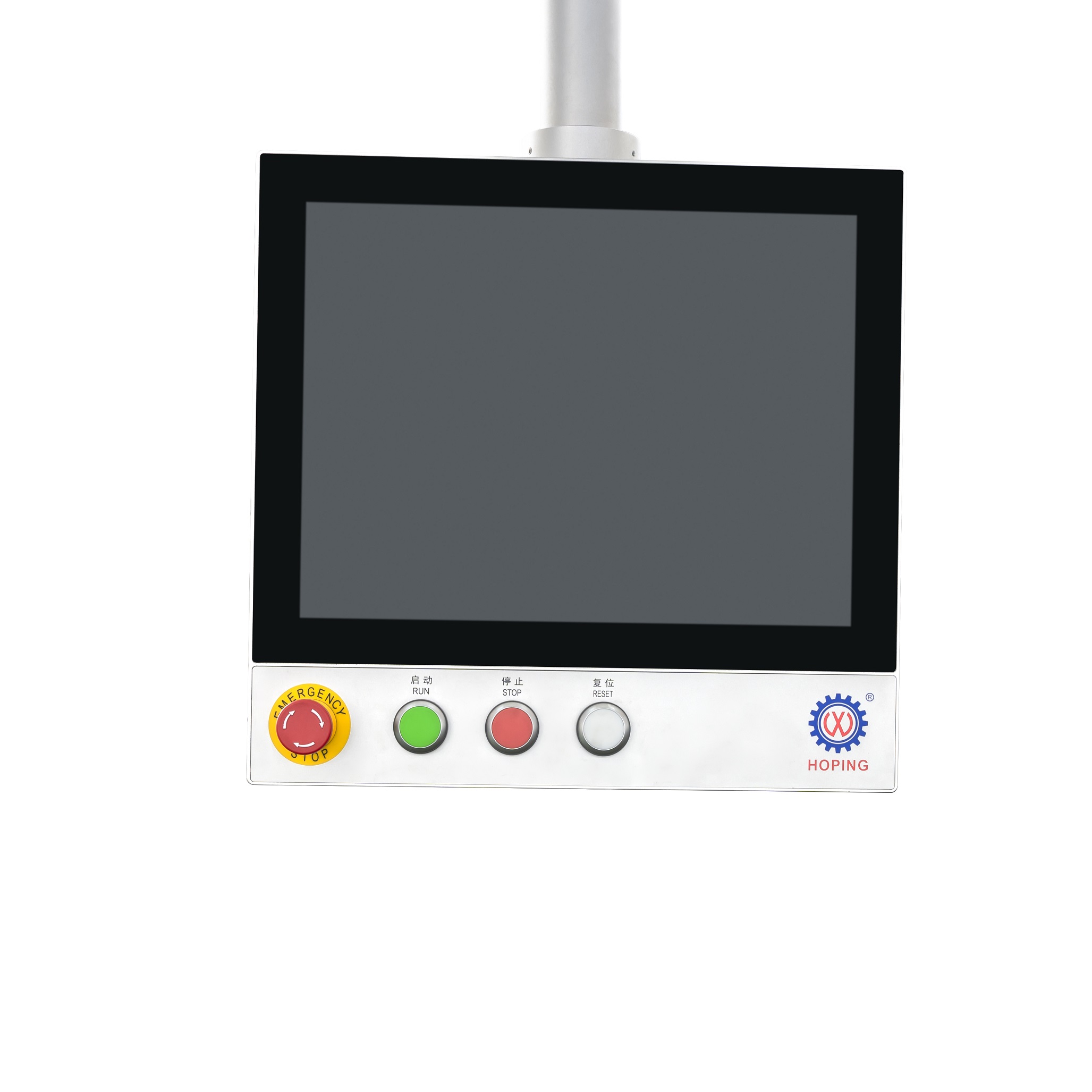
The CP9315 industrial PC is the second layer, the line computing platform that runs alongside the Beckhoff controller. Industrial PCs of this class are used in packaging machinery to host the operator interface, format and preset data, and communication with inspection and downstream equipment. Hoping's approach to operator hardware is visible elsewhere in the range: the DPH320HII rotary blister packing machine is described with a 15-inch industrial touchscreen HMI with an integrated industrial PC, mounted on a swing arm with a 180-degree rotating arm and a 270-degree adjustable display. The DHL8005H itself is specified with a CP9315 industrial PC as part of its control platform.
The transfer station: D3 intelligent top-loading parallel tracking
Transfer is where an integrated blister-cartoner either works or does not. The DHL8005H uses a D3 intelligent top-loading parallel tracking transfer system. In a parallel tracking arrangement the handling device follows the moving carton lane while placing product rather than indexing against a stationary target, which is the standard engineering response when placement has to occur at line speed. The same D3 top-loading principle appears on the DHL1000/5H blister line and on the IXW400 liquid dosage blister-cartoner, indicating that it is a platform-level transfer architecture in the Hoping range rather than a one-off design.
Replenishment: three-channel servo-driven independent replenishment
The DHL8005H is specified with a three-channel servo-driven independent replenishment system. Replenishment exists because cavities can be empty or product can be rejected upstream; independent channels let the line compensate so that cartons leave complete. Three channels mean the replenishment function is distributed rather than handled at a single point, and servo drive matters because replenishment motion must be phased to the main machine cycle instead of running on a fixed cam.
Material continuity: PVC and Alu foil auto splicing
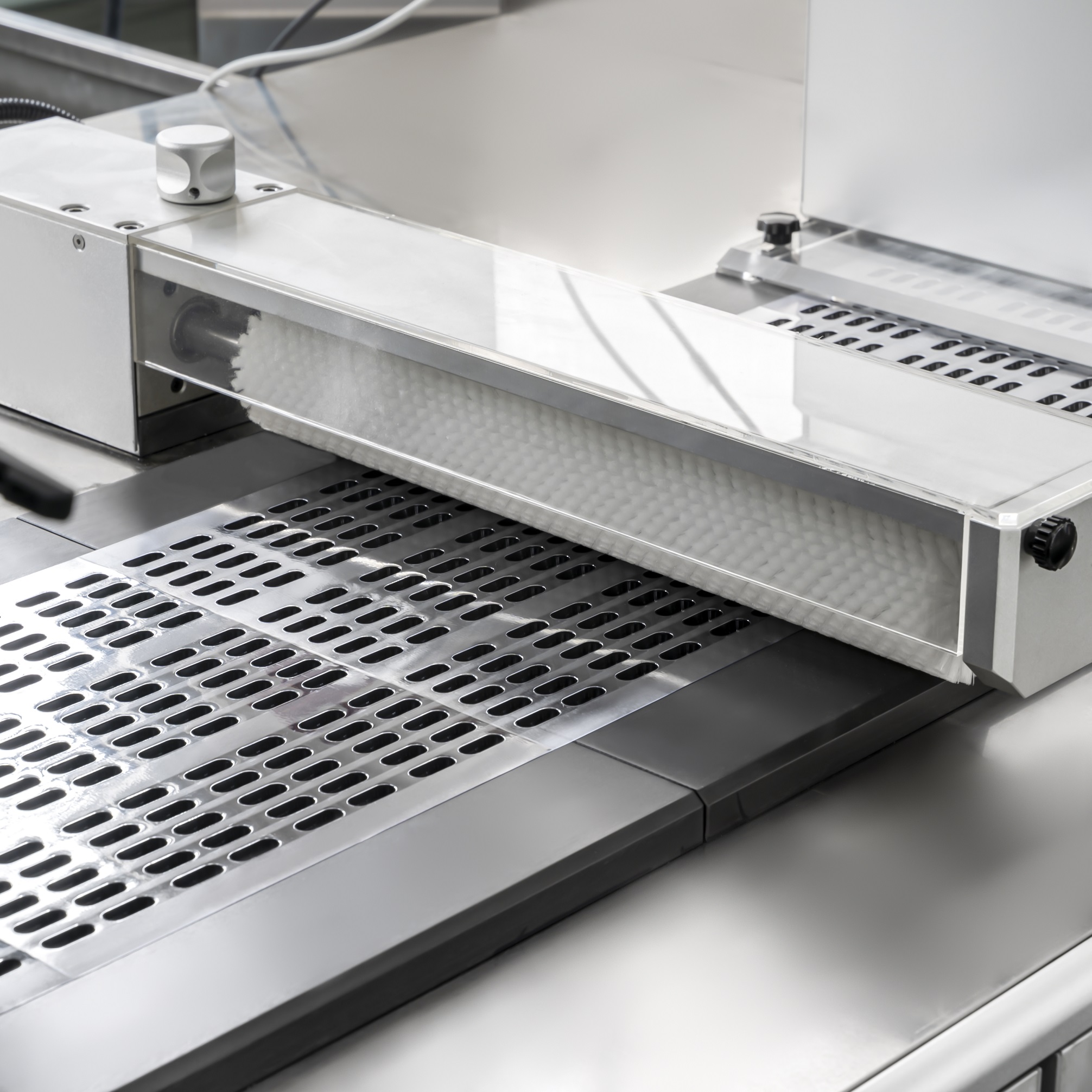
Forming film and lidding foil are consumed continuously. The DHL8005H specification includes PVC/Alu foil auto splicing, which allows a new roll to be joined to the running web so that the forming and sealing stations continue without a full stop. In a linked line, a manual roll change is a line event rather than a station event: the transfer system, the cartoner and downstream equipment are all affected.
Format flexibility: mold change and preset memory
Mold-change and preset-memory functions are part of the DHL8005H specification. Preset memory is the control-side counterpart of quick mechanical changeover: format parameters are stored and recalled instead of being re-established by hand for each blister format, carton size and leaflet format. For multi-product facilities, this is often what separates an integrated line that behaves as a flexible asset from one that behaves as a single-format machine.
Execution: mechanical and hygiene design behind the control platform
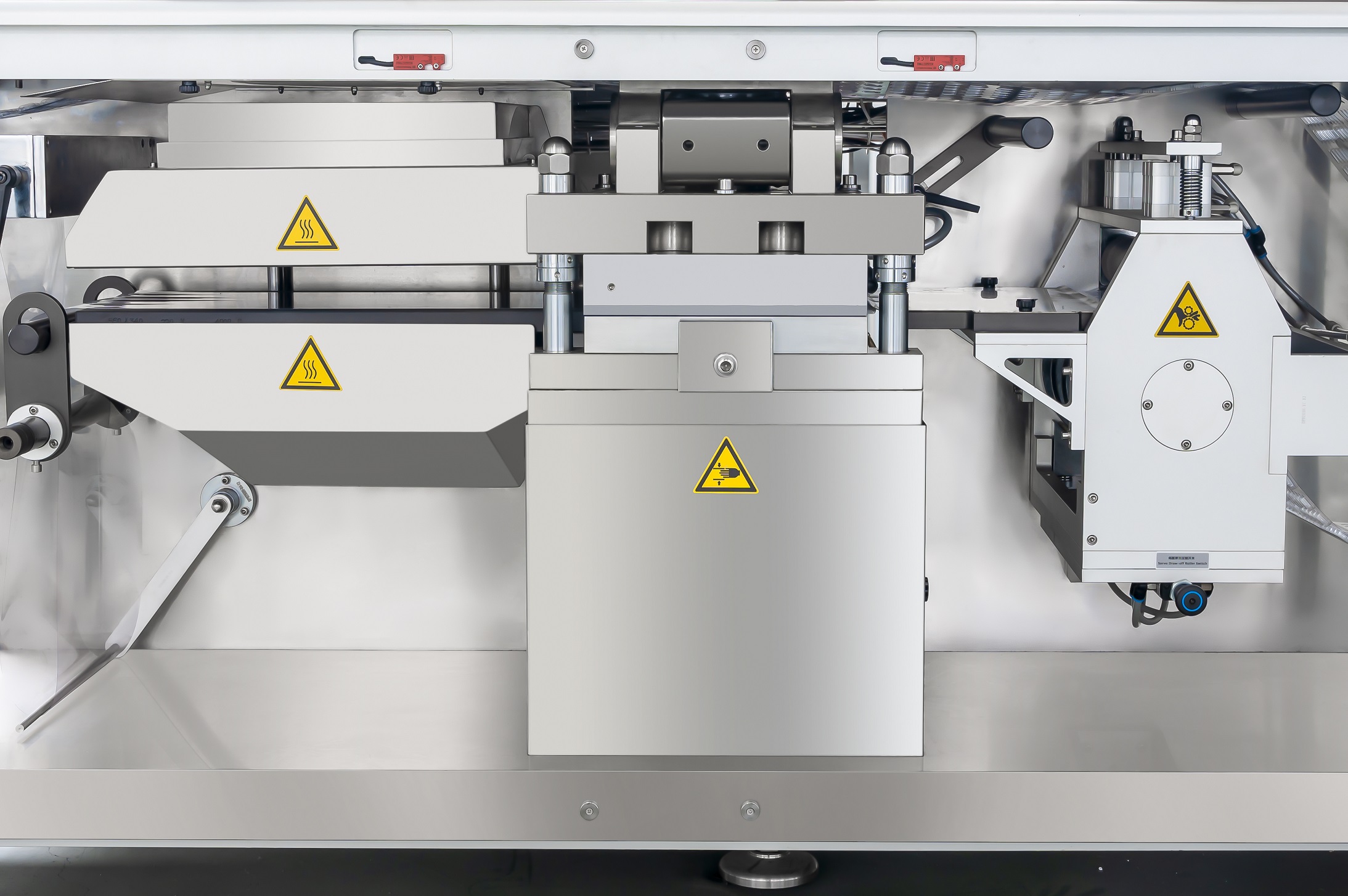
The DHL8005H is built on a stainless steel and aluminum-alloy machine structure with transparent guarding and GMP-oriented product-contact parts and tooling according to technical agreement. Its scope covers high-speed blister forming and sealing, transfer, leaflet handling, carton opening, insertion, coding and inspection, and connection to bundling, case-packing and palletizing equipment. High-speed rotary platforms in the same range indicate the level of motion complexity handled in the blister section: the DPH320HII is described with a nine-axis continuous rotary pick-and-place robot system with FESTO pneumatic control, a dual-servo forming station with a precision servo-driven indexing mechanism and PID-controlled PVC preheating, plus Japanese NSK bearings at critical drive stations. The same design language, servo positioning with controlled heating and monitored transfer, carries into the integrated cartoning platforms.
The same control platform across the range
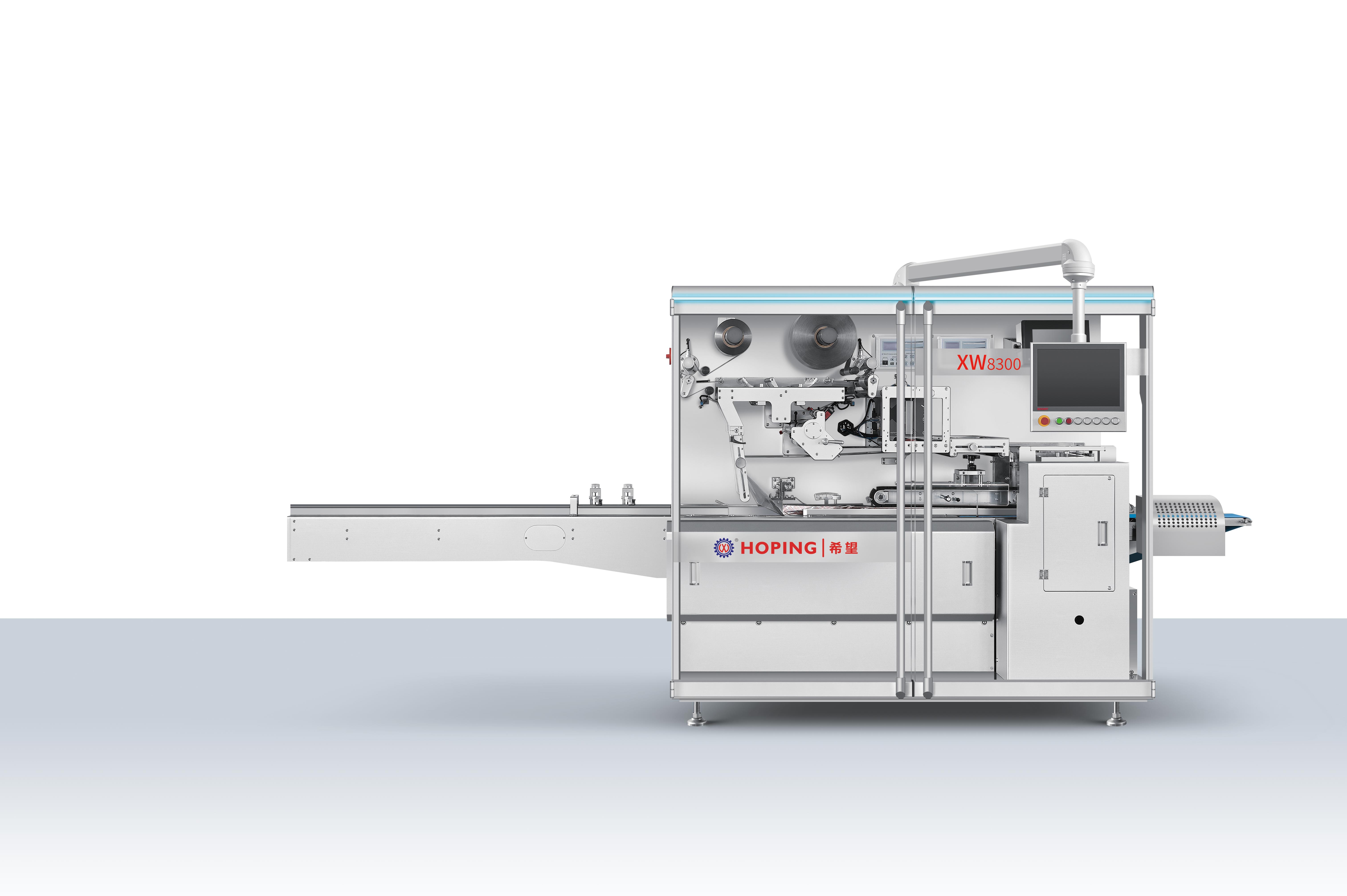
Beckhoff control is not limited to a single model. The DHL6004 blister-cartoner line, rated up to 600 blisters per minute and 400 cartons per minute, uses a Beckhoff controller with a CP9315 industrial PC. The IXW600 blister-flow-wrap-cartoning line and the dual-track IXW800 use the same Beckhoff plus CP9315 combination, and the XW8300 reciprocating flow packing machine, rated up to 300 packs per minute with 4-axis servo control and rotary reciprocating end-sealing, is specified with a Beckhoff control system.
Siemens-based control remains available elsewhere in the range: the DHL7005H and DHL7004 blister-cartoners use a Siemens motion controller with a TP900 HMI, the IXW400 liquid dosage blister-cartoner uses a Siemens controller with a CP9315 industrial PC, and the XW8200 flow wrapper and XWZ120 horizontal cartoner are Siemens-controlled. The practical reading for a project team is that platform choice is a project-level decision within one supplier's range rather than a fixed constraint.
Step-by-Step Breakdown: From Blister Card to Sealed Carton
- Blister forming. The forming station heats the forming film and forms the cavities that will hold tablets or capsules. The DHL8005H supports Alu and PVC-based blister formats, and film supply is continuous through PVC/Alu foil auto splicing.
- Product feeding. The DHL8005H is specified with multiple feeding methods, which allows the same platform to be configured to different tablet and capsule shapes rather than locking the line to one product geometry.
- Sealing. Lidding material is sealed over the filled cavities. Because the lidding web is auto-spliced, sealing continues through roll changes instead of stopping the linked line.
- Registration and indexing. The formed and sealed web is indexed to the punching and cutting position. Servo-driven indexing is what keeps this step phase-locked to the rest of the line rather than free-running.
- Replenishment decision. Where a cavity is empty or product has been rejected, the three-channel servo-driven independent replenishment system compensates so the downstream cartoner still receives complete cartons.
- Transfer. The D3 intelligent top-loading parallel tracking transfer system picks blister cards and places them into opened cartons while tracking the carton lane, which is the mechanism that allows the transfer step to keep pace with the blister section.
- Leaflet handling and carton opening. Leaflets are folded and cartons opened in the cartoning section. Carton opening must be timed to the transfer window, which is a synchronization task rather than a mechanical one.
- Insertion, coding and inspection. Blister cards and leaflets are inserted, and the line scope includes coding and inspection. Rejected cartons are removed rather than passed downstream, which protects batch integrity.
- Closing and downstream hand-off. The carton is closed and the line connects to bundling, case-packing and palletizing equipment. This is where a control architecture either speaks to adjacent machines or forces manual transfer.
- Format changeover and preset recall. Mold change is combined with preset memory, so stored format parameters are recalled for a new blister format, carton size or leaflet format rather than re-established manually.
Use Cases: Where This Architecture Earns Its Place
- High-volume tablet and capsule production. Where primary and secondary packaging must run as a single flow at up to 800 blisters per minute and up to 500 cartons per minute, the DHL8005H is positioned as a solid dosage turnkey packing line rather than as an assembly of separate machines.
- Multi-product, multi-batch facilities. Mold change plus preset memory matters most where the same line has to move between blister formats and carton sizes on a production schedule rather than once a year.
- Nutraceutical, healthcare, food and cosmetic blister-cartoning. The DHL8005H applicable scope covers pharmaceutical solid dosage, tablet and capsule packaging, healthcare products, and food and cosmetic blister-cartoning projects where the same integrated architecture is required.
- Line upgrades and capacity expansion. Existing packaging line upgrades, high-capacity expansion, intelligent packaging workshop retrofits and downstream integration projects are all recognized application types for this class of equipment, and control platform choice is usually the pivot point of such a retrofit.
- Projects that also need flow wrapping. Where moisture-sensitive or flow-wrapped product requires a blister, pillow-pack and carton sequence, the IXW600 and IXW800 blister-flow-wrap-cartoning lines use the same Beckhoff plus CP9315 control basis with rotary reciprocating flow-wrapper matching technology.
Comparison Table: Control Platforms Across Hoping Blister-Cartoning Lines
| Line / model | Control platform | Transfer and replenishment | Rated capacity |
|---|---|---|---|
| DHL8005H automatic blister-cartoning line | Beckhoff motion controller + CP9315 industrial PC | D3 intelligent top-loading parallel tracking transfer; three-channel servo-driven independent replenishment | Up to 800 blisters/min; up to 500 cartons/min |
| DHL1000/5H blister line | Beckhoff motion controller + high-bus industrial control system | D3 intelligent top-loading parallel tracking transfer; four-channel servo-driven independent replenishment | Up to 1000 blisters/min; up to 500 cartons/min |
| DHL7005H automatic blister-cartoning line | Siemens motion controller + TP900 HMI | Self-developed IRB24 intelligent transfer robot; independent replenishment | Up to 700 blisters/min; up to 500 cartons/min |
| DHL7004 automatic blister-cartoning line | Siemens motion controller + TP900 HMI | IRB24 intelligent transfer robot; servo-driven independent replenishment | Up to 700 blisters/min; up to 400 cartons/min |
| DHL6004 automatic blister-cartoning line | Beckhoff controller + CP9315 industrial PC | Servo-driven independent replenishment; high-speed transfer and cartoning linkage | Up to 600 blisters/min; up to 400 cartons/min |
| IXW600 blister-flow-wrap-cartoning line | Beckhoff controller + CP9315 industrial PC | Rotary reciprocating flow-wrapper matching technology; servo-driven replenishment | Up to 600 blisters/min, 300 packs/min, 300 cartons/min |
| IXW800 dual-track blister-flow-wrap-cartoning line | Beckhoff controller + CP9315 industrial PC | D3 top-load robotics and rotary manipulator; servo-driven independent replenishment | Up to 600 blisters/min |
| IXW400 liquid dosage blister-cartoner line | Siemens controller + CP9315 industrial PC | D3 top-loading robot; servo-driven independent replenishment | Up to 400 blisters/min; 150 cartons/min |
The table shows that platform choice and transfer principle are configured per project rather than standardized across the range. A line specified with a Beckhoff controller and CP9315 industrial PC is not automatically the right choice for every format; what matters is that the transfer principle, replenishment channel count and capacity rating match the product and the carton format being run.
Specification Checklist Before You Commit
- Confirm the required blister output and carton output as separate numbers, and ask how the line behaves when the two are not perfectly matched.
- Ask which transfer principle is offered for your carton and blister geometry, and whether parallel tracking transfer is used or a robotic transfer such as the IRB24.
- Confirm replenishment channel count and whether replenishment is servo-driven and independent from the main drive.
- Confirm auto splicing for both the forming film and the lidding material, and whether Alu-Alu formats are supported on the same platform.
- Ask for the format-change procedure in writing, including which parameters are stored in preset memory and which require mechanical mold change.
- Confirm the control platform by model, including whether the motion controller and the industrial PC are separate components.
- Map the line against ISO 15378 expectations and, for EU destinations, Machinery Directive 2006/42/EC with the EN 415 series, and confirm which certification documents are supplied.
- Confirm downstream connection scope: bundling, case packing, palletizing and the data interface available for production reporting.
- Confirm how product-contact parts and tooling are defined in the technical agreement.
FAQ
Does a Beckhoff-controlled blister-cartoning line meet pharmaceutical packaging compliance requirements?
Compliance is determined by the line as a whole, not by the controller brand, but the control platform has to support the requirements. Pharmaceutical packaging machines must comply with ISO 15378, which integrates GMP requirements for primary packaging materials, and EU safety for packaging machinery is governed by Machinery Directive 2006/42/EC together with the EN 415 series. The DHL8005H is specified with GMP-oriented line design, a stainless steel and aluminum-alloy structure, transparent guarding and GMP-oriented product-contact parts and tooling according to technical agreement, including in-line coding and inspection in its scope. Hoping Machinery's public profile lists CE and ISO 9001/14001 certifications for its integrated blister cartoning lines and end-of-line packaging systems. For a specific project, the certification and documentation package should be confirmed against your own quality system at the technical agreement stage.
How do the Beckhoff motion controller and CP9315 industrial PC keep forming, sealing and cartoning synchronized?
They form a two-layer control core rather than two competing systems. The Beckhoff motion controller governs the synchronized servo-driven motion of the blister section, the transfer station and the cartoner on one timing reference, so the blister card leaving the forming and sealing station arrives at the carton opening and insertion station in the correct position. The CP9315 industrial PC operates alongside it as the line computing platform, hosting operator, recipe and data functions. What makes the architecture work at rated capacity is the combination with the DHL8005H mechanical systems: the D3 intelligent top-loading parallel tracking transfer system for placement, three-channel servo-driven independent replenishment so cartons leave complete, PVC/Alu foil auto splicing so forming and sealing continue through roll changes, and mold-change with preset memory for repeatable format switching. Which function runs on the controller and which on the industrial PC is defined in the machine technical documentation.
What determines the control configuration and commercial scope of an integrated blister-cartoning line?
Configuration, not just capacity, drives the commercial scope of a project. The variables that change from line to line are the blister output and carton output required, the number of replenishment channels, whether the transfer is a parallel tracking system or a robotic transfer such as the IRB24, whether flow wrapping is required between blister and carton (the IXW series), the range of blister and carton formats to be run, mold sets and format tooling, and whether downstream bundling, case packing and palletizing are included. In the Hoping range alone these variables produce lines rated from up to 400 blisters per minute on the IXW400 up to 1000 blisters per minute on the DHL1000/5H, with different control platforms. The correct way to scope a project is to define formats and required outputs first and then confirm the configuration, tooling and control platform against a technical agreement, with a written quotation issued for that configuration.
How is synchronization validated before the line goes into routine production?
Validation is normally built around three things the DHL8005H already provides: transfer accuracy at production speed, replenishment behavior with intentionally incomplete cavities, and format-change repeatability. The D3 intelligent top-loading parallel tracking transfer system, coding and inspection scope, and mold-change with preset memory are the functions that make these checks repeatable — preset memory in particular means the parameters validated for one format can be recalled rather than re-established. Buyers typically request a validation run on their own blister format, carton size and leaflet format before acceptance. Planning that run early, and agreeing which formats will be validated, is considerably easier than adding checks later.
How should a buyer evaluate a pharmaceutical packaging machine manufacturer for a Beckhoff-based integrated line?
Start with whether the manufacturer builds the control platform into more than one model, because that indicates platform depth rather than a single custom build. Hoping Machinery applies Beckhoff control across the DHL8005H, DHL6004, IXW600, IXW800 and XW8300, and offers Siemens-based alternatives on other lines. Zhejiang Hoping Machinery Co., Ltd. was founded in 2001 and manufactures pharmaceutical packaging machinery, integrating R&D, production, marketing and service; the facility covers 28,800 square meters with approximately 300 staff, including an R&D team of 56 engineers, and annual production capacity of 500 units. Exports account for 25% of total sales, with major markets in Southeast Asia, the Middle East, Eastern Europe, South America and Africa. The company holds 26 invention patents, 70 utility patents, 4 appearance patents, 10 PCT-protected patents in Europe, Russia, Germany, Italy and other countries, and 28 software copyrights. Verify those capabilities against your format list, control platform requirement and documentation needs rather than against a single throughput figure.
Conclusion: Control Architecture Is a Procurement Decision, Not a Detail
On an integrated blister-cartoning line, output is determined by synchronization before it is determined by station speed. The DHL8005H combines a Beckhoff motion controller with a CP9315 industrial PC so that blister forming, sealing, transfer and cartoning operate on one timing reference, supported by the D3 intelligent top-loading parallel tracking transfer system, three-channel servo-driven independent replenishment, PVC/Alu foil auto splicing and preset memory. The result is a line rated up to 800 blisters per minute and up to 500 cartons per minute in which the control platform, the transfer principle and the format-change philosophy are specified together rather than separately.
For engineering and procurement teams, the practical consequence is that control architecture belongs in the specification from the beginning. Model, controller platform, industrial PC, transfer system and replenishment configuration should be named explicitly, checked against the formats you actually run, and confirmed against the documentation package your quality system requires.
Next Step: Line Configuration and Documentation
If you are specifying a Beckhoff-controlled integrated blister-cartoning line, the fastest way to close the open questions is to send your blister format, carton size, leaflet format and required outputs for a configuration review. Hoping Machinery can confirm the matching line model, control platform, transfer system and replenishment configuration, and issue a quotation against a technical agreement.
Download the full product catalog: Hoping Machinery Catalog (PDF)
Company website: www.hopingcn.com
Contact: Monica | Email: monica@xwbj.com | Tel / WhatsApp: +86 133-5610-5292
Zhejiang Hoping Machinery Co., Ltd., 88th Weiwu Road, Nanbin Sub-district, Ruian City, Zhejiang Province, China.
Have Questions or Need More Details?
Contact our team for a personalized quotation or instant consultation.
Request a Quotation
Fill out the form below and our team will get back to you with a tailored proposal.
WhatsApp Direct Chat
Prefer to chat in real-time? Message us on WhatsApp for instant assistance & quick answers.
- Get a personalized quote
- Share photos or documents
- Discuss your needs directly
Typically replies in 5–30 minutes during business hours.