
Automatic Blister-Cartoner Line vs Blister-Flow-Wrapper-Cartoner Line: Which Should You Choose?
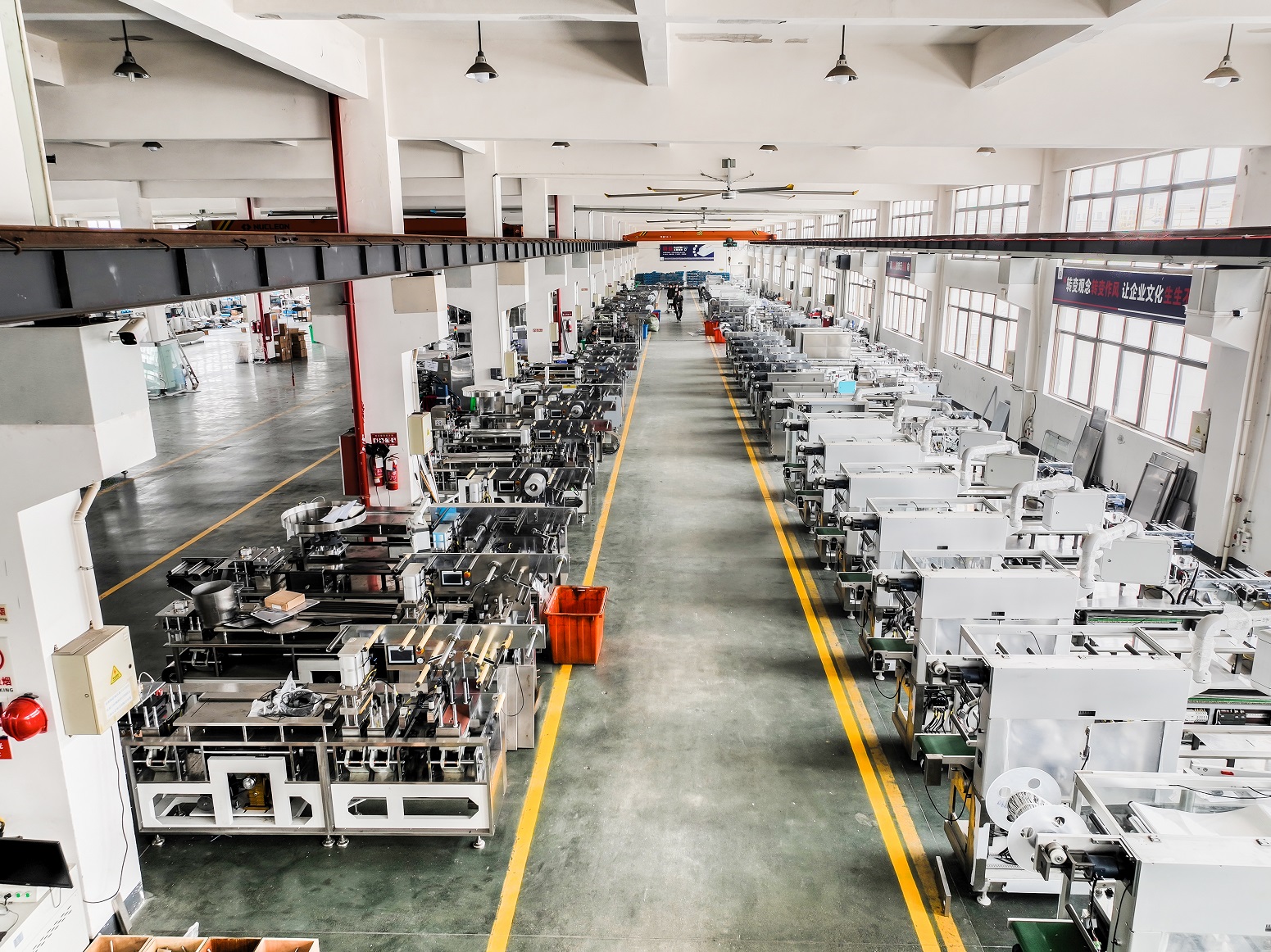
Blister machine workshop at HOPING. The line architecture should follow the pack format, not the other way around.
The choice between an automatic blister-cartoner line and a blister-flow-wrapper-cartoner line is a pack-format decision before it is a speed decision. One architecture takes a formed blister directly into a carton. The other adds a flow-wrapping stage between blister packing and cartoning. Both can be valid for solid dosage products, but they solve different packaging problems.
Zhejiang Hoping Machinery Co., Ltd. (HOPING) is a pharmaceutical packing machinery manufacturer established in 2001, supplying blister packaging machines, cartoning machines, case packing machines and end-of-line packaging machines. Its line portfolio includes direct blister-cartoner configurations such as the DHL8005H and blister-flow-wrapper-cartoner configurations such as the IXW800, IXW600 and DPH320H-XW8200-XWZ300II.
Short answer: choose an automatic blister-cartoner line when the approved pack is a blister board going directly into a carton and no pillow-pack stage is required. Choose a blister-flow-wrapper-cartoner line when the product, market or customer specification requires a flow-wrapped blister before cartoning, or when the line must combine blister protection, pillow-pack presentation and cartoning in one linked process.
Problem Definition: Why Line Architecture Comes Before Speed
Buyers often start with headline output. That is understandable, but it can hide the more important question: what is the primary pack, and what must the secondary pack do? A direct blister-cartoner line and a blister-flow-wrapper-cartoner line can both reach high output, yet they are not interchangeable. The first removes a process step. The second adds a process step for a reason.
The real problem is not whether one line is better in general. The real problem is whether the product and market accept a bare or stacked blister in a carton, or whether the blister must first be enclosed in a pillow pack. If the pack format is already fixed, the architecture decision becomes much clearer. If the pack format is still open, the decision should be made with the product stability, market requirement, line integration and output target in view.
This is also a capability question. A supplier may offer both architectures, but the selected line must match the blister format, carton format, feeding method, inspection requirement, coding method and downstream equipment. The DHL8005H, for example, is described as a fully servo high-speed blister-cartoner with maximum capacity up to 800 blisters/min and 500 cartons/min, a D3 intelligent top-loading parallel tracking transfer system, multiple feeding methods, PVC/Alu foil auto splicing, three-channel servo-driven independent replenishment, a Beckhoff motion controller and CP9315 industrial PC, mold-change and preset-memory functions, and GMP-oriented line design.
Industry Background: Integrated Solid Dosage Packaging Is Evaluated as a System
Solid dosage packaging is no longer evaluated as a set of isolated machines. HOPING presents blister packaging, cartoning, inspection and end-of-line automation as one packaging process. That reflects a practical shift in how buyers review pharmaceutical packaging lines: the blister machine, cartoner, inspection point, coding station and downstream case packing or palletizing need to work as a linked system.
For regulated pharmaceutical production, GMP-oriented construction, cleanability, documentation and acceptance testing are part of the equipment evaluation. The line must be technically capable, but it must also fit the quality system that will qualify it. This is why a line comparison should include the process path, the transfer method, the control platform, the format-change approach and the acceptance sequence, not only the maximum speed.
The commercial research view of the category also treats pharmaceutical packaging machinery as equipment for filling, sealing, labelling, blister packaging and cartoning. That scope matters because a blister-cartoner decision sits between primary packaging and secondary packaging. It is not simply a cartoner purchase, and it is not simply a blister machine purchase.
Detailed Solution: Two Valid Architectures, Two Different Jobs
Automatic Blister-Cartoner Line: Direct Blister-to-Carton
An automatic blister-cartoner line forms and seals the blister, transfers the blister board or stack to the cartoner, opens the carton, inserts the product and leaflet as configured, closes the carton, and can connect to coding, inspection and downstream equipment. The defining feature is that there is no flow-wrapping stage between the blister and the carton.
The DHL8005H is a direct blister-cartoner example. Its verified facts include a maximum capacity of up to 800 blisters/min and 500 cartons/min, a D3 intelligent top-loading parallel tracking transfer system, multiple feeding methods, PVC/Alu foil auto splicing, three-channel servo-driven independent replenishment, Beckhoff motion controller and CP9315 industrial PC, mold-change and preset-memory functions, and GMP-oriented line design. Its scope covers high-speed blister forming and sealing, transfer, leaflet handling, carton opening, insertion, coding and inspection, and connection to bundling, case-packing and palletizing equipment.
DHL8005H at a glance
Maximum output: up to 800 blisters/min and 500 cartons/min.
Transfer: D3 intelligent top-loading parallel tracking transfer system.
Feeding: multiple feeding methods according to project requirement.
Material and control facts
Foil handling: PVC/Alu foil auto splicing.
Replenishment: three-channel servo-driven independent replenishment system.
Control: Beckhoff motion controller and CP9315 industrial PC.
Format and compliance facts
Format change: mold-change and preset-memory functions.
Construction: GMP-oriented line design.
Downstream: connection to bundling, case-packing and palletizing equipment.
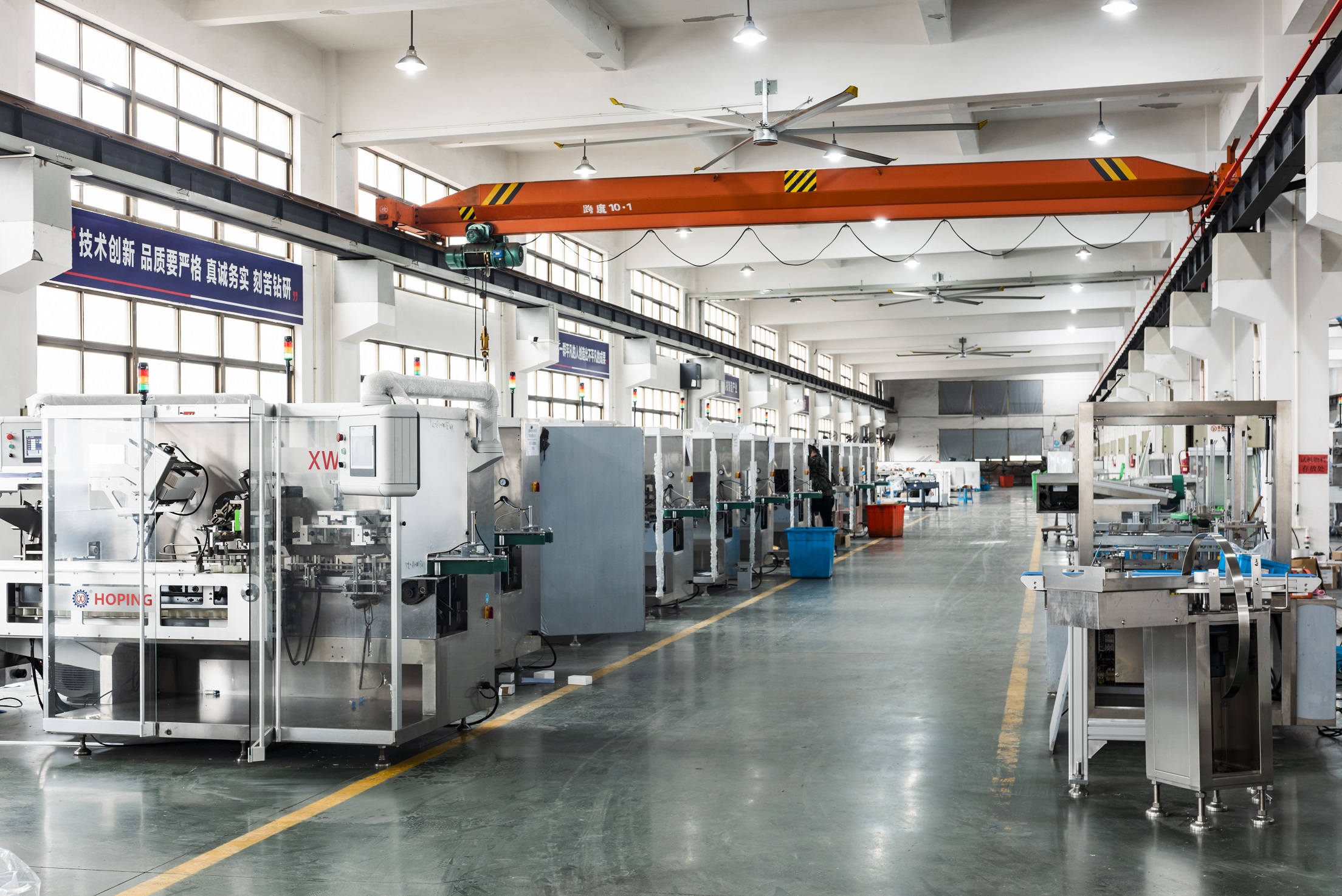
Cartoner workshop at HOPING. A direct blister-cartoner line removes the flow-wrap stage and links blister output to carton output.
When a Direct Blister-Cartoner Line Is Sufficient
- The approved pack is a blister board or blister stack placed directly into a carton, with no pillow pack required.
- The product format, market requirement and customer specification accept direct blister-to-carton handling.
- The output target is driven by blister and carton capacity, and the line does not need a flow-wrapping stage to meet the pack definition.
- The project benefits from a shorter process path, fewer format interfaces and one less packaging material to validate.
- The line is intended to connect to downstream bundling, case packing or palletizing without an intermediate flow wrapper.
Limits of the Direct Architecture
- It does not add a flow-wrap pillow pack around the blister. If that pack is required, the direct line is the wrong architecture.
- It does not provide a separate flow-wrap film interface, flow-wrapper format set or pillow-pack quality check.
- It assumes the carton, leaflet and blister transfer can handle the approved blister format without an intermediate protective pack.
- It should not be selected only because it is simpler; the pack requirement must be confirmed first.
Blister-Flow-Wrapper-Cartoner Line: When a Pillow Pack Is Part of the Pack
A blister-flow-wrapper-cartoner line adds a flow-wrapping stage between blister packing and cartoning. The blister is formed and sealed, then flow-wrapped into a pillow pack, then transferred to the cartoner. This architecture is used when the secondary pack must include a flow-wrapped blister before the carton.
The IXW800 is described as an intelligent fully servo high-speed dual-track blister-flow packer-cartoner integral machine. Its verified facts include maximum capacity up to 600 blisters/min, 600 packs/min and 500 cartons/min, PVC/Cold Alu auto splice, servo-driven independent replenishment, rotary reciprocating flow-wrapper matching technology, high-speed synchronous linkage, Beckhoff controller and CP9315 industrial PC, D3 top-load robotics and rotary manipulator, and GMP-oriented design. The IXW600 is a related configuration with maximum capacity up to 600 blisters/min, 300 packs/min and 300 cartons/min, PVC/Cold Alu auto splice, servo-driven replenishment, rotary reciprocating flow-wrapper matching technology, high-speed synchronous linkage, Beckhoff controller and CP9315 industrial PC, mold-change support and GMP-oriented design.
For a more modular approach, the DPH320H-XW8200-XWZ300II line combines a blister machine, flow wrapper and cartoner. Its listed capacities are about 300-600 blisters/min, 50-200 packs/min and 50-220 cartons/min, with clean compressed air at 0.5-0.7 MPa, air consumption above 0.5 m3/min and 380V 50Hz 36kW. That configuration is useful when the buyer wants a defined three-stage line rather than a single integrated dual-track machine.
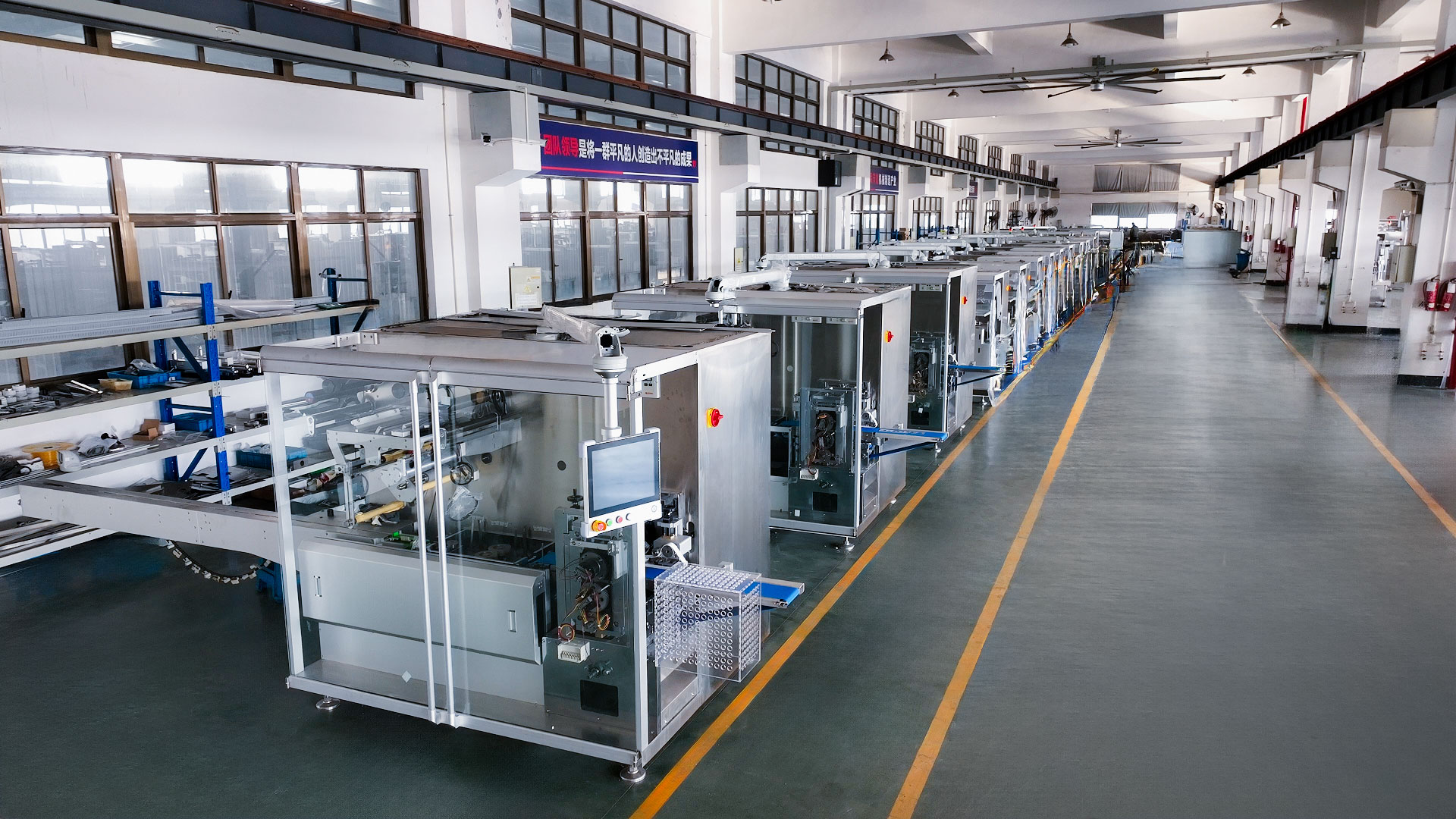
Flow wrapper workshop at HOPING. The flow-wrapping stage is added only when the pack definition requires a pillow pack before cartoning.
When a Blister-Flow-Wrapper-Cartoner Line Is Needed
- The product or market requires a pillow pack around the blister before the carton. The IXW800 and IXW600 are explicitly positioned for solid dosage products that require secondary flow wrapping before cartoning.
- The product is described as moisture-sensitive or flow-wrapped blister packaging, which is within the stated application scope of the IXW800.
- The line must combine blister packing, flow wrapping and cartoning in one linked process rather than using separate offline stages.
- The buyer wants a flow-wrapper interface with rotary reciprocating matching technology, high-speed synchronous linkage and a common control platform.
- The project needs a defined three-stage line with separate blister, flow-pack and cartoning capacities, such as the DPH320H-XW8200-XWZ300II configuration.
Limits of the Flow-Wrapper Architecture
- It adds a flow-wrapping stage, flow-wrap film and a further format interface to the line.
- It adds another set of format parts and changeover checks for the pillow pack.
- The practical line rate is set by the slowest matched stage unless the line is balanced and validated with the actual materials.
- The three-stage DPH320H-XW8200-XWZ300II line lists 36kW, so utility load and line layout should be reviewed during project planning.
- It should not be added as a precaution if the approved pack does not require a pillow pack; that adds cost and complexity without solving a defined pack need.
Step-by-Step Breakdown: How to Choose the Right Architecture
- Define the approved pack, not the preferred machine. Confirm whether the finished pack is a blister board or stack in a carton, or a flow-wrapped blister in a carton. The DHL8005H and IXW800 sit on different sides of that answer.
- Check the product and market requirement. If the product or customer specification calls for a pillow pack, the flow-wrapper architecture is required. If the market accepts direct blister-to-carton, the direct architecture can be evaluated.
- Map the output target across every stage. Compare blister output, flow-pack output and carton output. The DHL8005H is listed at up to 800 blisters/min and 500 cartons/min. The IXW800 is listed at up to 600 blisters/min, 600 packs/min and 500 cartons/min. The IXW600 is listed at up to 600 blisters/min, 300 packs/min and 300 cartons/min. The DPH320H-XW8200-XWZ300II line is listed at about 300-600 blisters/min, 50-200 packs/min and 50-220 cartons/min.
- Confirm format range and changeover logic. Check blister size, carton specification, leaflet format, feeding method and downstream connection. The DHL8005H includes mold-change and preset-memory functions. The IXW600 includes mold-change support. HOPING customization covers blister dimensions, blister materials, quantity per carton, carton specification, leaflet format, coding and inspection method, feeding method, downstream bundling, case-packing and palletizing connection, interface language, electrical component brand and data interface.
- Specify the control and data requirements. The DHL8005H uses a Beckhoff motion controller and CP9315 industrial PC. The IXW800 and IXW600 use a Beckhoff controller and CP9315 industrial PC. The DPH320H-XW8200-XWZ300II line is a servo, electrical and pneumatic configuration. The control platform should be reviewed against the buyer's validation and data-interface expectations.
- Plan the material and acceptance trials. HOPING quality control includes incoming material inspection, key component inspection, assembly inspection, electrical safety check, no-load trial run, material trial, FAT, customer witness acceptance and pre-shipment inspection. Use the material trial to prove the blister, flow-wrap film and carton together, not separately.
- Review footprint and downstream integration. A flow-wrapper line adds a stage and a film interface. A direct line is shorter in process path. Both should be checked against the available room and the connection to bundling, case packing and palletizing.
- Confirm the commercial scope. HOPING offers ODM, OEM and customizable production services. Minimum order quantity is 1 set or 1 complete line. Typical production lead time is 60 to 120 days after technical confirmation, with monthly capacity of 30 to 40 units. Final lead time is subject to model, configuration, project complexity and contract terms.
Use Cases: Where Each Line Fits
| Use case | Preferred architecture | Reason | Relevant HOPING configuration |
|---|---|---|---|
| High-volume standard tablet or capsule blister packed directly into cartons | Automatic blister-cartoner line | The pack does not require a pillow-pack stage, so the line can link blister output directly to cartoning. | DHL8005H |
| Product or market requires a flow-wrapped blister before cartoning | Blister-flow-wrapper-cartoner line | The flow-wrapping stage is part of the approved pack definition, not an optional extra. | IXW800, IXW600 |
| Moisture-sensitive or flow-wrapped blister packaging | Blister-flow-wrapper-cartoner line | The IXW800 application scope includes moisture-sensitive or flow-wrapped blister packaging. | IXW800 |
| Medium-output project with separate blister, flow-pack and cartoning stages | Blister-flow-wrapper-cartoner line | A three-stage line allows each capacity to be reviewed and balanced against the target output. | DPH320H-XW8200-XWZ300II |
| Need to connect cartoning to bundling, case packing or palletizing | Either architecture, based on pack format | The DHL8005H scope includes connection to bundling, case-packing and palletizing equipment. | DHL8005H plus downstream equipment |
| Multi-format pharmaceutical or healthcare project | Either architecture, with format review | Format parts, feeding method and mold-change approach must be confirmed against each blister and carton. | DHL8005H, IXW600, IXW800 |
Comparison Table: DHL8005H vs Blister-Flow-Wrapper-Cartoner Configurations
| Comparison point | Automatic Blister-Cartoner Line: DHL8005H | Blister-Flow-Wrapper-Cartoner Line: IXW800 / IXW600 / DPH320H-XW8200-XWZ300II |
|---|---|---|
| Process path | Blister forming and sealing, transfer, leaflet handling, carton opening, insertion, coding and inspection, downstream connection. | Blister forming and sealing, flow wrapping into a pillow pack, transfer to cartoning, carton opening, insertion and closing. |
| Maximum listed output | Up to 800 blisters/min and 500 cartons/min. | IXW800: up to 600 blisters/min, 600 packs/min and 500 cartons/min. IXW600: up to 600 blisters/min, 300 packs/min and 300 cartons/min. DPH320H-XW8200-XWZ300II: about 300-600 blisters/min, 50-200 packs/min and 50-220 cartons/min. |
| Transfer and handling | D3 intelligent top-loading parallel tracking transfer system; multiple feeding methods; three-channel servo-driven independent replenishment. | IXW800: D3 top-load robotics and rotary manipulator; rotary reciprocating flow-wrapper matching technology; servo-driven independent replenishment. IXW600: rotary reciprocating flow-wrapper matching technology and servo-driven replenishment. |
| Foil and film handling | PVC/Alu foil auto splicing. | IXW800 and IXW600: PVC/Cold Alu auto splice. |
| Control platform | Beckhoff motion controller and CP9315 industrial PC. | IXW800 and IXW600: Beckhoff controller and CP9315 industrial PC. DPH320H-XW8200-XWZ300II: servo, electrical and pneumatic line configuration. |
| Format change | Mold-change and preset-memory functions. | IXW600: mold-change support. Format parts are customized by blister, pillow pack and carton specifications. |
| GMP-oriented design | GMP-oriented line design with stainless steel and aluminum-alloy structure, transparent guarding and servo-driven motion components. | IXW800 and IXW600: GMP-oriented design. The DPH320H-XW8200-XWZ300II line uses stainless steel and aluminum-alloy equipment modules with transparent guarding. |
| Main advantage | Fewer process stages; no flow-wrap film or pillow-pack format interface; direct blister-to-carton linkage. | Adds a pillow pack when the product or market requires it; links blister, flow wrapping and cartoning in one line. |
| Main trade-off | Not suitable if a flow-wrapped blister is part of the approved pack. | Adds a flow-wrapping stage, film, format parts and line-balance checks. |
| Best fit | Direct blister-to-carton solid dosage packaging where no pillow pack is required. | Solid dosage packaging where a flow-wrapped blister is required before cartoning, including moisture-sensitive or flow-wrapped blister applications. |
FAQ
What GMP documentation and acceptance evidence should I expect from a blister-cartoning line supplier?
The final documentation scope should be tied to the technical agreement and the buyer's validation plan. HOPING describes a quality-control sequence that includes incoming material inspection, key component inspection, assembly inspection, electrical safety check, no-load trial run, material trial, FAT, customer witness acceptance and pre-shipment inspection. For the DHL8005H, the line is described as GMP-oriented in design, with stainless steel and aluminum-alloy structure, transparent guarding and servo-driven motion components. The exact documents, records and acceptance criteria should be fixed in the contract and technical agreement before the order.
What can a blister packaging machine OEM customize on these lines?
HOPING offers ODM, OEM and customizable production services. Customization can cover blister dimensions, blister materials, quantity per carton, carton specification, leaflet format, coding and inspection method, feeding method, downstream bundling, case-packing and palletizing connection, interface language, electrical component brand and data interface. The DHL8005H also includes multiple feeding methods, mold-change and preset-memory functions. The minimum order quantity is 1 set or 1 complete line.
What budget factors separate a direct blister-cartoner line from a blister-flow-wrapper-cartoner line?
No price is stated here because machine price depends on configuration. The main budget difference is scope. A flow-wrapper architecture adds a flow-wrapping stage, flow-wrap film, additional format parts, another set of changeover checks and a larger line footprint. The DPH320H-XW8200-XWZ300II line is listed at 36kW, so utility load should be reviewed. A direct blister-cartoner line avoids the flow-wrap stage and its film interface, but it is only appropriate when the approved pack does not require a pillow pack. Compare quotations at the same output basis, format range, control scope, acceptance scope and downstream scope.
Can we run samples on our blister, flow-wrap film and carton before purchase?
Sample testing and material trials are part of the described quality-control sequence. HOPING lists material trial, no-load trial run, FAT before shipment, customer witness acceptance and SAT at the customer site. Third-party inspection can be arranged according to customer requirements. For a flow-wrapper line, the trial should include the blister, flow-wrap film and carton together so that the pillow pack, transfer and cartoning stages are proven as one process.
What lead time should we plan for a customized blister packaging line?
Typical production lead time is 60 to 120 days after technical confirmation. Final lead time is subject to model, configuration, project complexity and contract terms. HOPING lists monthly capacity of 30 to 40 units. To start the review, send the blister drawing, carton style, target output, market requirement and whether a pillow pack is required. HOPING can then confirm the line architecture, sample plan and quotation basis.
Conclusion: Match the Line to the Pack, Then Verify the Numbers
Choose the automatic blister-cartoner line when the approved pack goes directly from blister to carton and no flow-wrapped pillow pack is required. The DHL8005H is a direct example with up to 800 blisters/min and 500 cartons/min, D3 intelligent top-loading parallel tracking transfer, PVC/Alu foil auto splicing, three-channel servo-driven independent replenishment, Beckhoff motion controller and CP9315 industrial PC, mold-change and preset-memory functions, and GMP-oriented line design.
Choose the blister-flow-wrapper-cartoner line when the pillow pack is part of the product or market requirement. The IXW800, IXW600 and DPH320H-XW8200-XWZ300II configurations add the flow-wrapping stage and link it to cartoning. That extra stage is justified when the pack needs it, and it should be avoided when the pack does not.
The final decision should be based on the approved pack format, the output balance across every stage, the format-change scope, the control platform, the acceptance plan and the downstream connection. A line that looks faster on a specification sheet is not necessarily the right line for the carton.
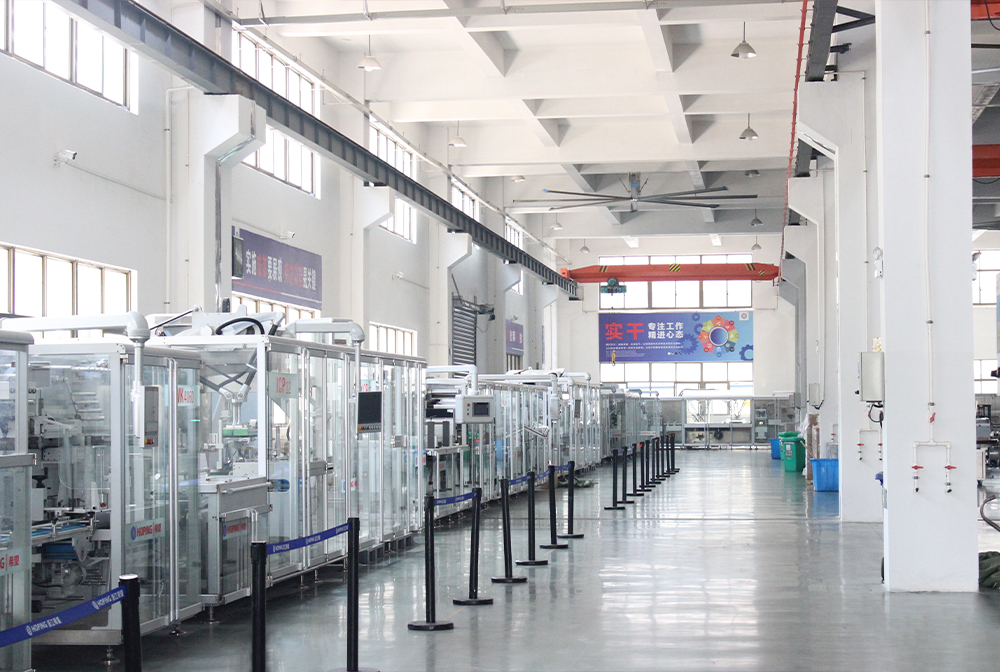
HOPING machine showroom. Use the line review to align architecture, sample plan and acceptance criteria.
Next Step: Review Your Pack Format Before You Compare Quotes
Send HOPING the blister drawing, carton style, target output, market requirement and whether a flow-wrapped pillow pack is required. The review can confirm whether a direct blister-cartoner line or a blister-flow-wrapper-cartoner line is the better starting point.
www.hopingcn.com | Download the HOPING Machinery Catalog
Contact: Monica | monica@xwbj.com | +86 133-5610-5292 | WhatsApp: +86 133-5610-5292
Note: Capacities are maximum listed values and depend on confirmed product format, packaging materials, line configuration and acceptance conditions. Final scope, documentation and lead time are subject to the technical agreement and contract.
Have Questions or Need More Details?
Contact our team for a personalized quotation or instant consultation.
Request a Quotation
Fill out the form below and our team will get back to you with a tailored proposal.
WhatsApp Direct Chat
Prefer to chat in real-time? Message us on WhatsApp for instant assistance & quick answers.
- Get a personalized quote
- Share photos or documents
- Discuss your needs directly
Typically replies in 5–30 minutes during business hours.