
Understanding Region-Specific Pharma Packaging Rules for Blister Lines
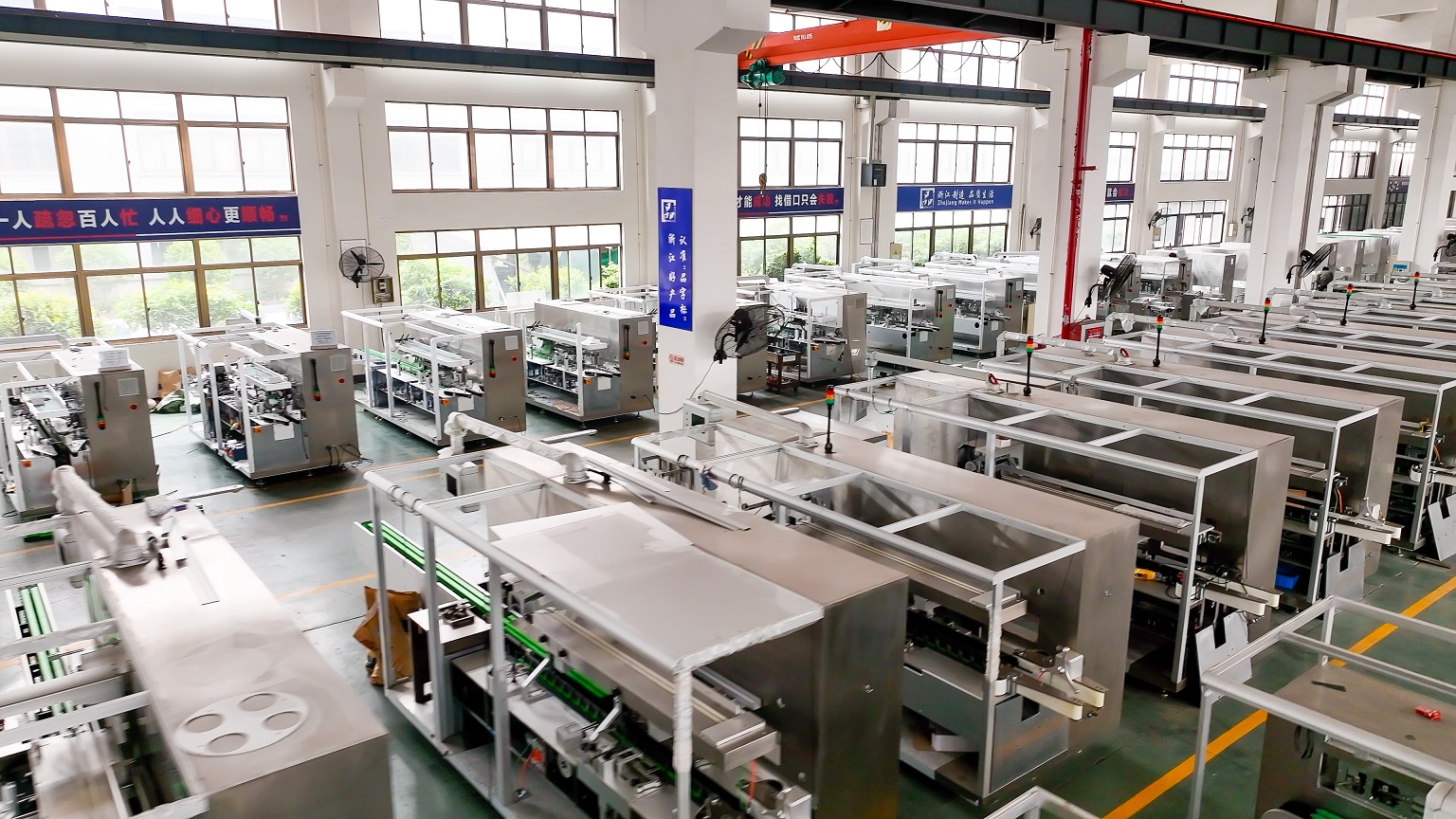
Cover: an integrated blister-cartoning line is assembled and dry-run before shipment. The machine is the same product everywhere; the approval file that travels with it is not.
A blister-cartoning line is approved twice: once as a machine, and once as part of a validated pharmaceutical packaging process. The hardware does not change when the destination changes. The documentation, the acceptance evidence and the parameter controls do.
Buyers planning a pharmaceutical packaging machine project usually spend most of their evaluation time on output rate, servo axes and carton formats. That is the engineering side, and it is well documented. The side that delays projects is the approval side: which contact-part materials, tooling records, parameter controls and acceptance evidence a destination market expects to see, and how those expectations are written into a technical agreement before the line is built.
This guide is written for buyers at the decision and execution stage who are deploying a blister cartoning line, a secondary packaging line or a turnkey pharmaceutical packaging line into markets where the rules are set region by region. It does not summarize any single national regulation, because those are published by the authorities themselves. It explains the transferable method: map the rules first, then document the machine against them.
Problem Definition: The Machine Is Fixed, the Rules Are Not
A blister packaging machine sits between two different rule sets. The first set governs the medicinal product and its primary package: blister cavity geometry, forming and sealing quality, foil selection, printed carton and leaflet. The second set governs the equipment itself: guarding, control architecture, materials and how the machine may be operated safely in a pharmaceutical factory. The first set changes with the marketing authorization market. The second set changes with the installation market. A line installed in one region and later re-sited to another may need both sets re-examined.
Three practical consequences follow for any export project.
- Contact parts and tooling must be describable in writing. If the technical agreement lists only output rate and carton size, the buyer has no document to place in the validation file when a reviewer asks what touches the product and how it is cleaned.
- Parameter control must be reproducible, not operator-dependent. Where format settings live only in an operator's memory, batch-to-batch consistency becomes a human variable, and human variables are the hardest kind to defend.
- Acceptance evidence must be planned before shipment. A factory acceptance test staged against an agreed technical agreement is far easier to defend than a test improvised after the crates arrive.
The gap is rarely technical incompetence on either side. It is a documentation gap: the supplier documents the machine, the buyer validates the process, and nobody owns the interface. In well-run projects the interface is owned by the technical agreement.
Industry Background: A Large Market With Uneven Regional Rules
Pharmaceutical packaging equipment is a substantial global market, and its published size varies depending on whether secondary and end-of-line equipment is counted in the same definition. Each figure below is attributed to its publishing source rather than blended into a single blended estimate.
- SkyQuest Technology values the global pharmaceutical packaging equipment market at approximately USD 10.71 billion in 2024.
- Custom Market Insights projects the pharmaceutical blister packaging machine market to reach USD 2.57 billion by 2025, with a CAGR of 2.8%.
- Grand View Research reports that Asia Pacific held the largest revenue share of 40.7% in the pharmaceutical packaging equipment market in 2025.
- Fortune Business Insights values the pharmaceutical cartoning machinery segment at USD 1.46 billion in 2024.
- A market intelligence report places the combined share of Uhlmann, IMA and Marchesini at approximately 29% of the pharmaceutical blister packaging machine market.
Demand concentration matters to buyers because it shapes how suppliers document compliance. Where a market is served by a small number of long-established brands, documentation practice has been standardized around those brands for years. Where capacity is added quickly against regional demand, documentation quality becomes the differentiator between suppliers that look similar on a specification sheet.
On the rule side, two frameworks appear repeatedly in buyer checklists. ISO 15378 integrates GMP requirements for primary packaging materials, which is why it appears in packaging-material discussions rather than only in machine discussions. In the European Union, pharmaceutical equipment safety is governed by the Machinery Directive 2006/42/EC together with the EN 415 series for packaging machines. Both belong in an approval file; neither replaces the destination authority's own requirements.

Regional demand is uneven, and the compliance questions buyers ask differ from market to market: primary packaging material rules on one side, machinery safety rules on the other.
Detailed Solution: How a Blister-Cartoning Line Gets Documented
Zhejiang Hoping Machinery Co., Ltd. (Hoping Machinery) is a pharmaceutical packing machinery manufacturer based in Ruian City, Zhejiang Province, China, established in 2001. The company builds blister packaging machines, cartoners, case packers and end-of-line packaging equipment, and supplies integrated blister-cartoning lines. Hoping reports 300 employees, a 28,800 m² facility, an annual output of 500 units, a 56-engineer R&D team and a 25% export ratio, with projects in Southeast Asia, the Middle East, Eastern Europe, South America and Africa. The company holds CE and ISO 9001 / ISO 14001 certifications, along with 26 invention patents, 70 utility patents, 4 appearance patents, 10 PCT-protected filings and 28 software copyrights.
GMP orientation of contact parts: documented, not asserted
The argument that satisfies most reviewers is short: what touches the product, what it is made of, how it is cleaned, and where that is written down. Blister-cartoning lines are built with stainless steel and aluminum alloy contact parts and tooling selected for GMP-oriented cleaning and product-contact behaviour, and the specification of those parts is carried into the project technical agreement rather than left to a general catalogue description. The distinction matters at audit. A catalogue says GMP design. A technical agreement says which part, which material, which surface condition, and which drawing revision.
For a buyer working across two regions, this is the single most useful documentation habit: request that contact-part and tooling specifications be issued as controlled annexes to the technical agreement, so the same annex can be reused when the line is reviewed under a different authority's file structure.
Preset memory and parameter governance as compliance evidence
Reproducibility is the other half of the approval file. Preset-memory functions allow format recipes, including blister parameters, cartoning parameters and coding settings, to be stored, recalled and locked, so a validated setup can be reproduced on the next shift instead of re-entered by hand. Hoping's control concept supports centralized control, modular stations, alarm indication and parameter management, with key-parameter locking and fault recording available as part of the architecture. In an approval conversation this should be described as change control rather than as a convenience feature: who may change a parameter, what evidence records the change, and how the previous validated state is restored.
Decision rule for buyers: if a supplier cannot explain, in one sentence, who can change a locked parameter and how that change is recorded, the parameter-governance section of your validation file is incomplete. This is a documentation question, not a machine-speed question.
What the integrated line covers, and why that affects handling risk
The representative DHL1000/5H model reaches up to 1,000 blisters per minute and 500 cartons per minute; actual output depends on product format, quantity per carton, materials and process conditions. Integration covers blister packaging, blister transfer, leaflet handling, carton opening, insertion, inspection and rejection, and downstream connection within one automated process. Compared with a traditional arrangement of a blister machine plus manual transfer plus a standalone cartoner, this reduces manual intervention and intermediate handling, which is directly relevant when a region's review focuses on contamination and mix-up risk rather than on throughput.
Risk controls that belong in the technical file
Export projects are usually reviewed against a familiar list of risk categories: poor blister forming or sealing; missing, wrong or incomplete product feeding; missing leaflet; carton jam; coding or date printing error; foreign matter or contamination risk; downtime during high-speed operation; and delivery and installation risks on export projects. The corresponding controls include sensor monitoring, vision or checkweighing inspection where configured, missing-product alarm, automatic stop, automatic rejection, key-parameter locking, fault records and mechanical safety protection, supported by FAT and SAT acceptance and SOP training.
On the project side, samples and packaging materials are confirmed at the early stage, the solution is designed around the actual blister and carton formats, and no-load plus material tests are completed before shipment. Installation, commissioning, training, spare parts and remote technical support are provided, and customer witness acceptance can be arranged for key projects. These are the items that turn a machine specification into a reviewable project record.
Step-by-Step: Building a Region-Ready Approval File
The sequence below is the working order that keeps a multi-region deployment from stalling at the validation stage. Steps one to four happen before the purchase order; steps five to eight happen before final payment.
- Map the destination rules before the RFQ. Identify the medicines authority and the machinery-safety framework that apply in the installation country, and record the mapping in a single index document. Everything that follows is filed against that index.
- Fix packaging formats and materials first. Blister foil type (including alu-alu constructions), cavity dimensions, carton board, leaflet and coding requirements. This is why sample and packaging material confirmation belongs at the early project stage: the line is designed around formats, not around a generic specification.
- Write the technical agreement around contact parts and tooling. Materials, surface condition, drawings and cleaning assumptions become controlled annexes rather than narrative promises.
- Define parameter governance. Decide which parameters are preset and locked, who is authorised to change them, and how the change is recorded.
- Agree the acceptance chain in writing. Technical agreement confirmation, sample testing, FAT before shipment, SAT at the customer site. Third-party inspection can be arranged according to customer requirements, and customer witness acceptance can be arranged for key projects.
- Plan the documentation handover as a deliverable. Machine documentation, drawings, test records and training material should be listed in the agreement, not requested after arrival.
- Commission and validate on site. Installation, commissioning, operator training, spare parts and remote technical support are part of the project scope, not optional extras.
- Convert handover into a long-term arrangement. Preventive maintenance intervals, spare-parts planning, remote diagnostics and a named technical contact are what determine whether the line is still easy to document in year five.
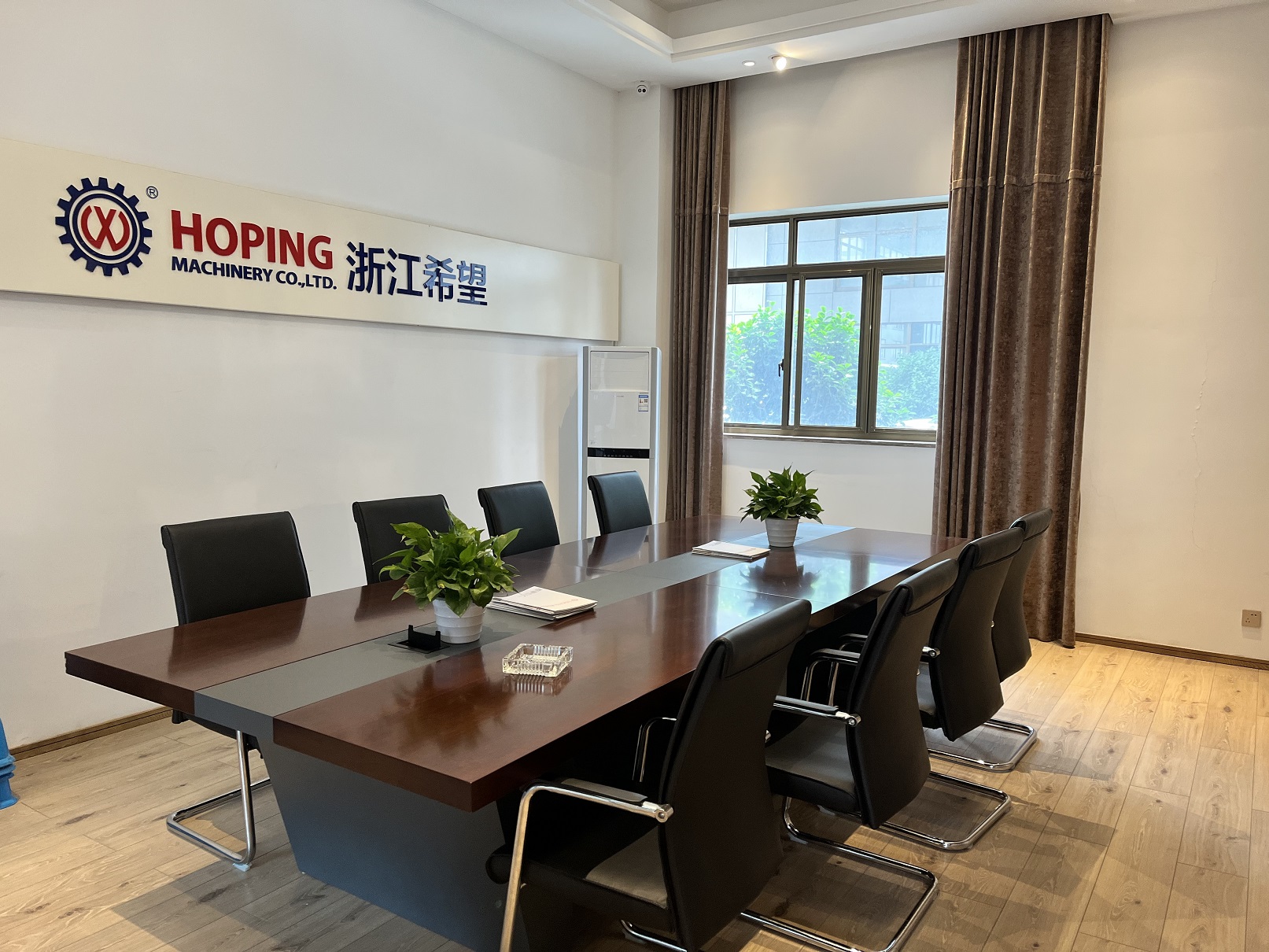
Step 3 and step 5 in practice: the technical agreement is where contact-part materials, tooling drawings, parameter governance and acceptance criteria are fixed before the line is built.
Use Cases: Three Deployment Patterns
1. A line bound for a market covered by EU machinery safety rules
A buyer installing in this environment starts with two references: the Machinery Directive 2006/42/EC and the EN 415 series for packaging machines. Those address the machine as equipment. The medicinal-product side of the file then needs its own content, which is where the technical agreement earns its value: contact-part and tooling annexes, format specifications, parameter governance and the acceptance record. The practical error to avoid is treating the machinery document set as the whole submission and discovering the product-contact documentation gap only when the packaging process is reviewed.
2. Deployment in Southeast Asia or the Middle East
These are two of Hoping's listed export regions, and the binding constraint there is often material variability rather than line speed. Humidity and transport conditions make seal quality and moisture protection more prominent, which is why alu-alu blister formats appear frequently in project discussions for moisture-sensitive products. The documentation approach stays the same: confirm sample materials early, run no-load and material tests before shipment, and carry the FAT record into the local file rather than reconstructing it from memory on site.
3. A multi-format producer running tablets, capsules and alu-alu packs on one line
Here the operational risk shifts to changeover. Preset memory reduces that risk by allowing a validated recipe to be recalled rather than reconstructed, but it also creates a new obligation: a recipe released from memory must be verified for the current material batch. The working rule that keeps both regions and auditors satisfied is a recipe release step, written into the SOP, that treats a recalled preset as a starting point requiring confirmation rather than as a finished setup.
Comparison: Reference Frameworks and Line Configurations
The first table lists the published frameworks buyers most often map against, and where each belongs in an approval file. It deliberately excludes country-specific regulations, which are published by the destination authorities and should be confirmed from those sources.
| Framework | Region / scope | What it addresses (as published) | Where it belongs in the file |
|---|---|---|---|
| ISO 15378 | Global standard | Integrates GMP requirements for primary packaging materials | Primary packaging material and package-related sections |
| Machinery Directive 2006/42/EC | European Union | Safety of pharmaceutical equipment as machinery | Equipment safety and conformity section |
| EN 415 series | European Union | Safety of packaging machines | Machine-level safety design, guarding and control |
| Destination authority requirements | Installation country | Not summarized here; published by the authority itself | Country-specific addendum, mapped before the RFQ |
The second table compares the integrated line configuration with the conventional sequence of separate machines, using the documented characteristics of the integrated approach.
| Dimension | Integrated blister-cartoning line (DHL1000/5H representative) | Blister machine + manual transfer + standalone cartoner |
|---|---|---|
| Process scope | Blister packaging, blister transfer, leaflet handling, carton opening, insertion, inspection / rejection and downstream connection in one automated process | Blister machine and cartoner as separate stations, with manual transfer between them |
| Representative output | Up to 1,000 blisters/min and 500 cartons/min; actual output depends on product format, quantity per carton, materials and process conditions | Not stated as an integrated figure; the arrangement is a low-speed semi-automatic or conventional non-full-servo alternative |
| Manual intervention | Reduced, because intermediate handling is automated | Higher, because transfer between stations is manual |
| Cost profile | Initial investment usually higher than standalone or semi-automatic equipment; helps reduce labour, transfer, management and quality-risk costs in large-scale continuous production | Lower initial investment; operating cost structure driven by labour and transfer handling |
| Maintenance | Centralized control, modular stations, alarm indication and parameter management support routine maintenance; operator training, spare-parts management and preventive maintenance remain important | Maintenance planning is split across separate machines |
| Best fit | Large-scale solid dosage packaging, high-capacity workshops, production requiring reduced manual contact and improved line efficiency, multi-format lines requiring stable operation | Lower-volume or less automated production where manual transfer is acceptable |
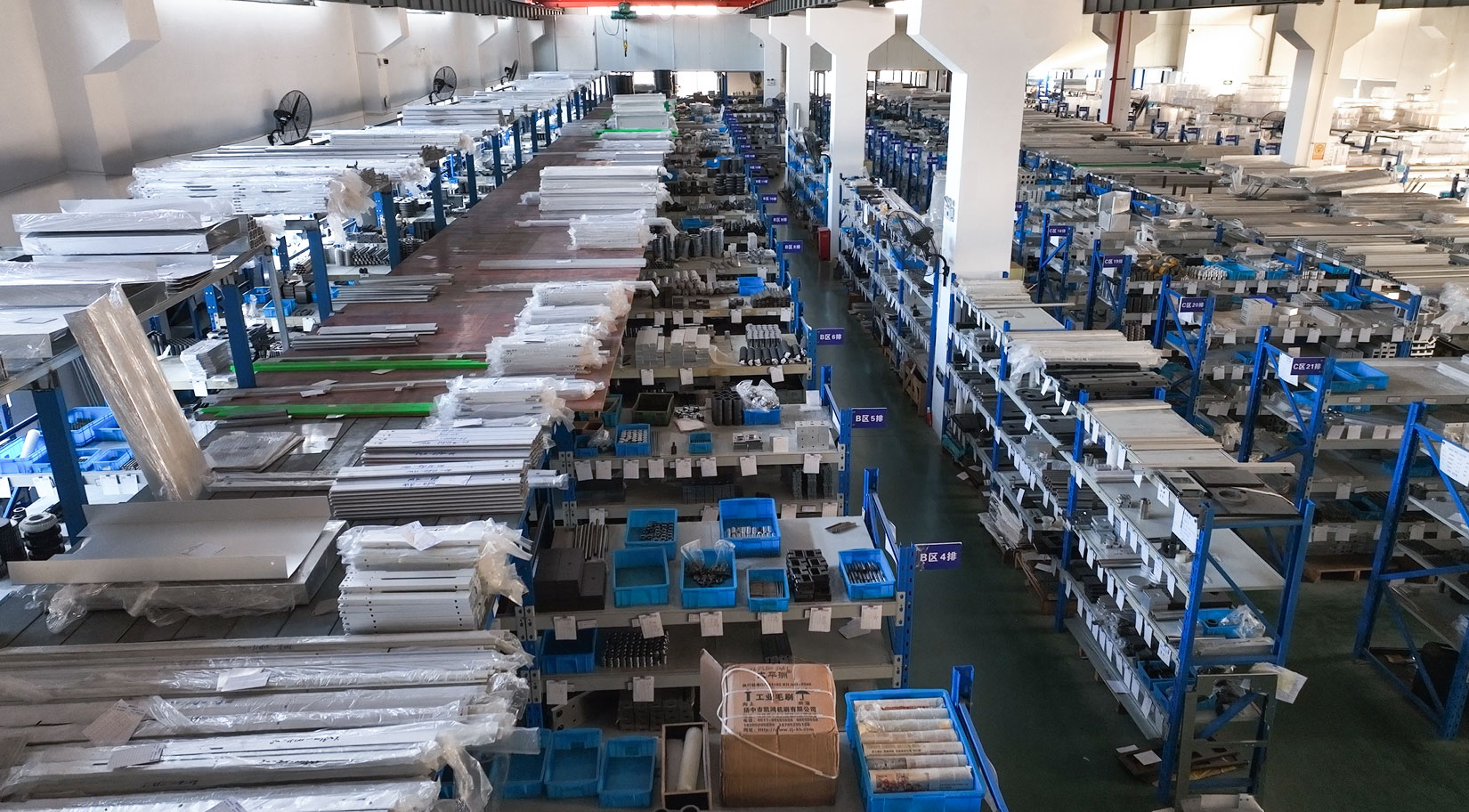
Long-term supply is a warehouse question too: spare-parts planning and shipment staging determine how quickly a line can be restored after a fault.
Frequently Asked Questions
1. Which compliance documents should accompany a blister-cartoning line into a regulated region?
The project-level documents are technical agreement confirmation, sample testing records, FAT before shipment and SAT at the customer site; third-party inspection can be arranged according to customer requirements, and customer witness acceptance can be arranged for key projects. Alongside these sit the standards that buyers most often map against: ISO 15378, which integrates GMP requirements for primary packaging materials, and, for EU installations, the Machinery Directive 2006/42/EC with the EN 415 series for packaging machines. Country-specific requirements should always be confirmed with the destination authority itself, because those rules are published and revised by that authority.
2. Can one blister-cartoning line serve more than one region's format requirements?
Yes, because the machine is defined by format rather than by geography. Integration covers blister packaging, blister transfer, leaflet handling, carton opening, insertion, inspection and rejection, and downstream connection, with centralized control, modular stations, alarm indication and parameter management. Preset-memory functions allow format recipes to be stored, recalled and locked, which is what makes a validated setup repeatable across shifts and formats. Output on the representative DHL1000/5H reaches up to 1,000 blisters per minute and 500 cartons per minute, with actual results depending on product format, quantity per carton, materials and process conditions.
3. What do the purchasing terms look like for an export blister-cartoning project?
The minimum order quantity is 1 set or 1 complete line. Delivery terms are EXW Ruian / Wenzhou, FOB Ningbo or Shanghai, or CIF / CFR destination port, with final terms subject to contract and customer country requirements. Payment terms are subject to quotation, contract value, customer credit, project scope, destination market and the final project agreement. When budgeting, include the acceptance chain (sample testing, FAT, SAT and optional third-party inspection) and the commissioning scope (installation, training and spare parts) rather than the equipment price alone. An integrated line usually carries a higher initial investment than standalone or semi-automatic equipment, but it helps reduce labour, transfer, management and quality-risk costs in large-scale continuous production.
4. Can we test our own blister foil and cartons before shipment?
Yes. Samples and packaging materials are confirmed at the early project stage, the solution is designed around the actual blister and carton formats, and no-load plus material tests are completed before shipment. Customer witness acceptance can be arranged for key projects, which allows the buyer's own team or a nominated inspector to observe the tests on the line before it leaves the factory.
5. How do we evaluate a long-term pharmaceutical packaging machine supply partner in China, and what is the typical lead time?
Typical production lead time is 60 to 120 days after technical confirmation, with a monthly production capacity of 30 to 40 units and a minimum order quantity of 1 set or 1 complete line. For the partnership question, the useful test is forward-looking rather than historical: will this supplier still be able to document your line in year five, when your destination market or format mix has changed? That means checking documentation practice, spare-parts availability, remote technical support and training capability. Hoping Machinery, established in 2001, reports 300 employees, a 28,800 m² facility, 500 units of annual output and a 56-engineer R&D team, with 26 invention patents, 70 utility patents, 4 appearance patents, 10 PCT-protected filings and 28 software copyrights, and holds CE and ISO 9001 / ISO 14001 certifications.
Conclusion: Document the Line Before You Ship It
Region-specific pharma packaging rules do not change what a blister-cartoning line does. They change what you must be able to prove about it. The practical discipline is to map the destination rules before the RFQ, fix formats and materials early, write contact-part materials and tooling into a controlled technical agreement, define who can change a locked parameter, and agree the acceptance chain before the machine is built. Buyers who do this once end up with a reusable approval template for every subsequent region they enter.
Hoping Machinery supplies integrated blister-cartoning lines and end-of-line packaging equipment for pharmaceutical production, supported from Ruian City, Zhejiang Province, China, with installation, commissioning, training, spare parts and remote technical support. Project documentation, contact-part annexes and acceptance arrangements are agreed per project, per destination market.
Next step: send your blister and carton formats, your destination market and your target output, and the Hoping team will respond with the technical agreement structure, contact-part documentation list and a project timeline for your blister-cartoning line.
Download the full Hoping Machinery catalogue: Hoping Machinery Catalog (PDF)
Website: www.hopingcn.com | Email: monica@xwbj.com | Tel / WhatsApp: +86 133-5610-5292
Have Questions or Need More Details?
Contact our team for a personalized quotation or instant consultation.
Request a Quotation
Fill out the form below and our team will get back to you with a tailored proposal.
WhatsApp Direct Chat
Prefer to chat in real-time? Message us on WhatsApp for instant assistance & quick answers.
- Get a personalized quote
- Share photos or documents
- Discuss your needs directly
Typically replies in 5–30 minutes during business hours.