
Best Blister-Cartoning Line Setups for High-Volume Tablet Production
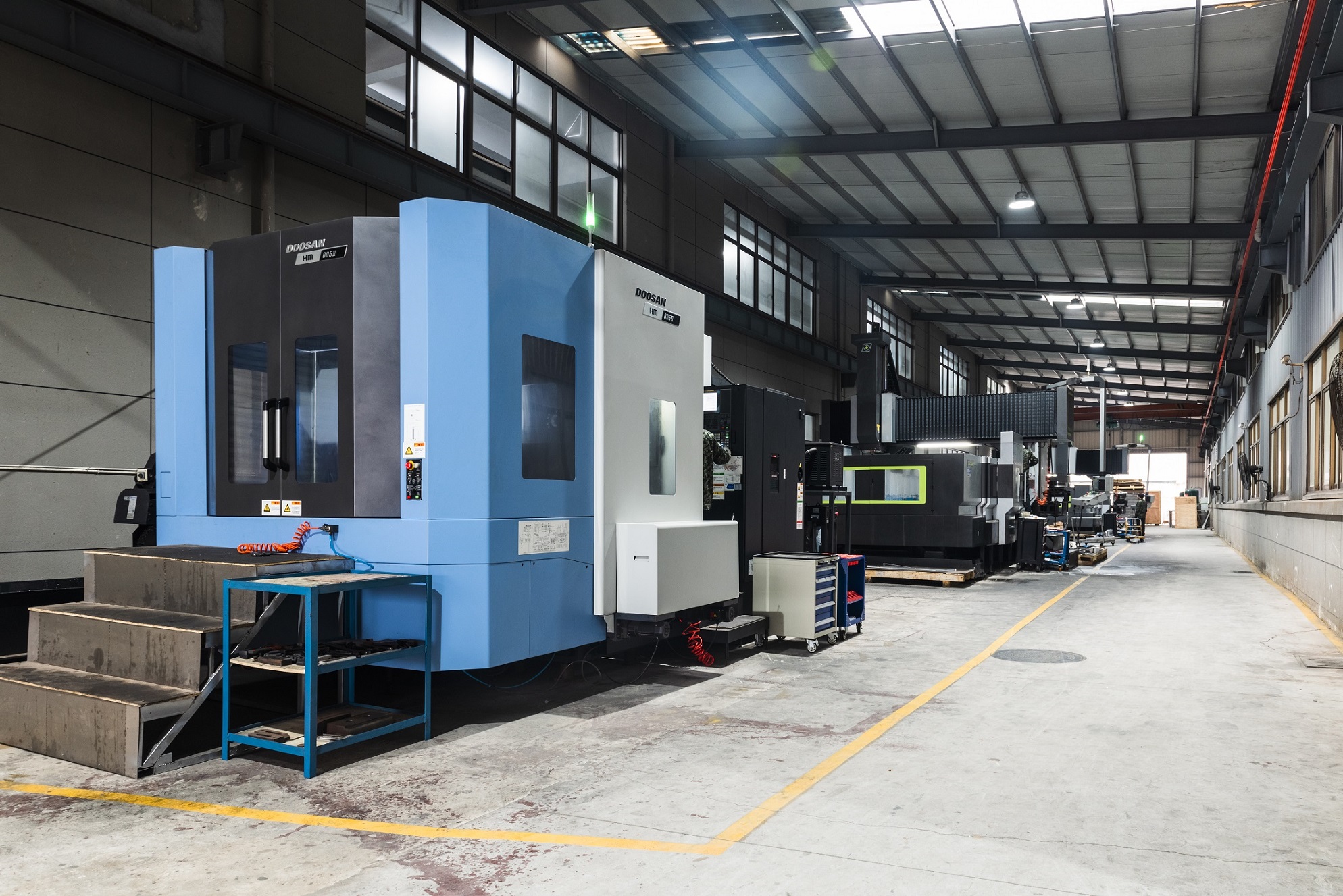
Gantry machining capacity upstream of assembly — the step that determines how a pharmaceutical packaging machine behaves once it runs at full speed.
High-volume tablet production rewards one specific kind of setup: an integrated, fully servo-driven blister-cartoning line that carries blister forming, blister transfer, leaflet handling, carton opening, insertion, inspection/rejection and downstream connection inside a single automated process. The representative configuration in that class — the DHL1000/5H — is rated for up to 1,000 blisters/min and 500 cartons/min, with actual output depending on product format, quantity per carton, materials and process conditions.
That number is the benchmark, not the answer. Tablets dominate a production schedule in different ways. Some plants run a single tablet format around the clock; others rotate dozens of formats across three shifts and expect changeover time to disappear into the shift plan. "Best" therefore depends on how much integration, automation and downstream capacity a specific schedule profile can actually absorb — and on whether the supplier behind the line can still support it in year three.
This guide ranks five blister-cartoning line setups by their fit for high-volume tablet production, states the trade-offs inside each, and then walks through the execution details — format definition, sample validation, acceptance testing, lead time and long-term service — that decide whether the line keeps its rated output after commissioning.
Defining the Problem: Where High-Volume Tablet Schedules Actually Lose Output
High-volume tablet lines rarely fail in the sealing station alone. They fall short of a rated figure in predictable places: poor blister forming or sealing, missing, wrong or incomplete product feeding, missing leaflets, carton jams, coding and date-printing errors, foreign matter or contamination risk, and unplanned downtime during high-speed operation. On a short batch run each of those events is an inconvenience. On a three-shift tablet schedule, each one is a capacity loss that repeats.
The common thread is the handoff between the blister stage and the carton stage. When blisters are collected, moved and loaded by hand, the line inherits the variability of that step: throughput tracks operator attention, product contact increases, and quality risk grows as volumes rise. The bigger the volume, the more expensive the manual step becomes — not because it is slow in isolation, but because it is inconsistent at exactly the moment consistency matters most.
Control architecture compounds the problem. A conventional mechanical link between blister and cartoner transmits motion but not intelligence; the two stages cannot compensate for each other in a stable way, so synchronization has to be re-tuned mechanically whenever format or material changes. A fully servo-driven architecture lets motion synchronization be tuned, monitored and locked, which is what a high-volume tablet schedule needs: steady rhythm, predictable stops, and parameters that stay where they were set instead of drifting back toward whatever the machine finds easiest.
A third loss point sits downstream. Inspection, rejection and coding are frequently treated as add-ons, so a line reaches its rated speed only in configurations that a buyer never actually ordered. For tablet production, defect detection and correct date coding are requirements of the flow, not optional equipment.
Industry Background: Why Integrated Capacity Keeps Expanding
Pharmaceutical packaging is a large and steadily expanding equipment category. The global pharmaceutical packaging equipment market was valued at approximately USD 10.71 billion in 2024, according to SkyQuest Technology. Inside it, the pharmaceutical blister packaging machine segment is projected to reach USD 2.57 billion by 2025, growing at a CAGR of 2.8% (Custom Market Insights), while the pharmaceutical cartoning machinery segment was valued at USD 1.46 billion in 2024 (Fortune Business Insights). Asia Pacific held the largest revenue share of 40.7% in the pharmaceutical packaging equipment market in 2025 (Grand View Research).
Two consequences follow for anyone specifying a tablet line. First, capacity decisions at tablet-heavy plants are now made inside a market where integrated blister-cartoning lines are mainstream rather than niche. Second, the supplier landscape is concentrated at the top but far from closed: the top three players — Uhlmann, IMA and Marchesini — collectively hold approximately 29% of the pharmaceutical blister packaging machine market, leaving a long tail of suppliers competing on configuration depth, integration scope and long-term service rather than on brand alone.
Compliance shapes the same decision. Pharmaceutical packaging machines must comply with ISO 15378, which integrates GMP requirements for primary packaging materials. EU pharmaceutical equipment safety is governed by the Machinery Directive 2006/42/EC together with the EN 415 series for packaging machines. For a high-volume tablet line these are not paperwork items — they determine which construction details, materials, documentation and validation evidence a supplier must be able to provide, and they surface during FAT and SAT rather than at quotation stage.
The Five Setups, Ranked for High-Volume Tablet Production
Ranking here is by fit for schedules where tablets dominate. Setup 1 is the configuration most plants should benchmark everything else against. The later entries are not automatically worse machines — they are valid for narrower volume bands, and choosing one deliberately is different from arriving there by default.
1. Fully Integrated Full-Servo Blister-Cartoning Line
This is the setup that fits high-volume tablet production most directly. It integrates blister packaging, blister transfer, leaflet handling, carton opening, insertion, inspection/rejection and downstream connection into one automated process, reducing manual intervention and intermediate handling at every point where product would otherwise be exposed.
The reference configuration in this class, the DHL1000/5H, is rated for up to 1,000 blisters/min and 500 cartons/min. The fully servo drive improves motion synchronization and operating efficiency; actual energy consumption should be measured on site against real output, running hours and configuration rather than assumed from a datasheet.
Where it fits: large-scale solid dosage pharmaceutical packaging, high-capacity workshops, production that must reduce manual contact and improve line efficiency, and multi-format packaging lines that have to run stably rather than only at peak once.
Where the limits are: initial investment is usually higher than standalone or semi-automatic equipment. That premium has to be justified by the labor, transfer, management and quality-risk costs it removes in large-scale continuous production. On a genuine high-volume tablet schedule those costs are continuous; on a low-volume or intermittent schedule they are not, and the premium is harder to earn back.
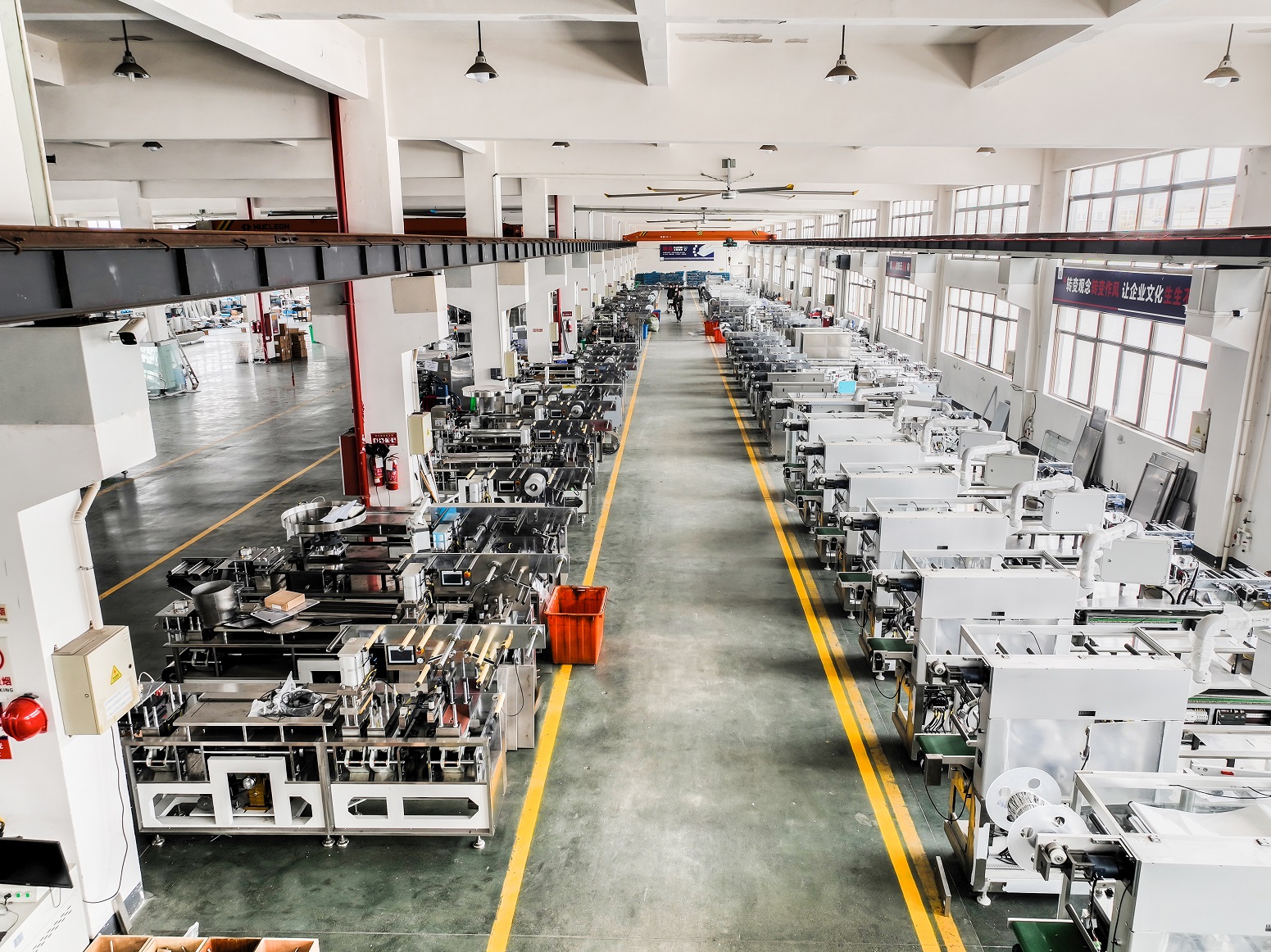
Blister stage assembly — forming, sealing and feeding sub-assemblies that determine stable output at the front of an integrated line.
2. Integrated Line Extended with Case Packing and End-of-Line Equipment
For tablet plants that also carry heavy secondary and tertiary packing loads, the integrated blister-cartoning core can be extended downstream into case packing and end-of-line packaging. The logic is identical: fewer handoffs, fewer points where product sits in open trays, and fewer places where output can silently degrade without anyone noticing until the shift report.
This setup suits plants where the cartoner is not the last machine in the flow and where the blister-cartoning stage must hand off to downstream equipment without creating a buffer that hides upstream losses. It also suits projects where the case packing machine and end-of-line packaging machine are specified in the same technical agreement as the blister and carton stages, so interface responsibility sits with one supplier.
The trade-off is project scope. A longer line means more stations to validate, more interfaces to define, and a more demanding installation and commissioning sequence. Extending the line later is possible, but it is a second project with its own acceptance cycle rather than a continuation of the first.
3. Non-Full-Servo Linked Blister-Cartoning Line
A linked line built on a conventional, non-full-servo architecture is a real option for mid-volume tablet work. It keeps blister and carton stages connected, which is already structurally better than manual transfer, but it gives up the motion flexibility of a fully servo design. Synchronization between stations is coarser, and compensating for format or material variation takes more mechanical adjustment and more operator judgment.
For a plant whose tablet volume is moderate and genuinely stable, this can be a rational cost position. For a plant where tablets dominate the schedule across many formats, the servo premium usually repays itself — not in a single headline number, but in reduced downtime and fewer manual corrections per shift, month after month.
4. Semi-Automatic Low-Speed Blister-Cartoning Setup
Semi-automatic, low-speed configurations remain appropriate for small batches, launch volumes and pilot production. They are easier to place, easier to start, and consistent with a cautious first step into automated blister-cartoning.
The constraint is scale. Because part of the cycle depends on the operator, output varies with attention and shift, and manual contact between stages is higher. When tablet volume grows past the point where the line runs continuously, this setup stops being a compromise and becomes the bottleneck — which is why scale-up should be planned before the ceiling is reached, not after output has already flattened.
5. Separate Blister Machine + Manual Transfer + Standalone Cartoner
The conventional arrangement — a blister machine, manual transfer and a standalone cartoner — is the historical baseline. Each machine can run independently, and it requires the least integration engineering.
It is also the weakest fit for high-volume tablet production. Manual transfer introduces variability at the highest-volume point in the flow, increases product contact, and makes losses hard to attribute when output falls short: the blister machine, the transfer step and the cartoner can each look acceptable in isolation while the line as a whole underperforms. For a schedule where tablets dominate, the ceiling is structural rather than operational — no amount of operator skill removes the handoff itself.
Setup Comparison at a Glance
The table below compares the five setups on the dimensions that decide a high-volume tablet project. Where a figure is not established for a setup, it is left unstated rather than estimated.
| Attribute | Full-servo integrated line (DHL1000/5H class) | Non-full-servo linked line | Semi-automatic low-speed setup | Separate machines + manual transfer |
|---|---|---|---|---|
| Steps inside one automated process | Blister forming, blister transfer, leaflet handling, carton opening, insertion, inspection/rejection, downstream connection | Partial integration | Partial, low speed | None — steps remain separate |
| Drive architecture | Fully servo | Conventional, non-full-servo | Partly automated | Manual transfer between stages |
| Rated blister output | Up to 1,000 blisters/min | Not established | Not established | Not established |
| Rated carton output | Up to 500 cartons/min | Not established | Not established | Not established |
| Manual intervention | Reduced | Higher | High | Highest |
| Cost profile | Higher initial investment; lower labor, transfer, management and quality-risk cost in large-scale continuous production | Lower initial investment | Lower initial investment | Lowest integration cost |
| Strongest fit | Large-scale solid dosage, high-capacity workshops, multi-format lines | Stable mid-volume production | Small batches and pilot production | Very low volume or legacy layouts |
Step-by-Step: Moving from Configuration Decision to Line Execution
The buyer stage for a high-volume tablet line is decision through execution. The sequence below reflects that — configuration is settled first, then validated, then accepted.
- Profile the tablet schedule. SKU count, batch sizes, shift pattern, changeover frequency and quantity per carton. The ranking above only becomes a decision once these are written down.
- Define the blister and carton formats. Blister layout, foil and film materials, carton dimensions and board grade. Format is the physical constraint that limits what any setup can run, regardless of headline speed.
- Fix the integration scope. Decide where the automated flow ends — at the carton, at the case, or at the pallet. Everything beyond that boundary is a separate project with its own acceptance.
- Confirm the drive and control architecture. Fully servo or conventional, and which control platform the plant's own maintenance team can support across the equipment's working life.
- Specify inspection and rejection as requirements. Sensor monitoring, vision or checkweighing inspection where configured, missing-product alarms, automatic stop and automatic rejection.
- Require key-parameter locking and fault records. These keep settings consistent across shifts and make output loss diagnosable instead of anecdotal.
- Validate with samples and materials. Confirm samples and packaging materials at the early project stage; design the solution around the actual blister and carton formats; run no-load and material tests before shipment.
- Accept the line formally. Acceptance criteria typically cover technical agreement confirmation, sample testing, FAT before shipment, SAT at the customer site, and third-party inspection where requested. Customer witness acceptance can be arranged for key projects.
- Commission, train and document. Installation, commissioning and operator training, together with SOPs and spare-parts lists, belong to execution rather than after-sales extras.
- Schedule preventive maintenance before start-up, not after the first stoppage. Centralized control, modular stations, alarm indication and parameter management support routine maintenance, but operator training, spare-parts management and preventive maintenance remain essential.
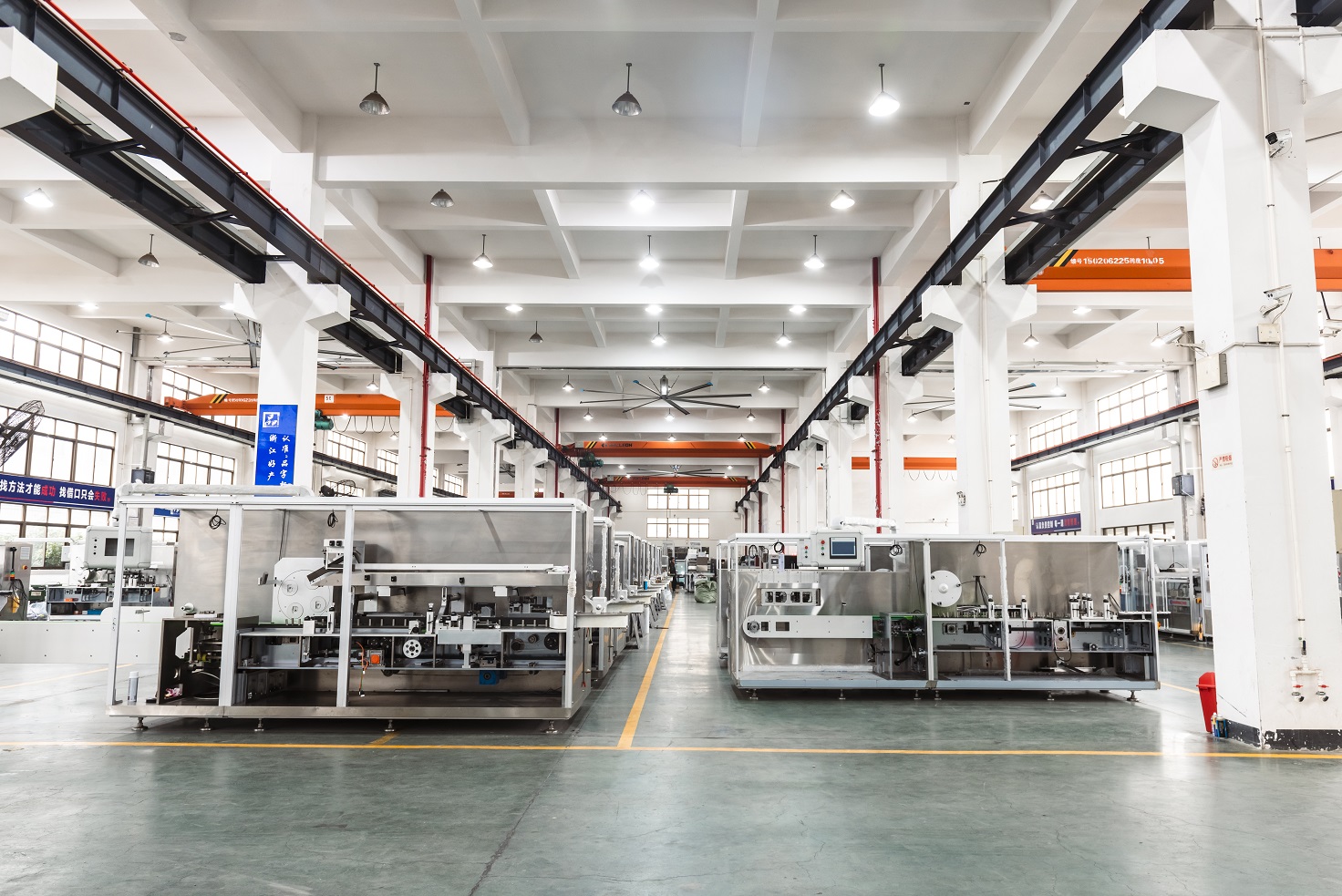
Cartoning stage assembly — the section where servo synchronization decides whether a high-volume tablet schedule holds its rhythm.
Use Cases: When Tablets Dominate the Production Schedule
- High-volume tablet blister packaging where the line runs near-continuously and manual contact is both a throughput and a compliance concern.
- Capsule blister packaging on the same integrated architecture, where formats allow the line to serve more than one dosage form.
- Alu-alu blister packaging for moisture-sensitive products, where forming and sealing stability at speed becomes the controlling factor rather than the nominal rating.
- Multi-format tablet portfolios that need frequent changeovers without losing rhythm between shifts.
- Export projects where FAT/SAT documentation, spare-parts planning and remote technical support form part of the acceptance scope rather than an afterthought.
Long-Term Fit: What a High-Volume Line Needs From Its Supply Partner
Choosing the setup is a decision. Keeping it at rated output for years is an execution problem, and it depends on the supplier as much as on the machine. For a tablet line running near-continuously, the practical questions are about repeatability of supply, clarity of commercial terms and depth of post-installation support.
Zhejiang Hoping Machinery Co., Ltd. is a pharmaceutical packing machinery manufacturer based in Ruian City, Zhejiang Province, China, established in 2001. Its product range covers blister packaging machines, cartoning machines, case packing machines and end-of-line packaging machines, and its stated manufacturing base covers 28,800 m² with more than 300 employees, an annual output of 500 units, a 56-engineer R&D team, an export ratio of 25% and main markets across Southeast Asia, the Middle East, Eastern Europe, South America and Africa. The company holds CE and ISO 9001/14001 certifications.
Commercial terms matter at the execution stage because they determine whether a second or third line can be added without renegotiating from zero:
- Minimum order quantity: 1 set or 1 complete line.
- Production lead time: typically 60–120 days after technical confirmation.
- Monthly production capacity: 30–40 units.
- Delivery terms: EXW Ruian/Wenzhou; FOB Ningbo or Shanghai; CIF/CFR destination port, with final terms subject to contract and destination-country requirements.
- Acceptance: technical agreement confirmation, sample testing, FAT before shipment, SAT at the customer site, and third-party inspection where the customer requires it.
- Post-installation support: installation, commissioning, training, spare parts and remote technical support.
Risk control is where long-term fit is actually tested. A supplier's approach to poor forming or sealing, missing or incorrect product feeding, missing leaflets, carton jams, coding errors and contamination risk should be visible in the machine design — sensor monitoring, missing-product alarms, automatic stop and rejection, key-parameter locking, fault records and mechanical safety protection — and in the project process: sample and material confirmation early, format-specific design, no-load and material testing before shipment, and documented FAT/SAT acceptance.
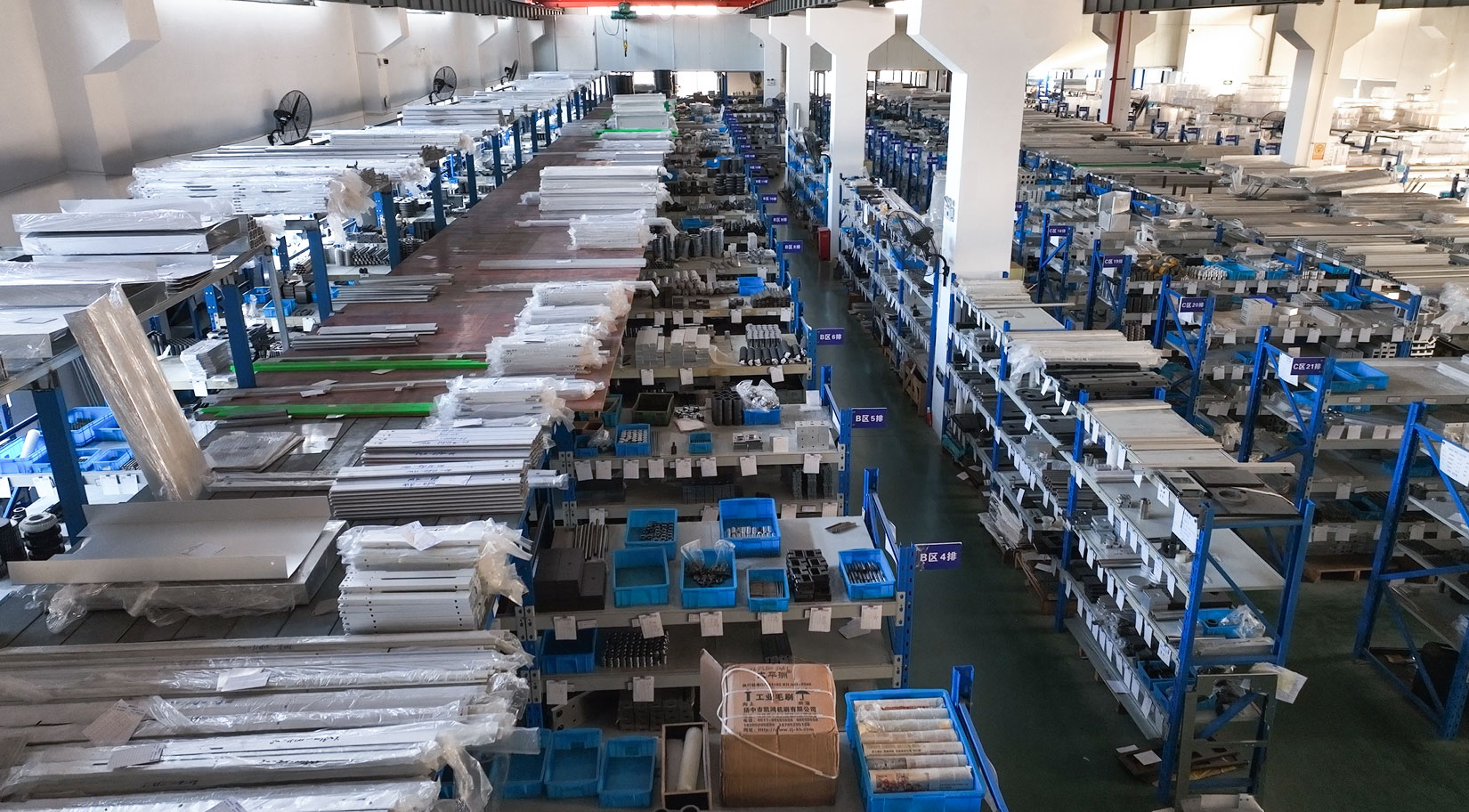
Component and spare-parts warehousing — the part of supply continuity a tablet plant only notices when it is missing.
FAQ
Which standards and compliance requirements apply to a high-volume blister-cartoning line?
Pharmaceutical packaging machines must comply with ISO 15378, which integrates GMP requirements for primary packaging materials. In the EU, pharmaceutical equipment safety is governed by the Machinery Directive 2006/42/EC together with the EN 415 series for packaging machines. In practice these requirements appear in construction details, materials, documentation and acceptance testing rather than in a certificate alone — which is why FAT and SAT evidence should be part of the technical agreement from the start.
What output can an integrated blister-cartoning line deliver when tablets dominate the schedule?
The representative DHL1000/5H integrated full-servo configuration is rated for up to 1,000 blisters/min and 500 cartons/min. Actual output depends on product format, quantity per carton, materials and process conditions, so rated figures should be treated as a configuration ceiling and verified against the specific tablet format, blister layout and carton specification being packed.
What are the MOQ, lead time and delivery terms for a complete blister-cartoning line?
The minimum order quantity is 1 set or 1 complete line. Typical production lead time is 60–120 days after technical confirmation, against a monthly production capacity of 30–40 units. Delivery terms include EXW Ruian/Wenzhou, FOB Ningbo or Shanghai, and CIF/CFR destination port, with final terms subject to contract and destination-country requirements. Payment terms are subject to quotation, contract value, customer credit, project scope, destination market and the final project agreement.
How are samples and packaging materials validated before a high-volume line ships?
Samples and packaging materials are confirmed at the early project stage, and the solution is designed around the actual blister and carton formats. No-load and material tests are carried out before shipment, followed by FAT before shipment and SAT at the customer site. Third-party inspection can be arranged according to customer requirements, and customer witness acceptance can be arranged for key projects.
How do you choose a long-term pharmaceutical packaging machine supply partner in China?
Look for evidence that the partner can sustain the line rather than only build it: a defined MOQ and lead time (1 set or 1 complete line; typically 60–120 days after technical confirmation), enough monthly capacity to support repeat or expansion orders (30–40 units), clear delivery and acceptance terms, and documented after-sales scope covering installation, commissioning, training, spare parts and remote technical support. Manufacturing depth matters too — Hoping, for example, has operated since 2001 with a 28,800 m² base, more than 300 employees and a 56-engineer R&D team, and holds CE and ISO 9001/14001 certifications. If a second line is likely within a few years, confirm with the supplier directly how repeat configurations and spare-parts continuity would be handled.
Conclusion: Choosing a Setup You Can Still Run in Year Three
For tablet-dominated schedules, the fully integrated, fully servo-driven blister-cartoning line — in the class of the DHL1000/5H, rated up to 1,000 blisters/min and 500 cartons/min — remains the setup most high-volume projects should benchmark against, with downstream case packing and end-of-line equipment added where the packing flow demands it. Non-full-servo linked lines, semi-automatic setups and separate-machine arrangements still have valid places, but they belong to specific volume bands rather than to a continuous tablet schedule.
The decision does not end at configuration. Format definition, inspection and rejection requirements, sample and material validation, FAT/SAT acceptance, and a documented spare-parts and preventive-maintenance plan determine whether the rated figures survive contact with production. That is the part of a high-volume line project where supplier depth shows up first.
Next Step: Validate a Configuration Against Your Tablet Format
Send your tablet format, blister layout, carton specification and expected shift pattern, and the configuration that fits your volume band can be confirmed against real samples rather than a general catalogue entry. Minimum order quantity is 1 set or 1 complete line, with typical production lead time of 60–120 days after technical confirmation.
Contact: Monica | Email: monica@xwbj.com | Tel / WhatsApp: +86 133-5610-5292
Website: www.hopingcn.com | Download the full catalogue: Hoping Machinery Catalog (PDF)
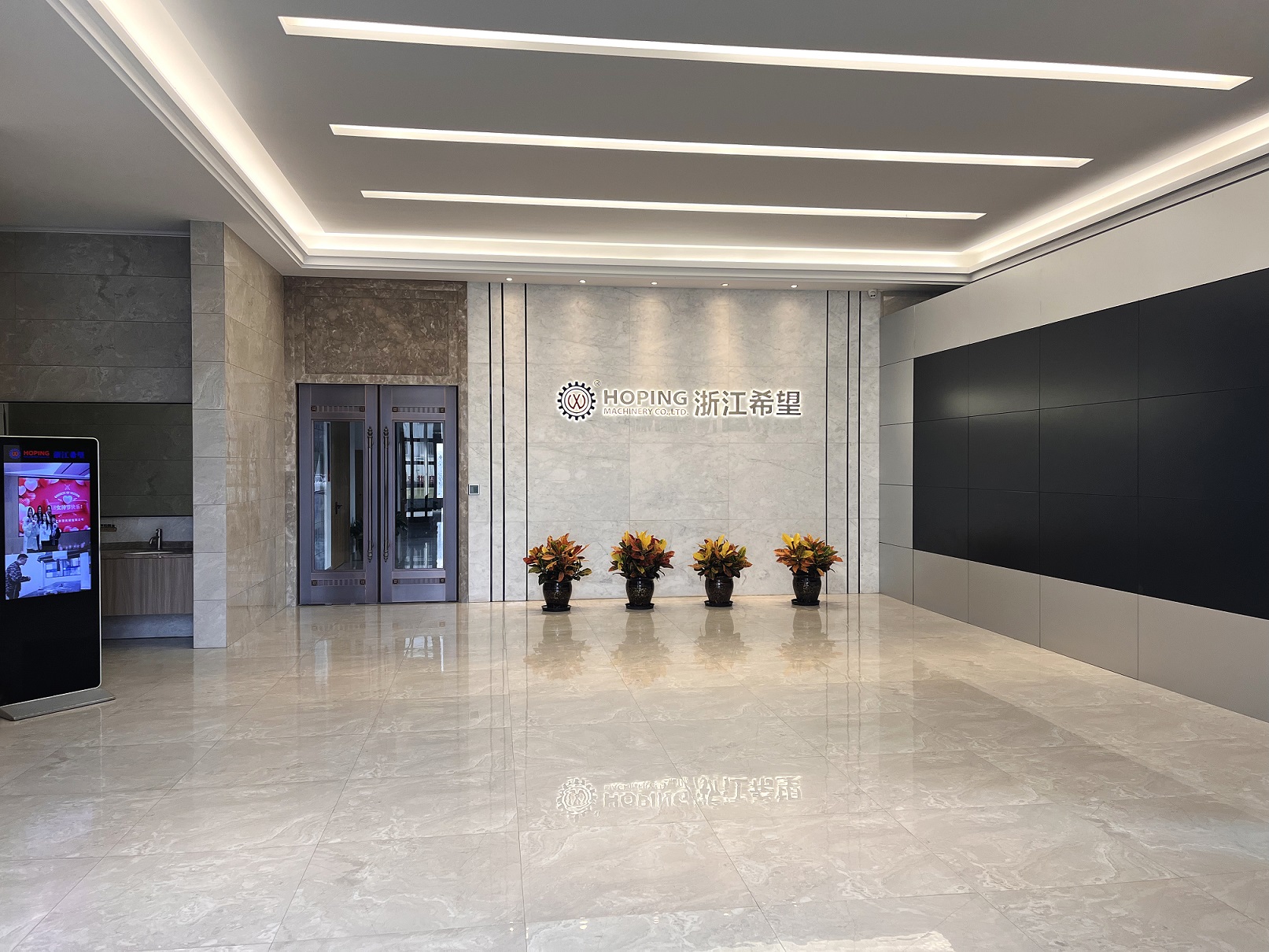
Project review and technical agreement stage — where tablet format, carton specification and acceptance criteria are fixed before a line is built.
Have Questions or Need More Details?
Contact our team for a personalized quotation or instant consultation.
Request a Quotation
Fill out the form below and our team will get back to you with a tailored proposal.
WhatsApp Direct Chat
Prefer to chat in real-time? Message us on WhatsApp for instant assistance & quick answers.
- Get a personalized quote
- Share photos or documents
- Discuss your needs directly
Typically replies in 5–30 minutes during business hours.