
Blister-Cartoning Lines for Soft Capsules and Healthcare Products
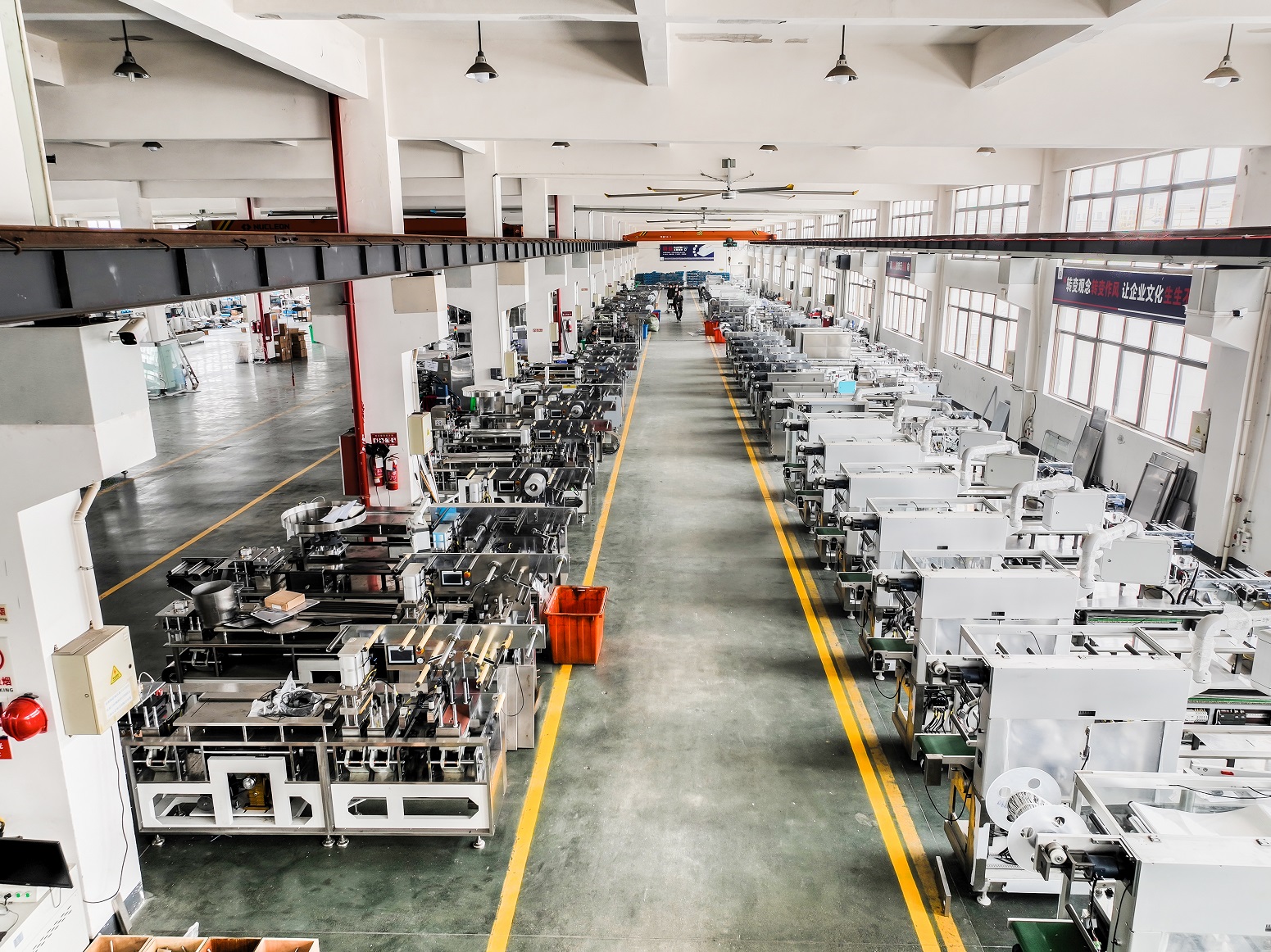
Cover: the forming and sealing section of an integrated blister cartoning line, Hoping Machinery blister machine workshop.
Direct answer: An automatic blister-cartoning line can be applied to soft capsules and other healthcare solids when the project is engineered around the confirmed blister format, carton format and product feed behaviour, not around a single tablet geometry. Zhejiang Hoping Machinery Co., Ltd. (“HOPING”) builds integrated blister cartoning lines whose stated intended use is large-scale solid dosage pharmaceutical packaging and high-capacity workshops that require reduced manual contact. The practical question is therefore not whether a pharmaceutical blister packaging machine can run soft capsules, but which customization steps convert a standard configuration into a validated soft-capsule or healthcare format.
This guide walks through the problem, the market context, the automation scope of the line, the customization points that matter for non-tablet solids, a step-by-step project breakdown, realistic use cases, and a decision table for buyers who are comparing an integrated line against separate blister and cartoning machines.
Why Soft Capsules and Healthcare Solids Break Single-Product Assumptions
A blister line that runs one round tablet is a solved problem. The same line running a soft capsule, an oblong healthcare item, a two-count blister and a six-count carton is a different problem, because four variables change at once: the geometry entering the forming station, the way the product sits in the cavity, the leaflet requirement, and the carton blank itself.
In an integrated line, those variables are mechanically linked. Blister packaging, blister transfer, leaflet handling, carton opening, insertion, inspection and rejection, and downstream connection all sit inside one automated process. That integration is the main advantage over a traditional setup, but it also means a deviation at any single station propagates through the rest of the line instead of being absorbed by a manual transfer step.
The documented risk profile of high-speed blister-cartoning operation is specific and worth listing before any customization discussion, because each item maps to a different customization decision:
- Poor blister forming or sealing
- Missing, wrong or incomplete product feeding
- Missing leaflet
- Carton jam
- Coding or date printing error
- Foreign matter or contamination risk
- Downtime during high-speed operation
- Delivery and installation risk on export projects
For a producer moving from tablets into soft capsules or healthcare items, the first four risks are the ones that change most, because they are format-dependent. The last four are project-dependent and stay constant regardless of the dosage form. A supplier evaluation that only checks nominal output rate will miss most of them.
Industry Background: A Market Where Format Diversity Is Normal
The commercial context explains why customization has become a normal requirement rather than a special order. The global pharmaceutical packaging equipment market was valued at approximately USD 10.71 billion in 2024 according to SkyQuest Technology. Within that space, the pharmaceutical blister packaging machine segment was projected by Custom Market Insights to reach USD 2.57 billion by 2025, and Fortune Business Insights valued the pharmaceutical sector of the cartoning machinery market at USD 1.46 billion in 2024.
Supply is not evenly distributed. Grand View Research recorded that Asia Pacific held the largest revenue share of 40.7% in the pharmaceutical packaging equipment market in 2025, which is consistent with the concentration of blister and cartoning machine manufacturing in the region. At the top of the equipment market, Uhlmann, IMA and Marchesini are reported to hold approximately 29% of the pharmaceutical blister packaging machine market combined. The remaining share is served by a long list of regional manufacturers, and most of them win projects on configuration fit rather than on scale.
Two transparency notes are relevant for buyers building a business case. First, market-size estimates diverge: SkyQuest put the total pharmaceutical packaging equipment market at USD 10.71 billion for 2024, while Grand View Research placed it at USD 7.0 billion for 2025, largely because of different treatment of primary versus secondary equipment. Second, regulatory framing is more stable than market sizing. ISO 15378 integrates GMP requirements for primary packaging materials, and in the European Union, pharmaceutical equipment safety is governed by the Machinery Directive 2006/42/EC together with the EN 415 series for packaging machines. For an application guide on soft capsules and healthcare products, these standards matter because they apply to the line configuration regardless of which solid dosage form runs on it.
What an Integrated Blister Cartoning Line Actually Automates
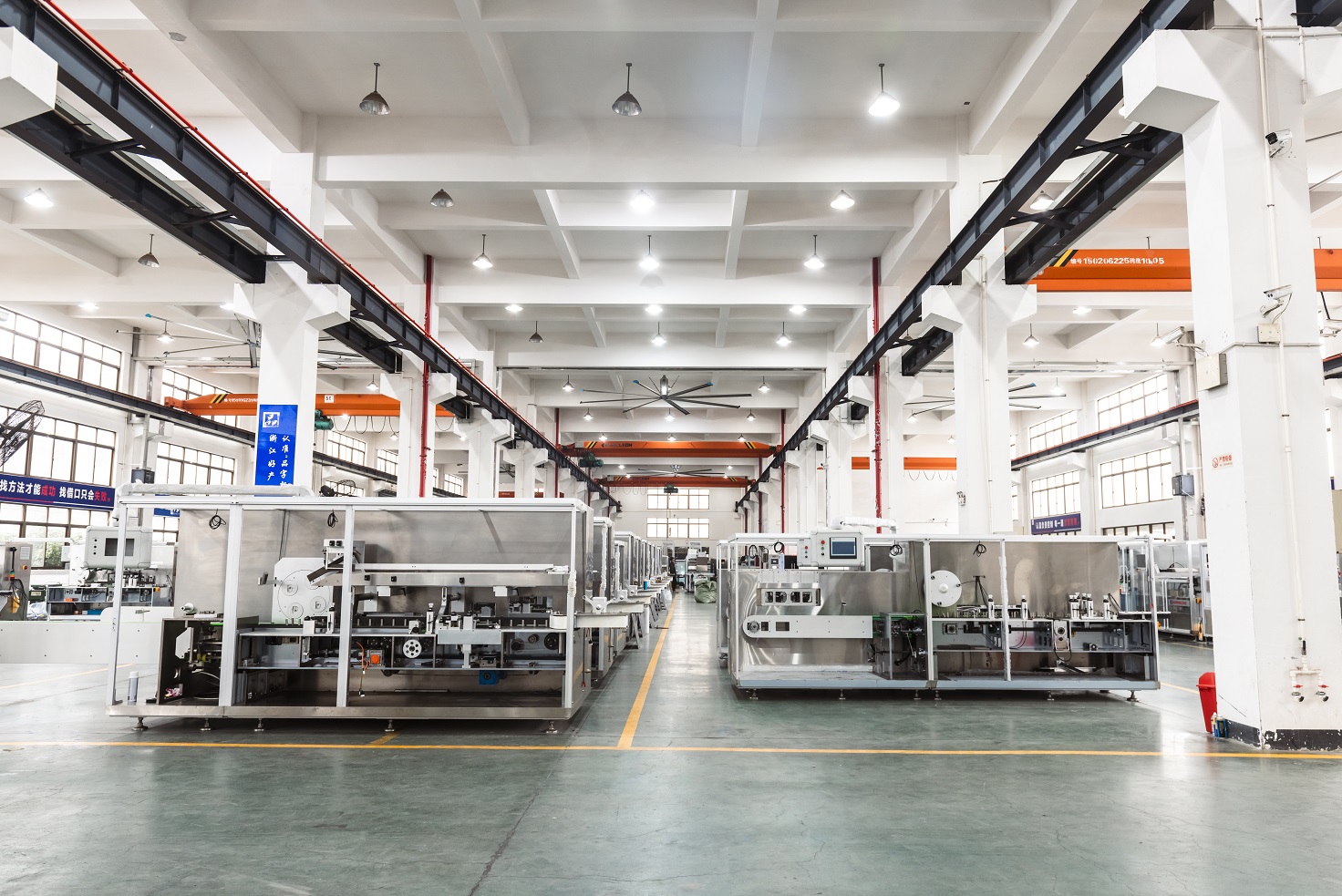
The cartoning stage: carton opening, leaflet insertion and product insertion inside one automated process.
The scope of integration is the single most important specification a buyer needs to understand before discussing soft-capsule customization. In the Hoping configuration, an integrated line combines blister packaging, blister transfer, leaflet handling, carton opening, insertion, inspection and rejection, and downstream connection into one automated process. Compared with a traditional blister machine plus manual transfer plus a standalone cartoner, this reduces manual intervention, and it removes the intermediate handling stage where a soft capsule is most exposed to mechanical damage and product mix-ups.
Output figures should be read as configuration-dependent rather than as a promise. The representative DHL1000/5H model can achieve up to 1000 blisters per minute and 500 cartons per minute, and the actual figure depends on product format, quantity per carton, packaging materials and process conditions. For soft capsules, quantity per carton and cavity layout frequently become the limiting factors before the nominal blister rate does.
Three design characteristics matter when the line is asked to serve more than one solid dosage form:
- Fully servo drive. Servo motion improves motion synchronization and operating efficiency, which is what allows one line to hold consistent timing when formats and counts per carton change. Energy consumption should still be measured against actual on-site output, running hours and configuration rather than taken from a datasheet.
- Modular stations and centralized control. Modular station design with centralized control, alarm indication and parameter management supports routine maintenance and format-related adjustments. Operator training, spare-parts management and preventive maintenance remain necessary and are not replaced by the automation itself.
- Downstream connection. The line is not limited to blister and carton output. Hoping’s product range includes cartoning machines, case packing machines and end-of-line packaging machines, so the blister cartoning line can be connected into a secondary packaging line and an automatic case packer where the project requires it.
Customization Points That Adapt the Line to Soft Capsules and Healthcare Products
Customization on an automatic blister-cartoning line is not a single option. It is a sequence of engineering decisions that must be made in a defined order, because later decisions depend on earlier ones.
1. Engineering from the blister format and the carton format
The supplier’s stated method is to design the solution according to the blister and carton formats. This is the anchor of the whole project. Cavity geometry, forming and sealing behaviour, transfer timing and carton blank design are all derived from the two formats rather than selected from a catalogue. For a soft capsule, which deforms more readily than a compressed tablet, this format-first approach is what separates a workable configuration from one that has to be re-engineered on site.
2. Confirming samples and packaging materials at the early project stage
Printed in this guide as a fixed step rather than an optional courtesy: samples and packaging materials are confirmed at the early project stage. For healthcare producers, this is where forming film behaviour, capsule shell tolerance and carton board stiffness are tested against the actual product rather than against a specification sheet. If a format cannot be run with the buyer’s real materials, the discussion should happen before the order, not after installation.
3. Configuring inspection, rejection and parameter control
The documented control set for this equipment class includes sensor monitoring, vision or checkweighing inspection where configured, missing-product alarm, automatic stop, automatic rejection, key-parameter locking, fault records and mechanical safety protection. For a multi-format producer, two of these carry disproportionate weight: automatic rejection, because a mixed batch is a compliance event rather than a quality inconvenience, and key-parameter locking, because format changes should not open the door to unrecorded parameter drift.
4. Extending the scope downstream
Where the product moves to secondary packaging, the line can be connected to case packing and end-of-line equipment. This matters for soft capsules and healthcare items because a turnkey pharmaceutical packaging line reduces the number of times product is transferred by hand between machine groups, which is precisely the stage where manual contact and mix-up risk accumulate.
5. Planning maintenance and operating discipline before startup
Centralized control, modular stations, alarm indication and parameter management support routine maintenance, but they do not remove the need for training, spare-parts management and preventive maintenance. For a line running several dosage formats, the maintenance plan should be written against the format list, not against a single product.
Step-by-Step Breakdown: From Sample to Site Acceptance
Early-stage project review: samples, formats and packaging materials are confirmed before the configuration is fixed.
- Define the dosage forms and pack formats. List every solid dosage form the line must run, including soft capsules and healthcare items, together with blisters per carton and cartons per case. The list drives configuration, not the first product alone.
- Confirm samples and packaging materials. Send physical product and the actual forming film, lidding material and carton board so that forming, sealing and carton handling are evaluated against real inputs.
- Fix the integration scope. Decide whether the project needs blister and carton only, or whether the blister cartoning line should connect to a case packing machine and end-of-line packaging machine.
- Configure inspection and rejection. Agree which stations carry sensor monitoring, vision or checkweighing inspection, missing-product alarms, automatic stop and automatic rejection, and how faults are recorded.
- Lock key parameters. Define which settings operators may adjust during a format change and which are locked, and how parameter records are kept.
- Run no-load and material tests before shipment. No-load testing checks motion and timing; material testing checks forming, feeding, leaflet insertion and carton closing with the buyer’s own product and packaging materials.
- Complete FAT and SAT, and train the team. FAT/SAT acceptance with SOP training is part of the documented risk-control method, and customer witness acceptance can be arranged for key projects.
- Plan installation, spares and support. Installation, commissioning, training, spare parts and remote technical support form the post-shipment stage, and are particularly relevant for export projects where delivery and installation carry their own risk.
Use Cases: Where This Configuration Fits Best
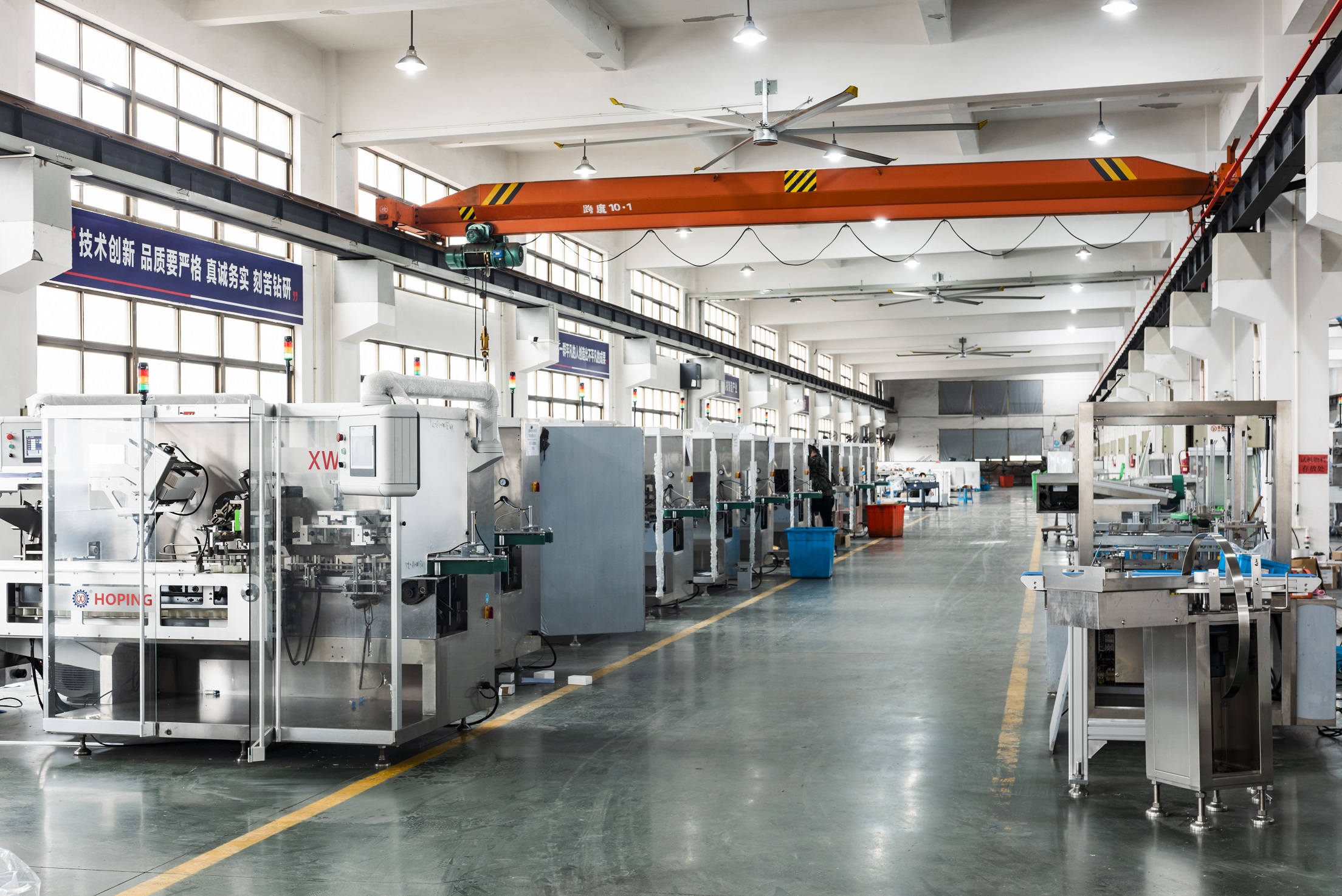
Cartoner workshop: format-dependent cartoning units prepared for different solid dosage products.
Large-scale solid dosage producers with a mixed portfolio. The line is positioned for large-scale solid dosage pharmaceutical packaging and high-capacity workshops that require reduced manual contact. A producer running tablets, soft capsules and healthcare items on one line benefits most from format-based engineering, because the alternative is a separate line per format.
Multi-format packaging lines that need stable operation. Multi-format operation is one of the documented application conditions, and it is also the condition under which key-parameter locking and centralized parameter management earn their cost.
Producers replacing manual transfer between machines. Manufacturers currently running a pharmaceutical blister packaging machine, manual transfer and a standalone horizontal cartoning machine can consolidate blister packaging, transfer, leaflet handling, carton opening, insertion, inspection and rejection into one process. The gain is not only labor: it is the removal of an unmonitored handling step.
Export projects requiring documented acceptance. For shipments into Southeast Asia, the Middle East, Eastern Europe, South America or Africa, the combination of factory testing before shipment, FAT/SAT acceptance and remote technical support is frequently the deciding factor, because on-site problem solving is slow and expensive across those distances.
Comparison Table: Integrated Line vs Separate Blister and Cartoning Machines
| Decision dimension | Integrated blister-cartoning line | Traditional blister machine + manual transfer + standalone cartoner |
|---|---|---|
| Process scope | Blister packaging, blister transfer, leaflet handling, carton opening, insertion, inspection/rejection and downstream connection combined into one automated process | Blister machine, manual transfer and standalone cartoner as separate steps |
| Manual intervention | Reduced, because intermediate handling is automated | Higher, because transfer between machines is manual |
| Representative output | DHL1000/5H model up to 1000 blisters/min and 500 cartons/min; actual output depends on product format, quantity per carton, materials and process conditions | Not specified in the comparison source |
| Initial investment | Usually higher than standalone or semi-automatic equipment | Lower initial investment |
| Cost structure in continuous production | Helps reduce labor, transfer, management and quality-risk costs in large-scale continuous production | Labor, intermediate transfer and separate quality control remain in the process |
| Maintenance model | Centralized control, modular stations, alarm indication and parameter management; operator training, spare-parts management and preventive maintenance remain important | Maintenance organised per individual machine |
| Documented best fit | Large-scale solid dosage pharmaceutical packaging; high-capacity workshops requiring reduced manual contact; multi-format lines needing stable operation | Referenced as the conventional alternative that the integrated line replaces |
Comparison rows are drawn from the documented comparison of the integrated line against traditional blister machine plus manual transfer plus standalone cartoner solutions.
Frequently Asked Questions
What standards apply to a pharmaceutical blister packaging machine and cartoning machine?
ISO 15378 integrates GMP requirements for primary packaging materials, which is the reference most often cited for pharmaceutical packaging equipment. In the European Union, equipment safety falls under the Machinery Directive 2006/42/EC together with the EN 415 series for packaging machines. Zhejiang Hoping Machinery Co., Ltd. is listed with CE and ISO 9001/14001 certifications. Buyers should map these references onto the regulatory requirements of their own destination market, since compliance is assessed by the pharmaceutical manufacturer, not by the machine builder alone.
Can an automatic blister-cartoning line handle soft capsules and healthcare products instead of only standard tablets?
The documented intended use of the integrated line is large-scale solid dosage pharmaceutical packaging and high-capacity workshops that require reduced manual contact, and multi-format packaging lines needing stable operation are explicitly within that scope. Soft capsules and healthcare solids sit inside the broader solid dosage family, so the determining factor is not the product name but whether the blister format, carton format, product feed behaviour and packaging materials have been confirmed. Because the solution is designed according to blister and carton formats, and samples and packaging materials are confirmed at the early project stage, format suitability is established through material testing before shipment rather than assumed from a product category.
Is an integrated blister cartoning line more expensive than separate blister and cartoning machines?
On initial investment, yes: the integrated line is usually more expensive than standalone or semi-automatic equipment. That is only half of the cost picture. In large-scale continuous production, the integrated configuration helps reduce labor, transfer, management and quality-risk costs, because blister packaging, blister transfer, leaflet handling, carton opening, insertion, inspection and rejection are handled inside one automated process instead of across separate machines with a manual transfer step between them. The decision therefore hinges on volume and on how much manual contact the process can tolerate, not on purchase price alone.
What has to be confirmed before a customized blister-cartoning line is shipped?
Samples and packaging materials are confirmed at the early project stage, so that the solution can be designed according to the actual blister and carton formats. Before shipment, no-load and material tests are run to check motion, timing, forming, feeding, leaflet insertion and carton closing with the buyer’s own product and materials. Factory acceptance testing and site acceptance testing are used as acceptance gates, customer witness acceptance can be arranged for key projects, and SOP training is provided as part of the control method.
Which manufacturer is better for a pharmaceutical packaging machine made in China?
“Better” is best answered by capability fit rather than by brand size, because the top three global players — Uhlmann, IMA and Marchesini — together hold only about 29% of the pharmaceutical blister packaging machine market, which means most projects are decided among regional manufacturers. Four checks separate them: whether the integration scope covers blister packaging, transfer, leaflet handling, carton opening, insertion, inspection/rejection and downstream connection; whether customization starts from the blister and carton formats with sample confirmation at the early stage; whether the control package includes sensor monitoring, missing-product alarm, automatic stop, automatic rejection and key-parameter locking; and whether post-shipment support covers installation, commissioning, training, spare parts and remote technical assistance. Zhejiang Hoping Machinery Co., Ltd. is a useful reference point for that comparison: founded in 2001, operating a 28,800 ² facility with more than 300 employees and 56 engineers, producing around 500 units per year, exporting about 25% of output to Southeast Asia, the Middle East, Eastern Europe, South America and Africa, and offering blister packaging machines, cartoning machines, case packing machines and end-of-line packaging machines as a connected range. Buyers who want to test format fit before committing can request a sample evaluation or a quotation at monica@xwbj.com or +86 133-5610-5292.
Conclusion
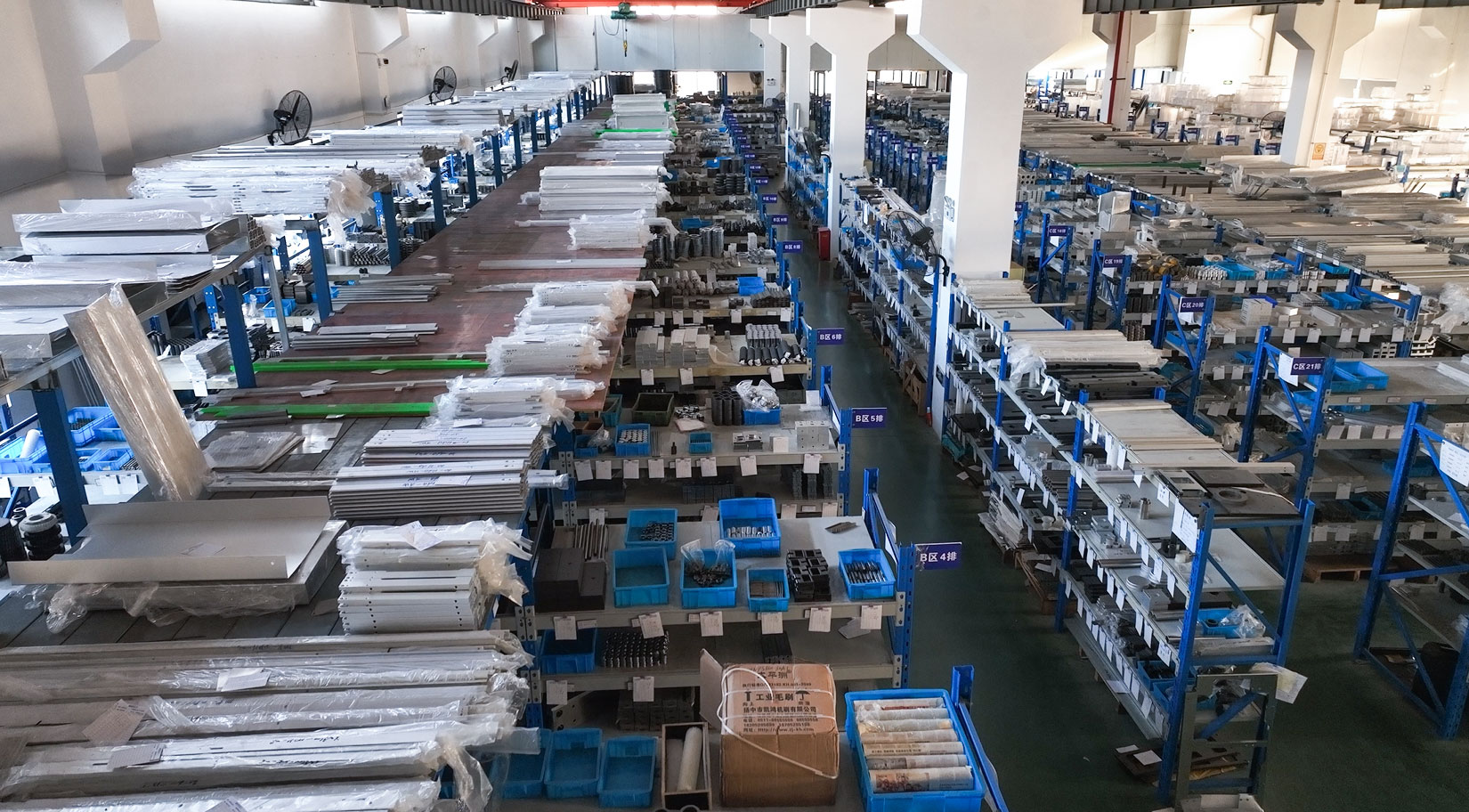
Downstream staging: blister cartoning lines connect to case packing and end-of-line equipment.
Soft capsules and healthcare products do not require a different machine category. They require a different starting point: the blister format and the carton format, confirmed with real samples and real packaging materials, rather than a tablet specification used as a proxy. From that anchor, the rest of the configuration follows — inspection and rejection logic, key-parameter locking, downstream connection to case packing and end-of-line equipment, and a maintenance plan written against the actual format list.
For decision-stage buyers, the most useful next step is not a broader specification sheet but a format-specific one. Send the products you intend to run, together with forming film, lidding material and carton board, and evaluate the configuration against your own inputs. The Hoping Machinery catalogue, including blister packaging machines, cartoning machines, case packing machines and end-of-line packaging machines, can be downloaded here: Hoping Machinery Catalog (PDF). For a sample trial or quotation, contact Zhejiang Hoping Machinery Co., Ltd. at monica@xwbj.com or via WhatsApp +86 133-5610-5292.
Have Questions or Need More Details?
Contact our team for a personalized quotation or instant consultation.
Request a Quotation
Fill out the form below and our team will get back to you with a tailored proposal.
WhatsApp Direct Chat
Prefer to chat in real-time? Message us on WhatsApp for instant assistance & quick answers.
- Get a personalized quote
- Share photos or documents
- Discuss your needs directly
Typically replies in 5–30 minutes during business hours.