
GMP Compliance in Integrated Blister-Cartoning Machines: What the DHL8005H Meets
GMP Compliance in Integrated Blister-Cartoning Machines: What the DHL8005H Meets
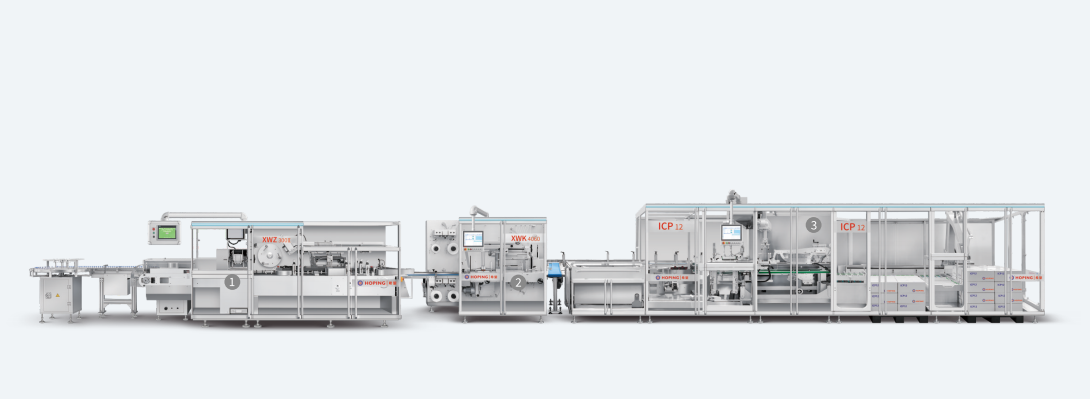
An integrated blister-cartoning machine links blister forming and sealing, product transfer, leaflet handling, carton erection, insertion and closing, coding and inspection into one continuous flow. For a solid dosage manufacturer, that integration is a commercial decision — fewer manual transfers, fewer hand-off points, a shorter line. It is also a compliance decision, because every additional handling stage has to stay cleanable, repeatable and documentable under GMP.
This article answers one narrow question. What does GMP compliance mean in practice on an integrated blister-cartoning machine, and what can a buyer actually verify on the DHL8005H — an intelligent fully servo high-speed blister-cartoner integrated machine manufactured by Zhejiang Hoping Machinery Co., Ltd. (www.hopingcn.com) — from published specifications and technical agreement terms?
The short answer: on the DHL8005H, GMP-oriented design is expressed through product-contact parts and tooling that meet GMP according to the technical agreement, a stainless steel and aluminum-alloy machine structure with transparent guarding, and a fully servo-linked architecture with mould-change and preset-memory functions. Published capacity is up to 800 blisters/min and 500 cartons/min.
For buyers who need extractable facts before a technical meeting, the DHL8005H configuration is documented as follows:
- Machine type: intelligent fully servo high-speed blister-cartoner integrated machine; solid dosage turnkey packing line.
- Maximum capacity: up to 800 blisters/min and 500 cartons/min.
- Blister-to-carton transfer: D3 intelligent top-loading parallel tracking transfer system.
- Feeding and material handling: multiple feeding methods, with PVC/Alu foil auto splicing.
- Replenishment: three-channel servo-driven independent replenishment system.
- Control platform: Beckhoff motion controller and CP9315 industrial PC.
- Changeover: mould-change and preset-memory functions.
- Structure: stainless steel and aluminum-alloy machine structure, transparent guarding, and GMP-oriented product-contact parts and tooling according to technical agreement.
- Line scope: high-speed blister forming/sealing, transfer, leaflet handling, carton opening, insertion, coding/inspection, and connection to bundling, case-packing and palletizing equipment.
Problem Definition: "Is It GMP?" Is the Wrong Question to Ask a Machine Builder
GMP is a manufacturing quality system. It covers premises, equipment, materials, personnel, documentation and process control, and the compliance outcome belongs to the pharmaceutical manufacturer — not to the machine. Equipment suppliers contribute to that outcome through design, materials, surface finish, cleanability, control repeatability, documentation and acceptance testing. When a buyer asks a supplier "is this machine GMP compliant?", the honest answer is narrower: the supplier can demonstrate GMP-oriented design and provide evidence that supports the buyer's own qualification and validation work.
Two misunderstandings cost buyers time and money. The first is reading "GMP-oriented design" as a certificate. It is a design statement, and its real content sits in material specifications, cleaning access, control repeatability and documentation — items that can be inspected and tested. The second is confusing machine-safety compliance with GMP. In the EU, pharmaceutical equipment safety is governed by the Machinery Directive 2006/42/EC and the EN 415 series for packaging machines. Those instruments address operator safety and machine hazards; GMP addresses product quality, cross-contamination, traceability and cleaning. A machine can carry CE marking and still be hard to clean, and a cleanable machine can be built for a non-EU market without CE marking. Mixing the two frameworks leads to buying the wrong evidence — or no evidence at all.
A third boundary is worth naming. ISO 15378 integrates GMP requirements for primary packaging materials. It shows that GMP language extends through the packaging chain rather than stopping at the machine guard, and it explains why material and surface specifications — not just equipment certificates — dominate compliance conversations in pharmaceutical packaging projects.
Industry Background: Compliance Pressure Inside a Growing Packaging Market
Integrated blister-cartoning decisions are being made in a market that keeps expanding. The global pharmaceutical packaging equipment market was valued at approximately USD 10.71 billion in 2024, according to SkyQuest Technology. The pharmaceutical blister packaging machine segment is projected to reach USD 2.57 billion by 2025 with a CAGR of 2.8%, based on Custom Market Insights, and the pharmaceutical cartoning machinery segment was valued at USD 1.46 billion in 2024 according to Fortune Business Insights. Grand View Research places Asia Pacific at the largest regional revenue share of 40.7% in the pharmaceutical packaging equipment market in 2025.
Supply concentration matters for how buyers verify suppliers. A Market Intelligence Report estimates that the top three players in the pharmaceutical blister packaging machine market — Uhlmann, IMA and Marchesini — collectively hold approximately 29% of market share. The practical implication is that a large share of installed lines worldwide is supplied by manufacturers outside the top tier. For those projects, the difference between a smooth validation and a difficult one is rarely brand size; it is whether the supplier can produce the specific evidence the buyer's quality team asks for.
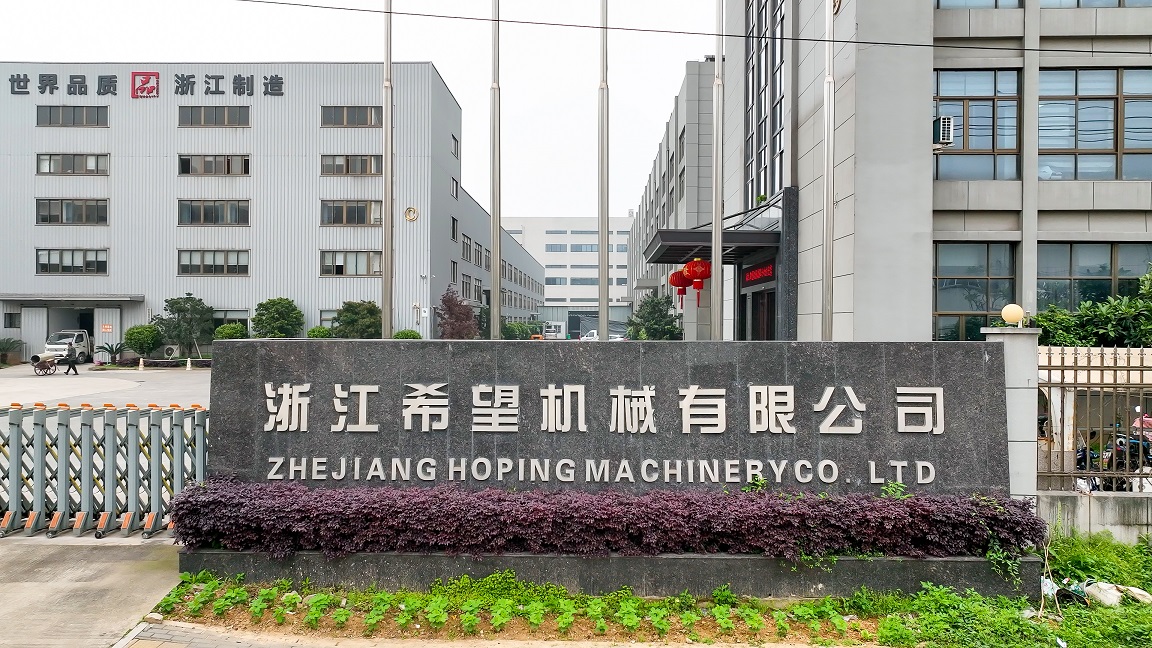
Zhejiang Hoping Machinery Co., Ltd. sits in that supplier landscape as a Chinese manufacturer of blister packaging machines, cartoning machines, case packing machines and end-of-line packaging equipment. The company was established in 2001, operates a 28,800 m² facility with 300 employees, produces an annual output of 500 units, and employs a 56-engineer R&D team. Its published intellectual property position includes 26 invention patents, 70 utility patents, 4 appearance patents, 10 PCT-protected filings, and 28 software copyrights. Export activity covers markets including Southeast Asia, the Middle East, Eastern Europe, South America and Africa.
Detailed Solution: What the DHL8005H Meets
Contact materials, tooling and the technical agreement
On the DHL8005H, the material commitment that matters most for GMP concerns product-contact parts and tooling: on this model they are stated to meet GMP according to the technical agreement, within a stainless steel and aluminum-alloy machine structure with transparent guarding. That wording is important for two reasons. First, it locates the GMP-relevant material commitment in a project-specific document rather than in a generic brochure claim. Second, it acknowledges that tooling is format-specific — a blister-cartoning line's contact parts are built around the confirmed blister format, carton format and product behaviour, so the material statement has to be issued per project.
Hoping publishes more granular material detail on related blister models, which is useful as a reference point when a buyer discusses the DHL8005H technical agreement. On the DPH320HII rotary blister packing machine and the DPP260T1 platen blister machine, product-contact parts are made of AISI 316L stainless steel and FDA-compliant pharmaceutical-grade materials, while non-product-contact parts are manufactured from AISI 304 stainless steel and anodized aluminum alloy; the machines are designed and manufactured in accordance with GMP requirements, with corrosion-resistant and easy-to-clean surfaces. For the DHL8005H, the equivalent statement is issued against the agreed tooling set, so the buyer's checklist should request it in writing together with the format drawings.
Customisation scope on Hoping lines spans blister size, blister materials, quantity per carton, carton specification, leaflet format, coding and inspection method, feeding method, downstream bundling/case-packing/palletizing connection, interface language, electrical component brand and data interface. In GMP terms, this is the list of variables that must be frozen before qualification — and the list a buyer should compare against the supplier's documentation package.
Cleanability, access and maintenance
Cleanability is the part of GMP-oriented design that can be verified fastest during a factory visit and referenced most easily in a validation file. Transparent guarding over working zones on the DHL8005H keeps product handling visible while separating operators from moving parts, which supports both safety and cleaning routines.
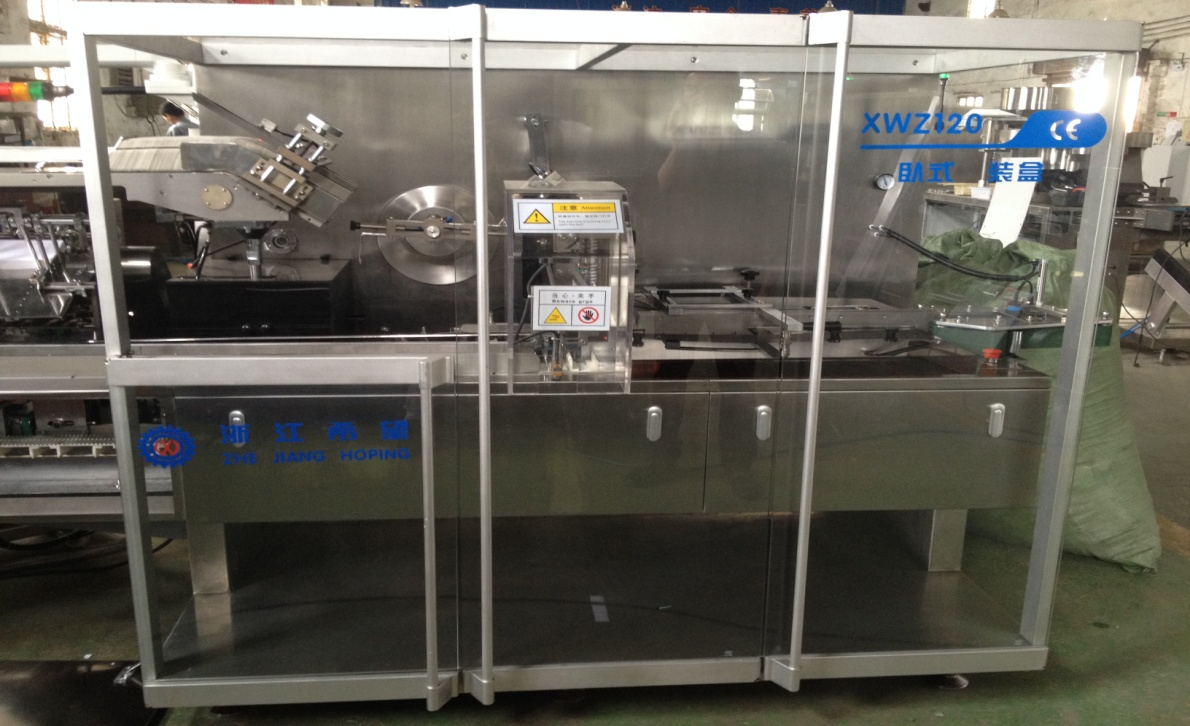
Two published design elements on Hoping equipment illustrate how cleanability is engineered rather than asserted. First, the cartoner frame uses a balcony-style design — Hoping describes the machine as simple and elegant in construction, made with high-quality carbon steel combined with cold-formed channel steel welding for sufficient strength, rigidity and precision, and arranged in a balcony layout that makes it easy to clean and organise, fully complying with GMP requirements. Second, on Hoping rotary blister machines, an integral guide rail system is used so that mould changeovers are rapid and cleaning is straightforward, which the manufacturer presents as GMP-compliant pharmaceutical production support.
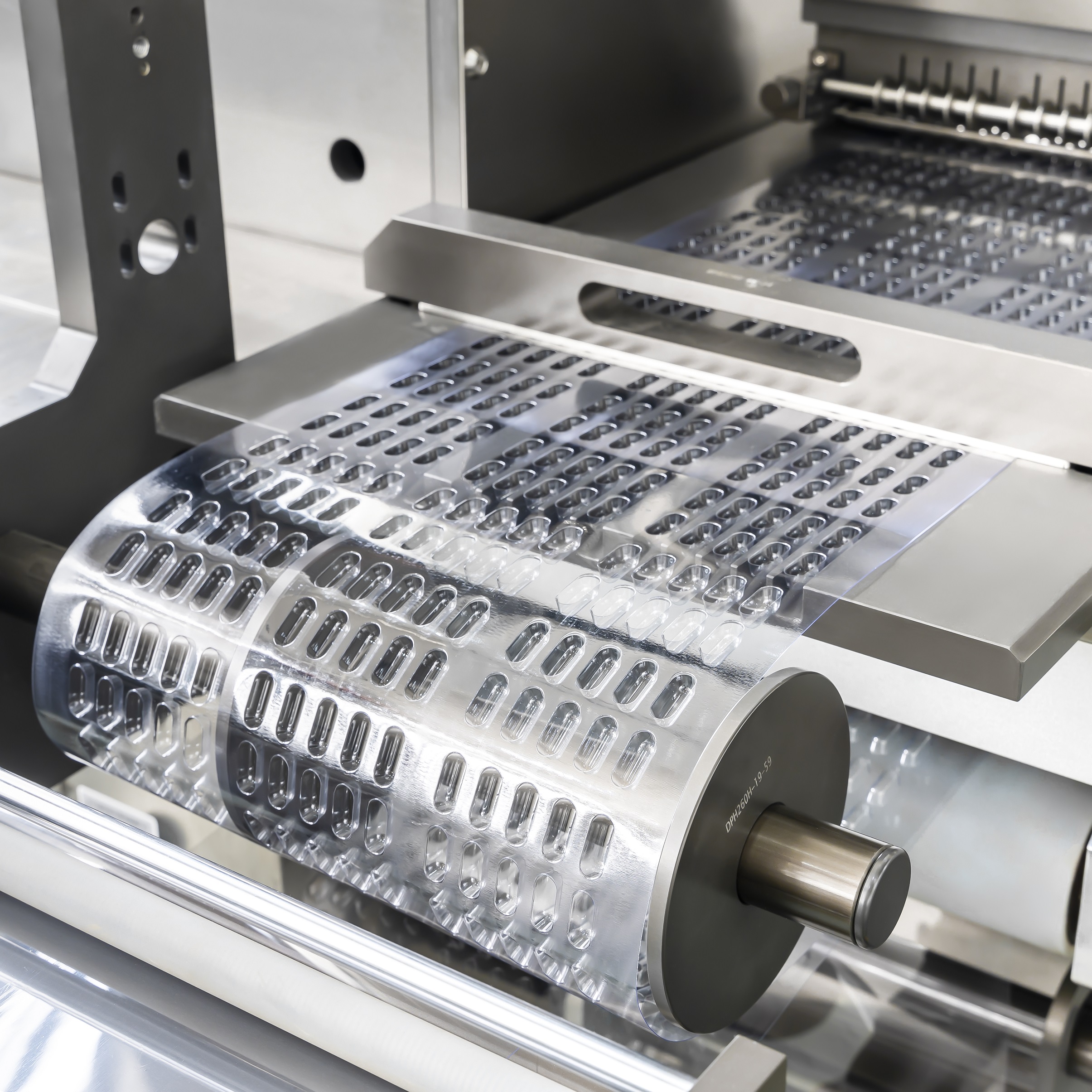
For an integrated line, the practical question is not whether one module is cleanable but whether the whole flow can be opened, cleaned and returned to a documented state within the changeover window the plant actually has. That is why access design and changeover design belong in the same conversation as material selection.
Controlled handling from blister to carton
Every transfer point is a compliance risk point: dropped product, misaligned blisters, mixed batches or damaged cartons all create deviations that must be investigated. The DHL8005H addresses this with a D3 intelligent top-loading parallel tracking transfer system that moves blisters from the blister web into cartons with controlled, repeatable motion, supported by multiple feeding methods so the feeding principle can be matched to tablet or capsule behaviour rather than forced onto it.
Two further configuration items reduce human intervention at the line. PVC/Alu foil auto splicing on the DHL8005H limits machine stops and manual film handling at roll changes, while stabilising web feeding; the three-channel servo-driven independent replenishment system keeps product supply synchronised with the high-speed transfer and cartoning rhythm. Together with the line's published scope — blister forming and sealing, transfer, leaflet handling, carton opening, insertion, coding/inspection and connection to downstream bundling, case-packing and palletizing equipment — these elements describe a line built to keep product inside a closed, controlled path for as much of the process as possible.
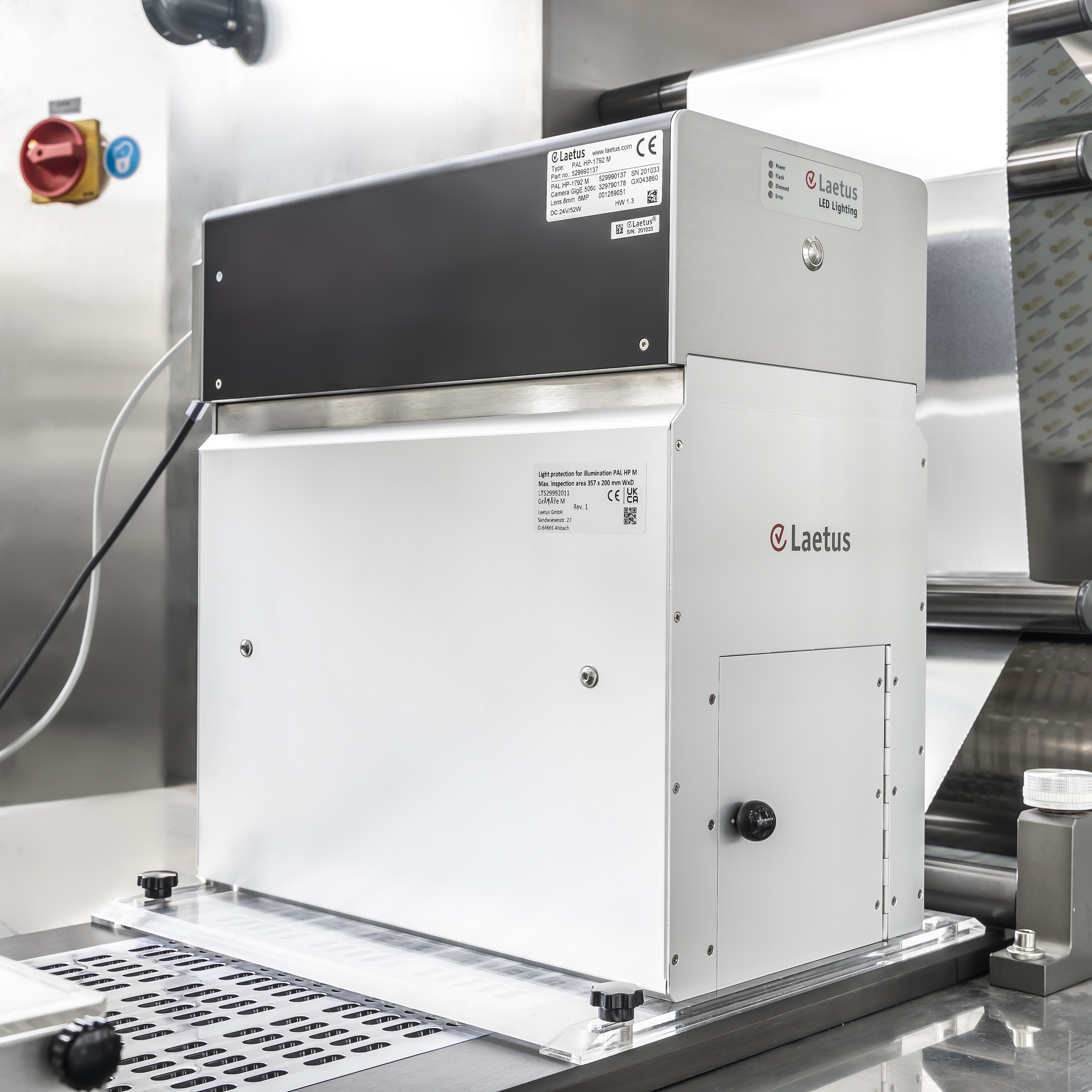
Inspection and rejection follow the same logic. On Hoping rotary blister machines, an advanced vision inspection system with an upper-light industrial camera design provides real-time monitoring and 100% online inspection of product presence, colour, alignment, contamination, foreign matter, size, shape and packaging defects. Where this capability is specified into a DHL8005H project, it converts a manual, sample-based check into a continuous record — a materially stronger position when the buyer's quality unit reviews line performance data.
Repeatability, settings memory and control
GMP production depends on repeating the same state, batch after batch. The DHL8005H runs a fully servo-linked operation with a Beckhoff motion controller and CP9315 industrial PC, and provides mould-change and preset-memory functions. In practice, preset memory means changeover parameters are recalled rather than re-entered by hand — a direct reduction in operator-dependent variability, and a smaller surface for human error during format changes.
Across the line family, the same control philosophy appears in published configurations: fully servo-linked operation with PLC/HMI interface, synchronised multi-station control, alarm stop, fault indication, recipe storage and format changeover support according to configuration. For a validation file, these are the features that allow a documented changeover procedure to be written and then followed identically by different shifts.
The integration boundary and manufacturer capability
An integrated line is only as strong as its interfaces. The DHL8005H is designed to connect to downstream bundling, case-packing and palletizing equipment, with an ERP/MES data interface available depending on configuration. Buyers should treat this boundary as part of the GMP scope: what data leaves the line, where inspection records are stored, and how the end-of-line equipment is cleaned are all questions that belong in the project specification.
Behind the machine, the supplier's own operating discipline is part of the evidence. Hoping's quality control sequence covers incoming material inspection, key component inspection, assembly inspection, electrical safety check, no-load trial run, material trial, factory acceptance test, customer witness acceptance and pre-shipment inspection. Manufacturing capacity is stated at 30–40 units per month, with a minimum order quantity of 1 set or 1 complete line. Hoping's published company profile also lists CE and ISO 9001/14001 certification for its equipment.
Step-by-Step: Verifying GMP-Oriented Design Before You Commit
The following sequence converts a GMP conversation into verifiable project items. It is written for a buyer at research-to-evaluation stage who must produce evidence for an internal quality or engineering review.
- Step 1 — Freeze the product and formats. Confirm the dosage form, blister format, blister materials, quantity per carton, carton specification and leaflet format. These variables determine the tooling set, and the tooling set determines the contact-material statement.
- Step 2 — Request the contact-material and tooling statement. Ask for the written statement covering product-contact parts and tooling against the agreed formats, matching the level of detail used on other Hoping models where product-contact parts are AISI 316L stainless steel and FDA-compliant pharmaceutical-grade materials.
- Step 3 — Walk the cleaning path. Review guarding, frame layout, balcony access, guide rail systems and tooling removal with the operators who will clean the line. Record which surfaces can be reached without tools and how long a full clean takes.
- Step 4 — Confirm changeover and settings memory. Verify mould-change and preset-memory functions against your changeover frequency, and confirm that recipe storage is included in the agreed configuration.
- Step 5 — Confirm coding, inspection and rejection. Define the coding/inspection method and the rejection logic for your product, including whether vision inspection of product presence, colour, alignment, contamination, foreign matter, size, shape and packaging defects is required.
- Step 6 — Agree the acceptance-test sequence. Sequence the programme so that electrical safety check, no-load trial run, material trial, factory acceptance test, customer witness acceptance and pre-shipment inspection happen in the order your quality unit needs to record them.
- Step 7 — Define the line boundary and support. Confirm downstream bundling, case-packing and palletizing connections, the data interface, and the after-sales package: on-site installation and commissioning, operator training, maintenance training, remote support, spare parts supply, process-parameter guidance and regular follow-up.
Note: the sequence above reflects published Hoping configuration and quality-control information. Project-specific items should always be confirmed in the technical agreement and contract documents.
Project Scenarios Where an Integrated Blister-Cartoning Line Fits
Integrated blister-cartoning equipment such as the DHL8005H is specified into five recurring project types: a new solid dosage blister packaging line; an upgrade of an existing packaging line; a high-capacity expansion; an intelligent packaging workshop retrofit; and a blister-cartoning-bundling or case-packing downstream integration project. In each case the product role is the same — completing blister packaging, leaflet folding, carton opening, blister insertion, batch/date coding, inspection and rejection, and downstream connection — and the project differentiator is the capacity, format and integration boundary.
A representative project profile illustrates the pattern. Large pharmaceutical manufacturers, solid dosage production companies and pharmaceutical engineering contractors typically plan multi-line programmes of roughly 5–10 lines, covering blister packaging and automatic cartoning for tablets, capsules and other solid dosage forms, whether for new line construction, capacity expansion or the replacement of older packaging equipment. Customer names are disclosed only with authorisation, so these profiles stand on documented project objectives rather than on client marketing claims. Representative objectives include improving packaging automation, reducing manual transfer, improving blister-to-carton connection efficiency, reducing wrong-insertion and missing-leaflet risks, and supporting downstream automation integration.
The operating environment for these projects is a GMP-oriented cleanroom or pharmaceutical packaging workshop, with continuous high-speed operation and multi-batch, multi-format production. That combination — high speed plus frequent changes — is exactly where preset memory, servo-linked control and accessible cleaning design earn their place in the specification.
Integrated Blister-Cartoning Line Comparison: GMP-Relevant Configuration
The table below compares published configuration data across four integrated blister-cartoner models in the Hoping line family. It is intended as a selection reference for buyers narrowing a project, not as a ranking of models — the correct choice depends on required output, format range and the downstream equipment the line must feed.
| Configuration item | DHL8005H | DHL7005H | DHL6004 | DHL1000/5H |
|---|---|---|---|---|
| Machine type | Intelligent fully servo high-speed blister-cartoner integrated machine; solid dosage turnkey packing line | Fully servo high-speed blister-cartoner integral machine; solid dosage turnkey packing line | Intelligent fully servo high-speed blister-cartoner integrated machine; solid dosage turnkey packing line | Intelligent fully servo high-speed blister-cartoner integrated machine; solid dosage turnkey packing line |
| Max blister capacity | Up to 800 blisters/min | Up to 700 blisters/min | Up to 600 blisters/min | Up to 1000 blisters/min |
| Max cartoning capacity | Up to 500 cartons/min | Up to 500 cartons/min | Up to 400 cartons/min | Up to 500 cartons/min |
| Blister-to-carton transfer | D3 intelligent top-loading parallel tracking transfer system | Self-developed IRB24 intelligent transfer robot | High-speed transfer and cartoning linkage | D3 intelligent top-loading parallel tracking transfer system |
| Replenishment | Three-channel servo-driven independent replenishment | Servo-driven independent replenishment | Servo-driven independent replenishment | Four-channel servo-driven independent replenishment |
| Control platform | Beckhoff motion controller and CP9315 industrial PC | Siemens motion controller and TP900 HMI | Beckhoff motion controller and CP9315 industrial PC | Beckhoff motion controller and high-bus industrial control system |
| Changeover / settings memory | Mould-change and preset-memory functions | Mould-change support | Convenient mould change | Mould-change and recipe memory functions |
| Structure and contact parts | Stainless steel and aluminum-alloy structure; transparent guarding; GMP-oriented product-contact parts and tooling according to technical agreement | Stainless steel and aluminum-alloy structure; transparent safety enclosure; tooling and contact parts configured by project | Stainless steel and aluminum-alloy structure; protective doors and transparent guards; tooling and contact parts customized by product and packaging materials | Stainless steel and aluminum-alloy structure; transparent safety guards; product-contact and format parts configured to GMP-oriented project requirements |
All figures in this table are the maximum capacities and configuration items published by the manufacturer for each model. Actual line output depends on product, format and downstream configuration.
FAQ: GMP Compliance on Integrated Blister-Cartoning Machines
1. What does "GMP-oriented design" actually mean on the DHL8005H?
On the DHL8005H, GMP-oriented design is the design intent published by the manufacturer: product-contact parts and tooling meet GMP according to the technical agreement, the machine structure is stainless steel and aluminum alloy with transparent guarding, and the line operates fully servo-linked with mould-change and preset-memory functions. It is a design statement rather than a machine certificate — the compliance outcome is established by the pharmaceutical manufacturer through qualification and validation, supported by supplier documentation and acceptance testing such as the no-load trial run, material trial, factory acceptance test and customer witness acceptance.
2. Which standards and documents should a buyer check alongside GMP?
Two frameworks sit next to GMP in a pharmaceutical packaging project. ISO 15378 integrates GMP requirements for primary packaging materials, which is why material and surface specifications carry so much weight in packaging discussions. In the EU, pharmaceutical equipment safety is governed by the Machinery Directive 2006/42/EC and the EN 415 series for packaging machines — these address operator safety and machine hazards, not product quality, so they should be requested as separate evidence. For a DHL8005H project, the document set should include the confirmed contact-material and tooling statement per technical agreement, format drawings, and the acceptance-test records agreed in Step 6 of the verification workflow.
3. What capacity and format capability does the DHL8005H line offer?
The DHL8005H is published at up to 800 blisters/min and 500 cartons/min, with a D3 intelligent top-loading parallel tracking transfer system, multiple feeding methods, PVC/Alu foil auto splicing, and a three-channel servo-driven independent replenishment system, controlled by a Beckhoff motion controller and CP9315 industrial PC. It is applied in pharmaceutical solid dosage production, capsule and tablet packaging, healthcare products, and food and cosmetic blister-cartoning projects. Format scope is customisable across blister size, blister materials, quantity per carton, carton specification, leaflet format, coding and inspection method, feeding method, downstream connection, interface language, electrical component brand and data interface.
4. How should a buyer evaluate a pharmaceutical packaging machine manufacturer for blister lines?
Evaluate the manufacturer against the evidence your own qualification process will need. For Hoping, that evidence includes a 56-engineer R&D team, a 28,800 m² facility with 300 employees and an annual output of 500 units, a documented quality-control sequence running from incoming material inspection to pre-shipment inspection, stated manufacturing capacity of 30–40 units per month, a minimum order quantity of 1 set or 1 complete line, and after-sales support covering on-site installation and commissioning, operator and maintenance training, remote support, spare parts and process-parameter guidance. Export activity covers Southeast Asia, the Middle East, Europe, North America, South America, Africa, Russia, Japan and Australia, and the published company profile lists CE and ISO 9001/14001 certification for its equipment. The decisive test is whether the manufacturer can deliver validation-relevant documentation for your specific formats and model.
5. What lead time and validation support should a blister-cartoning project plan for?
Hoping's typical lead time is 60–120 days after technical confirmation, subject to model, configuration, project complexity and contract terms, with monthly manufacturing capacity of 30–40 units and a minimum order quantity of 1 set or 1 complete line. Validation support covers the no-load trial run, material trial, factory acceptance test, customer witness acceptance and pre-shipment inspection, followed by on-site installation and commissioning, operator training, maintenance training and remote troubleshooting. As a practical next step, send your blister and carton formats to the Hoping team to receive a DHL8005H configuration review — the machine catalogue is available for download here: Hoping Machinery Catalog (PDF).
Conclusion: Compliance Is a Verifiable Project, Not a Badge
GMP compliance on an integrated blister-cartoning machine is not settled by a logo on a brochure. It is settled by specific, checkable items: which materials contact the product and how that is agreed, how the line can be opened and cleaned, how consistently it repeats a validated state, what it inspects and rejects automatically, and what documentation and acceptance tests the supplier will produce. On the DHL8005H, the verifiable core is a stainless steel and aluminum-alloy structure with transparent guarding, GMP-oriented product-contact parts and tooling meeting GMP per technical agreement, a D3 intelligent top-loading parallel tracking transfer system, three-channel servo-driven independent replenishment, Beckhoff motion controller and CP9315 industrial PC control, and mould-change and preset-memory functions — at published capacities of up to 800 blisters/min and 500 cartons/min.
For buyers moving from research into evaluation, the most useful action is to convert the seven-step workflow in this article into a request list, then compare supplier responses line by line. Requests that come back with specific material statements, test sequences and configuration documents are the ones that survive a quality review.
Next Step: Match the DHL8005H to Your Formats
Share your blister format, carton size, leaflet format and target output with the Hoping team, and request a configuration review against the DHL8005H integrated blister-cartoning line.
Website: www.hopingcn.com | Catalog: Download the Hoping Machinery Catalog (PDF)
Email: monica@xwbj.com | Tel / WhatsApp: +86 133-5610-5292
Zhejiang Hoping Machinery Co., Ltd. — 88th Weiwu Road, Nanbin Sub-district, Ruian City, Zhejiang Province, China
Have Questions or Need More Details?
Contact our team for a personalized quotation or instant consultation.
Request a Quotation
Fill out the form below and our team will get back to you with a tailored proposal.
WhatsApp Direct Chat
Prefer to chat in real-time? Message us on WhatsApp for instant assistance & quick answers.
- Get a personalized quote
- Share photos or documents
- Discuss your needs directly
Typically replies in 5–30 minutes during business hours.