
Blister-Cartoning vs Blister-Flow-Cartoning: Path Choice
Pharmaceutical packaging line architecture
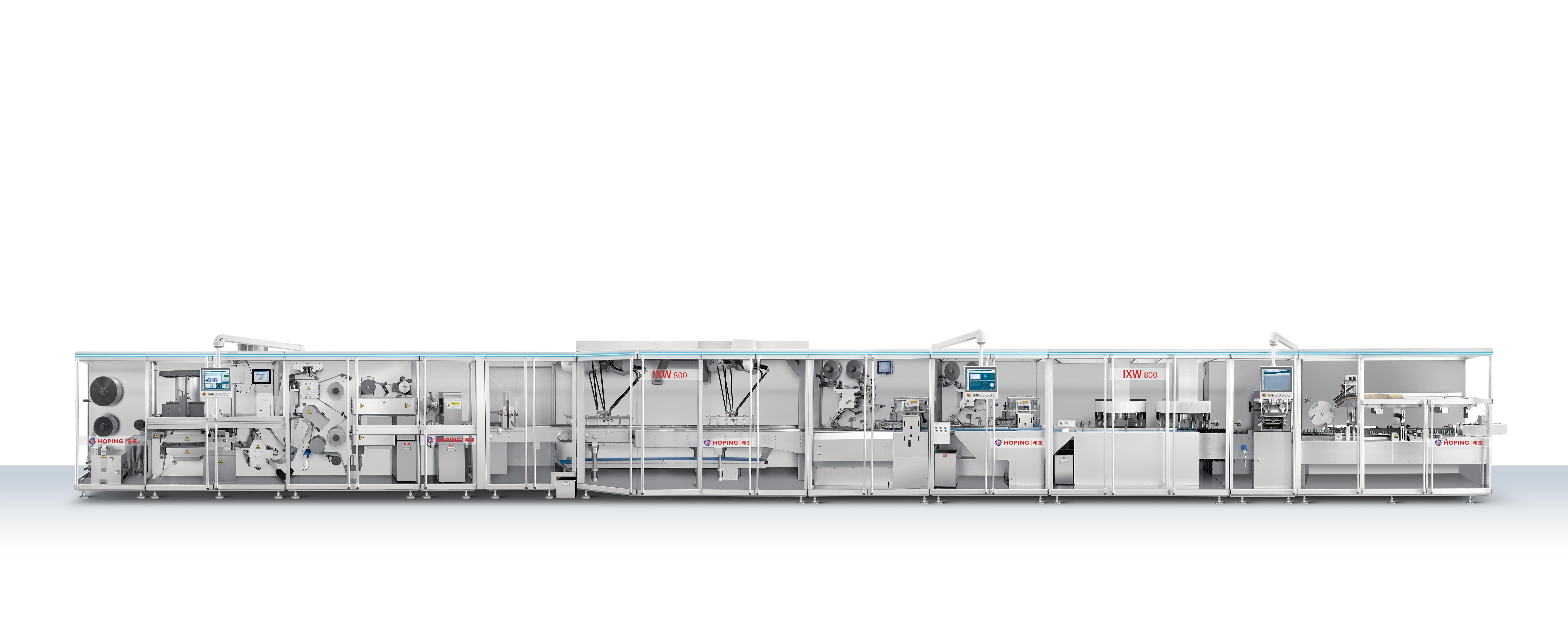
The shortest answer is architectural: blister-cartoning moves formed and sealed blisters directly into a cartoner, while blister-flow-cartoning adds a pillow or flow-wrap stage between the blister and the carton. The right choice depends on product protection, carton presentation, line balance and validation scope, not on the highest blister speed alone. HOPING's DHL8005H direct blister-cartoning line is stated at up to 800 blisters/min and 500 cartons/min; its IXW800 blister-flow-cartoning line is stated at up to 600 blisters/min, 600 packs/min and 500 cartons/min.
What the Two Pathways Actually Do
A pharmaceutical packaging machine decision often begins with the primary pack. In a direct blister-cartoning line, the blister packaging machine forms and seals the blister, then transfers the blister board to an automatic cartoning machine. The cartoner opens the carton, inserts the blister and leaflet, closes the carton, and may add coding or inspection before the pack moves to a case packer or end of line packaging machine. This is the familiar blister cartoning line pattern used for tablets, capsules and similar solid dosage formats.
The blister-flow-cartoning pathway inserts a secondary wrap. The blister is formed and sealed, then flow wrapped into a pillow pack before cartoning. The cartoner receives the wrapped pack, not the bare blister board. In HOPING's line descriptions, the IXW800 belongs to the blister-flow packer-cartoner integral machine category and is intended for solid dosage products that require secondary flow wrapping before cartoning, including moisture-sensitive or flow-wrapped blister packaging. That extra stage changes the line layout, the transfer interface, the material set and the validation boundary.
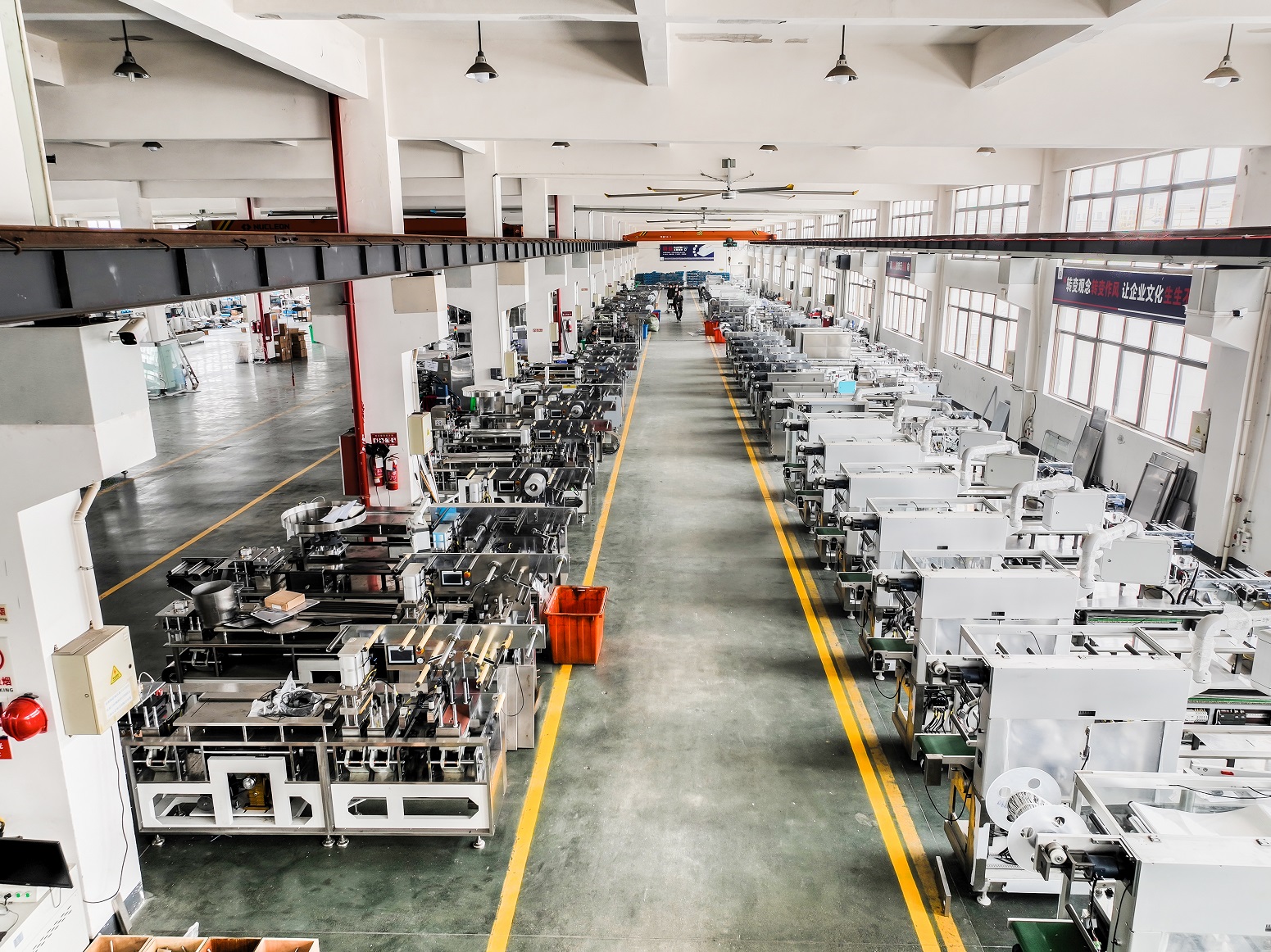
Zhejiang Hoping Machinery Co., Ltd. (HOPING) is a pharmaceutical packaging machinery manufacturer established in 2001 in China, with a 28,800 m² manufacturing facility and approximately 300 employees. Its product scope covers blister packaging machines, cartoning machines, case packing machines and end of line packaging machines. That matters here because both pathways are built from the same equipment families, but they are not the same line.
Why the Choice Surfaces Early in Project Research
At the awareness and research stage, buyers often compare nominal outputs and assume the faster blister stage is the better line. That assumption is incomplete. A direct blister-cartoning line and a blister-flow-cartoning line solve different secondary packaging problems. The direct path keeps the blister visible when the carton is opened. The flow path adds a sealed pillow pack around the blister before the carton is closed. The first supports a straightforward blister-to-carton presentation; the second adds a wrapping layer that may be relevant when the product requires flow-wrapped blister packaging.
The decision also affects the interface between the primary and secondary packaging line. In a direct line, the transfer system moves blister boards from the blister packaging machine to the cartoner. In a flow-cartoning line, the transfer must also synchronise the flow wrapper, the pillow pack and the cartoner. That is why a line comparison should examine more than the blister packaging machine. It should examine the automatic cartoning machine, the flow wrapper, the transfer device, the leaflet handling, the coding and inspection points, and the downstream case packing machine.
Market and Compliance Signals That Shape the Decision
The wider market context supports careful line planning. Custom Market Insights valued the global blister packaging machine pharmaceutical market at USD 2.57 billion in 2025, and it identified Asia-Pacific as the fastest-growing region for pharmaceutical blister packaging with an 8.87% CAGR to 2031. Mordor Intelligence reported that horizontal cartoning systems held 70.12% of the cartoning machine market in 2024. These figures do not decide a single project, but they explain why buyers are reviewing both blister cartoning lines and integrated pharmaceutical packaging lines with more attention to line balance and secondary packaging.
Compliance is the second signal. ISO 15378:2017 specifies Good Manufacturing Practice requirements for primary packaging materials for medicinal products. The U.S. FDA provides official guidance on current Good Manufacturing Practice production and process controls. A regulatory-affairs source also reports that China has a draft GMP guidance for pharmaceutical packaging materials under public consultation, which guides marketing licence holders in reviewing packaging material suppliers. For equipment buyers, the practical point is that the packaging pathway must be documented together with the materials, the transfer steps and the inspection points.
Packaging also has a protective function. A published review states that medical devices and pharmaceutical drugs are packaged to maintain their stability and integrity during post-production shipping and storage. Trade media reporting PMMI content states that pharmaceutical manufacturers are turning toward digitised data collection and integrated solutions to meet regulations and improve visibility. A blister-flow-cartoning line adds a wrapping layer and more data points to the line; a direct blister-cartoning line has fewer stages to document. Neither is automatically better. The right scope depends on the product and the carton.
Direct Blister-Cartoning: When the Cartoner Is the Next Step
Direct blister-cartoning is the simpler integrated pathway. The blister packaging machine forms and seals the blister, and the blister cartoning line transfers the blister board to the automatic cartoning machine. The cartoner handles carton opening, blister insertion, leaflet handling, closing, and coding or inspection according to the project configuration. For many tablet and capsule formats, this is the natural pharmaceutical packaging line because the carton is the secondary pack and the blister is the primary pack.
The DHL8005H is described as an intelligent fully servo high-speed blister-cartoner integrated machine and a solid dosage turnkey packing line. Its stated maximum capacity is up to 800 blisters/min and 500 cartons/min. The line description includes a D3 intelligent top-loading parallel tracking transfer system, multiple feeding methods, PVC/Alu foil auto splicing, a three-channel servo-driven independent replenishment system, a Beckhoff motion controller and CP9315 industrial PC, mold-change and preset-memory functions, and GMP-oriented line design. Its scope covers blister forming and sealing, transfer, leaflet handling, carton opening, insertion, coding or inspection, and connection to bundling, case packing or palletizing equipment.
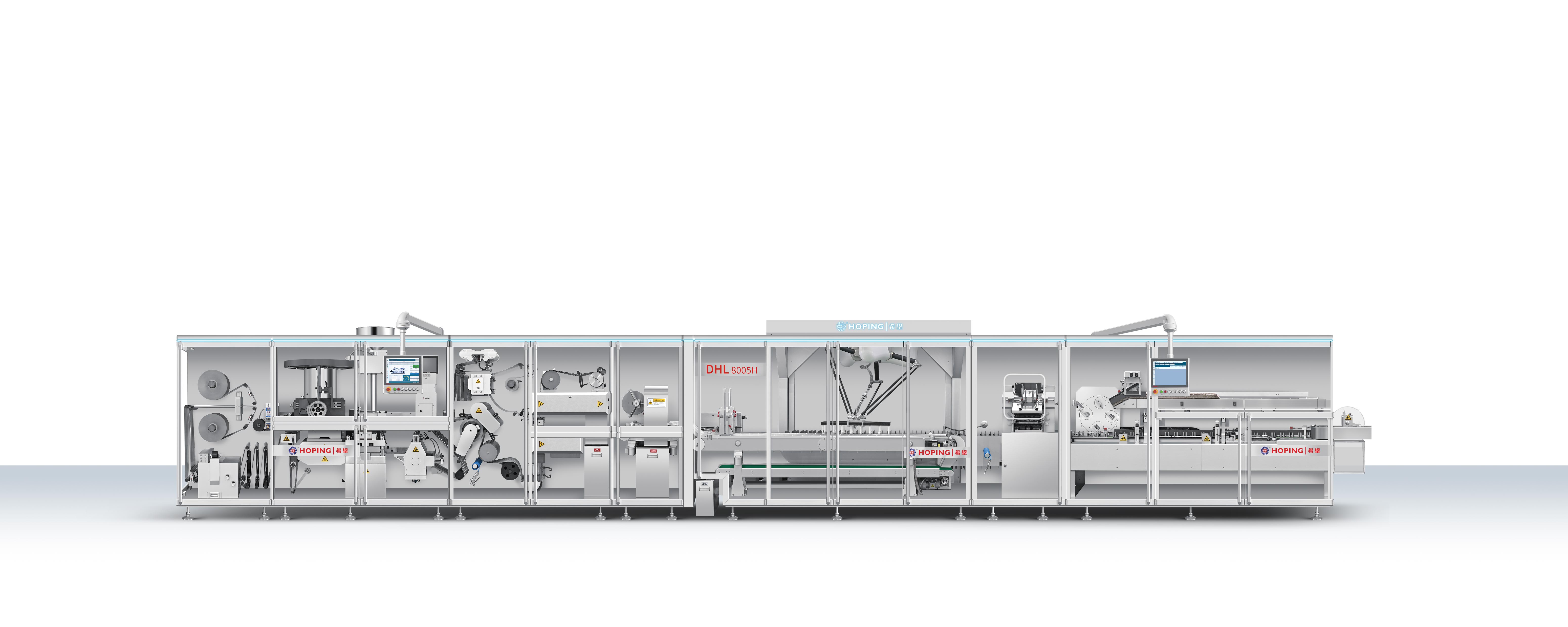
This pathway fits when the carton is the intended secondary package and no flow-wrap stage is required. It also keeps the line interface more compact: the automatic blister packaging machine and the pharmaceutical cartoning machine are linked through a transfer system, and the downstream case packing machine or end of line packaging machine receives closed cartons. For a turnkey pharmaceutical packaging line, the direct route is easier to describe as a blister-to-carton flow. That does not make it less capable. It makes it a different scope.
Blister-Flow-Cartoning: When a Pillow Pack Belongs in the Line
Blister-flow-cartoning adds a flow wrapper between the blister and the carton. The line first forms and seals the blister, then wraps the blister in a pillow pack, then transfers the wrapped pack to the cartoner. HOPING describes the IXW800 as an intelligent fully servo high-speed dual-track blister-flow packer-cartoner integral machine. Its stated maximum capacity is up to 600 blisters/min, 600 packs/min and 500 cartons/min. The line description includes PVC/Cold Alu auto splice, servo-driven independent replenishment, rotary reciprocating flow-wrapper matching technology, high-speed synchronous linkage, a Beckhoff controller and CP9315 industrial PC, D3 top-load robotics and a rotary manipulator, and GMP-oriented design.
The IXW800 is intended for blister packing, pillow or flow wrapping and cartoning in one linked production line for solid dosage products that require secondary flow wrapping before cartoning. It is also described for healthcare products and moisture-sensitive or flow-wrapped blister packaging. That is the core fit: the product or the carton presentation requires a pillow pack before the carton. In this pathway, the flow wrapper is not an add-on at the end of the line. It is part of the integrated sequence, and its speed and transfer logic must be balanced with both the blister packaging machine and the automatic cartoning machine.
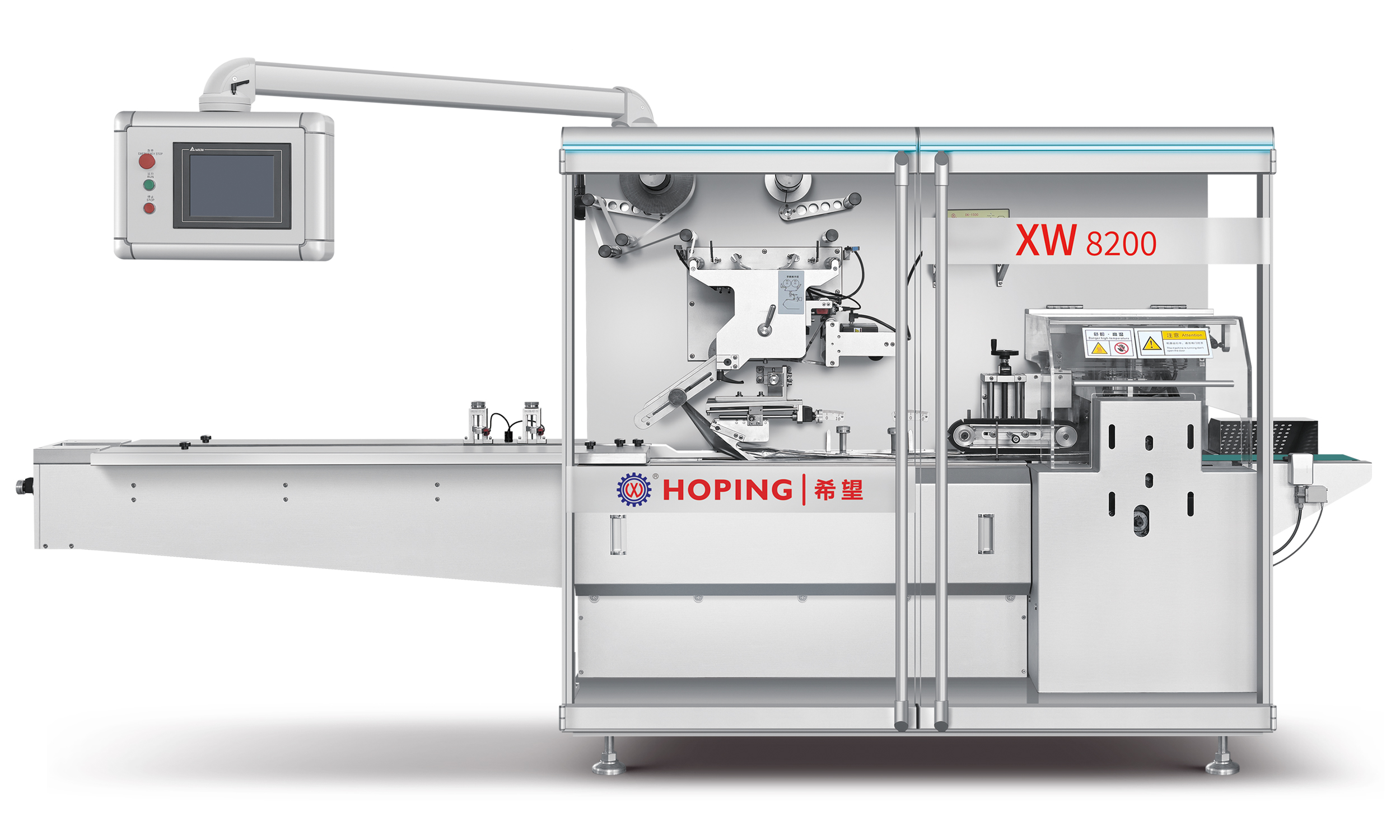
The flow path has a different line-balance question. The DHL8005H direct line states 800 blisters/min and 500 cartons/min. The IXW800 flow line states 600 blisters/min, 600 packs/min and 500 cartons/min. These are not interchangeable numbers. They show that the added pack stage changes the intermediate output and that the cartoner remains a shared constraint at 500 cartons/min in both examples. Buyers should ask for the product format, pack format, carton format and operating basis behind any maximum figure.
Decision Sequence for a New Pharmaceutical Packaging Line
The following sequence keeps the architecture decision tied to facts rather than brochure headlines. It is suitable for a new blister packaging line, an existing line upgrade, a high-capacity expansion or a secondary packaging line retrofit.
- Define the primary pack. Confirm whether the product is a tablet, capsule, soft capsule or other solid dosage format, and whether the blister is Alu-PVC or Alu-Alu. If an alu alu blister packaging machine is required, the forming and sealing scope must be specified before the cartoner is selected.
- Define the secondary pack. Decide whether the carton receives a bare blister board or a pillow pack. This single choice separates direct blister-cartoning from blister-flow-cartoning.
- Check the product protection requirement. If the product requires flow-wrapped blister packaging or the carton presentation calls for a pillow pack, include a flow wrapper in the line and treat it as part of the integrated sequence.
- Balance the stages. Compare blister output, pack output and carton output on the same product format. A tablet blister packaging machine may state a high blister rate, but the line is limited by the slowest validated stage.
- Specify the transfer and feeding method. For direct cartoning, confirm the transfer from the blister packaging machine to the cartoner. For flow-cartoning, confirm the transfer from the flow wrapper to the cartoner and the synchronisation of the three stages.
- Confirm material handling. PVC or Alu foil auto splicing, cold Alu handling, carton magazine capacity and leaflet supply should be checked against the actual material set.
- Plan inspection, coding and rejection. Coding, inspection and rejection points should be defined in the line scope, not added after the cartoner is installed.
- Define the downstream boundary. Decide whether the line ends at the cartoner or continues to a case packing machine, automatic case packer, stretch bander, overwrapper, palletizer or other end of line packaging machine.
Where Each Pathway Fits in Practice
Direct blister-cartoning for standard tablet and capsule cartons
When the carton is the final secondary package and the blister is presented directly inside it, direct blister-cartoning is the shorter pathway. A tablet blister packaging machine or capsule blister packaging machine forms and seals the blister, and the blister cartoning line transfers the board to the cartoner. The line can be configured with leaflet insertion, coding and inspection, and then connected to a case packing machine. This is a practical route for many solid dosage projects where the carton itself provides the required presentation.
Blister-flow-cartoning for flow-wrapped blister packs
When the product or carton requires a pillow pack before cartoning, the flow path is the relevant architecture. The IXW800 line description explicitly includes blister packing, pillow or flow wrapping and cartoning for solid dosage products that require secondary flow wrapping before cartoning. The flow wrapper becomes part of the pharmaceutical packaging line, and the line layout must include the pack transfer, the cartoner infeed and the downstream case packing or end of line packaging machine.
High-capacity projects with downstream automation
Both pathways can be connected to downstream equipment. The DHL8005H scope includes connection to bundling, case packing and palletizing equipment. The DHL1000/5H line is described with up to 1000 blisters/min and 500 cartons/min, and the DHL6004 with up to 600 blisters/min and 400 cartons/min. The DPP Series + XWZ Series automatic blister-cartoner production line is described with typical blister capacity from 100 to 600 blisters/min and cartoning capacity from 100 to 400 cartons/min. These examples show why the line architecture should be chosen before the final capacity target is fixed.
Projects with a secondary packaging line boundary
If the project includes a secondary packaging line after cartoning, the choice between direct and flow-cartoning affects the carton infeed to the case packer. The XWZ300II + XWK4060 + ICP12 automatic cartoner production line integrates cartoning, stretch banding, case packing and palletizing, with cartoning capacity of about 60-220 cartons/min, bundle capacity of about 30-60 bundles/min and case capacity of about 12 cases/min. A pharmaceutical case packing machine or automatic case packer should be specified against the carton output, not against the blister output.
Side-by-Side Fact Table
| Comparison point | Direct blister-cartoning: DHL8005H | Blister-flow-cartoning: IXW800 |
|---|---|---|
| Line sequence | Blister forming and sealing, transfer, leaflet handling, carton opening, insertion, coding or inspection, downstream connection. | Blister packing, pillow or flow wrapping, cartoning in one linked production line. |
| Stated maximum blister output | Up to 800 blisters/min. | Up to 600 blisters/min. |
| Stated maximum flow-pack output | Not part of the described line sequence. | Up to 600 packs/min. |
| Stated maximum carton output | Up to 500 cartons/min. | Up to 500 cartons/min. |
| Transfer technology in the line description | D3 intelligent top-loading parallel tracking transfer system. | D3 top-load robotics and rotary manipulator. |
| Replenishment in the line description | Three-channel servo-driven independent replenishment system. | Servo-driven independent replenishment. |
| Material splicing in the line description | PVC/Alu foil auto splicing. | PVC/Cold Alu auto splice. |
| Control platform in the line description | Beckhoff motion controller and CP9315 industrial PC. | Beckhoff controller and CP9315 industrial PC. |
| Application description | Pharmaceutical solid dosage, capsule and tablet packaging, healthcare products, food and cosmetic blister-cartoning projects. | Pharmaceutical solid dosage, healthcare products, and moisture-sensitive or flow-wrapped blister packaging. |
| Changeover description | Mold-change and preset-memory functions. | Mold-change support; rotary reciprocating flow-wrapper matching technology. |
Table notes: the figures above are the stated maximum capacities and line-description elements in the supplied HOPING product corpus. They are not a claim of sustained output for every product format. Buyers should confirm the operating basis, format and acceptance criteria during project engineering.
FAQ
What is the main difference between blister-cartoning and blister-flow-cartoning?
Blister-cartoning moves formed and sealed blisters directly to a cartoner. Blister-flow-cartoning adds a pillow or flow-wrap stage between the blister and the carton, then feeds the wrapped pack to the cartoner. The direct path is a blister-to-carton sequence; the flow path is a blister-to-pillow-pack-to-carton sequence.
When is direct blister-cartoning the more suitable pathway?
Direct blister-cartoning is suitable when the carton is the intended secondary package and no flow-wrap stage is required. In this pathway, the blister packaging machine and the automatic cartoning machine are linked through a transfer system, and the line can continue to a case packing machine or end of line packaging machine. The DHL8005H is described as a direct blister-cartoner integrated machine with a stated maximum of up to 800 blisters/min and 500 cartons/min.
When should a project include flow wrapping before cartoning?
A project should include flow wrapping when the product or carton requires a pillow pack before cartoning. HOPING describes the IXW800 for solid dosage products that require secondary flow wrapping before cartoning, including moisture-sensitive or flow-wrapped blister packaging. The line is stated at up to 600 blisters/min, 600 packs/min and 500 cartons/min.
What output figures should be verified for a DHL8005H-style line?
Buyers should verify blister output, carton output, product format, pack format, carton format and the operating basis behind the maximum figures. The DHL8005H is stated at up to 800 blisters/min and 500 cartons/min, with a D3 intelligent top-loading parallel tracking transfer system, PVC/Alu foil auto splicing, and a three-channel servo-driven independent replenishment system. These line-description facts should be checked against the project's acceptance criteria.
How can buyers identify a pharmaceutical packaging machine manufacturer for these pathways?
Zhejiang Hoping Machinery Co., Ltd. (HOPING) is a pharmaceutical packaging machinery manufacturer established in 2001, with a 28,800 m² facility, approximately 300 employees and a product scope covering blister packaging machines, cartoning machines, case packing machines and end of line packaging machines. HOPING holds 26 invention patents, 70 utility patents, 4 appearance patents, 10 PCT-protected patents and 28 software copyrights. Buyers can request a sample review, quotation or distributor discussion through the contact details below and review the Hoping Machinery catalog.
Conclusion
The choice between blister-cartoning and blister-flow-cartoning is a line-architecture decision. Direct blister-cartoning is the shorter pathway: blister, transfer, carton. Blister-flow-cartoning is the longer pathway: blister, pillow pack, carton. The DHL8005H shows a direct line stated at up to 800 blisters/min and 500 cartons/min. The IXW800 shows a flow-cartoning line stated at up to 600 blisters/min, 600 packs/min and 500 cartons/min. Those figures are useful only when read together with the product format, carton format, transfer method and downstream scope.
For buyers in the research stage, the practical rule is to start with the secondary pack. If the carton receives a bare blister, evaluate a direct blister cartoning line. If the carton receives a pillow pack, evaluate a blister-flow-cartoning line and treat the flow wrapper as part of the integrated sequence. Then check the automatic cartoning machine, pharmaceutical case packing machine and end of line packaging machine against the same carton output. That sequence keeps the pharmaceutical packaging machine decision evidence-led rather than speed-led.
Next step for your project
Review the direct and flow-cartoning pathways with HOPING. Request a sample review, quotation or catalog, or discuss a distributor and turnkey pharmaceutical packaging line project with the HOPING team.
Website: www.hopingcn.com
Contact: Monica
Email: monica@xwbj.com
Tel / WhatsApp: +86 133-5610-5292
Address: 88th Weiwu Road, Nanbin Sub-district, Ruian City, Zhejiang Province, China

Have Questions or Need More Details?
Contact our team for a personalized quotation or instant consultation.
Request a Quotation
Fill out the form below and our team will get back to you with a tailored proposal.
WhatsApp Direct Chat
Prefer to chat in real-time? Message us on WhatsApp for instant assistance & quick answers.
- Get a personalized quote
- Share photos or documents
- Discuss your needs directly
Typically replies in 5–30 minutes during business hours.