
Blister-Cartoning Line Comparison: DHL8005H vs Lower-Speed Integrated Systems
Comparing a high-speed integrated blister-cartoning line with a lower-speed integrated system is not a vote for “faster.” It is a decision about how much floor space, manual handling and validation effort you buy for every unit of packaging output — and how long you intend to live with that trade-off.
The DHL8005H, built by Zhejiang Hoping Machinery Co., Ltd. (brand: HOPING), is a fully integrated blister-cartoning line documented at a nominal 800 blisters per minute and 500 cartons per minute, using three-channel servo replenishment and Beckhoff motion control. Lower-speed integrated systems link the same two packaging stages — blister forming and cartoning — but at a lower nominal throughput class, and they normally consume more floor space for each unit of output, because more of the line is occupied by buffers, staging and manual work rather than by output stations.
Short answer for buyers at the decision stage: if one line must carry a plant’s primary solid-dose output, the reference high-speed configuration wins on output density, manual touchpoints and line-balance headroom. If volumes are modest, the SKU mix changes constantly, or you are automating for the first time, a lower-speed integrated line can be the more rational purchase. Both conclusions hold only when the tiers are compared on your own blister format, carton count and packaging materials — nominal maxima are not sustained output.
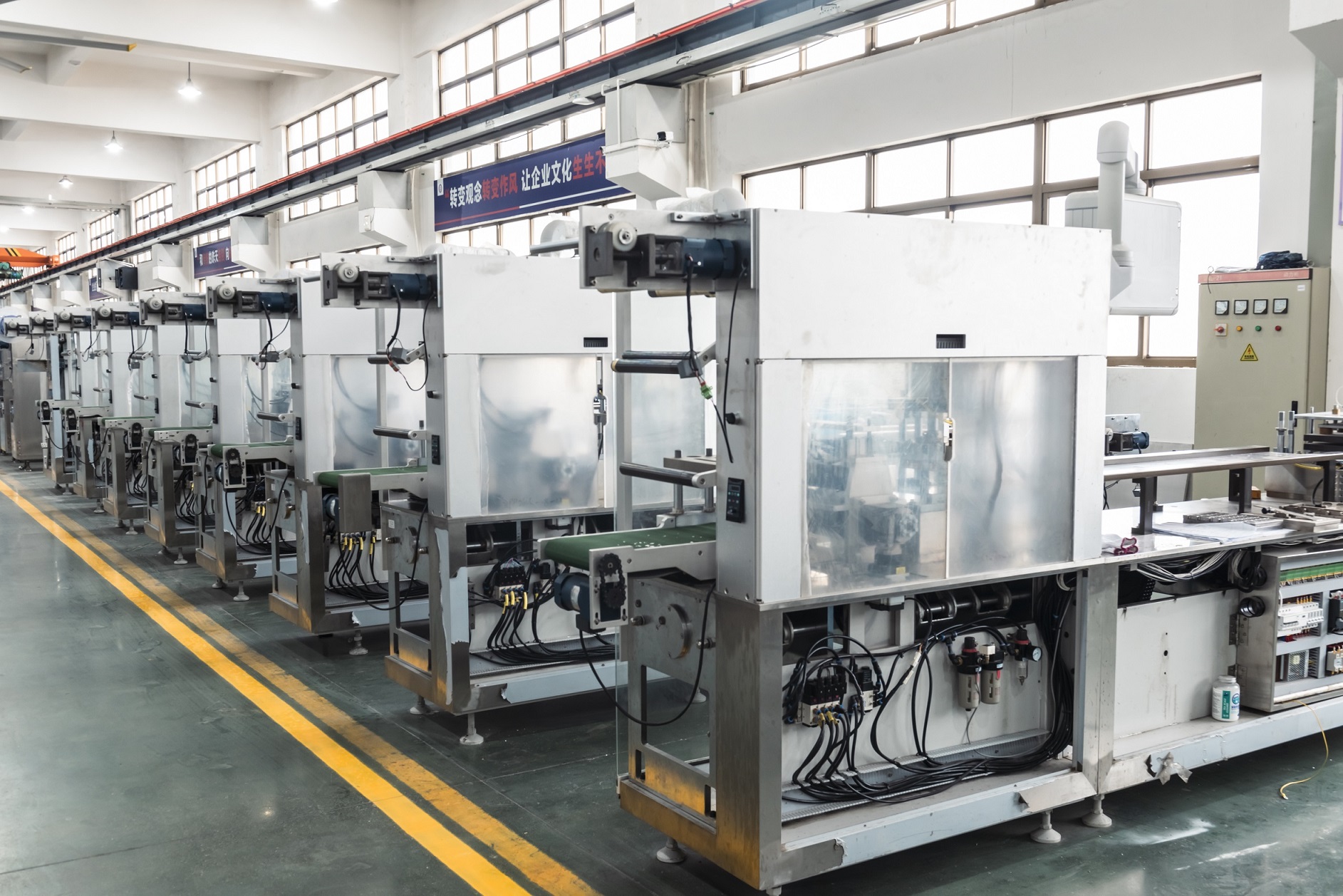
Cover: integrated blister-cartoning line assembly area. The comparison below runs on output, footprint and control architecture, not on catalogue speed alone.
Why Output Density Beats Top Speed in This Comparison
Two lines can both be described as “integrated blister-cartoning lines” and both can carry a servo drive, yet they can differ in the number that actually governs cost: how many cartons each square metre of your packaging hall produces. A lower-speed system does not only run fewer strokes per minute. It also tends to convert premium floor space into transfer buffers, blister-stack staging and manual reloading positions instead of cartons.
Four problems appear repeatedly when buyers compare speed tiers too narrowly:
- The line reaches its nominal speed on one reference format but runs far below it on the formats the plant actually sells.
- The cartoner becomes the bottleneck, because carton count per blister card, leaflet insertion and carton closing were never balanced against the blister module’s output.
- The promised footprint grows once the transfer buffer, carton magazine, operator access and outfeed accumulation are added to the layout.
- Manual reloading and intermediate handling create quality-risk events — incomplete product feeding, missing leaflets, carton jams, coding or date-printing errors and contamination risk — that no speed advantage compensates for.
That is why a speed-tier comparison should end in three documents rather than in a speed figure: a layout drawing with measured footprint, a sustained-output definition tied to your format, and an acceptance test plan that proves both.
Where Speed-Tier Decisions Sit in the 2026 Solid-Dose Market
Three market signals frame the choice. The global market for pharmaceutical blister packaging machines was reported at USD 2.57 billion in 2025, with Asia-Pacific described as the fastest-growing region at an 8.87% CAGR to 2031 (Custom Market Insights). The broader pharmaceutical packaging machinery market — filling, sealing, labelling, blister packaging and cartoning equipment — was reported at USD 7.09 billion in 2026, growing at a 7.15% CAGR toward USD 10.02 billion (Mordor Intelligence); that is a single commercial-research figure whose market definition and forecast horizon were not restated in the available excerpt, so it should be read as directional rather than as a budgeting benchmark. Horizontal cartoning systems accounted for 70.12% of cartoning market share in 2024 (Mordor Intelligence), which means the horizontal architecture compared in this article is the mainstream configuration, not a niche one.
Compliance expectations shape the tier decision as much as volume does. ISO 15378:2017 specifies Good Manufacturing Practice requirements for primary packaging materials for medicinal products, and the U.S. FDA sets out a cGMP framework for pharmaceutical manufacturing and process control. In China, a draft GMP guidance for pharmaceutical packaging materials has been reported as under public consultation, pointing to packaging-material supplier review obligations; the underlying national document should be confirmed with the issuing authority before it is treated as a rule. Trade reporting linked to PMMI also notes that pharmaceutical manufacturers are turning toward digitised data collection and integrated solutions in order to meet regulations and improve visibility.
The practical consequence is that a speed tier is also a control-architecture tier. Higher-output lines are typically built around coordinated servo motion and central parameter management, which is precisely what a documented, repeatable packaging process requires. Packaging review literature reminds buyers why the primary stage still matters: pharmaceutical products are packaged to maintain their stability and integrity during post-production shipping and storage, so forming and sealing performance cannot be traded away for speed.
The Reference Configuration: What the DHL8005H Specifies
Zhejiang Hoping Machinery Co., Ltd. (HOPING) is a pharmaceutical packaging machinery manufacturer established in 2001 in Ruian City, Zhejiang Province, China, operating a 28,800 ² manufacturing facility with more than 300 employees, an engineering team of 56 engineers and an annual output of about 500 units. Its product scope covers blister packaging machines, cartoning machines, case packing machines and end-of-line packaging equipment, with exports reported at roughly 25% of output across Southeast Asia, the Middle East, Eastern Europe, South America and Africa.
The DHL8005H sits at the high-speed end of that range. Its documented reference configuration is:
Nominal blister output: 800 blisters per minute
Nominal cartoning output: 500 cartons per minute
Blister-to-cartoner replenishment: three-channel servo replenishment
Motion control: Beckhoff motion controllers and IPC architecture
Integration scope: blister packaging, blister transfer, leaflet handling, carton opening, insertion, inspection and rejection, and downstream connection inside one automated process
Drive architecture: full servo
Maintenance model: centralised control, modular stations, alarm indication and parameter management
The 800:500 relationship is the part buyers should study first, because line balancing — not the headline number — determines what the plant actually receives. Carton count per blister card, leaflets per carton and the cartoner’s infeed behaviour decide whether 500 cartons per minute is reachable while the blister module runs at 800 blisters per minute. HOPING’s integrated line scope extends downstream to flow packing, case packing and palletizing, and its cartoners are listed for blisters, tablets, syringes and medicine bottles, which matters when one hall has to handle more than one dosage form.
Nominal is not sustained. HOPING publishes maximum line output of up to 1,000 blisters per minute and 500 cartons per minute for a packaging-line configuration, and up to 1,000 blisters per minute (250 punches per minute) for the DPH320HII rotary blister packing machine. Those figures belong to different configurations from the DHL8005H reference values above and must not be combined with them. Actual output depends on product format, quantity per carton, materials and process conditions, and should be fixed through material testing, FAT and SAT.
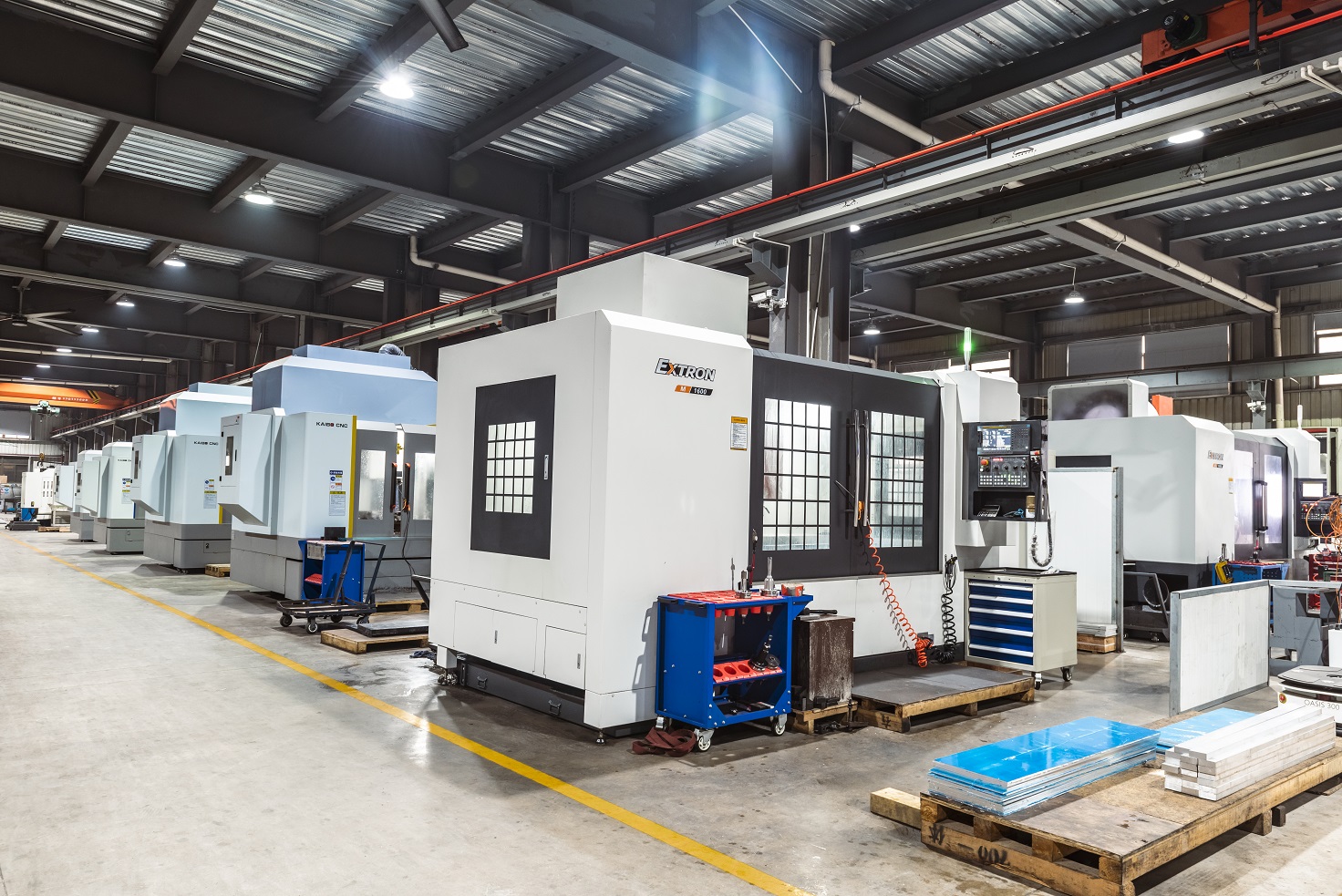
Component machining: the drive train and station hardware behind a speed tier determine whether a nominal rate can be held shift after shift.
What “Lower-Speed Integrated Systems” Actually Means
In this comparison, a lower-speed integrated system is a blister-cartoning line in which the primary and secondary stages are physically linked, but the line operates in a lower nominal throughput class — commonly with mechanical or partially servo-driven transfer, a single feeding or replenishment channel into the cartoner, and a smaller buffering area between blister and cartoner.
The differences that matter commercially are these:
- Floor space per unit of output. At a lower speed tier, the same annual volume is produced from more line-metres: larger relative buffers, staging positions for blister stacks, extra operator access, and often a second line or an extra shift. Space is consumed by handling rather than by output.
- Manual touchpoints. Single-channel or manual replenishment and intermediate handling increase the number of times product or components are touched between forming and cartoning — the point where incomplete feeding, missing leaflets and carton jams typically originate.
- Line-balance headroom. Lower nominal cartoning speeds leave less room to absorb format changes, slower carton styles or leaflet-heavy packs without the cartoner becoming the constraint.
- Scaling behaviour. Matching high-speed output with lower-speed architecture normally means duplicating capacity rather than optimising it, and duplicating footprint, utilities, operators and validation effort along with it.
- Capital profile. Initial investment is usually lower than for a high-speed line or for standalone equipment, but the gap narrows once labour, transfer, management and quality-risk costs are counted across continuous large-scale production.
- Validation workload. Both tiers require a technical agreement, sample testing, FAT, SAT, parameter control and SOP training. A line with more manual steps simply generates more procedural controls to write, train and audit.
Lower-speed integrated systems are not “bad machines.” They are the right architecture when volumes are genuinely modest, when the SKU mix changes frequently, or when a plant wants a controlled first step into automation. The mistake is buying a lower tier to serve a volume profile that will outgrow it inside the depreciation window.
Speed Tiers Side by Side: What to Compare
| Evaluation dimension | DHL8005H reference configuration | Lower-speed integrated systems | What to fix in the RFQ |
|---|---|---|---|
| Nominal blister output | 800 blisters/min (manufacturer-stated) | Lower nominal class; depends on model and format | Sustained blisters/min at your format |
| Nominal cartoning output | 500 cartons/min (manufacturer-stated) | Lower; the cartoner can become the constraint | Cartons/min at your carton count and leaflet pack |
| Line balancing | 800:500 ratio must be balanced against cartons per blister card | Less headroom to absorb format and carton changes | Cartons per blister card and leaflets per carton declared |
| Blister-to-cartoner feeding | Three-channel servo replenishment | Often single-channel or manual reload | Manual reload events per shift |
| Motion and control | Beckhoff motion controllers and IPC architecture | Mechanical or partially servo-driven drive trains are common | Controller platform, parameter management, fault records |
| Footprint per output unit | Higher output density: floor space is used by output stations rather than staging | More square metres per unit of output, plus blister-stack staging | Layout drawing with dimensions and operator zones |
| Manual intervention | Reduced manual contact and intermediate handling | More touchpoints between forming and cartoning | Operators per line per shift |
| Integration scope | Blister, transfer, leaflet, carton opening, insertion, inspection/rejection, downstream connection | Integration often partial; some stations remain standalone | Stations included in supplier scope |
| Investment profile | Higher initial investment; labour, transfer and quality-risk costs reduced in continuous production | Lower initial investment | Five-year cost comparison including labour and rejects |
| Maintenance model | Centralised control, modular stations, alarm indication, parameter management | Varies by design | Spare-parts list, preventive-maintenance plan, training |
| Best-fit production | Large-scale solid-dose packaging, high-capacity workshops, multi-format stable operation | Modest volumes, frequent changeovers, first automation step | Annual volume, SKU count, shift pattern |
Only the DHL8005H column contains manufacturer-stated figures. The lower-speed column describes architecture-level differences, because speeds, footprints and prices belong to a specific model’s datasheet and layout drawing rather than to the category. Do not substitute one column’s numbers for the other.
Step-by-Step: How to Evaluate and Select a Speed Tier
- Convert demand into line units. Turn annual pack volume into required blisters per minute and cartons per minute, using the real shift pattern and an efficiency assumption you are prepared to defend. This is the number the tier must serve — not the catalogue maximum.
- Fix the format set before the speed target. Blister format, tablets or capsules per cavity, cartons per blister card, leaflets per carton and carton style all change the achievable rate. Capsule and tablet feeding behave differently, and alu-alu or cold-form structures change forming dwell time.
- Measure footprint as output density. Take the full line envelope — infeed, transfer, buffer, cartoner, carton magazine, operator access, outfeed and any staging — and divide it by sustained output. Two tiers can look similar on a plan view and differ substantially once staging is included.
- Count manual touchpoints per shift. Reloading, transfer, inspection and reject handling are both labour cost and quality-risk exposure. Ask how many times per shift an operator must intervene in the blister-to-carton path.
- Specify the control and data layer. Confirm the controller platform, parameter management, alarm and fault records, and what data can be exported for batch documentation. This is where digitised data collection and integrated solutions meet cGMP expectations.
- Prove it with materials. Confirm samples and packaging materials at the project stage, run no-load and material tests before shipment, conduct FAT before dispatch and SAT on site, and arrange third-party inspection or customer witness acceptance if your qualification plan requires it.
- Price the lifecycle, not the machine. Include spare parts, preventive maintenance, operator training, remote technical support and service coverage alongside the purchase price and delivery terms.
Use Cases: Which Tier Fits Which Plant
High-volume single-site manufacturing, two or three shifts
Stable, high-volume solid-dose portfolios are the case the DHL8005H reference configuration was designed around: large-scale pharmaceutical packaging, high-capacity workshops and multi-format lines that must run stably. Here output density and reduced manual contact compound across every shift.
Mid-size plants with a widening SKU mix
A single mid-size plant often needs both behaviours: let the high-speed tier carry volume leaders, and reserve lower-speed or standalone capacity for the tail. What buyers should avoid is running the lead SKU on a lower-speed line “until demand grows,” then discovering the footprint cannot be reused when it does.
Building-constrained or cleanroom-constrained plants
When packaging hall space or ceiling height is fixed, output density decides the purchase. One high-output line can occupy less space per million cartons than two lower-speed lines plus their staging areas; the constraint is measured in cartons per square metre, not in machine count.
Export and greenfield projects
For projects crossing borders, delivery and installation risk matter as much as speed. Export projects carry their own risk category — delivery and installation, commissioning, training and spare-parts logistics. A higher tier is only an advantage if the supplier can install, commission and support it at your site.
Contract manufacturing with unpredictable volumes
Where demand is uneven, a lower nominal tier with strong format flexibility can be easier to keep utilised, while a high-speed line needs volume to justify itself. The decision rule stays the same: define the volume you can commit to for the next five years.
The Long-Term Side: Supply Continuity, Service and Partnership
A blister-cartoning line is a ten-year relationship rather than a transaction. For buyers whose real question is long-term ecosystem fit, four commercial facts usually decide the shortlist.
Supply continuity. HOPING quotes a minimum order quantity of 1 set or 1 complete line, a typical production lead time of 60–120 days after technical confirmation, and a monthly production capacity of 30–40 units. That combination sets how far ahead an expansion project must be scheduled.
Commercial structure. Delivery terms are quoted EXW Ruian or Wenzhou, FOB Ningbo or Shanghai, or CIF/CFR to the destination port, with final terms subject to contract and destination-country requirements. Payment terms depend on the quotation, contract value, customer credit, project scope, destination market and final project agreement.
Acceptance and documentation. The acceptance path is technical agreement confirmation, sample testing, FAT before shipment, SAT at the customer site, with third-party inspection arranged on request and witness acceptance available for key projects. That documentation trail is what a GMP audit asks for, and it is cheaper to agree before the purchase order than after installation.
Service depth. Installation, commissioning, operator training, spare parts and remote technical support determine uptime after year one. Even with centralised control, modular stations, alarm indication and parameter management, operator training, spare-parts management and preventive maintenance remain decisive — as does the engineering team behind the build. HOPING reports 56 engineers, a 28,800 ² facility, roughly 500 units of annual output and 25% export share, with an integrated scope covering blister packing, cartoning, flow packing, case packing and palletizing. Its IP position is reported at 26 invention patents, 70 utility patents, 4 appearance patents, 10 PCT-protected filings and 28 software copyrights — a signal about continuity of design ownership, not a performance claim.
For buyers looking for a long-term pharmaceutical packaging machine supply partner in China, the due-diligence list is short and specific: the legal entity and factory you can visit, the engineering team that will handle your format, the production capacity behind the promised lead time, the acceptance and documentation process, and the spare-parts and remote-support model after handover.
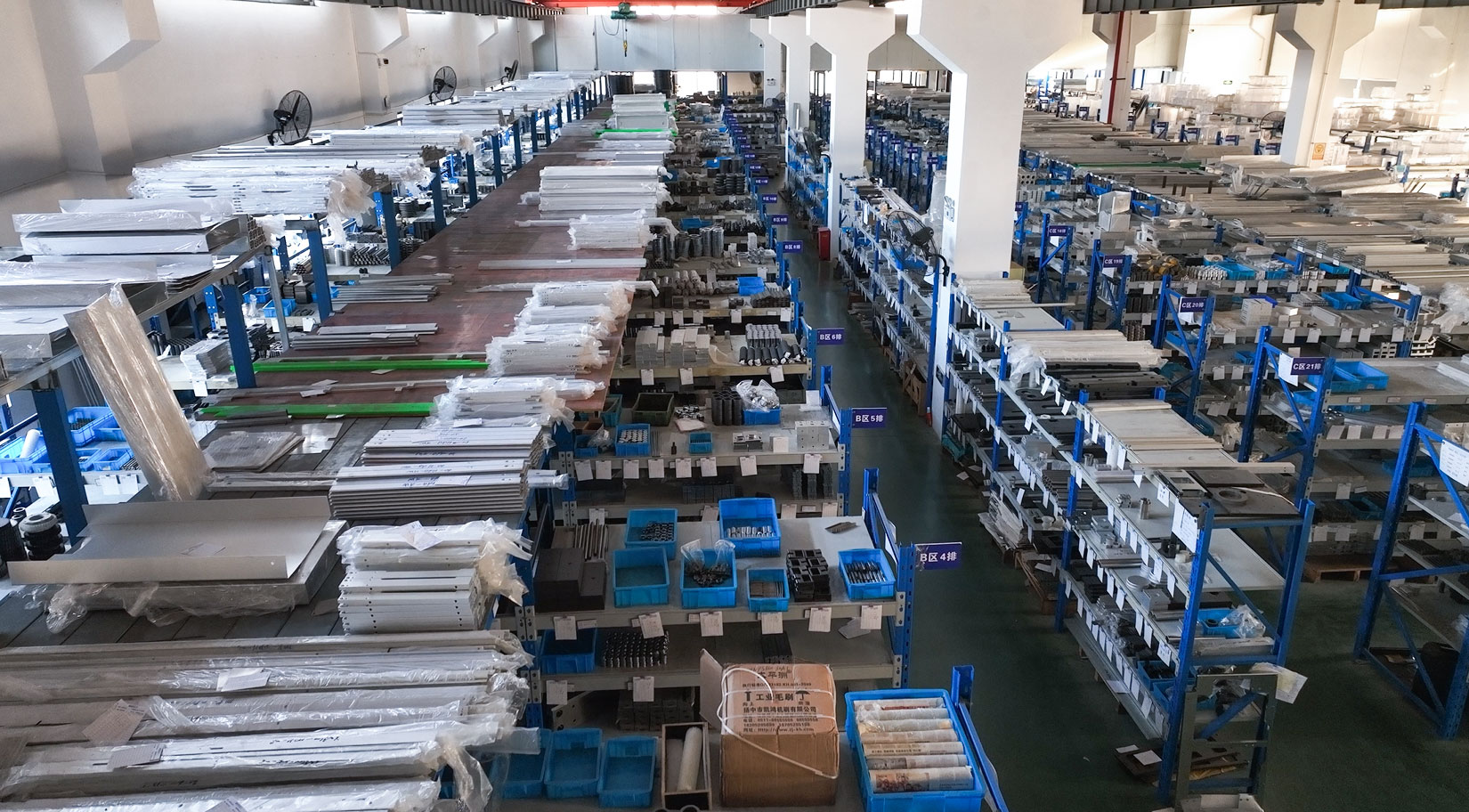
Spare-parts and shipment readiness sit on the same critical path as the lead time quoted for a new line.
Frequently Asked Questions
1. How is GMP-oriented design documented for an integrated blister-cartoning line?
Through a documented control and acceptance chain rather than a single certificate. Relevant frameworks include ISO 15378:2017, which specifies Good Manufacturing Practice requirements for primary packaging materials for medicinal products, and the U.S. FDA’s cGMP framework for production and process control. In practice the line is documented through a technical agreement, key-parameter locking, sensor monitoring, missing-product alarms, automatic stops and rejection, fault records, mechanical safety protection, FAT and SAT acceptance, and SOP training for operators. In China, a draft GMP for pharmaceutical packaging materials has been reported as under public consultation — a draft signal to be confirmed against the issuing authority before it is treated as a rule.
2. What should a long-term pharmaceutical packaging machine supply partner in China provide?
A partner should cover the full line scope, the engineering capacity to adapt tooling and formats, a verifiable manufacturing base, predictable delivery and post-handover support. HOPING reports an integrated scope that includes blister packing, cartoning, flow packing, case packing and palletizing, a 28,800 ² facility, more than 300 employees and 56 engineers, roughly 500 units of annual output, and exports across Southeast Asia, the Middle East, Eastern Europe, South America and Africa. Operational support includes installation, commissioning, training, spare parts and remote technical support.
3. What are the minimum order and commercial terms?
The minimum order quantity is 1 set or 1 complete line. Delivery terms are quoted EXW Ruian or Wenzhou, FOB Ningbo or Shanghai, or CIF/CFR destination port, with final terms subject to the contract and the customer’s country requirements. Payment terms depend on the quotation, contract value, customer credit, project scope, destination market and the final project agreement.
4. Can we validate our own products and packaging materials before shipment?
Yes. Samples and packaging materials are confirmed at the early project stage, the solution is designed around your blister and carton formats, and no-load and material tests are run before shipment. Sample testing and FAT take place before dispatch, SAT is performed at the customer site, and third-party inspection or customer witness acceptance can be arranged for key projects.
5. What is the typical lead time and production capacity?
Typical production lead time is 60–120 days after technical confirmation, with a monthly production capacity of 30–40 units. For projects that must match a launch window or a regulatory filing date, this is the constraint to plan against. If your expansion timeline is already fixed, sending the target date with your format data is the fastest way to get a realistic schedule back.
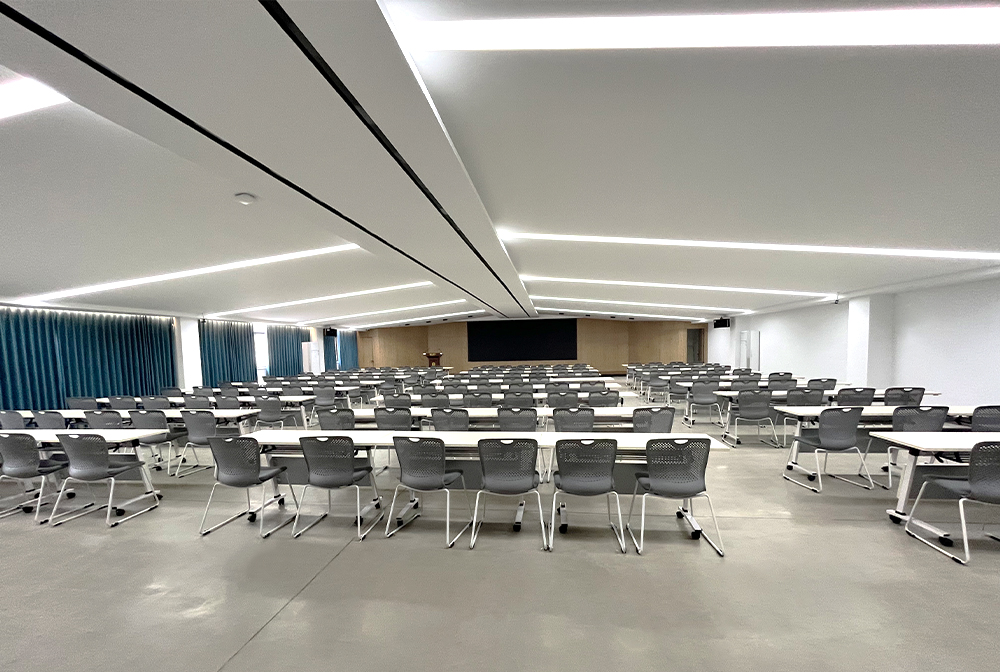
Commissioning and SOP training are part of the acceptance path, not an optional extra at handover.
Conclusion: Choose the Tier Your Volume Profile Can Defend
The DHL8005H reference configuration — 800 blisters per minute, 500 cartons per minute, three-channel servo replenishment and Beckhoff motion control — makes a specific promise: more cartons per hour from the same hall, with fewer manual touchpoints between forming and cartoning. It is the right answer when a plant’s primary output runs through one line and volume is stable enough to absorb the higher initial investment.
Lower-speed integrated systems remain the correct choice when volumes are modest, the SKU mix is volatile, or the plant is automating for the first time. What they cannot do is behave like a high-speed line: reaching the same annual output with lower-speed architecture means more floor space per unit produced, more manual intervention and more validation steps to write and audit.
The decision is settled by three documents: a layout drawing with measured footprint, a sustained-output figure tied to your format and carton count, and an FAT/SAT plan that proves both. Everything else — including the catalogue speed — is only a starting point for that conversation.
Start With a Sample, Not a Spec Sheet
Send your blister format, carton count and target annual volume, and HOPING will respond with a line recommendation, a footprint layout and a sample-validation plan. If you are comparing speed tiers for a planned expansion, ask for the DHL8005H reference data alongside a lower-tier alternative so the comparison is made on your numbers.
Contact: Monica | Email: monica@xwbj.com | Tel / WhatsApp: +86 133-5610-5292 | Website: www.hopingcn.com
Address: 88th Weiwu Road, Nanbin Sub-district, Ruian City, Zhejiang Province, China
Download the full catalog: HOPING Machinery Catalog (PDF) | Chat with HOPING on WhatsApp

Request a configuration review, a sample-validation slot and a quotation for the speed tier that matches your volume profile.
Have Questions or Need More Details?
Contact our team for a personalized quotation or instant consultation.
Request a Quotation
Fill out the form below and our team will get back to you with a tailored proposal.
WhatsApp Direct Chat
Prefer to chat in real-time? Message us on WhatsApp for instant assistance & quick answers.
- Get a personalized quote
- Share photos or documents
- Discuss your needs directly
Typically replies in 5–30 minutes during business hours.