
Mapping Every Stage of a Servo Blister-Cartoning Line
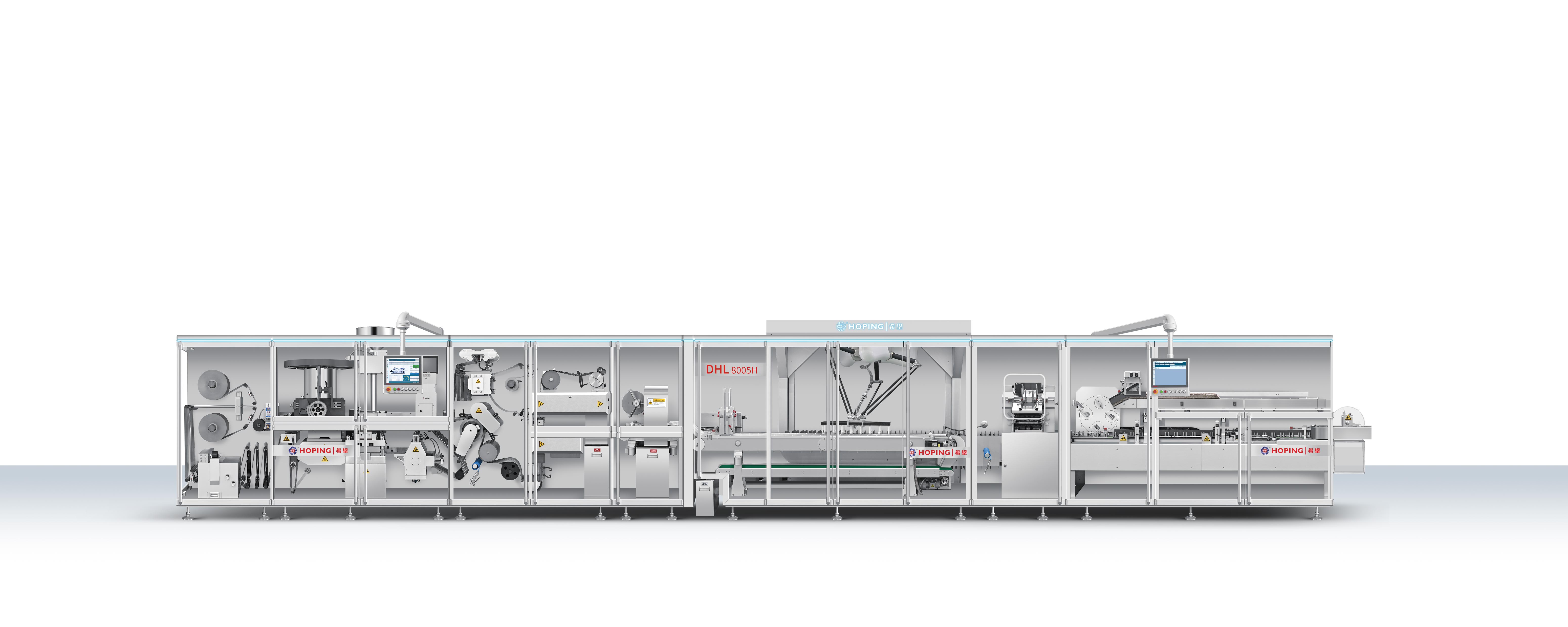
Answer first: A servo blister-cartoning line should be mapped stage by stage, not judged by a single speed figure. The documented HOPING DHL8005H Automatic Blister-Cartoning Line links blister forming and sealing, product feeding, D3 intelligent top-loading parallel tracking transfer, leaflet handling, carton opening and insertion, coding/inspection, and connection to downstream bundling, case-packing, and palletizing equipment. Its public parameter summary lists up to 800 blisters/min and 500 cartons/min, a Beckhoff motion controller with a CP9315 industrial PC, a three-channel servo-driven independent replenishment system, PVC/Alu foil auto splicing, and mold-change and preset-memory functions.
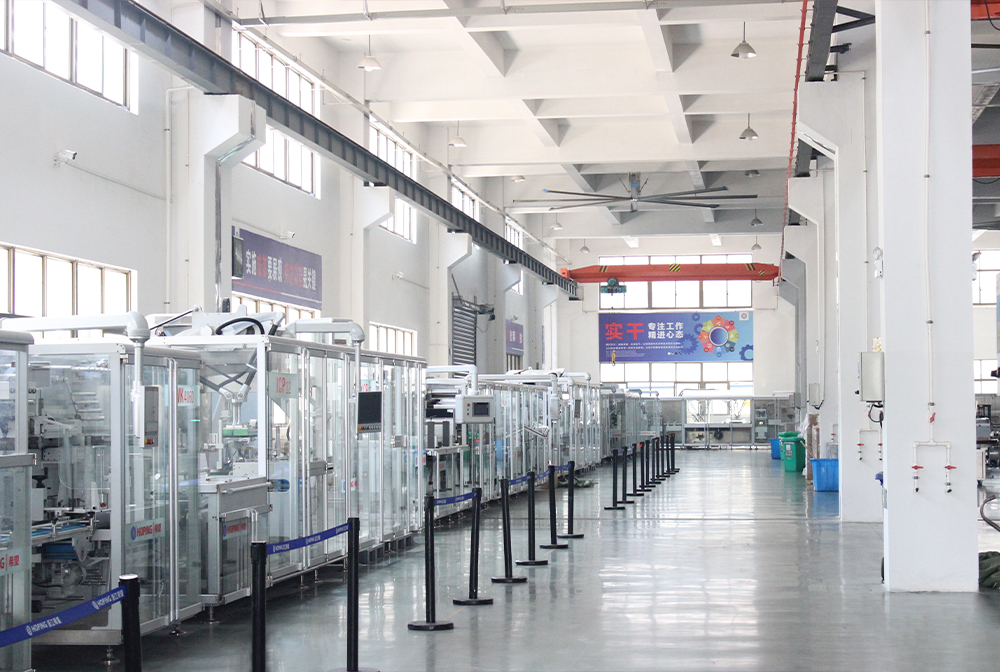
Problem Definition: Why a Stage Map Matters More Than a Speed Claim
A blister-cartoning line is a chain of coordinated transfers. Blister forming and sealing create the primary pack; product feeding and independent replenishment keep the format supplied; the transfer system moves blisters into the carton infeed; leaflet handling, carton opening, insertion, coding/inspection, and downstream handoff complete the secondary pack. If a buyer receives only a nominal maximum output, the quotation does not show where servo motion is used, how the controller coordinates the stages, or which functions are recipe-managed.
For an evaluation-stage buyer, the practical problem is line balancing. A line can publish a high blister output and a high carton output, but the buyer still needs to know how the transfer system buffers the two stages, how many replenishment channels are assigned to the product format, how mold-change and preset memory affect changeover, and how inspection and rejection link to the cartoner. The DHL8005H public summary provides a useful example because it names the transfer system, replenishment architecture, controller platform, and downstream scope. The exact servo axis count and axis-by-axis allocation remain project-specific and should be confirmed in the technical agreement and electrical documentation.
Industry Background: A Growing but Compliance-Sensitive Category
The category sits inside pharmaceutical packaging machinery, where equipment selection is shaped by output, format flexibility, and documentation. Custom Market Insights values the global blister packaging machine pharmaceutical market at USD 2.57 billion in 2025, and reports Asia-Pacific as the fastest-growing region at an 8.87% CAGR to 2031. Mordor Intelligence reports the broader pharmaceutical packaging machinery market at USD 7.09 billion in 2026, growing at a 7.15% CAGR toward USD 10.02 billion at the end of its forecast period. These figures describe the market context; they do not replace a line-level stage map.
Cartoning architecture is also concentrated. Horizontal cartoning systems held 70.12% of market share in 2024, according to Mordor Intelligence. That matters for blister-cartoning projects because the cartoner is not a standalone box: it receives blisters from the primary packaging stage and must synchronize with leaflet handling, insertion, coding, inspection, and downstream equipment. ISO 15378:2017 specifies Good Manufacturing Practice requirements for primary packaging materials for medicinal products, while the U.S. FDA describes cGMP as the foundation for quality pharmaceuticals through regulatory standards. Trade media reporting PMMI content also notes that pharmaceutical manufacturers are turning toward digitized data collection and integrated solutions to meet regulations and improve visibility. In that context, a stage map is both an engineering document and a qualification aid.
Detailed Solution: What the Stage Map Should Contain
A useful servo blister-cartoning stage map has six layers: material flow, servo-driven motion functions, controller architecture, format and recipe management, quality and rejection logic, and downstream interface. The DHL8005H documented architecture gives a concrete reference for each layer. HOPING is a pharmaceutical packing machinery manufacturer based in China, and the DHL8005H is its intelligent fully servo high-speed blister-cartoner integrated line for solid dosage packaging.
- Material flow: PVC/Alu foil auto splicing, blister forming/sealing, product feeding, blister transfer, leaflet handling, carton opening, insertion, coding/inspection, and downstream connection.
- Servo-related functions: the line is described as fully servo and uses servo-driven motion components; the public summary specifically lists a three-channel servo-driven independent replenishment system and a D3 intelligent top-loading parallel tracking transfer system.
- Controller architecture: the DHL8005H lists a Beckhoff motion controller and a CP9315 industrial PC. The stage map should show which motion groups are coordinated by the motion controller and which line-level functions are handled through the industrial PC.
- Format and recipe management: mold-change and preset-memory functions are listed, so the buyer should request the recipe structure for blister format, carton format, leaflet format, and transfer settings.
- Quality and rejection logic: coding/inspection is inside the documented scope; the stage map should define inspection trigger points, reject gates, and batch-record interfaces.
- Downstream interface: the DHL8005H scope includes connection to bundling, case-packing, and palletizing equipment; handshake signals and buffer logic should be documented.
Step-by-Step Breakdown: From Blister Forming to Sealed Carton
1. Material Unwind and PVC/Alu Foil Auto Splicing
The first stage establishes continuous material supply. The DHL8005H public summary lists PVC/Alu foil auto splicing. For the stage map, confirm the splice position, material buffer, tension-control method, and the reject logic that follows a splice. The public summary documents auto splicing but does not publish the axis-level allocation for this function. Ask whether splicing is servo-driven or pneumatic in the project's electrical documentation, and include the answer in the technical agreement.
2. Blister Forming and Sealing
The DHL8005H scope includes high-speed blister forming/sealing. This is where the primary pack geometry and seal integrity are created. In a fully servo line, the forming and sealing motions must be synchronized with material feed and the downstream transfer. The public summary lists servo-driven motion components, mold-change support, and preset-memory functions. The stage map should identify which forming and sealing parameters are stored as recipes, how mold-change affects the motion profile, and which parameters are locked by the quality function.
3. Product Feeding and Independent Replenishment
Product feeding is format-dependent. The DHL8005H supports multiple feeding methods and lists a three-channel servo-driven independent replenishment system. The stage map should assign each replenishment channel to a product type or format, define low-level detection, and show how replenishment interacts with line speed. The public summary does not state that every channel is used for every product; channel-to-format assignment should be confirmed by the supplier for the buyer's tablet or capsule format.
4. Blister Transfer: The D3 Parallel Tracking Bridge
The transfer stage is the bridge between blister output and carton infeed. The DHL8005H lists a D3 intelligent top-loading parallel tracking transfer system. This is the clearest documented example of a servo-coordinated stage in the public parameter set. The stage map should define the transfer mode, tracking logic, buffer capacity, reject interface, and the handshake with the cartoner. Because the public summary does not publish the transfer axis count, the buyer should request the transfer axis map and the failure-mode response from the supplier.
5. Leaflet Handling and Carton Opening
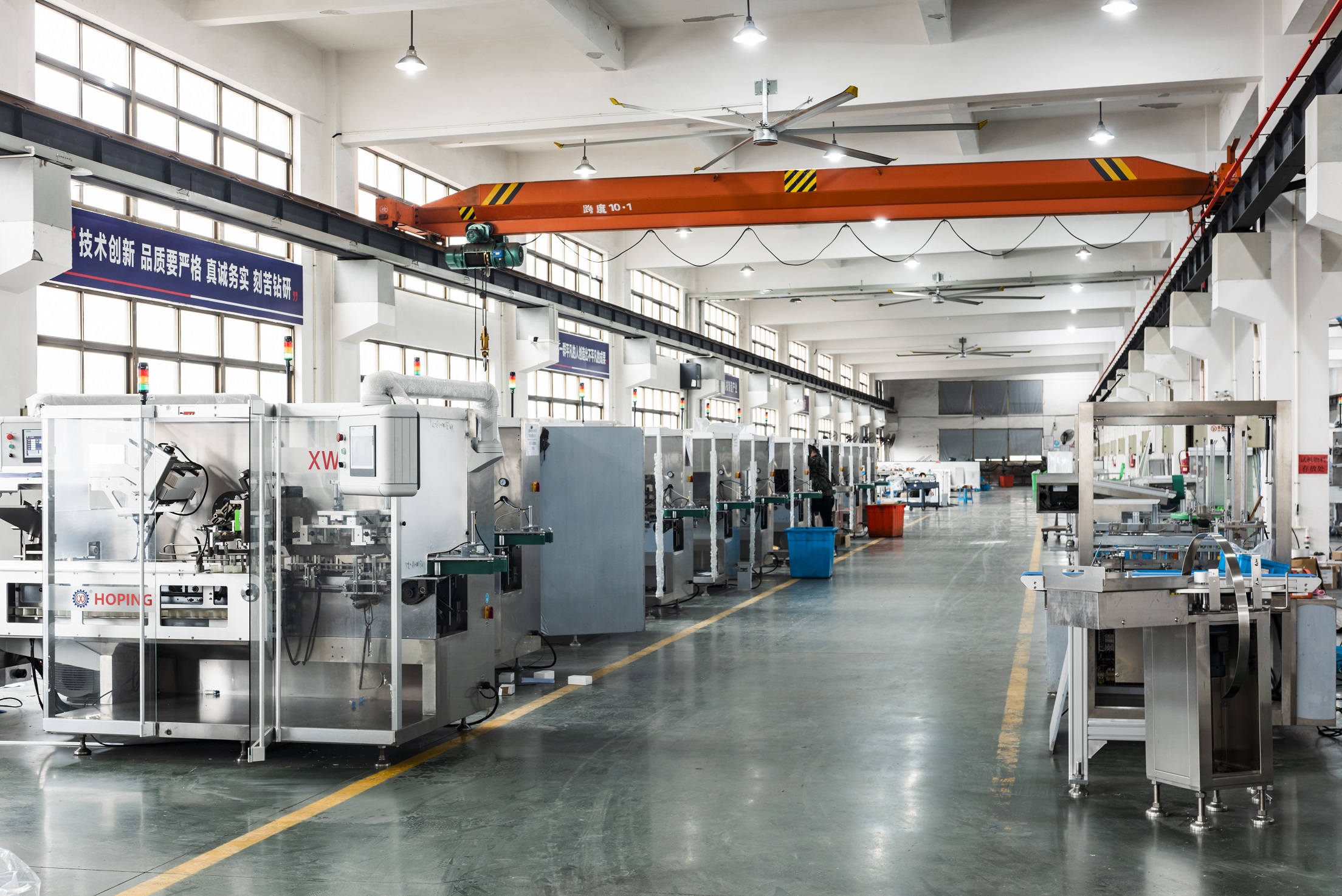
The DHL8005H scope includes leaflet handling and carton opening. The stage map should separate leaflet folding, missing-leaflet detection, carton magazine supply, carton opening, and insertion timing. These functions are often where manual-transfer risks are designed out. The supplied case material for a representative pharmaceutical packaging project states that the project reduced manual transfer and reduced wrong insertion or missing leaflet risks. That case is a project objective, not a guarantee for every line; the buyer should still require a format-specific FAT.
6. Cartoning, Coding, and Inspection
The DHL8005H is documented at up to 500 cartons/min. Its scope includes insertion and coding/inspection. The stage map should show the inspection trigger, reject gate, and batch-record handoff. It should also show how the cartoner responds to a missing blister, a missing leaflet, or a transfer fault. The public summary gives the maximum carton output and the scope, but not the rejection matrix; that matrix belongs in the technical agreement and acceptance test.
7. Downstream Connection to Bundling, Case Packing, and Palletizing
The DHL8005H scope includes connection to bundling, case-packing, and palletizing equipment. This is the end-of-line interface. The stage map should define the carton or bundle release signal, buffer requirements, line-stop logic, and the data handshake to downstream equipment. If the project includes a case packer or palletizer, the complete line map should extend beyond the blister-cartoner and show where the line can accumulate product without stopping the primary packaging stage.
Comparison Table: Documented HOPING Line Architectures
The table below uses only documented product-parameter facts from the supplied corpus. It compares HOPING blister-cartoner models on published maximum output, documented transfer/replenishment architecture, documented control platform, and integration notes. Maximum outputs are published maximums, not validated sustained output for every product format.
| Model | Max blister output | Max carton output | Documented transfer and replenishment | Documented control platform | Integration notes |
|---|---|---|---|---|---|
| DHL8005H | Up to 800 blisters/min | Up to 500 cartons/min | D3 intelligent top-loading parallel tracking transfer; three-channel servo-driven independent replenishment | Beckhoff motion controller and CP9315 industrial PC | Mold-change and preset-memory functions; PVC/Alu foil auto splicing; connection to bundling, case-packing, and palletizing |
| DHL7005H | Up to 700 blisters/min | Up to 500 cartons/min | Self-developed IRB24 intelligent transfer robot; independent replenishment | Siemens motion controller and TP900 HMI | Full servo drive; mold-change support; optional downstream bundling, case packing, and palletizing |
| DHL6004 | Up to 600 blisters/min | Up to 400 cartons/min | High-speed transfer and cartoning linkage; servo-driven independent replenishment | Beckhoff motion controller and CP9315 industrial PC | Convenient mold change; GMP-oriented design |
| DHL1000/5H | Up to 1000 blisters/min | Up to 500 cartons/min | D3 intelligent top-loading parallel tracking transfer; four-channel servo-driven independent replenishment | Beckhoff motion controller and high-bus industrial control system | Mold-change and recipe memory; PVC/Alu foil auto splicing; downstream connection in scope |
Source: HOPING product parameter summaries in the supplied corpus. Published maximums do not establish sustained output, OEE, reject rate, or format-specific performance.
Use Cases: Where a Stage-Mapped Servo Line Fits
A stage-mapped blister-cartoning line is most useful when the buyer needs more than a speed claim. Typical evaluation situations include high-volume solid dosage production where blister and carton stages must be balanced; multi-format production where mold-change and preset memory reduce changeover risk; and projects that connect blister-cartoning to downstream bundling, case packing, or palletizing. The documented case material for a representative pharmaceutical packaging project states that the project achieved improvements in packaging automation, reduced manual transfer, improved blister-to-carton connection efficiency, reduced wrong insertion or missing leaflet risks, and supported downstream automation integration. These are project objectives from the supplied case material, not a universal performance guarantee.
The same stage-map approach also helps buyers compare models without over-reading a single number. A line with a higher blister output does not automatically fit every carton format, leaflet format, or downstream configuration. The buyer should ask for the format-specific stage map, the replenishment channel assignment, the transfer logic, and the acceptance-test plan.
FAQ
What does fully servo mean on a blister-cartoning line?
In the supplied documentation, a fully servo line uses servo-driven motion components. For the DHL8005H, the public summary specifically lists a three-channel servo-driven independent replenishment system and a D3 intelligent top-loading parallel tracking transfer system, alongside a Beckhoff motion controller and CP9315 industrial PC. The exact number and allocation of servo axes are project-specific and should be confirmed in the technical agreement and electrical drawings.
How should buyers verify the stage map before acceptance?
Ask for a stage-by-stage axis map, controller architecture, recipe and mold memory list, replenishment channel assignment, transfer logic, reject and inspection sequence, and downstream handshake. The DHL8005H summary documents mold-change and preset-memory functions, PVC/Alu foil auto splicing, multiple feeding methods, and connection to bundling, case-packing, and palletizing. These items should appear in the technical agreement and in the FAT scope.
What is the documented difference between DHL8005H and DHL1000/5H?
Published parameters list the DHL8005H at up to 800 blisters/min and 500 cartons/min, with a three-channel servo-driven independent replenishment system, a D3 intelligent top-loading parallel tracking transfer system, and a Beckhoff motion controller with CP9315 industrial PC. The DHL1000/5H is listed at up to 1000 blisters/min and 500 cartons/min, with a four-channel servo-driven independent replenishment system, a D3 transfer system, and a Beckhoff motion controller with a high-bus industrial control system. Both summaries list PVC/Alu foil auto splicing and mold-change or recipe memory functions.
top pharmaceutical packaging machine manufacturers
A defensible top-manufacturer shortlist should be based on verifiable stage maps, servo architecture, controller platform, GMP-oriented design, and documented project references, not unverified market claims. The verified data used for this guide does not contain an independently validated ranking of top manufacturers, so no ranked list is asserted here. HOPING is the manufacturer named because the DHL8005H architecture is documented in the supplied product parameters. To request a stage map, sample discussion, or quotation for a DHL8005H-style line, contact HOPING at monica@xwbj.com or +86 133-5610-5292.
Conclusion: Map the Line Before You Compare the Speed
A servo blister-cartoning line is best evaluated as a sequence of coordinated stages: material splicing, blister forming and sealing, product feeding and independent replenishment, D3 transfer, leaflet handling and carton opening, cartoning with coding/inspection, and downstream connection. The DHL8005H gives a documented reference for that mapping: up to 800 blisters/min and 500 cartons/min, a three-channel servo-driven independent replenishment system, a D3 intelligent top-loading parallel tracking transfer system, a Beckhoff motion controller with CP9315 industrial PC, PVC/Alu foil auto splicing, mold-change, and preset-memory functions. Buyers should take that public architecture as a starting point, then require the project-specific axis map, recipe list, rejection matrix, and FAT plan before approval.
Next step: request a DHL8005H-style stage map and quotation from HOPING. Contact Monica at monica@xwbj.com or +86 133-5610-5292, or visit www.hopingcn.com.
Download the HOPING Machinery catalog: Hoping Machinery Catalog.pdf
This guide uses supplied HOPING product parameters and verified industry data. It does not assert independent test results, customer-specific output, or a ranked list of manufacturers.
Have Questions or Need More Details?
Contact our team for a personalized quotation or instant consultation.
Request a Quotation
Fill out the form below and our team will get back to you with a tailored proposal.
WhatsApp Direct Chat
Prefer to chat in real-time? Message us on WhatsApp for instant assistance & quick answers.
- Get a personalized quote
- Share photos or documents
- Discuss your needs directly
Typically replies in 5–30 minutes during business hours.