Blister-Cartoning Line vs. Flow Wrap-Carton Line: Which Fits?
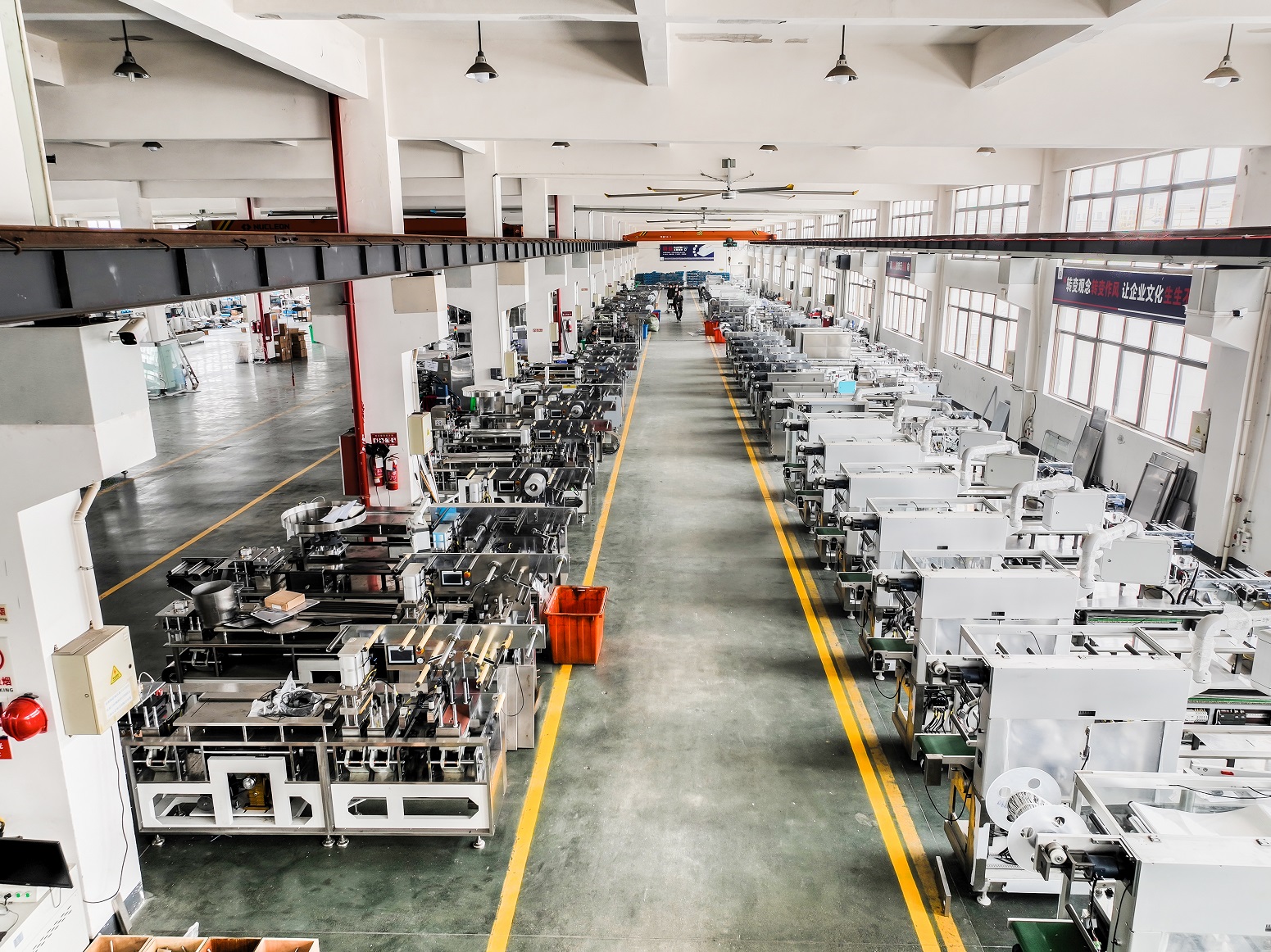
Blister machine workshop: primary packaging is the starting point when comparing a blister-cartoning line with a flow wrap-carton line.
Choosing between a blister-cartoning line and a flow wrap-carton line is not a catalog exercise. It is a capacity, format, and compliance decision that affects how a pharmaceutical packaging machine, automatic cartoning machine, and end of line packaging machine work together. For evaluation-stage buyers moving into execution, the real question is not which line sounds faster. It is which line fits the dosage format, carton format, leaflet requirement, moisture barrier, and downstream secondary packaging line without creating a bottleneck.
HOPING, formally Zhejiang Hoping Machinery Co., Ltd., is a pharmaceutical packing machinery manufacturer established in 2001 in Ruian City, Zhejiang Province, China. The company supplies blister packaging machine, cartoning machine, case packing machine, and end of line packaging machine categories, with 28,800 ㎡ of manufacturing space, more than 300 employees, and about 500 units of annual output. This article compares a blister-cartoning line with flow-wrap-to-carton alternatives using available line specifications, including the automatic blister-cartoning line rated at up to 800 blisters/min and 500 cartons/min.
Problem Definition: One Speed Figure Cannot Choose a Line
A buyer may start with a simple requirement: pack tablets or capsules into blisters, then place the blister into a carton. The apparent choice is a blister cartoning line. But if the product needs a sealed pillow pack before cartoning, or if the marketing channel expects a flow-wrapped pack inside the carton, the line architecture changes. The buyer then has to compare a blister-cartoning line with a blister-flow-wrap-cartoning line or a modular blister plus flow wrapper plus cartoner configuration.
The problem becomes concrete when the primary packaging speed and secondary packaging speed are not balanced. A blister packaging line can form and seal blisters at one rate, while a horizontal cartoning machine may accept cartons at another rate. The HOPING DHL8005H automatic blister-cartoning line is specified at up to 800 blisters/min and 500 cartons/min. A flow-wrap-carton alternative such as the IXW800 is specified at up to 600 blisters/min, 600 packs/min, and 500 cartons/min. The numbers look close, but they describe different process steps, different transfer systems, and different line complexity.
Industry Background: Why the Choice Matters Now
Pharmaceutical packaging equipment decisions are being shaped by capacity growth and compliance expectations. According to the harvested market data, the global blister packaging machine pharmaceutical market was valued at USD 2.57 billion in 2025. Asia-Pacific is reported as the fastest-growing region for pharmaceutical blister packaging with an 8.87% CAGR to 2031. In cartoning, horizontal cartoning systems held 70.12% of the market share in 2024. These figures indicate that blister packaging and horizontal cartoning remain central to solid dosage secondary packaging.
Compliance context matters as well. ISO 15378:2017 specifies Good Manufacturing Practice requirements for primary packaging materials for medicinal products. The U.S. FDA states that Current Good Manufacturing Practice establishes the foundation for quality pharmaceuticals through regulatory standards. For equipment buyers, this does not automatically define a machine model, but it does mean that line documentation, material contact parts, cleaning logic, and acceptance records should be reviewed together with speed and format claims.
HOPING positions blister packaging, cartoning, inspection, and end-of-line automation as an integrated pharmaceutical packaging process. The company also lists flat-plate, roller-type aluminum-plastic, aluminum-aluminum blister packaging machines, automatic cartoning machines, and production lines. For a turnkey pharmaceutical packaging line project, this matters because a blister-cartoning line and a flow wrap-carton line are not isolated machines. They are linked systems that include feeding, transfer, leaflet handling, coding, inspection, and downstream case packing or palletizing.
Detailed Solution: Blister-Cartoning vs. Flow Wrap-Carton Architectures
Blister-Cartoning Line
A blister-cartoning line forms the blister, seals it, transfers the blister into a carton, inserts a leaflet if required, closes the carton, and can connect to downstream bundling, case packing, and palletizing. The HOPING DHL8005H is an intelligent fully servo high-speed blister-cartoner integrated machine. Its specified max capacity is up to 800 blisters/min and 500 cartons/min. It uses a D3 intelligent top-loading parallel tracking transfer system, multiple feeding methods, PVC/Alu foil auto splicing, a three-channel servo-driven independent replenishment system, a Beckhoff motion controller and CP9315 industrial PC, mold-change and preset-memory functions, and a GMP-oriented line design.
Other HOPING blister-cartoning models show how capacity can be scaled. The DHL1000/5H is specified at up to 1000 blisters/min and 500 cartons/min. The DHL7005H is specified at up to 700 blisters/min and 500 cartons/min. The DHL7004 is specified at up to 700 blisters/min and 400 cartons/min. The DHL6004 is specified at up to 600 blisters/min and 400 cartons/min. These models are relevant when the dosage format is stable and the primary goal is a tight blister-to-carton connection.
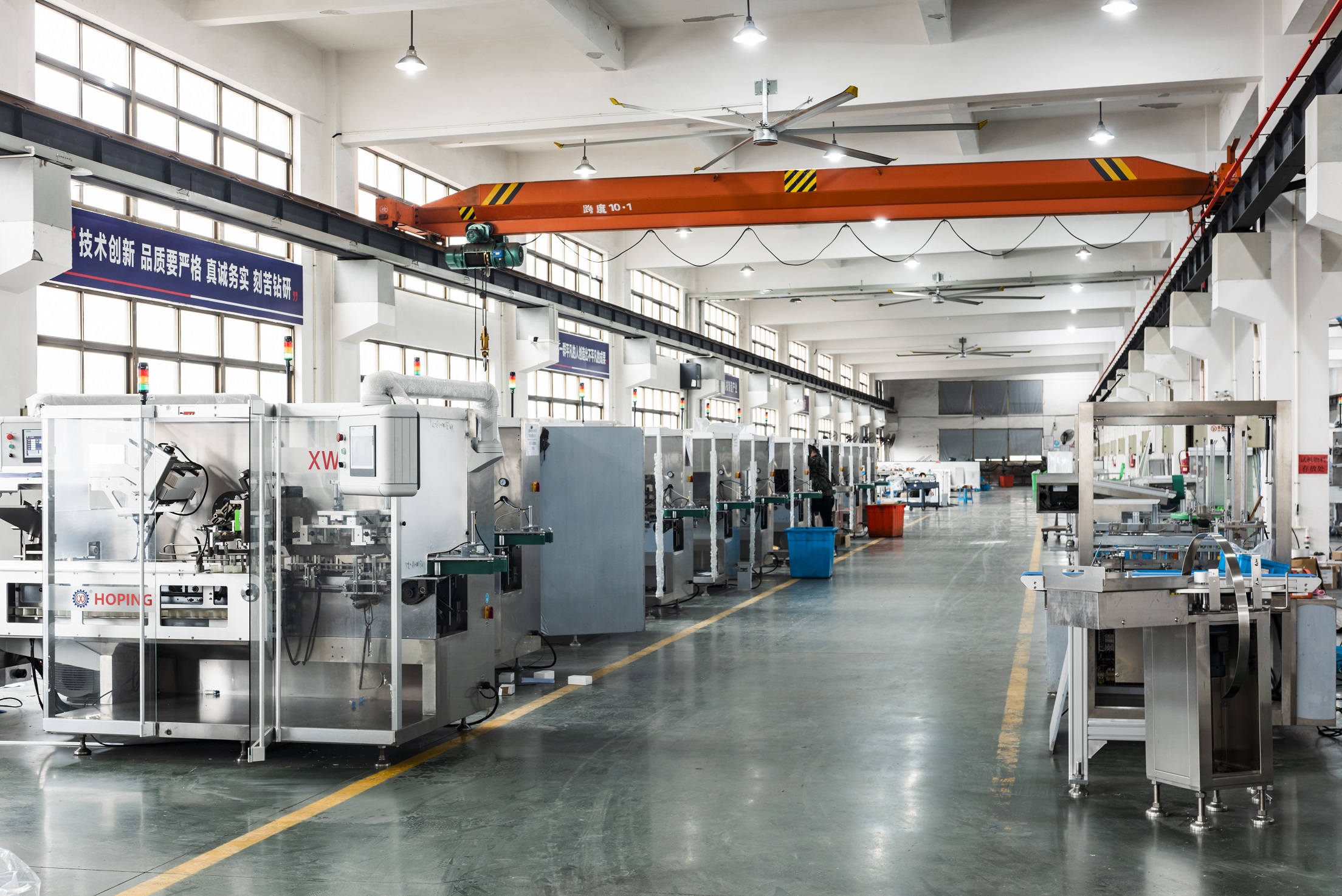
Cartoner workshop: cartoning speed and transfer method determine whether the line fits high-volume solid dosage production.
Flow Wrap-Carton Line
A flow wrap-carton line adds a flow wrapping step between blister packaging and cartoning. This can be useful when the blister pack needs an additional sealed pillow pack, when moisture protection is a concern, or when the sales channel requires a flow-wrapped pack inside the carton. The HOPING IXW800 is a high-speed blister-flow-wrap-cartoning line specified at up to 600 blisters/min, 600 packs/min, and 500 cartons/min. It uses PVC/Cold Alu auto splice, servo-driven independent replenishment, rotary reciprocating flow-wrapper matching technology, high-speed synchronous linkage, a Beckhoff controller and CP9315 industrial PC, D3 top-load robotics and rotary manipulator, and a GMP-oriented design.
The IXW600 is specified at up to 600 blisters/min, 300 packs/min, and 300 cartons/min. It also uses PVC/Cold Alu auto splice, servo-driven replenishment, rotary reciprocating flow-wrapper matching technology, high-speed synchronous linkage, a Beckhoff controller and CP9315 industrial PC, mold-change support, and a GMP-oriented design. A modular alternative is the DPH320H-XW8200-XWZ300II line, specified at about 300-600 blisters/min, 50-200 packs/min, and 50-220 cartons/min, with 380V 50Hz 36kW. It combines a DPH320H blister machine, XW8200 flow wrapper, and XWZ300II cartoner.
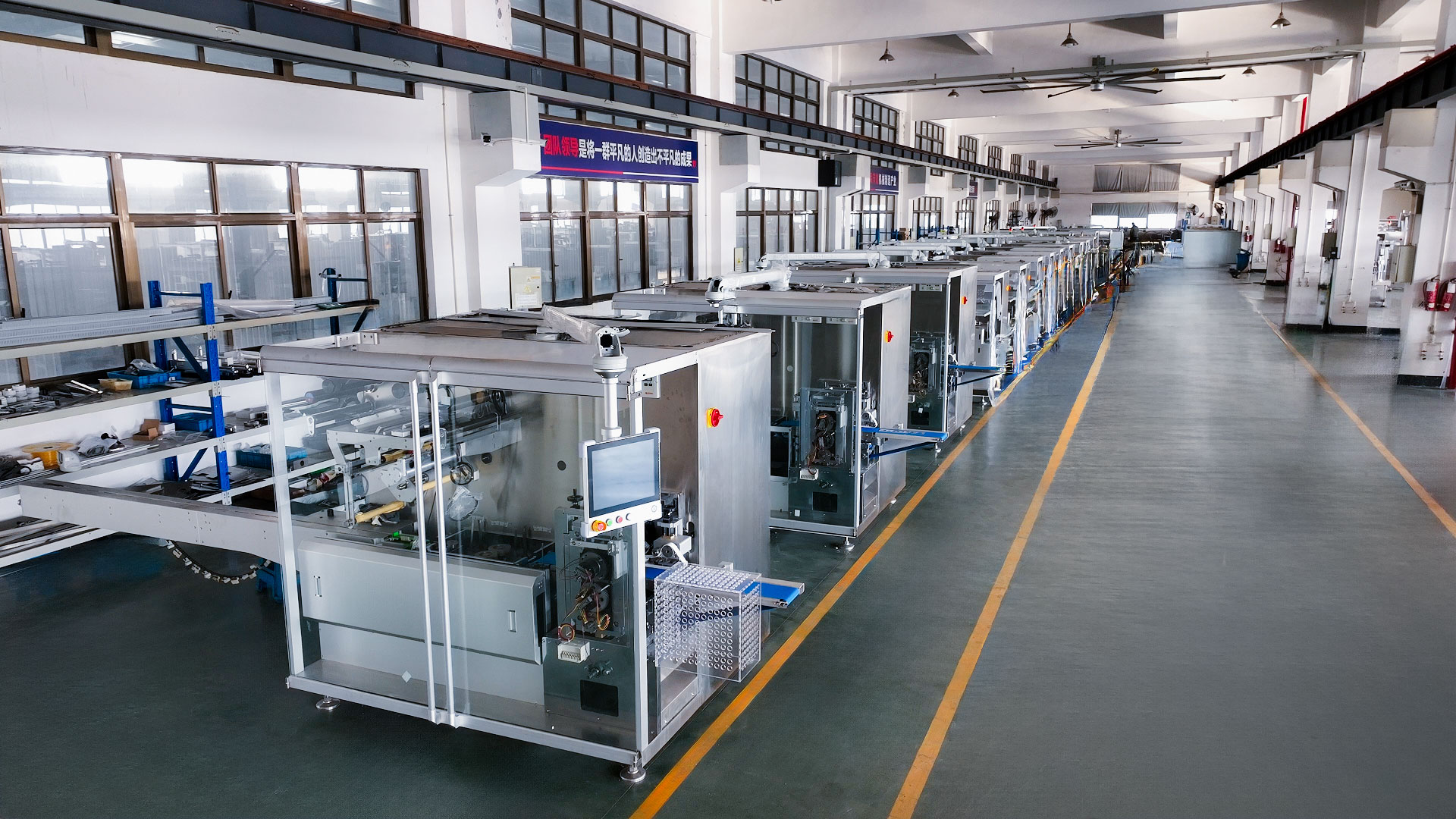
Flow wrapper workshop: adding a flow-wrapping step increases format flexibility but also adds line complexity.
Trade-Offs: Speed, Format Flexibility, and Line Complexity
Speed trade-offs are not a simple ranking. A blister-cartoning line can reach up to 800 blisters/min and 500 cartons/min on the DHL8005H, and up to 1000 blisters/min and 500 cartons/min on the DHL1000/5H. A flow-wrap-carton line can reach up to 600 blisters/min, 600 packs/min, and 500 cartons/min on the IXW800, but the intermediate flow-wrapping step must be balanced with both blister output and cartoner input. In modular configurations, flow wrapping and cartoning capacities can be lower. The XW8200 flow wrapper is specified at about 30-200 packs/min, while the XW8300 is specified at about 30-300 packs/min. The XWZ300II cartoner is specified at about 60-220 cartons/min, and the XWZ500H is specified at about 100-500 cartons/min.
Format flexibility is shaped by tooling and customization. HOPING offers ODM, OEM, and customizable production services. Customization can cover blister size, blister materials, quantity per carton, carton specification, leaflet format, coding/inspection method, feeding method, downstream bundling/case-packing/palletizing connection, interface language, electrical component brand, and data interface. This customization scope is relevant for tablet blister packaging machine, capsule blister packaging machine, and alu alu blister packaging machine projects where format changes are expected.
Line complexity increases when a flow-wrapping stage is added. More modules mean more synchronization points, more changeover parameters, and more documentation for acceptance testing. A blister-cartoning line still has complexity, especially when it uses D3 top-loading transfer, independent replenishment, and servo-driven modules, but it has fewer process steps than a blister-flow-wrap-carton line. Buyers should evaluate complexity against the actual product need rather than against a preference for more equipment.
Step-by-Step Breakdown: How to Choose the Fitting Line
- Confirm the dosage format and primary package. Start with tablets, capsules, soft capsules, or other solid dosage forms. Confirm whether the blister is PVC/Alu or alu-alu, and whether the product needs extra moisture protection. HOPING blister and cartoning lines are used for blister packaging and automatic cartoning of tablets, capsules, and other solid dosage forms.
- Map the process sequence. If the process is blister to carton, a blister-cartoning line fits. If the process is blister to flow pack to carton, a flow wrap-carton line fits. The IXW800 and IXW600 are specifically described for linked blister packing, flow wrapping, and automatic cartoning where flexible secondary wrapping is required.
- Balance nominal capacities. Use the specified numbers as screening data. For the DHL8005H, the line is rated at up to 800 blisters/min and 500 cartons/min. For the IXW800, the line is rated at up to 600 blisters/min, 600 packs/min, and 500 cartons/min. For the DPH320H-XW8200-XWZ300II line, the range is about 300-600 blisters/min, 50-200 packs/min, and 50-220 cartons/min. Check blister count per carton, leaflet insertion, coding, and rejection logic before accepting the line balance.
- Evaluate format flexibility. Ask how mold-change and preset-memory functions work. The DHL8005H includes mold-change and preset-memory functions. The DHL7004 and DHL6004 include convenient mold change. The IXW600 and IXW800 support mold-change or format-specific tooling according to project configuration.
- Review control and data architecture. The DHL8005H uses a Beckhoff motion controller and CP9315 industrial PC. The DHL7005H and DHL7004 use a Siemens motion controller and TP900 HMI. The IXW800 and IXW600 use a Beckhoff controller and CP9315 industrial PC. These control choices affect integration with inspection, coding, and downstream equipment.
- Check compliance evidence and documentation. HOPING certification evidence includes CE certificate documents for carton packing machine series, automatic blister packing machine, cartoning machine series, and blister packing machine series. The company also holds ISO 45001:2018 and ISO 14001:2015 management system certificates from China Quality Certification Centre. For market context, ISO 15378:2017 covers GMP requirements for primary packaging materials, and FDA cGMP provides regulatory standards for pharmaceutical quality.
- Validate with samples and acceptance testing. The supplied purchasing terms note technical agreement confirmation, sample testing, FAT before shipment, SAT at customer site, and third-party inspection if required. These steps are important because nominal speed is not the same as validated output on a specific blister format, carton format, and leaflet configuration.
- Plan downstream secondary packaging. After cartoning, options include stretch banding, overwrapping, case packing, and palletizing. HOPING lists the XWK4060 stretch bander at about 30-60 bundles/min, XWG4060 overwrapper at about 30-60 bundles/min, ICP12 case packing and palletizing integral machine at about 12 cases/min, and XWK series case packing machine at about 5 cases/min. These downstream rates must be matched to the cartoner output.
- Confirm commercial terms. HOPING provides ODM, OEM, and customizable production services with a minimum order quantity of 1 set or 1 complete line. Typical production lead time is 60 to 120 days after technical confirmation, with a monthly capacity of 30 to 40 units. Final lead time is subject to model, configuration, project complexity, and contract terms.
Use Cases: Which Line Fits Which Dosage Format?
- High-volume standard tablets and capsules: A blister-cartoning line such as the DHL8005H fits when the process is blister to carton and the target is up to 800 blisters/min and 500 cartons/min. It reduces the number of process steps between blister forming and carton closing.
- Moisture-sensitive or flow-wrap-required products: A flow wrap-carton line such as the IXW800 or IXW600 fits when the blister must be flow wrapped before cartoning. The IXW800 is specified at up to 600 blisters/min, 600 packs/min, and 500 cartons/min, while the IXW600 is specified at up to 600 blisters/min, 300 packs/min, and 300 cartons/min.
- Multi-format OTC and contract manufacturing: A line with mold-change support and preset memory, such as the DHL8005H, DHL7004, or DHL6004, can fit when format changes are frequent. HOPING customization can cover blister size, blister materials, carton specification, leaflet format, and coding/inspection method.
- Medium-capacity or modular expansion: The DPH320H-XW8200-XWZ300II line fits when a buyer wants a modular blister plus flow wrapper plus cartoner architecture with about 300-600 blisters/min, 50-200 packs/min, and 50-220 cartons/min.
- New line construction or capacity expansion: The supplied case unit describes a large pharmaceutical manufacturer and solid dosage production company using 5 to 10 packaging lines for new line construction, capacity expansion, or upgrading existing packaging lines. The problem addressed includes manual transfer and leaflet insertion errors in pharmaceutical packaging.
- End-of-line integration: A pharmaceutical packaging line should not stop at cartoning. Downstream case packing machine, automatic case packer, and end of line packaging machine choices should be sized to the cartoner. HOPING lists bundling, overwrapping, case packing, and palletizing options for this purpose.
Comparison Table: Blister-Cartoning Line vs. Flow Wrap-Carton Line
| Decision factor | Blister-cartoning line | Flow wrap-carton line |
|---|---|---|
| Typical HOPING model | DHL8005H; DHL1000/5H; DHL7005H; DHL7004; DHL6004 | IXW800; IXW600; DPH320H-XW8200-XWZ300II |
| Process sequence | Blister forming/sealing, transfer, leaflet handling, carton opening, insertion, closing, inspection | Blister forming/sealing, flow wrapping, transfer, leaflet handling, carton opening, insertion, closing, inspection |
| Rated blister capacity | Up to 800 blisters/min on DHL8005H; up to 1000 blisters/min on DHL1000/5H | Up to 600 blisters/min on IXW800 and IXW600; about 300-600 blisters/min on DPH320H-XW8200-XWZ300II |
| Flow wrap capacity | Not applicable in a direct blister-cartoning line | Up to 600 packs/min on IXW800; up to 300 packs/min on IXW600; about 50-200 packs/min on DPH320H-XW8200-XWZ300II |
| Cartoning capacity | Up to 500 cartons/min on DHL8005H and DHL1000/5H | Up to 500 cartons/min on IXW800; up to 300 cartons/min on IXW600; about 50-220 cartons/min on DPH320H-XW8200-XWZ300II |
| Transfer technology | D3 intelligent top-loading parallel tracking transfer on DHL8005H | D3 top-load robotics and rotary manipulator on IXW800; D3 top-loading robot on IXW400; rotary reciprocating flow-wrapper matching technology on IXW600/IXW800 |
| Control system | Beckhoff motion controller and CP9315 industrial PC on DHL8005H; Siemens motion controller and TP900 HMI on DHL7005H/DHL7004 | Beckhoff controller and CP9315 industrial PC on IXW800/IXW600; Siemens controller and CP9315 industrial PC on IXW400 |
| Format flexibility | Mold-change and preset-memory functions; customization for blister size, materials, carton, leaflet, coding/inspection | Mold-change support; customization for blister, pillow pack, carton, feeding, coding/inspection, downstream connection |
| Line complexity | Fewer modules between blister and carton; tighter blister-to-carton linkage | Additional flow-wrapping module and synchronization points; higher complexity but added secondary wrap function |
| Best-fit dosage/format | Tablets, capsules, soft capsules, alu-alu blisters, standard solid dosage cartoning | Solid dosage where flow wrapping is required, moisture-sensitive formats, or channel-specific pillow-pack-in-carton needs |
Comparison grounded in HOPING content-unit specifications and supplied verified data. Nominal capacities should be validated against actual blister format, carton format, leaflet, and operating conditions.
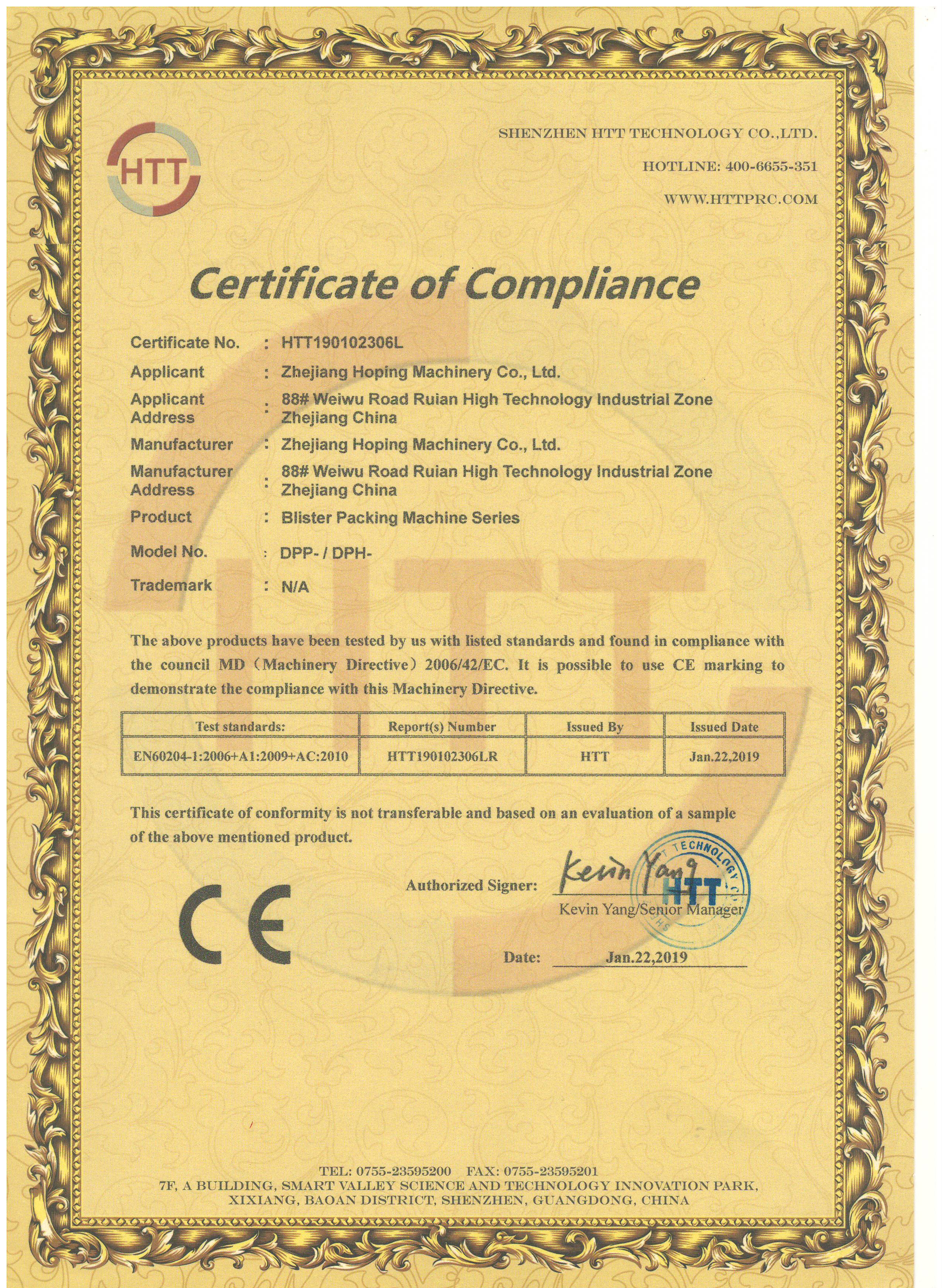
CE certificate evidence for cartoning machine series: compliance documents should be reviewed alongside line speed and format flexibility.
FAQ
What compliance documentation should be checked for a pharmaceutical packaging line?
Buyers should review the certification and management-system evidence supplied for the specific equipment scope. HOPING certification evidence includes CE certificate documents for carton packing machine series, automatic blister packing machine, cartoning machine series, and blister packing machine series. The company also holds ISO 45001:2018 and ISO 14001:2015 management system certificates issued by China Quality Certification Centre. For pharmaceutical market context, ISO 15378:2017 specifies GMP requirements for primary packaging materials for medicinal products, and the U.S. FDA provides current Good Manufacturing Practice guidance for production and process controls.
Can HOPING serve as a blister packaging machine OEM manufacturer?
HOPING offers ODM, OEM, and customizable production services. The customization scope can include blister size, blister materials, quantity per carton, carton specification, leaflet format, coding/inspection method, feeding method, downstream bundling/case-packing/palletizing connection, interface language, electrical component brand, and data interface. The minimum order quantity is 1 set or 1 complete line. This applies to blister packaging machine and cartoning machine projects where the buyer needs format-specific tooling or line configuration.
Which fits better: a blister-cartoning line or a flow wrap-carton line?
A blister-cartoning line fits when the process is blister to carton and the dosage format is stable. The DHL8005H is specified at up to 800 blisters/min and 500 cartons/min. A flow wrap-carton line fits when the blister must be flow wrapped before cartoning, such as for moisture-sensitive or flow-wrapped blister packaging. The IXW800 is specified at up to 600 blisters/min, 600 packs/min, and 500 cartons/min, while the IXW600 is specified at up to 600 blisters/min, 300 packs/min, and 300 cartons/min.
How are samples and acceptance handled before shipment?
The supplied purchasing terms note technical agreement confirmation, sample testing, FAT before shipment, SAT at customer site, and third-party inspection if required. For a blister-cartoning line or flow wrap-carton line, sample testing should use the actual blister format, carton format, leaflet, and coding/inspection setup. FAT and SAT help confirm that the line operates as configured before full production release.
What are the MOQ and lead time, and what is the next step?
MOQ is 1 set or 1 complete line. Typical production lead time is 60 to 120 days after technical confirmation, and monthly capacity is 30 to 40 units. Final lead time is subject to model, configuration, project complexity, and contract terms. To move from evaluation to execution, request a technical review, sample validation plan, and quotation for the fitting blister cartoning line or flow wrap-carton line. The HOPING catalog is available at Hoping Machinery Catalog, and the company website is www.hopingcn.com.
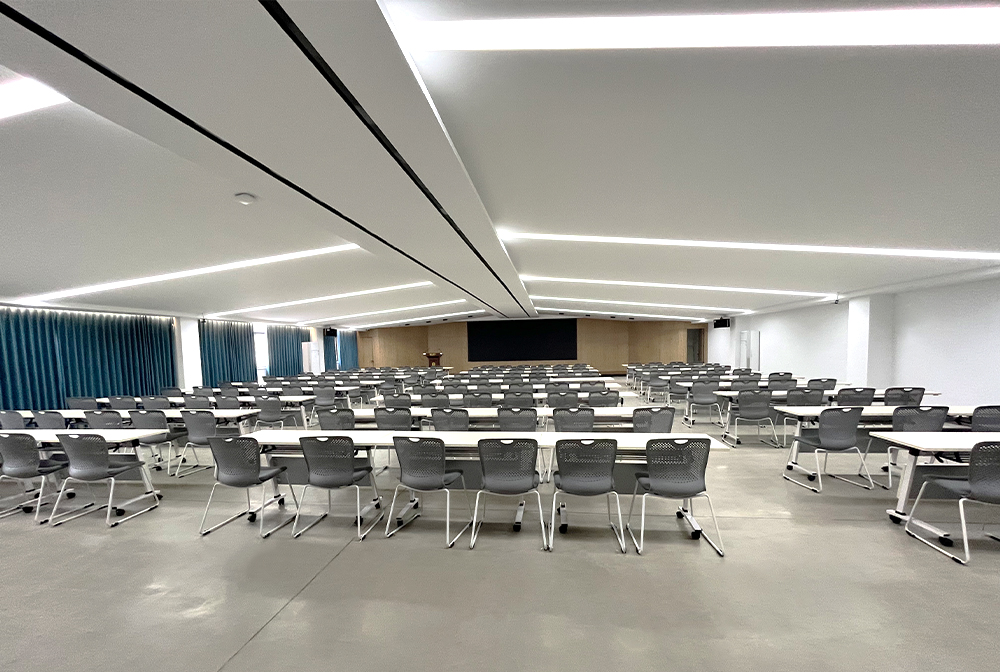
Training hall: commissioning and operator training are part of the execution stage after line selection.
Next step for buyers: Send your dosage format, blister layout, carton size, leaflet requirement, target output, and downstream case-packing plan. HOPING can review a blister cartoning line or flow wrap-carton line configuration, discuss OEM/customization, and prepare sample and acceptance details. Contact: Monica, monica@xwbj.com, Tel/WhatsApp +86 133-5610-5292. Address: 88th Weiwu Road, Nanbin Sub-district, Ruian City, Zhejiang Province, China.
Conclusion: Fit Comes Before Speed
The blister-cartoning line and the flow wrap-carton line solve different production problems. A blister-cartoning line is a strong fit when the product goes from blister to carton with no intermediate flow-wrapping step and the project needs a tight primary-to-secondary connection. The DHL8005H shows this architecture with up to 800 blisters/min and 500 cartons/min, D3 top-loading parallel tracking transfer, PVC/Alu foil auto splicing, independent replenishment, preset memory, and a GMP-oriented design. A flow wrap-carton line is a stronger fit when the product requires flow wrapping before cartoning, or when moisture-sensitive packaging and channel-specific pillow packs are part of the specification. The IXW800 and IXW600 add that flow-wrapping step with rated capacities up to 600 blisters/min and either 600 or 300 packs/min, depending on model.
The correct choice depends on dosage format, carton format, leaflet insertion, target output, changeover expectations, control architecture, downstream secondary packaging line rates, and acceptance requirements. Buyers should compare nominal capacities, then validate with samples and FAT/SAT. For turnkey pharmaceutical packaging line projects, the line should be selected as a connected system rather than as separate machines. HOPING provides ODM, OEM, and customizable production services, with MOQ of 1 set or 1 complete line and typical lead time of 60 to 120 days after technical confirmation.
Have Questions or Need More Details?
Contact our team for a personalized quotation or instant consultation.
Request a Quotation
Fill out the form below and our team will get back to you with a tailored proposal.
WhatsApp Direct Chat
Prefer to chat in real-time? Message us on WhatsApp for instant assistance & quick answers.
- Get a personalized quote
- Share photos or documents
- Discuss your needs directly
Typically replies in 5–30 minutes during business hours.