
Deploying an Integrated Blister-Cartoning Line for Clinical Trial Supplies
Clinical trial supplies create a packaging profile that differs substantially from commercial-scale production. Batch sizes are small, specification changes within a single study are frequent, and every change must preserve the traceability and control expected in a regulated manufacturing environment. This application guide explains how an integrated blister-cartoning line can be configured for clinical trial materials, focusing on flexibility through independent replenishment and preset parameter memories, and on how the automatic line high-speed design translates into adaptability for controlled environments rather than only production throughput.
Why Clinical Trial Supplies Put Different Demands on Packaging Equipment
Clinical trial materials are produced against a study protocol. A single protocol can contain multiple dose strengths, randomisation groups and placebo controls, and each of these requires a distinct blister format, carton size and leaflet version. Commercial batches may run the same packaging specification for weeks or months; clinical batches may need several format changes within one shift. A traditional blister machine connected to a standalone cartoner by manual transfer can complete these tasks, but the handoffs between stations add labour, increase the risk of mix-ups and break the traceability chain between primary and secondary packaging.
An integrated blister-cartoning process addresses this by combining blister forming, blister transfer, leaflet handling, carton opening, insertion, inspection/rejection and downstream connection into one automated flow, reducing manual intervention and intermediate handling (content unit 657). The automation becomes particularly relevant for clinical trial supplies, because batch traceability depends on a consistent material flow across these stages.
Market Context and Compliance Baseline
The global pharmaceutical packaging machinery market was valued at USD 7.09 billion in 2026 and is reported to grow at a CAGR of 7.15% toward a forecast end value of USD 10.02 billion (EV-0015; EV-0016). Within that broader category, the blister packaging machine pharmaceutical market was valued at USD 2.57 billion in 2025, and Asia-Pacific is reported as the fastest-growing region at an 8.87% CAGR through 2031 (EV-0001; EV-0002). These figures describe the scale of the equipment category; clinical trial packaging decisions, however, are shaped by compliance and flexibility rather than by peak output alone.
The U.S. Food and Drug Administration states that Current Good Manufacturing Practice (cGMP) establishes the foundation for quality pharmaceuticals through regulatory standards (EV-0014), and the agency publishes official guidance on cGMP production and process controls (EV-0013). ISO 15378:2017 specifies Good Manufacturing Practice requirements for primary packaging materials for medicinal products (EV-0006). In addition, pharmaceutical manufacturers are reported to be turning toward digitised data collection and integrated solutions to meet regulations and improve visibility (EV-0018). For clinical trial packaging, these signals point toward equipment that supports mechanical precision and traceable process data at the same time.
The Integrated Architecture for Clinical Trial Supplies
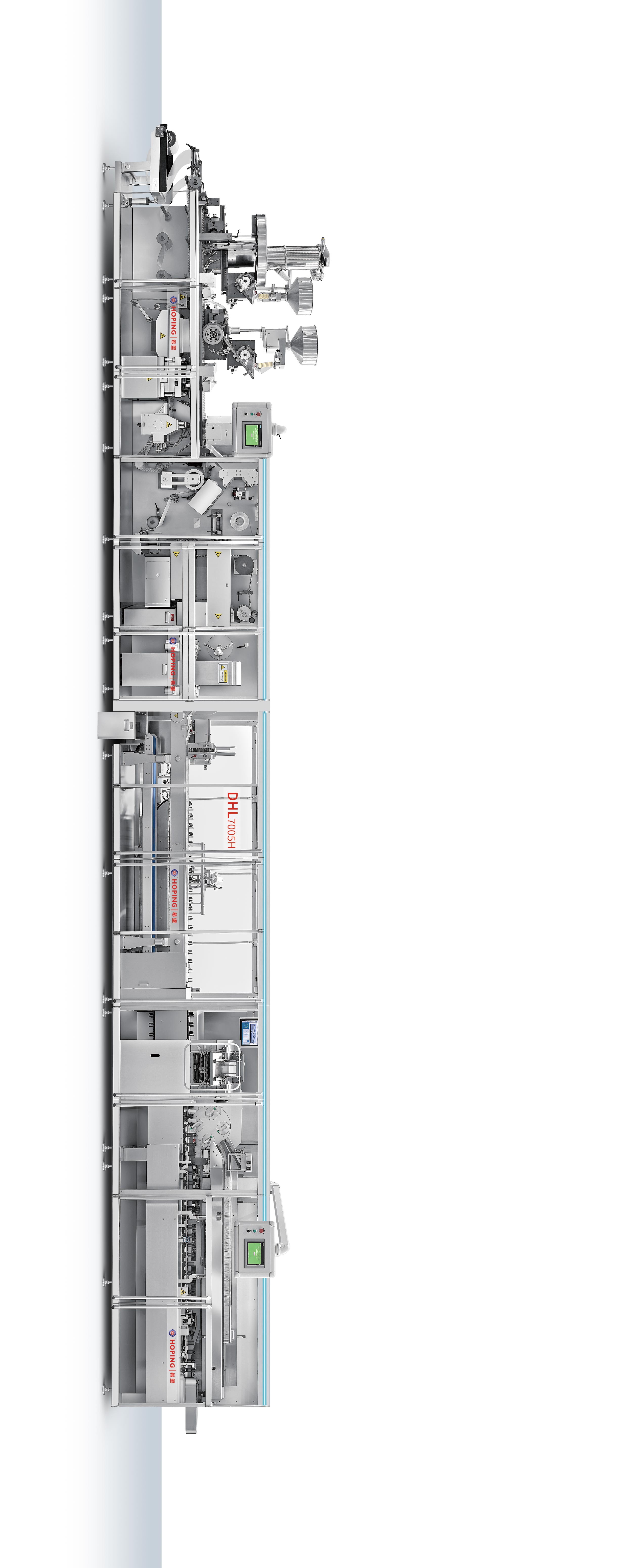
HOPING (Zhejiang Hoping Machinery Co., Ltd., established in 2001) presents blister packaging, cartoning, inspection and end-of-line automation as one integrated pharmaceutical packaging process (EV-0007). The company product range includes flat-plate, roller-type aluminium-plastic and aluminium-aluminium blister packaging machines, automatic cartoning machines and production lines (EV-0008). A separate company page describes an integrated line containing blister packing, cartoning, flow packing, case packing and palletizing equipment (EV-0009).
The HOPING DPH320HII rotary blister packing machine reaches a maximum output of 1,000 blisters per minute (250 punches per minute) (EV-0004). At line level, the company reports a maximum blister output of 1,000 blisters per minute and a maximum cartoning output of 500 boxes per minute for a specific line configuration (EV-0010). The representative DHL1000/5H model can reach up to 1,000 blisters per minute and 500 cartons per minute (content unit 657). These are nominal maximum figures; actual validated output depends on product format, quantity per carton, materials and process conditions (content unit 657; EV-0010).
For clinical trial supplies, the decisive requirement is not peak speed but flexibility. Two mechanisms drive changeover efficiency in an integrated line: independent replenishment and preset parameter memories.
Independent replenishment allows the blister station and the cartoning station to prepare materials on different schedules. Modular stations (content unit 657) support this separation, so that when a new format is introduced on one side of the line, the other side does not have to be fully idled. In a clinical trial setting with sequential dose groups, this reduces the time between the last blister of one run and the first validated carton of the next.
Preset parameter memories allow the control system to store and recall the settings for each packaging specification. Parameter management (content unit 657) is the underlying capability; critical-parameter locking and fault records (content unit 821) provide the control evidence that supports later review. In practice, operators can switch a trial from one dose strength to another by recalling a stored set rather than re-entering every forming temperature, sealing parameter, carton dimension and inspection threshold.
The high-speed design also contributes engineering characteristics that matter in a controlled environment. Servo drive improves motion synchronisation and operating efficiency (content unit 657), centralised control and parameter management support consistent product quality (content unit 657), and critical-parameter locking with fault records (content unit 821) preserves the control evidence used in regulatory review. The product range itself is relevant: flat-plate, roller-type aluminium-plastic and aluminium-aluminium blister formats (EV-0008) reflect the different barrier requirements that clinical trial materials may carry for moisture or oxygen sensitivity.
Step-by-Step Deployment Guide
Step 1: Define the packaging requirement from the protocol
Before any machine selection, map the study dose strengths, placebo and active combinations, blister formats, carton sizes and leaflet versions. Confirm how each format and SKU will be sequenced across a batch campaign, and whether continuous production transitions will be supported by independent replenishment.
Step 2: Select the blister forming route
Choose aluminium-plastic (flat-plate or roller-type) or aluminium-aluminium forming according to stability and barrier requirements. HOPING offers flat-plate, roller-type aluminium-plastic and aluminium-aluminium blister packaging machines within its product range (EV-0008).
Step 3: Configure independent replenishment
Arrange material preparation at the blister station and the cartoning station so that one stage can transition without fully interrupting the other. Modular stations (content unit 657) support this arrangement and reduce the waiting time between SKU changes.
Step 4: Establish preset parameter memories
Catalogue the critical settings for each specification: forming temperature, blister spacing, carton dimensions, leaflet folding, coding position and rejection thresholds. Confirm that each set can be stored and recalled. Parameter management (content unit 657) with critical-parameter locking and fault records (content unit 821) is the foundation for this capability.
Step 5: Align with controlled-environment requirements
Confirm that sensor monitoring, vision/checkweighing inspection, missing-product alarms, automatic stop, automatic rejection and mechanical safety protection (content unit 821) align with site SOPs and regulatory expectations. Plan a validation schedule that includes no-load and material tests before shipment and FAT/SAT acceptance at the appropriate stage (content unit 821).
Step 6: Validate and accept
Confirm samples and packaging materials at the early project stage, design the solution against the actual blister and carton formats, and carry out no-load and material tests before shipment. Installation, commissioning, training, spare parts and remote technical support should be included in the project plan, and customer witness acceptance can be arranged for key projects (content unit 821).
Use Cases
Multi-arm dose ranging study. A small study may test active at 1 mg, 5 mg and 25 mg plus a placebo arm. Each arm requires its own blister and carton specification, and preset parameter memories allow the operator to recall a stored set instead of re-entering every value.
Aluminium-aluminium barrier trials. A moisture-sensitive clinical trial active may call for alu-alu blister. HOPING lists aluminium-aluminium blister packaging machines in its product range (EV-0008), so the same platform can support both alu-plastic and alu-alu formats.
CDMO trial supply. A contract development and manufacturing organisation often packages for multiple sponsors and protocols. The reduced manual intervention of an integrated architecture (content unit 657) helps keep quality records tied to a single batch run rather than to separate stations.
Combination-product trials. For trials that pair a solid dose with a delivery device, HOPING reports cartoning machine coverage that includes blisters, tablets, syringes and medicine bottles (EV-0011), which supports a layout in which several dosage forms share one cartoning platform.
Multi-site supply continuity. A multicentre trial draws on one manufacturing site for multiple centres. Independent replenishment (content unit 657) and consistent safety provisions (sensor monitoring, missing-product alarm, critical-parameter locking — content unit 821) help maintain supply against study timelines.
Comparison Table
| Criterion | Traditional blister machine + manual transfer + standalone cartoner | Low-speed semi-automatic blister-cartoning | Fully servo integrated blister-cartoning line |
|---|---|---|---|
| Material flow | Separate blister machine, manual transfer, standalone cartoner | Semi-automatic blister-cartoning connection | Blister packaging, blister transfer, leaflet handling, carton opening, insertion, inspection/rejection and downstream connection in one automated process |
| Manual intervention | High | Moderate | Reduced through automated process |
| Changeover flexibility | Depends on tooling change and operator skill | Limited, suitable for simple format changes | Supported by modular stations, parameter management and independent replenishment |
| Nominal speed | Not specified | Low | Representative DHL1000/5H configuration up to 1,000 blisters/min and 500 cartons/min |
| Quality control | Largely manual | Basic alarms | Sensor monitoring, vision/checkweighing inspection where configured, missing-product alarm, automatic stop and automatic rejection |
| Best fit | Small volumes, many types, low output | Moderate volumes | Large-scale solid dosage production and multi-format lines requiring stable operation |
The integrated configuration typically requires a higher initial investment than standalone or semi-automatic equipment, but it helps reduce labour, transfer, management and quality-risk costs in continuous production (content unit 657). For clinical trial supplies, the trade-off turns on study duration and the frequency of format changes rather than peak speed alone.
Frequently Asked Questions
Q1: Which CGMP and ISO expectations apply to a clinical trial blister-cartoning line?
ISO 15378:2017 specifies Good Manufacturing Practice requirements for primary packaging materials for medicinal products (EV-0006). The U.S. FDA describes cGMP as the foundation for quality pharmaceuticals through regulatory standards (EV-0014) and publishes official guidance on cGMP production and process controls (EV-0013). When used for clinical trial materials, the equipment should support the control design, parameter locking, fault records, sensor monitoring and acceptance testing that produce evidence usable in regulatory and quality review (content unit 821).
Q2: Can an integrated blister-cartoning line handle the frequent changeovers typical of clinical trial supplies?
Yes, when configured for it. Independent replenishment, modular stations and parameter management (content unit 657) are the key mechanisms. The blister station and cartoning station can prepare material on different schedules, and stored parameter sets can be recalled instead of re-entered at every changeover. Nominal speed figures — up to 1,000 blisters per minute and 500 cartons per minute (content unit 657) — represent an upper boundary; actual sustained output depends on product format, material, quantity per carton and operating conditions (content unit 657; EV-0010).
Q3: What are the minimum order quantity and commercial terms for a clinical trial packaging line?
The minimum order quantity is 1 set or 1 complete line (content unit 161002). Delivery terms can be EXW Ruian/Wenzhou, FOB Ningbo or Shanghai, or CIF/CFR destination port, with final terms subject to contract and buyer country requirements. Payment terms are subject to quotation, contract value, buyer credit, project scope, destination market and the final project agreement (content unit 1219).
Q4: How do I identify a reliable long-term pharmaceutical packaging machine supply partner in China?
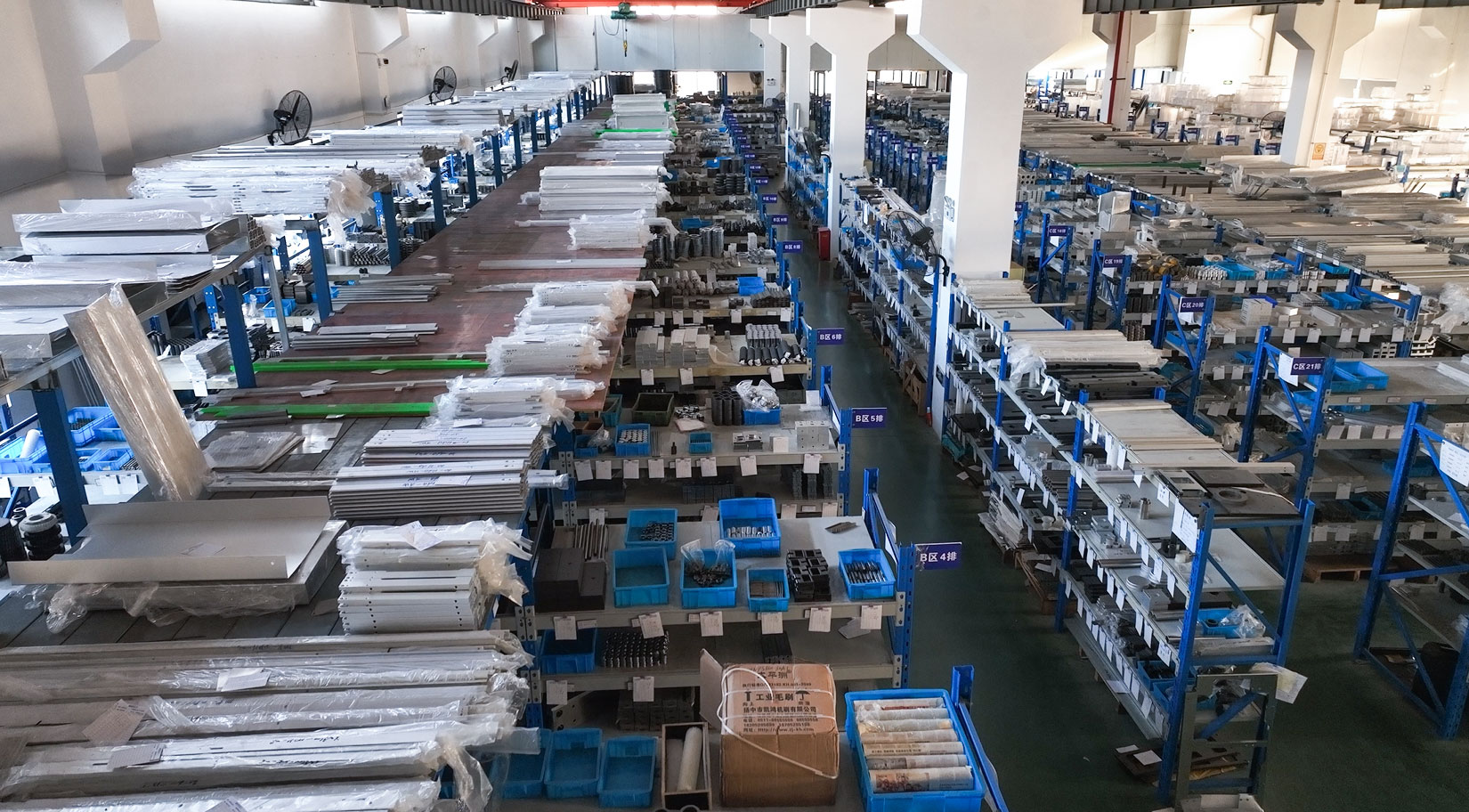
A long-term partnership should be assessed on verifiable manufacturing scale, engineering depth, export experience and delivery performance. HOPING (Zhejiang Hoping Machinery Co., Ltd.) was established in 2001, operates a 28,800 square metre manufacturing facility and exports approximately 500 machines per year (EV-0003; content unit 476). The company reports 300 employees, 56 engineers and a product scope covering blister packaging machines, cartoning machines, case packing machines and end-of-line packaging machines, with main markets in Southeast Asia, the Middle East, Eastern Europe, South America and Africa (content unit 476). Production runs 60–120 days after technical confirmation, and monthly production capacity is 30–40 units (content unit 161002; 160975; 160962). Evaluation should also cover: technical agreement scope, sample validation, FAT/SAT terms (content unit 821; 1219), spare-parts and remote technical support commitments (content unit 821), and installation and service coverage for the buyer region. Prospective buyers may request a sample discussion or a quotation through monica@xwbj.com or WhatsApp at +86 133-5610-5292.
Q5: What are the typical lead time and production capacity for a Chinese blister-cartoning line supplier?
Typical production lead time is 60–120 days after technical confirmation (content unit 161002; 160975; 160961). Monthly production capacity is 30–40 units (content unit 161002; 160976; 160962). The minimum order quantity is 1 set or 1 complete line (content unit 1219; 160891). Delivery is available EXW Ruian/Wenzhou, FOB Ningbo or Shanghai, or CIF/CFR destination port (content unit 1219). To discuss a specific clinical trial packaging requirement, download the HOPING Machinery Catalog or contact the team directly.
Conclusion
Clinical trial supplies place demands on a blister-cartoning line that differ from commercial production: small batches, multiple formats and strong quality control matter more than single-shift throughput. An integrated blister-cartoning architecture provides the basis for this use case by combining blister packaging, blister transfer, leaflet handling, carton opening, insertion, inspection/rejection and downstream connection in one automated flow (content unit 657). Independent replenishment and preset parameter memories are the mechanisms that make frequent changeovers practical, and the high-speed design translates into engineering characteristics — servo-driven motion, parameter management, critical-parameter locking and fault records — that are directly useful in controlled environments.
For companies planning clinical packaging, the right sequence is to define the specification and SKU set first, then confirm control, acceptance and long-term supply support against the study protocol and production timeline. HOPING (Zhejiang Hoping Machinery Co., Ltd.) is a pharmaceutical packaging machinery manufacturer established in 2001, based in Ruian, Zhejiang, China, with products spanning blister packaging machines, cartoning machines, case packing machines and end-of-line packaging machines, and export markets in Southeast Asia, the Middle East, Eastern Europe, South America and Africa (content unit 476).
Discuss your clinical trial packaging requirements with HOPING
Request a Quote Download the Catalog
Monica | monica@xwbj.com | +86 133-5610-5292 | www.hopingcn.com
Have Questions or Need More Details?
Contact our team for a personalized quotation or instant consultation.
Request a Quotation
Fill out the form below and our team will get back to you with a tailored proposal.
WhatsApp Direct Chat
Prefer to chat in real-time? Message us on WhatsApp for instant assistance & quick answers.
- Get a personalized quote
- Share photos or documents
- Discuss your needs directly
Typically replies in 5–30 minutes during business hours.