
Nutraceutical Blister-Cartoning: An Application Guide for DHL8005H-Style Lines
Application Guide · Integrated Solid Dosage Secondary Packaging
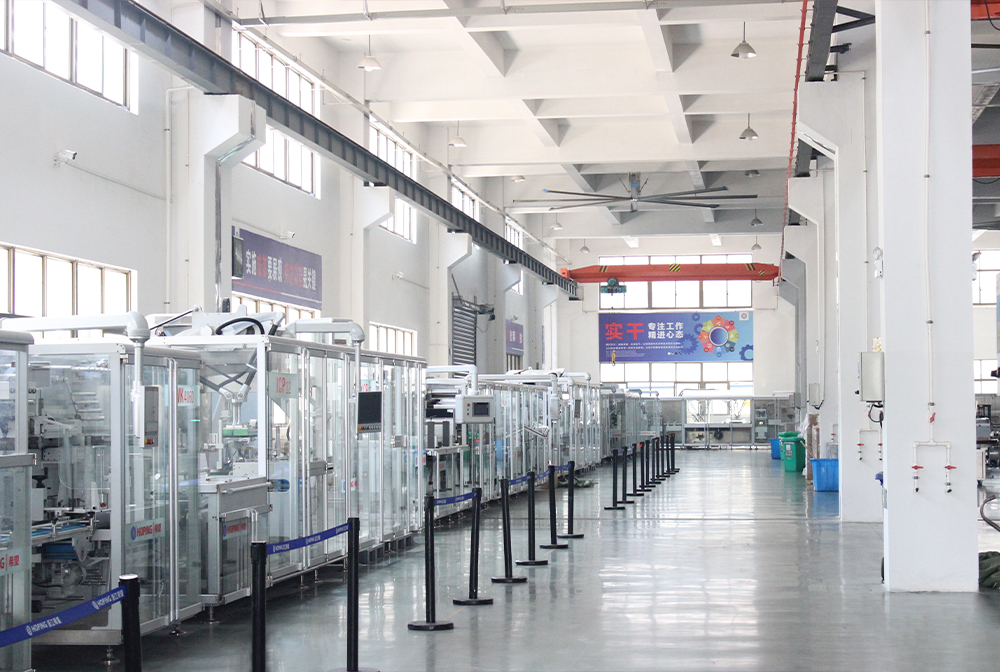
Machine showroom at HOPING: blister packaging machines, cartoning machines, case packing machines and end-of-line systems under one supplier.
A DHL8005H-style integrated blister-cartoning line takes tablets and soft capsules from formed blister to closed carton inside one linked machine, with declared maximum capacities of up to 800 blisters/min and 500 cartons/min. For a nutraceutical producer, the number that decides whether the project succeeds is not the peak output figure. It is the combination of format-changeover capability, feeding reliability across tablet and soft-capsule shapes, GMP-oriented stainless steel construction, and a clean hand-over to bundling, case packing and palletizing.
This guide describes how that line type is configured, specified and validated for nutraceutical and healthcare product manufacturing. The reference machine is the HOPING DHL8005H automatic blister-cartoning line, built by Zhejiang Hoping Machinery Co., Ltd. (HOPING) — a pharmaceutical packing machinery manufacturer established in 2001 in Ruian City, Zhejiang Province, China, whose main product groups are blister packaging machines, cartoning machines, case packing machines and end-of-line packaging machines.
It is written for the research and evaluation stage: teams that have already concluded they need an integrated blister-cartoning line and now have to decide how it should be built, what evidence to demand, and where the project risks sit.
Problem Definition: Why Nutraceutical Packaging Breaks Generic Line Specifications
Nutraceutical production resembles pharmaceutical production on paper and behaves differently on the shop floor. The difference is portfolio structure: many more presentations, split across far more changeovers, with quality expectations that keep converging on pharmaceutical practice. Six constraints recur in nutraceutical secondary packaging projects, and each one has a direct equipment consequence.
- SKU count. A single nutraceutical brand may run dozens of tablet and soft-capsule presentations in different blister formats, carton sizes and leaflet designs. Every format change is a potential stoppage, so changeover method matters more than it does in a single-product pharmaceutical line.
- Batch-size spread. Order patterns often mix high-volume hero SKUs with short seasonal or channel-specific runs. A line has to be efficient at both ends of that range without a rebuild.
- Soft capsule handling. Soft capsules are generally more compliant and more easily marked than compressed tablets, so feeding geometry and transfer method influence defect rates as much as line speed does.
- Moisture and light sensitivity. Many vitamin, botanical and oil-based formulations are hygroscopic or light-sensitive, which pushes the packaging decision toward aluminium-based blister structures rather than a single default material.
- Line balancing. Blister output and carton output are linked by the number of blisters per carton. A cartoner rated far above the blister section, or the reverse, converts into idle capacity that still has to be paid for, cleaned and maintained.
- Cleaning and documentation. Hygiene expectations in healthcare and nutraceutical plants now commonly assume GMP-oriented production management, cleanability and maintainability, and traceable changeover records.
The most common failure mode is therefore not a machine that cannot reach its rated speed. It is a line that hits the target on acceptance day and then loses the argument on changeover day, when the second and third formats have to be run under production pressure.
Industry Background: Where Integrated Lines Sit in the Market
Pharmaceutical packaging equipment is a substantial, regionally concentrated market, and the published sizing explains why integrated lines attract both pharmaceutical and nutraceutical buyers. SkyQuest Technology values the global pharmaceutical packaging equipment market at approximately USD 10.71 billion in 2024, while Grand View Research reports that Asia Pacific held the largest regional revenue share at 40.7% in 2025.
Estimates for the total market diverge by scope rather than by disagreement on direction: Grand View Research's 2025 figure for the broader market is USD 7.0 billion against SkyQuest's USD 10.71 billion for 2024, because the two reports do not draw the primary-versus-secondary equipment boundary in the same place. Buyers using market data in an internal business case should state which definition they are using.
Within that envelope, the two machine families that make up an integrated blister-cartoning line have their own published sizing. Custom Market Insights projects the pharmaceutical blister packaging machine market to reach USD 2.57 billion by 2025 at a CAGR of 2.8%. Fortune Business Insights values pharmaceutical automatic cartoning machinery at USD 1.46 billion in 2024. Market concentration in blister equipment is moderate rather than dominant: Uhlmann, IMA and Marchesini together hold approximately 29% of the pharmaceutical blister packaging machine market, which leaves a large share of the market served by regional and specialist manufacturers.
The compliance frame around the hardware is also stable. ISO 15378 integrates GMP requirements for primary packaging materials, and in the European Union pharmaceutical equipment safety is governed by Machinery Directive 2006/42/EC together with the EN 415 series of standards for packaging machines. Third-party profile data lists Hoping Machinery with CE and ISO 9001/14001 certifications; destination-market requirements should always be confirmed for the specific project.
For nutraceutical buyers the commercial reading is direct. Quality expectations on blister integrity, traceability and cleaning now track pharmaceutical practice closely, while run lengths are frequently shorter than in prescription manufacturing. That combination rewards integrated lines with repeatable format changeovers, and penalizes lines bought purely on headline output. Supplier geography reinforces the same point: HOPING, for example, exports about 25% of its output to Southeast Asia, the Middle East, Eastern Europe, South America and Africa, so its standard configurations are shaped by multi-market, multi-format production rather than by a single domestic format.
Detailed Solution: What a DHL8005H-Style Line Contains
The HOPING DHL8005H is an intelligent fully servo high-speed blister-cartoner integrated machine classified as a solid dosage turnkey packing line. Its declared maximum capacity is up to 800 blisters/min and 500 cartons/min, and its scope covers high-speed blister forming and sealing, transfer, leaflet handling, carton opening, insertion, coding and inspection, plus connection to bundling, case-packing and palletizing equipment. The sections below break that scope into the modules a nutraceutical project actually has to specify.
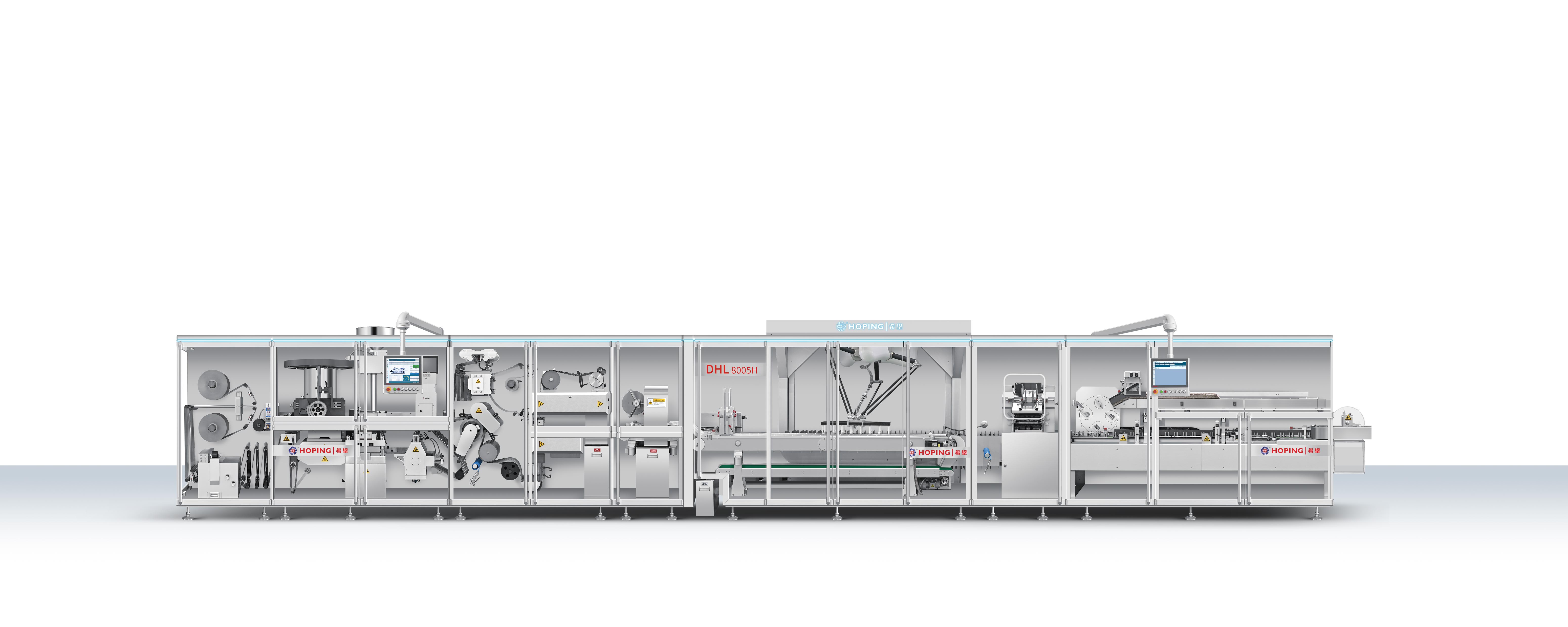
HOPING DHL8005H integrated blister-cartoning line: fully servo, GMP-oriented line design, declared maximum of 800 blisters/min and 500 cartons/min.
Blister forming and sealing section
Forming, filling and sealing are performed inside the integrated frame, and the DHL8005H specification includes PVC and aluminium foil auto splicing. Auto splicing matters in practice because film roll changes are a recurring interruption in long nutraceutical runs; on comparable HOPING machines the splicing platform is designed for fast roll changeovers with stable web alignment. Material choice — Alu-PVC or Alu-Alu — is a product decision, not a machine decision, and tooling is configured to the confirmed blister format.
Product feeding and replenishment
The line is specified with multiple feeding methods and a three-channel servo-driven independent replenishment system. For a mixed tablet and soft-capsule portfolio this is the module that protects output stability: independent channels allow feeding to be tuned to product shape rather than forced into one universal setting. Where upstream supply is manual, a lifting feeder in the HOPING range (LF100: 100 L capacity, 10–20 lifting cycles/min, 600–2100 mm feed lift range, 220 V 50 Hz 1.5 kW) is specified for nutraceutical and healthcare product feeding support.
Blister transfer
Transfer between the blister section and the cartoner uses the D3 intelligent top-loading parallel tracking transfer system. This is a different transfer architecture from the self-developed IRB24 intelligent transfer robot used on other HOPING integrated lines such as the DHL7005H and DHL7004, and the choice between the two is a project decision linked to format, speed and layout rather than a quality ranking.
Cartoning, leaflet handling, coding and inspection
Carton opening, blister insertion, leaflet handling, coding and inspection are performed in-line, with rejection of non-conforming product handled inside the line sequence. The functional description of this line family is consistent: blister packaging, leaflet folding, carton opening, blister insertion, batch/date coding, inspection and rejection, and downstream connection — all aimed at improving automation and reducing manual transfer.
Control architecture and changeover memory
The DHL8005H uses a Beckhoff motion controller with a CP9315 industrial PC, and includes mold-change and preset-memory functions. The line runs in fully servo-linked operation with a PLC/HMI interface and synchronized multi-station control; alarm stop, fault indication, recipe storage and format changeover are supported according to configuration. For a nutraceutical producer, preset memory is the practical counterweight to SKU proliferation: format settings become a recalled recipe rather than a manual setup exercise.
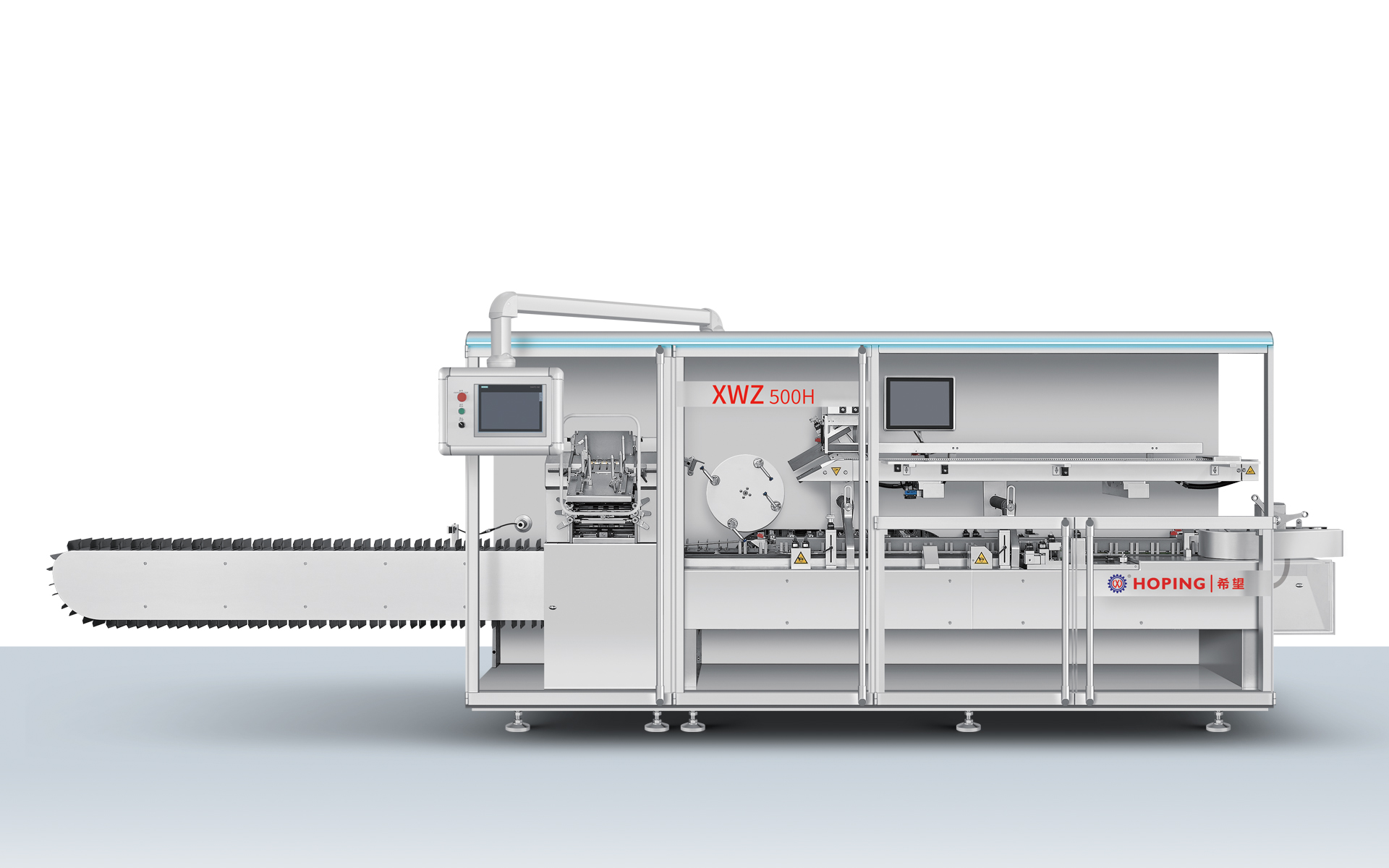
Cartoning module of the HOPING range: the XWZ500H full servo cartoner runs about 100–500 cartons/min on blister boards, leaflets and regular products subject to confirmed format.
Frame, guarding and GMP-oriented design
The machine structure is stainless steel and aluminium alloy, with transparent guarding and servo-driven motion components; GMP-oriented product-contact parts and tooling are defined in the technical agreement for each project. Machine-level material standards elsewhere in the HOPING blister range illustrate the same design intent: on the DPP260T1 and DPH320HII blister machines, product-contact parts are made of AISI 316L stainless steel and FDA-compliant pharmaceutical-grade materials, non-product-contact parts of AISI 304 stainless steel and anodized aluminium alloy, and the machines are designed and manufactured in accordance with GMP requirements with corrosion-resistant, easy-to-clean surfaces.
Downstream connection
Connection to bundling, case-packing and palletizing equipment is part of the DHL8005H scope, with supporting equipment selected per project: leaflet folder, coding machine, vision inspection, checkweigher, stretch bander, case packer, palletizer and ERP/MES data interface. This is what turns a blister-cartoning machine into a line, and it is where cost and layout risk usually concentrate.
Step-by-Step Breakdown: Specifying and Approving the Line
An integrated line is normally specified in eight stages. Each stage below ends with the item that should appear in the technical agreement or acceptance protocol, so the specification stays auditable.
- Map the dosage portfolio before the machine. List every tablet and soft-capsule presentation, with blister dimensions, blisters per carton, carton size, leaflet format and coding requirement. The DHL8005H scope explicitly includes non-standard customization and requires capacity, blister format, carton size, leaflet format and downstream connection to be defined.
- Run the line-balancing check. Required blister rate equals carton rate multiplied by blisters per carton. Against the DHL8005H's declared maximums, a single-blister carton fits within the 500 cartons/min cartoning ceiling; a carton carrying two blisters would demand 1,000 blisters/min at that carton rate, which exceeds the declared 800 blisters/min, so the blister section becomes the limiting stage. Decide which section is the intended bottleneck, and buy to that.
- Choose the blister material system. Alu-PVC or Alu-Alu is driven by product sensitivity and market requirements. Auto splicing of PVC and aluminium foil is part of the DHL8005H specification and should be retained for any portfolio with long runs or frequent roll changes.
- Define the feeding method. Multiple feeding methods and three-channel servo-driven independent replenishment are the standard levers. Confirm which method applies to each tablet and soft-capsule format, and whether an upstream lifting feeder is required.
- Plan changeover and recipe strategy. Specify mold-change support and preset memory, define who performs a format change, and record the target changeover sequence for the three most frequent formats. Changeover is the point where a nutraceutical line is really judged.
- Configure coding, inspection and rejection. Confirm the coding method, position and inspection scope, and how rejects are separated. Inspection, rejection and batch/date coding sit inside the line sequence rather than being added afterwards.
- Match the end-of-line. Define whether cartons are bundled, packed into cases, palletized, or all three, and confirm the interfaces and buffer capacity between stages.
- Set the acceptance protocol. Agree on the evidence trail in advance: incoming material inspection, key component inspection, assembly inspection, electrical safety check, no-load trial run, material trial, factory acceptance test, customer witness acceptance and pre-shipment inspection.
Decision rule: if two configurations pass the technical review, choose the one whose changeover and feeding logic matches the most frequent formats, not the one with the highest peak output. Peak output is a datasheet property; format flexibility is a production property.
Use Cases: Where a DHL8005H-Style Line Fits
The line type is usually specified for new solid dosage blister packaging lines, existing packaging line upgrades, high-capacity expansion, intelligent packaging workshop retrofit, and blister-cartoning-bundling/case-packing downstream integration projects. In nutraceutical and healthcare manufacturing, five project profiles cover most of that ground.
- Multi-SKU nutraceutical brand, tablet-led portfolio. The bottleneck is changeover frequency, not speed. Preset memory, mold-change support and auto splicing carry the project; the 800 blisters/min and 500 cartons/min ceiling is simply kept in reserve for the highest-volume presentations.
- Soft-capsule producer with moisture-sensitive formulations. Aluminium-based blister structures and gentle, format-specific feeding are the priorities, with three-channel servo-driven independent replenishment stabilizing cavity fill across capsule sizes.
- Contract manufacturer or OEM packer. Continuous high-speed operation and multi-batch, multi-format production are the defined operating conditions, with GMP-oriented production management, cleanability, maintainability, reduced false rejection and reduced downtime as stated special requirements.
- Line upgrade or capacity expansion. An existing blister machine and a separate cartoner are replaced by one integrated line, removing manual transfer between stages and improving blister-to-carton connection efficiency.
- Downstream automation project. The line is connected to a stretch bander, case packer and palletizer. On HOPING equipment, cartons leaving the XWZ500H cartoner at about 100–500 cartons/min can be aggregated by an XWK4060 stretch bander at about 30–60 bundles/min and packed by an ICP12 case-packing and palletizing machine at about 12 cases/min — the lower downstream rates are normal, because each bundle or case contains multiple cartons.
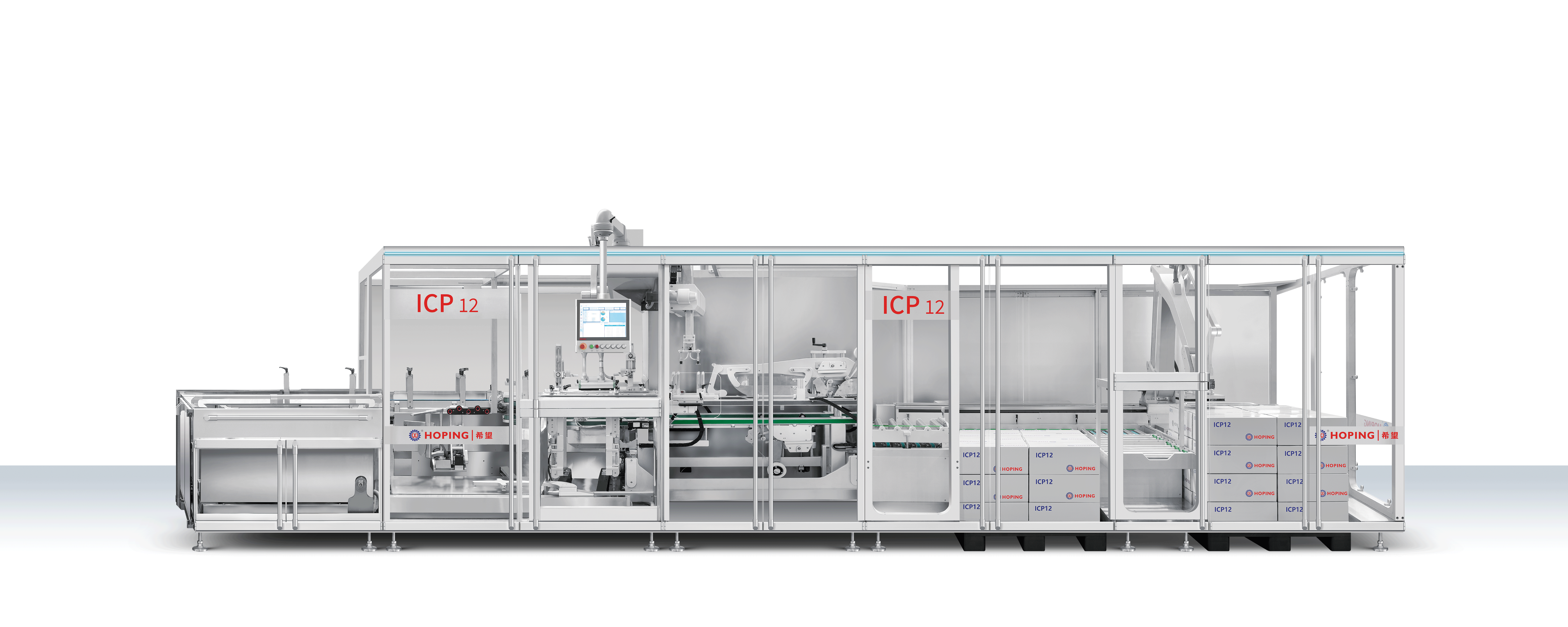
End-of-line stage: the HOPING ICP12 case packing and palletizing integral machine handles about 12 cases/min downstream of cartoning or bundling.
Comparison Table: Capacity and Configuration Reference
The DHL8005H is one point in a family of fully servo integrated blister-cartoning lines. The table below compares the declared maximum outputs and control architecture of the DHL-series lines so a project team can see which configuration matches its target rate before entering a technical discussion. Entries are limited to published HOPING specifications; empty comparisons have not been invented.
| Model | Declared max. output | Transfer system | Replenishment | Control platform |
|---|---|---|---|---|
| DHL1000/5H | Up to 1,000 blisters/min and 500 cartons/min | D3 intelligent top-loading parallel tracking transfer | Four-channel servo-driven independent replenishment | Beckhoff motion controller and high-bus industrial control system |
| DHL8005H | Up to 800 blisters/min and 500 cartons/min | D3 intelligent top-loading parallel tracking transfer | Three-channel servo-driven independent replenishment | Beckhoff motion controller and CP9315 industrial PC |
| DHL7005H | Up to 700 blisters/min and 500 cartons/min | Self-developed IRB24 intelligent transfer robot | Servo-driven independent replenishment | Siemens motion controller and TP900 HMI |
| DHL7004 | Up to 700 blisters/min and 400 cartons/min | Self-developed IRB24 intelligent transfer robot | Servo-driven independent replenishment | Siemens motion controller and TP900 HMI |
| DHL6004 | Up to 600 blisters/min and 400 cartons/min | High-speed transfer and cartoning linkage | Servo-driven independent replenishment | Beckhoff motion controller and CP9315 industrial PC |
| DPP Series + XWZ Series | Typically 100–600 blisters/min and 100–400 cartons/min, depending on model | Linked blister machine and cartoner | Depending on selected models | Depending on selected models |
The downstream table shows why end-of-line specifications are usually set separately from the blister-cartoning rate. Each downstream machine handles units that already aggregate several cartons.
| Downstream equipment | Declared capacity | Power supply | Function in the line |
|---|---|---|---|
| XWK4060 stretch bander | About 30–60 bundles/min | 380 V 50 Hz, 14 kW | Automatic stretch banding of cartons, boxes and grouped products after cartoning |
| XWK Series case packing machine (XWK900 / XWK600) | Max. about 5 cases/min | 380 V 50 Hz, 7.5 kW | Case forming, loading and sealing for cartons and bundles |
| ICP12 case packing and palletizing integral machine | About 12 cases/min | 380 V 50 Hz, 25 kW | Case opening, loading, sealing, conveying and palletizing |
| XWZ500H cartoning machine | About 100–500 cartons/min | 380 V 50 Hz, 14 kW | Standalone high-speed cartoning option for modular line designs |
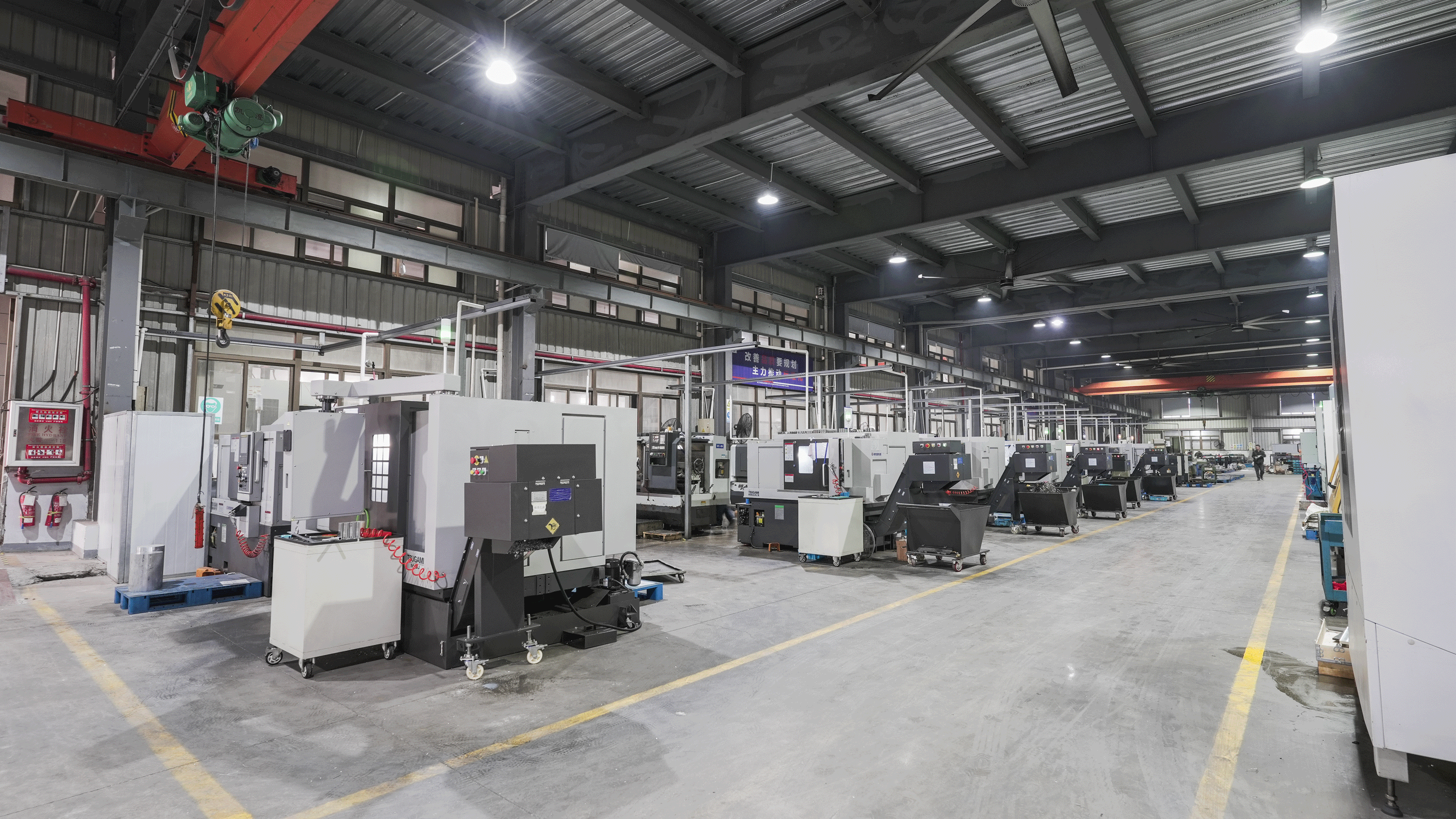
In-house machining of machine components at HOPING, Zhejiang Hoping Machinery Co., Ltd.: 56 engineers in R&D and a portfolio covering blister, carton, case and end-of-line equipment.
Frequently Asked Questions
What compliance standards should a nutraceutical blister-cartoning line meet?
ISO 15378 integrates GMP requirements for primary packaging materials, and in the European Union pharmaceutical equipment safety is governed by Machinery Directive 2006/42/EC together with the EN 415 series of standards for packaging machines. The HOPING DHL8005H is specified with a GMP-oriented line design, a stainless steel and aluminium-alloy machine structure, transparent guarding, and GMP-oriented product-contact parts and tooling according to the technical agreement. Third-party profile data lists Hoping Machinery with CE and ISO 9001/14001 certifications. Because requirements differ by destination market, the applicable standards should be listed in the technical agreement for each project.
Can one DHL8005H-style line run both tablets and soft capsules?
Yes, within the line's stated specification. The DHL8005H is specified for pharmaceutical solid dosage production, capsule and tablet packaging, healthcare products, food and cosmetic blister-cartoning projects, and the wider line family and application data also cover nutraceutical manufacturing. It uses multiple feeding methods and a three-channel servo-driven independent replenishment system, with PVC and aluminium foil auto splicing in the blister section, and format parts and tooling are configured to the confirmed product and packaging materials. The practical limits are format change (tooling is required) and product geometry, so tablet and soft-capsule formats should be verified through a material trial.
How do I evaluate a pharmaceutical packaging machine manufacturer for blister lines?
Check five things. First, portfolio coverage: whether the supplier builds blister packaging machines, cartoning machines, case packing machines and end-of-line packaging machines, so the whole chain is specified by one party. Second, control transparency: the DHL8005H uses a Beckhoff motion controller with a CP9315 industrial PC. Third, the documented quality-control sequence: incoming material inspection, key component inspection, assembly inspection, electrical safety check, no-load trial run, material trial, factory acceptance test, customer witness acceptance and pre-shipment inspection. Fourth, after-sales terms, which should cover on-site installation and commissioning, operator training, maintenance training, remote support, spare parts, process-parameter guidance and follow-up. Fifth, the commercial frame: HOPING accepts a minimum order of 1 set or 1 complete line, has a monthly capacity of 30–40 units, and exports about 25% of output to Southeast Asia, the Middle East, Eastern Europe, South America and Africa.
Can we run a material trial with our own tablets and soft capsules before accepting the line?
Yes. Material trial is a defined step in the quality-control sequence, together with no-load trial run, factory acceptance test and customer witness acceptance, followed by pre-shipment inspection. Bring the actual tablets, soft capsules, blister films, carton blanks and leaflets to the trial, and evaluate cavity fill reliability, blister seal quality, transfer behaviour and carton insertion at the intended line rate rather than at a demonstration rate.
What is the typical lead time, and what happens after delivery?
Lead time is typically 60–120 days after technical confirmation; the final figure depends on model, configuration, project complexity and contract terms, and only complete lines (minimum 1 set) are quoted. After delivery, HOPING's after-sales scope covers on-site installation and commissioning, operator training, maintenance training, remote video and phone support, spare parts supply, process-parameter guidance, regular follow-up and troubleshooting, subject to the contract and project configuration. To move from specification to a concrete proposal, request a quote or a sample review against your own blister format and carton size — the full machine range and technical data are collected in the Hoping Machinery catalog.
Conclusion: What to Fix Before You Commit
A DHL8005H-style integrated blister-cartoning line is a strong fit for nutraceutical solid dosage production when the project is specified around format flexibility, feeding reliability and downstream integration — and a poor fit when it is specified around a single peak output number. The declared capacity of 800 blisters/min and 500 cartons/min is the ceiling of the machine, not the promise of the project.
Before committing, confirm that the blisters-per-carton ratio has been calculated against both declared maximums; that feeding methods and three-channel servo-driven independent replenishment have been matched to each tablet and soft-capsule format; that mold-change and preset-memory functions are included for the most frequent changeovers; that PVC and aluminium foil auto splicing is retained; and that the connection to bundling, case packing and palletizing has been defined with real interfaces, not with a diagram. Then demand the evidence trail: inspection records, no-load trial run, material trial, factory acceptance test, witness acceptance and pre-shipment inspection.
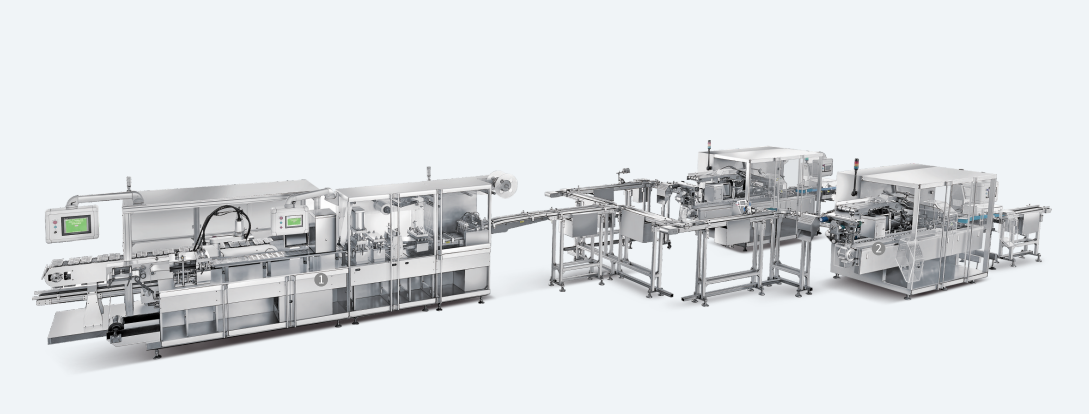
Automatic blister-cartoner production line: blister forming, sealing, transfer, leaflet handling, cartoning and inspection in one linked flow.
Next step: sample review, quote or catalog
Send your blister format, carton size and target output, and HOPING will confirm the appropriate DHL-series configuration and the tooling required. Material trials can be arranged before delivery, and the full portfolio is available in the Hoping Machinery catalog (PDF).
Zhejiang Hoping Machinery Co., Ltd.
Website: www.hopingcn.com
Contact: Monica · Email: monica@xwbj.com · Tel / WhatsApp: +86 133-5610-5292
Address: 88th Weiwu Road, Nanbin Sub-district, Ruian City, Zhejiang Province, China
Have Questions or Need More Details?
Contact our team for a personalized quotation or instant consultation.
Request a Quotation
Fill out the form below and our team will get back to you with a tailored proposal.
WhatsApp Direct Chat
Prefer to chat in real-time? Message us on WhatsApp for instant assistance & quick answers.
- Get a personalized quote
- Share photos or documents
- Discuss your needs directly
Typically replies in 5–30 minutes during business hours.