Long-Term Pharmaceutical Packaging Machine Supply Partner in China: A Practical Decision Guide
Long-Term Pharmaceutical Packaging Machine Supply Partner in China: A Practical Decision Guide
Published: August 16, 2026
Buying a pharmaceutical packaging machine is often treated as a one-time purchasing event. The buyer studies line speed, checks the forming and sealing system, compares cartoning machine options, and then negotiates the price. That approach works for a single project, but it does not fully answer the question that matters for a production site with several SKUs and multi-year capacity plans: which manufacturer can serve as a long-term pharmaceutical packaging machine supply partner in China?
Selecting a partner is not only about the pharmaceutical packaging machine itself. It includes the blister packaging machine, pharmaceutical cartoning machine, case packing machine, end-of-line packaging machine, and the engineering systems that connect them. It also includes documentation, training, spare parts, and the manufacturer’s ability to support a turnkey pharmaceutical packaging line over time. This guide explains how to evaluate a long-term partner, what integrated supply capability looks like, and which commercial and technical conditions should be confirmed before the first order is released.
The Problem: Why a Long-Term Supply Partner Is Different From a Machine Supplier
When a buyer purchases a standalone blister packaging machine, the scope is relatively clear: the machine must form, fill, seal and punch blisters at an agreed rate. But most solid dosage packaging projects do not stop there. They also need a cartoning machine, a leaflet feeder, code printing, inspection or rejection, and often a downstream case packing machine or end-of-line packaging machine. If each unit is sourced from a different supplier, the buyer becomes the integrator. That creates a long-term operational risk.
Typical risks include poor blister forming or sealing, missing or wrong product feeding, missing leaflet insertion, carton jams, coding or date-printing errors, contamination risk, and downtime during high-speed operation. On an integrated blister-cartoning line, these risks are handled through sensor monitoring, vision or checkweighing inspection where configured, missing-product alarms, automatic stops, automatic rejection, key-parameter locking, fault records and mechanical safety protection. But these controls only work if the manufacturer understands the complete primary and secondary packaging process, not just one module.
A long-term supply partner should therefore be evaluated on process integration, engineering ownership, compliance evidence, service capacity and commercial stability. The machine specification is only one part of the decision.
Industry Background: Pharmaceutical Packaging Equipment Demand and Standards
The pharmaceutical packaging equipment market is large and continues to expand. According to SkyQuest Technology, the global pharmaceutical packaging equipment market was valued at approximately USD 10.71 billion in 2024. Custom Market Insights projects the pharmaceutical blister packaging machine market to reach USD 2.57 billion by 2025 with a CAGR of 2.8%. Fortune Business Insights values the pharmaceutical cartoning machinery market at USD 1.46 billion in 2024. Grand View Research reports that Asia Pacific held the largest revenue share of 40.7% in 2025. It is important to note that research groups define the scope differently; these figures should be read as directional rather than exact.
At the same time, compliance requirements are tightening. Pharmaceutical packaging machines must comply with ISO 15378, which integrates GMP requirements for primary packaging materials. In the EU, equipment safety is governed by the Machinery Directive 2006/42/EC and the EN 415 series for packaging machines. A long-term partner must be able to operate in this compliance environment, not only at the moment of delivery, but also when the line is modified, upgraded or transferred to another site.
Detailed Solution: What a Long-Term Pharmaceutical Packaging Machine Partner Should Offer
Integrated line capability across primary and secondary packaging
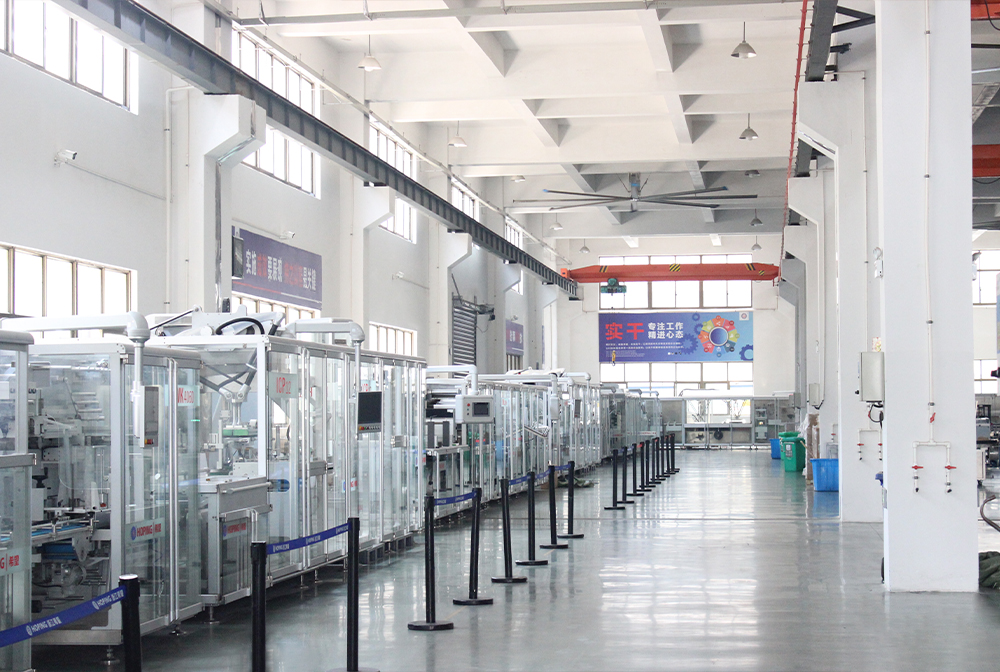
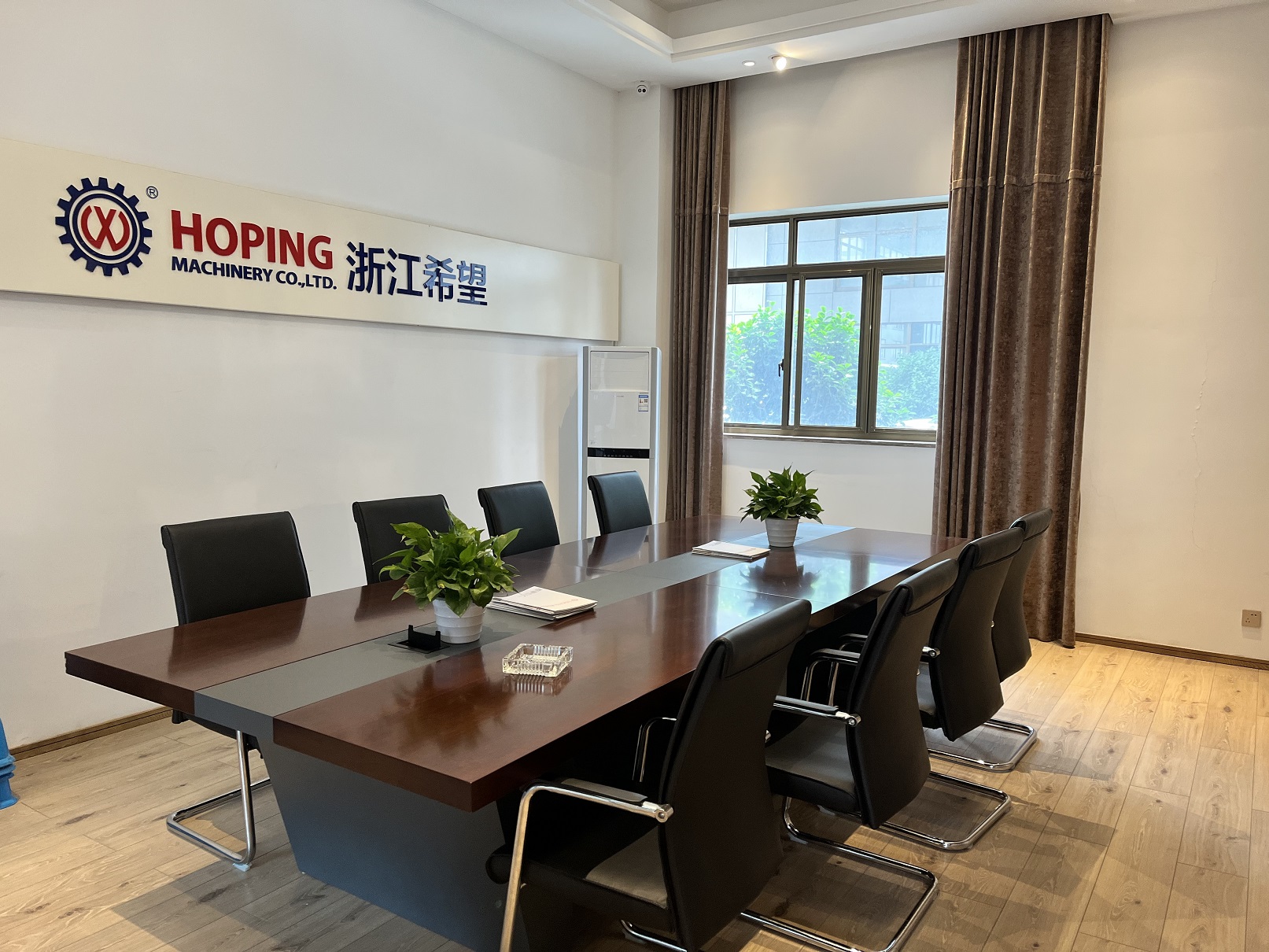
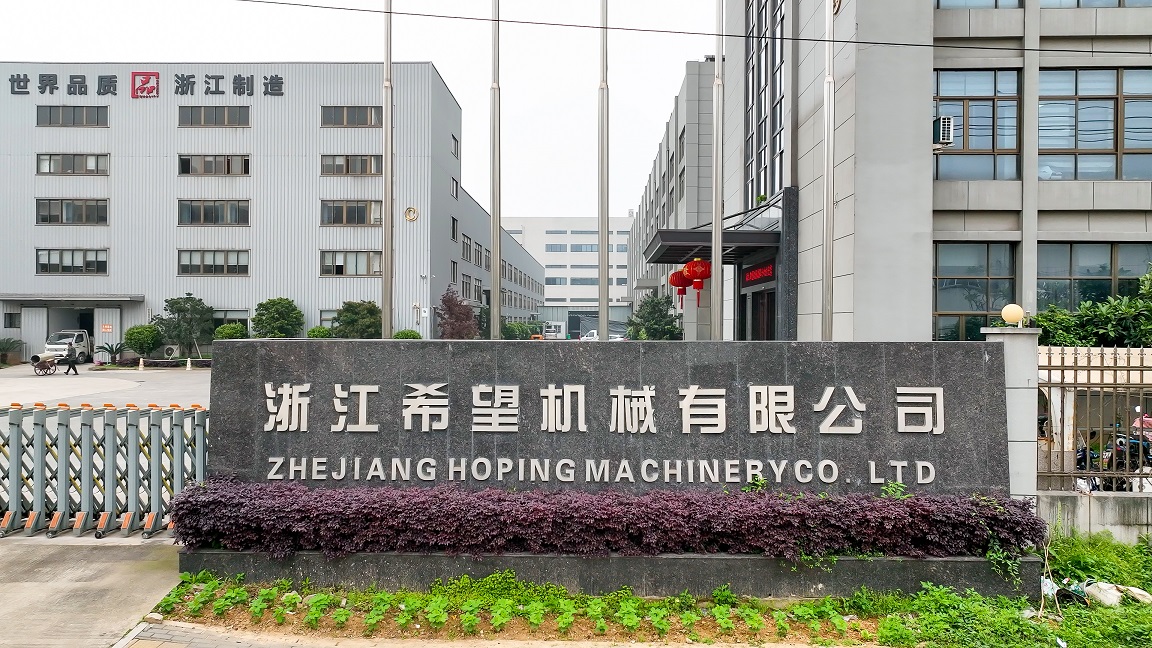
Zhejiang Hoping Machinery Co., Ltd. (HOPING) is a Chinese manufacturer of pharmaceutical packaging machinery, with headquarters and factory at 88th Weiwu Road, Nanbin Sub-district, Ruian City, Zhejiang Province. HOPING was founded in 2001, employs more than 300 people, and serves markets in Southeast Asia, the Middle East, Eastern Europe, South America and Africa. Its product range covers blister packaging machines, cartoning machines, case packing machines and end-of-line packaging machines.
The company’s integrated line capability is built around flat and rotary Alu-PVC / Alu-Alu blister packaging machines, including the DPP Series and DPH Series; horizontal cartoning machines in the XWZ Series; flow wrappers such as the XW8200 and XW8300; stretch banders, overwrappers, case packing machines in the XWK Series; and the ICP12 case packing and palletizing integral machine. This portfolio allows HOPING to quote a complete secondary packaging line, not just a single machine.
Representative integrated line models include:
- DHL1000/5H: an intelligent fully servo high-speed blister-cartoner integrated machine with max capacity up to 1000 blisters/min and 500 cartons/min, D3 intelligent top-loading parallel tracking transfer, PVC/Alu foil auto splicing, four-channel servo-driven replenishment, Beckhoff motion controller and GMP-oriented design.
- DHL8005H: up to 800 blisters/min and 500 cartons/min with the D3 transfer system, three-channel replenishment and Beckhoff control.
- DHL7005H: up to 700 blisters/min and 500 cartons/min with self-developed IRB24 intelligent transfer robot, Siemens motion controller and TP900 HMI.
- DHL7004: up to 700 blisters/min and 400 cartons/min with IRB24 transfer robot and full servo drive.
- DHL6004: up to 600 blisters/min and 400 cartons/min with Beckhoff motion controller and CP9315 industrial PC.
- IXW800: up to 600 blisters/min, 600 packs/min and 500 cartons/min, combining blister packing, flow wrapping and cartoning in one linked line.
- IXW400: a liquid dosage blister-cartoner integrated line for filled syringes, ampoules and cartridges, up to 400 blisters/min and 150 cartons/min.
Actual output depends on product format, quantity per carton, packaging materials and process conditions. A capable supplier should be willing to state this clearly instead of guaranteeing a speed that cannot be repeated on site.
Engineering and manufacturing depth
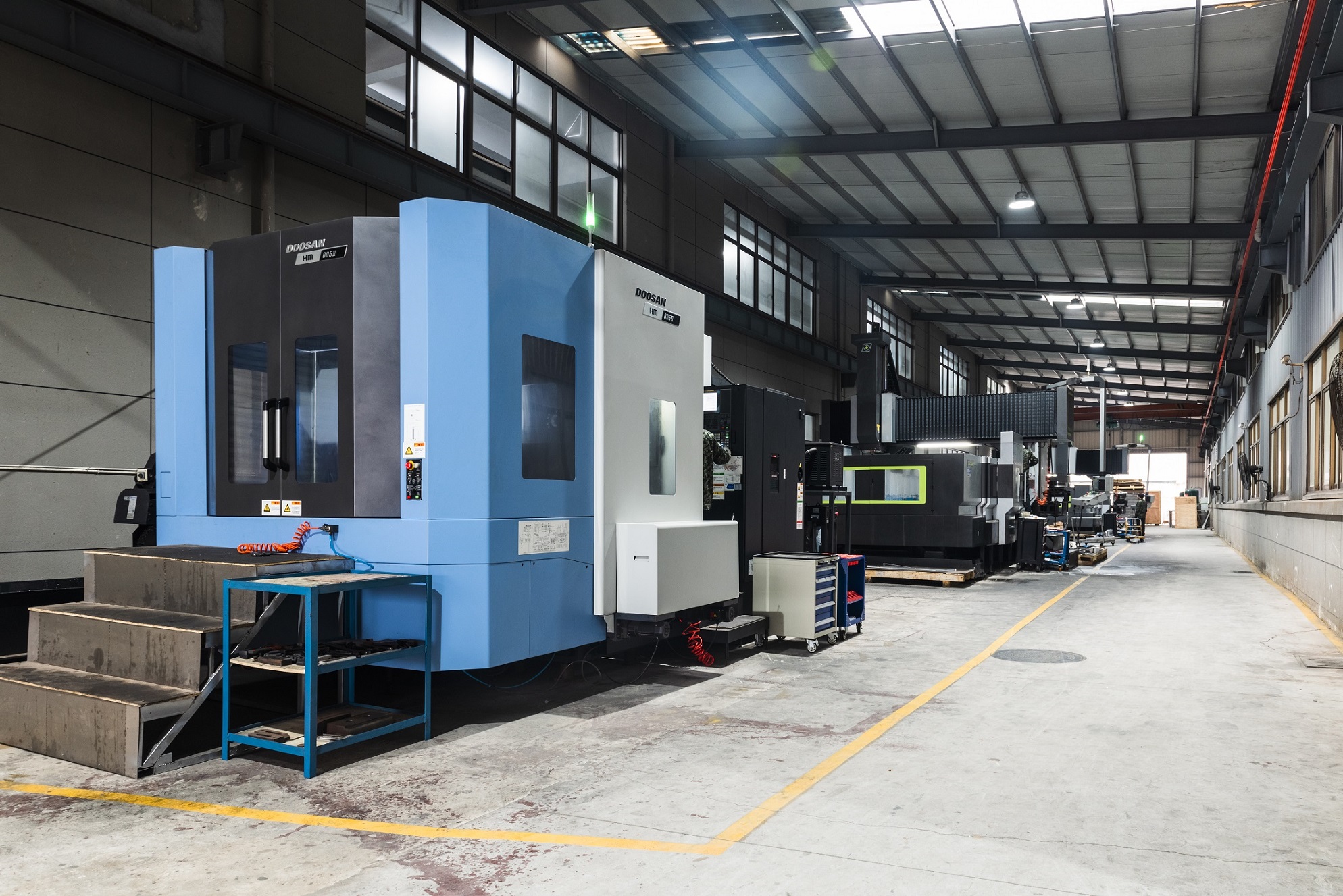
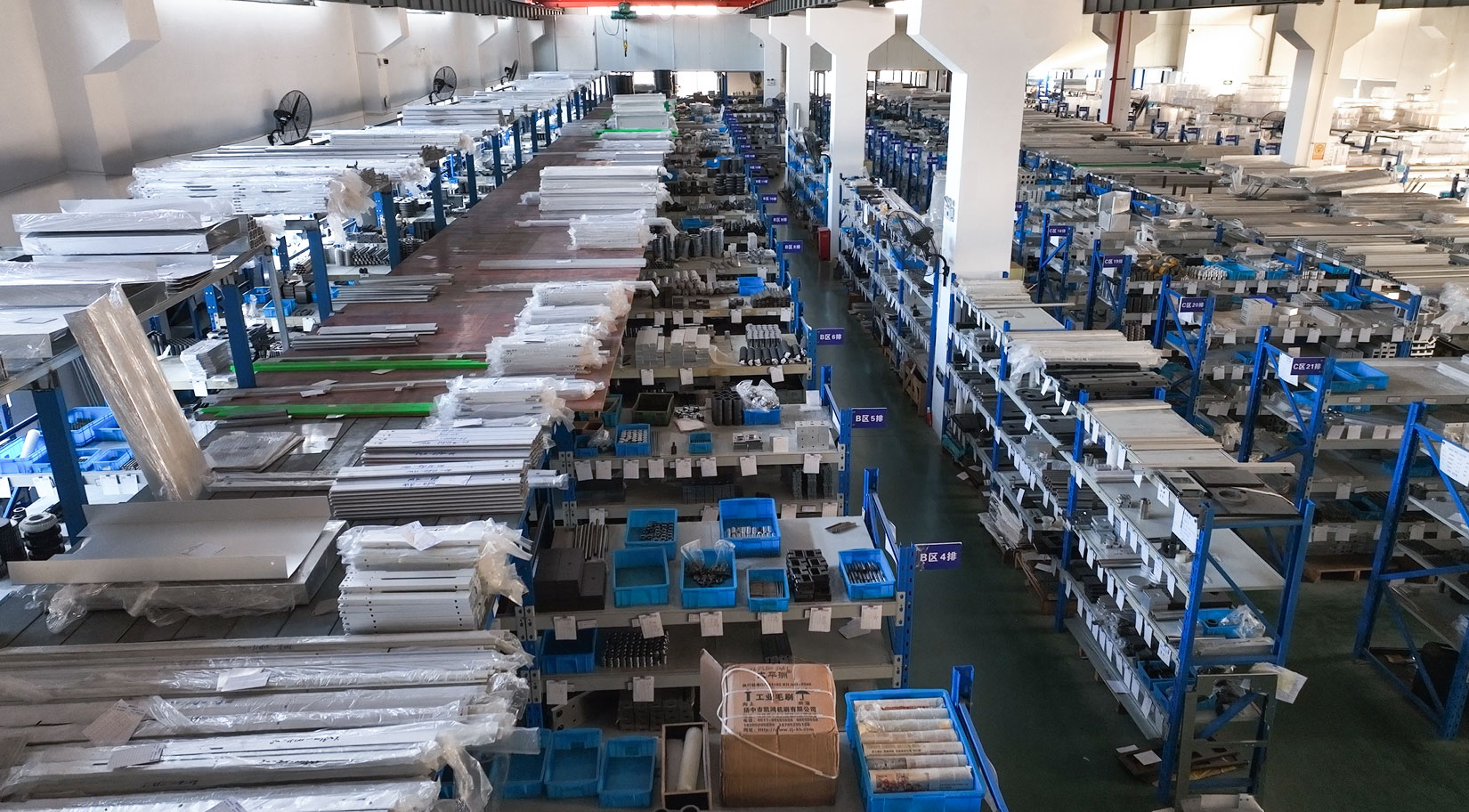
A long-term partner must be able to manage format changes, mold changes and line modifications after installation. HOPING’s engineering team includes 56 engineers, and the company has accumulated intellectual property across 26 invention patents, 70 utility patents, 4 appearance patents, 10 PCT-protected patents and 28 software copyrights. The factory area is 28,800 ㎡, with annual output of about 500 units and monthly production capacity of 30 to 40 units.
In-house machining, assembly and testing capacity reduces dependence on external suppliers for critical format parts. That matters for long-term supply because replacement parts and format tooling must remain available after the original project is completed.
Compliance, documentation and validation support
Pharmaceutical buyers need evidence that the packaging line can be validated in their own GMP environment. HOPING holds CE and ISO 9001/14001 certifications, and its equipment is designed and manufactured in accordance with GMP requirements. On many models, product-contact parts are made of AISI 316L stainless steel and FDA-compliant pharmaceutical-grade materials, while non-product-contact parts are manufactured from AISI 304 stainless steel and anodized aluminum alloy.
The company also supports acceptance through technical agreement confirmation, sample testing, FAT before shipment and SAT at the customer site. Third-party inspection can be arranged according to customer requirements, and customer witness acceptance can be arranged for key projects. This documentation trail is essential for a long-term supply relationship, because regulators and internal quality teams expect traceability from machine design to installation.
Commercial and delivery capacity for repeat orders
Commercial terms are a practical part of supplier qualification. HOPING’s minimum order quantity is 1 set or 1 complete line. Typical production lead time is 60 to 120 days after technical confirmation, and monthly production capacity is 30 to 40 units. Delivery terms can be structured as EXW Ruian/Wenzhou, FOB Ningbo or Shanghai, or CIF/CFR destination port, depending on the contract and customer country requirements. Payment terms are subject to quotation, contract value, customer credit, project scope and destination market.
These conditions matter because a long-term partner is not only a machine builder. It is also a manufacturing resource that must reserve capacity, order long-lead electrical and servo components, and coordinate export logistics without delaying the customer’s project timeline.
Step-by-Step: How to Set Up a Long-Term Supply Relationship
Step 1: Define the complete packaging scope
The buyer should first define the expected process flow: tablet or capsule feeding, blister forming and sealing, blister transfer, leaflet folding, carton opening, product insertion, coding, inspection, rejection, and downstream bundling, case packing or palletizing. The more clearly this scope is defined, the easier it is to assess whether a supplier can deliver a true blister packaging line rather than a collection of standalone machines.
Step 2: Evaluate line integration instead of discrete machines
An integrated blister-cartoning line synchronizes the blister machine, transfer system and cartoning machine. HOPING’s DHL and IXW lines use fully servo drives, intelligent transfer robots and centralized control to reduce manual intervention and intermediate handling. The buyer should ask how the supplier handles product transfer, missing-product detection, carton jam recovery and downstream connection.
Step 3: Verify engineering and manufacturing depth
Ask about in-house R&D, patents, machining capability and the team behind the project. HOPING has 56 engineers and a range of patents and software copyrights. This kind of depth matters when a new SKU is introduced, because the supplier will need to modify tooling, adjust recipes and validate new formats.
Step 4: Check compliance evidence
Request certificates, machine manuals and GMP-oriented design documentation. For pharmaceutical packaging, standards such as ISO 15378 and the EU EN 415 series provide a useful baseline. If the supplier cannot explain how the machine aligns with GMP requirements, the project will face additional validation risk.
Step 5: Run material tests and FAT
Samples and packaging materials should be confirmed at the early project stage. HOPING designs the solution according to the confirmed blister and carton formats and conducts no-load and material tests before shipment. The buyer should also define the FAT procedure and, if possible, participate in customer witness acceptance.
Step 6: Plan installation, training and spare parts
Installation, commissioning, training, spare parts and remote technical support should be included in the partnership plan. For export projects, the supplier’s ability to send experienced commissioning teams and respond remotely is as important as the machine specification.
Step 7: Assess delivery and reorder capacity
Confirm the minimum order quantity, lead time and monthly production capacity. HOPING’s MOQ is 1 set or 1 complete line, with a typical lead time of 60 to 120 days and monthly production capacity of 30 to 40 units. This gives the buyer a practical basis for planning line extensions and future capacity expansion.
Use Cases: Matching the Line Configuration to the Project Scenario
High-volume tablet and capsule producer
A large solid dosage plant with continuous production needs a line that can keep up with upstream granulation and compression capacity. The DHL1000/5H is designed for this scenario, with maximum capacity up to 1000 blisters/min and 500 cartons/min, intelligent top-loading transfer and servo-driven replenishment. Actual output depends on carton size, tablets per carton and material behavior.
Producer requiring flow wrapping before cartoning
Some products need a pillow pack around the blister before cartoning, especially moisture-sensitive or high-value formats. The IXW800 combines blister packing, flow wrapping and cartoning in one linked process, with max capacity up to 600 blisters/min, 600 packs/min and 500 cartons/min. This reduces manual handling between primary and secondary packaging.
Liquid dosage and injectable packaging
For filled syringes, ampoules and cartridges, the IXW400 provides a liquid dosage blister-cartoner integrated line with up to 400 blisters/min and 150 cartons/min. The line uses a D3 top-loading robot and servo-driven independent replenishment to handle fragile product geometries.
Smaller or medium-volume production with format flexibility
Not every producer needs high speed. For medium-volume pharmaceutical and healthcare products, flat plate blister machines such as the DPP260K provide 20 to 70 cycles/min and support Alu-PVC / Alu-Alu formats. This can be linked with XWZ Series cartoning machines to build a semi-automatic or automatic blister-cartoning line that matches lower throughput requirements.
Comparison: Integrated Fully Servo Line vs. Standalone and Semi-Automatic Options
| Comparison Criterion | Integrated Fully Servo Line (e.g., HOPING DHL Series) | Low-Speed Semi-Automatic Blister-Cartoning Solution | Standalone Blister Machine + Manual Transfer + Standalone Cartoner |
|---|---|---|---|
| Process Integration | Blister packaging, transfer, leaflet handling, carton opening, insertion, inspection and downstream connection are integrated into one automated process. | Blister and cartoning functions are linked but operate at a lower speed with more manual involvement. | Blister machine and cartoner are separate; blisters are transferred manually or by intermediate conveyor. |
| Representative Output | DHL1000/5H can reach up to 1000 blisters/min and 500 cartons/min; actual output depends on format, materials and process conditions. | Lower and more operator-dependent output; suitable for smaller batches. | Output is limited by manual transfer and separate machine controls. |
| Best For | Large-scale solid dosage production, high-capacity workshops, multi-format lines requiring reduced manual contact. | Medium or low-speed production where initial investment must stay low. | Existing production sites that already own equipment and need to add capacity gradually. |
| Cost Profile | Initial investment is usually higher than standalone or semi-automatic equipment, but it helps reduce labor, transfer, management and quality-risk costs in large-scale continuous production. | Lower initial investment, but labor and quality risk increase as volume grows. | Equipment cost may be lower, but handling and quality-control costs can offset the difference. |
| Maintenance | Centralized control, modular stations, alarm indication and parameter management support routine maintenance. | Simpler controls, but more manual steps may create additional failure points. | Separate controls and transfers require more coordination and monitoring. |
FAQ: Long-Term Pharmaceutical Packaging Machine Supply Partner China
Conclusion and Next Step
Choosing a long-term pharmaceutical packaging machine supply partner in China is a decision about engineering depth, compliance, delivery capacity and after-sales systems, not just price. For solid dosage producers, the most stable path is usually an integrated blister-cartoning line that connects primary packaging, cartoning and downstream end-of-line equipment under one control system. HOPING represents this integrated-turnkey model with in-house manufacturing, a broad equipment portfolio and documented support processes.
If you are evaluating a long-term pharmaceutical packaging machine supply partner, start with a technical discussion about your line configuration and required output. You can download the HOPING Machinery Catalog or contact HOPING at monica@xwbj.com / WhatsApp.
Have Questions or Need More Details?
Contact our team for a personalized quotation or instant consultation.
Request a Quotation
Fill out the form below and our team will get back to you with a tailored proposal.
WhatsApp Direct Chat
Prefer to chat in real-time? Message us on WhatsApp for instant assistance & quick answers.
- Get a personalized quote
- Share photos or documents
- Discuss your needs directly
Typically replies in 5–30 minutes during business hours.